WHY JESUS DIED ON THE CROSS? (synopsis of Good Friday sermon)- 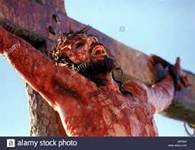
IS 52: 13-53:12; Ps 31: 2, 6 12-13, 15-16, 17, 25; Heb 4: 14-16; 5:7-9; Jn 18: 1-19:42.
The passion of the Christ: On April 12th, 2004, the cover of TIME magazine asked, “Why Did Jesus Have to Die?” The main reason why Time asked this question was the unprecedented impact of Mel Gibson’s film, The Passion of the Christ, which brought in more than $ 370 million in two months. The film was 126 minutes long, and at least 100 of those minutes graphically portrayed the torture and death of Jesus. On Good Friday Catholics hear the answer when the priest recites the verse from Isaiah–“He was wounded for our transgressions … by his stripes we are healed.” Catholics on Good Friday during the ‘long gospel’ cry out, ‘Crucify him! Crucify him,’ acknowledging the truth that it is not the Romans or the Jewish leaders but the sinners down through the centuries who killed Jesus. Naturally, the question believers ask is, how is Jesus’ death atonement for human sins leading to the salvation of humanity? John the evangelist gives the answer: “For God so loved the world that he gave his one and only Son, that whoever believes in him shall not perish but have eternal life. For God did not send his Son into the world to condemn the world, but to save the world through him. “(John 3:16-17).
One page summary of theories explaining why Jesus suffered and died for us: 1) The theory of substitutionary atonement: By Jesus’ time, Jewish Temple ritual included regular sin sacrifices for reconciliation, or atonement, with God. By around A.D. 57, the Apostle Paul explained that Jesus’ death was a redemptive and atoning act because “Jesus died for us on account of our sins” (Romans 4:25). In other words, Christ died for man, in man’s place, taking his sins and bearing them for him. Since humanity’s sin against an infinite God required infinite atonement, only Jesus who was God and man could make that atonement. 2) The ransom payment theory: Mark in his gospel uses this Roman legal terminology for the freeing of slaves when he quotes Jesus: “the Son of Man came … to give his life as a ransom for many.” St. Anselm in his book “Cur Deus Homo?” explains this theory. “No sin can be forgiven without satisfaction. In other words, an infinite debt had to be paid to God for our sins, and only a God-man could pay it by his suffering and death.
3) Exemplary Atonement Theory” or demonstration of God’s love for us: Jesus’ death was designed to impress mankind greatly with a sense of God’s love, resulting in softening their hearts and leading them to repentance.
4) The theory of Solidarity with suffering humanity. Yet another explanation of the reason for Christ’s suffering and death is the theory of Solidarity with suffering humanity. It enables us to find meaning for our sufferings in the sufferings of Christ. The examples of numerous martyrs of the Church and secular martyrs like Mahatma Gandhi, Dr. Martin Luther King and Archbishop Oscar Romero will help us to convert our sufferings salvcific.
Life messages 1) Let us welcome our crosses as Jesus did for the atonement of our sins and those of others. 2) Let us experience and share Christ’s love.
WHY DIDJESUS DIE ON THE CROSS? (Good Friday sermon)- 2026
The passion of the Christ: On April 12th, 2004, the cover of TIME magazine asked (http://www.time.com/time/magazine/article/0,9171,993793,00.html), “Why Did Jesus Have to Die?” TIME put this question in the spotlight partly because it was the beginning of Holy Week and the time of the year when Christians throughout the Western world remember the crucifixion of Christ. But the main reason was the unprecedented impact of Mel Gibson’s film, The Passion of the Christ, which brought in more than $370 million in two months, passing Jurassic Park as seventh on the all-time U.S. box office list. The film was 126 minutes long, and at least 100 of those minutes graphically portrayed the torture and death of Jesus. This movie prompted more people to ask the question which St. Augustine asked centuries ago: why did Jesus suffer so much to accomplish our salvation? Why couldn’t God just be merciful and forgive our sins without needing all that torture and horrific pain? On Good Friday Catholics hear the answer when the priest recites the verse from Isaiah–“He was wounded for our transgressions … by his stripes we are healed.” It was with those words that Gibson commenced his depiction of the scourging of Jesus. Who killed Jesus? Catholics on Good Friday during the ‘long gospel’ cry out, ‘Crucify him! Crucify him,’ acknowledging the truth that it is not the Romans or the Jewish leaders but the sinners down through the centuries who killed Jesus. Naturally the question believers ask is, how is Jesus’ death atonement for human sins leading to the salvation of humanity?
Jesus’ Death: Historical Context: The story of Jesus’ death begins hundreds of years before his birth. The Hebrew prophets foretold the birth and death of the coming Savior of the world several hundred years before the birth of Jesus Christ. Most notably, around 700 B.C., the prophet Isaiah described in detail the execution of the coming savior in Isaiah chapter 53. When this reference is compared to the descriptions of Jesus’ death by crucifixion, the similarities are stunning because Jesus died in precisely the same way that prophets had predicted. Jesus suggested that his death was a necessary element in God’s eternal plan for sending him into the world. He described the purpose of his life in this manner, “For God so loved the world that he gave his one and only Son, that whoever believes in him shall not perish but have eternal life. For God did not send his Son into the world to condemn the world, but to save the world through him. “(John 3:16-17). Each of the Gospel writers describes the event of Jesus’ death: “When Jesus had cried out again in a loud voice, he gave up his spirit”; “With a loud cry, Jesus breathed his last”; “When he had said this, he breathed his last”; “He bowed his head and gave up his spirit” (Matthew 27:50; Mark 15:37; Luke 23:46; John 19:30). But none of the Gospel writers focuses on the physical sufferings of Jesus. Each tells part of the whole horrific story, with his own emphasis and understanding of its significance. The death of Jesus was not only unusual – it was unique.
Traditional theories: Based on the Bible and the teachings of the Fathers of the Church, Bible scholars and theologians try to explain the reason for Jesus’ death by various theories. But all these theories are based on the central fact that man can not atone for his sin against the infinite justice of God. Since God is just, he cannot merely sweep our sins “under the rug.” God’s justice demands that our sins be punished. Not to punish sin would be unjust. God is both just and loving. Therefore, God’s love is willing to meet the demands of His justice. But only a God–man could do that, and Jesus made that atonement by his suffering and death. Out of perfect love for us, Jesus took upon himself the punishment we deserve. His willingness to suffer in our place balanced the divine “scales of justice.” The debt was now paid. His love paid the price. His passion and death atoned for our sins and redeemed us. St. Augustine and St. Thomas Aquinas arrive at the conclusion that God could have found another way to save us. But Christ’s making satisfaction for the penalty of our sins through suffering was, in fact, the way God chose to make possible our salvation.
1) The theory of substitutionary atonement: By Jesus’ time, Jewish Temple ritual included regular sin sacrifices for reconciliation, or atonement, with God. By around A.D. 57, the Apostle Paul explained that Jesus’ death was a redemptive and atoning act because “Jesus died for us on account of our sins” (Romans 4:25). In other words, Christ died for man, in man’s place, taking his sins and bearing them for him. Thus Jesus’ suffering and death were considered ‘saving realities’ and an ‘atoning sacrifice.” According to the Synod of Trent (AD 325), the “atonement” is the “satisfaction” of Christ, whereby God and the world are reconciled or made to be at one. “For God indeed was in Christ, reconciling the world to himself” (2 Corinthians 5:19) – (NAE – New Advent Encyclopedia). The Nicene Creed, proclaimed it thus: “who for us men and for our salvation, came down, took flesh, was made man; and suffered.” This theology of salvation considered Jesus’ death on the cross as a positive act of God which ‘expiated the sins of the world’. Since humanity’s sin against an infinite God required infinite atonement, only Jesus who was God and man could make that atonement. In other words, nothing less than the atonement made by one who was God as well as man could suffice as satisfaction for the offense against the Divine Majesty. St. Thomas Aquinas explains that by reason of the infinite dignity of the Divine Person, the least action or suffering of Christ had an infinite value, so that in itself it would suffice as an adequate satisfaction for the sins of the whole world. (NAE). The Catechism of the Catholic Church states: “Justification has been merited for us by the Passion of Christ who offered himself on the cross as a living victim, holy and pleasing to God, and whose blood has become the instrument of atonement for the sins of all men-” (CCC-1992). Theologians call this explanation the theory of substitutionary atonement. The Catholic Church adopted substitution as a legitimate doctrine at the Council of Trent. The Incarnation is, indeed, the source and the foundation of the Atonement. By the union of the Eternal Word with the nature of man all mankind was lifted up and, so to speak, deified. “He was made man“, says St. Athanasius, “that we might be made gods” (De Incarnatione Verbi, 54) (NAE). In the final analysis, restoration of fallen man was the work of God’s free mercy and benevolence. St. Peter explained this idea to the Jews of Jerusalem in his first sermon on Pentecost: “This Jesus [was] delivered up according to the definite plan and foreknowledge of God-“(CCC-600).
2) The ransom payment theory: A second group of theologians and bible scholars view Jesus’ atonement by his death as ransom paid. They use the legal term “ransom” to explain the reason for Jesus’ death on the cross (the ransom payment theory). This explanation is founded on the expressed words of Scripture, and is supported by many of the greatest of the early Fathers and later theologians. (NAE- New Advent Encyclopedia). Mark in his gospel uses this Roman legal terminology for the freeing of slaves when he quotes Jesus: “the Son of Man came … to give his life as a ransom for many.” St. Anselm in his book “Cur Deus Homo?” explains this theory. “No sin can be forgiven without satisfaction. A debt to Divine justice has been incurred; and that debt must be paid. But man could not make this satisfaction for himself because the debt is something far greater than he can pay. Moreover, all the service that he can offer to God is already due on other titles. Hence the only way in which the satisfaction could be made, and men could be set free from sin, was by the coming of a Redeemer who is both God and man” (NAE). In other words, an infinite debt had to be paid to God for our sins, and only a God-man could pay it by his suffering and death. That is why St. Paul reminds us: “For you are bought with a great price” (1 Corinthians 6:20). Hence the atonement appears as the deliverance of man from captivity under the devil by the payment of a ransom to God. The blood of Christ was the price (NAE). The Scriptures had foretold this divine plan of salvation through the putting to death of “the righteous one, my Servant” as the ransom that would free men from the slavery of sin (CCC-601). Citing a confession of faith that he himself had received, St. Paul professes that “Christ died for our sins in accordance with the scriptures” (1 Cor 15:3; Acts 3; 18). In fact, Jesus himself explained the meaning of his life and death in the light of God’s suffering Servant. Besides, after his Resurrection he gave this interpretation of the Scriptures to the disciples at Emmaus, and then to the apostles. Consequently, St. Peter formulated the apostolic faith in the divine plan of salvation in this way: “You were ransomed from the futile ways inherited from your fathers… with the precious blood of Christ, like that of a lamb without blemish or spot..” (CCC-602).
3) A unique and definitive sacrifice for the atonement of human sins. A third group of theologians consider Jesus’ suffering and death as a unique and definitive sacrifice for the atonement of human sins. Isaiah 53:10 calls our Savior a “guilt offering.” John the Baptist calls him the Lamb “who takes away the sin of the world” (John 1:29). Paul calls him a “sacrifice of atonement,” a “sin offering,” a “Passover lamb,” a “fragrant offering” (Romans 3:25; 8:3; 1 Corinthians 5:7; Ephesians 5:2). Hebrews 10:12 calls him a “sacrifice for sins.” John calls him “the atoning sacrifice for our sins” (1 John 2:2; 4:10). What is important is simply that we are saved through the death of Jesus. “By his wounds we are healed.” He died to set us free, to remove our sins, to suffer our punishment, to purchase our salvation. Christ’s death is both the Paschal sacrifice that accomplishes the definitive redemption of men, through “the Lamb of God, who takes away the sin of the world“, and the sacrifice of the New Covenant, which restores man to communion with God by reconciling him to God through the “blood of the covenant, which was poured out for many for the forgiveness of sins“(CCC-613). This death is the offering of the Son of God made man, who in freedom and love offered his life to his Father through the Holy Spirit in reparation for our disobedience. This sacrifice of Christ is unique because it completes and surpasses all other sacrifices (CCC 614). That is why the Council of Trent emphasized the unique character of Christ’s sacrifice as “the source of eternal salvation.” (CCC 617).
4) Exemplary Atonement Theory” or demonstration of God’s love for us. A fourth group of theologians propose their “Exemplary Atonement Theory” to explain Christ’s sacrificial death as demonstration of God’s love for us. The CCC explains it thus: By giving up his own Son for our sins, God manifests that His plan for us is one of benevolent love, prior to any merit on our part: “In this is love, not that we loved God but that He loved us and sent His Son to be the expiation for our sins. God shows his love for us in that while we were yet sinners Christ died for us” (CCC 614). It was out of love for his Father and for men, whom the Father wants to save, that Jesus freely accepted his Passion and death. In his First Epistle Peter presents Jesus’ trials as occasion for imitation: “because Christ also suffered for you, leaving you an example that you should follow in his steps.” Jesus’ death was designed to impress mankind greatly with a sense of God’s love, resulting in softening their hearts and leading them to repentance. When Jesus died he was demonstrating that the God who was his Father had entered our life and loved us even to the point of death. The cross primarily demonstrates the greatness of the love of God, a love that should move us to turn away from our sin and to love God in return. The Johannine theological
accent that the death of Jesus was the greatest manifestation of God’s
love for the world is more appreciated today in Theology. The Cross is made by the crossing of two loves – the horizontal love of God and the vertical love of Jesus as he was the fullest expression of Father’s love in the world. He became the sacrament of redemption on the Cross and the Cross today is the sacrament of Jesus today.
5) The theory of Solidarity with suffering humanity. Yet another explanation of the reason for Christ’s suffering and death is the theory of Solidarity with suffering humanity. The Church teaches us that Jesus saved and reconciled humanity to God in and through his death and resurrection. Since God could have saved humanity in any number of ways, one may wonder why he would choose the cruel death of his Son to be his method. In Rom 11:33, Paul reminds us of the “inscrutable and unsearchable ways of God.” God was willing to allow a cruel execution for His only Son to show His solidarity with suffering humanity. As the mediator of salvation, Jesus endured torment of body and anguish of spirit. It enables us to find meaning for our sufferings in the sufferings of Christ. As we lay down our lives in the service of others, we open ourselves to receiving God’s abundant life. In the same way, as we empty ourselves of all selfish tendencies, we are filled with the life of the risen Christ. As we struggle to overcome addictions and sin in our lives, we share in Christ’s victory over sin and destruction.
Heroes who voluntarily shared Christ’s suffering: The examples of numerous martyrs of the Church and secular martyrs like Mahatma Gandhi, Dr. Martin Luther King and Archbishop Oscar Romero will help us to convert our sufferings salvcific. Gandhi, King and Romero felt called by God to carry out a certain mission – to be liberators of their people, and to speak with courage of their convictions. All three were assassinated or executed for their “crime” of speaking truth to political power. All three knew that they, like Jesus, would most likely pay the ultimate price for their fidelity to their mission. They could easily have escaped death by preaching a safe message. But in doing so, they would be unfaithful to God and to their mission. So they continued to say and do things that endangered their lives. Did God will for them to die? “No” and “yes”. All three men died because their enemies wished to get rid of them. It certainly was not God’s will that evil people kill good men. But it was God’s will that all three be faithful to their mission, even if it meant sacrificing their lives for the liberation of their people. In this sense, God willed the death of Gandhi, King and Romero. But we also know that God always turns the tables on such evil acts. The deaths of Gandhi, King and Romero brought about significant progress in the liberation of their people from oppression. Their sacrificial deaths give us some glimpse into the significance of the death of Jesus. Because he was God in human form, his death was infinitely more valuable for all of humanity. Looking at Jesus’ death in this way helps us to see that we are saved by an act of sacrificial love. God took what was intended as an evil act and used it to save the world. Many of the Christians who have viewed Mel Gibson’s film report that it brought them to tears to realize what our Lord did for us. More than ever before, they have been made aware of just how high a price was paid by God the Son—and God the Father—to save us. They have been inspired to a stronger faith in God’s love and a firmer hope in his desire to bring them to heaven.
Life messages 1) Let us welcome our crosses as Jesus did for the atonement of our sins and those of others: We may have been crucified several times in our lives. We may have been betrayed by our dear ones. We may have been misunderstood in the most calculated and deliberate of ways by those whom we trusted and loved. We may have been forced to take up the cross for others several times. We may have felt forsaken and abandoned on several occasions. The question we should ask ourselves on Good Friday is whether we have accepted these painful experiences gracefully from a loving God and offered all these painful occasions as atonement for our sins and for the sins of our dear ones. By dying on the cross Jesus embraced human suffering. So, when we are troubled and in distress, we can turn to him in confidence that he will be with us. Jesus unites his cross with our own and calls upon us to share in the sufferings of others. This means we are to bear the burdens of one another just as Christ has carried our burdens. That’s one way we can show we’ve accepted Christ’s precious gift.
2) Let us experience and share Christ’s love: Since on Good Friday we gratefully remember the depth of the sacrificial love shown by Jesus, we should see the reality we celebrate as an invitation to show our gratitude to our Savior by loving those who don’t deserve our love and by showing compassion to those who suffer and those who may have no one to help them face the prospect of death.
Additional anecdotes: 1) Uncle Tom’s Cabin; or, Life Among the Lowly is an anti-slavery novel written by American author Harriet Beecher Stowe and published in 1852. Stowe, a Connecticut-born teacher at the Hartford Female Academy and an active Abolitionist, focused the novel on the character of Uncle Tom, a long-suffering, faithful black slave around whom the stories of other characters—both fellow slaves and slave owners—revolve. The sentimental novel depicts the cruel reality of slavery while also asserting that Christian love can overcome something as destructive as the enslavement of one’s fellow human beings. In the first year after it was published, 300,000 copies of the book were sold in the United States alone. Uncle Tom’s Cabin was the best-selling novel of the 19th century and the second best-selling book of that century, following the Bible, and it is credited with helping fuel the Abolitionist cause in the 1850s.The novel had a profound effect on attitudes toward African-Americans and slavery in the United States, so much so in the latter case that the novel intensified the sectional conflict leading to the American Civil War. The book’s impact was so great that when Abraham Lincoln met the author Stowe at the start of the American Civil War, he exclaimed, “So this is the little lady who made this big war.”
The story follows the fortunes of a slave, the dutiful Uncle Tom. He was a slave on the Shelby plantation in Kentucky. There he was loved by his owners, their son, and every slave on the property. He lived contentedly with his wife and children in their own cabin until Mr. Shelby decided to sell him and another slave to pay off debts to Augustine St. Clair in New Orleans. In the idealistic St. Clair’s household, the young daughter, Eva, became fond of Tom, and his life with his new master was relatively happy. However, following the deaths of the decent master St. Clair and the kindly Eva, Tom was sold again. His new master was Simon Legree, the owner of a cotton plantation. The embodiment of cruelty, Legree treated the good and loyal Tom so terribly that the slave died just before rescue arrived in the form of George Shelby, his first owner’s son. The novel ends describing George Shelby who returned to the Shelby plantations and set all his slaves free in order to perpetuate the memory of the sacrificial, loving and dedicated service of Uncle Tom. George freed his slaves with the advice, “Remember about your freedom when you look at the wooden cabin of our dear Uncle Tom. Remember that great man and his sacrificial suffering and heroic death which gave you your freedom.” On Good Friday, our Mother the Church gives us her children a similar challenging reminder: “Look at this Holy Cross of Christ and learn to appreciate the great price he paid for our freedom from sin’s enslavement by his suffering and death on the cross.”
Anecdote 2) Christian powder: Comedian Yakov Smirnoff, who emigrated from Russia to the U. S., tells his first experiences in an American grocery store: I saw milk power and told my friend that we got milk from cows and sheep in Russia. My friend explained that if we put milk powder in hot water it becomes milk. Then I saw “orange powder” and told my friend how we picked oranges from orange trees. Then to my great astonishment I saw the packet “baby powder,” and asked my friend if Americans get babies by putting it in hot water! Next Sunday, when my friend took me to his Church, the preacher told the congregation that instant Christian can be made from “Christian powder” by just accepting Jesus as Lord & Savior and confessing our sins to him, just as we use milk powder and orange powder to get milk and orange juice. But Jesus’ teaching is “Whoever wishes to come after me must deny himself, take up his cross and follow Me.” (Mt 16:24). On Good Friday, we reflect on the question of why Jesus died on the cross.
3) Their son’s vital organs be harvested and donated Several months ago, the television and print media carried the story of a seven-year-old boy who died in tragic circumstances while on vacation with his family in Italy. Armed thieves, attempting to take the family’s car and valuables waited in ambush in the Italian countryside. As the car passed, thieves sprayed a shower of bullets at the vehicle. Although the family was able to escape, some of the bullets had hit the young boy, while he slept in the back seat. A short time later, the child was pronounced dead at a nearby hospital. People were shocked and outraged as the sad news was reported. But public outrage was soon replaced by wonder and admiration. The boy’s family arranged that all of their son’s vital organs be harvested and donated. As a result, the lives of eight Italians, each of whom received one or more of the child’ healthy organs, were forever changed. For some it meant being able to see again; for others death was postponed because a young vital organ had replaced an aged, defective one. Because organ donation was such a rarity in Italy, the gift of life was all the more remarkable. As I heard the story of the young boy and learned of the aftermath of his death, I was reminded of another time and place and the death of another son, whose dying brought life to so many. It is the life-giving death of this other son, viz., Jesus, which is the focus of our scripture readings for today. (Sanchez files).
The cross exemplifies every virtue(From a conference by Saint Thomas Aquinas, priest)
Why did the Son of God have to suffer for us? There was a great need, and it can be considered in a twofold way: in the first place, as a remedy for sin, and secondly, as an example of how to act.
It is a remedy, for, in the face of all the evils which we incur on account of our sins, we have found relief through the passion of Christ. Yet, it is no less an example, for the passion of Christ completely suffices to fashion our lives. Whoever wishes to live perfectly should do nothing but disdain what Christ disdained on the cross and desire what he desired, for the cross exemplifies every virtue.
If you seek the example of love: Greater love than this no man has, than to lay down his life for his friends. Such a man was Christ on the cross. And if he gave his life for us, then it should not be difficult to bear whatever hardships arise for his sake.
If you seek patience, you will find no better example than the cross. Great patience occurs in two ways: either when one patiently suffers much, or when one suffers things which one is able to avoid and yet does not avoid. Christ endured much on the cross, and did so patiently, because when he suffered he did not threaten; he was led like a sheep to the slaughter and he did not open his mouth. Therefore Christ’s patience on the cross was great. In patience let us run for the prize set before us, looking upon Jesus, the author and perfecter of our faith who, for the joy set before him, bore his cross and despised the shame.
If you seek an example of humility, look upon the crucified one, for God wished to be judged by Pontius Pilate and to die.
If you seek an example of obedience, follow him who became obedient to the Father even unto death. For just as by the disobedience of one man, namely, Adam, many were made sinners, so by the obedience of one man, many were made righteous.
If you seek an example of despising earthly things, follow him who is the King of kings and the Lord of lords, in whom are hidden all the treasures of wisdom and knowledge. Upon the cross he was stripped, mocked, spat upon, struck, crowned with thorns, and given only vinegar and gall to drink.
Do not be attached, therefore, to clothing and riches, because they divided my garments among themselves. Nor to honors, for he experienced harsh words and scourging. Nor to greatness of rank, for weaving a crown of thorns they placed it on my head. Nor to anything delightful, for in my thirst they gave me vinegar to drink.
YouTube videos: https://youtu.be/SABwuDDwxzs
https://youtu.be/RiR7DWTgab8 (film clips on Jesus’ death)
 Fr Tony's Homilies