All posts by Tony Kadavil

June 20-25 weekday homilies

June 20-25: June 20 Monday: Mt 7:1-5: Judge not, that you be not judged. 2 For with the judgment you pronounce you will be judged, and the measure you give will be the measure you get. 3 Why do you see the speck that is in your brother’s eye, but do not notice the log that is in your own eye? 4 Or how can you say to your brother, `Let me take the speck out of your eye,’ when there is the log in your own eye? 5 You hypocrite first take the log out of your own eye, and then you will see clearly to take the speck out of your brother’s eye. Additional reflections: Click on https://bible.usccb.org/podcasts/video; https://catholic-daily-reflections.com/daily-reflections/; https://www.epriest.com/reflections.

The context: In today’s passage, taken from the Sermon on the Mount, Jesus condemns our careless, malicious, and rash judgments about others’ feelings, motives, behavior or actions.

Reasons why we should not judge others: 1) No one, except God, is good enough, and only He has the right and authority, to judge us, because only He sees the whole truth and only He can read the human heart. 2) We do not see all the facts or circumstances, nor the power of the temptation, behind a person’s evil deed. 3) We have no right to judge others because we have the same faults as the ones we are judging and often in a higher degree (remember Jesus’ funny example of a man with a wooden beam in his eye trying to remove the dust particle from another’s eye?) St. Philip Neri commented, watching the misbehavior of a drunkard: “There goes Philip but for the grace of God.” 4) We are often prejudiced in our judgment of others, and total fairness cannot be expected from us.

Life messages: 1) Let us leave the judgment to God and refrain from being critical and judgmental. 2) Let us remember the advice of saints: “When you point one finger of accusation at another, three of your fingers point at you. Let us heed the Jewish rabbi’s advice: “He who judges others favorably will be judged favorably by God.” (https://frtonyshomilies.com/) L/22

June 21 Tuesday: (St. Aloysius Gonzaga, Religious)https://www.franciscanmedia.org/saint-of-the-day/saint-aloysius-gonzaga: Mt 7: 6, 12-14:Do not give dogs what is holy; and do not throw your pearls before swine, lest they trample them under foot and turn to attack you. 12 So whatever you wish that men would do to you, do so to them; for this is the law and the prophets. 13 “Enter by the narrow gate; for the gate is wide and the way is easy, that leads to destruction, and those who enter by it are many. 14 For the gate is narrow and the way is hard, that leads to life, and those who find it are few.Additional reflections: Click on https://bible.usccb.org/podcasts/video; https://catholic-daily-reflections.com/daily-reflections/; https://www.epriest.com/reflections.

The context: Today’s Gospel passage, taken from the Sermon on the Mount, speaks about the proper use of holy things, the Golden Rule we have to obey, and the less-traveled narrow way we have to take in our Christian lives.

1) Jesus advises his listeners to use holy things in a holy manner. The Jews had a statement in their Scriptures (“Do not put a golden ring in the nose of a pig or on the ears of a dog” Prv 11:22), parallel to Jesus’ statement, “Do not give dogs what is holy; and do not throw your pearls before swine”(Mt 7:12) The Jews understood the injunction to mean the exclusiveness of their religion, which meant that they should not teach the Law to the Gentiles. The early Church interpreted Jesus’ statement in its earliest catechism,the Didache, to mean that only the baptized should approach the Eucharistic table. This view is reflected in the canons of the Oriental Churches, introducing a command in the text of the Mass before Eucharistic prayer, “Let the catechumens, hearers and unbelievers quit,” and a serious warning before Holy Communion, “Holy things are for holy people.” 2) The statement of the Golden Rule, “Whatever you wish that men would do to you, do so to them(Mt 7:12), is Jesus’ positive contribution to ancient and negative Jewish principles, meaning that real Christianity consists in doing good to others by loving service and works of mercy.

3) Enter by the narrow gate:Supplementing the instructions given by Moses (Dt 30:15-20), Joshua (Dt 24:15), and Jeremiah (21:8), Jesus challenges his followers to “enter by the narrow gate and take the hard way that leads to life.”

Life message: 1) Let us learn to reverence and respect holy things in a holy manner. 2) Let us do to others what we wish them to do to us. 3) Let us choose Jesus’ narrow way of sacrificial love and humble service. (https://frtonyshomilies.com/) L/22

June 22 Wednesday: (St. Paulinus of Nola, Bishop,( https://www.franciscanmedia.org/saint-of-the-day/saint-paulinus-of-nola) Saints, John Fisher, (https://www.franciscanmedia.org/saint-of-the-day/saint-john-fisher) Bishop, Thomas More, (https://www.franciscanmedia.org/saint-of-the-day/saint-thomas-more) Martyrs): Mt 7:15-20: “Beware of false prophets, who come to you in sheep’s clothing but inwardly are ravenous wolves. 16 You will know them by their fruits. Are grapes gathered from thorns, or figs from thistles? 17 So, every sound tree bears good fruit, but the bad tree bears evil fruit. 18 A sound tree cannot bear evil fruit, nor can a bad tree bear good fruit. 19 Every tree that does not bear good fruit is cut down and thrown into the fire. 20 Thus you will know them by their fruits. Additional reflections: Click on https://bible.usccb.org/podcasts/video; https://catholic-daily-reflections.com/daily-reflections/; https://www.epriest.com/reflections.

The context: In today’s Gospel passage, taken from the Sermon on the Mount, Jesus gives his Church a warning against false prophets and their false doctrines. Jesus compares them to wolves in sheep’s clothing and tells us we can recognize them by observing the lives they lead and the doctrines they teach.

False and true prophets: The Old Testament speaks of false prophets and how they mislead God’s people. Jeremiah 23:9-40 is a classic example. The prophet condemns the false prophets of Baal. The Old Testament gives three signs of true prophets: a) they honor God and promote the worship of the one true God; b) they care for the poor; c) they fight for justice. Modern false prophets in the Church try to remove the cross from Christianity, dilute sin, and avoid teaching about God’s judgment while teaching that morality is relative, which God abhors: “Woe to those who call evil good and good evil, who change darkness into light and light into darkness(Is 5:20). They try to separate the people of God from the Magisterium of the Church. But modern true prophets lead exemplary and righteous lives, obey God’s laws and the Church laws and demonstrate the virtues of Faith, Hope, Charity, Justice, Prudence, Fortitude, and Temperance. In addition, they produce the fruits of the Holy Spirit. “The fruit of the Spirit is love, joy, peace, patience, kindness, goodness, faithfulness, gentleness, and self-control” (Galatians 5:22-23). The pre -Vatican II Baltimore Catechism expanded this passage from Galatians to Twelve Fruits: “Charity, Joy, Peace, Patience, Benignity [Kindness], Goodness, Long-suffering [Patience] Mildness [Gentleness], Modesty, Continency, Chastity [three effects of Self-Control].

Life message: 1) As Christians, we participate in the prophetic role of Christ. Hence, we have the duty of leading others to Christ by our exemplary Christian lives. (https://frtonyshomilies.com/) L/22

June 23 Thursday: (The nativity o St. John the Baptist) https://www.franciscanmedia.org/saint-of-the-day/nativity-of-saint-john-the-baptist

  Luke 1:57-66: 57 Now the time came for Elizabeth to be delivered, and she gave birth to a son. 58 And her neighbors and kinsfolk heard that the Lord had shown great mercy to her, and they rejoiced with her. 59 And on the eighth day they came to circumcise the child; and they would have named him Zechariah after his father, 60 but his mother said, “Not so; he shall be called John.” 61 And they said to her, “None of your kindred is called by this name.” 62 And they made signs to his father, inquiring what he would have him called. 63 And he asked for a writing tablet, and wrote, “His name is John.” And they all marveled. 64 And immediately his mouth was opened and his tongue loosed, and he spoke, blessing God. 65 And fear came on all their neighbors. And all these things were talked about through all the hill country of Judea; 66 and all who heard them laid them up in their hearts, saying, “What then will this child be?” For the hand of the Lord was with him. Additional reflections: Click on https://bible.usccb.org/podcasts/video; https://catholic-daily-reflections.com/daily-reflections/; https://www.epriest.com/reflections.

The context:Today’s Gospel describes the birth and naming of St. John the Baptist, the last Old Testament prophet. He was given the mission of heralding the promised Messiah and of preparing the Chosen People to welcome that Messiah by preaching to them repentance and the renewal of life. John was born to the priest, Zechariah and his wife, Elizabeth in their old age. Today’s Gospel passage describes John’s birth, Circumcision, and Naming ceremony.

A miraculous birth and an event of double joy: His elderly parents rejoiced in John’s birth, as he was a gift from God in their old age. Since the child was a boy, all their neighbors rejoiced with them, and the village musicians celebrated the birth by playing their joyful music. The Naming followed the baby’s Circumcision, and Elizabeth insisted that the child should be named John (which means “the Lord is gracious”), the name given him by the Archangel Gabriel when he spoke to Zechariah. The mute Zechariah approved that name by writing, “His name is John.” At that action of obedient surrender to the Lord God, the priest’s speech was restored, and he loudly proclaimed the praises of God for blessing him with a son and Israel with her Deliverer, Whose herald his son would be.

Life messages: 1) We need to pray for our parents and be thankful to them for the gift of life, the training and discipline they have given us, and the love and affection they have lavished on us. Let us ask God’s pardon if we are, or were, ungrateful to them, do/did not take proper care of them in their illness or old age or ever inflicted pain on them.

2) We need to remember and pray for our godparents who sponsored us in Baptism, which made us children of God, brothers and sisters of Jesus, heirs of Heaven and members of the Church.

3) We should have the courage of our Christian convictions as John the Baptist did, and we should become heralds of Christ as the Baptist was, by our transparent Christian lives. (Fr. Tony) (https://frtonyshomilies.com/) L/22

June 24 Friday: (Most Sacred Heart of Jesus):

https://www.franciscanmedia.org/franciscan-spirit-blog/the-sacred-heart-of-jesus: Luke 15: 3-7:

Devotion to the Sacred Heart of Jesus is the second popular Catholic devotion among Catholics, the first being the Rosary. The infinite love and mercy of God is shown in many different metaphors and symbols like the Baby in the manger, the Good Shepherd, the Crucifix, the Sacred Heart, and the Divine Mercy Picture. The devotion to the Sacred Heart is based on the apparitions of Our Lord from 1673 to 1675 to St. Margaret Mary Alacoque, a nun of the Visitation Convent at Paray-le-Monial in France. The Gospel passage, “They shall look on him whom they have pierced” (Jn 19:35-37) lies at the foundation of the whole tradition of devotion to the Divine Heart. The practices of the “Enthronement of the Sacred Heart of Jesus” in the home and the “Consecration and dedication of the family to the Sacred Heart” were begun by Fr. Mateo Crawley-Boevey of the Congregation of the Sacred Hearts of Jesus and Mary and were later approved by the popes. Official and social recognition of the rule of Jesus over the Christian family is the purpose of the consecration of the family to the Sacred Heart of Jesus. The “Holy Hour,” the “Litany of the Sacred Heart,” “The Act of Consecration of the Family and the Human Race to the Sacred Heart,” the “First Friday Devotion” and the “Novena to the Sacred Heart of Jesus” are different forms of this devotion.

Life Messages: 1) An invitation for heart transplant. Our hearts become stony and insensitive through our daily exposure to acts of cruelty, terrorism, injustice and impurity. Hence God prescribes a change of heart through His prophet Ezekiel (Ez 11:19-20) to make our hearts soft, elastic, large and sensitive:” I will give them a new heart and put a new spirit within them; I will remove the stony heart from their bodies and replace it with a natural heart.” The Sacred Heart of Jesus should be the ideal heart for this medical procedure because Jesus said, “Learn of me I am meek and humble of heart.” Let us ask to have the heart of Jesus.

2) An invitation to love. The Sacred Heart of Jesus challenges us to love others as Jesus loved, selflessly, unconditionally and sacrificially, and to express this love in humble and loving service done to others.

c) An invitation to pray: First, let us continue to pray for the grace of healing for those who have been the victims of sexual abuse by the clergy as the Church expresses its sorrow and seeks forgiveness from these victims. Let us also pray that these victims may, in turn, accept the grace to forgive those who have harmed and betrayed them. Second, let us pray for the grace of courage for our bishops to be true shepherds in caring for their flocks; in restoring discipline in clerical and religious life and in ending the dissent that has undermined the Magisterium. Third, let us pray for the grace of perseverance, that clergy and laity alike will keep the Faith and not lose hope in difficult time of purification. (https://frtonyshomilies.com/) L/22 Additional reflections: Click on https://bible.usccb.org/podcasts/video; https://catholic-daily-reflections.com/daily-reflections/; https://www.epriest.com/reflections.

June 25 Saturday (The Immaculate Heart of the Blessed Virgin Mary) (https://www.ewtn.com/catholicism/seasons-and-feast-days/immaculate-heart-of-mary-14358) Lk 2:41-51: 41 Each year his parents went to Jerusalem for the feast of Passover, and when he was twelve years old, they went up according to festival custom. After they had completed its days, as they were returning, the boy Jesus remained behind in Jerusalem, but his parents did not know it. Thinking that he was in the caravan, they journeyed for a day and looked for him among their relatives and acquaintances, but not finding him, they returned to Jerusalem to look for him. ……51Additional reflections: Click on https://bible.usccb.org/podcasts/video; https://catholic-daily-reflections.com/daily-reflections/; https://www.epriest.com/reflections.

This feast commemorates the joys and sorrows of the Mother of God, her virtues and perfections, her love for God and her Divine Son and her compassionate love for mankind. … In 1969, Pope Paul VI moved the celebration of the Immaculate Heart of Mary to the Saturday, immediately after the Solemnity of the Sacred Heart of Jesus. Devotion to the Immaculate Heart of Mary is a special form of devotion to the venerable person of Mary, similar to devotion to the Sacred Heart of Jesus. Mary’s Immaculate Heart represents her interior life and the beauty of her soul. Devotion to the Heart of Jesus is especially directed to the Divine Heart as overflowing with love for men. This devotion is an attempt to respond to Jesus’ love and to make reparation for the lack of love on the part of mankind. In the devotion to the Heart of Mary, on the other hand, what seems to attract us above all else is the love of Mary’s Immaculate Heart for Jesus and for God. The objective is to love God and Jesus better, by uniting ourselves to Mary for this purpose and by imitating her virtues. In this devotion, we think of the love, virtues, and sentiments of Mary’s interior life and try to put them into practice.

Scriptural basis of this devotion: It was mostly the love, humility, faith, and other virtues of the Heart of Mary that attracted early Christians to Mary, the mother of Jesus. They saw Mary’s heart in its true color at the foot of the Cross. Simeon’s prophecy furnished this devotion with its most popular representation: the heart pierced with a sword. St. Augustine remarks: “At the foot of the cross, Mary cooperated with Jesus in the work of our redemption through charity.” One Scriptural passage in support of this devotion is the twice repeated saying of St. Luke given in today’s Gospel that Mary kept all the sayings and doings of Jesus in her heart, that she might ponder over them and live by them. A few of the sayings of Mary recorded in the Gospel, particularly the Magnificat, disclose new features in Marian psychology. Elizabeth proclaims Mary blessed because she has believed the words of the angel. The Magnificat is also an expression of her humility. Answering the woman in the crowd who praised Jesus’ mother as blessed, Jesus commented “Blessed rather are they that hear the word of God and keep it.” It was Mary’s readiness to hear and do the will of God that endeared her to God and caused her to be selected as the Mother of Jesus.

Life message: Let us take Mary as our role model and practice her virtues of trusting Faith, serving humility and readiness to do God’s will in our daily lives, thus becoming immaculate children of an Immaculate Heavenly Mother. Tony (https://frtonyshomilies.com/) L/22

June 12:

The Miraculous Medal also known as the Medal of Our Lady of Grace, and the Medal of the Immaculate Conception is a devotional medal, the design for which was provided to Saint Catherine Labouré by the Blessed Mother in a vision during a series of apparitions in Daughters of Charity Convent on Rue du Bac, Paris, France, on 19 July 1830. What St. Catherine saw in her vision was both sides of an oval medal. The front of the Medal shows Mary standing on a serpent, (the evil one), coiled on the globe of the earth; Mary has rays of grace streaming from her hand. In the band framing medal on which the image is centered, appear the words, O MARY CONCEIVED WITHOUT SIN, PRAY FOR US WHO HAVE RECOURSE TO THEE; the date of the apparition, 1830, is centered on the band under the globe. On the reverse of the medal, the central image is a cross with its horizontal base woven through the top portion (where straight and diagonal legs join), of the capital letter M. Beneath the letter are pictured the Sacred Heart of Jesus crowned with thorns next to the Immaculate Heart of Mary pierced with a sword. The whole of the image is framed in the twelve stars of the Woman in Revelation, “clothed with the sun, with the moon under her feet and on her head a crown of 12 stars” (Rv 12:1), St. Catherine was commanded to have a medal struck, with copies being made and distributed to urge people to pray to the Mary the Virgin Mother of God and to change their lives. The Saint did so, with some difficulties, and the medal was passed out to hundred. Miraculous healings in answer to prayers by those wearing the medal and honoring Our Lady caused the Medal to be called “miraculous” and hundreds to demand and wear the medal, giving copies to their friends, families and strangers The devotion has spread world-wide; the devotion of wearing the Miraculous Medal honors the Hearts of Jesus and Mary). (apparitions of the Blessed Virgin Mary[2] )

Most Holy Body and Blood of Jesus (June 19)

The Most Holy Body and Blood of Christ [C] (June 19) One page summary

Importance: 1) The last two precious gifts given to us by Jesus are the Holy Eucharist as our spiritual food on Holy Thursday and Jesus’ mother Mary as our spiritual mother on Good Friday 2) Corpus Christi reminds us of the abiding presence of our loving God as Emmanuel (God with us), which is celebrated yearly in order that we may give collective thanks to our Lord for his living with us in the Eucharist. 3) The feast also gives us an occasion to learn more about the importance and value of the “Real Presence” of Jesus in the Eucharist, so that we may appreciate the Sacrament better and maximum benefit from receiving Communion.

We believe in the “Real Presence” of Jesus in the Holy Eucharist because1) Jesus promised it after miraculously feeding the 5000. 2) Jesus instituted the Holy Eucharist during his Last Supper. 3) Jesus commanded his disciples to repeat it in his memory. 4) “Nothing is impossible for God” (Lk 1:37)

We explain the real presence of Jesus in the Holy Eucharist by: “transubstantiation” which means that the substance of the consecrated bread and wine is changed to the substance of the risen, living Jesus in His glorified Body and Blood by the action of the Holy Spirit, while the accidents (like color, shape, taste, etc. of the consecrated bread and wine), remain unchanged.

.Scripture lessons: This year’s readings for this feast emphasize the theme of the priesthood of Jesus. Today’s first reading describes how the priest-king Melchizedek offered a thanksgiving-sacrifice of bread and wine to God for the welfare of the patriarch Abraham and shows how the event prefigured the Eucharistic sacrifice of the Priest-King Jesus.  It is also as a sign of thanksgiving for Jesus’ victory won over sin and death.  In the second reading, St. Paul gives the earliest account of what Jesus said and did during the last meal he celebrated with his followers, interpreting it as a sacrifice.   Today’s Gospel describes Jesus’ miraculous feeding of five thousand people by multiplying five loaves of bread and two fish. Theologically, this feeding is a prefiguring of Jesus’ gift of the Eucharistic bread that would spiritually nourish those who believe in him.

A Sacrament and a sacrifice: Jesus instituted the Holy Eucharist both as a sacramental banquet and a sacrificial offering.As a Sacrament, a) the Eucharist is a visible sign that gives us God’s grace and God’s life and, b) as a communal Meal, The Eucharist unites us and nourishes our souls. As a sacrifice a) the Eucharistic celebration is a re-presentation or re-enactment of Jesus’ sacrifice on Calvary, completed in His Resurrection. b) As Church, we offer Jesus’ sacrifice to God the Father for the remission of our sins, using signs and symbols.

Life messages: 1) Let us appreciate the “Real Presence” of Jesus in the Holy Eucharist, by receiving him with true repentance for our sins, due preparation, and deep reverence.

2) Let us be Christ-bearers and conveyers: By receiving Holy Communion, we become Christ-bearers as Mary was, with the duty of conveying Christ to others at home and in the workplace, through love, mercy, forgiveness, and humble and sacrificial service.

3) Let us offer our lives on the altar along with Jesus’ sacrifice, asking pardon for our sins, expressing gratitude for the blessings we have received, and presenting our needs petitions on the altar.

THE MOST HOLY BODY AND BLOOD OF CHRIST [C] (June 19)

(Gn 14:18-20, 1Cor 11:23-26, Lk 9: 11b-17)

Homily starter anecdotes # 1: They Had Enough: St. John Bosco (1815-1888), better known as “Don Bosco”, was not only a skilled administrator, missionary, and educator of boys. God also chose on occasion to work miracles through him. One feast day, all the boys in his Oratory school at Turin, Italy, were scheduled to receive Holy Communion from him at Mass. When Communion time came, however, he opened the ciborium containing the sacred hosts and found it almost empty. And 650 students were lined up to receive! (The sacristan of the Chapel almost fainted when he saw the surprised look on the Saint’s face as he took the cover off the ciborium. Father Sacristan had completely forgotten to put out another ciborium filled with altar breads to be consecrated during that Mass!). Don Bosco paused only a moment. Then he lifted his eyes to heaven, breathed a little prayer, grasped the ciborium and started to administer Communion to the kneeling boys. Marvel upon marvels, each time he removed a host, another appeared to replace it. Thus, there were enough to take care of 650 students, and probably some left besides. Naturally, this miraculous multiplication could not be kept quiet at the Oratory. His associates asked St. John about it, and he agreed that something remarkable had occurred. “God is good” he said, “and He saw to it that the boys were taken care of.” — Today we celebrate Corpus Christi – the Church’s special feast in honor of the Eucharistic Body and Blood of Christ. Appropriately, the Gospel chosen relates Jesus’ feeding the 5000 by multiplying the loaves and fishes. It was a miracle clearly foreshadowing the institution of the Eucharist. Our Lord has not often been called upon to multiply already consecrated hosts, as He did for Don Bosco, but it is almost a miracle in itself that at every Mass in the world since Holy Thursday Christ has multiplied Himself as Eucharistic food. Thus, the faithful, as today’s gospel says, “have all eaten until they had enough.” (Father Robert F. McNamara).

2) Communion on the moon: The Lord’s Supper ensures that we can remember Jesus from any place. Apollo 11 landed on the moon on Sunday, July 20, 1969. Most remember astronaut Neil Armstrong’s first words as he stepped onto the moon’s surface: “That’s one small step for man, one giant leap for mankind.” But few know about the first meal eaten on the moon. Dennis Fisher reports that Buzz Aldrin, the NASA Astronaut had taken aboard the spacecraft a tiny pyx provided by his Catholic pastor. Aldrin sent a radio broadcast to Earth asking listeners to contemplate the events of the day and give thanks. Then, blacking out the broadcast for privacy, Aldrin read, “I am the vine, you are the branches. He who abides in Me, and I in him, bears much fruit.” Then, silently, he gave thanks for their successful journey to the moon and received Jesus in the Holy Eucharist, surrendering moon to Jesus. Next, he descended on the moon and walked on it with Neil Armstrong. (Dan Gulley: “Communion on the Moon”: Our Daily Bread: June/July/August 2007). –- Aldrin’s actions remind us that in the Lord’s Supper, God’s children can share the life of Jesus from any place on Earth, even from the moon. God is everywhere, and our worship should reflect this reality. In Psalm 139 we are told that wherever we go, God is intimately present with us. Buzz Aldrin celebrated that experience on the surface of the moon. Thousands of miles from earth, he took time to commune with the One who created, redeemed, and established fellowship with him. (Dennis Fisher) (http://www.smithvillechurch.org/html/body_remembering_jesus_on_the_moon.html) &(https://www.rbc.org/devotionals/our-daily-bread/2007/07/20/devotion.aspx) Fr. Tony (https://frtonyshomilies.com/)

[Email from dated June 9, 2012: Dear Fr. Tony,

I read your anecdote 'communion on the Moon' with some amusement. Buzz Aldrin was Roman Catholic. He was an altar server to an uncle of mine Fr. Dennis Barry in St. Martin's Church, La Mesa, California. My uncle said Mass in his hotel room with Buzz as the altar server the day before his trip to the Moon, and I have photographs of that Mass with Buzz holding the wine and water at the Offertory. My uncle gave Buzz the Body of Christ to take to the Moon with him and that was his first 'meal on the moon'. I later met Buzz Aldrin at my uncle's funeral in La Mesa in 1986. So, Buzz was not a Presbyterian. Thank you for your splendid service and keep up the good work. God Bless. Fr. Eddie Collins. The Presbytery, O'Rahilly Street, Clonakilty, Co Cork, eddiecollins)) Comment: Probably, Aldrin joined the Presbyterian Church after his divorce, and remarriage without annulment. Please check http://www.snopes.com/glurge/communion.asp. Fr. Tony

# 3: “I would like to say Mass.” Dominic Tang, the courageous Chinese archbishop, was imprisoned for twenty-one years for nothing more than his loyalty to Christ and Christ’s one, true Church. After five years of solitary confinement in a windowless, damp cell, the Archbishop was told by his jailers that he could leave it for a few hours to do whatever he wanted. Five years of solitary confinement and he had a couple of hours to do what he wanted! What would it be? A hot shower? A change of clothes? Certainly, a long walk outside? A chance to call or write to family? What would it be, the jailer asked him. “I would like to say Mass,” replied Archbishop Tang. [Msgr. Timothy Similarly, Vietnamese Jesuit, Joseph Nguyen-Cong Doan, who spent nine years in labor camps in Vietnam, relates how he was finally able to say Mass when a fellow priest-prisoner shared some of his own smuggled supplies. “That night, when the other prisoners were asleep, lying on the floor of my cell, I celebrated Mass with tears of joy. My altar was my blanket, my prison clothes my vestments. But I felt myself at the heart of humanity and of the whole of creation.” (Ibid., p. 224).

# 4: The greatest work of art in St. Peter’s Basilica: One of the seminarians who gives tours of St. Peter’s told me of an interesting incident. He was leading a group of Japanese tourists who knew absolutely nothing of our Faith. With particular care he explained the great masterpieces of art, sculpture and architecture. He finally concluded at the Blessed Sacrament Chapel trying his best to explain quickly what it was. As the group dispersed, an elderly man, who had been particularly attentive stayed behind, and said, “Pardon me. Would you explain again this ‘Blessed Sacrament?’” Our student did, after which the man exclaimed, “Ah, if this is so, what is in this chapel is a greater work of art than anything else in this basilica.”’  [Msgr. Timothy M Dolan in Priests of the Third Millennium, (2000), p. 226.] — Today’s feast of Corpus Christi is intended to make us value and appreciate the worth of Jesus in the Holy Eucharist.  Fr. Tony (https://frtonyshomilies.com/)

Introduction: The feast and its objectives:    Today, we celebrate the solemn feast of Corpus Christi. It is three feasts in one: the feast of the Eucharistic Sacrifice, the feast of the Sacrament of the Eucharist, and the feast of the Real Presence of Jesus in the Holy Eucharist.  This doctrinal  feast has been established for three purposes:  1) to give God collective thanks for Christ’s abiding presence with us in the Eucharist and to honor Him there; 2) to instruct the people in the Mystery, Faith, and devotion surrounding the Eucharist, and 3) to teach us to appreciate and make use of the great gift of the Holy Eucharist, both as a Sacrament and as a sacrifice. In the three-year cycle of the Sunday liturgy, there is a different theme each year for this Feast of the Body and Blood of Christ.  In Cycle A the theme is the Eucharist as our food and drink; in Cycle B the emphasis is on the Eucharist as the sign of the covenant; and in Cycle C the focus is on the priesthood of Jesus and the Covenant Blood.

Although we celebrate the institution of the Holy Eucharist on Holy Thursday, the Church wants to emphasize its importance by a special feast, formerly called Corpus Christi.” It was Pope Urban IV who first extended the feast to the universal Church. This is one of the few feasts left in which we observe a procession and a sung “Sequence” before the  Gospel is read.  Today’s feast reminds us of the priority of the Word of God and the Eucharist in our lives.  We need this Bread which is his Body, this Wine which is his Blood to be able, as a community (Church),  and as individuals to grow in Faith, to increase and develop our  strength and courage so that we can live this Christ-life, and to become more fully true members of the Body of Christ.

Historical development: Today’s celebration of the Body and Blood of the Lord originated in the Diocese of Liege in 1246 as the feast of Corpus Christi.  In the reforms of Vatican II, Corpus Christi was joined with the feast of the Precious Blood (then celebrated July 1) to become the Solemnity of the Body and Blood of the Lord. We celebrate today Christ’s gift of the Eucharist, the source and summit of our life together as the Church.  The Council of Trent (1545 to 1563) declared that we must honor Our Lord Jesus Christ in the Holy Eucharist publicly so that those who observe the Faith of Catholics in the Most Holy Eucharist may be attracted to our Eucharistic Lord and come to believe in the Divinity of Our Lord Jesus Christ, present in this great Sacrament. “The Catholic Church teaches that in the Eucharist, the Body and Blood of the God-man are really, truly, substantially, and abidingly present together with his soul and divinity by reason of the Transubstantiation of the bread and wine into the Body and Blood of Christ.  This takes place in the unbloody sacrifice of the Mass” (Council of Trent, 1551; CCC # 1374, note 200)

Biblical foundation: Our belief in this Real Presence of Jesus in the Holy Eucharist derives from the literal interpretation of the promise of Christ to give us his Body and Blood for our spiritual food and drink, as found in St. John’s Gospel, Chapter 6, and also in the four independent accounts of the fulfillment of this promise at the Last Supper (Mt 26; Mk 14; Lk 22; 1 Cor 11).  Eucharistic theologians explain the Real Presence by a process called transubstantiation: the entire substance of bread and wine is changed into the entire substance of the risen, living, glorified Body and Blood of Christ, retaining only the “accidents” (taste, color, shape) of bread and wine. Can there be a religion in which God is closer   to man than our Catholic Christianity?  Jesus does not believe that he is humiliating himself in coming to us and giving himself to us in his Flesh and Blood; rather, he is expressing his everlasting love for us.

Scripture lessons: Today’s Scripture readings contain three themes: the Eucharist as blessing or praise of God (action of Melchizedek in Gn 14:18-20), the Eucharist as memorial of what Jesus did at the Last Supper (1 Cor 11:23-26) and the Eucharist as food for the multitudes (Lk 9:11b-17). The never-ending supply of bread with which Jesus fed the multitude prefigured his own Body, the consecrated Bread that sustains us until he comes again.  The Eucharist is also a re-enactment of Christ’s sacrificial Self-giving.  The Jews offered animal sacrifices to God, believing that life was in the blood, and the animal blood was a substitute for human lifeblood. Following this Jewish tradition, Jesus offered his own lifeblood as a substitute for the lifeblood of all human beings and, so, sealed the New Covenant made between God and humankind (1 Cor 11:25), bringing new life to the world. The Corpus Christi readings remind us of Jesus’ offering of his Body and Blood which serves in the Church as a lasting memorial of His saving death for us. We renew Jesus’ Covenant by participating in the banquet of his Body and Blood, a banquet that, through his death, gives us life.

First reading: Genesis 14:18-20, explained: Abram was the earlier name of the patriarch Abraham, founder of the Chosen People who became our ancestors in the Faith. This story tells us how Melchizedek, the neighboring Canaanite king and “priest of God Most High,” welcomed Abram as he returned after defeating some local “kings” who had kidnapped his brother Lot, and recovering from them the property they had previously captured from the King of Sodom. Both Melchizedek himself and the character of his offering prefigure Jesus. In an act of thanksgiving, this mysterious King of Salem and “priest of God Most High,” blessed Abram, offered bread and wine to God and shared these with Abram. Abram affirms his Faith in the true God (“the Lord, God Most High, Creator of Heaven and earth”) to Whom he has sworn an oath (v 22). Jesus became known as “a priest according to the order of Melchizedek”(Psalm 110:4).  Jesus, priest and king, is the Eternal Priest and King of Kings who offered a sacrifice of Bread and Wine during his Last Supper. Jesus is infinitely greater than Melchizedek, in that He is the sacrifice and the offering (the Bread and Wine), as well as the one making the offering, the priest. Melchizedek offered a gift of gratitude to God. Jesus’ gift is also called the Eucharist, meaning thanksgiving. Like Melchizedek’s offering of gratitude to God, the Eucharist is our sacrifice of thanksgiving to God for all that He has accomplished in and through Jesus. Although the bread and wine mentioned in Genesis 14 are highly suggestive of the Eucharist for us, the sacrificial meal originally probably had no Eucharistic significance beyond reminding us of the hospitality which should be part of every celebration of the Lord’s Supper.

Second Reading, I Cor 11:23-26, explained: Today, on the feast of the Body and Blood of Christ, we listen to Paul’s account of the Last Supper. This is one of the few places in his writings where Paul solemnly states that he is handing on a tradition possibly originating in the mid-30s. Paul supports the authenticity of his interpretation of the Last Supper of Jesus, describing it as a direct revelation received from the risen Jesus. Then he gives the earliest account of what Jesus said and did during the last meal he celebrated with his followers. The words Paul quotes are very similar to those ascribed to Jesus in the Gospels of Matthew, Mark and Luke.  This earliest written account of the institution of the Lord’s Supper in the New Testament emphasizes Jesus’ action of self-giving as expressed in the words over the bread and the cup and his double command to repeat his own action. Paul has to be very clear about his authority here, because he’s correcting the Corinthians severely. Misconduct at the Eucharist is one of several abuses for which the Apostle takes them to task. To proclaim the death of the Lord is to confess one’s Faith in the whole mystery of Christ and all that he means for us. The refusal of some of the Corinthian converts to imitate Jesus’ death by dying to their own vested interests had been creating chaos in Church gatherings. Paul believes that since Jesus gave us the Eucharist in the context of his dying for our sake, we should experience it only in the context of our dying to ourselves for his sake. Thus, all Christ’s disciples are challenged to promote community, to be united and to hold possessions in common.

Today’s Gospel (Lk 9:11-17):  Theologically, the miraculous feeding of the crowd of five thousand men could be understood as a type or prefiguring of Jesus’ gift of the Eucharistic Bread that would spiritually nourish those who believed in him. Christologically, the taking, breaking and giving of the loaves anticipated the “taking” of Jesus in the garden, the “breaking” of his body during his passion and Jesus’ “giving” of himself as a sacrifice for the sins of humankind. The description of the miracle also points out the disciples’ role in the miraculous feeding of the multitude. Only after they give him what little they have can Jesus bless, break and give it back to them to distribute to the hungry crowd.  Luke tells us that Jesus demands all his followers to “share what little they have” when they gather for the Lord’s Supper. No matter how insignificant or small our gift, it could be the very thing Jesus blesses to satisfy the hunger of those around us. To die by becoming one with each other and to die by sharing ourselves are at the heart of the Eucharist. If those elements are missing, our rubrics and actions are meaningless. In Greek the word koinonia is used by the Christian writers to describe both the Eucharistic communion and the communion of wealth.  For the first Christian communities the two things were the same (cfr. Acts 2:42-45).

Exegesis: Theological significance: Vatican II states that as a sacrifice “the Holy Eucharist is the center and culmination of Christian life” (Lumen Gentium, 11).  Why?  1) Because it enables us to participate in Christ’s sacrifice as a present reality and to benefit from its fruits in our own lives.  2) Because it helps us to worship the Father, Son, and Holy Spirit in the most perfect way.  3) Because it strengthens our charity and unity in Jesus with each other in a joint offering of his Body and Blood to the Father.  4) Because it gives us a lasting memorial of Christ’s suffering, death, and Resurrection, reminding us of our obligation to make loving sacrifices for others.  The Eucharist is the Mystery of our Faith, the mystery of our Hope, the mystery of our Charity.  Why do we celebrate the Eucharist some 2,000 years later?  We do this because Jesus told us to do so: “Do this in memory of me.”   St. Augustine in the 5th century said it best when he said: “It is your Mystery, the Mystery of Your Life, that has been placed on the altar.”  This Holy Memorial is known by various names: 1) “The Eucharist” because Jesus offered himself to God the Father as an act of thanksgiving; 2) “The Lord’s Supper”–or “Breaking of the Bread”– because we celebrate it as a communal meal;  3) “Holy Communion” because, we become one with Christ by receiving him; and  4) “Holy Mass” (holy sending), because it gives us a mission: “Go in peace glorifying God by your life.”

Jesus replaces the Old Covenant with the New Covenant: Jesus instituted the Eucharist in deliberate allusion to, and fulfillment of, what happened on Mount Sinai.  He replaced Moses as the God-chosen mediator, establishing the New Covenant promised through the prophet Jeremiah (Jer 31:31-34), by using his own Blood rather than that of sacrificial animals.  By sacramentally consuming the Body and Blood of the God-man, we, the final-age people of God, are interiorly transformed through the most perfect possible union with God.  Jesus creates a faithful people intimately united with God by means of his sacramental Blood.

The Jewish Passover is transformed into the Eucharistic celebration: Jesus instituted the Sacrament of the Holy Eucharist while eating the Passover meal, the feast on which the Jews gathered annually to commemorate their ancestors’ deliverance from Egyptian slavery.  This foundational event began the night God “passed over” the Israelites to punish their Egyptian oppressors who resisted His will.  Israel was “saved through blood” of sacrificial lambs sprinkled on doorways.  (There are some modern Bible scholars who doubt whether Jesus’ Last Supper was strictly a Passover meal because many items of the Passover meal are not mentioned).  In the second half of today’s Gospel, Jesus’ words and gestures are understood as mediating the fullness of salvation through Blood that would be his own.  That night he offered “the Blood of the (New) Covenant,” as Blood to be drunk rather than sprinkled.  Moreover, since it was his own, this Blood needed no further identification with God by splashing against an altar.  Finally, the Blood was “to be poured out for you and for many (a Semitism for ‘all’).”  Thus, the new and perfect Paschal Lamb accomplished for people of every nation what Mosaic sacrifices only imperfectly achieved for the Jews.  Giving of both “Body” and “Blood” establishes the context of Jesus’ sacrificial death, a New Covenant sealed with his Blood.

The Sacrament and the sacrifice: Jesus instituted the Holy Eucharist during the Last Supper as a Sacramental banquet and a sacrificial offering.  As a Sacrament, the Holy Eucharist is an outward sign in and through which we meet Jesus who shares his life of grace with us. “In the Most Blessed Sacrament of the Eucharist the Body and Blood, together with the soul and Divinity, of our Lord Jesus Christ and, therefore, the whole Christ is truly, really, and substantially contained” (CCC#1374). In this Sacrament of the Eucharist, we do meet Jesus, the Risen Lord who comes to us under signs of Bread and Wine to nourish and strengthen us for our journey through life.  The Eucharistic Meal is a great mystery because during the Eucharistic celebration the substance of bread and wine are converted into the substance of the risen Jesus’ Body and Blood, while their appearances (or “accidents”) remain.  We believe in this transformation of bread and wine (called Transubstantiation), because Jesus unequivocally taught it and authorized his apostles to repeat it.  As a Sacrament, the Holy Eucharist imparts to us Jesus’ abiding presence in our souls.  In addition, we share in his Divine life, which is an assurance of eternal life and the basis for the conviction that we are children of God the Father.  God shares His life with Jesus and with all other people.  The Eucharist is the Sacrament of our union with Jesus.  In this Sacrament, Jesus gives us his own Body, broken for us on the cross and his precious Blood poured out for us, in order that our sins may be forgiven.  The Eucharistic celebration is also a sacrifice because it is the re-presentation or re-living in an unbloody manner of Christ’s Death on Good Friday and of his Resurrection on Easter Sunday.  By means of signs, symbols and prayers, we share in Christ’s passion, death and Resurrection made really present for us in an unbloody manner.  This re-presenting, this re-living of the One Sacrifice of Christ, which is the heart and point of every Mass, assures us of Jesus’ love for us and of his forgiveness of our sins.  Through this sacrifice, the risen Jesus becomes present on the altar, offering himself to the Father through the ministry of the priest.

Life Messages: 1) We need to receive this message of unity and sacrificial love: The Eucharist (the Body and Blood of Christ), teaches us the importance of community, the bond that results from this sacrifice. John Chrysostom says: “What is the Bread actually? The Body of Christ. What do communicants become? The Body of Christ. Just as the bread comes from many grains, which remain themselves and are not distinguished from one another because they are united, so we are united with Christ.”  Just as numerous grains of wheat are pounded together to make the host, and many grapes are crushed together to make the wine, so we become unified in this sacrifice.  Our Lord chose these elements in order to show us that we ought to seek union with one another, to allow the Holy Spirit to transform us into Our Lord Jesus Christ and to work with Him in the process.  Christ is the Head and we are the Body.  Together we are one.  That which unites us is our willingness to sacrifice our time and talents to God in our fellow members in Christ’s Mystical Body.  This is symbolized by our sharing in the same Bread and the same Cup.  Hence, Holy Communion should strengthen our sense of unity and love.

2) We need to prepare properly to receive Holy Communion: We have tarnished God’s image within us through acts of impurity, injustice, disobedience, and the like.  Hence, there is always need for repentance, and a need for the Sacramental confession of grave sins, before we receive Holy Communion.  We should remember the warning given by St. Paul: “Whoever, therefore, eats the Bread or drinks the Cup of the Lord in an unworthy manner will be answerable for the Body and Blood of the Lord. Examine yourselves, and only then eat of the Bread and drink of the Cup. For all who eat and drink without discerning the Body, eat and drink judgment against themselves.” (1 Cor. 11:27-9).  Hence, let us receive Holy Communion with fervent love and respect — not merely as a matter of routine.   St.  Paul is speaking also of the Mystical Body of Christ, i.e., the people of God gathered at the altar. Such a union, plainly, means that our outward piety towards the consecrated Bread and Wine cannot coexist with rudeness, unkindness, slander, cruelty, gossiping or any other breach of charity toward our brothers and sisters.

3) We need to become Christ-bearers and -conveyers: By receiving Holy Communion we become Christ-bearers as Mary was, with the duty of conveying Christ to others at home and in the workplace, as love, mercy, forgiveness ,and humble and sacrificial service.

As we celebrate this great feast of Faith, let us worship what St. Thomas Aquinas did not hesitate to call, “the greatest miracle that Christ ever worked on earth .”….. My Body …….. My Blood“. Before the greatness of this mystery, let us exclaim with St. Augustine, “O Sacrament of devotion! O Sign of unity! O Bond of charity!”   Let us also repeat St. Thomas Aquinas’ prayer of devotion in the presence of the Blessed Sacrament:  “O Sacrament most holy! O Sacrament Divine! All praise and all thanksgiving be every moment Thine!”

 JOKES OF THE WEEK: Do you think two cases of whiskey are enough?” There was to be a Baptismal party for the new baby of a soldier and his wife at their home on an Army base. Before the ceremony the chaplain took the new father aside. “Are you prepared for this solemn event?” he asked. “I guess so,” replied the soldier. “I’ve got two hams, pickles, bread, cake, cookies……” “No, no!” interrupted the chaplain. “I mean spiritually prepared!” “Well, I don’t know,” said the soldier thoughtfully. “Do you think two cases of whiskey are enough?” — Beyond all that we hunger for is the hunger for spiritual nourishment. Sometimes people aren’t even aware that this exists. But Jesus realized this hunger and instituted the Holy Eucharist to feed our starving souls.
(Harold Buetow in “God Still Speaks: Listen!”)

 USEFUL WEBSITES ON THE HOLY EUCHARIST

      1) http://www.usccb.org/dpp/realpresence.htm

2) http://www.therealpresence.org/eucharst/a.html,

3) http://www.catholic.com/library/Real_Presence.asp

4) USCCB – (Liturgy) – Resources for the Year of the Eucharist
http://www.usccb.org/liturgy/eucharistyear.shtml

5) Eucharistic miracle: https://www.youtube.com/embed/3gPAbD43fTI?

Blessed

6) The Real Presence: Eucharistic Miracles

http://www.therealpresence.org : Official Website of the CARLO ACUTIS Association and the Cause of Beatification of Blessed Carlo Acutis (15-year-old computer wizard)

30 -Additional anecdotes:

1) “All we really need in our convent is the Tabernacle.” The former archbishop of San Francisco, John Quinn, loved to tell the story of the arrival of Mother Teresa and her Missionaries of Charity to open their house in the city. Poor Archbishop Quinn had gone to great efforts to make sure that their convent was, while hardly opulent, quite comfortable. He recalls how Mother Teresa arrived and immediately ordered the carpets removed, the telephones, except for one, pulled out of the wall, the beds, except for the mattresses taken away, and on and on. Explained Mother Teresa to the baffled archbishop, “All we really need in our convent is the tabernacle” [Msgr. Timothy M. Dolan in Priests of the Third Millennium (2000), p. 218.]. Fr. Tony (https://frtonyshomilies.com/)

 2) The Eucharistic piety that converted St. Elizabeth Ann Seton: Two hundred years ago, a beautiful, young, Episcopalian woman accompanied her husband, a merchant, to Italy, leaving four of their five children at home with family members. They had sailed for Italy, hoping that the change in climate might help her husband, whose failing business had eventually affected his health adversely. Tragically, he died in Liverno. The grieving young widow was warmly received by an Italian family, business acquaintances of her deceased husband. She stayed with them for three months before she could arrange to return to America.  The young widow was very impressed by the Catholic faith of her host family, especially their devotion to the Holy Eucharist: their frequent attendance at Mass, the reverence with which they received Holy Communion, the awe they showed toward the Blessed Sacrament on feast days when the Eucharist was carried in procession. She found her broken heart healed by a hunger for this mysterious presence of the Lord, and, upon returning home, requested instruction in Catholic Faith. Soon after being received into the Church, she described her first reception of the Lord in the Eucharist as the happiest moment of her life. — It was in St. Peter’s Square on September 14, 1975, that Pope St. Paul VI canonized this woman, Elizabeth Ann Seton, as the first native-born saint of the Unites States. The Eucharist for her was a sign and cause of union with God and the Church. Fr. Tony (https://frtonyshomilies.com/)

3) “I will not permit Christ to return to Albania as long as I am in charge.” Mother Teresa was given a reception by the cruel Communist dictator Enver Hoxha who ruled Albania for 40 years from 1945 to 1985.  He imposed atheism as the official religion in 1967.  The possession of a Bible or cross often meant a ten-year prison term.  Welcoming Mother Teresa in 1985, he stated that he appreciated her world-wide works of charity, and then added, “But I will not permit Christ to return to Albania as long as I am in charge.”  In her reply after thanking the president for the reception Mother said, “Mr. President, you are wrong.  I have brought not only the love of Christ into my native land but also the real presence of Christ in the Holy Eucharist right into your presidential palace.  I am allowed to carry Jesus in a pyx during my visit of  this Communist country where public worship is a crime.  I keep Jesus in the consecrated host in my pocket.  Jesus will surely return to this country very soon.”  Communist rule collapsed in Albania in 1992, and Christians and Muslims reopened their churches and mosques for worship.  The non-Communist president of Albania, Mr. Ramiz Alia, awarded Albanian citizenship to Mother Teresa during her visit to her liberated home country in 1992.  Mr. Alia also created a “Mother Teresa Prize” to be awarded to those who distinguished themselves in the field of humanitarian and charitable work. Fr. Tony (https://frtonyshomilies.com/)

4)  Blessed Imelda, the Patron saint of First communicants: Blessed Imelda Lambertini had a remarkable experience of this love. She lived in Bologna, Italy, in the 1300s. She had wanted to be a nun from the time she was a little girl, and she joined that Dominican convent at the age of nine, to better prepare herself for the day when she would take the habit. Her greatest desire was to receive Holy Communion, but in those days you had to be at least twelve-years-old to do so. Imelda begged for an exception to the rule, but the chaplain refused. She kept praying for special permission. Her prayers were miraculously answered on the Feast of the Ascension in 1333. After Mass, she stayed in her place in the chapel, where one of the nuns was putting away the sacred vessels. Suddenly, the nun heard a noise and turned towards Imelda. Hovering in mid air in front of Imelda as she knelt in prayer was a sacred host, the Blessed Eucharist, shining with a bright and forceful light. The frightened nun ran to find the chaplain. By the time the chaplain arrived, the rest of the nuns and other onlookers had crowded, awe-struck, into the chapel. When the priest saw the shining, hovering host, he put on his vestments, went over to the girl, took the miraculous host in his hands, and gave her Holy Communion. Some minutes later, after the crowd had dispersed, the mother superior came over to Imelda to call her for breakfast. She found the girl still kneeling, with a smile on her face. — But Imelda was dead. She had died of love, in ecstasy,  after receiving Christ in the Eucharist. He had longed to be with her even more than she had longed to be with him. Blessed Imelda’s body is incorrupt, and you can still see it today in the Church where she is interred, in Bologna. She is the patron saint of First Holy Communicants. (E-Priest). Fr. Tony (https://frtonyshomilies.com/)

5) “Jesus Christ gave a lasting memorial”: One of his Catholic disciples asked the controversial god-man Osho Rajneesh about the difference between Buddha the founder of Buddhism and Jesus Christ.  Rajneesh told a story to distinguish between Buddha and Christ. When Buddha was on his deathbed, his disciple Anand asked him for a memorial and Buddha gave him a Jasmine flower. But as the flower dried up, the memory of Buddha also dwindled. Jesus Christ, however, instituted a lasting memorial without anybody’s asking for it, by offering to God his Body and Blood under the appearances of bread and wine and commanding his disciples to share his Divinity by repeating the offering. So Jesus continues to live in his followers while Buddha lives only in history books.  — On this feast, as on Holy Thursday, we reflect on the importance of the institution of the Holy Eucharist and priesthood. [Osho Rajneesh claimed that he was another incarnation of God, that he had attained “enlightenment” at 29 when he was a professor of Hindu philosophy in Jabalpur University in India. He had thousands of followers for his controversial “liberation through sex theology,” based on Hindu, Buddhist and Christian theology]. Fr. Tony (https://frtonyshomilies.com/)

6) Precious gift: We are all familiar with the situation of the little boy who wants to give his father a birthday present but does not have any money to buy one. His father, realizing his son is too young to make any money, slips him five bucks so that he can do some shopping the next time they are in town. The big day comes, and the little boy proudly presents his father with a beautifully wrapped, birthday gift. He is so very happy and proud of himself. So is his father – proud and happy to have such a loving son. — God gave us his Son so that we could give him back as a gift and become once again his sons and daughters. Jesus Christ was placed in our hands so that we could have a gift for Him, the best of gifts. During each Eucharistic celebration, we give this precious gift back to God the Father. (Fr. Jack Dorsel). Today we celebrate the feast of the Eucharist.

7) The Eucharistic miracle at the tomb of St. Christina, in Bolsena, Italy: Today we are reminded of a miracle that took place in 1263. A German priest, Peter of Prague, stopped at Bolsena while on a pilgrimage to Rome. He is described as being a pious priest, but one who found it difficult to believe in Transubstantiation. While celebrating Mass at the tomb of St. Christina, located in Bolsena, Italy, he had barely spoken the words of Consecration when blood started to seep from the consecrated Host and trickle over his hands onto the altar and the corporal. The priest was immediately confused. At first he attempted to hide the blood, but then he interrupted the Mass and asked to be taken to the neighboring city of Orvieto, the city where Pope Urban IV was then residing. The Pope listened to the priest’s story and gave him absolution for his lack of faith. He then sent emissaries for an immediate investigation. When all the facts were ascertained, he ordered the Bishop of the diocese to bring to Orvieto the Host and the linen cloth bearing the stains of blood. With archbishops, cardinals, and other Church dignitaries in attendance, the Pope met the procession and, amid great pomp, had the relics placed in the cathedral. The linen corporal bearing the spots of blood is still reverently enshrined and exhibited in the Cathedral of Orvieto, Italy. — Pope Urban IV was prompted by this miracle to commission St. Thomas Aquinas to compose the liturgical prayers in honor of the Eucharist. One year after the miracle, in August of 1264, Pope Urban IV introduced the saint’s compositions, and by means of a papal bull instituted the feast of Corpus Christi. (Fr. Eugene Lobo S.J. Rome). Fr. Tony (https://frtonyshomilies.com/)

8) Another Eucharistic miracle: A famous Eucharistic miracle is that of Lanciano, also in Italy, which took place in the year 700. A monk who feared he was losing his vocation was celebrating Mass, and during the consecration the host  turned into flesh and the wine turned into blood Despite the fact that the miracle took place almost 1300 years ago, you may still see the flesh in a monstrance which is exposed every day and the blood in a glass chalice. (The glass chalice is beneath the monstrance on the right.) I also had the privilege of seeing that Eucharistic miracle during my time in Italy. The blood has congealed and is now in five clots in the glass chalice. In 1971 and 1981 a hospital laboratory tested the flesh and blood and discovered that the flesh is myocardium, which is heart-muscle tissue, so we could say it is the heart of Jesus, the Sacred Heart, and the blood is of the blood group AB. In 1978 NASA scientists tested the blood on the Turin Shroud and interestingly also discovered that it is of the blood group AB. (The Sudarium, Face Cloth of Christ, in John 20:6 is also of the blood group AB.) Despite the fact that human flesh and blood should not have remained preserved for 1300 years, the hospital lab tests found no trace of any preservatives. One final interesting point about the five blood clots in the chalice is that when you weigh one of them, it is the same weight as all five together, two of them together weigh the same as all five. In fact no matter what way you combine the blood clots individually or in a group to weigh them, they always weigh the same. — (This shows that the full Jesus is present in a particle of the Eucharist no matter how small.) These are two Eucharistic miracles I have seen and which have been authenticated by the Church after investigation. (Fr. Tommy Lane). Fr. Tony (https://frtonyshomilies.com/)

9) Blood Brothers: Jesuit Ignacio Ellacuria of El Salvador, Franciscan Maximilian Kolbe of Poland, Sr. Rani Maria, an Australian missionary, and Graham Staines murdered in north India, appear very diverse in their lifestyles, yet little divided them in death. All these are martyrs who shed their blood that others might live. They represent modern ‘bodies of Christ.’ — Today, celebrating the feast of the Body and Blood of Christ, we could reflect on the Reality of Jesus in the Sacrament of His Blood and Body and our Christian calling. — Some years ago, Jesuit philosophers of Satya Nilayam in South India, formed a group called ‘Blood Brothers’ comprised of students who were willing to donate blood regularly. Indeed, we are all truly ‘Blood brothers and sisters,’ saved by the supreme sacrifice of our elder Blood Brother, Jesus. Moreover, Martyrs like Ellacuria, Kolbe, Staines, and Rani Maria are but representatives of a long list of ‘Blood brothers and sisters’ whose life was truly Eucharistic. May the Corpus Christi called “Church” be ever willing to break itself and bleed in selfless service of society at large. (Francis Gonsalves in Sunday Seeds for Daily Deeds; quoted by Fr. Botelho).

10) The Blessing Cup: Leonardo da Vinci was 43 years old when the Duke of Milan asked him to paint the Last Supper. He worked on it slowly and with meticulous attention to detail. He spent much time making the cup that Jesus held as beautiful as possible. After three years he was ready to show it, and he called a friend to come and see it. He said, “Look at it and give me your opinion.” The friend said, “It is wonderful. The cup is so real I cannot take my eyes of it!” Immediately, Leonardo took a brush and drew it across the sparkling cup. He exclaimed as he did so: “Nothing shall detract from the figure of Christ!” — Christ must be the primary focus of a Christian’s life. (John Rose in John’s Sunday Homilies; quoted by Fr. Botelho). Fr. Tony (https://frtonyshomilies.com/)

11) “Are you guys Dominicans?”  Fr. Denis likes to tell a story about an American paratrooper in World War II who got entangled in a tree and couldn’t get down.  He was terribly afraid that he had come down behind enemy lines and would be killed.  Then two men dressed in civilian clothes came by so the GI quickly called out, “Can you tell me where I am?”  “Indeed we can,” said one – “You are up in a tree.”  There was a long pause, and then the paratrooper asked suspiciously, “Are you guys Dominicans?”  “Yes, but how could you tell?”  The GI replied, “I knew because what you say is perfectly true – but it doesn’t help me to get out of this tree!” — Likewise, to describe Catholic belief about the Holy Eucharist by saying that it is the Body and Blood of Christ is true, but not very helpful unless we are convinced of this truth, appreciate this great gift and experience it in our lives. Fr. Tony (https://frtonyshomilies.com/)

12)  St. Padre Pio’s prayer of thanksgiving after Mass.

“Stay with me, Lord, for it is necessary to have You present so that I do not forget You.  You know how easily I abandon You.

Stay with me, Lord, because I am weak and I need Your strength, that I may not fall so often.

Stay with me, Lord, for You are my life, and without You, I am without fervor.

Stay with me, Lord, for You are my light, and without You, I am in darkness.

Stay with me, Lord, to show me Your will.

Stay with me, Lord, so that I hear Your voice and follow You.

Stay with me, Lord, for I desire to love You very much, and always be in Your company.

Stay with me, Lord, if You wish me to be faithful to You.

Stay with me, Lord, for as poor as my soul is, I want it to be a place of consolation for  You, a nest of love.

Stay with me, Jesus, for it is getting late and the day is  coming to a close, and life passes; death, judgment, eternity approach.  I need your presence and your love to renew my strength. Fr. Tony (https://frtonyshomilies.com/)

13) The Mass is Heaven on earth! Scott Hahn was a Protestant minister, who had for twenty years studied the Book of Revelation. He admits that, in trying to study Revelation, he felt like a person standing before a locked door, searching for the right key on a keychain. There was no key that fitted, until he linked the Book of Revelation to the Mass. And that, in his opinion, is the right key. His experience thereafter was so inspiring that a year later, he asked to be received into full communion with the Catholic Church. This in a nutshell, is his thesis: The key to understanding the Book of Revelation is the Mass. Stated differently; the Mass is the only way a Christian can truly make sense of the Book of Revelation. Today, Dr. Scott Hahn, a happily married man and father of six children, is a Professor of Theology and Scripture in a University and the Director of the Institute of Applied Biblical Studies. –Scott Hahn is candid and realistic when he observes that, for most Catholics, the Sunday Mass is anything but Heavenly. In fact, he frankly adds, it’s often an uncomfortable hour, punctuated by babies screaming, bland hymns sung off-key, meandering and pointless homilies, and people dressed as if they were going to a party, picnic, or football game. Yet, this is his conviction: “When we go to Mass every Sunday, we go to Heaven. And this is true of every Mass we attend, regardless of the quality of the music or the fervour of the preacher. The Mass -and I mean every single Mass -is Heaven on earth.”
[James Valladares in Your Words are Spirit, and They Are Life; quoted by Fr. Botelho.] Fr. Tony (https://frtonyshomilies.com/)

14) Body of Christ? Sometime ago I was in Washington, D.C. in the Basilica of the National Shrine of the Immaculate Conception. A dozen or so pilgrims came out of the grandiose basilica. They had participated in a Mass, they had received Holy Communion, forming with Him, his Body and Blood. I saw them, and I even saw a blind man who had received Communion with them. They came out of the Church together with him. He walked among them tapping the pavement in front of himself with his stick. He did not see them since he was blind but he must have been aware of them all talking excitedly, feeling a bit lost in a strange place. They did not see him, either, though they were not blind. He ended up in the midst of them. Someone stepped on his cane, bending it, while he was pushed on. They left him alone trying to straighten his cane. — They had all been to Holy Communion together in Jesus, who said of all of them: “This is my Body, this is my Blood!”  Yet, when it came to everyday life, that reality got lost, the Body did not seem to have been formed. They were not really in communion. They did not really form His Body, our Body. Did they? Do we? [Joseph G. Donders in Praying and Preaching the Sunday Gospel; quoted by Fr. Botelho.] Fr. Tony (https://frtonyshomilies.com/)

15) What are they hungry for? An American priest was invited to take part in a youth rally in Canada. About 700 young people were camping out in a large park for the weekend. Their program included workshops on such topics as dating, sexual morality, drugs, peer pressure, and meditation. The organizers felt that the least popular workshop would be the one on meditation. They were in for a big surprise. It was the best-attended workshop of the weekend. At one point in that workshop, the priest giving it sensed a profound presence of the Holy Spirit and invited the 200 participants to pray together. The response was amazing. Afterwards the priest said, “It was one of the most moving experiences in all my years of priestly ministry.” Then alluding to the image in today’s Gospel he said: “There’s a whole mountain-side full of young people out there who want to eat, but there’s no one to feed them. There’s a whole mountain-side full of young people out there who want to pray but there’s no one to teach them.” — The priest’s remark merely paraphrases what Jesus said in Matthew’s Gospel. (Quoted by Fr. Botelho) Fr. Tony (https://frtonyshomilies.com/)

 16) Source of Christian heroism: I’d like to begin this Corpus Christi homily with a quote from Mahatma Gandhi. He said, regarding Fr. Damien: “The political and journalistic world can boast of very few heroes who compare with Father Damien of Molokai. The Catholic Church, on the contrary, counts by the thousands those who after the example of Fr. Damien have devoted themselves to the victims of leprosy. It is worthwhile to look for the sources of such heroism.” — What is the source of the heroism of people like St. Damien of Molokai and his successor, St. Marianne Cope?  We get the answer this Sunday. In today’s readings, St. Paul tells how Jesus took bread and said, “This is my Body,” and with the chalice of wine, “This is the covenant in my Blood.” Then St. Paul concludes, “As often as you eat this Bread and drink this Cup, you proclaim the death of the Lord until he comes.”
When we receive Communion – the Body and Blood of Jesus – we mystically enter his death and Resurrection. There we receive strength – strength to spend our lives in service as Jesus did and commands us to do.  Now, you and I are not St. Damien or St. Marianne, but the Eucharist calls us – like them – to give our lives for others. Fr. Tony (https://frtonyshomilies.com/)

17) “What kind of joke is this?” A priest I heard of, if he sees people leave early, stops them and reminds them that only one person left the Last Supper early! Well, I am not going to do that, but I am tempted to do what St. Philip Neri did: He saw someone leaving church right after Communion, and he sent servers with candles and bells to accompany the man. The guy stormed back into the Church and confronted the priest. “What kind of joke is this?” he demanded. St. Philip Neri said, “It’s no joke. The rules of the liturgy say the Blessed Sacrament should be treated with reverence. You left the Church immediately with no prayer of thanksgiving. You were carrying the Blessed Sacrament within you. So I asked the boys to accompany you to honor Him.” — After Communion you and I are tabernacles – the physical presence of Jesus continues in us for a brief time. That’s why we have the Communion hymn, a time of silence, the Communion Prayer — and even the announcements to build up the Body of Christ in practical ways.  I encourage you to use well the time after Communion to say thanks, to express your gratitude. (Fr. Phil Bloom) Fr. Tony (https://frtonyshomilies.com/)

18) “Body of Christ” A modern tourist in cities like Paris or Rome, and particularly the latter, cannot but be struck by the extraordinary number of Churches and their close proximity to each other. They all derive from the devotion to Corpus Christi which originated in the twelfth century and whose feast we celebrate today. It began in the city of Liege in northern France, under Bishop Robert Thourotte of Liege, persuaded by St. Juliana of Cornillion. Urban IV in 1264 extended the feast to the Universal Church. After Urban’s death, October 2, 1264, the feast was restricted to certain areas of France, Germany, Hungary, and northern Italy, but in 1317 Pope John XXII (served August 7, 1316 through December 4, 1334), reintroduced the Feast to the Universal Church (Instruction by Pope Benedict XVI at the General audience celebrated in St. Peter’s Square, November 17, 2010).

By the fifteenth century, Corpus Christi had become the principal feast of the Church almost everywhere. Every city, town and village held its Corpus Christi procession. In some places the Feast became the social event on the calendar. Months were spent preparing for it. Guilds competed with each other to provide the most colourful contribution. Cities like Paris had their timber-built houses arranged in narrow streets, where humans and animals lived closely together in squalor. In such a world, it was little wonder that the Corpus Christi devotion had such enormous appeal. What greater protection could they ask for than the Body of Christ, carried in procession through their streets to inoculate them against all such infections?

After well over a thousand years of Christianity, the Real Presence, Christ’s continuing presence in the consecrated Bread, came to dominate the devotional life of the people. New devotions were developed such as visits to, and Exposition and Benediction of, the Blessed Sacrament. The idea that no place was too good to house the body of Christ, led to the building of larger and more ornate churches. It became the age of the great Cathedrals, like Notre Dame and Chartres. Changes were introduced into the Mass itself to reflect this new devotion; in particular, the elevation was introduced after the consecration. For medieval Christians, there were real and down-to-earth reasons why the Body and Blood of Christ should be raised. Blindness was a common affliction then, and people believed that looking at the Body of Christ was the best protection against it. Bowing to popular pressure, the Church permitted it. The elevation of the chalice was an after-thought because the church feared that the people might believe in only one species. This background helps to explain the close proximity of Churches in cities like Paris and Rome. Elevations were much in demand and people rushed from one church to another just to watch the elevation. — Such Eucharistic devotions dominated religious practice right down to the Second Vatican Council. There the Church wisely decided that the Mass needed to be restored as the centre of Eucharistic devotion and, perhaps unwittingly, the other forms were down-graded. Within a generation, visits, Benedictions, expositions, 40-Hours Devotion, and Corpus Christi processions had virtually disappeared. The Bread remained; the circuses had gone. And we are the poorer for it. (Rev. Liam Swords) Biblical IE. Fr. Tony (https://frtonyshomilies.com/)

19) History of the feast: In 1246, Bishop Robert Thourotte of the Belgian diocese of Liège, at the suggestion of St. Juliana of Mont Cornillion (also in Belgium), convened a synod and instituted the celebration of the feast of Corpus Christi. From Liège, the celebration began to spread, and, on September 8, 1264, Pope Urban IV issued the papal bull Transiturus,  which established the Feast of Corpus Christi as a universal feast of the Church, to be celebrated on the Thursday following Trinity Sunday. At the request of Pope Urban IV, St. Thomas Aquinas composed the office (the official prayers of the Church) for the feast. This office is widely considered one of the most beautiful in the traditional Roman Breviary (the official prayer book of the Divine Office or Liturgy of the Hours), and it is the source of the famous Eucharistic hymns “Pange Lingua Gloriosi” and “Tantum Ergo Sacramentum.” For centuries after the celebration was extended to the universal Church, the feast was also celebrated with a Eucharistic procession, in which the Sacred Host was carried throughout the town, accompanied by hymns and litanies. The faithful would venerate the Body of Christ as the procession passed by. In recent years, this practice has almost disappeared, though some parishes still hold a brief procession around the outside of the parish church. While the Feast of Corpus Christi is one of the ten Holy Days of Obligation in the Latin Rite of the Catholic Church, in some countries, including the United States, the feast has been transferred to the following Sunday. (Fr. Hoisington). Fr. Tony (https://frtonyshomilies.com/)

20) Pope Benedict XVIs preference for receiving Holy Communion on tongue: “I am not opposed in principle to Communion in the hand; I have both administered and received Communion in this way myself. The idea behind my current practice of having people kneel to receive Communion on the tongue was to send a signal and to underscore the Real Presence with an exclamation point. One important reason is that there is a great danger of superficiality precisely in the kinds of Mass events we hold at Saint Peter’s, both in the Basilica and in the Square. I have heard of people who, after receiving Communion, stick the Host in their wallet to take home as a kind of souvenir. In this context, where people think that everyone is just automatically supposed to receive Communion — everyone else is going up, so I will, too—I wanted to send a clear signal. — I wanted it to be clear: Something quite special is going on here! He is here, the One before whom we fall on our knees! Pay attention! This is not just some social ritual in which we can take part if we want to.” Fr. Tony (https://frtonyshomilies.com/)

21) Visiting the Tabernacle (with a quotation from St Peter Julian Eymard): This is why Catholics still practice the ancient tradition of making frequent visits to the Eucharist throughout the day.  Even in big cities today, when you go into a Catholic Church, you can almost always find someone kneeling before the altar where the Tabernacle is kept.  The Presence Lamp, often a thick candle enclosed in a tall, open-topped glass container with a red shield,  burns near the tabernacle in the sanctuary, as a constant reminder that Christ is truly present there, and his love is burning for us. This is also why Catholics still have the tradition of making the sign of the cross when they drive by a Catholic Church.  Even if we don’t have time to stop and make a visit to our Lord, to thank him for his blessings and tell him all our needs and sorrows, by making the sign of the cross we show our Faith in and appreciation for his constant, miraculous presence. —  St Peter Julian Eymard [AYE-mard], who lived in France in the 1800s, beautifully explained how Christ’s constant presence in the Eucharist shows, without a doubt, that Jesus’ love for us, even for the most hardened sinner, has no limits. Speaking of Jesus in the Eucharist, St Peter says:  “He loves, He hopes, He waits. If He came down on our altars on certain days only, some sinner, on being moved to repentance, might have to look for Him, and not finding Him, might have to wait.  Our Lord prefers to wait Himself for the sinner for years rather than keep him waiting one instant.” (E-Priest). Fr. Tony (https://frtonyshomilies.com/)

22) Saints’ favorite food: Throughout the history of the Church, God has made the power of the Eucharist clear in many ways. • For example, some of the saints have gone for long periods of their lives in which their only food was the Eucharist. • I know it sounds hard to believe. • If there were only one or two cases, it would be reasonable to be skeptical. • But it actually happens every couple generations, as if God wants to make sure we don’t forget what’s really going on in the Eucharist. In the 1300’s, St Catherine of Siena often went for months at a time living solely on the Holy Eucharist. In the 1400s, St Nicholas of Flue, Switzerland’s great native saint, spent the last 19 years of his life as a hermit. • He would give spiritual advice all day and pray all night. • For those 19 years, he was unable to eat any food. • The Holy Eucharist was his only nourishment. In April, 2004, Pope St. John Paul II beatified Blessed Alejandrina Maria da Costa, a Portuguese peasant girl. •Paralyzed at age 14, she spent her life offering her sufferings and prayers to God for the conversion of sinners. • She died in 1955, at age 51. • For the last 13 years of her life, Alejandrina ate and drank nothing except her daily Holy Communion. • Since she lived in the age of modern science, she was subjected to countless medical studies, none of which found a natural explanation. (E-Priest). Fr. Tony (https://frtonyshomilies.com/)

23) St Juliana Falconieri’s Miraculous Final Communion: All the saints realize how much we need this Divine nourishment. St Juliana Falconieri [fahl-cone-YAIR-ee] had a particularly passionate devotion to this truth of our Faith. • Juliana lived in Florence, Italy, in the early Renaissance. • When she was 14, her mother began arranging a marriage for her. • As soon as she found out, she objected, explaining that she wanted to consecrate her life to Christ. • At first her mother resisted, but Juliana’s vocation was undeniable, and eventually she took the habit as a Third Order Servite. • Later, she helped start a new Order of Servite nuns, dedicated to prayer and serving the sick. • Throughout the long, hard years of foundation, she received Holy Communion three times a week – much more often than was normal for those times. • But in her later years, chronic sickness made her unable to consume anything solid. • Even while on her deathbed, frequent fits of vomiting made it impossible for her to receive Communion. • But when she knew her last hour had come, she was inflamed with a desire to receive Holy Communion one last time. • So she asked the priest to lay a corporal (the white cloth put on top of the altar for the liturgy of the Eucharist) on her chest and place the consecrated host on top of it. • No sooner had the Eucharist been laid over her heart than it disappeared, being miraculously consumed directly into her body. • She died soon after, and as they were preparing the body for burial, they found the sign of the cross that had been on the host emblazoned on her skin. — • Ever since, the Servites have kept an image of a shining host on the left front side of their habits. The Eucharist is food from heaven, given to us by Christ to bring us to heaven. (E-Priest). Fr. Tony (https://frtonyshomilies.com/)

24) Two fundamental needs: Ethiopia suffered a terrible famine during the years 1984 to 1986. Cardinal Hume of Westminster tells us about an incident that happened when he visited Ethiopia in the middle of the famine. One of the places he visited was a settlement in the hills where the people were waiting for food which was likely to arrive. He was taken there by helicopter. As he got out of the helicopter a small boy, aged about ten, came up to him and took his hand. He was wearing nothing but a loincloth around his waist. The whole time that the cardinal was there the little child would not let go of his hand. As they went around he made two gestures: with one hand he pointed to his mouth, and with the other he took the cardinal’s hand and rubbed it on his cheek. — Later, the cardinal said, “Here was an orphan boy who was lost and starving. Yet by two simple gestures he indicated two fundamental needs or hungers. With one gesture he showed me his hunger for food, and with the other his hunger for love. I have never forgotten that incident, and to this day I wonder whether that child is alive.” [Flor McCarthy in New Sunday & Holy Day Liturgies; quoted by Fr. Botelho.] Fr. Tony (https://frtonyshomilies.com/)

25) How can God be present in a tiny host? Some time ago, a street-corner preacher who knew how to make religious truths come to life was faced by a hostile crowd. “How,” one of them demanded, “is it possible for bread and wine to become the Body and Blood of Christ?” The preacher looked calmly at the stout questioner for a moment and answered, “You have grown somewhat since you were a child and have more flesh and blood than you had then. Surely, if a human body can change food and drink into flesh and blood, God can do it too.” “But how,” countered the heckler, “is it possible for Christ to be present in his entirety in a small host?” The preacher glanced up at the sky and down at the street before them and answered, “This city scene and the sky above it is something immense, while your eye is very small. Yet your eye in itself contains the whole picture. When you consider this, it won’t seem impossible for Christ to be present in his entirety in a little piece of bread.” Once more the heckler attacked. “How, then, is it possible for the same Body of Christ to be present in all your churches at the same time?” The preacher’s answer: “In a large mirror you see your image reflected but once. When you break the mirror into a thousand pieces, you see the same image of yourself in each of the hundred fragments. If such things occur in everyday life, why should it be impossible for the body of Christ to be present in many places at once? –Just tell me, what isn’t possible for God? [Harold Buetow in God Still Speaks: Listen! quoted by Fr. Botelho.] Fr. Tony (https://frtonyshomilies.com/)

26) A Missionary Gets Muddy: The Eucharist is one of the great proofs of God’s trustworthiness – Christ faithfully present through the ups and downs of twenty centuries. A true story about a missionary illustrates this well.     Fr. Meehus was working in a small village in rural China during the Sino-Japanese war.     As Japanese soldiers neared the village, the priest led his congregation of orphans into hiding in the nearby hills.     Safe in a cave, he counted eighty children – everyone was there.     Then one of the boys spoke up, “Father, someone is missing.”     They counted again – still 80. But the boy insisted. The priest asked, “Who is it, who’s missing?”     The boy answered, ” We left Jesus in the Tabernacle.”     Father moaned – in his rushed escape, he had forgotten to bring the Blessed Sacrament.     He made a quick decision. He had the children smear him with mud, telling them that he was going to be a commando (which they thought was fun).     Then he went out, slipped through enemy lines, crept to the Church, and tip-toed up to the Tabernacle, praying in the silence of his heart:     “Jesus, I’m sorry I have to come for You this way; You might not recognize me with all this mud… I am in disguise now, but this is really and truly the one who has held You in his hands many mornings at Mass.”     And in his heart, the priest heard God answering him:     “Of course I recognize you… I am in disguise too. A lot of people don’t recognize Me either; but in spite of appearances, I am Jesus, your friend, and I hold you in My hands from morning until night.”  —   When the soldiers left, the priest and his congregation carried Jesus in a triumphant procession back to the Tabernacle. When trusting God is hard, a glance at the Eucharist – the sign of God’s faithfulness – can make all the difference.  [Adapted from Msgr. Arthur Tonne’s Stories for Sermons]. Fr. Tony (https://frtonyshomilies.com/)

27) Retelling the Story: On a hill near Cape Town, South Africa, just below the famed Table Mountain, a gun is fired every day at noon. The hill is known as Signal Hill. The firing of the gun once served a beautiful purpose. It signaled that a ship, on its way to or from India, had arrived in the harbour with a cargo of goods, and was in need of supplies of food and fresh water. A beautiful exchange resulted. There was receiving and giving. But that was a long time ago. The purpose no longer exists. Yet the gun is still fired dutifully every day. However, the firing is now little more than an empty ritual. Once it had a beautiful meaning. Now the meaning has gone out of it. Most of the local people ignore it. Visitors are told, ‘If you hear a loud bang at mid-day, don’t worry. It’s only the gun going off.’ However the ritual still has one thing going for it. Most people know the story behind it. If that story were to be lost, then the ritual would become poorer still. — The Eucharist celebrates a wonderful event – the gift which Jesus made of his life on our behalf. Every time we celebrate the Eucharist we tell that story again. But like anything that is repeated over and over again, there is a danger that it may become just a ritual. (Flor McCarthy in New Sunday & Holy Day Liturgies; quoted by Fr. Kayala). Fr. Tony (https://frtonyshomilies.com/)

28) God Always Comes…Once upon a time there was a Rabbi. Whenever he wanted God’s presence, he went to a special place in the woods, lit a fire, said some prayers, and did a dance. Then God would appear to him. When he died, his disciple did the same. If he wanted God’s presence, he went to the same spot in the woods, lit the fire, and said the same prayers, but nobody had taught him the dance. It still worked. God appeared. When he died, his disciple carried on the tradition. If he wanted God’s presence, he went to the same spot in the woods and lit the fire, but he didn’t know the prayers, nor the dance, but it still worked. God came. Then he died. He also had a disciple. Whenever he wanted God’s presence, he too went to the same place in the woods, but nobody had taught him how to light the fire or say the prayers or do the dance, but it still worked, God appeared. In the end, he died, but he too had a pupil. One day this pupil wanted God’s presence. So he searched for the place in the woods, but couldn’t find it. And he didn’t know how to light the fire or say the prayers or do the dance. All he knew was how to tell the story. But it worked. — He discovered that whenever he told the story of how the others had found God, God would appear. In essence, this story explains how the sacred ritual, liturgy, works. (Ronald Rolheiser in In Exile; quoted by (Fr. Kayala). Fr. Tony (https://frtonyshomilies.com/)

29) Jesus, Bread of Life: Brennan Manning, an American Franciscan priest, tells this story of his mother, a lady in her mid-seventies in Brooklyn. Mrs. Manning’s day centred on her daily Eucharist. Because she began her voluntary stint at a drug detoxification centre each morning at 7:30 AM., the only Mass she could reach was at 5:30 AM. Across the road from her lived a very successful lawyer, mid-thirties, married with two children. The man had no religion and was particularly critical of daily Church-goers. Driving home from a late party at 5 am one January morning, the roads glassy with ice, he said to his wife: “I bet that old hag won’t be out this morning”, referring to Mrs. Manning. But to his shock, there she was on hands and knees negotiating the hill up to the Church. He went home, tried to sleep, but could not. Around 9 am he rose, went to the local presbytery and asked to see a priest. “Padre,” he said, “I am not one of yours. I have no religion. But could you tell me what you have there that can make an old woman crawl up here on hands and knees on an icy morning?” Thus, began his conversion along with his wife and family. — Mrs. Manning was one of those people who never studied deep religious books, never knew the big theological words, but she knew what it is to meet Jesus in Holy Communion. Jesus Christ is the bread of life. What more could we want? (Sylvester O’Flynn in The Good News of Mark’s Year; quoted by Fr. Kayala). Fr. Tony (https://frtonyshomilies.com/)

30) The source of her strength: It was the time of the inauguration of their house for the poor in New Delhi, India. Mother Teresa and her sisters of the Missionaries of Charity were waiting at the door for Prime Minister Jawaharlal Nehru to arrive. As soon as he came, Mother Teresa took him to the chapel and spent some time there before the Eucharist. Then she explained to Nehru about the real presence of Jesus in the Eucharist and told him that Eucharist was the source of her strength. Nehru did not say anything. He could only marvel at what he heard and saw. Though he was not a believer, Nehru truly admired the services of Mother Teresa and her sisters for the poorest of the poor in India; he knew that they drew their strength for their work from the Eucharist. For Mother Teresa, Eucharist was always the source of her energy and strength. She always began her day attending Mass and receiving the Lord Jesus in the Eucharist. — Like Mother Teresa, we also believe that the Lord Jesus is present in the Eucharist. Like her, we also believe that Jesus gives us new life by sharing his body and blood through the Eucharist. Yes, the Lord is with us, and he is truly present in the Eucharist. As we celebrate the feast of the Most Holy Body and Blood of Jesus, let us reaffirm our faith in the Real Presence of Jesus in the Eucharist and receive his body and blood with love every time we celebrate the Mass. (Fr. Jose P CMI)  L/22

Note: For pictures on Corpus Christi Sunday, please visit Google images. 

 “Scriptural Homilies” Cycle C (No 38) by Fr. Tony: akadavil@gmail.com

Visit my website by clicking on https://frtonyshomilies.com/ for missed or previous Cycle C homilies, 141 Year of FaithAdult Faith Formation Lessons” (useful for RCIA classes too) & 197 “Question of the Week.” Contact me only at akadavil@gmail.com. Visit https://www.catholicsermons.com/homilies/sunday_homilies  of Fr. Nick’s collection of homilies or Resources in the CBCI website:  https://www.cbci.in.  (Special thanks to Vatican Radio website http://www.vaticannews.va/en/church.html -which completed uploading my Cycle A, B and C homilies in May 2020)  Fr. Anthony Kadavil, Chaplain, Sacred Heart Residence of the Little Sisters of the Poor, 1655 McGill Ave, Mobile, AL 36604


June 13-18 weekday homilies

June 13-18: Kindly click onhttps://frtonyshomilies.com/ for missed Sunday and weekday homilies, RCIA & Faith formation classes: June 13 Monday: (St. Anthony of Padua, Priest, Doctor of the Church) https://www.franciscanmedia.org/saint-anthony-of-padua/ and https://www.atonementfriars.org/life-st-anthony-padua/): Mt 5:38-42: “You have heard that it was said, `An eye for an eye and a tooth for a tooth.’ 39 But I say to you, Do not resist one who is evil. But if any one strikes you on the right cheek, turn to him the other also; 40 and if anyone would sue you and take your coat, let him have your cloak as well; 41 and if any one forces you to go one mile, go with him two miles. 42 Give to him who begs from you, and do not refuse him who would borrow from you. Additional reflections (Click on these links: https://bible.usccb.org/podcasts/video;https://catholic-daily-reflections.com/daily-reflections/; https://www.epriest.com/reflections

The context: During their captivity in Egypt, the Jews became familiar with the crude tribal law of retaliation called Lex Talionis (=Tit-for-Tat) given by the ancient lawmaker Hammurabi during the period 2285-2242 BC. In the Sermon on the Mount, Jesus rejects even the concession of milder retaliation allowed by Moses. In its place, Jesus gives a new law of love and grace — and no retaliation.

“An eye for an eye and a tooth for a tooth.”Moses instructed the Israelitesto follow tit-for-tat retaliation, rather than to wreak total destruction upon their enemies. That is, instead of mutilating or murdering all the members of the offender’s family or tribe, they should discover, then punish by an equal mutilation or harm, only the offender. Later, a milder version of this law was substituted. It demanded monetary compensation, as decided by a judge, in place of physical punishment. Moses also gave the Israelites several laws commanding merciful treatment for the enemy if he also was a Jew (e.g., Lv 19:18).

The true Christian reaction: For Jesus, retaliation, or even limited vengeance, has no place in the Christian life. Jesus illustrates the Christian approach by giving three examples:

Turn to him the other cheek:Striking someone on the right cheek (with the right hand), requires striking with the back of one’s hand, and, according to Jewish concepts, the blow inflicts more insult than pain. Jesus instructs his followers to forgive the insult gracefully and convert the offender. 2) “Let him have your cloak as well.” Jesus instructs his followers that they should show more responsibility and a greater sense of duty than to fight over possessions. 3) Go with him two miles. A Christian has the duty of responding, even to seemingly unjust demands by helping or serving gracefully not grudgingly. Tony (https://frtonyshomilies.com/) L/22

June 14 Tuesday: Mt 5:43-48: “You have heard that it was said, `You shall love your neighbor and hate your enemy.’ 44 But I say to you, Love your enemies and pray for those who persecute you, 45 so that you may be sons of your Father who is in heaven; for he makes his sun rise on the evil and on the good, and sends rain on the just and on the unjust. 46 For if you love those who love you, what reward have you? Do not even the tax collectors do the same? 47 And if you salute only your brethren, what more are you doing than others? Do not even the Gentiles do the same? 48 You, therefore, must be perfect, as your heavenly Father is perfect Additional reflections (Click on these links: https://bible.usccb.org/podcasts/video;https://catholic-daily-reflections.com/daily-reflections/; https://www.epriest.com/reflections

The context: Today’s Gospel passage is perhaps the central and the most famous section of the Sermon on the Mount. It gives us the Christian ethic of personal relationship: love one’s enemies as well as one’s neighbors and show one’s love for one’s enemies by forgiving them and praying for them. Above all, it tells us that what makes Christians different is the grace with which we interact with others, treating them with loving kindness and mercy, especially when those others seemingly don’t deserve it. The Old Law never said to hate enemies, but that was the way some Jews understood it. Jesus commands that we are to love our enemies and pray for those who persecute us in order to demonstrate that we are children of a merciful Heavenly Father. From the cross, Jesus, living what he preached, did as he commands us to do, and prayed for Mercy to God His Father for all of those who were responsible for the Crucifixion – which includes all fallen humankind, and so ourselves — saying, ‘Father forgive them; they know not what they do.’” (Lk 23:34). A Christian has no personal enemies. If we only love our friends, we are no different from pagans or atheists.

We need to love our neighbors and our enemies, too: The Greek word used for loving enemies is not storge (= affection or natural love towards family members), or philia (= friendship, love of close friends), or eros (= romance) (passionate love between a young man and woman), but agápe (= unconditional love) which is the invincible benevolence, or good will, for another’s highest good. Since agápe, or unconditional love, is not natural, practicing it is possible only with God’s help. Agápe love is a choice more than a feeling. We choose to love our enemies because Jesus loved them enough to die for them, and they, too, are the children of our God. We have in the Acts of the Apostles the example of St. Stephen, the first Christian martyr, who, like Jesus on the cross, prayed for those who were putting him to death.

Life Messages: We are to try to be perfect, to be like God: 1) We become perfect when we fulfill God’s purpose in creating us: with His help, to become God-like. 2) We become perfect when, with His ongoing help, we try to love as God loves, to forgive as God forgives and to show unconditional good will and universal benevolence as God does. Perfection means we are striving to live each and every moment doing God’s will, using or cooperating with the grace of God. Fr. Tony (https://frtonyshomilies.com/) L/22

June 15 Wednesday: Mt 6:1-6, 16-18: “Beware of practicing your piety before men in order to be seen by them; for then you will have no reward from your Father who is in heaven. 2 “Thus, when you give alms, sound no trumpet before you, as the hypocrites do in the synagogues and in the streets, that they may be praised by men. Truly, I say to you, they have received their reward. 3 But when you give alms, do not let your left hand know what your right hand is doing, 4 so that your alms may be in secret; and your Father who sees in secret will reward you. 5 “And when you pray, you must not be like the hypocrites; for they love to stand and pray in the synagogues and at the street corners, that they may be seen by men. Truly, I say to you, they have received their reward. 6 But when you pray, go into your room and shut the door and pray to your Father who is in secret; and your Father who sees in secret will reward you. 16 “And when you fast, do not look dismal, like the hypocrites, for they disfigure their faces that their fasting may be seen by men. Truly, I say to you, they have received their reward. 17 But when you fast, anoint your head and wash your face, 18 that your fasting may not be seen by men but by your Father who is in secret; and your Father who sees in secret will reward you. Additional reflections (Click on these links: https://bible.usccb.org/podcasts/video;https://catholic-daily-reflections.com/daily-reflections/; https://www.epriest.com/reflections

The context: In today’s passage from the Sermon on the Mount, Jesus takes three cardinal works of religious life in Judaism, namely, almsgiving, fasting, and prayer, and instructs the apostles, the crowd of disciples, and us on the principles underlying these acts of personal piety.

Life Messages: 1) Almsgiving becomes a noble and meritorious religious act when we give alms to others in order to bring glory to God. a) We are to help the poor as an expression of our sharing love, in thanksgiving for the blessings we have received from God. b) But Almsgiving becomes solely an act of self-glorification when we do it as the Pharisees did, to demonstrate our generosity in public and to get popular acclaim.

2) Fasting becomes a noble act pleasing to God when we do it: a) to experience what the real hunger of the poor is, b) to help the poor better by giving the price of what we do not eat to feed them, c) to discipline ourselves in eating and drinking and d) to appreciate better God’s blessings of good health, good appetite, and generous provisions. e) Fasting solely for show, as the Pharisees did, is wrong and sinful.

3) Prayer: Prayer is opening our connectionto Godby talking to Him and listening to Him, convinced of His all-pervading holy presence within us and all around us. a) By prayer we acknowledge our total dependence on God, draw from Him our daily spiritual strength, and recharge our spiritual batteries from God’s infinite power. b) Long, noisy, repetitious prayer performed in public solely for show as the Pharisees did is no prayer at all. It is hypocrisy. Tony (https://frtonyshomilies.com/) L/22

June 16 Thursday: Mt 6: 7-15:7 “And when you are praying, do not use meaningless repetition as the Gentiles do, for they suppose that they will be heard for their 10many words. 8 “So do not be like them; for 11your Father knows what you need before you ask Him. 9 “12Pray, then, in this way: ‘Our Father who is in heaven, Hallowed be Your name. 10 ’13Your kingdom come. 14Your will be done, on earth as it is in heaven. 11 ’15Give us this day our daily bread. 12 ‘And 16forgive us our debts, as we also have forgiven our debtors. 13 ‘And do not lead us into temptation, but 17deliver us from 18evil. [For Yours is the kingdom and the power and the glory forever. Amen.’] 14 “19For if you forgive others for their transgressions, your heavenly Father will also forgive you. 15 “But 20if you do not forgive others, then your Father will not forgive your transgressions. Additional reflections (Click on these links: https://bible.usccb.org/podcasts/video;https://catholic-daily-reflections.com/daily-reflections/; https://www.epriest.com/reflections

The context: In today’s passage from the Sermon on the Mount, Jesus instructs the crowd that they should not pray like the Gentiles, repeating empty phrases. He means that true prayer is not so much a matter of the number of words as of the frequency and the love with which one turns towards God, raising one’s mind and heart to God. So, Jesus teaches them a model prayer. Jesus’ prayer, “Our Father,” consists of two parts. In the first part, we praise and worship God, addressing Him as our loving, caring, and providing Heavenly Father and promising Him that we will do His holy will in our lives, thus remaining in His kingdom. In the second part, we present our petitions before the Triune God. First,we ask God for our present needs, food clothing and shelter, (“give us this day our daily bread”), then for our past needs, especially for forgiveness of our sins (“forgive us our trespasses as we forgive those who trespass against us”), and finally, for our future needs, protection against the tempter and his temptations (“and lead us not into temptation, but deliver us from evil”). In this part, we also bring the Trinitarian God into our lives. We bring in: 1) God the Father, the Provider, by asking for daily bread; 2) God the Son, our Savior, by asking forgiveness for our sins; and 3) God the Holy Spirit, the Paraclete, Who is our Guide, Advocate, Comforter, and Illuminator, by asking for protection and deliverance from evil. Special stress on the spirit of forgiveness:We are told to ask for forgiveness from others for our offenses against them, and to offer unconditional forgiveness to others for their offenses against us as a condition for receiving God’s forgiveness. Jesus clarifies, “If you forgive others their wrongs, your Father in Heaven will also forgive yours. If you do not forgive others, then your Father will not forgive you either” (Mt 6:14-15).

“For Thine is the Kingdom, the Power, and the Glory, now and forever. Amen.”The manuscripts of the Gospel of Matthew do not contain this phrase, nor do any of the Catholic translations. Martin Luther added this doxology to the Our Father in his translation of Matthew’s Gospel, and the King James editions of the Biblekeep it. The doxology is actually taken from the Divine Liturgy or Catholic Mass. Known as the final doxology, it takes up the first three petitions to our Father. By the final “Amen,” which means, “So be it”, we ratify what is contained in the prayer that God has taught us. Tony (https://frtonyshomilies.com/) L/22

June 17 Friday: Mt 6:19-23: 19 “Do not lay up for yourselves treasures on earth, where moth and rust consume and where thieves break in and steal, 20 but lay up for yourselves treasures in heaven, where neither moth nor rust consumes and where thieves do not break in and steal. 21 For where your treasure is, there will your heart be also. 22 “The eye is the lamp of the body. So, if your eye is sound, your whole body will be full of light; 23 but if your eye is not sound, your whole body will be full of darkness. If then the light in you is darkness, how great is the darkness!Additional reflections (Click on these links: https://bible.usccb.org/podcasts/video;https://catholic-daily-reflections.com/daily-reflections/; https://www.epriest.com/reflections

The context: Today’s Gospel passage from the Sermon on the Mount instructs us to amass secure and lasting treasures in Heaven by a life of righteousness on earth, doing the will of God and sharing our blessings with the needy. Jesus uses two metaphors, one explaining the folly of keeping perishable treasures on earth and the other of loving the darkness caused by pride and prejudice.

The image of earthly & heavenly treasures: Man’s heart yearns for a treasure which will give him security and lasting happiness. But treasure in the form of riches very often gives him constant worry because riches can be lost, destroyed or stolen, or his life may be terminated abruptly. The only treasure which will last beyond this life is treasure stored in Heaven. Obtaining and keeping such a treasure is possible only by lovingly and sacrificially sharing God’s blessings with others and leading an upright life doing the will of God with His grace.

The image of a sound eye and clear vision: Jesus compares the human eye to a lamp which provides the body with light. St. Thomas Aquinas in his commentary on Mathew gives the following explanation: “The eye refers to motive. When a person wants to do something, he first forms an intention: thus, if your intention is sound – simple and clear—that is to say, if it is directed towards God, your whole body (that is, all your actions), will be sound, sincerely directed towards good.” Bad eyesight is also a Biblical metaphor for stupidity and spiritual blindness. Such blindness is caused by pride, prejudice, jealousy, hatred, etc., which would destroy our fair judgment.

Life message: 1)Let usspend our lives here on earth doing good for otherswithout being blinded by pride and prejudice. Thus, we will store up everlasting treasures in Heaven. Tony (https://frtonyshomilies.com/) L/22

June 18 Saturday:Mt 6. 24-34: the other, or he will be devoted to the one and despise the other. You cannot serve God and mammon. 25 “Therefore I tell you, do not be anxious about your life, what you shall eat or what you shall drink, nor about your body, what you shall put on. Is not life more than food, and the body more than clothing? 26 Look at the birds of the air: they neither sow nor reap nor gather into barns, and yet your heavenly Father feeds them. Are you not of more value than they? 27 And which of you by being anxious can add one cubit to his span of life? 28 And why are you anxious about clothing? Consider the lilies of the field, how they grow; they neither toil nor spin; 29 yet I tell you, even Solomon in all his glory was not arrayed like one of these. 30 But if God so clothes the grass of the field, which today is alive and tomorrow is thrown into the oven, will he not much more clothe you, O men of little faith? 31 Therefore do not be anxious, saying, `What shall we eat?’ or `What shall we drink?’ or `What shall we wear?’ 32 For the Gentiles seek all these things; and your heavenly Father knows that you need them all. 33 But seek first his kingdom and his righteousness, and all these things shall be yours as well. 34 “Therefore do not be anxious about tomorrow, for tomorrow will be anxious for itself. Let the day’s own trouble be sufficient for the day. !Additional reflections (Click on these links: https://bible.usccb.org/podcasts/video;https://catholic-daily-reflections.com/daily-reflections/; https://www.epriest.com/reflections The context: Today’s passage from the Sermon on the Mount instructs us to serve God alone as our Master and to avoid worries and anxiety by placing our trusting Faith in the providence and care of a loving God and by living one day at a time in God’s presence, doing His will and praying for and deriving strength from Him.

Impossibility of serving two opposed masters: Man’s ultimate goal and Master is God and not material possessions. We cannot serve both at the same time. Material possessions should not replace God and become gods. They are given to us to be used as means to reach our ultimate goal, especially by sharing them with the needy.

Jesus’ arguments against unnecessary worries: 1) Unnecessary worries and anxiety cause spiritual, physical, and mental damages. a) Worries and anxiety cause the spiritual disease of sin when, like pagans and atheists, we do not trust in the goodness and providential care of a loving heavenly Father. b) Worries and anxieties cause physical diseases like hypertension, heart problems, respiratory diseases, insomnia, and rheumatic diseases. c) They also cause mental diseases like depression, phobias, obsessive-compulsive disorders and many others. 2) In nature, other creatures (like birds), work hard for their daily food, but they do not worry about tomorrow’s food. 3) Worry is useless because we cannot increase even an inch of our height or a day of our lives by hours of worrying.

Life Messages: How to avoid worry: 1) Trust in the providence of a loving God. 2) Acquire the art of living one day at a time without worrying over the dead past, the living present, or the unknown future. 3) Seek God’s kingdom by doing His will every day and live a righteous life obeying God’s law. Tony (https://frtonyshomilies.com/) L/22

Fr. Tony: Homily for Father’s Day (June 19th= Corpus Christi Sunday)

FATHER’S DAY (in U. S. A.) Message: June 19, 2022: one-page synopsis

Introduction: Happy Father’s Day to all who are fathers or grandfathers or stepfathers! Five weeks ago, we observed Mother’s Day and offered Mass for our moms. Today, on this Father’s Day, we are doing the same – offering our dads, living or dead, on the altar of God during this Holy Mass and invoking our Heavenly Father’s blessings on them.

The observance most similar to our Father’s Day was the ancient Roman Parentalia, an annual family reunion to remember and commemorate departed parents and kinsfolk. The originator and promoter of Father’s Day was Mrs. Sonora Dodd of Spokane, Washington. Her father, William Jackson Smart, had accomplished the amazing task of rearing his six children after their young mother’s death. Mrs. Dodd’s suggestions for observing the day included wearing a flower — a red rose to indicate a living father and a white rose for a dead father. In 1924, President Calvin Coolidge made the first Presidential proclamation in support of Father’s Day, and in 1972, President Richard Nixon declared the third Sunday in June a National Day of Observance in honor of fathers.

The Father’s role in society: According to the Catechism of the Catholic Church, the vital importance of the father’s role comes from the fact that, with his wife, he cooperates with God the Creator in bringing a new human life into the world. Children who are raised with fathers present in the family have much lower rates of delinquency, drug and alcohol use, teen pregnancy, and so on, than those with absent fathers. The father’s presence is also a significant positive factor in the children’s getting a college education, finding a satisfying job, and making a lasting marriage. A girl’s choice of partner and satisfaction in marriage is often directly related to the relationship she has had with her father.

A day to remember our Heavenly Father and our Rev. Fr. Pastors: Father’s Day is a day to remember, acknowledge and appreciate the “World’s Greatest Dad,” OUR HEAVENLY FATHER (Rom. 8:15, Gal. 4:6) Who isour spiritual Daddy, actively involved in all areas of our lives. It is He on Whom we lean in times of pain and hurt; it is He on Whom we call in times of need; it is He Who provides for us in all ways — practical, emotional, and spiritual. Many of us pray the “Our Father” day after day, without paying attention to, or experiencing, the love and providence of our Heavenly Father. Let us pray the Our Father during this Holy Mass, realizing the meaning of each clause and experiencing the love of our Heavenly Father for us. May all earthly fathers draw strength from their Heavenly Father! On this Father’s Day, please don’t forget to pray for us, your spiritual Fathers, – men who are called to be Fathers of an immensely large parish family through the Sacrament of Holy Orders.

FATHER’S DAY MESSAGE, (June 19, 2022)

Anecdote # 1: “Have you ever seen a saint praying?” St. Therese of Lisieux and St. Teresa of Avila have their own stories about the influence their fathers had on their lives as role models. The Little Flower used to ask an innocent question to her first grader classmates: “Have you ever seen a saint praying?” She would add: “If you haven’t, come to my house in the evening. You will see my dad on his knees in his room with outstretched arms, praying for us, his children, every day.” She states in one of her letters from the convent: “I have never seen or heard or experienced anything displeasing to Jesus in my family.” In the final year of her high school studies, St. Teresa of Avila was sent by her father (against her will), to a boarding house conducted by nuns. Her father took action at the moment he discovered bad books and yellow magazines hidden in her box. These had been supplied to Teresa by her spoiled friend and classmate, Beatrice. St. Teresa later wrote as the Mother Superior: “But for that daring and timely action of my father, I would have ended up in the streets, as a notorious woman.” Father’s Day challenges Christian Fathers to be role models to their children.

# 2: ‘I never hugged my dad’! In his book My Father, My Son, Dr Lee Salk describes a moving interview with Mark Chapman, the convicted murderer of Beatle John Lennon. At one point in the interview, Chapman says: “I don’t think I ever hugged my father. (David Curtis Chapman, was a staff sergeant in the U. S. Air Force). He never told me he loved me…I needed emotional love and support. I never got that.” Chapman’s description of how he would treat a son if he had one is especially tragic, because he will probably never get out of prison and have a family of his own. He says: “I would hug my son and kiss him…and just let him know…he could trust me and come to me…and (I would) tell him that I loved him.” Dr Salk ends his book with this advice to fathers and sons. It applies equally well to mothers and daughters. “Don’t be afraid of your emotions, of telling your father or your son that you love him and that you care. Don’t be afraid to hug and kiss him. Don’t wait until the death bed to realize what you’ve missed.” (Mark Link in Sunday Homilies)

# 3: “Paco, meet me at the Hotel Montana noon Tuesday. All is forgiven.” In Ernest Hemingway’s short story “Capital of the World,” a Spanish newspaper, El Liberal, carried a poignant story about a father and his son. It went like this. A teen-aged boy, Paco, and his very wealthy father had a falling out, and the young man ran away from home. The father was crushed. After a few days, he realized that the boy was serious, so the father set out to find him. He searched high and low for five months to no avail. Finally, in a last, desperate attempt to find his son, the father put an ad in a Madrid newspaper. The ad read, “Dear Paco, Meet me at the Hotel Montana noon Tuesday. All is forgiven. I love you. Signed, Your Father. On Tuesday, in the office of Hotel Montana, over 800 Pacos showed up, looking for love and forgiveness from their fathers. What a magnet that ad was! Over 800 Pacos!! We all hunger for pardon. We are all “Pacos” yearning to run and find a father who will declare, “All is forgiven.” Father’s Day reminds us that we need more loving, forgiving fathers.

#3 “I love you, Dad. Happy Birthday.” A friend tells about how when he was a small boy his father’s birthday rolled around, and he did not realize it until it was too late to get his father a birthday present. So, he went through all his resources and came up with 17 cents. He put the dime, the nickel, and the two pennies in an envelope and gave it to his father with a note: “I love you, Dad. Happy Birthday. Thanks for being the best dad in the whole world. Sorry I did not get you a gift. This is all I’ve got.” Years later, at his father’s death, when he was going through his father’s possessions, he discovered within a special compartment of his father’s wallet, the envelope, the note, the dime, the nickel, and the two pennies that his father had carried all those years. (Donald Shelby, “Love is Gratitude”). Why? Why of all the things the father and son had experienced together was this token kept as the most precious reminder of their relationship? Why? It was pure love, and pure gratitude. And that’s what we have in our second Scripture lesson today.

Introduction: Happy Father’s Day to all who have fathers or stepfathers, who had fathers or who are fathers! These holidays of our culture are not exactly high holy days of the Church, but they do give us reason to pause, to pray for and to reflect on our fathers whom we honor. Five weeks ago we offered Mass for our moms. Today, on this Father’s Day, we are doing the same – offering our dads, living or dead, on the altar of God during this Holy Mass and invoking our Heavenly Father’s blessings on them. Modern America appears to be unique in its honoring of fathers on a special day. Today we celebrate, congratulate and pray for the men who continue to reflect the Divine qualities of fatherhood as they lovingly establish, nourish and maintain their families. Fathers are a blessing, and we thank them for blessing us with lives of dedication, endurance and love.

Historical note: The observance most similar to our Father’s Day was the ancient Roman Parentalia, which lasted from the thirteenth of February to the twenty-second. This festival, however, was not for living fathers, but was rather a time of remembrance, commemorating departed parents and kinsfolk. The ceremonies were held, Ovid says, to “appease the souls of your fathers.” This annual observance became a family reunion. Members offered wine, milk, honey, oil and water at the flower-decorated graves. At the concluding ceremony, known as the Caristia, much celebrating went on as the living relatives feasted together, having been cleansed by the performance of their duties to the dead. Father’s Day for us, of course, is not intended for honoring the dead. We may pay a minor symbolic tribute by wearing a white rose in memory of deceased fathers, but far fewer of these are seen than white carnations on Mothers’ Day.

The origin of Father’s Day. The originator and promoter of Father’s Day was Mrs. John Bruce Dodd (Sonora Smart Dodd), of Spokane, Washington. The idea of a Father’s Day celebration came to her first while listening to a sermon on Mother’s Day in 1909. Her own father, William Jackson Smart, had accomplished the amazing task of rearing six children — Mrs. Dodd and her five brothers — after his young wife had died. The sacrifices her father made on their eastern Washington farm called to mind the unsung feats of fathers everywhere. Mrs. Dodd’s idea was approved by her church and publicized by the YMCA. In 1910, the mayor of Spokane issued a Father’s Day Proclamation and the governor, M.E. Hay, set the date for an observance throughout the state. Mrs. Dodd’s suggestions for observing the day included wearing a flower — a red rose to indicate a living father and a white rose for a dead father. By 1924, the custom had spread through the country, and Calvin Coolidge made the first Presidential proclamation in support of Father’s Day. Nearly 50 years later, (1972), President Richard Nixon made the holiday permanent, requesting that Congress pass a joint resolution to establish the third Sunday in June as a National Day of Observance in honor of fathers everywhere.

The Father’s role in the family and in the society. Some recent studies have demonstrated how important a father is to his child’s development. Children raised with fathers present have lower rates of delinquency, drug and alcohol use, teen pregnancy, and so on, than those with absent fathers. The father’s presence is also a significant positive factor in children’s getting a college education, finding a satisfying job, and making a lasting marriage. Psychotherapists today are saying that both parents are vitally important to the stable development of their children; the mother’s input is invaluable in the formative pre-adolescent years, but the father’s most important influence is at adolescence. Single mothers tell us that it is terribly difficult to teach their children about the meaning of God the Father Who seems so impersonal because their children have been abandoned by their natural fathers. Adolescent daughters long to hear from their fathers that they are beautiful and loved. In fact, a girl’s choice of partner and satisfaction in marriage is often directly related to the relationship she has had with her father. According to the Catechism of the Catholic Church, the vital importance of the father’s role comes from the fact that, with his wife, he cooperates with God the Creator in bringing a new human life into the world. There is no power greater than that (#2367). (A few Biblical references to fathers: Genesis 2:24, Exodus 20:12, Ezekiel 19:19-20, Sirach 3:1-16, Matthew 19:16-22, John 1:14, 2 Cor. 6:16-18, Ephesians 6: 1-4, 1 Thess. 2:11 – 12).

The ideal and the reality: Many fathers today are role models like St. Thomas More and St. Louis Martin (father of the Little Flower), heroes of our Faith. Even in these days, fathers are expected to be the providers for, and the protectors of, the family. They are also supposed to be attuned emotionally and spiritually to their wives and children and to be able to balance careers with family life. Fathers struggle to overcome temptation and conflict. They make sacrifices day after day for their families. They try to give their youngsters the kind of model that surely they deserve above all else, a model of goodness, holiness, faith, trust in God and fidelity to the teachings of the Church. This is what Father’s Day should remind us of. This is a time for all fathers to reflect upon their duties as responsible and well-integrated men. True fatherhood demands commitment. Commitment demands maturity, sacrifice, and love. Fatherhood also demands responsibility. Every true father will take responsibility for all of his actions. Our nation has an urgent need for good fathers.

But while the idea of fatherhood is a good one, the reality we see on earth is sometimes quite different. Some fathers abandon their children, beat them, ridicule or ignore them, abuse them and damage them psychologically for life. Even good fathers have their limits. Unfortunately, we unduly sentimentalize fatherhood, the media often ridicule and make fun of it and we treat it with contempt. We are reminded time after time of the number of children growing up fatherless because their fathers have abandoned them or their fathers have been unfaithful.

A day to remember our Heavenly Father and our Rev. Fr. Pastor: A favorite gift for Father’s Day is the cap emblazoned with the words “World’s Greatest Dad.” You may see more of them than ever this year on the heads of proud fathers everywhere. There is one dad, however, who doesn’t always get a lot of honor on Father’s Day. That is the “World’s Greatest Dad,” OUR HEAVENLY FATHER (Rom. 8:15, Gal. 4:6). He is our spiritual Daddy, actively involved in all areas of our lives. It is He on Whom we lean in times of pain and hurt; it is He on Whom we call in times of need; it is He Who provides for us in all ways — practical, emotional, and spiritual. He wants us to think of Him as “Dad.” This being so, let us take this Father’s Day to honor Him, the REAL “World’s Greatest Dad.” Many of us pray the “Our Father” day after day, without paying attention to, or experiencing, the love and providence of our Heavenly Father. Let us pray the Our Father during this Holy Mass realizing the meaning of each clause and experiencing the love of our Heavenly Father for us. May all earthly fathers draw strength from their Heavenly Father! On this Father’s Day, please don’t forget to pray for us your spiritual Fathers – men who are called to be Fathers of an immensely large parish family through the Sacrament of Holy Orders.

JOKES OF THE DAY

1)What a Card!Father’s Day was near when I brought my three-year-old son, Tyler, to the card store. Inside, I showed him the cards for dads and told him to pick one. When I looked back, Tyler was picking up one card after another, opening them up and quickly shoving them back into slots, every which way. “Tyler, what are you doing?” I asked. “Haven’t you found a nice card for Daddy yet?” “No,” he replied. “I’m looking for one with money in it.” (Submitted to Readers Digest by Terri Cook).

2) Brag about parents: An Army brat was boasting about his father to a Navy brat.
“My dad is an engineer. He can do everything. Do you know the Alps?”
“Yes,” said the Navy brat.
“My dad built them.”
Then the naval kid spoke: “And do you know the Dead Sea?”
“Yes.”
“It’s my dad who’s killed it!”

3) New family driver: Martin had just received his brand new driver’s license. The family trooped out to the driveway, and climbed in the car, for he was going to take them for a ride for the first time. Dad immediately headed for the back seat, directly behind the newly-minted driver. “I’ll bet you’re back there to get a change of scenery after all those months of sitting in the front passenger seat teaching me how to drive,” says the beaming boy to his father. “Nope,” comes dad’s reply, “I’m gonna sit here and kick the back of your seat as you drive, just like you’ve been doing to me all these years.”

4) Transformation: One cynic, speaking from his own experience, noted that children go through four fascinating stages. First they call you DaDa. Then they call you Daddy. As they mature they call you Dad. Finally, they call you collect to borrow money.

5) A Father’s Day Card read: “Being a father can be expensive, time-consuming, frustrating, confusing and emotionally draining. Actually, it’s a lot like golf.”

6) Pap and pup: While flying from Denver to Kansas City, Kansas, my mother was sitting across the aisle from a woman and her eight-year-old son. Mom couldn’t help laughing as they neared their destination and she heard the mother say to the boy, “Now remember — run to Dad first, then the dog.”
(Submitted to Readers Digest by Karla J. Kasper)

WEBSITES OF THE WEEK

1) http://www.homiliesbyemail.com/Special/Fathers/fathersday.html

2) http://www.fathers.com/

3) http://www.usccb.org/sdwp/projects/socialteaching/ (Catholic Social teaching)

4) Website for Catholic kids: http://www.k4j.org/

5) Father’s Day song:

6) http://skitguys.com/videos/item/coffee-for-dad

7) Father’s Day video dancing with kids & moms: https://youtu.be/wlvUMEYlSI0

Intercessory prayers for Father’s Day Mass (By Kirk Loadman)

1- For those fathers who have striven to balance the demands of work, marriage, and children with an honest awareness of both joy and sacrifice. We pray to the Lord.

2- For those fathers who, lacking a good model for a father, have worked to become good fathers. We pray to the Lord.

3- For those fathers who by their own account were not always there for their children, but who continue to offer those children, now grown, their love and support. We pray to the Lord.

4- For those fathers who have been wounded by the neglect and hostility of their children. We pray to the Lord.

5- For those fathers who, despite divorce, have remained in their children’s lives. We pray to the Lord

6- For those fathers whose children are adopted, and whose love and support has offered healing. We pray to the Lord.

7- For those fathers who, as stepfathers, freely chose the obligation of fatherhood and earned their step-children’s love and respect. We pray to the Lord.

8- For those fathers who have lost a child to death and continue to hold the child in their hearts. We pray to the Lord.

9- For those men who have no children, but cherish the next generation as if they were their own. We pray to the Lord.

10- For those men who have “fathered” us in their role as mentors and guides. We pray to the Lord.

11- For those men who are about to become fathers: may they openly delight in their children! We pray to the Lord.

12- For those fathers who have died and gone for their eternal reward but live on in our memory and whose love continues to nurture us. We pray to the Lord.

Concluding prayer by the priest
God our Father,
in Your wisdom and love You made all things.
Bless these men,
that they may be strengthened as Christian fathers.
Let the example of their faith and love shine forth.
Grant that we, their sons and daughters,
may honor them always
with a spirit of profound respect.
Grant this through Christ our Lord.
Amen

13 Additional anecdotes

1) “And if you don’t pass the test you have to be the Daddy?” A mother was out walking with her 4–year-old daughter. The child picked up something off the ground and started to put it into her mouth. The mother took it away and said “Don’t do that!” “Why not?” asked the child. “Because it’s on the ground,” said her mother. “You don’t know where it’s been. It’s dirty, and it’s probably loaded with germs that could make you sick.” The child looked at her mother with total admiration and said, “Mommy, how do you know all this stuff? You’re so smart.” The mother said, “All Moms know this stuff. It’s on the Mom’s Test. You have to know it or they don’t let you be a Mom.” There was silence for a minute or so as the child thought this through. “Oh, I get it,” she said at last. “And if you don’t pass the test you have to be the Daddy?” (The Jokesmith). Welcome on this Father’s Day. As someone has said, “Father’s Day is like Mother’s Day, except the gift is cheaper.” And that’s true. But there are some fine Dads in our congregation, and we want to honor them. After all, it’s not easy being a Dad.

2) “Wait until you see sister!” A bald man and his wife one night decided to go out to dinner and hired a babysitter to take care of their kids. While they were gone, the babysitter got interested in TV and wasn’t watching the kids very carefully. The couple’s little boy got into his father’s electric shaver and shaved a big landing strip right down the middle of his head. When Dad, got home, he was furious. He said, “Son! I told you never to play with my shaver. Now you are going to get a spanking that you will never forget!” He was just about to give the spanking when the boy looked up at him and said, “Wait until you see sister!” The Mom and Dad were both horrified. They went into the next room and there was their little four-year-old daughter with the hair shaved off of her head. She looked like a skinned rabbit. By this time Dad was furious. He grabbed his son and said, “Now you’re really going to get it.” Just as Dad was about to begin administering discipline, his son looked up at him with tears in his eyes and said, “But Daddy! WE WERE JUST TRYING TO LOOK LIKE YOU!” [Parables, Etc. (Saratoga Press, P.O. Box 8, Platteville, CO, 80651; 970-785-2990), October 2001.] And that’s key to whole parenting thing, isn’t it? Many of our kids just want to look like us. (Added on Dec 18, 2012)

3) Once upon a time: A few of you remember the days of black-and-white television when television networks carried shows like Father Knows Best and Ozzie and Harriet. The norm for these programs was a family with a working husband and a wife who stayed at home, lovingly devoted to her husband and her children. At least that was the image the media portrayed. Most families even then were not as idyllic as the sitcoms portrayed them.

4) “If Daddy Will Hold Me”: A little girl had somehow received a bad cut in the soft flesh of her eyelid. The doctor knew that some stitches were needed, but he also knew that because of the location of the cut, he should not use an anesthetic. He talked with the little girl, and he told her what he must do… and asked her if she thought she could stand the touch of the needle without jumping. She thought for a moment, and then said simply, “I think I can if Daddy will hold me while you do it.” So the father took his little girl in his lap, steadied her head against his shoulder, and held her tightly in his arms. The surgeon then quickly did his work… and sewed up the cut in her eyelid… and the little girl did not flinch. She just held on tight to her Father.

That’s a parable for us in our spiritual lives and a graphic reminder that whatever we have to face, we can hold on tight to our Father… and He will see us through. There’s a word for that… it’s called TRUST or FAITH. It’s surely what Jesus had in mind when he said, “Unless you become like a little child, you cannot enter the kingdom of God.” (James W. Moore, When Our Children Teach Us)

5) ”I learned it from you, Daddy.” The Talmud tells us, ”A child tells in the street what its father says at home.” Much to the embarrassment of many parents, this adage is true. One father tells of taking his three-year-old son with him to see Grandma and Papa. While visiting, Grandma and her grandson baked cookies while dad and Papa watched a football game. Upon tasting a sample from the first batch, the three-year-old held the cookie out saying, ”Damn, this is good!” Grandma gasped. The father jumped from his chair and corrected his son saying, ”That’s not a nice word! Where did you learn that word?” The boy instantly replied, ”I learned it from you, Daddy. You say it every time Momma fixes supper.”

6) Notorious outlaws: Regardless of what you may have heard or read, Frank and Jesse James, two of the most famous outlaws of all time, were cold-blooded murderers. Their father, though, was a Baptist pastor and the founder of William Jewel College in Liberty, Kentucky. Their mother was raised in a Catholic convent. Both parents espoused values very different from those that their sons held. Yet, Robert James, their father, deserted his wife and sons while they were still very small so that he could search for gold in California. [Castel, Albert. “Men Behind the Masks: The James Brothers,” American History Illustrated (June 1982), pp. 1018.] Another of the men who terrorized the West was named John Wesley Hardin. Guess where he got his name? Hardin was the son of a Methodist circuit rider who also taught school and practiced law. Hardin’s father, a fervent Texan, raised his son to hate the North. When Hardin, at age 14, shot and killed a black man in honest self-defense, his father sent him away, not trusting the justice of the Northern Reconstruction government in Texas. Hardin subsequently killed Federal soldiers on a number of occasions, though the Civil War had ended years earlier. He also spent 17 years in prison for shooting a deputy. Perhaps John Wesley Hardin would have taken a different path if his father had not hated the government so much, and if his father had not shielded him from facing justice when he shot his first victim. [McGinty, Brian. “John Wesley Hardin,” American History Illustrated (June 1982) pp. 3236.] Regardless, it is clear that though the fathers of Frank and Jesse James and of John Wesley Hardin were men of the cloth, they were not great role models.

7) “My son is ‘under 12.'” Tell me, what will the child in this little scenario remember? The family goes to Mass every Sunday and on all the Holy Days of Obligation. They say the Rosary and talk about Christian values at dinnertime. Then, on Saturday night, when they go out to the movies, the father tells the cashier that his son is “under 12”, when, in fact, he’s already 13. Now, tell me, what will make the biggest impression on this young man? What he’s heard all week or what he sees on Saturday night?

8) Four Fathers From The Bible: Enoch, a father who walked with God as a great man of Faith.
Noah, who was concerned about saving his children; he taught them about righteousness. He also walked with God, leaving a great example to follow.
Abraham, who was given the title “Father of all of them that believe”. He trained them as mentioned in Genesis 18:19.
Joshua, who trusted God when others would not. Joshua didn’t care what other fathers were doing; he and his family were going to serve the Lord! (Fr. Antony Kayala).

9) “You promised that, Dad. ‘No matter what,’ you said, ‘I’ll always be there for you!'” There’s a fascinating story that comes from the 1989 earthquake which almost flattened Armenia. That earthquake killed over 30,000 people in less than four minutes. In the midst of all the confusion of the earthquake, a father rushed to his son’s school. When he arrived, he discovered the building was flat as a pancake.

Standing there looking at what was left of the school, the father remembered a promise he’d made to his son, “No matter what, I’ll always be there for you!” Tears began to fill his eyes. It looked like a hopeless situation, but he couldn’t take his mind off his promise.

He remembered that his son’s classroom was in the back right corner of the building He rushed over there and started digging through the rubble. As he was digging other grieving parents arrived, clutching their hearts, saying: “My son! My daughter!” They tried to pull him off of what was left of the school saying: “It’s too late!” “They’re dead!” “You can’t help!” “Go home!”

Even a police officer and a fire fighter told him he should go home. To everyone who tried to stop him he said, “Are you going to help me now?” They didn’t answer him but he continued digging for his son stone by stone. He needed to know for himself: “Is my son alive or is he dead?”

This man continued to dig for eight hours and then twelve and then twenty-four and then thirty-six. Finally, during the thirty-eighth hour, as he pulled back a boulder, he heard his son’s voice. He screamed his son’s name, “ARMAND!” and a voice answered him, “Dad? It’s me Dad!”

And then the boy added these priceless words, “I told the other kids not to worry. I told ’em that if you were alive, you’d save me and when you saved me, they’d be saved. You promised that, Dad. ‘No matter what,’ you said, ‘I’ll always be there for you!’ And here you are Dad. You kept your promise!” (Jack Canfield and Mark Victor Hansen, Chicken Soup for the Soul; added in Jan, 2014).

10) “Just the cutest thing!” A woman wrote to a magazine to tell about an event that had occurred in her family when she was about eighteen months old. Her mother was out and her dad was in charge of her and her brother who was four years older. Someone had given her a little ‘tea set’ as a get-well gift and it was one of her favorite toys. Her Dad was in the living room one evening engrossed in the evening news and her brother was playing nearby in the living room when the little girl brought her Dad a little cup of make-believe ‘tea,’ which was just plain water. After several cups of this tea and lots of praise from Dad for making such a yummy concoction, the little girl’s Mom came home. Her Dad made Mom wait in the living room to watch this eighteen-month-old bring him a cup of tea, because it was “just the cutest thing!” Her Mom waited, and sure enough, here the girl came down the hall with a cup of tea for her Daddy. Mom watched Dad drink this special tea, then asked, “Did it ever occur to you that the only place that baby can reach to get water is the toilet?” (MONDAY FODDER, To subscribe http://family-safe-mail.com/magiclist/.)

11) “I wasn’t a good father.” Baseball superstar Mickey Mantle was interviewed shortly before his death. He had been a hero on the ball field, but not such a superstar outside baseball. After his playing days ended, he checked into the Betty Ford Clinic to deal with the consequences of a lifetime of alcohol abuse. Part of his struggle involved the loss of his son, Billy, who had died of a heart attack while suffering from Hodgkin’s disease, a genetic disease which had killed Mantle’s father and grandfather at an early age. In the interview, Mickey Mantle said, “One of the things I learned at the Betty Ford Clinic was why I was depressed. I wasn’t a good father. I always felt like I wasn’t there for my kids like my father was for me.” (Dr. Stanley C Sneeringer, http://www.faithlutheranchurch.org/99sermons/07‑11‑99.htm.)

12) Andy did not get a spanking; instead he got a hug: Brandon has two little kids: Andy, who is five years old, and Charlie, who is four. Brandon tries to be a good father to his little boys. Brandon goes and shaves himself and goes on to dress up. He comes out a few minutes later and what does he see? Little Andy has gotten hold of his father’s electric shaver and shaved a big expressway right down the middle of his head. Brandon is furious. He says, “Andy! Didn’t I tell you never to play with my shaver. Now you are going to get a spanking you will never forget!He was just about to administer the spanking when Andy looks up at him and says, “Wait till you see Charlie!” Brandon and his wife are simply horrified when they go into the washroom and see their little four-year-old boy with all of the hair gone, looking like a little skinned rabbit. By this time, Brandon is really furious. He grabs up Andy and says, “Now you are really going to get it.” Just as he lifts his hand and starts to bring it down, Andy looks up at him with tears in his eyes and said, “But Daddy! We were just trying to be like you!Well, Andy did not get a spanking; instead he got a hug. Isn’t that true? In so many ways we want to be like our fathers. It shows that they were and are heroes for us and that we are heroes for our children. (Fr. Mateuz) L-15

13) PresidentBill J. Clinton’s Father’s Day Proclamation in 1998: “Fathers play a unique and important role in the lives of their children. As mentor, protector, and provider, a father fundamentally influences the shape and direction of his child’s character by giving love, care, discipline, and guidance. As we observe Father’s Day, our nation honors fatherhood and urges fathers to commit themselves selflessly to the success and well-being of their children. And we reaffirm the importance of fathers in the lives of their children. Raising a child requires significant time, effort, and sacrifice; and it is one of the most hopeful and fulfilling experiences a man can ever know. A father can derive great joy from seeing his child grow from infancy to adulthood. As a child matures into independence and self-reliance, the value of a parent’s hard work, love, and commitment comes to fruition. Responsible fatherhood is important to a healthy and civil society. Numerous studies confirm that children whose fathers are present and involved in their lives are more likely to develop into prosperous and healthy adults. Children learn by example; and they need their father’s presence as examples of virtue in their daily lives. A child’s sense of security can be greatly enhanced by seeing his parents in a loving and faithful marriage.” (L/22)

“Scriptural Homilies” Cycle C(No. 39) by Fr. Tony:akadavil@gmail.com

Visit my website by clicking on https://frtonyshomilies.com/ for missed or previous Cycle C homilies, 141 Year of FaithAdult Faith Formation Lessons” (useful for RCIA classes too) & 197 “Question of the Week.” Contact me only at akadavil@gmail.com. Visit https://www.catholicsermons.com/homilies/sunday_homilies  of Fr. Nick’s collection of homilies or Resources in the CBCI website:  https://www.cbci.in.  (Special thanks to Vatican Radio website http://www.vaticannews.va/en/church.html -which completed uploading my Cycle A, B and C homilies in May 2020)  Fr. Anthony Kadavil, Chaplain, Sacred Heart Residence of the Little Sisters of the Poor, 1655 McGill Ave, Mobile, AL 36604

Father’s Day Bible Verses (Fr. Kayala)

Psalm 103:13 (NIV)
As a father has compassion on his children, so the LORD has compassion on those who fear him;

Proverbs 3:11-12(NIV)
My son, do not despise the LORD’s discipline and do not resent his rebuke, because the LORD disciplines those he loves, as a father the son he delights in.

Proverbs 23:22 (NIV)
Listen to your father, who gave you life,
and do not despise your mother when she is old.

Proverbs 23:24 (NIV)
The father of a righteous man has great joy;
he who has a wise son delights in him.

Ephesians 6:4 (NIV)
Fathers, do not exasperate your children; instead, bring them up in the training and instruction of the Lord

Colossians 3:21 (NIV)
Fathers, do not embitter your children, or they will become discouraged.

Hebrews 12:7 (NIV)
Endure hardship as discipline; God is treating you as sons. For what son is not disciplined by his father?

Matthew 7:11(NIV)
If you, then, though you are evil, know how to give good gifts to your children, how much more will your Father in heaven give good gifts to those who ask him!

Joshua 24:15 (ESV)
And if it is evil in your eyes to serve the LORD, choose this day whom you will serve, whether the gods your fathers served in the region beyond the River, or the gods of the Amorites in whose land you dwell. But as for me and my house, we will serve the LORD.”

Deuteronomy 6:6-9 (ESV)
And these words that I command you today shall be on your heart. You shall teach them diligently to your children, and shall talk of them when you sit in your house, and when you walk by the way, and when you lie down, and when you rise. You shall bind them as a sign on your hand, and they shall be as frontlets between your eyes. You shall write them on the doorposts of your house and on your gates.

Psalms 127:3-5 (ESV)
Behold, children are a heritage from the LORD, the fruit of the womb a reward. Like arrows in the hand of a warrior are the children of one’s youth. Blessed is the man who fills his quiver with them! He shall not be put to shame when he speaks with his enemies in the gate.

Psalm 44:1 (NKJV)
“God, we have heard with our ears, our fathers have told us, what deeds you performed in their days, in the days of old:”

Proverbs 17:6 (NKJV)
“Grandchildren are the crown of the aged, and the glory of children is their fathers.”

Proverbs 23:24 (NKJV)
“The father of the righteous will greatly rejoice; he who fathers a
wise son will be glad in him.”

1 Timothy 3:5 (KJV)
“For if a man know not how to rule his own house,
how shall he take care of the church of God?”

Proverbs 22:6 (ESV)
“Direct your children onto the right path,
and when they are older, they will not leave it.”

Proverbs 20:7 (KJV)
“The just man walketh in his integrity: his children are blessed after him.”

Genesis 18:19(ESV)
For I have chosen him, that he may command his children and his household after him to keep the way of the LORD by doing righteousness and justice, so that the LORD may bring to Abraham what he has promised him.”

1 Timothy 3:12-13 (KJV)
Let the deacons be the husbands of one wife, ruling their children and their own houses well.
For they that have used the office of a deacon well purchase to themselves a good degree, and great boldness in the faith which is in Christ Jesus.

Most Holy Trinity Sunday (June 12, 2022)

MOST HOLY TRINITY SUNDAY [C] (June 6) 1-page summary (L-22).

Introduction: The mystery of the most Holy Trinity is a basic doctrine of Faith in Christianity, understandable not with our heads but with our hearts. It teaches us that there are three distinct Persons in one God, sharing the same Divine Nature, co-equal and co-eternal. Our mind cannot grasp this doctrine which teaches that 1+1+1 = 1 and not 3. But we believe in this Mystery because Jesus, Who is God, taught it clearly, the Evangelists recorded it, the Fathers of the Church tried to explain it, and the Councils of Nicaea and Constantinople defined it as a dogma of Christian Faith. (Add a pertinent anecdote).

Importance in Christian life: 1) All prayers in the Church begin in the Name of the Holy Trinity and end glorifying the Trinity. 2) All Sacraments are administered (we are baptized, confirmed, anointed, our sins are forgiven, our marriage is blessed, and our Bishops, priests and deacons are ordained) in the name of the Holy Trinity. 3) When Church bells ring thrice daily, they remind us to give glory to the Holy Trinity for the Incarnation of Jesus and His Redemption of all of us. 4) We bless ourselves, and the priest blesses us, in the Name of the Holy Trinity.

Biblical basis: There are only vague and hidden references to the Trinity in the Old Testament. But the New Testament gives clear teachings on the Holy Trinity.

  1. At the Annunciation, God the Father sends His angel to Mary, God the Holy Spirit comes upon her, the Power of the Most High overshadows her, and God the Son becomes Incarnate in her womb.

2) At the baptism of Jesus, when the Son receives baptism from John the Baptist, the Father’s Voice is heard, and the Holy Spirit appears as a Dove and descends upon Jesus.

3) At the Ascension, Jesus gives the missionary command to his disciples to baptize those who believe, in the name of the Father and of the Son and of the Holy Spirit.

4) John’s account: In John’s Gospel, chapters 15–18, we have a detailed account of Jesus’ teaching of the role of each Person of the Holy Trinity: a) God the Father creates and provides for His creatures. b) God the Son redeems us and reconciles us with God. c) God the Holy Spirit sanctifies us, strengthens us, teaches us, and guides us to God.

Life messages: 1) Let us respect ourselves and others because everyone is the temple of the Holy Spirit where all Three Persons of the Holy Trinity abide.

2) Let us have the firm conviction that the Trinitarian God abides in us, that He is the Source of our hope, courage and strength, and that He is our final destination.

3) Let us practice the Trinitarian relationship of love and unity in the family relationships of father, mother, and children because by Baptism we become children of God and members of God’s Trinitarian family.

4) Let us practice the I–God–my neighbor vertical and horizontal Trinitarian relationships in this life by loving God.

HOLY TRINITY(June 6): Prv 8:22-31; Rom 5:1-5; Jn 16:12-15

Homily starter anecdotes# 1:Simplified explanations by Ss. Patrick, Cyril and Jean-Marie Vianney: Since the Holy Trinity is a mystery, all these examples are only the shadows of the shadows of the Truth. The shamrock, a kind of clover, is a leguminous herb that grows in marshy places. St. Patrick, the missionary patron saint of Ireland, used the shamrock to explain the Holy Trinity. The story goes that one day his friends asked Patrick to explain the Mystery of the Trinity. He looked at the ground and saw shamrocks growing amid the grass at his feet. He picked one up one of its trifoliate leaves and asked if it were one leaf or three. Patrick’s friends couldn’t answer – the shamrock leaf looked like one but it clearly had three parts. Patrick explained to them: “The mystery of the Holy Trinity – one God in Three Persons: the Father, the Son and the Holy Spirit – is like this, but more complex and unintelligible.” St. Cyril, the teacher of the Slavs, tried to explain the Mystery of the Most Holy Trinity using sun as an example. He said, “God the Father is that blazing sun. God the Son is its light and God the Holy Spirit is its heat — but there is only one sun. So, there are three Persons in the Holy Trinity but God is One and indivisible.” St. Jean-Marie Vianney used to explain Holy Trinity using lighted candles and roses on the altar and water in the cruets. “The flame has color, warmth and shape. But these are expressions of one flame. Similarly, the rose has color, fragrance and shape. But these are expressions of one reality, namely, rose. Water, steam and ice are three distinct expressions of one reality. In the same way one God revealed Himself to us as Father, Son and the Holy Spirit.” Watch: https://www.youtube.com/watch?v=KQLfgaUoQCw&feature=player_detailpage (Fr. Tony (https://frtonyshomilies.com/))

# 2: The Mystery of man created by a mysterious Triune God: How complex and mind-boggling is our physical construction! Chemically, the body is unequalled for complexity. Each one of its 30 trillion cells is a mini chemical factory that performs about 10,000 chemical functions. With its 206 bones, 639 muscles, 4 million pain sensors in the skin, 750 million air sacs in the lungs, 16 million nerve cells and 30 trillion cells in total, the human body is remarkably designed for life. And the brain! The human brain with the nervous system is the most complex arrangement of matter anywhere in the universe. One scientist estimated that our brain, on the average, processes over 10,000 thoughts and concepts each day. Three billion DNA pairs in a fertilized egg (a child into whom God has already breathed an immortal, spiritual soul) control all human activities, 30,000 genes making 90,000 proteins in the body. Bill Bryson in his book, A Short History of Nearly Everything, says it is a miracle that we even exist. Trillions of atoms come together for approximately 650,000 hours (74 years calculated as the average span of human life), and then begin to silently disassemble and go off to other things. There never was something like us before and there never will be something like us again. But for 650,000 hours the miracle or mystery that is uniquely us, exists here on earth. — One could spend years just dealing with the marvelous intricacies and majesty of God’s creation. We are, as the Psalmist states “fearfully and wonderfully made.” No wonder we cannot understand the mystery of the Triune God Who created us! Fr. Tony (https://frtonyshomilies.com/)

# 3: The mystery of the magnitude of the universe: The universe has around 100–1000 billion galaxies. Our galaxy is called the Milky Way. The Milky Way contains 100–400 billion stars with their planets including the sun and its planets and our earth is one of its tiny planets. This means that our Sun is just one star among the hundreds of billions of stars in our Milky Way Galaxy. The diameter of the observable universe is about 93 billion light years, and a light-year is a unit of length equal to 6 trillion miles. The number and size of galaxies and stars and planets in the universe remain mind-baffling mysteries in spite of all our latest astronomical discoveries and studies, and we have been able to send astronomers only to our earth’s sole natural satellite, the moon. — If the universe is so mysterious, there is no wonder why the nature of the Triune God Who created it, remains a mystery and why we have to accept the mystery of the Triune God as revealed by God Himself in the Holy Scripture!
( https://youtu.be/hTuJby2_97E) (https://youtu.be/9Dsq-FrEJxo). Fr. Tony (https://frtonyshomilies.com/)

# 4: “But that is impossible, my dear child:” There is a very old and much-repeated story about St. Augustine, one of the intellectual giants of the Church. He was walking by the seashore one day, attempting to conceive of an intelligible explanation for the mystery of the Trinity. As he walked along, he saw a small boy on the beach, pouring seawater from a shell into a small hole in the sand. “What are you doing, my child?” asked Augustine. “I am emptying the sea into this hole,” the boy answered with an innocent smile. “But that is impossible, my dear child,” said Augustine. The boy stood up, looked straight into the eyes of Augustine and replied, “What you are trying to do – comprehend the immensity of God with your small head – is even more impossible.” Then he vanished. The child was an angel sent by God to teach Augustine a lesson. Later, Augustine wrote: “You see the Trinity, if you see love.” According to him, the Father is the lover, the Son is the loved one and the Holy Spirit is the personification of the very act of loving. This means that we can understand something of the Mystery of the Holy Trinity more readily with the believing heart than with our feeble mind. Evagrius of Pontus, a Greek monk of the 4th century who came from what is now Turkey in Asia and later lived out his vocation in Egypt, said: “God cannot be grasped by the mind. If God could be grasped, God would not be God.” Fr. Tony (https://frtonyshomilies.com/)

Introduction: Today’s feast invites us to live in the awareness of the presence of the Triune God within us: the Father, the Son, and the Holy Spirit. The mystery of the Holy Trinity, a doctrine enunciated by the ecumenical councils of Nicaea and Constantinople, is one of the fundamental doctrines of Christianity and the greatest mystery of our Faith, namely, that there are Three Divine Persons, sharing the same Divine Nature in one God. “There is one God, who has three Persons, Father, Son and Holy Spirit. Each Person is God, yet there is still only one God” (CCC #234, #253-256). We have the Father Who is the Creator, the Son Who is the Redeemer and the Holy Spirit Who is the Sanctifier and the Counselor. The doctrine of Three Persons in one God, co-equal and co-eternal in Divinity yet distinct in Person, is not explicitly spelt out in the Bible. Even the very word “Trinity” is not found in the Bible. But the doctrine of the Trinity underlies all major Christian feasts, including Christmas, the Epiphany, Good Friday, Easter, the Ascension and Pentecost. All the official prayers of the Church, including the Holy Mass and the Sacraments, begin with an address to the Holy Trinity: “In the Name of the Father and of the Son and of the Holy Spirit.” We are baptized, absolved of our sins, and anointed in the name of the Blessed Trinity. Throughout the world, when Church bells ring three times a day, Christians are being invited to pray to God the Father (the Provider); God the Son (the Savior); and God the Holy Spirit (the Sanctifier), giving glory to the Triune God for the Incarnation of the Son and our Redemption through His suffering and death, as we pray the Angelus, or in the Easter Season, the Regina Coeli. We bless ourselves with the Sign of the Cross, invoking the Name of the Father and of the Son and of the Holy Spirit, and we conclude our prayers glorifying the Holy Trinity, saying “Glory be to the Father and to the Son and to the Holy Spirit….” Today’s readings convey the fundamental mystery that the Triune God reaches out to people with love, seeking the deepest communion with them.

Scripture lessons summarized: Today’s readings from Proverbs, Romans, and John are all about “pouring out.” God pours Self out in Word; God and Word pour out the Spirit to help us pour ourselves out; and the Spirit pours forth Faith and strength and character. Instead of spelling out the doctrine of Holy Trinity, today’s readings summarize the effects of the Trinity in our daily lives. The Book of Proverbs reflects on Wisdom, a quality which that book identifies with God. St. Paul, in his Letter to the Romans, teaches us that we have peace with God the Father through Jesus Christ, and that the love of God has been poured into our hearts through the Holy Spirit. In today’s Gospel, Jesus, the Son of God, mentions the role of the Holy Spirit, His close relationship with God the Father and what the Holy Spirit is going to do for us as we go about our daily tasks. God has revealed to us three separate functions that are carried out by the three Persons. He has told us that it is proper to attribute to God the Father the work of creation; to God the Son, the work of Redemption, of reconciliation and of healing, and to the Holy Spirit, the work of guidance in truth, in the work of teaching and in the work of sanctification. As the Father, God has brought forth the created universe and even our very selves. As God’s Son and our Brother, Jesus, He has made known a God Who hears our cries, Who cares, Who counts the hairs on our head and Who loves us so passionately that He became one of us, to suffer for our sins, to die that we may live. As Spirit, God remains with and within us as Paraclete: Guide, Advocate and Consoler.

Frank Sheed’s explanation of the Holy Trinity: The great apologist Frank Sheed used to give a very interesting explanation of the Most Holy Trinity. He started by thinking about our own human nature. Each one of us exists, but since we are spiritual, we also have an idea of ourselves. We can think about ourselves, reflect on ourselves, and know ourselves. This is why human beings are the only animals on earth who write diaries.

That’s similar to what happens in the relationship between God the Father and God the Son. God the Father is spiritual, able to know Himself. He has an Idea of Himself. But, since His knowledge is limitless, unlike ours, that Idea of Himself is perfect and perfectly complete. But to be perfect, the Idea, or the Word, has to share in God’s own existence; the Word actually has to be a Divine Person. And so, God the Father, from all eternity, knowing Himself, engenders the Son, the perfect Image of the Father. And then, of course, since both the Father and the Son are Infinitely Good and Beautiful, as soon as They know Each Other, They also love Each Other. Even we, when we think about ourselves, love ourselves. We want the best for ourselves. We are glad that we exist. But God’s Love, like his Knowledge, is limitless, Infinite, and so this Love, too, has to be Infinite and so intense and so full that it shares fully in the Divine existence; this Love is a Divine Person – the Holy Spirit.

This is the mystery we profess each week when we affirm our belief in the Son of God, who is “consubstantial [one in Being] with the Father, God from God, light from light true God from true God” and in the Holy Spirit, who “with the Father and the Son is worshipped and glorified.” (E- Priest) — (Holy Trinity: Our God is far beyond the grasp of our intellect. All we can say is: God, the Father, our Father, is Omnipresent and so I live in Him because the universe exists in Him. The Son, Jesus is Emmanuel – God with us — and so He is always with me; I live with Him. The Holy Spirit is the One Who inspires us all from within us, and so The Holy Spirit lives in my heart. There is only one God. We live in Him; He lives with us and He lives in us. Yahweh – “I am Who am” — He is all (Joe Vempeny) —The great 20th-century Catholic Theologian Father Karl Rahner, SJ, was supposedly asked once by a priest friend how he should explain the Holy Trinity when preaching. Father Rahner’s reply was simple: “Don’t!” The mystery we celebrate in today’s feast defies not only explanation but also comprehension (OSV)

Exegetical notes 1) The development of the Trinitarian doctrine in the Church. The oldest doctrinal formulation of the Church’s belief in the Trinity is found in the Apostles’ Creed which has served both as the basis of instruction for catechumens and as the Baptismal confession of Faith since the second century. Later, the Nicene Creed, originating at the Council of Nicaea (AD 325), stated the doctrine more explicitly. This creed was introduced into our Western liturgy by the regional council of Toledo in AD 589. God has revealed to us three separate functions that are attributed to the Three Persons. He has told us that it is proper to attribute to God the Father the work of Creation, to God the Son the work of Redemption, and to God the Holy Spirit the work of Sanctification. Our knowledge of God as Trinity is made possible by God, who has chosen to reveal Himself as Father, Son and Holy Spirit. As Father, God has brought forth the created universe, including our own being. As the Father’s Only-begotten Incarnate Son, Jesus, God has made known One Who hears our cries, Who cares, Who counts the hairs on our head, and Who loves us so passionately that He became one of us in order to suffer for our sins, and even to die for us. As Spirit, God remains with us and within us.

2) The Triune God as seen in the Old Testament: Since Yahweh, the God of Israel, was careful to protect His Chosen People from the pagan practice of worshipping several gods, the Old Testament books give only indirect and passing references to the Trinity, and the Jewish rabbis never understood them as references to the Holy Trinity. Gn 1:26 presents God speaking to Himself: “Let Us make man in Our image, according to Our likeness.” Gn 18:2 describes how Yahweh visited Abraham under the appearance of three men, an event that the Russian Orthodox Church celebrates as the “Trinitarian Experience of Abraham.” In Gn 11:7, before punishing the proud builders of the Tower of Babel, God says, “Come, let Us go down among them and confuse their language. “These passages imply, rather than state, the doctrine of the Trinity.


3) Clear doctrine of the Trinity in the New Testament.

a) The Annunciation (Lk 1: 26-38), describes how God the Father sends the Archangel Gabriel to Mary to announce to her that God the Holy Spirit, will “come upon” her, that “the power the Most High will overshadow” her, that the Son will be made flesh in her womb: “Therefore, the Child to be born will be called holy, the Son of God.”

b) During the baptism of Jesus (Mt 3:16-17), the Holy Spirit is shown descending on Jesus in the form of a Dove, while the Voice of God the Father is heard from the clouds, saying, “You are My Beloved Son in Whom I am well pleased” (Lk 4:22).

c) John (Chapters 15 through 18) presents the detailed teaching of Jesus on the Persons of the Holy Trinity.

d) In the preaching mission given by the risen Lord to the disciples, Jesus commands them to baptize people “in the Name of the Father and of the Son and of the Holy Spirit.” (Confer also Mt 28:19; Jn 10:30).

Trinitarian heresies: it became necessary for the Church to define the mystery more fully, thus dispelling certain heresies like the belief in three gods (tritheism) or that the Father, Son, and Holy Spirit referred not to real distinction within the Godhead but to different ways in which God relates to us (the heresies of Monarchianism, Sabellianism, Atripassianism and Modalism). The most grievous heresy that threatened the Church was Arianism, the view that only the Father is God while Jesus is a human creature, who, although superior to other humans in a relationship with the Father, was inferior to the Father. The Church called 4th century Councils of Nicaea (325) and Constantinople (381) to combat the Arian heresy and to produce creeds that defined the nature and relationship of the Trinity. We affirm our belief in the Trinity in the Creed of Nicaea-Constantinople which the congregation professes aloud just after the Gospel and Homily, in the liturgy of the Sunday Mass. The dogma of the Trinity, as defined by the Catholic Church, is composed of three crucial elements: 1) God is one substance or being and three Persons. 2) The Father, the Son, and the Holy Spirit are three distinct Persons within the Godhead. With regard to the Trinity, the word “Person” is a technical term that designates the three distinct subsistent relations within the Trinity: the Father (paternity), the Son (filiation), and the Holy Spirit (passive spiration). These three relations are rooted in the two “processions” of the inner life of the Trinity: The Father eternally begets the Son and The Holy Spirit proceeds (spirates) from the Father and the Son. The conclusion is that the three Persons of the Trinity are, therefore, differentiated from one another by virtue of the different relations they have to one another. (See CCC 232, 234, 244, 237-38, 251, 261, 684, 732 and the www.agapebiblestudy.com document “Monotheism and the Mystery of the Triune God).

Life messages: 1)We need to respect ourselves and respect others. Our living belief in the presence of the Triune God within us should help us to esteem ourselves as God’s holy dwelling place, to behave well in His holy presence, and to lead purer and holier lives, practicing acts of justice and charity. This Triune Presence should also encourage us to respect and honor others as “Temples of the Holy Spirit.”

  1. We need to be aware of God as the Source of our strength and courage. Our awareness and conviction of the presence of God within us give us the strength to face the manifold problems of life with Christian courage. It was such a conviction that prompted the early Christian martyrs being taken to their execution to shout the heroic prayer of Faith from the Psalms: “The Lord of hosts is with us, the God of Jacob is our refuge ” (Ps 46:7,11).

3) We need to see the Trinity as the model for our Christian families: We are created in love to be a community of loving persons, just as the Father, Son, and Holy Spirit are One in Love. From the day of our Baptism, we have belonged to the One God, Father, Son, and Holy Spirit. How privileged we are to grow up in such a beautiful Family! Hence, let us turn to the Father, Son, and Holy Spirit in prayer every day. We belong to the Family of the Triune God. The love, unity, and joy in the relationship among the Father, Son, and Holy Spirit should be the supreme model of our relationships within our Christian families. Our families become truly Christian when we live in a relationship of love with God and with others.

4) We are called to become more like the Triune God through all our relationships. We are made in God’s image and likeness. Just as God is God only in a Trinitarian relationship, so we can be fully human only as one member of a relationship of three partners. The self needs to be in a horizontal relationship with all other people and in a vertical relationship with God. In that way our life becomes Trinitarian like that of God. Modern society follows the so-called “I-and-I” principle of unbridled individualism and the resulting consumerism. But the doctrine of the Blessed Trinity challenges us to adopt an “I-and-God-and-neighbor” principle: “I am a Christian insofar as I live in a relationship of love with God and other people.” Like God the Father, we are called upon to be productive and creative persons by contributing to the building up of the fabric of life and love in our family, our Church, our community, and our nation. Like God the Son, we are called to a life of sacrificial love and service so that we may help Him to reconcile, to be peacemakers, to put back together that which has been broken, and to restore what has been shattered. Like God the Holy Spirit, we are called, with His help, to uncover and teach Truth and to dispel ignorance not in anger but in love. (Trinitarian spirituality: “The doctrine of the Trinity affirms that it belongs to God’s very Nature to be committed to humanity and its history, that God’s Covenant with us is irrevocable, that God’s Face is immutably turned toward us in love, that God’s Presence to us is utterly reliable and constant…. Trinitarian spirituality is one of solidarity between and among persons. It is a way of living the Gospel attentive to the requirements of justice, understood as rightly ordered relationships between and among persons.” Dictionary of Spirituality)

St. Francis Xavier’s favorite prayer was: “Most Holy Trinity, Who live in me, I praise You, I worship You, I adore You, and I love You.” May the Son lead us to the Father through the Spirit, to live with the Triune God forever and ever. Amen.

JOKES OF THE WEEK:

1) Trinitarian Love, the essence of family life: One day, while he was walking with God in the Garden of Eden Adam said, “Excuse me God, can I ask you a few questions?” God replied, “Go on Adam, but be quick. I have a world to create.”
So, Adam says, “When you created Eve, why did you make her body so curved and tender unlike mine?” “I did that, Adam, so that you could love her.” “Oh, well then, why did you give her long, shiny, beautiful hair?” “I did that Adam so that you could love her.” “Oh, well then, why did you make her so stupid? Is that too because I should love her?” “Well, Adam, no. I did that so that she could love you.”

# 2: Wisdom from child’s mouth: A priest went into a second-grade classroom of the parish school and asked, “Who can tell me what the Blessed Trinity means?” A little girl lisped, “The Blethed Twinity meanth there are thwee perthonth in one God.” The priest, taken aback by the lisp, said, “Would you say that again? I don’t understand what you said.” The little girl answered, “Y’not thuppothed to underthtand; ‘t’th a mythtewy.”(Another version: At confirmation, the Archbishop asked the children for a definition of the Holy Trinity. A girl answered very softly – “The Holy Trinity is three persons in one God.” The Archbishop, who was rather old and almost deaf, replied, “I didn’t understand what you said.” And the young theologian standing in front of him replied: “Well, Your Excellency, you are not supposed to. The Trinity is a mystery. Nobody understands it.)”

# 4: Trinitarian pastor: One parishioner said, “The mystery of the Trinitarian God is a lot like our pastor. I don’t see him through the week, and I don’t understand him on Sunday.”

5) God Is Everywhere: A pastor was trying to explain to a little Sunday school child that God is calling people everywhere in the world to believe in him. “God is much bigger than we imagine him to be and God can use all of us in lots of different ways to do his work everywhere,” the pastor said. “God is everywhere!” “Everywhere?” asked the little boy. “Everywhere!” said the pastor. The boy went home and told his mother, “God is everywhere! The pastor said so.” “Yes, I know,” said the mother. “You mean He is even in the cupboard?” “Yes,” said the mother. “In the refrigerator — even when we close the door and the light goes out?” “Yes,” said the mother. “Even in the sugar bowl?” the lad asked as he took the lid off. “Yes,” said the mother, “even in the sugar bowl.” The boy slammed down the lid and said, “Now I’ve got Him.”

8) Lutheran satire about St. Patrick’s bad analogies (Funny You Tube joke): https://www.youtube.com/watch?v=KQLfgaUoQCw&feature=player_detailpage

THE WEBSITES OF THE WEEK

1) Father’s advice to his son in law before giving his daughter in marriage; (Hilarious video illustrating the role of the Trinitarian God in marriage)

https://www.youtube.com/watch?feature=player_embedded&v=eqEkPjUbmIA

2)Catholic doctrines in short videos; http://thatcatholicshow.sqpn.com/

3) Catholic pages Directory: http://www.catholic-pages.com/dir/default.asp

4) The Catholic Liturgical Calendar page: http://www.easterbrooks.com/personal/calendar/index.php

5) Fr. Don’s video homily collections:https://sundayprep.org/prep-videos/

6) Video Sunday-Scripture study by Fr. Geoffrey Plant: https://www.youtube.com/user/GeoffreyPlant2066 7)Virtual tour of Sistine chapel, Vatcan: http://www.vatican.va/various/cappelle/sistina_vr/index.html?utm_source=Twitter

8) Free program for men’s renewal in parishes: https://www.paradisusdei.org/index.php/programs/tmiy

(Video URL)= https://www.paradisusdei.org/index.php/programs/tmiy

29 Additional anecdotes: 1) Trinity prayer of Tolstoy’s hermits: Three Russian monks lived on a faraway Island. Nobody ever went there. However, one day their Bishop decided to make a pastoral visit to learn more about their religious life. But when he arrived, he discovered that they did not know even the Lord’s Prayer. So, he spent all his time and energy teaching them the Our Father and then left them, satisfied with his pastoral visit. But when his small ship had left the island and was back in the open sea, he suddenly noticed the three monks walking on the water – in fact they were running after the ship. When they approached it, they cried out, “Dear Bishop we have forgotten the Lord’s Prayer you taught us. The Bishop, overwhelmed by what he was seeing and hearing asked them, “But dear brothers, how then do you pray?” They answered, “We just say, there are three of us and there are three of you, have mercy on us.” The bishop, awestruck by their sanctity and simplicity said, “Go back to your island and be at peace.” [Adapted from Leo Tolstoy- The Three Hermits (Russian: Три Старца), a short story by Russian author Leo Tolstoy (Lev Nikolayevich Tolstoy), was written in 1885 and first published in 1886 in the weekly periodical Niva (нива).] Fr. Tony (https://frtonyshomilies.com/)

2)The world’s biggest mysteries scientists still can’t solve: Ghost ships, alien contact, and technology, all built thousands of years before their time, still remain mysteries, unexplained by modern science. Ten such mysteries are the 1)Baghdad, or Parthian, Battery, date ca. 2000 years ago, capable of generating electric charge. 2) Terrifying SOS message about the death of all crew members from a from a Dutch freighter, the SS Ourang Medan. 3) The Dancing Plague of 1518 which made 400 women hysterically dance themselves to death. 3) Man, with no identity: A man who would soon adopt the name Benjaman Kyle woke up in 2004 outside of a Burger King in Georgia without any clothes, any ID, or any memories. 4) The WOW! Signal received by Jerry Ehman, a volunteer for SETI, the Search for Extraterrestrial Intelligence from within the Sagittarius constellation near a star called Tau Sagittarii, 120 light years away. 5) The Voynich Manuscript: The writing is composed of over 170,000 characters written in patterns that resemble natural language. The sections appear to describe different topics of herbal, astronomical, biological, cosmological, and pharmaceutical nature. 6) Oak Island Money Pit: Oak Island is the home of what is informally known as the “Money Pit,” of Nova Scotia in eastern Canada. It is an incredibly deep hole of incredibly elaborate construction discovered in 1795. 7) The Antikythera mechanism is an incredibly intricate analogue computer found in a shipwreck near Greece in the year 1900. The device was used to determine the positions of celestial bodies using a mind-bogglingly complex series of bronze gears. 8) “Sea Peoples” — a technologically inferior, unaffiliated group of seafaring warriors who raided the lands and are often credited with the collapse of once-great civilizations in the Aegean and eastern Mediterranean regions. 9) Turkey’s Göbekli Tepe is composed of more than 200 pillars, up to 20 feet in height and weighing up to 20 tonnes, arranged in roughly 20 circles, built more than 13,000 years ago, predating Stonehenge by more than 8,000 years. 10) The Confederate Treasury. The year was 1865, and the American Civil War was drawing to a close. As the Union army marched the final path to victory, the Confederate Secretary of the Treasury George Trenholm made one last effort to preserve the South’s assets by liquefying all gold and silver and burying them in untraceable places along with jewels. (http://www.news.com.au/technology/science/archaeology/the-worlds-biggest-mysteries-scientists-still-cant-solve/news-story/aac87ed0bc09d5cd4dfba0d49f613334)

3) Human mystery confronting divine mystery: The story is told that Franklin D. Roosevelt and one of his close friends, Bernard Baruch, talked late into the night one evening at the White House. At last, President Roosevelt suggested that they go out into the Rose Garden and look at the stars before going to bed. They went out and looked into the sky for several minutes, peering at a nebula with thousands of stars. Then the President said, “All right, I think we feel small enough now to go in and go to sleep.”  — The wonder of the power and wisdom of God puts things in perspective for us humans. Creation was not an accident, but the result of a Divine Plan; planets, stars, plants, birds, fish, and animals were all created by God. And the climax of God’s creation was humanity. (Fr. Kayala). Fr. Tony (https://frtonyshomilies.com/)

4)Aggressively selfish child: A report some years ago, allegedly by the Minnesota Crime Commission, painted a dark picture of human nature indeed, particularly with regard to small children. I quote: “Every baby starts life as a little savage. He is completely selfish and self-centered. He wants what he wants when he wants it – his bottle, his mother’s attention, his playmate’s toy, his uncle’s watch.  Deny him these once, and he seethes with rage and aggressiveness, which would be murderous were he not so helpless. He is, in fact dirty. He has no morals, no knowledge, no skills. This means that all children not just certain children are born delinquent.  If permitted to continue in the self- centered world of his infancy, given free rein to his impulsive actions to satisfy his wants, every child would grow up a criminal a thief, a killer, or a rapist.” [Cited in R. Scott Richards, Myths the World Taught Me (Nashville: Thomas Nelson Publishers, 1991), p.  39.] — It is to transform this self-centered human nature into a selfless, loving, God-centered one that the Second Person of the Holy Trinity took human form as described in today’s Gospel. Fr. Tony (https://frtonyshomilies.com/)

5) “You ask me a riddle?”  Richard, Cardinal Cushing (d. 11/2/1970; Archbishop of Boston, MA), told of an occasion when he was administering last rites to a man who had collapsed in a general store. Following his usual custom, he knelt by the man and asked, “Do you believe in God the Father, God the Son, and God the Holy Spirit?” The Cardinal said the man roused a little bit, opened an eye, looked at him and said, “Here I am, dying, and you ask me a riddle?” — Call them riddles. Call them Mysteries. There are things about life and Faith we do not understand, but I am not going to suggest that you resign your effort to understand. Fr. Tony (https://frtonyshomilies.com/)

6) “The undertaker!” There is an old story about a henpecked husband who went to a psychologist. He was tired of being dominated by his wife. The psychologist told him, “You do not have to accept your wife’s bullying. You need to go home right now and let her know that you’re your own boss.” The husband decided to take the doctor’s advice. He went home and slammed the door on the way in. He confronted his wife and said, “From now on you’ll do what I say. Get my supper, then go upstairs and lay out my clothes. After I eat, I’m going out with the boys while you stay home. By the way, do you know who is going to tie my tie for me?” “I sure do,” said his wife calmly, “the undertaker!” — Some marriages are filled with conflict. So are some offices. Unfortunately, some Churches are filled with conflict as well. The feast of the Holy Trinity challenges us to cultivate the Trinitarian relationship of love and unity in our families and offices, parishes, and classrooms. Fr. Tony (https://frtonyshomilies.com/)

7) Bad things always come in threes.” An old adage warns, “Bad things always come in threes.” Have you found this true in your own experience? That bad things (and good things), like to happen in community, in bunches? You say: we invent this connection by suddenly realizing that we got a flat tire on the same day that a computer glitch devoured our hard drive, shortly after our last contact lens just slid down the drain.  I say: there seems to be something significant about the power of three. – On this Sunday, “Trinity Sunday,” the Church celebrates the Triune God, Father, Son, and Holy Spirit, affirming the Truth that good things also come in threes. We recognize God as Creator (the Father), God as Redeemer (the Son), and God as Sanctifier (the Holy Spirit). Fr. Tony (https://frtonyshomilies.com/)

8) “But the machine can’t ask me about my arthritis.” This true story is told of a woman named Mamie who made frequent trips to the branch post office. One day she confronted a long line of people who were waiting for service from the postal clerk. Mamie only needed stamps, so a helpful observer asked her, “Why don’t you just use the stamp machine? You can get all the stamps you need and you won’t have to wait in line.” Mamie said, “I know, but the machine can’t ask me about my arthritis.” — That’s part of the wisdom of Christ’s coming to our earth to live among us as described in John’s Gospel (Jn 3: 16-18).  He can relate to us in all of our daily needs. As we try to walk in Jesus’ steps, we might do well to pray the ancient Irish poem set to an Irish ballad tune, which says,

Be Thou my Wisdom, and Thou my true Word;

I ever with Thee and Thou with me, Lord;

Heart of my own heart, whatever befall,

Still be my Vision, O Ruler of all. (Fr. Tony (https://frtonyshomilies.com/)

9) A dumb debate on God: The following imagined debate for mute and deaf scholars is a warning to our pastors who think that they have explained Holy Trinity well to their flock on Trinity Sunday.  The Jews and the Catholics are having a debate about God and decide that they will each send one representative to prove that their side is right. The only rule is that words are not allowed. They decide on their representatives. The Vatican decides to send their best brain – Cardinal Ratzinger, the head of the Congregation on Faith and Morals – while the Jews pick one of their best rabbis to represent them. As a sign of respect, the Jews allow the debate to be held at the local cathedral. The time for the debate comes and the rabbi walks into the cathedral and up to the cardinal. The cardinal waves his hand towards the sky. The rabbi responds by slamming his fist into his palm. The cardinal holds up three fingers. The rabbi responds by holding up his middle finger. The cardinal then pulls out bread and wine. The rabbi then reaches into a bag and pulls out two fish. At this point the cardinal holds up his hands and walks away.

After the debate the cardinal heads back to the Vatican to talk it over with the pope and the other cardinals. “Man, those Jews have it all figured out. First, I said to him, ‘God is everywhere,’ and he responded, ‘God is right here.’ I was taken aback. So, I held up three fingers representing the Holy Trinity, and he responded, ‘We all worship the same one God.’ I didn’t know what to do so I showed him bread and wine representing the sacrifice of Jesus, and he responded with two fish, representing that Jesus provides.

The Rabbi headed back to the synagogue to tell the others his version what had happened. “Man, you wouldn’t believe those Catholics. The moment I walked in this guy with a weird hat gestures at me ‘No Jews Allowed.’ I said ‘I’m staying right here.’ Then he said, ‘You have three minutes.’ I said, ‘Get lost.’ Then he pulled out his lunch, so I showed him mine.” Fr. Tony (https://frtonyshomilies.com/)

10) Why Isn’t the Whole West Coast Included?  A woman wrote to Reader’s Digest,  about an experience that she had when she took a young girl from India to Church with her. It was the eleven-year-old girl’s first exposure to a Christian worship service. The young lady’s parents were traveling on business and had left her in the care of their American friends. The little Hindu girl decided on her own to go with the family to Church one Sunday. After the service was over, they went out to lunch. — The little girl had some questions. She wondered, “I don’t understand why isn’t the West Coast included, too?” Her Christian friends were puzzled and asked, “What do you mean?” She responded, “You know. I kept hearing the people say, ‘In the name of the Father, and the Son, and the whole East Coast.’” Fr. Tony (https://frtonyshomilies.com/)

11) God Is Everywhere: A pastor was trying to explain to a little Sunday school child that God is calling people everywhere in the world to believe in Him. “God is much bigger than we imagine Him to be, and God can use all of us in lots of different ways to do His work everywhere,” the pastor said. “God is everywhere!” “Everywhere?” asked the little boy. “Everywhere!” said the pastor. The boy went home and told his mother, “God is everywhere! The pastor said so.” “Yes, I know,” said the mother. “You mean He is even in the cupboard?” “Yes,” said the mother. “In the refrigerator — even when we close the door and the light goes out?” “Yes,” said the mother. “Even in the sugar bowl?” the lad asked as he took the lid off. “Yes,” said the mother, “even in the sugar bowl.” The boy slammed down the lid and said, “Now I’ve got Him.” Fr. Tony (https://frtonyshomilies.com/)

12) “What?” Jesus said, “Who do men say that I am?” And his disciples answered and said, “Some say you are John the Baptist returned from the dead; others say Elijah, or other of the old prophets.” And Jesus answered and said, “But who do you say that I am?”  Peter answered and said, “Thou art the Logos of the Father, the Son Whom the Father loved from eternity and Whom the Holy Spirit, the eternal Personification of the love between the Father and the Son, begot on the Virgin Mary.” And Jesus answering, said, “What?”  Fr. Tony (https://frtonyshomilies.com/)

13) “I’m surprised at you!” An English teacher of a 21-sophomore high school class put a small chalk dot on the blackboard. He then asked the class what it was. A few seconds passed and then someone said, “That is a chalk dot on the blackboard.” The rest of the class seemed relieved that the obvious had been stated, and no one else had anything to say. “I’m surprised at you,” the teacher told the class. “I did the same exercise yesterday with a group of kindergartners and they thought of 50 different things the chalk mark could be: an owl’s eye, a cigar butt, the top of a telephone pole, a star, a pebble, a squashed bug, a rotten egg, a bird’s eye, and so on.” — The older students had learned how to find a right answer but had lost the ability to look for more than one right answer. The Holy Spirit helps us, in His wonderful Wisdom, to see more than we might have seen by ourselves. The Spirit’s vision allows us wonderful options for expansion and new possibilities. It is the Spirit’s Wisdom that reveals the Word to us. It is the Wisdom of the Spirit that shows us our sin, which guides us, which instructs us, and which leads us in the way to Life  Everlasting. Fr. Tony (https://frtonyshomilies.com/)

 14) Trinitarian design for medieval cathedrals: When the architect and engineer Aldo Spirito was commissioned to design a cathedral for the Archdiocese of Abidjan, Ivory Coast, West Africa, he used a number of architectural elements, as was the tradition of the builders of the medieval cathedrals, to reinforce the truths of our Faith. Among those elements is the fact that the basic structure of his cathedral is triangular, so as to state dramatically the fundamental truth of Christian Faith: God has revealed Himself as Father, Son, and Holy Spirit. Fr. Tony (https://frtonyshomilies.com/)

15) The Sundial: A missionary from Africa, on his home-leave, came across a beautiful sundial. He thought to himself, “That sundial would be ideal for my villagers in Africa. I could use it to teach them to tell the time of the day.” The missionary bought the sundial, crated it and took it back to Africa. When the village chief saw it, he insisted that it be set up in the centre of the village. The villagers were thrilled with the sundial. They had never seen something so beautiful in their lives. They were even more thrilled when they learned how it worked. The missionary was delighted by everyone’s response to his sundial. He was totally unprepared for what happened a few days later. The people of the village got together and built a roof over the sundial to protect it from the rain and the sun! — Well, I think the sundial is a lot like the Holy Trinity, and we Christians are a lot like the African villagers. The most beautiful revelation of our Faith is the teaching about the Holy Trinity, namely, the Father, Son and the Holy Spirit. But instead of putting the teaching to work in our daily lives, we have built a roof over it, just as the villagers did over their sundial. For many of us the Trinity seems of little practical value, when it comes to our daily lives. We treat it more like an ornament of our Faith. (Mark Link in Sunday Homilies; quoted by Fr. Botelho).  Fr. Tony (https://frtonyshomilies.com/)

16) Jesus’ brother, Isukiri, died in Jesus’ place on the cross and Jesus went to Japan : While visiting one of the members of one of the congregations I served some years ago I was offered a cup of coffee, and while I sat in the lounge room waiting, I noticed something unusual.  On a table there was what appeared to be a shrine.  Inside was a Buddha statue with candles and flowers and food and other symbols.  As we sipped coffee, I asked about the display on the table expecting to hear a story about an overseas trip and souvenirs. Instead, I heard a story about this person’s involvement in the cultic Japanese religion Mahikari and how she felt that what she was learning through this religion complimented and supported her Christian Faith.  She told me how it taught her about karma, reincarnation, ancestor worship, and making food offerings to the spirits of the departed, and so on.  She told me that Jesus’ brother, Isukiri, died in Jesus’ place on the cross, that Jesus went to Japan when he was 37 and he died there when he 106. The amazing thing about all this, is that this person saw no conflict between what she confessed on Sunday mornings when she said the Apostles’ Creed with us and what she did the rest of the week as she prayed before the shrine in her lounge room.  This reminds me of the young man who asked if he could go into the Church to pray.  Before the pastor could respond, he quickly added, “By the way, what kind of Church is this?  Not that it makes any difference.  I don’t follow any particular religion.  Whenever I pass a Church or a mosque, I go in say a prayer and plug into the Divine.  Any God will do!” —

“Plug into the Divine,” as if  it were  magic, a kind of pill that will keep us safe and sound!  Today’s feast reminds us that our God is a Triune God, one God in Three Persons. (Rev. Gerhardy). Fr. Tony (https://frtonyshomilies.com/)

17) Exploring the mystery of Holy Trinity: Explorers and the pioneer families did solve the mystery of what was out there beyond the coastal strip. In fact, people have been exploring the mysteries of our world on many fronts – medicine, technology, and what is out there in space. Where there is any kind of a mystery, people will try to solve it. But there are some Mysteries that will always be Mysteries. Today, Trinity Sunday, we come up against one of those Mysteries – God.  Who is God? Where is God? What is God? I can’t touch Him. I can’t say how big He is. I can’t see Him. The early Christians started talking about a Triune God. This wasn’t to make God more logical and understandable and acceptable to human ways of thinking. In fact, the idea of the Trinity intensified the Mystery and awesomeness of God. They observed that Jesus had a unique relationship with the Father and that the Holy Spirit had a unique relationship with the Father and the Son. Against all sorts of odds, against all human logic, and in the face of mounting opposition, the Church maintained that Jesus Christ is true God, equal with the Father, and that the Holy Spirit is God, equal with the Father and the Son. Who is God? He is our Heavenly Father Who made us, takes cares of us and calls us His dear children. Who is God? He is Jesus Christ Who gave His life on the cross to re-establish our relationship with God. He reveals the way to God and to eternal life. Who is God? God is the Holy Spirit in you giving us Faith in God and guiding us in our daily walk as a Christian. — Faith in the Triune God acknowledges the might and majesty of God but, at the same time, trusts in His care and intimate knowledge of our needs and of what is happening in our lives. “O LORD, our Lord, the majesty of Your Name fills the earth! Your glory is higher than the heavens”(Ps 8:1). Let us make this our prayer: “Lord God, in spite of our unbelief and lack of understanding of Who You are, show us Your new way of living. Amen.”  (Rev. Gerhardy). Fr. Tony  (https://frtonyshomilies.com/)

18) Holy Trinity prayer (Fr. De Mello version of Tolstoy’s The Three Hermits):    When the Bishop’s ship stopped at a remote island for a day, he decided to use the time as profitably as possible. He strolled along the seashore and came across three fishermen mending their nets. In Pidgin English they explained to him that, centuries ago, they had been Christianized by missionaries. “We, Christians!” they said, proudly pointing to themselves. The bishop was impressed. Did they know the Lord’s Prayer? They had never heard of it. The bishop was shocked. How could these men claim to be Christians when they did not know something as elementary as the Lord’s Prayer? “What do you say, then, when you pray?” the bishop asked. “We lift eyes in heaven. We pray, ‘We are three, You are three, have mercy on us.’” The bishop was appalled at the primitive, downright heretical nature of their prayer. So he spent the whole day teaching them to say the Lord’s Prayer, and he succeeded although the fishermen were poor learners.

Months later the bishop’s ship happened to pass by those islands, and the bishop, as he paced the deck saying his evening prayers, recalled with pleasure the fact that on that distant island were three fishermen who were now able to pray correctly, thanks to his patient efforts. While he was lost in thought he happened to look up and noticed a spot of light in the east. The light kept approaching the ship and, as the bishop gazed in wonder, he saw three figures walking on the surface of the water towards the boat. The captain stopped the ship and all the sailors leaned over the rails to see this amazing sight. When they were within speaking distance, the bishop recognized his three friends, the fishermen. “Bishop!” they exclaimed, “we are so glad meet you! We heard your boat go past island and came hurry, hurry to meet you.” “What do you want?” asked the bishop filled with wonder seeing them walking on water as Jesus did. “Bishop,” they said, “we so sorry. We forgot that lovely prayer you taught us. We remember only this much: ‘Our Father in Heaven, holy be your name, your kingdom come’ . . .the rest  we forgot. Please teach us whole prayer again.” The bishop felt humbled. “Go back to your homes, my good men,” he said, “and each time you pray, say your Holy Trinity prayer, ‘We are three, You are three, have mercy on us!’” (Fr. Anthony de Mello S.J., The Song of the Bird, adapted from Tolstoy’s original story, The Three Hermits). Fr. Tony (https://frtonyshomilies.com/)

 19)  “Welcome!” There is a beautiful Russian icon of the Blessed Trinity painted by a monk named Rublev. The monk, Andrei Rublev (c. 1360 – 1430), was a medieval Russian who painted Orthodox icons and frescoes. His Trinity icon is considered the greatest of its kind, and one of the finest works of religious art ever created, depicting a wordless conversation among Father, Son, and Holy Spirit. It is based on an earlier icon known as the “Hospitality of Abraham” illustrating Genesis 18 which depicts the three angels who visited Abraham at the Oak of Mamre (see Gn 18:1-15) sitting around a table.  The painting is full of symbolism and is often interpreted as an icon of the Holy Trinity. A dish of food lies on the table. But the thing that immediately strikes you is the fact that at the front of the table there is a vacant place. The vacant place is meant to convey openness, hospitality and welcome towards the stranger and outsider. — That vacant place is meant for each one of us, and for all the human family. It signifies God’s invitation to us to share in the life of the Trinity. God doesn’t exclude us. He invites us to come in and sit at His table. He wants to share His life with us. (Flor McCarthy in New Sunday & Holy Day Liturgies; quoted by Fr. Botelho).  Fr. Tony (https://frtonyshomilies.com/)

 20) We don’t need to understand God to allow Him to take over our lives

Thomas Edison, the inventor, once remarked: “We don’t know what water is. We don’t know what light is. We don’t know what electricity is. We don’t know what heat is. We have a lot of hypotheses about these things, but that is all. But we don’t let our ignorance about these things deprive us of their use.” — The truth of that statement is real. Most of us do not know how an electric light works, how a telephone or a TV works, but this does not prevent us from using them. Let us try to apply the same common sense to our Faith in the doctrine of the Trinity. (John Pichappily in The Table of the Word; quoted by Fr. Botelho).  Fr.  Tony(https://frtonyshomilies.com/)

21) “Holy, Holy, Holy”: Today’s “signature” Hymn is familiar to all of us. It begins,

Holy, Holy, Holy, Lord God Almighty!

Early in the morning our song shall rise to Thee;

Holy, Holy, holy, merciful and mighty,

God in Three Persons, blessed Trinity.

Fr. Tony (https://frtonyshomilies.com/)

22) Blessed Elizabeth of the Trinity Becomes a House of God: No one understood this better that Blessed Elizabeth of the Trinity. She grew up in France in the late eighteen hundreds, the daughter of a successful military officer who died of a heart attack while she was still only a girl.     She was an extremely strong-willed and temperamental child.     Her frequent fits of rage were almost uncontrollable, and she was known as the “little devil.”     This began to change after her first Communion, when she was eleven.    That afternoon she met for the first time the prioress of the nearby Carmelite convent.     The nun explained that the girl’s name, Elizabeth, meant “house of God,” and wrote her a note that said:     “Your blessed name hides a mystery, accomplished on this great day. Child. Your heart is the House of God on earth, of the God of love.”     From then on, recognizing that God had taken up residence in her soul, she waged a holy war against her violent temper.     She didn’t win overnight, but she did win, eventually, and she also discovered her vocation to become a Carmelite herself.    Her mother didn’t like the idea, however, and made her wait until she was twenty-one.     She won friends of all ages during those years of waiting, singing in the parish choirs, arranging parish day-care service for families that worked in the local tobacco factory, and also winning several prizes for her skill at the piano.     She died only five years after entering the convent, at the age of 26, after having suffered horribly for months from an extremely painful disease of the kidneys.    But her realization that the Blessed Trinity dwelt within her enabled her to suffer with patience and even with joy.     As she wrote to her mother:     “The bride belongs to the Bridegroom, and mine has taken me. [Jesus] wants me to be another humanity for him in which he can still suffer for the glory of his Father, to help the needs of his Church: this thought has done me so much good.” — Blessed Elizabeth of the Trinity had discovered the intimate, loving presence of God that He so eagerly wants to reveal to all of us. (E-Priest). Fr. Tony (https://frtonyshomilies.com/)

 23) As there is fire and water in this brick” According to Tradition, when St. Spyridon of Trimithund was asked at the Council of Nicaea (A.D. 325) how three can simultaneously be one, he responded (with a little Divine help!) by taking up a brick and squeezing it. From the now-soft clay in his hands, a flame flared up, while simultaneously water flowed downward. “As there is fire and water, and clay in this brick,” said St. Spyridon, “in the same way there are three persons in the one Godhead.” (The great 20th-century Catholic theologian Father Karl Rahner, SJ, was supposedly asked once by a priest friend how he should explain the Holy Trinity when preaching. Father Rahner’s reply was simple: “Don’t!”) — The mystery we celebrate in today’s feast defies not only explanation but also comprehension. The preacher is left to reaffirm our core belief that God, remaining One, is somehow also Three in that Oneness – Triune.  The preacher is further challenged to help his congregants (and himself) understand why that truth might matter in their daily lives.) https://www.osv.com/OSVNewsweekly/DailyTake/Article/TabId/736/ArtMID/13645/ArticleID/22072/June-11-2017-The-Incomprehensible-Mystery-of-the-Trinity.aspx). Fr. Tony (https://frtonyshomilies.com/)

24) The universal testimony: A good illustration of the Trinity comes from world-renowned scientist Dr. Henry Morris. He notes that the entire universe is Trinitarian by design. The universe consists of three things: matter, space, and time. Take away any one of those three and the universe would cease to exist. But each one of those is itself a trinity. Matter = mass + energy + motion. Space = length + height + breadth. Time = past + present + future. Thus, the whole universe witnesses to the character of the God who made it (cf. Psalm 19:1). Fr. Tony (https://frtonyshomilies.com/)

25) Another simple explanation: St. John of Damascus, a great Eastern theologian of the eighth century, said we should think “of the Father as a root, the Son as a branch, and of the Spirit as a fruit, for the substance of these three is one.”  He also said, “Think of the Father as a Spring of Life, begetting the Son like a River and the Holy Ghost like a sea, for the spring, the river and the sea are all one nature.”(https://anastpaul.com)    Fr. Tony (https://frtonyshomilies.com/)

26) A Divine Mystery in our world of mysteries: The world, we live in, is not as simple as it might seem to be. It is full of unexplained mysteries that raise several questions that remain to be answered even today. There are many such mysterious phenomena, which find no satisfactory explanation in science. Many of the mysteries keep us wondering, asking questions, and striving to learn more about our world; others are simply amusing. They have perplexed individuals all throughout history. The Bermuda Triangle is believed to possess certain supernatural powers due to which aircraft and ships coming in its vicinity disappear. Moreover, researchers have never been able to find the exact cause of the disappearing of vessels and aircraft, neither have they been able to trace the lost objects. The Bermuda Triangle remains an unexplained mystery. Unidentified objects, abbreviated as UFOs, are disk-like objects seen in the night sky. Some of them glow and have lights. People claim to have seen them float in sky or fly across speedily. It is said that they could be spaceships or vehicles of the aliens traveling to Earth. Archaeologists have found about thirteen crystal skulls in parts of Mexico as well as Central and South America. They are 5000 to 36000-year-old human like skulls made out of milky crystal rock. Long years of research might be able to find answers to some of them while many will remain being unresolved for generations to come. —  If there are so many things that cannot be explained in this world, how can we expect to explain the mysteries relating to the Creator of this world! Today we celebrate the Solemnity of the Most Holy Trinity. It is a mystery that cannot be comprehended by the human beings. (Fr. Bobby Jose). Fr. Tony(https://frtonyshomilies.com/)

27) The “Dogmatic” Sarcophagus, also known as the “Trinity Sarcophagus” is an early Christian sarcophagus dating to 320–350,[2] now in the Vatican Museums (Vatican 104). [1] The three persons of the Trinity are portrayed as three bearded males, in the act of creating Eve while Adam lies nearby in a deep sleep. It was discovered in the 19th century during rebuilding works at the Basilica  di San Paolo fuori le Mura, (Basilica of Saint Paul Outside the Wall), in RomeItaly. Together with the Sarcophagus of Junius Bassus, it one of the most important examples of Christian-Roman sculpture of the Constantinian era. It draws its name from its clear references to the dogmas of the Council of Nicaea (325), in particular to Christ being consubstantial with God the Father, as shown (for example) by the scene of a figure with the appearance of Jesus between Adam and Eve, though whether the figure is to be understood as Christ or God the Father is less clear – the dogmatic point works either way. (Sanchez Archives & Wikipedia). Fr. Tony (https://frtonyshomilies.com/)

28)  Icon of the Trinity by Andrei Rublev:  In 1425 AD,  Andrew Rublev, a Russian monk, painted an icon of the Trinity in which three angelic figures are seated around a small table, engaged in intimate conversation. On the table is a chalice, in the background is a tree. The trio of figures and the tree are reminiscent of the visit which angelic messengers paid to Sarah and Abraham at the Oak of Mamre. As they enjoyed the generous welcome of Sarah and Abraham, the messengers announced the unexpected birth of Isaac (Gn 18) whom Abraham would later be willing to sacrifice if God willed it (Gn 22). From his knowledge of iconography, Henri Nouwen has suggested that Rublev intended this angelic appearance to prefigure the Divine visitation by which God sends the unexpected gift of His Son, who sacrifices himself for sin and gives new life through the Spirit. Rublev wished that his icon would offer his fellow monks a way to keep their hearts centered on God, Father, Son and Spirit, despite the chaotic world of political unrest in which they lived. (Sanchez Archives). Fr. Tony (https://frtonyshomilies.com/)   L/21

29) The Most Holy Trinity: During his third voyage to the Americas, Christopher Columbus (1451-1506) landed on an island in the South Caribbean Sea on July 31, 1498. He called this island Trinidad to honor the Most Holy Trinity. Later, when Spanish explorer Alonso De Leon (1639-1691) established a Spanish mission in Texas, he gave the name ‘Trinity’ to the 550-mile-long river that flows through Texas from north to south. Like Columbus and De Leon, we continue to honor the Most Holy Trinity by giving the name ‘Trinity’ to some churches and educational institutions. Also, once a year, we celebrate the feast of the Most Holy Trinity to remember and honor the three persons in one God: Father, Son, and Holy Spirit. There is the story of a wealthy Jewish man who was also a militant atheist. He had a son he sent to ‘Trinity School’ to get a good education. After attending the school for a few days, the son said to his father casually, “Dad, now I know what Trinity means.” “What does it mean?” the father asked him with a suspicious look on his face. “It means there are three persons in God,” the boy replied, “the Father, the Son, and the Holy Spirit.” Alarmed at the prospect of his son becoming a believer, he said, “Son, I am going to tell you something now, and I want you to remember it always. Forget the Trinity. There is only one God, and we don’t even believe in him.”  — This militant atheist was not an atheist. However, he had a tough time understanding the mystery of the Holy Trinity. That is why he was so vehement in his denial of the reality of the Holy Trinity. We cannot blame him for his lack of understanding of the Holy Trinity because we don’t really understand this mystery either. Yes, we don’t really understand this mystery. However, we genuinely believe in it because it has been revealed to us through the Holy Scriptures. Moreover, in our personal lives, we continue to experience the love of our heavenly Father, the saving grace of the Son, and the strengthening power of the Holy Spirit. Our faith, as well as our personal experience, assure us that God is Father, Son and Holy Spirit. (Fr. Jose P CMI). L/22

 “Scriptural Homilies Cycle C (No. 37) by Fr. Tony: akadavil@gmail.com

Visit my website by clicking on https://frtonyshomilies.com/ for missed or previous Cycle C homilies, 141 Year of FaithAdult Faith Formation Lessons” (useful for RCIA classes too) & 197 “Question of the Week.” Contact me only at akadavil@gmail.com. Visit https://www.catholicsermons.com/homilies/sunday_homilies  of Fr. Nick’s collection of homilies or Resources in the CBCI website:  https://www.cbci.in.  (Special thanks to Vatican Radio website http://www.vaticannews.va/en/church.html -which completed uploading my Cycle A, B and C homilies in May 2020)  Fr. Anthony Kadavil, Chaplain, Sacred Heart Residence of the Little Sisters of the Poor, 1655 McGill Ave, Mobile, AL 36604

June 6-11 weekday homilies

June 6-11: June 6 Monday(Blessed Virgin Mary, Mother of the Church): NC Register: https://www.ncregister.com/blog/mfenelon/why-the-new-memorial-of-mary-mother-of-the-church-is-so-remarkable ( Gen 3:9-15, 20; Acts 1:12-14; Jn 19:25-34): https://youtu.be/9ymyPDzzBOQ?list=PLpTzvCOJa7DAlWO6X2kAG00Pyg_VQd3RD One of the most recent architectural additions to Saint Peter’s Square is the mosaic of Mary “Mother of the Church,” with the inscription Totus Tuus, yet another sign of Pope St. John Paul II’s great love for Our Lady. On Saturday, March 3, 2018, Pope Francis declared that, thenceforward, the Monday after Pentecost Sunday would be celebrated as the Memorial of the Blessed Virgin Mary, Mother of the Church. The Memorial was to be observed annually. It has been added to the General Roman Calendar, the Roman Missal, and the Liturgy of the Hours with the Holy Father’s wish that this new feast day foster Marian piety and the maternal sense of the Church. Pentecost was the birth of the Church – the Mystical Body of Christ. As Mother of Christ, the Head of the Church, Mary is also the Mother of the Church, for she was with the apostles for that great event. In Catholic Mariology, Mother of the Church (Mater Ecclesiae) is a title officially given to Mary at the closing of the Second Vatican Council, by Pope St. Paul VI. The title was first used in the 4th century by Saint Ambrose of Milan. The same title was used by Pope Benedict IV in 1748 and then by Pope Leo XIII in 1885. Pope St. Paul VI made the pronouncement of the title Mother of the Church during his speech upon the closing of the third session of the Second Vatican Council on November 21, 1964: “For the glory of the Virgin and our consolation, we proclaim Mary the Most Holy Mother of the Church, that is, the Mother of the whole People of God, both the faithful and the pastors.” Later, the title was used by Pope St. John Paul II, and is also found in the Catechism of the Catholic Church which states that Mary joined in bringing about the birth of believers in the Church, who are members of its Head.” (CCC #963). “At once virgin and mother, Mary is the symbol and the most perfect realization of the Church.” (CCC # 507).

Pope St. John Paul II used the encyclical “Redemptoris Mater” (March 25, 1987), to explain how Jesus gave his mother to the care of John the apostle and how she became the Mother of the whole Church. The Pope said, “in her new motherhood in the Spirit, Mary embraces each and every one in the Church, and embraces each and every one through the Church.” Pope Benedict XVI addressed the issue of the relationship between Roman Catholic Mariology and ecclesiology quoting the theologian Hugo Rahner, SJ [elder brother of Karl Rahner SJ] that Mariology was originally ecclesiology. The Church is like Mary. The Church is virgin and mother, she is immaculate and carries the burdens of history. She suffers, and she is assumed into heaven. She is carrying the mystery of the Church. That is why in 2018 Pope Francis decreed that the Memorial of the Blessed Virgin Mary, Mother of the Church be inserted into the Roman Calendar on the Monday after Pentecost and that it be celebrated every year. The decree was signed on 11 February 2018, the memorial of Our Lady of Lourdes, at the 160th anniversary of the Lourdes apparitions. The decree was issued on 3 March 2018.

As St. Augustine once said: “Mary is more blessed because she embraces Faith in Christ than because she conceives the flesh of Christ.” As St. Ambrose taught, “The Mother of God is a type of the Church in the order of Faith, Charity, and the perfect union with Christ.” She serves as the ultimate role model for all Christians in her willingness to cooperate with God’s will. So, while we rightfully acknowledge her as the Mother of God, the Theotokos, we also acknowledge her sanctity and her willingness to do God’s will. This is why another ancient name attributed to her will officially appear on the Church’s calendar for the first time this year. “The Cross, the Eucharist, and the Mother of God are three mysteries that God gave to the world in order to structure, fructify, and sanctify our interior life and lead us to Jesus.” (Robert, Cardinal Sarah, Prefect of the Congregation for Divine Worship and the Discipline of the Sacraments; retired February 20, 2021). Let us honor Mary the Mother of the Church by imitating her virtues of faith, humility, and total surrender. Additional reflections: Click on https://bible.usccb.org/podcasts/video; https://catholic-daily-reflections.com/daily-reflections/; https://www.epriest.com/reflections(Copy and paste these web addresses on the Address bar of any Internet website like Google or MSN and press the Enter button of your Keyboard). (https://frtonyshomilies.com/)L/ 22

June 7 Tuesday: Mt 5: 13-16 (“You are the salt of the earth and light of the world”): In the time of Jesus, salt was connected in people’s minds with three special qualities. (i) Salt was connected with purity because it was white and it came from the purest of all things, the sun and the sea. Salt was the most primitive of all offerings to the gods. Jewish sacrifices were offered with salt. As the “salt of the earth,” the Christian must be an example of purity, exercising absolute purity in speech, in conduct, and even in thought. God calls His children to preserve and purify. The Church is to preserve modesty (1 Tm 2:9), morality (Eph 5:3-12), honesty and integrity (Jn 8:44-47). (ii) Salt was the commonest of all preservatives in the ancient world when people did not have fridges and freezers. It was used to prevent the putrefaction of meat, fish, fruits, and pickles. As the salt of the earth, the Christian must have a certain antiseptic influence on life and society, defeating corruption and making it easier for others to be good. Christians are to be a preserving influence to retard moral and spiritual spoilage in the world. (iii) Salt lends flavor to food items. One of the main functions of salt is to season food, to give it taste and flavor. To be the salt of society also means that we are deeply concerned with its well-being. We have to preserve the cultural values and moral principles Jesus has given us, and in this way to make a contribution to the development of a “Culture of Life” to replace the “culture of death” currently darkening our world. Thus, we will be adding flavor to the common life, religious and social. As salt seasoned and preserved food, and as salt keeps a fire burning uniformly in an oven for a longer time, the disciples were to improve the tone of society (“season” it), preserve the Faith, and extend the fire of the Spirit through their evangelization efforts.

The four roles of Christians as Christ’s light of the world. (i) A light is something which is meant to be seen. Christians are a lamp stand. Jesus therefore expects His followers to be seen by the world (Jn 13:35; 17:21). In addition, they must radiate and give light. “Let your light shine before men” (Mt 5:16). By this metaphor Jesus means that our Christianity should be visible in our ordinary activities and interactions in the world, for example, in the way we treat a shop assistant across the counter, in the way we order a meal in a restaurant, in the way we treat our employees or serve our employer, in the way we play a game, or drive or park a motor car, in the daily language we use, and in the daily literature we read. (ii) A lamp or light is a guide to make clear the way. So then, a Christian must make the way clear to others. That is to say, a Christian must of necessity be an example, showing the world what Jesus would do in every situation. iii) A light can often be a warning light. A light is often the warning which tells us to halt when there is danger ahead. It is sometimes the Christian’s duty to bring to one’s brother/sister a necessary warning of dangers, present or ahead. If our warnings are given, not in anger, not in irritation, not in criticism, not in condemnation, but in love, they may be effective. iv) Light exposes everything hidden by darkness. (Note Jn 3:19; 1 Cor 4:5; Eph 5:8–11). Let us pause for a moment and ask ourselves whether we are carrying Jesus in our lives, shining through our Christian living, as the Light Who lovingly warns and guides. Additional reflections: Click on https://bible.usccb.org/podcasts/video; https://catholic-daily-reflections.com/daily-reflections/; https://www.epriest.com/reflections.

June 8 Wednesday Mt 5: 17-19: 17 “Think not that I have come to abolish the law and the prophets; I have come not to abolish them but to fulfill them. 18 For truly, I say to you, till heaven and earth pass away, not an iota, not a dot, will pass from the law until all is accomplished. 19 Whoever then relaxes one of the least of these commandments and teaches men so, shall be called least in the kingdom of heaven; but he who does them and teaches them shall be called great in the kingdom of heaven. Additional reflections: Click on https://bible.usccb.org/podcasts/video; https://catholic-daily-reflections.com/daily-reflections/; https://www.epriest.com/reflections

The context: Today’s Gospel passage, taken fromJesus’ Sermon on the Mount, presents Jesus as giving the highest compliments to the Mosaic Law. These words of Jesus that Matthew reports touched the communities of converted Jews, helping them to overcome the criticism of the brothers of their own race who accused them saying, “You are unfaithful to the Law of Moses.” Ironically, Jesus himself would be falsely condemned and crucified as a Lawbreaker. Jesus says that the Old Testament, as the word of God, has Divine authority and deserves total respect. The Mosaic Law was ultimately intended to help people honor God by practicing love. Its moral precepts are to be respected because they are, for the most part, specific, Divine-positive promulgations of the natural law. ButChristians are not obliged to observe the legal and liturgical precepts of Old Testament because they were laid down by God for a specific stage in Salvation History.

Jesus’ teaching: In Jesus’ time, the Law was understood differently by different groups of the Jews to be: 1) The Ten Commandments, 2) The Pentateuch, 3) The Law and the Prophets, or 4) The oral (Scribal) and the written Law. Jesus, and later Paul, considered the oral Law as a heavy burden on the people and criticized it, while honoring the Mosaic Law and the teachings of the prophets. At the time of Jesus, the Jews believed that the Torah (Law given to Moses), was the eternal, unchangeable, Self-Revelation of God. In today’s Gospel, Jesus says that he did not come to destroy the Torah but to bring it to perfection by bringing out its inner meaning because He IS the ultimate self-Revelation of God, the Lawgiver. That is why the Council of Trent declared that Jesus was given to us, “not only as a Redeemer, in whom we are to trust, but also as a Lawgiver whom we are to obey” (“De Iustificatione,” can. 21). Jesus honored the two basic principles on which the Ten Commandments were based, namely the principle of reverence and the principle of respect. In the first four commandments, we are asked to reverence God, reverence His holy Name, reverence His holy day and reverence our father and mother. The next set of commandments instructs us to respect life, the marriage bond, one’s personal integrity and others’ good name, the legal system, another’s property and spouse, and one’s own spouse. Jesus declares that he has come to fulfill all Divine laws based on these principles. By “fulfilling the law,” Jesus means fulfilling the purpose for which the Law was given: that is, justice, or “righteousness,” as the Scriptures call it – a word that includes a just relationship with God).

Life messages: 1) In obeying God’s laws and Church laws, let us remember these basic principles of respect and reverence. 2) Our obedience to the laws needs to be prompted by love of God and gratitude to God for His blessings. Tony (https://frtonyshomilies.com/) L/22

June 9 Thursday: (St. Ephrem, Deacon, Doctor of the Church): https://www.franciscanmedia.org/saint-of-the-day/saint-ephrem; Mt 5:20-26: 20 For I tell you, unless your righteousness exceeds that of the scribes and Pharisees, you will never enter the kingdom of heaven. 21 “You have heard that it was said to the men of old, `You shall not kill; and whoever kills shall be liable to judgment.’ 22 But I say to you that every one who is angry with his brother shall be liable to judgment; whoever insults his brother shall be liable to the council, and whoever says, `You fool!’ shall be liable to the hell of fire. 23 So if you are offering your gift at the altar, and there remember that your brother has something against you, 24 leave your gift there before the altar and go; first be reconciled to your brother, and then come and offer your gift. Additional reflections: Click on https://bible.usccb.org/podcasts/video; https://catholic-daily-reflections.com/daily-reflections/; https://www.epriest.com/reflections

The context: For the Scribes and the Pharisees, the external fulfillment of the precepts of the Mosaic Law was the guarantee of a person’s salvation. In other words, a man saved himself through the external works of the Law. Jesus rejects this view in today’s Gospel passage, taken from the Sermon on the Mount. For Jesus, justification or sanctification is a grace, a free, strengthening gift from God. Man’s role is one of cooperating with that grace by being faithful to it and using it as God means it to be used. Jesus then outlines new moral standards for his disciples.

Control of anger: Anger is the rawest, strongest, and most destructive of human emotions. Describing three stages of anger and the punishment each deserves, Jesus advises his disciples not to get angry in such a way that they sin.

1) Anger in the heart (“brief stage of insanity” Cicero): It has two forms: a) a sudden, blazing flame of anger which dies as suddenly. b) a surge of anger which boils inside and lingers, so that the heart seeks revenge and refuses to forgive or forget. Jesus prescribes trial and punishment by the Village Court of Elders as its punishment.

2) Anger in speech: The use of words which are insulting (“raka“=“fool”), or damaging to the reputation (“moros” = a person of loose morals). Jesus says that such an angry (verbally abusive) person should be sent to the Sanhedrin, the Jewish religion’s Supreme Court, for trial and punishment.

3) Anger in action: Sudden outbursts of uncontrollable anger, which often result in physical assault or abuse. Jesus says that such anger deserves hellfire as its punishment. In short, Jesus teaches that long-lasting anger is bad, contemptuous speech or destroying someone’s reputation is worse and harming another physically is the worst.

Life messages: 1)Let us try to forgive,forget, and move toward reconciliation as soon as possible. St. Paul advises us “Be angry (righteous anger), but do not sin” (Eph 4:26). 2) When we keep anger in our mind, we are inviting physical illnesses like hypertension, and mental illnesses like depression. 3) Let us relax and keep silence when we are angry and pray for God’s strength for self-control , and for the grace, first to desire to forgive, and then actually to forgive, those who have injured us Fr. Tony (https://frtonyshomilies.com/) L/22

June 10 Friday: Mt 5.: 27-32: But I say to you that everyone who looks at a woman lustfully has already committed adultery with her in his heart. 29 If your right eye causes you to sin, pluck it out and throw it away; it is better that you lose one of your members than that your whole body be thrown into hell. 30 And if your right hand causes you to sin, cut it off and throw it away; it is better that you lose one of your members than that your whole body go into hell. 31 “It was also said, `whoever divorces his wife, let him give her a certificate of divorce.’ But I say to you that everyone who divorces his wife, except on the ground of unchastity, makes her and adulteress; and whoever marries a divorced woman commits adultery. Additional reflections: Click on https://bible.usccb.org/podcasts/video; https://catholic-daily-reflections.com/daily-reflections/; https://www.epriest.com/reflections

The context:In his Sermon on the Mount, Jesus outlines a new moral code for his followers, which is different from the Mosaic moral code. He insists that adultery, the violation of the Sixth Commandment, is also committed through willfully generated evil and impure looks, and evil thoughts and desires purposely created and held in the mind.

Interpreting Jesus’ words about self-mutilation. Our hands do not themselves sin, but are made the mind’s agents for sin according to what we touch and how we touch, in lust or greed or violence. Our eyes become agents of sins according to what they look at. In recommending mutilation of eyes and hands, Jesus is not speaking literally because we have more sins than we have body-parts. Besides, even if all offending parts were removed, our minds — the source of all sins — would still be intact, causing us to sin by thoughts and desires. So Jesus teaches us that, just as a doctor might remove a limb or some part of the body like an infected gall bladder, an inflamed appendix, cancerous colon sections, etc., in order to preserve the life of the whole body, so we must be ready to part with anything that causes us to commit grave sin or which leads to spiritual death (the “near occasions of sin.”) Hence, these warnings are actually about our attitudes, dispositions, and inclinations. Jesus recommends that our hands become agents of compassion, healing, and comfort, and that our eyes learn to see the truth, goodness, and beauty that are all around us.

Clear teaching on divorce: According Matthew’s account, adultery is the only ground in the Old Testament for sanctioning divorce. Based on the NT teachings given in Mk 10:1-12, Mt 5:31-32; Mt 19:3-9; Lk 16:18; and 1 Cor 7:10-11, the Catholic Church teaches that Marriage is a Sacrament involving both a sacred and legal contract between a man and a woman and, at the same time, a special Covenant with the Lord. “Divorce is also a grave offense against the natural law. Besides, it claims to break the contract, to which the spouses freely consented, to live with each other till death….” Divorce is immoral also because it introduces disorder into the family and into society” (CCC #2384, 2385).Fr. Tony (https://frtonyshomilies.com/) L/22

June 11 Saturday (St. Barnabas, Apostle): https://www.franciscanmedia.org/saint-of-the-day/saint-barnabas: Mt 10:7-15: 7 And preach as you go, saying, `The kingdom of heaven is at hand.’ 8 Heal the sick, raise the dead, cleanse lepers, cast out demons. You received without paying, give without pay. 9 Take no gold, nor silver, nor copper in your belts, 10 no bag for your journey, nor two tunics, nor sandals, nor a staff; for the laborer deserves his food. 11 And whatever town or village you enter, find out who is worthy in it, and stay with him until you depart. 12 As you enter the house, salute it. 13 And if the house is worthy, let your peace come upon it; but if it is not worthy, let your peace return to you. 14 And if any one will not receive you or listen to your words, shake off the dust from your feet as you leave that house or town. 15 Truly, I say to you, it shall be more tolerable on the Day of Judgment for the land of Sodom and Gomorrah than for that townAdditional reflections: Click on https://bible.usccb.org/podcasts/video; https://catholic-daily-reflections.com/daily-reflections/; https://www.epriest.com/reflections

The context: Today’s Gospel describes the commissioning of the twelve apostles for the apostolic work of preparing the towns and villages for Jesus’ coming visit to them. Sent out in pairs to preach the coming of the Kingdom of God, repentance, the forgiveness of sins, and liberation, they were to follow Jesus’ detailed action-plan and bear witness to Jesus by their simple lifestyle.

Jesus’ instructions and travel tips. By his instructions, it is clear that Jesus meant his disciples to take no supplies for the road. They were simply to trust that God, the Provider, would open the hearts of believers to take care of their needs. Jesus’ instructions also suggest that the apostles should not be like the acquisitive priests of the day, interested only in gaining riches. They should be walking examples of God’s love and providence. The Jews supported their rabbis, and they judged doing so a privilege as well as an obligation, seeing hospitality as an important religious tradition. The apostles are told they should choose temporary accommodation in a reputable household, should bless the residents with God’s peace, and should be satisfied with the food and accommodation they received, not search for better. They are to preach “’the Kingdom of Heaven is at hand,’ heal the sick, raise the dead, cleanse lepers, and cast out demons.”

Life messages: 1) We, too, have a witnessing mission:Each Christian is called not only to be a disciple, but also to be an apostle. As apostles, we have to evangelize the world by sharing with others, not just words, or ideas, or doctrines, but our experience of God and His Son, Jesus. It is through our transparent Christian lives that we must show the love, mercy, and concern of Jesus to the people around us. 2) We also have a liberating mission: There are many demons which can control the lives of people around us, making them helpless slaves —the demon of nicotine, the demon of alcohol, the demon of gambling, the demon of pornography, the demon of promiscuous sex, the demon of materialism, and the demon of consumerism. We need the help of Jesus to liberate ourselves and others from these things. (Fr. Tony) (https://frtonyshomilies.com/) L/22

May 30- June 4 weekday homilies

May 30- June 4: May 30 Monday: John 16: 29-33: His disciples said, “Now you are talking plainly, and not in any figure of speech. 30 Now we realize that you know everything and that you do not need to have anyone question you. Because of this we believe that you came from God.”* 31 Jesus answered them, “Do you believe now? 32 Behold, the hour is coming and has arrived when each of you will be scattered* to his own home and you will leave me alone. But I am not alone, because the Father is with me. 3I have told you this so that you might have peace in me. In the world you will have trouble, but take courage, I have conquered the world

Context: Jesus is speaking to his apostles after the Last Supper.

Scripture lessons: In this Last Supper discourse, Jesus explains his Divine origin and his relationship to God his Father in clear terms without using any metaphors. The apostles acknowledge that they understand the Divinity of Jesus. But Jesus prophesies that they will soon desert him and seek their own safety, while he will be arrested, brought to trial and crucified. Our Faith is tested every day when we live in a world filled with agnostics, atheists, and pleasure-seekers who see true believers as superstitious people and hate them. That is why Jesus gave his apostles and all his future disciples the assurance of the anointing of the Holy Spirit Who would strengthen them and guide them. The Second Vatican Council teaches in connection with this passage: “The Lord Jesus who said `Be of good cheer, I have overcome the world’ (John 16:33), did not by these words promise complete victory to his Church in this world. This sacred Council rejoices that the earth which has been sown with the seed of the Gospel is now bringing forth fruit in many places under the guidance of the Spirit of the Lord, who is filling the world” (Presbyterorum Ordinis, 22).

Life messages: 1) Our Faith is firmly rooted in the Divinity of Jesus demonstrated by his Messianic miracles, most of which were foretold by the prophets. The Resurrection of Jesus is the Miracle of miracles proving Jesus’ Divinity beyond doubt. 2) We need to get our daily infusion of spiritual strength by recognizing the presence of God – the Father, the Son, Jesus, and the Holy Spirit — living within us wherever we are, and by communicating with our indwelling God in prayer. (Fr. Tony) (https://frtonyshomilies.com/)L/22

May 31 Tuesday: The Visitation of the Blessed Virgin Mary: Visitation of Blessed Virgin Mary: https://www.franciscanmedia.org/saint-of-the-day/visitation-of-the-blessed-virgin-maryLk 1:39-56: Visitation: 39 In those days Mary arose and went with haste into the hill country, to a city of Judah, 40 and she entered the house of Zechariah and greeted Elizabeth. 41 And when Elizabeth heard the greeting of Mary, the babe leaped in her womb; and Elizabeth was filled with the Holy Spirit, …45 Additional reflections: Click on https://bible.usccb.org/podcasts/video; https://catholic-daily-reflections.com/daily-reflections/

The context: The mystery of the Incarnation comes to ordinary people living ordinary lives, who have the willingness to respond to God’s call and the openness and generosity to do God’s will. Luke, in today’s Gospel, tells us how two seemingly insignificant women met to celebrate the kindness and fidelity of God. In the Gospel, one definition of discipleship is to listen to God’s word and then carry it out. Mary did both, to become the most perfect disciple. The incident also shows us how sensitive Mary was to the needs of Elizabeth, her older cousin, who had miraculously become pregnant in her old age.

Mary’s visit to Elizabeth. There is a saying, “One who is on fire cannot sit on a chair.” Mary, carrying Jesus and filled with the empowering fire of the Holy Spirit, hurried to the mountain country where Elizabeth lived, thereby conveying the Holy Spirit to her cousin and her child. Like all good Jews, Mary was prompted in everything she did by her commitment to God’s word in her life.

The paradox of blessedness. Blessedness confers on a person both the greatest joy and the greatest task in the world. Nowhere can we see the paradox better illustrated than in Mary’s life. Mary was granted the blessedness and privilege of being the mother of the Son of God. Yet, that very blessedness was to be a sword to pierce her heart: one day she would see her Son hanging on a cross. So, to be chosen by God is often both a crown of joy and a cross of sorrow. God does not choose us to give us a life of ease and comfort, but in order that we may respond to His love by accomplishing His purposes.

Life messages:1) We should recognize the real presence of Emmanuel (God Is with Us) and say “yes” to Him: The Visitation of Mary reminds us that, through his holy ministry, Christ continues to be present among his people. Let us recognize and appreciate the truth that the same Christ “dwells among us” in the Bible, in the Sacraments, in the praying community, and in our souls. 2) We should convey Jesus to others as Mary did to Elizabeth. We can make a real difference in the lives of others today by carrying Jesus to them. For that, we must be filled with the spirit of Christ, allowing his rebirth within us. Then Jesus will enable us to share his love with all whom we encounter, offering them humble and committed service, unconditional forgiveness, and compassionate caring service. Fr. Tony (https://frtonyshomilies.com/) L/22

June 1 Wednesday:St. Justin, Martyr:https://www.franciscanmedia.org/saint-of-the-day/saint-justin-martyrMay 19 Wednesday: John 17:11-19: 11 And now I am no more in the world, but they are in the world, and I am coming to you. Holy Father keep them in your name, which you have given me, that they may be one, even as we are one. 12 While I was with them, I kept them in your name, which you have given me; I have guarded them, and none of them is lost but the son of perdition, that the scripture might be fulfilled. 13 But now I am coming to you; and these things I speak in the world, that they may have my joy fulfilled in themselves. 14 I have given them your word; and the world has hated them because they are not of the world, even as I am not of the world. 15 I do not pray that you should take them out of the world, but that you should keep them from the evil one. 16 They are not of the world, even as I am not of the world.17 Sanctify them in the truth; your word is truth. 18 As you did send me into the world, so I have sent them into the world. 19 And for their sake I consecrate myself, that they also may be consecrated in truth. Additional reflections: Click on https://bible.usccb.org/podcasts/video; https://catholic-daily-reflections.com/daily-reflections/

In today’s Gospel passage, taken from Jesus’ high-priestly prayer, Jesus prays in particular, for those disciples who are sharing the meal with him. Jesus prayed for the victory, unity, protection, and consecration of his disciples. (i) Jesus prayed that they might find victory by living out their Christianity in the rough-and-tumble of life. The disciples must win the world for Christ by living out their Christianity within the world. They must bear witness to Christ through their transparent Christian lives, reflecting Christ’s love, mercy, forgiveness, and spirit of humble service. (ii) Jesus prayed for the unity of his disciples. The world cannot be evangelized by competing Churches, and that is why Jesus prayed that his disciples might be as fully one as He and the Father are One. Christian unity is determined by whether and how well we love one another, and whether we reflect the love of God in Christ for the world. (Eph 4:4–6: … one body and one Spirit, just as you were called to the one hope that belongs to your call; d5one Lord, one faith, one baptism;e6one God and Father of us all, Who is above all and through all and in all).(iii) Jesus prayed for His Father’s protection for his disciples from the attacks of the Evil One. If the disciples of Christ fall, it is because they try to meet life with their own strength alone, and do not remember the presence of their protecting God and seek His help. (iv) Jesus prayed that his disciples might be consecrated in the truth. (a) ‘Consecrate’ means to set apart for a special task (Jer 1:5; Ex 28:41). (b) ‘Consecrate’ also means to equip a man with the qualities of mind, heart, and character which are necessary for that task. God has chosen us and dedicated us for His special service of loving and obeying Him ourselves and bringing others to do the same. He has not left us to carry out that great task with only our own strength, but by His grace He fits us for our task, if we place our lives in His hands.

Life message: 1):We need to understand, appreciate, cooperate with, and pray with and for each other: The denominations are a reality.There is no use in our blaming each other for the historical events which caused these divisions in Christ’s Body. What we can do is to learn sympathetically about the doctrinal similarities and differences among the members of our Christian community and learn to love each one and cooperate with the members of all denominations in all ways possible. 2) Let us pray fervently that God may show us how to proceed in building true and lasting Christian unity without sacrificing the basic Christian principles and teachings. Fr. Tony (https://frtonyshomilies.com/) L/22

June 2 Thursday: St. Marcellinus and Peter, Martyrs:https://www.franciscanmedia.org/saint-of-the-day/saints-marcellinus-and-peterJn 17:20-26 20 “I do not pray for these only, but also for those who believe in me through their word, 21 that they may all be one; even as thou, Father, art in me, and I in thee, that they also may be in us, so that the world may believe that thou hast sent me. 22 The glory which thou hast given me I have given to them, that they may be one even as we are one, 23 I in them and thou in me, that they may become perfectly one, so that the world may know that thou hast sent me and hast loved them even as thou hast loved me. 24 …26Additional reflections: Click on https://bible.usccb.org/podcasts/video; https://catholic-daily-reflections.com/daily-reflections/

The context: Today’s Gospel passage is the concluding part of Jesus’ “High Priestly Prayer” in his Last Supper discourse. Here, Jesus prays for true unity among his followers who accept him as their Lord and Savior.

Divisions in Christianity: The first major division in Christianity, which took place in the fifth century, was the schism caused when the Eastern Orthodox Churches under the patriarchs separated themselves from the Western Church under the Pope. Next, the Protestant Reformation in the sixteenth century separated its followers from unity with the Church centered in Rome and freed them from her Authority. During the following five centuries, this separation resulted in the formation of more than 30,000 Protestant denominations. According to Pope St. Paul VI [canonized October 14,
2018 by Pope Francis] “the Church founded by Jesus Christ and for which he prayed is indefectibly one in Faith, in worship and in the bond of hierarchical communion” (Creed of the People of God, 21).

Jesus’ prayer for unity: In his prayer for unity among his disciples, Jesus mentions that the basis and criterion of unity must be the Unity of God in His Three Divine Persons among Whom there is eternal, mutual love and Self-giving. The unity of Jesus and his Father is a unity of love and obedience and a unity of personal relationship. Another reason for Christian unity is the union of the faithful with Jesus Christ in His Mystical Body by Baptism, and through Him with the Father (verse 23). This means that the fullness of Unity is attained through the supernatural grace, which comes to us from the Father through Christ (cf. Jn 15:5). Jesus declares that unity among the believers is essential if the world is to acknowledge Him as Lord and Savior, because the disunity among Christians acts as the biggest block for evangelization, as it offers living, constant counter-witness to the Good News of Redemption.

Life messages: 1) Since Jesus Christ himself left us his final wish for unity through his prayer to the Father: “that they may all be one; even as You, Father are in Me, and I in You, that they also may be in Us, so that the world may believe that You have sent Me” (Jn 17:21), it is our duty to pray and work for meaningful unity among Christians. 2) Let us learn to appreciate each other’s common beliefs and enter into genuine dialogue and cooperation with members of other Christian denominations, instead of accusing each other of heresy. We need to remember that the present non-Catholic Christians are not responsible for the historical events and actions from which the various denominations originated in the past. . (Fr. Tony) (https://frtonyshomilies.com/) L/22

June 3 Friday: St. Charles Lwanga and companions, Martyrs:https://www.franciscanmedia.org/saint-of-the-day/saint-charles-lwanga-and-companionsJohn 21:15-19:15 When they had finished breakfast, Jesus said to Simon Peter, “Simon, son of John, do you love me more than these?” He said to him, “Yes, Lord; you know that I love you.” He said to him, “Feed my lambs.” 16 A second time he said to him, “Simon, son of John, do you love me?” He said to him, “Yes, Lord; you know that I love you.” He said to him, “Tend my sheep.” 17 He said to him the third time, “Simon, son of John, do you love me?” Peter was grieved because he said to him the third time, “Do you love me?” And he said to him, “Lord, you know everything; you know that I love you.” Jesus said to him, “Feed my sheep. 18 Truly, truly, I say to you, when you were young, you girded yourself and walked where you would;..19 Additional reflections: Click on https://bible.usccb.org/podcasts/video; https://catholic-daily-reflections.com/daily-reflections/

The context: This is a post-Resurrection apparition scene. After miraculously providing breakfast for his apostles who had been fishing all night, Jesus conferred on Peter the Primacy in his Church, which Jesus had promised as a reward for Peter’s profession of Faith (Mt 16:16-19).

The triple question: As if to give him a triple chance to atone for his triple denial, Jesus asks Peter, three times, "Simon, son of John, do you love me (agápe love) more than these?" Jesus asks Peter if he loves Jesus more than he loves his boat and fishing equipment, occupation, family, and friends. Jesus is also asking whether Peter loves him more than the other Apostles do. Instead of boasting of his own fidelity, strength, and greater love, as he had done before his triple denial of the Master, Peter humbly puts everything in Christ's hands. “Lord, You know well that I love (philia love=love of a friend) You."
The dual reward: 1) Primacy of jurisdiction over the Church was formally defined by the First Vatican Council (Vatican I) in the First Dogmatic Constitution “On the Church of Christ,” (Pastor Aeternus, Chapter 1) declaring, "We therefore teach and declare that, according to the testimony of the Gospel, the primacy of jurisdiction over the universal Church of God was immediately and directly promised and given to Blessed Peter the Apostle by Christ our Lord. [...] And it was upon Simon Peter alone, that Jesus, after his Resurrection, bestowed the jurisdiction of chief pastor and ruler over all his fold in the words: ‘Feed My lambs; feed My sheep (Jn 21:15-17).’” 2) Peter was also given the promise of a martyr’s death because real love involves responsibility as well as sacrifice. According to Tradition, St. Peter followed his Master to the point of dying by crucifixion -- head downwards, because he felt unworthy to die as Jesus had done. This happened during Nero's persecution of the Christians, which took place between the years 64 and 68 in Rome. 

Life messages: 1) We need to pray for the Pope, the successor of Peter, and for the bishops, the successors of the Apostles, and to support them in their ministry. 2) Jesus is a God of second chances Who gives chance after chance to sinners to return to his love, as is made clear by Jesus’ conferring primacy in his Church on he repentant Peter. (Fr. Tony) (https://frtonyshomilies.com/) L/22

June 4 Saturday:Jn 21:20-25: 20 Peter turned and saw following them the disciple whom Jesus loved, who had lain close to his breast at the supper and had said, “Lord, who is it that is going to betray you?” 21 When Peter saw him, he said to Jesus, “Lord, what about this man?” 22 Jesus said to him, “If it is my will that he remain until I come, what is that to you? Follow me!” 23 The saying spread abroad among the brethren that this disciple was not to die; yet Jesus did not say to him that he was not to die, but, “If it is my will that he remain until I come, what is that to you?” 24 This is the disciple who is bearing witness to these things, and who has written these things; and we know that his testimony is true. 25 But there are also many other things which Jesus did; were every one of them to be written, I suppose that the world itself could not contain the books that would be written. Additional reflections: Click on https://bible.usccb.org/podcasts/video; https://catholic-daily-reflections.com/daily-reflections/

Context: Today’s Gospel passage describes the role of Peter as the chief shepherd of Christ’s people and of John as a long-lived witness to Christ in the early Church. The last part of the passage was intended to correct the false notion in the early Church that John would not die until the much-expected, imminent “second coming” of Jesus.

Jesus’ reply: Jesus’ response implies that what is important is not to be curious about what the future will bring but to serve the Lord faithfully each day, keeping to the way He has marked out for one.

John’s testimony about his Gospel: The passage concludes with John’s testimony about the truth of the content of his Gospel. It also explains the purpose of John’s Gospel: to strengthen our Faith in what Jesus did and taught. In addition, it tells us that the written Gospels contain only a fraction of what Jesus taught and did, implying that we have to depend upon the Sacred Tradition of the early Church handed down to us by the early Fathers of the Church to complete the truth of the written testimony.

Life messages: 1) Just as Peter and John each had his unique role in Christ’s Church, so each believer, as a member of this Mystical Body of Christ, each of us with our different talents, strengths, weaknesses, and limits, has one’s own particular work to do in bringing the task of the Body – to bring the world to Christ and Christ to the world – to its completion. Hence it is our duty to bear witness to Christ by surrendering our lives to Christ on the altar of service for the people of God and by offering ourselves as humble instruments in the hands of Christ. . (Fr. Tony) (https://frtonyshomilies.com/) L/22

Pentecost Sunday homily (June 5)

Easter IV to Pentecost uploaded: Pentecost [June 5) Sunday (8-minute homily in one page) 

Pentecost literally means 50th. It is a feast celebrated on the 50th day after the Passover feast by the Jews and a feast celebrated on the 50th day after the feast of the Resurrection of Jesusby Christians. The Jewish Pentecost was originally a post-harvest thanksgiving feast. Later, the Jews included in it the remembrance of God’s Covenants with Noah after the Deluge and with Moses at Mt. Sinai

The event: On the day of Pentecost: 1) The Holy Spirit descended upon the apostles and the Blessed Virgin Mary as tongues of fire. 2) The frightened apostles were transformed into fiery preachers and evangelizers and were given the gift of tongues by a special anointing of the Holy Spirit. 3) The listeners experienced a fresh anointing of the Holy Spirit through the apostles’ gift of tongues: they heard Peter speaking in their native languages. 4) The early Christians became powerful witnesses and brave martyrs for their Faith in Jesus.

The role of the Holy Spirit in Christian life: 1) As an indwelling God, the Holy Spirit makes us His Living Temples (I Cor 3:16). 2) As a strengthening God, He strengthens us in our fight against temptations and in our mission of bearing witness to Christ by our transparent Christian lives. 3) As a sanctifying God, He makes us holy through the Sacraments: a) Through Baptism He makes us children of God and heirs of Heaven. b) Through Confirmation, He makes us temples of God, warriors, and defenders of the Faith. c) Through the Sacrament of Reconciliation, He enables us to be reconciled with God by pardoning our sins. d) Through the Sacrament of the Holy Eucharist, He gives us spiritual nourishment by changing bread and wine into Jesus’ Body, Blood Soul, and Divinity, through Epiclesis. e) Through the Sacraments of the priesthood (Ordination) and matrimony (Marriage), He makes the Church community holy. 4) As a teaching and guiding God, He clarifies and constantly reminds us of Christ’s teachings and guides the Magisterium of the Church in presenting Christ’s teachings correctly. 5) As a listening and speaking God, He listens to our prayers, enables us to pray, and speaks to us, mainly through the Bible. 6) As a Giver of gifts, He gives us His gifts, fruits, and charisms, thus enriching the Church.

Life messages: We need to permit the Holy Spirit to take control of our lives: 1) by constantly remembering His holy presence and behaving well; 2) by praying for His daily anointing so that we may fight against our temptations and control our evil tendencies, evil habits and addictions; 3) by asking His daily assistance to pray, listening to God through meditative Bible reading, and talking to Him by personal, family and liturgical prayers; and 4) byasking the help of the Holy Spirit to do good for others and to be reconciled with God and others every day.

Pentecost (June 5) Acts 2:1-11; I Cor 12:3b-7, 12-13; Jn 20:19-23 (or Jn 14:15-16, 23b-26)

Homily starter anecdotes:

1) “Well, Chippie doesn’t sing much anymore.” It happened in Galveston, TX. A woman was cleaning the bottom of the cage of her parrot Chippie with the canister vacuum cleaner. She was not using an attachment on the tube. When the telephone rang, she turned her head to pick it up, continuing to vacuum the cage as she said, “Hello,” into the phone. Then she heard the horrible noise of Chippie being sucked into the vacuum. Immediately she put down the phone, ripped open the vacuum bag, and found Chippie in there, stunned but still alive. Since the bird was covered with dust and dirt, she grabbed it, ran it into the bathroom, turned on the faucet, and held the bird under the water to clean it off. When she finished that, she saw the hair dryer on the bathroom sink. She turned it on and held the bird in front of the blast of hot air to dry him off. A few weeks later, a reporter from the newspaper that originally published the story went out to the house to ask the woman, “How’s Chippie doing now?” She said, “He just sort of sits and stares.” — Today’s Gospel tells us that was what happened to the apostles. They all were traumatized by the arrest and crucifixion of their master and bewildered by his post-Resurrection appearances and his command to prepare for the coming of his Holy Spirit. Many of us can identify with Chippie and the apostles. Life has sucked us up, thrown cold water on us, and blown us away. Somewhere in the trauma, we have lost our song. Hence, we, too, need the daily anointing of the Holy Spirit to keep us singing songs of Christian witnessing through agápe love. http://www.biblestudyresources.com/devotionals/jesus/he_keeps_me_singing.htm

2)  Treasure within: An old beggar lay on his deathbed. His last words were to his young son who had been his constant companion during his begging trips. “Dear son,” he said, “I have nothing to give you except a cotton bag and a dirty bronze bowl which I got in my younger days from the junk yard of a rich lady.” After his father’s death, the boy continued begging, using the bowl his father had given him. One day a gold merchant dropped a coin in the boy’s bowl and he was surprised to hear a familiar ring. “Let me check your bowl,” the merchant said. To his great surprise, he found that the beggar’s bowl was made of pure gold. “My dear young man,” he said, “why do you waste your time begging? You are a rich man. That bowl of yours is worth at least thirty thousand dollars.” — We Christians are often like this beggar boy who failed to recognize and appreciate the value of his bowl. We fail to appreciate the infinite worth of the Holy Spirit living within each of us, sharing His gifts and fruits and charisms with us. On this major feast day, we are invited to experience and appreciate the transforming, sanctifying, and strengthening presence of the Holy Spirit within us. This is also a day for us to renew our promises made to God during our Baptism and Confirmation, to profess our Faith, and to practice it.

 3) “Lower your bucket– taste and see”: More than a century ago, a great sailing ship was stranded off the coast of South America. Day after day the ship lay there in the still waters with not a hint of a breeze. The captain was desperate; the crew was dying of thirst. And then, on the far horizon, a steamship appeared, headed directly toward them. As it drew near, the captain called out, “We need water! Give us water!” The steamship replied, “Lower your buckets where you are.” The captain was furious at this cavalier response but called out again, “Please, give us water.” But the steamer gave the same reply, “Lower your buckets where you are!” And with that they steamed away! The captain was beside himself with anger and despair, and he went below. But a little later, when no one was looking, a yeoman lowered a bucket into the sea and then tasted what he brought up: It was perfectly sweet, fresh water! For you see, the ship was just out of sight of the mouth of the Amazon. And for all those days they had been sitting right on top of all the fresh water they needed! — What we are really seeking is already inside us, waiting to be discovered, waiting to be embraced: the Holy Spirit of God Who has been living within us from the moment of our Baptism. The Holy Spirit is saying to us at this very moment from deep in our heart, “Lower your buckets where you are. Taste and see!” Come, Holy Spirit! Fill our hearts and set us on fire! Amen.

# 4: Babel Tower of confusion and the Pentecost Spirit of unity: The people used language to promote a human agenda (Gen 11:3-4). So, God confused tongues into many different languages (Gen 11:7). The result was disunity (Gen 11:6-7). At the Tower of Babel, God scattered the human family across the face of the earth in judgment (Gen 11:9). But on the day of Pentecost, the Holy Spirit used language to announce the mighty works of God (Acts 2:14-41). Thus the Holy Spirit caused people speaking many different languages to understand one Gospel message (Acts 2:5-11). The result was unity (Acts 2:41). Pentecost was the beginning of the reunification of the human family as God sent men and women to gather into the New Covenant Church of Jesus Christ redeemed people from across the face of the earth (Acts 1:8; 2:37-41). (Rev. Michal E. Hunt) & https://www.calledtocommunion.com/2010/05/pentecost-babel-and-the-ecumenical-imperative/

Introduction: The Jewish Pentecost: Both the Jews and the Christians now celebrate Pentecost. Along with the Feast of the Passover and the Feast of Tabernacles, Pentecost was one of the major feasts of the Jews. During these three great Jewish festivals, every male Jew living within twenty miles of Jerusalem was legally bound to go to Jerusalem to participate in the feast. The word Pentecost is Greek for pentecostes which means “fiftieth.” The feast received this name because it was celebrated fifty days after the Feast of the Passover. Another name for the Jewish Pentecost is Shebuot or “The Feast of Weeks“ (the “week” of seven Sabbaths between Passover and Pentecost). It was originally a day of thanksgiving for the completion of the harvest. During Passover, the first omer (a Hebrew measure of about a bushel), of barley was offered to God. At Pentecost, two loaves of bread were offered in gratitude for the harvest. Later, the Jews added to the Feast of Pentecost the element of Yahweh’s Covenant with Noah, which took place fifty days after the great deluge. Still later, they made this feast an occasion to thank God for His Sinaitic Covenant with Moses, which occurred fifty days after the beginning of the Exodus from Egypt.

The Christian Pentecost: Pentecost marks the end and the goal of the Easter season. For Christians, it is a memorial of the day the Holy Spirit descended upon the apostles and the Virgin Mary in the form of fiery tongues, an event that took place fifty days after the Resurrection of Jesus. The Paschal Mystery — the Passion, the Death, the Resurrection, and the Ascension of Jesus — culminates in the sending of the Holy Spirit by the Father (at the request of His Son), on Jesus’ disciples. The feast also commemorates the official inauguration of the Christian Church through the apostolic preaching of St. Peter, which resulted in the conversion of 3000 Jews to the Christian Faith. Pentecost is, thus, the official birthday of the Church. But years ago, This Rock Magazine reported that there were 34,000 Protestant denominations which means that, on the average, more than sixty-nine new denominations had sprung up every year since the Reformation began in 1517. So whose birthday is it anyway? We say Pentecost is the birthday of the Church Jesus established nearly 2,000 years ago. — Today’s Scripture readings remind us that Pentecost is an event of both the past and the present. The main theme of today’s readings is that the gift of the Holy Spirit is something to be shared with others. In other words, the readings remind us that the gift of the Holy Spirit moves its recipients to action and inspires them to share this gift with others.

The first reading (Acts 2:1-11):The selection from Acts for today describes in detail the miraculous transformation that took place during the first Pentecost, thus fulfilling Jesus’ promise to his apostles that they would receive “Power from on high.” There was first “a noise like a strong driving wind.” Then there were “tongues as of fire” resting on the disciples, and each of them was filled with the Holy Spirit. The first manifestation of their reception of the Holy Spirit came immediately, as the formerly timid, frightened apostles burst out of doors and began to proclaim the Good News of Jesus! Then, everyone there (regardless of their many different native languages), was able to understand the Apostles’ proclamation of the Good News of the salvation of mankind, “in his own tongue.” The Jews in the crowds came from sixteen different geographical regions. The miracle of tongues on Pentecost thus reverses the confusion of tongues wrought by God at the Tower of Babel, as described in Genesis 11. Later, the Acts of the Apostles describes how the Holy Spirit empowered the early Christians to bear witness to Christ by their sharing love and strong Faith. This “anointing by the Holy Spirit” also strengthened the early Christian martyrs during the period of brutal persecution that followed, as it has done through the centuries and as it does today for the thousands of Christians presently under attack for their Faith who hold fast to it, drawing on the Power of the Holy Spirit as they live and as they die.

In theRefrain for the Responsorial Psalm (Ps 104),we pray, “Lord, send out Your Spirit, and renew the face of the earth,” asking God for a “fresh anointing” of the Spirit for all of us.

In the second reading (I Cor 12:3-7, 12-13), St. Paul explains how the sharing of the various spiritual gifts of the Holy Spirit enriches the Church. He refers to the varieties of gifts given to the Church as coming from the same Spirit Who activates all of them in Christians for the common good. They are described as the gifts, fruits, and charismsof the Spirit. They may take different forms like prophecy, teaching, administration, acts of charity, healing, and speaking in tongues; they may be granted to and reside in different persons like apostles, prophets, teachers, healers , and so on. Paul lists the fruits of the Spirit in his Letter to the Galatians: “What the Spirit brings is … love, joy, peace, patience, kindness, goodness, faithfulness, gentleness, and self-control” (5:22-23a). He continues, “Since the Spirit is our life, let us be directed by the Spirit” (5:25). Paul insists that thesespiritual gifts are to be used in the present time for the benefit of others, for the common good, and for the building up of the Body of Christ.

In today’s Sequence, the Church repeats her payer of invitation to the Holy Spirit (Veni Creator Spiritus), asking Him to come to us all now and detailing the effects His presence and His gifts will have on all of us, if we choose to receive them.

Today’s Gospel relates how the Risen Jesus gave his apostles a foretaste of Pentecost on the evening of Easter Sunday by appearing to them, sending them to carry on the mission given to Jesus by his Heavenly Father, then empowering them to do so by breathing upon them and saying, “Receive the Holy Spirit.” On the day of Pentecost, Jesus fulfilled his promise to send the Advocate or Paraclete. The gift of the Spirit would enable the Apostles to fulfill Jesus’ commission to preach the Gospel to all nations. Today’s Gospel passage also tells us how Jesus gave to the Apostles the power and authority to forgive sins. “Receive the Holy Spirit. For those whose sins you forgive, they are forgiven; for those whose sins you retain, they are retained” (Jn 20:23). These wonderful words, which bind together inseparably the presence of the Holy Spirit with the gift of forgiveness, are referred to directly in the Sacrament of Reconciliation. But they have a much wider meaning. Those words remind us of the Christian vocation we all have, to love and forgive as we have been loved and forgiven in the world of today, which is often fiercely judgmental and vengeful.

Exegetical notes: Role of the Holy Spirit in the life of the believer and of the Church: How beautiful is the thought that the Holy Spirit lives within us! Saint Paul reminds the Corinthian community of this fact when he asks, “Do you not know that you are God’s temple and that God’s Spirit dwells in you?” (I Corinthians 3:16). It is the Holy Spirit who develops our intimacy with God. “God has sent the Spirit of His Son into our hearts crying, ‘Abba! (Father!’)”(Gal 4:6). “God’s love has been poured into our hearts by the Holy Spirit Who has been given to us” (Rom 5:5). “No one can say, ‘Jesus is Lord,’ except by the Holy Spirit” (I Cor 12:3). Moreover, we know that it is the Holy Spirit Who teaches us to pray (Rom 8:26). By the power of the Spirit, we also know the Lord Jesus through His Church. Pentecost Sunday is the birthday of the Church, for it was the coming of the Holy Spirit upon the apostles and Mary that brought the Church into full active life on earth, and is the Holy Spirit Who still enlivens, enlightens, guides, and sanctifies the Church; the Holy Spirit will continue to do these things and more until the end of the world, the Judgment of all humanity, and the presentation by the Father of the Purified Church, the “Bride of the Lamb” to Jesus, His Son and our Lord. The Psalm refrain for this Sunday’s Responsorial Psalm (Ps 104) says it so well: Lord, send out your Spirit, and renew the face of the earth.” We know Jesus through the Sacramental Mysteries of the Church, and Holy Spirit is at the heart of the Sacramental life of the Church. Baptism, Confirmation and Holy Orders are the Sacramental Mysteries through which people receive the seal of the Holy Spirit. It would be impossible for us to receive Jesus in the Eucharist without the descent of the Holy Spirit at the Epiclesis of the Divine Liturgy. Even the forgiveness of sins comes through the Holy Spirit (Jn 20:21-23). The Holy Spirit both confirmed the apostles in Holy Orders as priests and empowered them to forgive sins by His Power, a work which He continues today in each of our priests.

The action of the Holy Spirit in the daily lives of Christians: The Spirit is that Paraclete (a Greek word that is translated Counselor, Comforter, Helper, Encourager, or Enabler), Who quietly works in us and through us every day behind the scenes in the basic activities of our lives and the lives of the people around us. He is there in all His fullness wherever people worship and pray in the Name of Jesus. When we believe and trust in Jesus, we have that Faith through the Holy Spirit’s work in us, filling us with Himself and His Gifts. The Holy Spirit leads us to turn away from our self-worship and sinfulness and reassures us that we are still loved in spite of our sin, and that Jesus died on a cross just to remedy the effects of those moments when we rebel against God’s Way. It is the Holy Spirit Who confronts us and urges us to take a good look at ourselves and where we are heading, to make a U-turn, to leave the old behind and to try something new. The Holy Spirit is not afraid to challenge us and stretch us to go and do things for Christ – things we have never done before or ever imagined ourselves doing. He’s the One Who says to us, “Stop being so self-focused. Stop looking into yourself all the time and being depressed by what you see or fooling yourself into thinking that what you see in yourself is enough to get you through! Look up, look away, look to Jesus and let Him turn your around; let Him take control!” “The feast of Pentecost celebrates the unseen, Immeasurable Presence of God in our lives and in our Church – the Ruah Who animates us to do the work of the Gospel of the Risen One, the Ruah Who makes God’s will our will, the Ruah Who IS God living in us and transforming us so that we may bring His life and love to our broken world. God “breathes” His Spirit into our souls that we may live in His life and love; God ignites the “fire” of His Spirit within our hearts and minds that we may seek God in all things in order to realize the coming of His reign.” (Connections). Through Baptism and Confirmation, and in the presence of the believing community gathered in prayer, we are “indelibly sealed” and “empowered” by the Holy Spirit, who now dwells within us (CCC #698).

The Holy Spirit, the Helper is quietly at work everywhere in our lives. We meet Him: in the sincere concern of a friend for our health; in the generosity of those who give us so much help; in the inner strength we discover in times of crisis; in those moments when we admit that we have been wrong; in the making of a tough choice; in the resilience of people who face one bad thing after another; in times when we have dared to love even though it was hard to do so. The Holy Spirit, the Helper, is quietly at work. We find Him: in our taking on responsibilities that we once thought beyond us; in our refusing to let the greed of society take over our soul; in our giving thanks always, even though times have been hard; in our rising above past failures and putting past hurts behind us; in our finding the Central Core of Peace in the midst of turmoil; in an adult patiently teaching a child self-esteem and self-control; in the person sitting quietly beside a hospital bed; in a parent praying for a troubled son or daughter. The Spirit calls us to repent, that is, to turn our lives around. We hear Him as He calls us to Faith and invites us, again, to take up our cross daily and follow Jesus. Whenever we look to the Holy Spirit, He is within us as our Helper, always assisting us to be what God made us to be. The Holy Spirit helps us to be truly great by becoming servants to one another. Likewise, the Spirit deepens our awareness of Jesus loving us as He lives in our lives. It is the Holy Spirit Who gathers us around the cross of Jesus; Who changes our lives, helping us to be more patient and forgiving; Who enables us to seek new beginnings in our relationships with one another; Who urges us to let the power of God’s love have the final say over the conflicts and difficulties we get into. He is available to us every moment of every day as we face the choices between remaining self-centered or becoming the God-cantered people, the Spirit is calling us to become in Christ.

Life messages:  1) We need to permit the Holy Spirit to direct our lives:  a) by constantly remembering and appreciating His Holy Presence within us, especially in the Sacraments of Baptism and Confirmation;  b) by fortifying ourselves with the help of the Holy Spirit against all types of temptations;  c) by seeking the assistance of the Holy Spirit in our thoughts, words, and deeds, and in the breaking of our evil habits, substituting for them habits of Goodness and Love;  d) by listening to the voice of the Holy Spirit speaking to us through the Bible and through the good counsel of others; e) by fervently praying for the gifts, fruits, and charisms of the Holy Spirit; f) by renewing our lives through the anointing of the Holy Spirit; and g) by living our lives in the Holy Spirit as lives of commitment, of sacrifice, and of joy.  We are called to love as Jesus loved, not counting the cost. As Saint Paul exhorts us, “Walk by the Spirit, and do not gratify the desires of the flesh.  If we live by the Spirit, let us also walk by the Spirit” (Gal 5:16, 25). 

2) We need to cultivate the spirit of forgiveness.  The feast of Pentecost offers us the chance to look at the role which forgiveness should play in our dealings with others.  Thus, we are challenged to examine our sense of compassion, patience, tolerance, and magnanimity.  Learning to forgive is a lifelong task, but the Holy Spirit is with us to make us agents of forgiveness.  If we are prepared on this day of Pentecost to receive the Holy Spirit into our lives, we can have confidence that our lives will be marked by the Spirit of forgiveness.

3) We need to observe Pentecost every day.  “It will always be Pentecost in the Church,” affirmed Saint Oscar Romero, Archbishop of El Salvador, on Pentecost Sunday 1978, “provided the Church lets the beauty of the Holy Spirit shine forth from her countenance.  When the Church ceases to let her strength rest on the Power from above which Christ promised her and which He gave her on that day, and when the Church leans rather on the weak forces of the power or wealth of this earth, then the Church ceases to be newsworthy.  The Church will be fair to see, perennially young, attractive in every age, as long as she is faithful to the Spirit Who floods her, and she reflects that Spirit through her communities, through her pastors, through her very life” [The Violence of Love, (Farmington, PA: The Plough Pub. Co.,  1998).] [Archbishop Oscar Romero was beatified May 23, 2015 by Pope Francis who canonized him October 14, 2018, the same day he canonized Pope Paul VI] Archbishop Romero’s declaration reminds us — as does today’s Gospel — that Pentecost is not just one day, but every day.  Without breath, there is no life.  Without the Spirit, the Church is a field of dry, dead bones. The Venerable Fulton J. Sheen once said about the Church, “Even though we are God’s chosen people, we often behave more like God’s frozen people–frozen in our prayer life, frozen in the way we relate with one another, frozen in the way we celebrate our Faith.” [Bishop Fulton J. Sheen was declared Venerable by Pope Benedict XVI in June, 2012.] Today is a great day to ask the Holy Spirit to rekindle in us the spirit of new life and enthusiasm, the fire of God’s love.  Let us repeat Saint John Henry Cardinal Newman’s favorite little prayer, “Come Holy Spirit:

“Come Holy Spirit
Make our ears to hear
Make our eyes to see
Make our mouths to speak
Make our hearts to seek
Make our hands to reach out
And touch the world with your love.  AMEN.” 
 

[Cardinal Newman was beatified September 19, 2010 by Pope St. John Paul II; he was canonized October 13, 2019 by Pope Francis]

4) We need to be Spirit-filled Christians: Spirit-filled people acknowledge their weaknesses, ask for the strengthening, anointing and guidance of the Holy Spirit every morning, ask for His forgiveness every evening, and pass on that forgiveness to those who sin against them. Spirit-filled people are praying people. Paul encourages us, “Pray on every occasion as the Spirit leads. For this reason keep alert and never give up; pray for all God’s people” (Eph 6:18). Spirit-filled people are praying and worshipping God in their families and parishes. They try to grow continually in their Faith, and they seek out every opportunity to discover Christ and what it means to be children of God. Spirit-filled people are people who allow the Spirit to change their lives through their daily reading of the Bible and their frequenting of the Sacraments of Reconciliation and Holy Eucharist.  Spirit-filled people speak words that heal, restore, make people happy and build people up, instead of tearing them down. Spirit-filled people pass on the love of God to the people living around them by their acts of kindness, mercy and charity. Hence, let us ask the Holy Spirit for a spirit of love instead of hate, a spirit of helpfulness instead of non-cooperation, a spirit of generosity instead of greed, and a spirit of gentleness in place of our spirit of ruthlessness.

Joke of the week: 1) The seven gifts in day-to-day life:

  1. a) The gift of wisdom: 1) Four-year-old Amanda was taken to the doctor’s office with a fever. The doctor looked in her ears and asked, “Who’s in there?  Donald Duck?” She said, “No.”  He looked in her open mouth, “Who’s in there?  Mickey Mouse?” Again, she said, “No.”  He put his stethoscope on her heart and asked, “Who’s in there?  Barney?” Amanda replied, “No, Jesus is in my heart.  Barney is in the pocket of my underwear.”

2) There is an old joke about a man who asked his pastor whether it was okay to smoke while he prayed. His pastor said, “Absolutely not! When you pray, you should be completely devoted to prayer!” So the man went to another priest, but he changed his question, “Would it be okay to pray while I smoke?” “Yes, of course” was the answer.

3) Several years ago in Germany, while giving the Sacrament of Confirmation, a bishop was questioning the children who were about to be confirmed: “Who can administer the sacrament of confirmation?” he asked. A young girl answered: “Any bishop, once he’s attained the age of reason!”

  1. b) The gift of understanding: 1) A kindergarten teacher was observing her the children in her classroom while they drew pictures.  She would occasionally walk around to see each child’s artwork.  As she came to one little girl who was working diligently, she asked what the drawing was. The girl replied, “I’m drawing God.” The teacher paused and said, “But no one knows what God looks like.” Without missing a beat, or looking up from her drawing the girl replied, “They will in a minute.” 

2) “If I sold my house and my car, had a big garage sale and gave all my money to the Church, would that get me into Heaven?” I asked the children in my Sunday School class. “NO!” the children all answered. “If I cleaned the  Church every day, mowed the yard, and kept everything neat and tidy, would that get me into Heaven?” Again, the answer was, “NO!” “Well, then, if I were kind to animals and gave candy to all the children, and loved my wife, would that get me into Heaven?” I asked them again. Again, they all answered, “NO!” “Well,” I continued, “then how can I get into Heaven?” A five-year-old boy shouted out, “YOU GOTTA BE DEAD!”

  1. c) The gift of counsel:Just after receiving his driver’s license, a Lutheran minister’s son wanted to talk about using the family car.  “I’ll make a deal with you,” his father said.  “Bring your grades up, read your Bible more often, and get a haircut.  Then you may use the car once or twice a week.”  A month later the question came up again.  “Son,” the father said, “I’m proud of you.  I see you studying hard and reading your Bible every day.  But you didn’t get a haircut.”  After a moment’s pause, the son replied, “Yeah, I’ve thought about that.  But Samson had long hair, Moses had long hair, and even Jesus had long hair.”  “True,” the father replied, “but maybe you noticed that they walked wherever they went?”
  2. d) The gift of fortitude:  A mother refused to permit her little boy to go for a picnic with his classmates.  On the day of the picnic, however, she changed her mind and gave him permission.  But he sighed and confessed, “It’s too late Mummy, I’ve already prayed for rain on the school picnic day!”
  3. e) The gift of knowledge: 1) The story is told of a man who went to the priest and said, “Father, I want you to say a Mass for my dog.” The priest was indignant. “What do you mean, say a Mass for your dog?” “It’s my pet dog,” said the man. “I loved that dog and I’d like you to offer a Mass for him.” “We don’t offer Masses for dogs here,” the priest said.  “You might try the denomination down the street.  Ask them if they have a service for you.” As the man was leaving, he said to the priest, “I really loved that dog.  I was planning to give a five-thousand-dollar stipend for the Mass.” And the priest said, “Wait a minute!  Why didn’t tell me that your dog was Catholic?!”

2) A little boy wanted $100 badly and prayed for two weeks, but nothing happened. Then he decided to write a letter to the Lord requesting the $100. When the postal authorities received the letter addressed to the Lord, USA, they decided to send it to the White House so the President could have a look at it. The President was so impressed, touched, and amused that he instructed his secretary to send the little boy a $5.00 bill, as this would appear to be a lot of money to a little boy. The little boy was delighted with the $5.00, and sat down to write a thank-you note to the Lord. He wrote: “Dear Lord, Thank You very much for sending me the money. However, I noticed that for some reason You had to send it through Washington, DC, and those jerks deducted 95%.”

3) The Two Ushers: Six-year-old Angie and her four-year-old brother Joel were sitting together in Church. Joel giggled, sang, and talked out loud. Finally, his big sister had had enough. “You’re not supposed to talk out loud in church” “Why? Who’s going to stop me?” Joel asked. Angie pointed to the back of the church and said, ”See those two men standing by the door? They’re ‘hushers.’”

  1. f) The gift of piety: A pious man, who had reached the age of 105 suddenly stopped going to synagogue. Alarmed by the old fellow’s absence after so many years of faithful attendance, the Rabbi went to see him. He found him in excellent health, so the Rabbi asked, “How come after all these years we don’t see you at services anymore?” The old man lowered his voice. “I’ll tell you, Rabbi,” he whispered. “When I got to be 90, I expected God to take me any day. But then I got to be 95, then 100, then 105. So, I figured that God is very busy and must have forgotten about me, and I don’t want to remind Him.
  2. g) The gift of fear of the Lord: Do not ride in automobiles: they are responsible for 20% of fatal accidents.  Do not stay home: 1% of all accidents occur in home.  Do not walk on the streets or sidewalks: 14% of all accidents occur at such times.  Do not travel by air, rail, or water: 16% of all accidents happen on planes, trains or boats. Only .001% of all deaths occur in worship services in Church, and these are usually related to previous physical disorders.  Hence, the safest place for you to be at any time is at Church!!!                                                                                  

YouTube Videos on the Pentecost

         5) Fr. Don’s video homily collections: https://sundayprep.org/prep-videos/  

         6) Video Sunday-Scripture study by Fr. Geoffrey Plant: 

             https://www.youtube.com/user/GeoffreyPlant2066    

          7) Who is Holy Spirit? Jimmy Akins:  https://youtu.be/obfFIIjJ3t4

          8)Bishop Barron on the Holy Spirit: https://youtu.be/1INut0Gi09Q

31 Additional anecdotes for Pentecost Sunday

1) The Spirit of God is the melody that energizes the Church: In the last years of his life, the great cellist and conductor Pablo Casals suffered greatly from rheumatoid arthritis and emphysema.  At 90, he was badly stooped, and his head pitched forward; his breathing was labored.  He needed the help of his wife, Marta, to get dressed in the morning.  Marta would then help him shuffle into his studio where he would, with great difficulty, arrange himself on the piano bench.  Casals would then manage to raise his swollen, clenched fingers above the keyboard. A visitor describes what he saw next one particular morning: “I was not prepared for the miracle that was about to happen.  The fingers slowly unlocked and reached toward the keys like the buds of a plant toward the sunlight.  His back straightened.  He seemed to breathe more freely.  Now his fingers settled on the keys.  Then came the opening bars of Bach’s Wohltemperierte Klavier [Well-tempered Clavier], played with great sensitivity and control . . . He hummed as he played, then said that Bach ‘spoke to him here’ – and he placed his hand over his heart. Then he plunged into a Brahms concerto and his fingers, now agile and powerful, raced across the keyboard with dazzling speed.  His entire body seemed fused with the music; it was no longer stiff and shrunken but supple and graceful and completely freed of its arthritic coils. Having finished the piece, he stood up by himself, far straighter and taller than when he had come into the room.  He walked to the breakfast table with no trace of a shuffle, ate heartily, talked animatedly, finished the meal, then went for a walk on the beach.” (From Anatomy of an Illness as Perceived by the Patient: Reflections on Healing and Regeneration by Norman Cousins). — Like music that inspires and exhilarates, the Spirit of God is the melody that energizes the Church, uniting our many different voices into the song of the Love of God.  God has formed us into a community, or Church, an instrument for bringing His life and love into our world.  But what makes our Church more than just a gathering of good people is His “Breath” infusing the Church with the music of His Divinity.  Today we celebrate that presence.  In Jesus’ breathing upon the assembled disciples on Easter night the new life of the Holy Spirit, the community of the Resurrection — the Church — takes flight.  That same Holy Spirit continues to “blow” through today’s Church giving life and direction to our mission and ministry to preach the Gospel to every nation, to immerse all of humanity into the music of God’s love and the symphony of the Resurrection.   

2) Paderewski immortalizing a boy’s music: Once, a mother took her five-year-old son with her to a concert by Ignace Paderewski, the great Polish pianist. The mother and her son got their seats close to the stage. Then the mother met her old friend and got involved talking with her. She failed to notice that her son had slipped away to do some exploring. At the right time the lights dimmed and the spot light came on. Only then did the mother see her five-year-old son on the stage, sitting on the piano bench, innocently picking out “Twinkle, Twinkle, Little star.” Before she could retrieve her son, Paderewski walked on to the stage. Walking over to the piano, he whispered to the boy, “Don’t stop! Keep playing.” Then, leaning over the boy, Paderewski reached out his left hand and began to fill in the bass. Later, he reached around the other side of the boy and added a running obbligato. Together, the great maestro and the tiny five-year-old mesmerized the audience with their playing. —  The image of the great maestro and the tiny five-year-old at the piano makes a fitting image of the Holy Spirit coming upon the disciples. On the first Pentecost, the Holy Spirit whispered encouragement to the disciples. The Holy Spirit transformed the feeble efforts of the disciples into something powerful. (John Pichappilly in The Table of the Word; quoted byFr. Botelho).

3)  Why are the Swiss watches gone? If in 1968 someone had asked which country would dominate watch-making in the 1990s, most people would have said Switzerland. This is because Switzerland had dominated the world of watch- making for the preceding sixty years. They had led the search for new ways to manufacture better and more durable watch parts. They had developed the best waterproofing techniques. In fact, in 1968 the Swiss made 65% of all watches sold in the world, and laid claim to 90% of the profits. However, by 1980 in Switzerland, watchmakers had been laid off by the thousands and the Swiss controlled a paltry 10% of the watch market. Why? The Swiss had ignored an important new development, the Quartz Movement. Ironically, it was  a Swiss who invented the Quartz movement, but the innovation was rejected because the resulting watch had no mainspring or knob. That was too much of a paradigm shift for them to embrace. It was too new and too strange. –Today’s text from Acts tells of a powerful paradigm shift in the people of God demanded by “God’s deeds of power,” the miraculous activities that accompanied the descent of the Holy Spirit on the apostles and Mary, the Mother of God and of the Church.

4) Speaking the same language: In 1887, Dr. Ludwig Zamenhof, a Polish linguist, constructed a new language that could be shared by people throughout the world.  The artificial language Dr. Zamenhof created is called Esperanto, “the language of hope.”  The name signifies hope for humankind that a common language might heal the divisions that exist among the different peoples of the earth. — The feast of Pentecost is the Church’s celebration of her unity and universality in the Holy Spirit, and so some of the readings used express this in terms of language.  Dr. Zamenhof’s invention of Esperanto as a universal language has been followed by the establishment of the United Nations Assembly and simultaneous translation, by Summit meetings of the heads of nations, by cultural exchanges, and by the revival of the Olympic Games. But Pentecost is more than a work of human creation, more than a work of art and music. Pentecost is a new outpouring of God’s Spirit into our hearts to kindle in us the fire of his love (Albert Cylwicki in His Word Resounds).

5)  All Mr. Yates needed was suddenly provided. During the Great Depression, a man by the name of Yates owned a sheep ranch in West Texas. Day by day he grazed his sheep and wondered how he was going to pay his bills. It was in the middle of the Depression, and even government subsidies would not give him enough income to break even. Then one day an oil company came to town. They asked permission to drill a wildcat well on Mr. Yates’ land. At 1,115 feet, they struck oil to the tune of 80,000 barrels a day. All Mr. Yates needed was suddenly provided. — When I read that old story, one that Bill Bright tells, I wondered if it might be a parable of our spiritual life. “All I have needed Thy hands have provided,” sings the hymn, Great is Thy Faithfulness. That is a parable of our spiritual life. The power we need to become what God intended us to be is already in our souls in the form of the indwelling Holy Spirit.

6) “Oh, it sleeps about eighty.” A family driving a large camper pulled up in front of the Church just as the pastor started toward home. Desiring to be friendly, the pastor introduced himself and expressed his admiration for the camper. The man of the family told him rather proudly: “This camper sleeps eight people.” Then he asked: “What is the capacity of your Church, Pastor?” The beleaguered pastor replied rather glumly, “Oh, it sleeps about eighty.” — It is embarrassing sometimes how little the modern-day Churches resemble the Church that first Pentecost: the sound of a wind-storm, tongues of fire, disciples speaking in different languages, thousands being added to the Church and lots of excitement – excitement everywhere!

7) “I’m gonna run her through that thing one time.” Two brothers grew up on a farm in a rural area near Cairo, Georgia. One brother took to education like a duck to water. He graduated from Georgia Tech and became a renowned engineer in Chicago. The other brother was content to stay home and farm. Some years later, the learned brother was invited to give a speech in Atlanta at the Peachtree Plaza Hotel. He had not seen his brother in a long while so he invited him to bring his family to the hotel and spend a little time with him. The rural brother had never been in a town bigger than Cairo. He and his wife and son piled into their pickup truck and headed for Atlanta. After a fearful experience on the interstate highways, they pulled up in front of the Peachtree Plaza. The farmer left his wife in the truck. He and his son went inside to check in. Just inside the entrance were a number of elevators. The farmer had never seen one before. He watched a large, very plain, middle-aged lady step inside one of those little rooms. The doors closed. After about a minute, the doors opened and out stepped a young lady who was a vision of loveliness. The farmer’s eyes bugged out. Quickly he punched his son and said, “Boy, go get your Maw. I’m gonna run her through that thing one time!” —  At Pentecost, a ragged aggregation of misfits was transformed into a disciplined cadre of spiritual storm troopers. The wimps became warriors!

8) Wilma Rudolph winning Olympics gold medals: Neil T. Anderson, in his book Victory over Darkness, tells a thrilling story about a little girl born with major health problems which left her crippled. She had a large, wonderful Christian family. Her mother used to tell her. “If you believe, God will make it happen. You will be able to run around like your brothers and sisters.” She took her mother’s counsel to heart and began to believe that God could heal her. She practiced walking without her braces with the aid of her brothers and sisters. On her twelfth birthday, she surprised her parents and her doctors by removing her braces and walking around the doctor’s office unassisted. She never wore the braces again. Her next goal was to play basketball. The coach only agreed to let her play as a means of getting her older sister on the team. One day she approached the coach and promised him if he would give her an extra 10 minutes of coaching each day, she would give him a world-class athlete. He laughed, but seeing she was serious, half-heartedly agreed. Before long her determination paid off. She was one of the team’s best players. Her team went to the state basketball championships. One of the referees noticed her exceptional ability. He asked if she had ever run track. She hadn’t. He encouraged her to try it. So after the basketball season she went out for track. She began winning races and earned a berth in the state championships. At the age of 16, she was one of the best young runners in the country. She went to the Olympics in Australia and won a bronze medal for anchoring the 400meter relay team. Four years later in Rome she won the 100-meter dash, the 200meter dash and anchored the winning 400-meter relay team “all in world-record times.” Wilma Rudolph capped the year by receiving the prestigious Sullivan Award as the most outstanding amateur athlete in America. Her faith and hard work had paid off. [Neil T. Anderson, Victory over Darkness (Ventura, California: Regal Books, 1990), pp. 107-108.] — In a sense, that is what Pentecost is about. People opened themselves to the Holy Spirit, and the Spirit empowered them to do things they never dreamed possible. Pentecost is about empowerment: “a small group of folks turned the world upside down.”

9) In yachting, no wind means no race!  Rev. Alan Walker of Australia often tells about the race of the sailing yachts in which Australia finally defeated the USA for the prized America’s Cup. For 132 years, the cup was kept and defended by the United States. Again, and again there were challenges for the cup, but each time it was retained by the USA. Finally, in 1983 Australia mounted a serious challenge. The event took place as scheduled, and after six races, the two yachts were deadlocked at three wins each. Now the whole world seemed to take notice. Australia was alive with anticipation. The sporting world was focused on the race. The day came for the final race. After more than 100 years, the United States was in danger of losing its very precious cup. Thousands of people came to watch the race. Television cameras were ready to beam the race by satellite around the world. The crews were ready. The boats were polished. The yachts pulled into place at the starting line. All was ready, but there was no race! There was not enough wind. In yachting, no wind means no race!” — In the life of the Church, as in yachting, no wind, no race. Who would deny that the Church today lacks power, life, energy, excitement? The Church today needs the power of the Holy Spirit.

10) Torch and Bucket: There is the story of a person who saw an angel walking down the street. The angel was carrying a torch in one hand and a bucket of water in the other. “What are you going to do with that torch and that bucket of water?” the person asked. The angel stopped abruptly, looked at the person and said, “With the torch, I’m going to burn down the mansions of Heaven, and with the bucket of water, I’m going to put out the fires of hell. Then we’re going to see who really loves God. — The angel’s point is that many people obey God’s Commandments out of fear of punishment of Hell or hope of reward in Heaven. They don’t obey him for the reason Jesus gives in today’s Gospel: they don’t obey them out of love. “If you love me,” Jesus says in today’s reading, “you will obey my commandments.” (Mark Link in Sunday Homilies). 

11) Do you belong to a Pentecostal church? During the Italian occupation of Ethiopia in the days of Mussolini, Christian believers suffered considerable persecution. In his book, Fire on the Mountains, Raymond Davis tells of the love demonstrated by believers for each other during this period of affliction, which in turn made a major impression on unbelievers. For example, no provision had been made by the invading army to feed the prisoners they had taken. This was the responsibility of relatives and friends. Christians in the prisons had no problem, though. They were well cared for by friends and family. In fact, so much food was brought them by fellow believers and Church groups that enough remained to feed the unbelieving prisoners also. This observable love, vibrant though nonverbal, brought many to seek the Lord. Such love had previously been unheard of. As a result the word spread far and wide. Non-believers sought out believers to learn more about the Christian Faith. When prisoners who had come to know Christ while in jail were released, they went back home and attended the nearest Church. [Leslie B. Flynn, You Don’t Have To Go It Alone, (Denver, Colorado: Accent Books, 1981).]   — It is only right, then, that we should pray that we might be a “Pentecostal Church,” if we understand what that means.

12) “I need to know if you are Pentecostal.” The well-known author and preacher, Fred Craddock, tells a rather funny story about a lecture he was giving: A few years ago, when he was on the West Coast speaking at a seminary, just before the first lecture, one of the students stood up and said, “Before you speak, I need to know if you are Pentecostal.” The room grew silent. Craddock said he looked around for the Dean of the Seminary! He was nowhere to be found. The student continued with his quiz right in front of everybody. Craddock was taken aback, and so he said, “Do you mean do I belong to the Pentecostal Church?” He said, “No, I mean are you Pentecostal?” Craddock said, “Are you asking me if I am charismatic?” the student said, “I am asking you if you are Pentecostal.” Craddock said, “Do you want to know if I speak in tongues?” He said, “I want to know if you are Pentecostal.” Craddock said, “I don’t know what your question is.” The student said, “Obviously, you are not Pentecostal.” He left. — What are we talking about this morning? Is the Church supposed to use the word Pentecost only as a noun or can it be used as an adjective? And so I ask you: Are you Pentecostal? If the Church is alive in the world, it is Pentecostal. The Church is alive if we are in one accord, if we are sharing our blessings with the less fortunate ones, if we are joined together in prayer, and if we are repenting people asking forgiveness from God and others every day.

13) “It was the Holy Spirit.” Fr. Bob Spitzer, a Jesuit priest who was the president of Gonzaga University for 12 years tells about a powerful prayer to the Holy Spirit. It involves asking for the healing of hurts and memories, not just for one’s own self, but for those one has harmed, always seeking forgiveness. He tells the story of making an offhand comment that afterwards he regretted. Unable to call the man, he went to the chapel and asked the Holy Spirit to heal any harm he had done. A few days later, something extraordinary happened.  Fr. Spitzer ran into the man walking on the campus, and the man said, “You know Father, I’ve been thinking about what you told me.  At first I was kind of angry, but the more I thought about it, the more I realized what you were getting at.  You actually helped me a great deal.”–  As Fr. Spitzer remarked later: “It was the Holy Spirit.” (http://www.magisreasonfaith.org/files/pdfs/spitzerbio.pdf).

14) The Holy Spirit is a Spirit of communication:  There have been numerous books written on the difficulty that men and women have in communicating. It has been estimated that women say something like 6,000 – 8,000 words a day and that men utter 2,000 – 4,000 words a day. At the end of the day the man has spoken his 4,000 words and doesn’t want to communicate any more. He simply wants to sit quietly, watch TV and go to bed. A woman most likely won’t have spoken her 8,000 words for the day yet. She may have 2-3,000 words to go and uses them to share every event of the day. This conversation may sound familiar. Wife: Hi darling …it’s good to see you home. How was your day? Husband: Good. Wife: I heard that you were going to finalize that big deal today. How did it go? Husband: Fine. Wife: That’s good. Do you think the boss will give you a raise? Husband: Maybe. Wife: Hey! Today I found out that I’m pregnant. Husband: That’s good. and so on… and then she goes on to tell everything that happened in her day. — The Holy Spirit communicates with men and women equally through the Holy Bible and inspires them and guides them in their communication with God. May God’s Spirit guide and help us as we go out from here today and give us the courage and power to speak his Word to others.  (Rev. Gerhard)-

15) Together they finished the race. Derek Redmond ran in a semi-final of the 1992 Barcelona Olympics. Halfway round the track this British athlete collapsed with a torn hamstring. For some strange reason, he wanted to finish the race, and he struggled to his feet. Derek’s Dad got up out of the stand, and he broke his way through security. His Dad picked up his crying son, and together they finished the race. — That man did what the Holy Spirit does for us. It’s when we are spiritually exhausted, when we find ourselves giving into the spirit of slavery again and again, when we can’t pray, when we don’t want to pray, when our Faith is just not strong enough –-  when there is no way we can finish the race — that is when the Spirit picks us up and drags us to the finish line. (Rev. Gerhard). 

16) Come, Holy Spirit: There was, in Europe, a period of human history called the Dark Ages. It started in about the fifth century and continued for the next 600 years. You might say it was a 600-year depression – food was scarce, people lived hand-to-mouth – and Western civilisation barely hung by a thread. The one bright spot was the local Cathedral. Building Cathedrals, even in small towns, gave work to thousands of people. These buildings became the cultural, social and spiritual centres of life. Murals, stained glass windows, sculptures, and pageantry helped teach the great stories of the Bible at a time when very few people could read. With this in mind, some of the cathedral builders chose to impress on the people the meaning of Pentecost. In the great domed,  richly painted ceilings were a number of small carefully disguised doors. During worship on Pentecost when the whole town was gathered in the cathedral, some unlucky parishioners were drafted to climb up on to the roof. At the appropriate moment during the liturgy, they would release a live dove through the one of the small doors. This dove would swoop over the congregation as a living symbol of the presence of the Holy Spirit. At the same time the choir boys would make whooshing noise, the doors in the ceiling would be opened again and this time rose petals would be showered on the congregation, symbolizing tongues of flame falling on the worshippers below. —  You can imagine the impact that this had on those medieval Christians whose lives were drab and hard. They might not have been able to read about Pentecost from the Bible but nevertheless this visual demonstration must have left a lasting impression. (Rev. Gerhard).

17) Some Pentecost traditions: Some parishes have begun the tradition of encouraging people to wear red clothing on Pentecost, since red is the liturgical color of the day. — This reflects the old custom of decorating homes and churches with colorful flowers on this day. In Poland, for example, and among the Ukrainians, Pentecost is sometimes called the “Green Holiday,” and in Germany the “Flower Feast.” In some Latin countries, there is the term Pascha Rosatum, Latin words that mean “Pasch [“Easter,” we would say] of Roses.” And in Italy there is the name Pascua Rossa, meaning “Red Pasch [“Easter,” again],” inspired by the red vestments worn on Pentecost. Medieval Christians liked to dramatize the Pentecost symbols of the dove and flames of fire. Historical accounts tell us, for example, that in France, when the priest intoned the words “Come, Holy Ghost,” trumpets would blow, signifying the violent wind of which the Scriptures speak. In other countries, choirboys would hiss, hum, make odd noises with wind instruments, and rattle their benches. Then from a hole in the wall above, called “The Holy Ghost Hole,” a great swinging disk with a beautiful image of a dove would descend, and remain suspended above the middle of the church. From the same opening in the wall would follow a shower of flowers, representing the gifts of the Holy Spirit, and water symbolizing Baptism. In the thirteenth century, French cathedrals would release white pigeons inside the buildings, and drop roses from the Holy Ghost Hole. Some towns in central Europe even dropped pieces of burning straw, representing the flaming tongues of Pentecost. This last custom eventually found disfavor, as more and more churches and worshipers caught fire, spiritually and literally. (Fr. Hoisington).

18) Did you and Grandma ever get into any fights?” A little girl asked her grandfather, “Did you and Grandma ever get into any fights?” The grandfather replied: “We don’t talk about it very often, but there was a time when we were not getting along very well. We seemed to be picking on each other a lot and finding all kinds of things to argue about and really getting on one another’s nerves. Well, one day I came in from the garden and I heard a voice upstairs. I went to the stairs and heard your grandmother telling God what she could not bring herself to tell me.” “Well, what did you do?” asked the granddaughter. “I quietly walked up the stairs,” he replied, “and knelt down beside her and told God my side of the story. And from that day to this, we have never had a problem which we couldn’t resolve by talking it over with each other and with God.”– Do you think the Holy Spirit was active in that couples’ marriage? There can be no doubt. Conflict will always remain part of every relationship. The fruits of the Spirit – love, joy, peace, patience, kindness, goodness, gentleness, faithfulness, and self-control – will always remain critical for happy relationships with others.

19) The Holy Spirit clean-up job: The Holy Spirit not only gives life but even brings dead bones to life. In Greek mythology, we read about the demi-god Hercules, son of Zeus and Alcmena. He was noted for his strength and was commanded by the King (whom he was serving in expiation of a crime), to clean the stables of Augeas, which housed 3000 oxen. The stable had not been cleaned for 30 years and Hercules was told to do the job within a day. This was a herculean job to complete. He could not do it by his own enormous power, so he directed the river Alpheus to run through the stable and so completed the task. — The apostles themselves did a great job of cleaning and giving life to people by serving as conduits for the Holy Spirit Who moved through the Apostles and into all who were willing to listen to their words and receive Him into their lives.  (Elias Dias in Divine Stories for Families).

20) Unseen Guest: Rossini was a great composer of beautiful music,  and the King of France, in gratitude and to honor him,  presented Rossini with a watch which he kept in his showcase with great pride. One day he showed it to his friend. His friend was surprised to know the real worth of the royal watch. He touched a button on the watch and a beautiful photograph of Rossini popped up. All stood in awe! — Rossini had had the watch for several years and but had never realized its value and importance. Many people do not know much about the Holy Spirit and His importance in our lives. (Elias Dias in Divine Stories for Families; quoted byFr. Botelho).

21) “Life after Delivery?” In a mother’s womb were two babies. One asked the other: “Do you believe in life after delivery?” The other replied, “Why, of course! There has to be something after delivery. Maybe we are here to prepare ourselves for what we will be later.” “Nonsense” said the first. “There is no life after delivery. What kind of life would that be?”  The second said, “I don’t know, but there will be more light than here. Maybe we will walk with our legs and eat from our mouth. Maybe we will have other senses that we can’t understand now.” The first replied, “That is absurd. Walking is impossible. And eating with our mouths? Ridiculous! The umbilical cord supplies nutrition and everything we need. But the umbilical cord is so short. Life after delivery is to be logically excluded.” The second insisted, ”Well I think there is something, and maybe it’s different from life here. Maybe we won’t need this physical cord anymore.” The first replied, “Nonsense. And moreover, if there is life, then why has no one ever come back from there? Delivery is the end of life, and in the after-delivery there is nothing but darkness and silence and oblivion. It takes  us nowhere.” “Well, I don’t know,” said the second, “but certainly we will meet Mother and she will take care of us.” The first replied “Mother? You actually believe in Mother? That’s laughable. If Mother exists, then where is She now?” The second said.” She is all around us. We are surrounded by Her. We are of Her. It is in Her that we live. Without Her this world would not and could not exist.”  Said the first: “Well I don’t see her, so it is only logical that she doesn’t exit.” To which the second replied, “Sometimes, when you’re in silence and you focus and listen, you can hear Her loving voice, calling down from above.” — Today is Pentecost: The Church’s birthday! “Before Pentecost, the disciples were unsure of what they were to do next, and spent most of their time in hiding. After Pentecost and the gift of the Holy Spirit, they understood their mission to spread the Good News of Jesus, and they had the courage to come out of their hiding and speak openly about who Jesus was, and what he had accomplished by his dying and rising. (http://www.staugustinechurch.net/homilies/pentecostSundayhomily.htm

22) The Shakespearean Advocate who saved a life: One of the popularcomedies of William Shakespeare   is The Merchant of Venice.” Antonio, a successful merchant of Venice, got into trouble because of his generosity. His friend Bassanio asked Antonio for a loan. Antonio agreed, but, as all of his assets were tied up at sea, the two went to Shylock, a Jewish moneylender. Shylock agreed to lend them 3000 ducats, but only if Antonio would sign a bond offering a pound of his flesh if the loan was not repaid in three months’ time. Antonio assented to the arrangement. Unfortunately, Antonio was not able to keep his word. The case reached the court. Shylock refused Bassanio’s offer of 6,000 ducats, twice the amount of the loan. He demanded his pound of flesh from Antonio. Everyone present at the scene pleaded for the life of Antonio. But Shylock was adamant that he wanted the will to be carried out. Thus, the court must allow Shylock to extract the pound of flesh. At that very moment, a young  Advocate arrived offering to serve as Defense Lawyer for the case of Antonio.  In due course, the Defense Advocate argued that the bond allowed Shylock to remove only the flesh, not any drop of “blood”, of Antonio. Thus, if Shylock were to shed any drop of Antonio’s blood, his “lands and goods” would be forfeited under Venetian laws. — The young  Advocate stepped in at a moment when Antonio was in utter hopelessness. He was sure that he would lose his life. But the Defender’s arguments and reasoning brought hope to Antonio who began to be reassured. In this crisis, the presence of an Advocate brought great change to the troubled life of Antonio. The disciples of Jesus, too, were in great hopelessness after the Ascension of Jesus. The message of Resurrection gave them hope and courage. However, that lasted only for forty days. After the Ascension they  waited in Jerusalem following Jesus’ instructions, and they prayed. Then came the great miracle. They found the Great Advocate in their midst.  The Holy Spirit descended upon them like tongues of fire, confirming their hopes and igniting their courage. It was the Holy Spirit Who transformed the ignorant men into possessors of Divine Wisdom. It transformed the cowards into heroes and desperate men into dreamers. (Fr. Bobby Jose)

23) Carnal versus Spiritual: There was once an Eskimo who used to take his two dogs for a bet-fight in the town square. One was a black dog the other was white. The people gathered week after week to see the dogs fight and bet heavily on the outcome. On some days, the black dog won, and on others the white prevailed. No matter which dog won, the Eskimo made money. The secret behind his duping of the people was that he would feed well the dog which he wanted to win. — Do you feed your spiritual self and keep it strengthened by the daily anointing of the Holy Spirit to win over the carnal person? “For I delight in the law of God after the inward man, but I see another law in my members, warring against the law of my mind, and bringing me into captivity to the law of sin which is in my members.” (Daniel Sunderaj in Manna for the Soul; quoted by Fr. Botelho).

24) Film: Being John Malkovich: In the very strange 1999 surrealist movie, Being John Malkovich, someone discovers a portal into Malkovich’s mind, enabling visitors to see and experience things through his body and to influence his actions. He becomes aware of what’s happening and finds the portal himself. At the climax of the movie, there is a bizarre but powerful scene when he enters the portal, being swept down a dark tunnel with a roaring sound to emerge as a participant/observer in his own world. He discovers that everyone has his face and his voice, and every word spoken is in his name.– Connections with the Pentecost story: the paradox of the Creator entering his own creation by an unexplainable power; the potential of the portal to connect people in an unprecedented kind of indwelling. But the exploitation of the portal by those who find it — selling access, allowing it to be used to violate someone’s integrity — reminds me of all who abuse the gift of the Spirit for their own ends or to manipulate others. Seeing the face of Malkovich everywhere reminds me of the Spirit making Jesus present through us in a new and all-encompassing way. We are recognizably Christ-like, though still ourselves, and all we say and do is “in his Name.” It’s a frightening moment in the movie, because Malkovich has no wish to become omnipresent as a Christ-figure, but the image is powerful. (Marnie Barre, “Film insights” in The Text this Week; quoted by Fr.  Botelho).

25) Holy-Roller Service: A little girl was visiting her grandmother in a small country town in the Southern United States. They attended a very emotional religious service, where people expressed their feelings by jumping about and shouting; it was what we might call a “Holy Roller” service. The little girl asked her grandmother if all that jumping meant the Holy Spirit was really there. Her grandmother said. “Honey, it don’t matter how high they jump up! It’s what they do when they come down that will tell you if it’s the real thing!” — It would be good if we were a little more enthusiastic about our religion, but what matters is what we do in everyday life. Does the Holy Spirit have a practical effect on our daily life? In what way? (Gerard Fuller in Stories for all Seasons; quoted by Fr. Botelho).

26) High tide of the Holy Spirit: A ship strayed off course near San Diego some years back. It became stuck in a reef at low tide. Twelve tugboats were unsuccessful in their attempts to budge it. Finally, the captain instructed the tugs to go back home. He sighed, “I’ll just be patient and wait.” He waited until high tide. All of a sudden, the ocean began to rise. What human power could not do, the rising tide of the Pacific Ocean did. It lifted that ship and put it back into the channel. — Something like that happened to the early Church on the Day of Pentecost. They were all together in one place,  waiting, wondering,  praying, when suddenly the tide of Holy Spirit rolled in and they were transformed.

27) Niccolo Paganini on one string:  The renowned Italian violinist, violist, cellist, guitarist, and composer, Niccolo Paganini, was due to perform one night in a very prestigious Concert Hall in Paris. Even as he walked on to the stage, the audience stood up and cheered with irrepressible excitement and heart-warming esteem. Resting his violin under his chin, the celebrated musician began to play with such dexterity and brilliance that the audience listened with spellbound silence. Suddenly one string of the violin snapped. But the consummate professional was not deterred. On the contrary, he continued to play with three strings, and the music was just as fascinating and impressive. Moments later a second string snapped; and minutes later the third. The audience gasped in stunned disbelief. What was Paganini going to do? Would he bow and leave regretfully? Without losing his cool, the famous maestro raised his hand, called for silence and announced: “Ladies and gentlemen, you are about to hear Paganini on one string.” What followed thereafter literally took everyone’s breath away – the performance was flawless, the music exquisite, the entertainment heavenly and just on one string! Such is the incomparable touch of the Master’s hand. –This extraordinary story aptly describes the singular and marvelous role of the Spirit in our personal lives. (J. Valladares in Your Words, O Lord, Are Spirit, and They Are Life; quoted by Fr. Botelho).

28) Why Isn’t the Holy Ghost Included?  A woman wrote to Reader’s Digest. She wanted to tell about an experience that she had when she took a young girl from India to Church with her. It was the eleven-year-old girl’s first exposure to a Christian worship service. The young lady’s parents were traveling on business and had left her in the care of their American friends.  The little Hindu girl decided on her own to go with the family to Church one Sunday.  After the service was over, they went out to lunch. The little girl had some questions. She wondered, “I don’t understand why the West Coast isn’t included,  too?”  Her Christian friends were puzzled and asked, “What do you mean?”–  She responded, “You know. I kept hearing the people say, ‘In the name of the Father, and the Son, and the whole East Coast.’”

29) Different gifts, the same Giver: Max Herr, aged 75, retired in March, 1981 after 52 years as the official Vatican clock-winder. Pope St. John Paul II received this German-born clockmaker and his family in a special audience at the time of his retirement. There are some 50 pendulum clocks in the Vatican. Since 1929, Herr had made the rounds every Friday winding and resetting them. When they or the many non-pendulum clocks needed repair, he would clean and overhaul them. Six popes had been his friends, and he had many “professional” memories of them. Pope Pius XII used to have him set all the clocks fifteen minutes ahead. Pope Paul VI found ticking clocks a distraction, so he kept only one timepiece in his rooms: a small alarm clock he had used since seminary days. American friends gave John Paul II a grandfather chime clock when he was installed as Pope. — Max Herr was certainly not the most important figure in the central offices of the Catholic Church. But the role he played in the Vatican, however humble, was expert and indispensable. The popes are called by God to save eternal souls, but they must do their work in a world where time rules. In a sense for 52 years this German clockmaker had kept the whole Church going! — That is what St. Paul meant when he said, “There are different gifts but the same Spirit; there are different ministries but the same Lord.” Whether great or small, we should all be happy to use our God-given talents for the benefit of others. “To each person the manifestation of the Spirit is given for the common good.” (1 Cor. 12:7. Today’s second reading). –(Father Robert F. McNamara.

30) “Now you know where God lives.” (In a Reader’s Digest’s article, quoted by Fr. Simplicio Apalisok in his homily book, an author tells how as a child, he was captivated by the sight of an old man prayerfully peering into an old cistern. Intrigued about what the old man was looking at, the boy edged up to the cistern and tried to see over the ledge. The old man held him with his shovel-like hands helped him over the ledge of the wheel. “Do you know who lives there?” the old man asked. The frightened boy shook his head. “God lives there. Look!” but the boy only saw his reflection in the still water. “But that’s me,” said the boy. — “That’s right,” said the old man. “Now you know where God lives.” (https://justmehomely.wordpress.com/2012/05/19/pentecost-sunday-year-b/)

31) Teilhard de Chardin , Karl Rahner and Hans Küng  on Pentecost: “The day will come,” said Teilhard de Chardin, “when, after harnessing space, the winds, the tides and gravitation, we shall harness for God the energies of love. And on that day, for the second time in the history of the world, we shall have discovered fire.” — In a sense the annual feast of Pentecost is another opportunity, placed in the path of the believer, for discovering and participating in the ever-present fire which is God’s love. Pentecost rounds out and climaxes the Easter event. All that we have remembered and celebrated, viz., Jesus’ saving death, His Resurrection and His Ascension to glory, all of these sacred events took place so that the Holy Spirit might be unleashed upon the world. As Karl Rahner (The Great Church Year, the Crossroad Pub. Co., New York: 1994), once explained, “Pentecost calls us to the realization that the Center of all reality, the innermost Heart of all infinity, the Love of the all-holy God, has become our Center, our Heart. God is ours. God has been given to us as gift, without reserve. God has made our own the joy, freedom, knowledge and peace of the Divine life” Hans Küng (Why I Am Still a Christian, Abingdon Press, Nashville TN: 1987) suggests that before the power of the Holy Spirit can truly take hold, all contrary spirits must be exorcized… to “… make room for the Spirit who is both tender and strong, who reconciles and unites.” (Sanchez Files). (L/21)

32) Aggiornamento:  Angelo Giuseppe Roncalli (1881-1963) was the third of the 13 children born in a poor Italian family in 1881. As he was very intelligent, after being consecrated as a bishop in 1925, he served as a papal delegate in Bulgaria, Turkey, and France. In 1953 he became the Patriarch of Venice as well as a cardinal. When Pope Pius XII died on October 9, 1958, Roncalli was elected pope at  the age of  77 under the name John XXIII. He was considered a transitional pope, and nobody expected much from him. — However, he surprised the world by convening Vatican Council II and asking the faithful to pray for a new Pentecost. He believed that only with a new outpouring of the Holy Spirit could the Church be renewed and updated (aggiornamento). That was why he asked the people to pray for a second Pentecost like the first one. (Fr. Jose P CMI) .

33) Poor diocese became rich  by revenues from donated land: Sara Tracy was born on December 6, 1827 in New York City. She was the heiress to the vast fortune of her brother, Edward Tracy. While on a trip to Rome in 1899, she happened to meet Bishop Patrick James Donahue on the ship by which they were traveling to Italy. Tracy spoke with Donahue during their trip on a personal matter. As they disembarked the ship, Tracy handed a check of $5,000 to Donahue for the needs of the diocese. She would continue to support the diocese during her lifetime and would, at her death, leave her entire estate to Bishop Donahue. The proceeds from this estate bequest allowed the establishment of Wheeling Jesuit College (later Wheeling University), the building of numerous facilities across the diocese, as well as the establishment of numerous outreach ministries. The investments were especially valuable for the lands that produced oil and natural gas revenues over the years. Bishop Mark E. Brennan was the first bishop to fully disclose and list the value of the investments from this fund. As of 2020, the investments from securities and mineral rights exceeded $286 million dollars, annual royalty revenues were $13.9 million dollars, with total revenues from investments exceeding $15 million dollars for the year, 2020. (Wikipedia). — The Holy Spirit indwelling  in each baptized Christian makes him or her richer and holier than what any worldly deposit can give.

The sequence for Pentecost, the “Veni, Sancte Spiritus”

Come, Holy Spirit;

shine in us with the heavenly light of Your own radiance.

Come, Father of the poor, come, Gift-giver,

come, Light of hearts.

You, gentle Guest of the soul, are the surest Consoler,
cooling our fever-heat.

You are Rest when we labour, relief in searing heat,

Solace when we weep.

O most blessed Light!

Fill the secret inward spaces

of the hearts that turn towards You.

Without Your mysterious glory,

nothing in human spirits is free from poison.

Wash what has become soiled in us;

moisten what has dried out;

heal whatever is wounded.

Make supple what has stiffened,

melt what is frozen in us,

straighten what has become bent.

To us who believe in You, who trust in You,

give Your seven-fold gifts of healing.

Grant, as Your gift, the fruits of virtue;
grant, as Your gift, salvation at the end;
may Your gifts bring undying joy.

Amen, alleluia!

In simple and powerful imagery – Mexican poet Amado Nervo, puts it as follows:

 Alone we are only a spark, but in the Spirit we are a fire.

 Alone we are only a string, but in the Spirit we are a lyre.

 Alone we are only an anthill, but in the Spirit we are a mountain.

 Alone we are only a feather, but in the Spirit we are a wing.

Alone we are only a beggar, but in the Spirit we are a King. L/22

 “Scriptural Homilies” Cycle C (No 36) by Fr. Tony: akadavil@gmail.com

Visit my website by clicking on https://frtonyshomilies.com/ for missed or previous Cycle C homilies, 141 Year of Faith “Adult Faith Formation Lessons” (useful for RCIA classes too) & 197 “Question of the Week.” Contact me only at akadavil@gmail.com. Visit also https://www.catholicsermons.com/homilies/sunday_homilies  under Fr. Tony’s homilies and  under Resources in the CBCI website:  https://www.cbci.in  for other website versions.  (Vatican Radio website: http://www.vaticannews.va/en/church.html uploaded my Cycle A, B and C homilies in from 2018-2020)  Fr. Anthony Kadavil, Chaplain, Sacred Heart Residence of the Little Sisters of the Poor, 1655 McGill Ave, Mobile, AL 36604 .

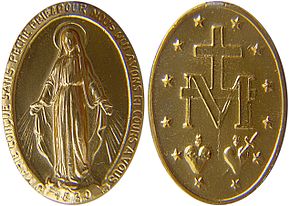
May 30- June 4 weekday homilies

May 30- June 4: Kindly click on https://frtonyshomilies.com/ for missed Sunday and weekday homilies, RCIA & Faith formation classes: May 30 Monday: John 16: 29-33: His disciples said, “Now you are talking plainly, and not in any figure of speech. 30 Now we realize that you know everything and that you do not need to have anyone question you. Because of this we believe that you came from God.”* 31 Jesus answered them, “Do you believe now? 32 Behold, the hour is coming and has arrived when each of you will be scattered* to his own home and you will leave me alone. But I am not alone, because the Father is with me. 3I have told you this so that you might have peace in me. In the world you will have trouble, but take courage, I have conquered the world

Context: Jesus is speaking to his apostles after the Last Supper.

Scripture lessons: In this Last Supper discourse, Jesus explains his Divine origin and his relationship to God his Father in clear terms without using any metaphors. The apostles acknowledge that they understand the Divinity of Jesus. But Jesus prophesies that they will soon desert him and seek their own safety, while he will be arrested, brought to trial and crucified. Our Faith is tested every day when we live in a world filled with agnostics, atheists, and pleasure-seekers who see true believers as superstitious people and hate them. That is why Jesus gave his apostles and all his future disciples the assurance of the anointing of the Holy Spirit Who would strengthen them and guide them. The Second Vatican Council teaches in connection with this passage: “The Lord Jesus who said `Be of good cheer, I have overcome the world’ (John 16:33), did not by these words promise complete victory to his Church in this world. This sacred Council rejoices that the earth which has been sown with the seed of the Gospel is now bringing forth fruit in many places under the guidance of the Spirit of the Lord, who is filling the world” (Presbyterorum Ordinis, 22).

Life messages: 1) Our Faith is firmly rooted in the Divinity of Jesus demonstrated by his Messianic miracles, most of which were foretold by the prophets. The Resurrection of Jesus is the Miracle of miracles proving Jesus’ Divinity beyond doubt. 2) We need to get our daily infusion of spiritual strength by recognizing the presence of God – the Father, the Son, Jesus, and the Holy Spirit — living within us wherever we are, and by communicating with our indwelling God in prayer. (Fr. Tony) (https://frtonyshomilies.com/)L/22

May 31 Tuesday: The Visitation of the Blessed Virgin Mary: Visitation of Blessed Virgin Mary: https://www.franciscanmedia.org/saint-of-the-day/visitation-of-the-blessed-virgin-mary Lk 1:39-56: Visitation: 39 In those days Mary arose and went with haste into the hill country, to a city of Judah, 40 and she entered the house of Zechariah and greeted Elizabeth. 41 And when Elizabeth heard the greeting of Mary, the babe leaped in her womb; and Elizabeth was filled with the Holy Spirit, …45 Additional reflections: Click on https://bible.usccb.org/podcasts/video; https://catholic-daily-reflections.com/daily-reflections/, & https://www.epriest.com/reflections

The context: The mystery of the Incarnation comes to ordinary people living ordinary lives, who have the willingness to respond to God’s call and the openness and generosity to do God’s will. Luke, in today’s Gospel, tells us how two seemingly insignificant women met to celebrate the kindness and fidelity of God. In the Gospel, one definition of discipleship is to listen to God’s word and then carry it out. Mary did both, to become the most perfect disciple. The incident also shows us how sensitive Mary was to the needs of Elizabeth, her older cousin, who had miraculously become pregnant in her old age.

Mary’s visit to Elizabeth. There is a saying, “One who is on fire cannot sit on a chair.” Mary, carrying Jesus and filled with the empowering fire of the Holy Spirit, hurried to the mountain country where Elizabeth lived, thereby conveying the Holy Spirit to her cousin and her child. Like all good Jews, Mary was prompted in everything she did by her commitment to God’s word in her life.

The paradox of blessedness. Blessedness confers on a person both the greatest joy and the greatest task in the world. Nowhere can we see the paradox better illustrated than in Mary’s life. Mary was granted the blessedness and privilege of being the mother of the Son of God. Yet, that very blessedness was to be a sword to pierce her heart: one day she would see her Son hanging on a cross. So, to be chosen by God is often both a crown of joy and a cross of sorrow. God does not choose us to give us a life of ease and comfort, but in order that we may respond to His love by accomplishing His purposes.

Life messages:1) We should recognize the real presence of Emmanuel (God Is with Us) and say “yes” to Him: The Visitation of Mary reminds us that, through his holy ministry, Christ continues to be present among his people. Let us recognize and appreciate the truth that the same Christ “dwells among us” in the Bible, in the Sacraments, in the praying community, and in our souls. 2) We should convey Jesus to others as Mary did to Elizabeth. We can make a real difference in the lives of others today by carrying Jesus to them. For that, we must be filled with the spirit of Christ, allowing his rebirth within us. Then Jesus will enable us to share his love with all whom we encounter, offering them humble and committed service, unconditional forgiveness, and compassionate caring service. Fr. Tony (https://frtonyshomilies.com/) L/22

June 1 Wednesday: St. Justin, Martyr: https://www.franciscanmedia.org/saint-of-the-day/saint-justin-martyr. May 19 Wednesday: John 17:11-19: 11 And now I am no more in the world, but they are in the world, and I am coming to you. Holy Father keep them in your name, which you have given me, that they may be one, even as we are one. 12 While I was with them, I kept them in your name, which you have given me; I have guarded them, and none of them is lost but the son of perdition, that the scripture might be fulfilled. 13 But now I am coming to you; and these things I speak in the world, that they may have my joy fulfilled in themselves. 14 I have given them your word; and the world has hated them because they are not of the world, even as I am not of the world. 15 I do not pray that you should take them out of the world, but that you should keep them from the evil one. 16 They are not of the world, even as I am not of the world.17 Sanctify them in the truth; your word is truth. 18 As you did send me into the world, so I have sent them into the world. 19 And for their sake I consecrate myself, that they also may be consecrated in truth. Additional reflections: Click on https://bible.usccb.org/podcasts/video; https://catholic-daily-reflections.com/daily-reflections/https://catholic-daily-reflections.com/daily-reflections/, & https://www.epriest.com/reflections

In today’s Gospel passage, taken from Jesus’ high-priestly prayer, Jesus prays in particular, for those disciples who are sharing the meal with him. Jesus prayed for the victory, unity, protection, and consecration of his disciples. (i) Jesus prayed that they might find victory by living out their Christianity in the rough-and-tumble of life. The disciples must win the world for Christ by living out their Christianity within the world. They must bear witness to Christ through their transparent Christian lives, reflecting Christ’s love, mercy, forgiveness, and spirit of humble service. (ii) Jesus prayed for the unity of his disciples. The world cannot be evangelized by competing Churches, and that is why Jesus prayed that his disciples might be as fully one as He and the Father are One. Christian unity is determined by whether and how well we love one another, and whether we reflect the love of God in Christ for the world. (Eph 4:4–6: … one body and one Spirit, just as you were called to the one hope that belongs to your call; d5one Lord, one faith, one baptism;e6one God and Father of us all, Who is above all and through all and in all).(iii) Jesus prayed for His Father’s protection for his disciples from the attacks of the Evil One. If the disciples of Christ fall, it is because they try to meet life with their own strength alone, and do not remember the presence of their protecting God and seek His help. (iv) Jesus prayed that his disciples might be consecrated in the truth. (a) ‘Consecrate’ means to set apart for a special task (Jer 1:5; Ex 28:41). (b) ‘Consecrate’ also means to equip a man with the qualities of mind, heart, and character which are necessary for that task. God has chosen us and dedicated us for His special service of loving and obeying Him ourselves and bringing others to do the same. He has not left us to carry out that great task with only our own strength, but by His grace He fits us for our task, if we place our lives in His hands.

Life message: 1):We need to understand, appreciate, cooperate with, and pray with and for each other: The denominations are a reality.There is no use in our blaming each other for the historical events which caused these divisions in Christ’s Body. What we can do is to learn sympathetically about the doctrinal similarities and differences among the members of our Christian community and learn to love each one and cooperate with the members of all denominations in all ways possible. 2) Let us pray fervently that God may show us how to proceed in building true and lasting Christian unity without sacrificing the basic Christian principles and teachings. Fr. Tony (https://frtonyshomilies.com/) L/22

June 2 Thursday: St. Marcellinus and Peter, Martyrs. https://www.franciscanmedia.org/saint-of-the-day/saints-marcellinus-and-peterJn 17:20-26 20 “I do not pray for these only, but also for those who believe in me through their word, 21 that they may all be one; even as thou, Father, art in me, and I in thee, that they also may be in us, so that the world may believe that thou hast sent me. 22 The glory which thou hast given me I have given to them, that they may be one even as we are one, 23 I in them and thou in me, that they may become perfectly one, so that the world may know that thou hast sent me and hast loved them even as thou hast loved me. 24 …26Additional reflections: Click on https://bible.usccb.org/podcasts/video; https://catholic-daily-reflections.com/daily-reflections/https://catholic-daily-reflections.com/daily-reflections/, & https://www.epriest.com/reflections

The context: Today’s Gospel passage is the concluding part of Jesus’ “High Priestly Prayer” in his Last Supper discourse. Here, Jesus prays for true unity among his followers who accept him as their Lord and Savior.

Divisions in Christianity: The first major division in Christianity, which took place in the fifth century, was the schism caused when the Eastern Orthodox Churches under the patriarchs separated themselves from the Western Church under the Pope. Next, the Protestant Reformation in the sixteenth century separated its followers from unity with the Church centered in Rome and freed them from her Authority. During the following five centuries, this separation resulted in the formation of more than 30,000 Protestant denominations. According to Pope St. Paul VI [canonized October 14, 2018 by Pope Francis] “the Church founded by Jesus Christ and for which he prayed is indefectibly one in Faith, in worship and in the bond of hierarchical communion” (Creed of the People of God, 21).

Jesus’ prayer for unity: In his prayer for unity among his disciples, Jesus mentions that the basis and criterion of unity must be the Unity of God in His Three Divine Persons among Whom there is eternal, mutual love and Self-giving. The unity of Jesus and his Father is a unity of love and obedience and a unity of personal relationship. Another reason for Christian unity is the union of the faithful with Jesus Christ in His Mystical Body by Baptism, and through Him with the Father (verse 23). This means that the fullness of Unity is attained through the supernatural grace, which comes to us from the Father through Christ (cf. Jn 15:5). Jesus declares that unity among the believers is essential if the world is to acknowledge Him as Lord and Savior, because the disunity among Christians acts as the biggest block for evangelization, as it offers living, constant counter-witness to the Good News of Redemption.

Life messages: 1) Since Jesus Christ himself left us his final wish for unity through his prayer to the Father: “that they may all be one; even as You, Father are in Me, and I in You, that they also may be in Us, so that the world may believe that You have sent Me” (Jn 17:21), it is our duty to pray and work for meaningful unity among Christians. 2) Let us learn to appreciate each other’s common beliefs and enter into genuine dialogue and cooperation with members of other Christian denominations, instead of accusing each other of heresy. We need to remember that the present non-Catholic Christians are not responsible for the historical events and actions from which the various denominations originated in the past. . (Fr. Tony) (https://frtonyshomilies.com/) L/22

June 3 Friday: St. Charles Lwanga and companions, Martyrs. https://www.franciscanmedia.org/saint-of-the-day/saint-charles-lwanga-and-companionsJohn 21:15-19:15 When they had finished breakfast, Jesus said to Simon Peter, “Simon, son of John, do you love me more than these?” He said to him, “Yes, Lord; you know that I love you.” He said to him, “Feed my lambs.” 16 A second time he said to him, “Simon, son of John, do you love me?” He said to him, “Yes, Lord; you know that I love you.” He said to him, “Tend my sheep.” 17 He said to him the third time, “Simon, son of John, do you love me?” Peter was grieved because he said to him the third time, “Do you love me?” And he said to him, “Lord, you know everything; you know that I love you.” Jesus said to him, “Feed my sheep. 18 Truly, truly, I say to you, when you were young, you girded yourself and walked where you would;..19 Additional reflections: Click on https://bible.usccb.org/podcasts/video; https://catholic-daily-reflections.com/daily-reflections/https://catholic-daily-reflections.com/daily-reflections/, & https://www.epriest.com/reflections

The context: This is a post-Resurrection apparition scene. After miraculously providing breakfast for his apostles who had been fishing all night, Jesus conferred on Peter the Primacy in his Church, which Jesus had promised as a reward for Peter’s profession of Faith (Mt 16:16-19).

The triple question: As if to give him a triple chance to atone for his triple denial, Jesus asks Peter, three times, “Simon, son of John, do you love me (agápe love) more than these?” Jesus asks Peter if he loves Jesus more than he loves his boat and fishing equipment, occupation, family, and friends. Jesus is also asking whether Peter loves him more than the other Apostles do. Instead of boasting of his own fidelity, strength, and greater love, as he had done before his triple denial of the Master, Peter humbly puts everything in Christ’s hands. “Lord, You know well that I love (philia love=love of a friend) You.”

The dual reward: 1) Primacy of jurisdiction over the Church was formally defined by the First Vatican Council (Vatican I) in the First Dogmatic Constitution “On the Church of Christ,” (Pastor Aeternus, Chapter 1) declaring, “We therefore teach and declare that, according to the testimony of the Gospel, the primacy of jurisdiction over the universal Church of God was immediately and directly promised and given to Blessed Peter the Apostle by Christ our Lord. […] And it was upon Simon Peter alone, that Jesus, after his Resurrection, bestowed the jurisdiction of chief pastor and ruler over all his fold in the words: ‘Feed My lambs; feed My sheep (Jn 21:15-17).’” 2) Peter was also given the promise of a martyr’s death because real love involves responsibility as well as sacrifice. According to Tradition, St. Peter followed his Master to the point of dying by crucifixion — head downwards, because he felt unworthy to die as Jesus had done. This happened during Nero’s persecution of the Christians, which took place between the years 64 and 68 in Rome.

Life messages: 1) We need to pray for the Pope, the successor of Peter, and for the bishops, the successors of the Apostles, and to support them in their ministry. 2) Jesus is a God of second chances Who gives chance after chance to sinners to return to his love, as is made clear by Jesus’ conferring primacy in his Church on he repentant Peter. (Fr. Tony) (https://frtonyshomilies.com/) L/22

June 4 Saturday:Jn 21:20-25: 20 Peter turned and saw following them the disciple whom Jesus loved, who had lain close to his breast at the supper and had said, “Lord, who is it that is going to betray you?” 21 When Peter saw him, he said to Jesus, “Lord, what about this man?” 22 Jesus said to him, “If it is my will that he remain until I come, what is that to you? Follow me!” 23 The saying spread abroad among the brethren that this disciple was not to die; yet Jesus did not say to him that he was not to die, but, “If it is my will that he remain until I come, what is that to you?” 24 This is the disciple who is bearing witness to these things, and who has written these things; and we know that his testimony is true. 25 But there are also many other things which Jesus did; were every one of them to be written, I suppose that the world itself could not contain the books that would be written. Additional reflections: Click on https://bible.usccb.org/podcasts/video; https://catholic-daily-reflections.com/daily-reflections/ https://catholic-daily-reflections.com/daily-reflections/, & https://www.epriest.com/reflections

Context: Today’s Gospel passage describes the role of Peter as the chief shepherd of Christ’s people and of John as a long-lived witness to Christ in the early Church. The last part of the passage was intended to correct the false notion in the early Church that John would not die until the much-expected, imminent “second coming” of Jesus.

Jesus’ reply: Jesus’ response implies that what is important is not to be curious about what the future will bring but to serve the Lord faithfully each day, keeping to the way He has marked out for one.

John’s testimony about his Gospel: The passage concludes with John’s testimony about the truth of the content of his Gospel. It also explains the purpose of John’s Gospel: to strengthen our Faith in what Jesus did and taught. In addition, it tells us that the written Gospels contain only a fraction of what Jesus taught and did, implying that we have to depend upon the Sacred Tradition of the early Church handed down to us by the early Fathers of the Church to complete the truth of the written testimony.

Life messages: 1) Just as Peter and John each had his unique role in Christ’s Church, so each believer, as a member of this Mystical Body of Christ, each of us with our different talents, strengths, weaknesses, and limits, has one’s own particular work to do in bringing the task of the Body – to bring the world to Christ and Christ to the world – to its completion. Hence it is our duty to bear witness to Christ by surrendering our lives to Christ on the altar of service for the people of God and by offering ourselves as humble instruments in the hands of Christ. . (Fr. Tony) (https://frtonyshomilies.com/) L/22

Easter VII Sunday (May 29th) when ascension is celebrated on 26th Thursday

Easter VII [C] Sunday (May 29)- One-page summary (L-22)

Introduction: Today’s readings are about people’s bearing heroic witness to Jesus through life and death, and the Source of the inspiration behind such witness-bearing. They urge us to work for greater Christian unity and to consider the power of Christian witness.

Scripture lessons: The first reading describes the martyrdom of Stephen, showing us how he bore witness to the forgiving love of Jesus by his last prayer. In the second reading, taken from the Book of Revelation, Jesus, the Alpha and the Omega, is pictured as having all the forces of Heaven and earth at his disposal, standing ready to help us in our Christian witness-bearing. It is relatively easy to acknowledge our oneness with Stephen and to long for the experience of eternal oneness with “all those who have washed their robes in the blood of the Lamb(Rv 22:14, Douay- Rheims). But to remain truly one with all of our brothers and sisters continues to be a daily challenge. Today’s Gospel is the last part of the “priestly prayer” of Jesus after the Last Supper. This chapter of John has been called “The Testament of Jesus” or “Jesus’ High Priestly (or Intercessory) Prayer.” During that long prayer, Jesus prayed first for himself – for his own glorification (vv 1-5) – as he faced the cross. Then, he prayed for his disciples that they might be unified and protected in the face of opposition from the world (vv 6-19), and finally he prayed for those in distant lands and far-off ages, including ourselves, who would enter the Christian Faith through the witness-bearing of the Apostles and their successors. Thus, this is Jesus’ prayer for each one of us. We have complete Faith and certainty because Jesus put his confidence in God and entrusted us to Him.

Life Messages: 1) We need to pray for unity and serve one another in unity. We must pray for unity and discuss the similarities we share with others as well as our differences. Along with prayer, we must put our words into action. This means that we are to serve one another and to love one another as brothers and sisters in the Lord. What unites us is greater than what divides us. As we move nearer to Jesus Christ, in him we move nearer to one another. Such unity is ultimately a gift of the Holy Spirit and of His guidance. The soul of the ecumenical movement then, is spiritual. Only by a renewal of the spiritual, by common prayer and common listening to the Word of God, can we hope to overcome the present ecumenical impasses and difficulties. In the words of Pope St. John Paul II: “The door to ecumenism is opened only on our knees.”

2) We need to have a clear idea about the Catholic stand on ecumenism. In his encyclical Ut Unum Sint, Pope St. John Paul II warns against compromise for the sake of unity. He states, “the ultimate goal of the ecumenical movement is to reestablish full visible unity among all the baptized [77.1].” He adds, “It is already possible to identify the areas in need of fuller study before a true consensus of Faith can be achieved.”

EASTER VII (May 29): Acts 7:55-60; Rv 22:12-14, 16-17, 20; Jn 17:20-26

Homily starter anecdotes: # 1: Fingerprints and DNA scanners: Fingerprints have long been recognized as a form of personal identification. As far back as the reign of the Babylonian King Hammurabi (1792-1750 BC), convicts were fingerprinted. In China as early as 246 BC, fingerprints were used to “sign” legal contracts. In 1788 a German anatomist, Johann Christoph Andreas Mayer, published findings which proved that fingerprints are unique to each individual. The idea caught on so fast that by the mid-nineteenth century, data banks of fingerprints were being collected all over the world for identification purposes. Now, as we know, micro-processors race and run at breakneck speed through millions of fingerprints in order to catch the bad guys or exonerate the good guys. Science has revealed other ways we are unique and singular. Our DNA is our own. Each cell of our body is genetically coded just for us. God made us in many ways wholly and totally different from one another. Yet, as Jesus offers up to the Father his own personal “Lord’s Prayer,” as given in today’s Gospel, he closes by praying for “oneness” among all those who follow him as disciples. Does this mean that Jesus prays for us all to be the same? Is this a call for “cloned Christians”? A franchise faith? A lemming life? A monotone mission? Is every follower of Jesus expected to keep the same pace, have the same stride, move to the same rhythm? Jesus was praying for generations of believers. The “oneness” that Jesus prayed for is a oneness of heart and a oneness of love. Oneness for Jesus is a love mark of hearts that have experienced the unity of Divine love – the unity of Father, Son, and Holy Spirit as they are poured out into the hearts of every disciple. As Christians, our DNA reads the same: we are all part of the Body of Christ. (https://frtonyshomilies.com/).

# 2: Unity by humble dialogue and loving interaction: If you have seen the academy award winning film Gandhi, you may remember the scene where Gandhi is caught in the middle of intense conflict between Muslims and Hindus. He defuses the situation by saying, “I am a Muslim, and a Hindu, and a Christian, and a Jew.” This is a wonderful attitude to take, so long as it affirms the unique identities and contributions of each tradition and so long as it is a recognition of unity amid diversity rather than a superficial homogenizing of the various faiths. As we noted on Ash Wednesday, Christians in particular may need to begin paying more serious attention to the other major religions of the world. Many folks are so ignorant of anything beyond the Judeo-Christian tradition that when they do run into another faith-system they are immediately swept off their feet and become infatuated. In the name of understanding and unity based on the grace of God, we surely need to avoid the attitude expressed by a group of parents who wanted The Diary of Anne Frank banned from the classroom because it seemed to approve of all religions without recognizing the superiority of Christianity. Ghandi’s sentiment is a great antidote to such, no doubt well-intentioned holier-than-thou-ism. The Charlton Heston movie El Cid (“The Lord”), illustrated both the horrible destructiveness of religious conflicts and the possibilities for overcoming religious-based hostility. The story of El Cid illustrates how the desire to win or claim other people for one’s Faith can become a prescription for cruel tyranny. Faith is shared through humble dialogue and by loving interaction, not by making claims and demands, although Jesus didn’t tell us to “Go, therefore, and ‘have dialogue’ with all nations,” but to “make disciples.” (https://frtonyshomilies.com/).

# 3: Wrong ecumenism in action? One day, a man was walking across a bridge and saw another man standing on the edge, about to jump off. He immediately ran to him and said, “Stop! Don’t do it!” “Well, why shouldn’t I?” he replied. The other said, “Well, there’s so much to live for!” “Like what”? “Well … are you religious or atheist?” “Religious.” “Me, too! And are you Christian or Jewish?” “Christian.” “Me, too! Are you Catholic or Protestant?” “Protestant.” “Me, too! Are you Episcopalian or Baptist?” “Baptist.” “Wow! Me too! Are you Baptist Church of God or Baptist Church of the Lord?” “Baptist Church of God.” “Me, too! Are you Original Baptist Church of God, or are you Reformed Baptist Church of God?” “Reformed Baptist Church of God.” “Me, too! Are you Reformed Baptist Church of God, reformation of 1879, or Reformed Baptist Church of God, reformation of 1915?” “Reformed Baptist Church of God, reformation of 1915!” To which he said, “Die, you heretic!” and pushed him off the bridge. (https://frtonyshomilies.com/).

Introduction: Today’s readings are about people’s bearing heroic witness to Jesus through life and death, and the Source of the inspiration behind such witness-bearing. They urge us to work for greater unity and to consider the power of Christian witness. The first reading describes the martyrdom of Stephen the Deacon and how he bore witness tohis Faith and the forgiving love of Jesus by his last prayers.In today’s Responsorial Psalm (Ps 97) the Psalmist prays that all creation may rejoice in the Lord Who is King, and that all peoples may see His Glory. In the second reading, taken from the Book of Revelation, Jesus, the Alpha and the Omega, is pictured as having all the forces of Heaven and earth at his disposal, standing ready to help us in our Christian witness-bearing. It is relatively easy to acknowledge our oneness with Stephen, and to long for the experience of eternal oneness with “all those who have washed their robes in the blood of the Lamb(Rv 22:14, Douay-Rheims). But to remain truly one with all of our brothers and sisters continues to be a daily challenge. Today’s Gospel is the last part of the “priestly prayer” of Jesus after the Last Supper. This chapter of John has been called “The Testament of Jesus” or “Jesus’ High Priestly (or Intercessory) Prayer.” During that long prayer, Jesus prays first for himself – for his own glorification (vv 1-5) – as he faces the cross. Then, he prays for his disciples that they may be unified and protected in the face of opposition from the world (vv 6-19), and finally he prays for those in distant lands and far-off ages, including ourselves, who will enter the Christian Faith. because of their witness-bearing. Thus, this is Jesus’ prayer for each one of us. We have complete Faith and certainty because Jesus put his confidence in God to whom he entrusts us all..

First reading, Acts 7: 55-60, explained: One of the purposes of Acts was to introduce Gentile converts to the Jewish roots of their new religion, and at the same time to explain Christianity’s separation from its ancestral tradition, and its openness to non-Jews. The story of Stephen’s martyrdom illustrates the point. Stephen’s vision of Jesus enthroned in Heaven, echoes the theme of the Feast of the Ascension. As in the case of Stephen, the Acts of the Apostles presents Christ’s disciples reproducing in their own lives some of the experiences of Jesus. By A.D. 80 when, some scholars believe, Luke wrote the Acts of the Apostles, Christians were almost sure that Christ’s “second coming” would be delayed. The delayed Parousia seems to be why Stephen, the first Christian to die looks up at the moment of death, sees “the Son of Man standing at God’s right hand,” and prays, “Lord Jesus, receive my spirit.” We might see Jesus coming in glory to receive Stephen’s spirit as an indication that each Christian, at the moment of death, will experience his or her personal Parousia. We no longer have to wait for Jesus’ Second Coming to enter into glory. That’s why Jesus, in Luke’s account of the Passion, assures the good thief, “This day you will be with me in paradise!”(Lk 23:43) An aspect of our Faith that is both reassuring and challenging is the fact that it is through us that the glory of the risen Jesus is revealed to others, just as it was in the martyrdom of Stephen. Stephen is a good example of Faith in the risen Jesus and of the power of Christian witness. In fact, the word “martyr” derives from the Greek word for witness. Stephen died as the consequence of his bold profession of Christian Faith.

Second Reading, Revelation 22, 12-14, 16-17, 20, explained: The Risen Jesus is celebrated here as the ground of unity and the reason for bearing witness (suffering martyrdom). The first readers of this book were facing life-and-death struggles with persecutors. Hence, the Book of Revelation was given by God to John to encourage them, and all of us when we are persecuted, and to convince them, and us, that the stakes are as high as they can be. What Stephen sees as a mere glimpse in the first reading is more fully described in the vision reported in the passage from Revelation. This crucified, and now glorious, Jesus, the Beginning and End of all things, can unreservedly promise us life because he has conquered death: “Let … the one who wants it receive the gift of life-giving waters” (Rv 22:17). Those joined to Jesus will be energized by the very power that flows from him. In promising martyrs that they will have the “right to the tree of life”(Cf Gn 3:21-24), John is telling us that, in Jesus, the ancient obstacle to eternal life has been lifted. John also gives the early Christians the assurance that Jesus is already present in their lives – (“realized eschatology”) to share their joys and sorrows.

Gospel exegesis: 1) Jesus prays for a unity of personal relationship. Unity is the main theme of Jesus’ prayer for the universal Church. He prays three times that all its members may be one as He and His Father are one, asking for the unity of the Church. Note the gradation in the intensity of unity for which Jesus asks:: in verse 21 he prays, “that they may all be one”; in verse 22, “that they may be one even as We are One”; and in verse 23, “that they may become perfectly one.” Christ’s plea does not concern human organizational or institutional unity among the 34,000 Christian denominations. Jesus wants the Church to be one in the very sense that there is oneness between Jesus and the Father. Quite obviously, the Oneness between Jesus and the Father is a oneness of Being, expressed as a complete unity of purpose and love. The mind of Jesus is that we cannot have unity with others unless we first have unity among ourselves as his disciples and, even more basic, that we cannot have this unity unless we have unity with God our Father in Christ by his Spirit. This means that Jesus prays for a unity of love among Christians, a unity based entirely our unity with Him, our living His Life, and on the relationship between heart and heart – God with us and we with each other. Jesus desires that Christian unity transcend all the present denominational differences and unite his followers in love. The Church must be one in the Spirit with its members, one in love and holiness. In addition to real theological and doctrinal differences, a major cause of Christian disunity today is that Jesus’ followers love their own ecclesiastical organizations, creeds, and rituals more than they love Christ. Only real Christian love, implanted by God in the hearts of Christians, can reconcile these real divisions and tear down the barriers that, over the centuries, have been erected among denominations. According to the Scriptures, God’s design for humankind is that we recognize that all of us are the children of God, and brothers to one another. This implies that we live in accord with this Divinely inspired insight—that we live in peace, harmony, and unity. Such a true spiritual unification is possible only through the work of the Holy Spirit.

2) Unity among Christians is necessary to convince the world of the truth of Christianity. Real unity among the Christians would stand as a supernatural fact requiring a supernatural explanation. It would have a strong witness value before non-Christians. Jesus actually makes this unity one of the most important signs of his mission. Faced with the disunity of Christians, the world cannot see the supreme value of the Christian Faith. Hence, it is our duty to demonstrate that unity of love with all our fellow Christians whatever their denominations and in spite of doctrinal differences. God’s glory is to be visible not in magnificent edifices or in structures of power, but in the love that unites Jesus’ followers among themselves and to God.

Jesus’ prayer for love and unity inspired Pope St. John XXIII in his desire to call a Council to help break down divisions among contemporary followers of Jesus. In his encyclical on ecumenism, Ut Unum Sint (1995), Pope St. John Paul II cites Jn. 17:21-22 at least five times, stressing that the unity “which the Lord has bestowed on his Church and in which he wishes to embrace all people…stands at the very heart of Christ’s mission” (No. 9), and he urges common prayer to overcome the “painful reality” of Christian division (No. 22). In the same encyclical, Pope St. John Paul II also gives three reasons for Christian unity – first, all Christians should be obedient to Christ’s prayer that “all may be one”; second, it is important to honor the call of the Second Vatican Council, and third, the effective evangelization of the world depends on the united witness of Christians, for division among Christian believers damages our credibility. The Pope does warn against the dangers of compromise for the sake of unity, for “compromise is a contradiction with God who is Truth [70.1].”

3) Why all Christian unity attempts failed? Hans Küng has included some of these admissions in his timely work entitled Global Responsibility (Crossroads Publishing Co., New York: 1991). 1-We have failed because we have not borne witness to God’s caring love for each and every creature. 2-We have failed because we have not overcome the divisions between the churches and have often used the authority and power given to us to strengthen false and limited solidarities like racism, sexism, and nationalism. 3-We have failed because we have caused wars or excused them and often too easily justified them. 4-We have failed to be mediators and reconcilers. 5-We have failed because we have not questioned decisively enough the political and economic systems which misuse power and riches, which exploit resources and perpetuate poverty and marginalization. 6-We have failed because we have regarded ourselves and our countries as the superior center of the world. We have failed because we have not borne constant witness to the sanctity and dignity of all life. (Sanchez Files).

4) Requirements for meaningful Christian unity: True union will not be achieved simply by recognizing and admitting failures. This being the first step, the acknowledgement of guilt must be followed by a deliberate and sustained process of radical change, change that begins in the mind and heart and will, and is authentically translated into words, works and daily continuing efforts. To that end, the participants in the meetings in Stuttgart (October, 1988), Basle (May, 1989), and Seoul (March, 1990), proposed that there be: (1) a new social world order in which there is not just freedom for all but also justice. This would require that all men and women would possess equal rights and live in solidarity with one another; (2) a pluralistic world order in which there is not just equality but a reconciled multiplicity of cultures, traditions and peoples, free of discrimination of any sort; (3) a world order in partnership wherein all men and women in church and society share responsibility at all levels and wherein all can freely contribute their gifts, insights, values and experiences; (4) a world order in which mere coexistence yields to authentic peace, mere competitive productivity yields to global sharing and solidarity, and mere tolerance yields to true ecumenism. However, new world orders cannot be imposed from without; any hope of arriving at global transformation must begin with initial efforts at the grassroots level. Therefore, Jesus’ prayer, “that all may be one,” challenges each of us to look, not across cultures, continents and oceans but into the mirror over the bathroom sink. (Sanchez Files).

5) Jesus has given us his glory. In his prayer for his followers, Jesus states that he has given his disciples the glory which the Father has given him. Jesus describes this glory in three ways. a) The Cross is his glory, and the crucifixion is the moment of his glorification by his Father. Hence, a Christian should consider the cross not as a penalty, but as an honor. We must regard difficulties as moments of glory given to us by God. b) Jesus considers his perfect obedience to the will of his Father as his glory. Thus, Christians are expected to find the real glory of life in doing God’s will. c) Jesus’ life is a demonstration of his special relationship with God, expressing God’s love, compassion, and forgiveness, thus giving Him glory. It is our glory when people around us see in us the reflection of Christ. God has given Christ the glory of Sonship, and this has resulted in Their unity. Jesus, in turn, gives to his disciples the glory of becoming the adopted sons of God (Gal 4: 5; Eph 1:5; Jn 1:12; 1 Jn 3:1). Jesus concludes his High Priestly prayer by promising us that if we share his sufferings on earth, we shall share his glory and triumph when our life on this earth is ended. As Paul put it, “If we have died with him, we shall also live with him. If we continue to endure, we shall also rule with him” (2 Timothy 2: 11-12). Jesus prays that we may be with Him, and that when we die we may share his glory.

Life Messages: 1) We need to pray for unity and serve one another in unity. We must pray for unity and discuss the similarities we share with others as well as our differences. Along with prayer, we must put our words into action. This means that we are to serve one another and to love one another as brothers and sisters in the Lord. Walter, Cardinal Kasper, President of the Pontifical Council for Promoting Christian Unity, writes: “Much has been achieved over the last decades. Separated Christians no longer consider one another as strangers, competitors, or even enemies, but as brothers and sisters. They have largely removed the former lack of understanding, misunderstanding, prejudice, and indifference; they pray together, they give together witness to their common Faith; in many fields they work trustfully together. They have experienced that ‘what unites us is greater than what divides us.’ Such a change was hardly conceivable only half a century ago; to wish to go back to those times would entail being forsaken not only by all good spirits but also by the Holy Spirit.” In the ecumenical movement, the question is the conversion of all to Jesus Christ. As we move nearer to Jesus Christ, in Him we move nearer to one another. Such unity is ultimately a gift of God’s Spirit and of His guidance.http://www.nccouncilofchurches.org/areasofwork/committees/christian_unity/sermon_mcbriar.htm – _edn9#_edn9. The soul of the ecumenical movement then, is spiritual. Only by a renewal of the spiritual, by common prayer and common listening to the Word of God, can we hope to overcome the present ecumenical impasses and difficulties.http://www.nccouncilofchurches.org/areasofwork/committees/christian_unity/sermon_mcbriar.htm – _edn10#_edn10. In the words of Pope St. John Paul II: “The door to ecumenism is opened only on our knees.”http://www.nccouncilofchurches.org/areasofwork/committees/christian_unity/sermon_mcbriar.htm – _edn11#_edn11

2) We need to have a clear idea about the Catholic stand on ecumenism. In his encyclical Ut Unum Sint, Pope St. John Paul II warns against compromise for the sake of unity. Quoting the Apostle Paul in Galations 3:28, he states that “the ultimate goal of the ecumenical movement is to reestablish full visible unity among all the baptized [77.1].” The Pope addresses the areas for study before a true consensus of Faith can be achieved: “It is already possible to identify the areas in need of fuller study before a true consensus of Faith can be achieved: 1) The relationship between Sacred Scripture, as the highest authority in matters of Faith, and Sacred Tradition, as indispensable to the interpretation of the Word of God. 2) The Eucharist, as the Sacrament of the Body and Blood of Christ, an offering of praise to the Father, the sacrificial memorial and Real Presence of Christ and the sanctifying outpouring of the Holy Spirit; 3) Ordination, as a Sacrament, to the threefold ministry of the episcopate, presbyterate, and diaconate. 4) The Magisterium of the Church, entrusted to the Pope and the Bishops in communion with him, understood as a responsibility and an authority exercised in the name of Christ for teaching and safeguarding the Faith; 5) The Virgin Mary, as Mother of God and Icon of the Church, the spiritual Mother who intercedes for Christ’s disciples and for all humanity [79.1].”

JOKES OF THE WEEK

1) A Catholic cat: A Catholic priest tells the story about receiving a call from a woman who was quite upset over the death of her pet cat, Homer. She wanted the priest to conduct the funeral service for Homer at her backyard. Imagine that?! The priest explained that this was a little out of his line, and he referred her to a friend, a Presbyterian pastor at a church down the street. Later, the priest learned that his Presbyterian friend had referred her to a Methodist minister, who had referred her to a Lutheran minister. About an hour later, she called her Catholic pastor back and she was still upset. The woman said she was at her wit’s end. She couldn’t find a pastor to conduct Homer’s funeral services and didn’t know what to do. Then she said that she was planning to give $1000 to the minister who performed this service for Homer. The pastor said it took him only a moment to mull this over and then say to her, “Well, why didn’t you tell me Homer was a Catholic cat in the first place!” — Ah, ecumenism at its best! In today’s Gospel Jesus prays for an entirely different type of unity of Christians.

2) Catholic crossing:  Paddy was in New York. He was patiently waiting and watching the traffic cop on a busy street crossing. The cop stopped the flow of traffic and shouted, ‘Okay, pedestrians.’ Then he’d allow the traffic to pass. He’d done this several times, and Paddy still stood on the sidewalk. After the cop had shouted, ‘Pedestrians!’ for the tenth time, Paddy went over to him and said, ‘Is it not about time ye let the Catholics across?’

STATISTICS ON WORLD RELIGIONS AND CHRISTIAN DENOMINATIONS

  1. Christianity: 2 billion (Christian denominations=over 34000)
  2. Islam: 1.3 billion, Hinduism: 900 million
  3. Secular/Nonreligious/Nones, Agnostic/Atheist: 850 million
  4. Buddhism: 360 million, Chinese traditional religion: 225 million
  5. primal-indigenous: 150 million, African Traditional & Diasporic: 95 million
  6. Sikhism: 23 million, Juche: 19 million, Spiritism: 14 million
  7. Judaism: 14 million, 8-Baha’i: 6 million, 9- Jainism: 4 million, 10-Shinto: 4 million

11-Cao Dai: 3 million, 12- Tenrikyo: 2.4 million, 13-Neo-Paganism: 1 million

14-Unitarian-Universalism: 800 thousand, 15- Rastafarianism: 700 thousand

USEFUL WEBSITES OF THE WEEK

1) Fr. Don’ collection of video homilies & blogs: https://sundayprep.org

 2) Video Sunday-Scripture study by Fr. Geoffrey Plant:

https://www.youtube.com/user/GeoffreyPlant2066

3) Dr. Brant Pitre’s commentary on Cycle C Sunday Scripture for Bible Class: https://catholicproductions.com/blogs/mass-readings-explained-year-c)      

4) http://www.searchingthescriptures.net/ (Non-Catholic)

10– Additional anecdotes:

1) “I know where to hide it.” This is a story by the Bombay-born, English writer, Rudyard Kipling (1865-1936). Once upon a time, when the gods were so new that they had no names and the first man was still damp from the clay of the pit from which he had been dug, he claimed that he too was a god. The gods weighed the evidence and decided that man’s claim was good. Having conceded man’s claim, the gods came by stealth and stole away his divinity, intending to hide it where he could never find it again. Various gods made various suggestions as to an appropriate hiding place, but they could not come to an agreement.  Finally, the wisest of the gods said, “I know where to hide it, give it to me.”  He closed his hand upon the tiny light of man’s stolen godhead, and when he opened his hand again, the light was gone.  “All is well,” said the god, “I have hidden it where man will never dream of looking for it.  I have hidden it inside man himself.” –Although Kipling’s fictional god was certain that the light of humanity’s godhead was hidden forever, ours is a God who wills that we know and rejoice in the wondrous discovery of the Godhead within us.  Today, Jesus reminds us that it is this light of Divinity within us that will enable us to receive and maintain the unity among the Christians for which he prayed. (https://frtonyshomilies.com/).

2) “They think they’re the only ones here.” There’s a story which many of you have heard and it is a fitting introduction for our text. A group of new arrivals in heaven met Saint Peter at the Pearly Gates. He began to show them around, pointing out areas of interest and filling them in on the rules of the kingdom. There were many “oohs” and “aahs” from the crowd, and they were obviously enjoying themselves immensely. Suddenly Saint Peter stopped a short distance from a massive building which was miles-wide, -long and -high, having no doors or windows. “While we pass this building,” he said, “you must walk quietly and utter not so much as a sound.” So the entourage tiptoed obediently past the monolith without a word. Once they were past, however, an inquisitive soul inquired, “Why did we have to be so quiet when we passed that building?” Saint Peter responded, “God put the Catholics [put your denomination here] in there. They think they’re the only ones up here.” (https://frtonyshomilies.com/).

3) One with God and one with one another: It is reported that Mahatma Gandhi, in his younger days, was impressed with Christianity. One Sunday in South Africa he went to a church, planning to ask the minister afterwards for instructions in the faith. But as he entered the building the ushers refused to seat him. “Why don’t you visit the colored peoples’ church?” he was asked. Gandhi never became a Christian. “If Christians also have differences, I might as well remain a Hindu,” he explained. —  Yes, we have differences — but in God’s strange math 1 + 1 + 1 = One. For those who believe that, their eyes look upon their neighbor in a whole new way. For those who believe that, their arms cannot help but reach out to join those who know the same math. For those who believe, God touches and blesses and makes them (us) one with him and with one another. (https://frtonyshomilies.com/).

4) Denominational traditions: At a large ecumenical gathering of religious leaders the fire alarm sounded. The Methodists gathered in a corner and prayed while the Baptists yelled “Where’s the water?” The Quakers quietly praised God for the blessing fire brings, while the Lutherans posted a notice on the door declaring fire to be evil. Catholics took pledges to cover the expenses. Christian Scientists agreed among themselves there really was no fire at all. The Pentecostals praised God and shouted “holy smoke.” Presbyterians appointed a committee to look into the matter and make a formal report at their next session meeting. In the meantime, the Episcopalians formed a procession and marched out of the building in decency and order. — It was the building maintenance man who brought the fire-extinguished and put out the fire. (https://frtonyshomilies.com/).

5) Opening of ourselves to God’s indwelling presence. Group magazine did a survey among junior high young people in youth groups across the U.S. They asked these young people to “describe the God you believe in.” These Junior High kids said things like: “He’ll always be there even when you don’t think he is . . . He’s not a man or woman he’s a spirit, a light that’s everlasting . . . Strong, powerful, loving, caring, forgiving, mysterious . . . The God who loves us no matter what we do the one, true God . . . Awesome. God is a 100% guarantee of a problem-free life.” (Don’t you wish!) Others said things like, “I believe in the God that sent his only Son to die on the cross . . . He loves all people even me . . . Kind, just, merciful, stern . . . Fun has a sense of humor . . . He wants me to obey him. (“Insight,” Sept./Oct. 1996, p. 16.) Those Junior High young people have a pretty good grasp on Who God is. — Certainly, God is all those things and more, and all of these are wrapped up in God’s glory. When the Holy Spirit is at work in our lives, our bodies house the living God. If God dwells in your life, then you have the glory. You see, the mistake we make is the assumption that glory comes from something we do, that glory is something we accomplish. That may be true in terms of what the world calls glory. But what God calls glory is simply the opening of ourselves to God’s indwelling presence. (https://frtonyshomilies.com/).

6) “Abide with Me” (hymn): Every January, the city of Delhi, India honors its president and government leaders with a ceremony called Beating Retreat. The centerpiece of the ceremony is an impressive marching display by the members of the military. The marching is highly stylized, and performed to the accompaniment of instruments, especially drums. However, everyone waits in eager anticipation for the finale of the Beating Retreat. Instead of a traditional Indian song, or a military tune, the finale of the Beating Retreat is a Christian hymn. In tribute to Mahatma Gandhi, the musicians play his favorite hymn, Abide with Me. Although most of the spectators, participants, and honorees in the ceremony are Hindu, Buddhist, or Sikh, the climax to the Beating Retreat is this sacred hymn, and it is played with respectful fervor. (Simon Winchester, “The Legacy,” August 1997, p.55.) –Gandhi knew that the glory did not belong with him, but with God. That is why he could sing, “Abide with me, fast falls the eventide; The darkness deepens; Lord, with me abide! When other helpers fail and comforts flee, Help of the helpless, O abide with me.” Glory is not something we can accomplish. It is a gift. All we can do is open our hearts to it. (https://frtonyshomilies.com/).

7) “Let’s go get it straightened out right now.” Jim Cymbala is the pastor of Brooklyn Tabernacle Church, a dynamic church in New York City. He started out with about 10 people and now there are over 6,000 people there. For 20 years now, Jim has been saying to every group of new members “Now I charge you that if you ever hear another member speak an unkind word of criticism, or slander against anyone — myself, an usher, a choir member, anyone else — stop that person in mid-sentence and say ‘Excuse me, who hurt you? Who slighted you? Let’s go get it straightened out right now,’ so God can restore peace and harmony to this body.” — Is it any wonder that he has 6,000 people in his Church now? God honors that kind of unity of spirit. God honors that kind of witness to the world. (https://frtonyshomilies.com/).

8) “It’s pretty tough being famous when nobody knows who you are.” Tony Campolo says that some years ago when his children were in their preteen years, he took them with him on a speaking engagement. When they drove into the parking lot adjoining the auditorium where, in just a few minutes, Tony was to speak, there were only three cars parked there. “Dad!” exclaimed his son, Bart, who at that point of his life was somewhat impressed with Tony’s role as a public speaker, “Nobody’s come to hear you! And you’re so famous!” “Come on, Bart,” responded his sister Lisa, who, Tony says, has always been the realist in the family, “if Dad is so famous, where are all the people?” “Knock it off, Lisa,” Bart answered back. “It’s pretty tough being famous when nobody knows who you are.” [Tony Campolo, Everything You’ve Heard Is Wrong (Dallas: Word Publishing, 1992), pp. 164-165.] —  That’s where most of us are. “It’s pretty tough being famous when nobody knows who you are.” Jesus didn’t promise that everybody would know our name. He just promised us glory. Evidently, what Jesus called glory was not what the world calls glory. And, maybe that’s just as well. Jib Fowles, a college professor and author, did a study of 100 stars from all fields of Hollywood entertainment, sports stars, musicians. He discovered that celebrities are almost four times more likely to kill themselves than the average American. “It’s . . . enormously stressful . . . ,” Fowles says. “There is unrelenting pressure coupled with diminishing private lives. They have to be on every time they step out their front door.” In fact, he found that the average age of death for celebrities, overall, was 58. The average for non-celebrities is 72 [Mary Loftus, “The Other Side of Fame,” Psychology Today (May/June 1995), p. 74.).] Is the world overlooking you? Maybe you are fortunate! (https://frtonyshomilies.com/).

9) We need people who can speak the language of the heart. Harold S. Kushner tells of an incident from his youth that made a distinct impression on him. A business associate of his father’s died under particularly tragic circumstances. Kushner accompanied his father to the funeral. The man’s widow and children were surrounded by clergy and psychiatrists trying to ease their grief and make them feel better. They knew all the right words, but nothing helped. They were beyond being comforted. The widow kept saying, “You’re right, I know you’re right, but it doesn’t make any difference.” Then a man walked in, a big burly man in his eighties who was a legend in the toy and game industry. He had escaped from Russia as a youth after having been arrested and tortured by the Czar’s secret police. He had come to this country, illiterate and penniless, and had built up an immensely successful company. He was known as a hard bargainer, a ruthless competitor. Despite his success, he had never learned to read or write. He hired people to read his mail to him. The joke in the industry was that he could write a check for a million dollars, and the hardest part would be signing his name at the bottom. He had been sick recently, and his face and his walking showed it. But he walked over to the widow and started to cry, and she cried with him, and you could feel the atmosphere in the room change. This man who had never read a book in his life spoke the language of the heart and held the key that opened the gates of solace where learned doctors and clergy could not. [Harold S. Kushner, When All You’ve Ever Wanted Isn’t Enough (New York: Summit Books, 1986).] — We need people who can speak the language of the heart. We need persons within the community of Christ to whom we feel especially close. There will come a time when we will need to reach out to them for comfort. There will be times they will need to reach out to us. Jesus’ first prayer is for our unity with one another. (https://frtonyshomilies.com/).

10)  “Get me to the Mustangs’ playoffs. No matter what.” In Yakima, Washington, some time, back a dying man made a strange request. On his deathbed, Grant Flory said to his family: “Get me to the Mustangs’ playoffs. No matter what.” He was referring to his old high school team, The Prosser Mustangs. So in early December, when the Mustangs played in Seattle’s Kingdome, Flory’s cremated remains were in attendance. His son Dwight approached the stadium gate wearing a camera bag that contained his father’s urn. He was stopped by a guard who asked what was in the bag. “It’s my dad,” he replied. The guard looked puzzled but allowed the ashes inside. Family members said anyone who knew Grant Flory wouldn’t be surprised by his request. He was a real football fan. — It is the dream of every pastor to have a congregation filled with people who are that determined to be at the Eucharistic celebration every Sunday to recharge their spiritual batteries, to pray for and realize Jesus’ dream of Church unity as he expressed in today’s Gospel. (https://frtonyshomilies.com/).

11) A young man named Saul: When St. Stephen the deacon was arrested by the Sanhedrin for preaching that Jesus was the Messiah, he was stoned to death for “blasphemy”. Though Saul threw no stones, he volunteered to watch the cloaks of the executioners, and thus became an accomplice in Stephen’s martyrdom (Acts 7: today’s second reading). Not long afterward, however, Our Lord appeared to Saul on the road to Damascus and called him into His service. Thus, Saul the lyncher turned into St. Paul the Apostle.

Paul was not the only terrorist in history who had a radical change of heart. Joseph Picot de Limoelan (1768-1826) was a Frenchman who attended the Royal Military School in Paris and received his military commission just before the outbreak of the French Revolution in 1789. Being a royalist by conviction, he resigned from the French Army and joined as a Major-General the insurgent army that battled the revolutionary government. When Napoleon Bonaparte became head of the revolutionary government, Joseph did not hesitate to conspire to assassinate him. On December 24, 1800, he and his fellow conspirators rigged up a cart full of explosives intended to kill Napoleon when he came by. This “infernal machine” did explode, but Bonaparte was untouched. Limoelan then took flight to Savannah, Georgia under the name of Joseph Picot de Cloriviere. As an exile, Joseph began to realize that violence solves nothing, and that he was called to higher things. So he entered the seminary at Baltimore, and on August 11, 1812, he was ordained a priest of the Archdiocese of Baltimore. His first assignment was a difficult one. He had to hold at bay the Irish leaders of St. Mary’s, Charleston, S.C. who were battling their archbishop. In 1818 Archbishop Marechal finally appointed the 51-year-old priest to a quieter post – the chaplaincy of the Visitation Convent at Georgetown. Here he was able to do solid priestly work. He spent much of his own money on Georgetown Visitation Convent, the oldest Catholic girl’s school in the original United States. He also helped found St. Joseph’s School in Washington. The lion had indeed become a lamb, as Saul had become St. Paul. (Father Robert F. McNamara). (https://frtonyshomilies.com/). L/22

 “Scriptural Homilies” Cycle C (No. 34) by Fr. Tony: akadavil@gmail.com

Visit my website by clicking on https://frtonyshomilies.com/ for missed or previous Cycle C homilies, 141                   Year of FaithAdult Faith Formation Lessons” (useful for RCIA classes too) & 197 “Question of the Week.” Contact me only at akadavil@gmail.com. Visit also https://www.catholicsermons.com/homilies/sunday_homilies  under Fr. Tony’s homilies and  under Resources in the CBCI website:  https://www.cbci.in  for other website versions.  (Vatican Radio website: http://www.vaticannews.va/en/church.html uploaded my Cycle A, B and C homilies in from 2018-2020)  Fr. Anthony Kadavil, Chaplain, Sacred Heart Residence of the Little Sisters of the Poor, 1655 McGill Ave, Mobile, AL 36604 .