All posts by Webmaster

O. T. XXVI (A) Sunday homily Oct 1, 2023

OT XXVI [A] (Oct 1) Sunday (Eight-minute homily in one page) L/23

Introduction: What will decide our eternal reward or punishment? Our final decision for or against God — our choosing to obey Him gracefully by doing His will or our choosing to go against His will! Gifted with free will, we are the ones who choose our eternal destiny. (You may add an anecdote).

Scripture lessons summarized: In the first reading, Ezekiel, corrects two incorrect Jewish beliefs i) Children inherit the guilt of their ancestors and are punished for their sins. ii) God is more strict than merciful. Jesus explains through the gospel parable that God will punish us only for our sins and that God’s mercy overrules strict justice.Today’s Responsorial Psalm (Ps 25) appeals to God’s compassion and mercy, begging Him to wipe away our sins and to extend mercy to us. The second reading: Our final choice for God, made by perfect obedience to Him, will be rewarded. Example: It is because of Christ’s perfect obedience to God’s will in “emptying himself, taking human form” and humbling himself by accepting “even death, death on a cross,” that God the Father “exalted Christ, bestowed on him the Name above every other name,”and made Jesus the recipient of universal adoration.

In today’s Gospel parable, a man with two sons tells both to go out to work in the vineyard. The first son says he will not go, but later he regrets his refusal and goes to work. He represents tax collectors and public sinners who refused to obey God’s commandments, but, after listening to John the Baptist and Jesus, repented and became eligible for eternal reward. The second son says that he will go but does not. He represents the chief priests and the elders, the Scribes, and the Pharisees. By their pride, and their refusal to obey God’s call to repentance through John the Baptist and Jesus, these so-called “religious” people excluded themselves from eternal reward. The lesson taught: The necessity for offering a continual “yes” to the saving act of God. Even when we say no, God gives us many chances of conversion, repentance, and doing His will.

Who are these two sons at present? The first son: 1) A repentant alcoholic, drug addict, chronic gambler sexual-deviant. 2) Members of a poor village parish who reach out to the needy in the community. 3) A Pastor who calls parishioners to true repentance. 4) A Church member who decides to tithe or a young person who decides to remain abstinent until marriage. All these choose to obey Christ sacrificially. The second son 1) A regular church goer who refuses Christ, entry into his or her heart and life and lives a pagan life on weekdays. 2) A Christian who refuses to obey Christ in the sensitive areas of sex, money, and power. 3) A priest whose sermon is designed to please people rather than to please God. 4) A Church that ignores issues of justice and mercy. 5) A Sunday School that neglects to teach children the great Biblical stories — in short, all people who appear to be faithful but, deep down in their hearts, are not.

Life messages: (1) We need to do God’s will every day: Each one of us is responsible to God for every action, and the just God will punish or reward one according to one’s actions. Since we are not sure about the moment of our death, our only guarantee of dying in God’s friendship is to live in that friendship always, saying “Yes,” to God by doing His will cheerfully and daily.

2) It is never too late for us to repent, be converted, and allow the Holy Spirit to renew our life: If we have been disobedient to God in our past life, we need to knock at the door of God’s mercy. God can, and will, do for us what, in his mercy, He, did for the repentant tax-collectors and harlots in the parable. Hence, every morning we must pray for the strengthening power of the Holy Spirit to do God’s will and every night we need to repent of our sins and ask God’s pardon and forgiveness. May the huge number of Covid deaths serve us aa a strong warning that we may not get a chance to be anointed before our death. If we are in serious sin we needto get reconciled with God, the Church and our brothers and sisters through the Sacrament of Reconciliation as soon as possible. Let us remember that it is never too late for us to turn back to God, ready to do His will.

OT XXVI [A] (Oct 1) Ez 18:25-28; Phil 2:1-11; Mt 21:28-32  

Homily starter anecdotes: 1) Tell that woman that I want her here in the White House.” Professor John Kenneth Galbraith, the world-famous Harvard economist and author of four dozen books and over a thousand articles, also served as economic advisor to four American presidents. In his autobiography, A Life in Our Times, Galbraith illustrates the devotion of Emily Gloria Wilson, his family’s housekeeper: “It had been a wearying day, and I asked Emily to hold all telephone calls while I had a nap. Shortly thereafter the phone rang. President Lyndon Johnson was calling from the White House. “Get me Ken Galbraith. This is Lyndon Johnson.” “He is sleeping, Mr. President. He has instructed me not to disturb him.” “Well, wake him up. I want to talk to him.” “No, Mr. President. I work for him, not you.” — When I called the President back, he could scarcely control his pleasure. “Tell that woman that I want her here in the White House!”  Today’s Gospel reminds us that perfect and graceful obedience to God is real love, and so is more rewarding than reluctant obedience. (https://frtonyshomilies.com/).

2) Blind obedience:  How we admire the obedience a dog shows to its master! Archibald Rutledge, the American storyteller wrote that one day he met a man whose dog had just been killed in a forest fire. Heartbroken, the man explained to Rutledge how it happened. Because he worked outdoors, he often took his dog with him. That morning, he left the animal in a clearing and gave him a command to stay and watch his lunch bucket while he went into the forest. His faithful friend understood, for that is exactly what he did. Then a fire started in the woods, and soon the blaze spread to the spot where the dog had been left. But he did not move. He stayed right where he was, in perfect obedience to his master’s word. Later with tearful eyes, the dog’s owner said, “I always had to be careful what I told him to do, because I knew he would do it.” — This, and more, is the kind of obedience to which Christ has called us. The short parable in today’s Gospel illustrates what true and graceful obedience is. (https://frtonyshomilies.com/).

3) Not doing something that was promised:  The Center for Creative Leadership in Greensboro, North Carolina, released a study of twenty-one high-potential executives who were terminated or forced to retire early from their companies. The one universal character flaw which always led to downfall was not doing something that was promised. Motivational speaker Cavett Robert learned from an English professor long ago that “character is the ability to carry out a resolution long after the mood in which it was made has left you.”  — The second son had good intentions, but he never made it to the vineyard. Dale Carnegie said that one of the most tragic characteristics of human nature is that all of us tend to put off living. We are all dreaming of some magical rose garden over the horizon – instead of cultivating the roses that are blooming outside our windows today. (https://frtonyshomilies.com/).

4) Trouble under obedience: “A companion of Francis of Assisi, Brother Juniper is remembered as a ‘fool for Christ,’ and there are all sorts of wild stories about his antics. He was notorious for constantly giving his possessions away and living with a winsomeness that sometimes got him in trouble. At one point he was ordered by a superior not to give away his outer garment to the beggars anymore. But it wasn’t long before he met someone in need who asked him for some clothing. He said, “My superior has told me under obedience not to give my clothing to anyone. But if you pull it off my back, I certainly will not prevent you.” (Another version: “I can’t give, but you can take.”) Fr. Tony Kayala. (https://frtonyshomilies.com/).

Introduction: Today’s Scripture passages warn us that it is our final decision for or against God that is most important because we are rewarded or punished according to it. In the first reading, Ezekiel’s message from the Lord God to Israel answers the objections of those who think it is not fair that God should give such weight to one’s final decision because a person who, after a very long virtuous life, finally chooses sin will be punished, while another, who finally chooses virtue after a life of loose morals, will be rewarded. Today’s Responsorial Psalm (Ps 25), appeals to God in His compassion and mercy, begging Him to wipe away our sins and extend mercy to us. The second reading, taken from Paul’s Letter to the Philippians, also affirms the truth that the final choice for God, made by perfect obedience to Him, will be rewarded. Paul emphasizes the fact that, because of Christ’s obedience to God’s will, emptying himself, taking human form and humbling himself by accepting death on a cross, that God the Father exalted Christ, bestowed on him the Name above every other name, and made Jesus the recipient of universal adoration. In today’s Gospel parable, a man with two sons tells both to go out to work in the vineyard. The first son says he won’t go, but later regrets it and works.  The second son says he will go but does not. In each case, it is the final decision that is more important. Jesus says, that repentant tax-collectors and prostitutes, represented by the first son who initially refused to go, will make their way into the Kingdom of God before the chief priests and the elders, represented by the second son in the parable.

The first reading (Ez 18:25-28) explained: In chapter 18, the Lord God, through His prophet, Ezekiel, challenges two old beliefs common among His people: that children inherit the guilt of their ancestors and are punished for it, and that God is more strict than merciful. Here, the Lord God declares His option for personal responsibility, which means one is to be rewarded or punished according to one’s individual actions, not for someone else’s. In today’s passage, Ezekiel answers the objection raised by the Jewish slaves in Babylon, “Our ancestors sinned, but we are punished, and so God is not fair!” God’s message is that His mercy overrules strict justice, and He doesn’t hold our past against us. Hence, if God is “not fair,” it is to our advantage, because He doesn’t hold the past against us and always gives us another chance. In the same chapter of Ezekiel, God returns this “not fair” accusation, asking the House of Israel if their ways are “fair” when they turn from God’s love to serve false gods and their own false sense of what life is.

We often think that it is not fair for God to reward or punish one based only on one’s final option for God or against God, without considering one’s lifetime indulgence in vices or lifetime practice of virtues. The prophecy’s response is that God always gives people a chance to change and to accept the consequences of that change. The Lord further explains that that it is possible for a wicked person to renounce his sins, begin respecting God’s law, and live an upright life. Such a person will not die but live, and God will not remember any of his crimes against him. Likewise, it is possible for a good person to turn away from uprightness and to forfeit the favor of God and neighbor. Such a person’s past good deeds will be “forgotten from then on,” and he shall die for his sins, — unless, of course, he repents and turns back to God. The Good News is that God is always ready to forgive; we need only show willingness to accept God’s forgiveness through our forgiveness of each other. Can one who “denies one’s Faith” ever come back into the Church? Yes. This issue confronted Pope Cornelius in the 3rd Century, and he called a Synod of Bishops to proclaim that an apostate who, after the persecution ends, truly repents, changing his mind and his way of life, can be readmitted to the Church community after receiving the Sacrament of Reconciliation and doing penance.

The second reading (Phil 2:1-11) explained: Here, citing Jesus as the supreme model of obedience to the Father’s will, St. Paul also affirms the truth that those who make the final choice for God will be rewarded. Using lines from a hymn of early Christian belief which existed long before Paul penned his letter to the Philippians, the Apostle reminds his community of their obligation to look to others’ interests rather than their own (Phil 2:1-11). As the hymn states, they need only take Jesus as their model for such behavior, because Jesus obeyed his Father completely, emptying himself, taking human form and humbling himself by accepting death on a cross. Paul emphasizes the fact that it is because of Christ’s loving obedience to the Father’s will that God the Father exalted Christ, bestowed on him the Name above every other name, and made Jesus the recipient of universal adoration. The message is that if we are united with Christ in his faithful obedience to God, we will also share his glory. Paul adds that such faithfulness and obedience to God demand that “we do nothing out of selfishness or vainglory.” Instead, we should “humbly regard others as more important” than ourselves, “each looking out not for his own interests, but also for those of others.” The hymn exemplifies the “mind” of Christ that we must “put on” when we face each other, which means that we will find unending joy and consolation only when we die to ourselves.

Gospel exegesis: The context: Jesus has now entered Jerusalem, the scene of all the Passion events he has predicted. When he reaches the Temple – the most religiously sensitive area for all of Judaism – Jesus becomes furious and drives out the merchants and moneychangers (Mt 21:12). It is not surprising, then, that the “chief priests and elders” should show great concern and great caution about Jesus’ presence in the Temple. That is why Jesus addressed this parable to those (v. 23) who approached him while he taught in the Temple and asked for his credentials: “By what authority are you doing these things, and who gave you this authority?” The parable of the two sons serves Jesus as a master strategy for defending his honor and presenting a counterchallenge to his adversaries. The purpose of this parable was to give a wake-up call to the chief priests and elders. The parable hints that their position as leaders of the Chosen People and their observance of Mosaic Law give them no guarantee that they will possess the Kingdom of God. Rather, because of their pride and their refusal to obey God’s call to repentance, they will exclude themselves from that Kingdom, while the tax-collectors and sinners, whom they despise, repenting of their sins and obeying Him, will be welcomed by Him into the Kingdom.

The parable and its meaning: Barclay calls this parable “The Better of Two Bad Sons.” Jesus presents us with a vineyard owner who has two sons. Both sons are asked by their father to go and work in his vineyard. The first son, when asked, says, “No.” He later changes his mind and goes. The second says “Yes, sir,” but does not go. Jesus then asks his listeners which of the two did the father’s will. They answer, “The first”, and their correct answer strengthens Jesus’ case against them. The message of the story is crystal clear. There are two very common classes of people in this world. First, there are those like the parable’s first-asked son, whose practice is far better than their profession. Second, there are the people like the second-asked son, whose profession is much better than their practice.   While the first class should be preferred to the second, neither is anything like perfect, because the really good man is the man in whom profession and practice meet and match. The ideal son in this parable would be one who accepted the father’s orders with grace and respect and who unquestioningly and fully carried them out as Jesus obeyed his Father’s orders. The only sign of belonging to the kingdom is faithfulness to the will of God.

This parable underlines the necessity of our responding with a continual “yes” to the saving act of God. Further, this parable teaches us that promises can never take the place of performance, and fine words are never a substitute for fine deeds. In other words, the parable clearly teaches that the Christian Way is followed in performance, not in promise alone, and that the mark of a Christian is obedience, graciously, promptly, and courteously given.  That is, we are not supposed to say “yes” to God on Sundays and “no” to God on weekdays. God does not want polite but hypocritical words, for that isn’t obedience at all. “Merciful and quick to forgive,” God tolerates willful, even blasphemous disobedience, provided repentance follows. God remains faithful, always ready to receive repentant sinners. He never abandons us even when we abandon Him. The parable teaches us that there are indeed two conditions for entering the Kingdom of God. One of these is giving up sinful ways. The second condition is believing the words of Jesus, and then acting accordingly. In both cases, or conditions, the emphasis is on the response of the listener to the word of God.

The twofold application of the parable: (1) This parable, found only in Matthew, outlines two responses to God’s call.  The first son says, “I will not,” but changes his mind and does what is needed.  The second son says, “I go, sir,” but does not go.  Verses 31-32 make it clear that the repentant tax collectors and prostitutes are seen in the first son, and the second son signifies the self-righteous among the chief priests and elders.  When John the Baptist called people to repent, tax collectors and prostitutes repented and were baptized.  It was easy for them to repent, because their sins were obvious, even to themselves.  The religious leaders, however, were not able, or ready, to admit their need for repentance, and therefore they rejected John and his call.  So also, they rejected Jesus.  We are reminded of Jesus’ words earlier in this Gospel, “Not everyone who says to me, ‘Lord, Lord,’ will enter the Kingdom of Heaven, but only the one who does the will of my Father in Heaven” (7:21). The life-saving difference between the two sons was the fact that one had the good sense to remember the love of his father, to turn from evil and decide to do what was right.

(2) Today, the first son, the faithful son, has still another face — a repentant alcoholic, a small band of worshipers in a storefront, a Church that reaches out to the needy in its community, a Pastor who calls parishioners to true repentance, a Church member who decides to tithe, a young person who decides to remain abstinent until marriage — all people who, however reluctantly or painfully, obey Christ.  The second son is now the person in the pew who refuses Christ entry into his or her heart and life — a Christian who refuses to obey Christ in the sensitive areas of sex, money, and power; a Preacher whose sermon is designed to please people rather than to please God; a Church that ignores issues of justice and mercy; a Sunday School that neglects to teach children the great Biblical stories — in short, all people who appear to be faithful but, down deep, are not.

Life messages: 
(1) We each need to lead a responsible Christian life, saying “yes” to God. Each one of us is responsible to God for every one of our actions, and the just God will punish or reward each of us according to our actions.  As we do not know at what moment death will take us, our only guarantee of dying in God’s friendship is to live in that friendship always, saying “Yes” to God in our deeds. We should become men and women who profess our Faith in word and deed, remembering that, “Not all those who say to me, ‘Lord, Lord,’ will enter the Kingdom of Heaven, but those who do the will of my Father Who is in Heaven” (Mt 7:21). God is ever with us to strengthen us, to pardon us, and to lift us up again when, through human weakness, we stumble on the road. God is calling us right now, inviting us to work in His vineyard, inviting us to say “Yes” to Him with our words and actions. Let us accept God’s invitation by purifying our hearts in the Sacrament of Reconciliation; by resolving to act upon our promises each morning before we get out of bed; and by declaring interiorly that people will be able to identify us as followers of Christ, not by empty words or pious gestures but simply by our Christian actions. In this way, we shall live a life filled with the joy that doing the will of the Father brings.

2) Instead of trusting in lame excuses, we need to seek God’s mercy.  We often use flimsy excuses to silence our conscience. They run like this: “I didn’t realize how sinful I was”; “I was just too busy with work, family, and a decent social life to have time for Sunday Mass”; “That’s what all my family does – it’s got to be OK!” ; “The devil made me do it – it wasn’t my fault!”; ””I couldn’t be different from everyone else—I’d look stupid!”; “I meant to straighten things out – I just didn’t get to it.” These are not valid excuses at the judgment seat of God. Hence, if we have been disobedient to God in our past life, we need to knock at the door of God’s mercy now. We need to remember that what God in his mercy did for the tax-collectors and harlots in the parable, the Matthews, the Augustines, the Margarets of Cortona, and the millions of unknown penitents who are now Saints in Heaven, He can, and will, do for us, if we repent of our past sins and renew our lives as the first-asked son in the parable did. It is never too late for us to be transformed.

JOKES OF THE WEEK:  

1) A Non-Catholic Minister recently quit the ministry after more than 20 years of faithful, dedicated service and became a funeral director. When asked why he had changed vocations, he said: “I spent 10 years trying to straighten out John and he’s still an alcoholic. Then I spent three and one-half years trying to straighten out Harold and Susan’s marriage problems and they ended up getting a divorce. Later I tried for two years to help Bob kick his drug habit and he is still an addict. Now, at the funeral home, when I straighten them out, they stay straight! Perfect obedience!”

2) One night an Admiral on a US Navy Battleship ordered a certain course. The navigation officer, seeing a light in the distance, reported that the battleship now seemed to be on a collision course with another ship. So, the Admiral ordered his radio officer to send a message to the on-coming ship that it should change its course 10 degrees to the south. The reply came simply, “Change your course 10 degrees to the north.” After two more unsuccessful exchanges, the Admiral, now quite furious, came thundering into the radio control room, grabbed the microphone, and bellowed into it, “Do you know that you are talking to an ADMIRAL in the UNITED STATES NAVY?!” After a brief moment of silence, the even-tempered reply came back, “This is a lighthouse; alter your course 10 degrees to the North.” — So, when God’s Word asks us to do something, and we wonder why, we need to remember Whom we’re talking to! If we want to avoid disaster in this life and the next, we really need to obey His orders!

 USEFUL WEBSITES OF THE WEEK (For homilies & Bible study groups) (The easiest method  to visit these websites is to copy and paste the web address or URL on the Address bar of any Internet website like Google or MSN and press the Enter button of your Keyboard).

1) Fr. Nick’s collection of Sunday homilies from 65 priests & weekday homilies: https://www.catholicsermons.com/homilies/sunday_homilies

2) Fr. Don’ collection of video homilies & blogs: https://sundayprep.org/featured-homilies/ (Copy it on the Address bar and press the Enter button)

3) Fr. Geoffrey Plant’s beautiful & scholarly video classes on Sunday gospel, Bible & RCIA topics https://www.youtube.com/user/GeoffreyPlant20663)

4) Dr. Brant Pitre’s commentary on Cycle A Sunday Scripture for Bible Class: https://catholicproductions.com/blogs/mass-readings-explained-year-Biblical basis of Catholic doctrines: http://scripturecatholic.com/

5) Agape Catholic Bible Lessons: http://www.agapebiblestudy.com/Bible base of Catholic teaching: http://www.catholic.com & http://socrates58.blogspot.com/

6)     The only Catholic TV in the Internet:  http://www.realcatholictv.com/

7)     No religion, no democracy: Harvard Law professor

http://www.youtube.com/watch?feature=player_detailpage&v=YjntXYDPw44

8)     https://youtube/8tRAOZGACa8

9)     http://www.textweek.com/mtlk/matt21b.htm

10)     https://www.sermons4kids.com/index.htm

11)     http://www.sermonsfromseattle.com/series_a_two_sonsGA.htm

12)     Video Sunday-Scripture study by Fr. Geoffrey Plant: https://www.youtube.com/user/GeoffreyPlant2066

34- Additional anecdotes

1) Rigorous Arabian horse training: Arabian horses go through rigorous training in the deserts of the Middle East. The trainers demand absolute obedience from the horses and test them to see if they are completely trained. The final test is almost beyond the endurance of any living thing. The trainer forces the horses to do without water for many days. Then he turns them loose and of course they start running toward the water, but just as they get to the edge, ready to plunge in and drink, the trainer blows his whistle. The horses who have been completely trained and who have learned perfect obedience stop. They turn around and come pacing back to the trainer. They stand there quivering, wanting water, but they wait in perfect obedience. When the trainer is sure that he has their obedience he gives them a signal to go back to drink. — Now this may be severe but when you are on the trackless desert of Arabia and your life is entrusted to a horse, you had better have a trained, obedient horse. We must accept God’s training and obey Him in words and deeds as demanded by the short parable in today’s Gospel. ((https://frtonyshomilies.com/).

2) For ladies only: The old television show Candid Camera had a classic episode in which two telephone booths were placed next to each other. One booth was labeled “Men” and the other “Women.” As the camera recorded the scene, no one who used the booths violated the signs. Men used only the booth labeled for men, and women used only the booth labeled for them. Even when there was a line for the men’s booth and the women’s booth was empty, no man used the women’s booth. There’s this story from the New York Post. On November 30, 1971, five heavily armed men shot out the glass doors of a New York bank and entered the bank firing automatic weapons, wounding twelve people. One of the bank tellers ran from the robbers and made it to an upstairs women’s restroom. One gunman chased her, but he stopped at the door to the ladies’ room, shouting at her to come out. When she refused, he went downstairs to help his colleagues finish robbing the bank. He might be a murderer and a thief, but he would not enter a women’s restroom. [William Lutz, The New Doublespeak (HarperCollins Publishers, 1996).] — Americans are basically tuned to obey the rules. But there is a problem of motivation. Their sins are generally ones of omission. They are like the young man in today’s Gospel who had good intentions. The problem was putting those good intentions into action. (https://frtonyshomilies.com/).

3) The speed of light: William Tarbell was explaining the consequences of light’s traveling at 186,000 miles per second. “It means the starlight shining in your window left the star about the time Shakespeare was writing his plays. The light has been traveling all that time to reach you and provide its light. In the same way, the work of the first disciples still influences you. Centuries ago, men and women were commissioned to make disciples of all nations. Although they have been dead for almost two thousand years, the effect of their work has traveled through history and touched us. It is felt in our lives and in our Churches today.” [Dr. William P. Barker, Tarbell’s, (Elgin, Illinois: David C. Cook Church Ministries, 1994).] — A handful of people 2,000 years ago with no social status or higher education or political influence turned the world upside down. How? The Holy Spirit worked through them. Why? Because they were totally dedicated to Christ. Like the first son in Jesus’ parable, they repented of their infidelity to Jesus during his arrest and surrendered their lives to Jesus with total commitment. There is no limit to what we can do in this world if Jesus truly is our Lord.( (https://frtonyshomilies.com/).

4) “Keep me out of Your way.” Father Mychal F. Judge, the fire department chaplain who, while ministering to the fire fighters working at Ground Zero, was killed by falling debris from the Towers. In Father Mychal’s pocket was this prayer that he always carried with him:

“Lord, take me where You want me to go;

Let me meet who You want me to meet;

Tell me what You want me to say, and

Keep me out of Your way.” [“Walter Scott’s Personality Parade,” Parade Magazine, (Jan. 6, 2002,  p.2; September 29, 2002).] —  Father Mychal was a man of commitment. He understood that the vows he took before God were not a trivial matter. He is one who said, “I’ll go,” and he went. ((https://frtonyshomilies.com/).

5) They couldn’t keep him out of the lineup.” Baseball fans are familiar with the accomplishments of baseball great Cal Ripken, Jr. Ripken entered the sports history books when he played a record 2,632 consecutive baseball games. That’s a major feat; most players miss a game here or there because of injuries or a need to rest their bodies. Ripken didn’t get injured less than any other player, and he doesn’t need less rest. But Ripken earned national respect because he played on in spite of injuries or exhaustion. As he says, “I want to be remembered as an iron man, a player who went out there and put it on the line every day. I want people to say, “They couldn’t keep him out of the lineup.'” (Selling Power, June 2000, p. 96). — That would be a good epitaph for any of us: “They couldn’t keep him out of the lineup.” Today’s Gospel story about the two imperfect sons challenges us to have Cal Ripken’s dedication in Christ’s service(https://frtonyshomilies.com/).

6) Andrew the apostle: A pastor met one of his members on the street who had missed Sunday Mass the previous Sunday. “What did you preach about on Sunday?” the man inquired. “I took my text from John 1 and spoke about Andrew,” was the reply. “Andrew!” the parishioner exclaimed in surprise. “Why, I hardly remember him at all among the disciples. He didn’t write any of the books of the Bible, did he? What made you talk about him?” The priest smiled. “I don’t suppose many people would call Andrew great, but the one significant thing about him is that every time he is mentioned in the Bible, he’s introducing someone to Jesus! First, we see him bringing his brother Simon to the Lord. Next, he’s escorting a young lad to the Savior who miraculously used the boy’s simple lunch to feed a multitude. And finally, he is directing a group of seeking Greeks to Jesus.” The parishioner walked away thoughtfully, for he had received a new glimpse of the importance of that unpraised apostle (Illosaurus). — We need more Andrews in the Church. We need more disciples who are directing their friends and their family to Jesus. Christ has called us to make an impact on this community. “Yes, Father, I will go.” We are those who have said we would go. The question is, have we gone? Is Christ Lord of our lives? Are we having an impact on those around us? (https://frtonyshomilies.com/).

7) Good intentions are not enough:  There was an example of someone with good intentions in Life magazine. His name was Goold Levison. He was a photographer and an inventor. In the early days of photography, cameras were large, stationary and slow, hardly conducive to shooting candid photographs or what Levison called “instantaneous pictures.” So, he and his partner George Bradford Brainerd invented their own camera, which they patented in 1885 as the Brainerd-Levison Hand Camera. The pair took the camera along on outings to the New Jersey shore, to Canadian forests and, most often, to scenic spots near their homes in Brooklyn. Their partnership ended with Brainerd’s death in 1887 at the age of 41. That same year, Levison invented a camera that could take a series of pictures in rapid succession. It was a real breakthrough. Unfortunately, the distractions of family concerns and other projects kept him from completing the paperwork to patent his invention. This delay cost him his shot at immortality. In 1891, Thomas Edison also invented a camera that would take pictures in rapid succession, but it was he, not Levinson, who patented the motion picture camera. (3) Goold Levison intended to patent his own camera. We can be sure of that. There were other pressing matters, though, and he never got around to it. —  Good intentions. It’s a shame good intentions are not enough. We would all be millionaires if they were. The second son in Jesus’ parable had such good intentions, but no actions. (https://frtonyshomilies.com/).

8) Tomorrow, I will fly south.” The great Danish philosopher, Soren Kierkegaard, once told a story of a flock of geese that was starting to head south to escape the blast of wintry winds. The first night they landed in a farmer’s yard and filled themselves with corn. Next morning, they flew on. All, that is, except one. “The corn is good,” this big goose said, “so I will stay and enjoy it another day.” The next morning, he decided to wait still another day, and another after that, enjoying the delicious food. Pretty soon he had developed a habit. “Tomorrow I will fly south,” he said. Then came the inevitable day when the winds of winter were so severe that waiting longer would mean death in the frozen wastes. So, he stretched his wings and waddled across the barnyard, picking up speed as he went. But alas! He was too fat to fly. He had waited too long. — The lazy goose represents the second son in Jesus’ parable. [Dr. Robert H. Schuller, Reach Out for New Life (Garden Grover, CA: The Cathedral Press, 1977 and 1991), pp. 25-26.]( (https://frtonyshomilies.com/).

9) Young man, if you believe in me and my cause, then you join the army.” During the Revolutionary War a young man is reported to have come to George Washington and said: “General Washington, I want you to know that I believe in you and your cause. I fully support you.” Washington graciously thanked him and asked the young man, “What regiment are you in? Under whose command do you serve? What uniform do you wear?” The young man answered, “Oh, I’m not in the army. I’m just a civilian.” The general replied, “Young man, if you believe in me and my cause, then you join the army. You put on a uniform. You get yourself a rifle, and you fight.” — That is Christ’s summons to us through the parable of two sons in today’s Gospel. If we believe in him and the cause for which he died, then we are called to take up his cross and walk in his footsteps doing those good things that he would do if he were with us in the flesh today. (https://frtonyshomilies.com/).

10) Be available, sensitive and accountableDaniel Webster once said, “The most important thought I ever had was that of my individual responsibility to God.” The word that we are hearing today is accountability. TV Evangelists find that they need to be accountable to somebody for how they spend the vast sums of money that are donated to their ministries. Our highest officials in Washington must be accountable for how they wield the awesome power of their offices. Every man or woman needs to be accountable to somebody, or else human nature has a tendency to abuse place and privilege. But, as Webster reminds us, the most awesome accountability is our accountability to God. — Life is a gift that has been entrusted to us. We are stewards of all that we have, all we are, and all we hope to be. We are not our own. We are His. One day we shall be held accountable by God for how we have lived our lives. He shall judge whether we have been a blessing or a burden, one who lifts up or one who puts down, a person who inspires others to their best or one who lives only for self. Today’s parable challenges us to be available, sensitive, and accountable now, as we prepare for that final accounting. (https://frtonyshomilies.com/).

11) Indignant protestor or a well-intentioned procrastinatorA certain nurse won the admiration of her entire community with her patience, her cheerfulness, her genuine concern for others. She gave far more of herself than anyone could ever expect. Her salary was inadequate by any standard, and one day a physician friend spoke to her about that. “Nurse,” he said, “Why don’t you get out of this backward little community and go where they will pay you a decent salary. God knows you are worth it.” With a smile she answered kindly, “If God knows I’m worth it, that’s all that matters to me.” — Does God know you are worth it? Am I a good worker in God’s vineyard?”  An indignant protestor?  Just a well-intentioned procrastinator? God needs laborers for the vineyard. Can He count on me? Can I pass the test of availability, sensitivity, and accountability to Him? Let us pray …(https://frtonyshomilies.com/).

12) Why there are no great leaders: Henry Steele Commager, the great American historian, asked why it is that today we have so few great leaders when, at the beginning of this nation’s history, over two hundred years ago, there were so many. We had a population in those days of just a few million people, maybe equal to the population of San Diego County, spread along the Atlantic seaboard in little towns and villages. Yet that generation, the 18th century, produced Benjamin Franklin, George Washington, the Adams family, Thomas Jefferson, James Monroe, James Madison, Alexander Hamilton, and the list goes on and on. It is a galaxy of leadership that we in our time, with over two hundred million people, cannot possibly match. Not with all our wealth. Not with all our technological sophistication. Not with all the higher education that is available to everybody in this country. Not with all the computers. We have not been able to produce leaders the quality of which we saw in the 18th century. Why is that? Commager listed a number of reasons,but he said that the one common denominator of all the 18th century leaders was that they had a sense of obligation to posterity.They had a sense of duty. They were motivated by a moral obligation to serve the highest that we knowoffer their leadership in that cause. — Today’s parable challenges us to be committed to a noble cause with a sense of duty. (https://frtonyshomilies.com/).

13) Things are not  always what they seem to be. Macaulay Culkin’s portrayal of a “good kid” was so convincing that when he played a “bad kid” in a movie called The Good Son, the effect was stunning. Macaulay played against his stereotype. He appeared to be an ideal boy, polite, courteous, and obedient. Since he was perceived to be all good, when things went wrong around his house the blame was just naturally placed upon his less charismatic brother. It was only at the end of the movie that his parents learned that this son, who appeared to be good, was, in fact, evil, and that things are not always what they seem to be. — Isn’t that what Jesus taught in his parable of “The Two Sons?” (https://frtonyshomilies.com/).

14) Communication gap: A father once tried to talk to his son about how college was going: The father said, “How are things going?” The son said, “Good.” The father said, “And the dormitory?” He said, “Good.” The father said, “How are your studies going?” He said, “Good.” The father said, “Have you decided on a major yet?” He said, “Yes.” “Well, what is it?” asked the father. The son said, “Communication.” — So, it goes as parents and children try to talk to each other. So it was for the two sons in Jesus’ story.  (William J. Carl III). (https://frtonyshomilies.com/).

15) “I am the Jesus you say you love!” There is a story that comes out of the Second World War that will haunt you if you think about it. It is about a little Jewish boy who was living in a small Polish village when he and all the other Jews in the vicinity were rounded up by Nazi troops and sentenced to death. This boy joined his neighbors in digging a shallow ditch for their own graves. Then they were lined up against a wall and machine-gunned. But none of the bullets hit the little boy. His naked body was splattered with the blood of his parents, and as he fell into the ditch, he pretended to be dead. The grave was so shallow that the thin covering of dirt did not prevent him from breathing. Several hours later, when darkness fell, this 10-year old boy crawled out of his grave. With blood and dirt caked on his little body, he made his way to the nearest home and begged for help. A woman answered the door and immediately recognized him as one of the Jewish boys marked for death by the Nazis. So she screamed at him to go away and slammed the door. Dirty, bloody, and shivering, this little boy limped from one house to the next begging for help. But he always got the same response. People were afraid to help. Finally, in desperation, he knocked on a door, and just before the lady of the house could tell him to leave, he cried out, “Don’t you recognize me? I am the Jesus you say you love!” The lady froze in her tracks for what seemed like an eternity to the little boy. Then with tears streaming down her face she threw open her arms. She picked up the boy and took him inside to safety. — Sometimes we need to be reminded that “When you do it unto the least of these, My brethren, you  do it unto Me.” Christian Discipleship, as explained through today’s Gospel parable, is a call to availability. It is also a call to sensitivity, and to action. (https://frtonyshomilies.com/).

16) My gift to you!” An elderly carpenter was ready to retire. He told his employer-contractor of his plans to leave the house-building business and live a more leisurely life with his wife, enjoying his extended family. He would miss the paycheck, but he needed to retire. They could get by. The contractor was sorry to see his good worker go and asked if he could build just one more house as a favor. The carpenter said yes, but in time it was easy to see that his heart was not in his work. He resorted to shoddy workmanship and used inferior materials. It was an unfortunate way to end a dedicated career. When the carpenter finished his work the employer came to inspect the house. He handed the front-door key to the carpenter. “This is your house,” he said, “My gift to you!” The carpenter was shocked! What a shame! If he had only known he was building his own house, he would have done it all so differently. —  So it is with us. We build our lives, a day at a time, often putting less than our best into the building. Then with a shock we realize we have to live in the house we have built. If we could do it over, we’d do it much differently. But we cannot go back. Build wisely! (Fr. Lobo) (https://frtonyshomilies.com/).

17) One son obeys the other does not. A survey was distributed during a worship service one Sunday morning. Among the question was, “Do you think there should be an evening Bible Study?” The young pastor was overwhelmed at the response. Over fifty persons indicated that there should be an evening Bible study. The elated pastor began making plans. A day or two later, the wise, experienced lay leader came to visit the pastor. Gently he advised the young man that he had asked the wrong question. Instead of asking, “Do you think there should be a Bible study?” the pastor should have asked, “Are you willing to attend an evening Bible study?” A second questionnaire was issued. This time the question was, “Are you willing to attend Bible study?” The result was quite different from the week before. This time only twelve persons indicated that they would be willing to attend.” — Application: Which brother are we? (Gerard Fuller in Stories for all Seasons). (https://frtonyshomilies.com/).

18) Two converts. An aged Rabbi who lived an exemplary life and converted many people to his ancestral religion was distraught when his son embraced Christianity. After his death, he appeared sulking and sad before the Almighty. “What is the matter, Rabbi?” asked God, deeply concerned. “It’s my son,” cried the rabbi, “He abandoned our Faith and became a Christian!” God replied in a consoling voice, “Don’t worry, friend, I understand you perfectly – My Only Son did the same thing!” — Today, conversions create either conflict or consolation depending on who converts whom to what, and why. We can reflect on today’s reading from the prism of conversions: Internal and external. (Francis Gonsalves in Sunday Seeds for Gospel Deeds) (https://frtonyshomilies.com/). 

19) The Brothers Karamazov Along with Oedipus Rex and Hamlet, Sigmund Freud considered Dostoevsky’s The Brothers Karamazov one of the three greatest works in world literature. In Freud’s interpretation, the three Karamazov brothers symbolize the nature of man. The eldest son, Dmitri, is a wild wastrel. He represents man dominated by sensuality. The next son, Ivan, is a teacher, writer and atheist. He symbolizes the intellectual dimension of man. The young son, Alyosha, was a novice at a monastery. He stands for the spiritual nature of man. The three Karamazov brothers were abandoned by their father Fyodor after their mother died. They reassemble now to do battle with their father and claim what is rightfully theirs. Their conflicts reflect those of Everyman, which occur not only in his soul, but also in his relationship to God. — Today’s Gospel parable tells another symbolic brother story. The first-asked son was told to work, refused to go, but later regretted it and went. The second-asked son was told by his father to work in the vineyard, said he’d go, but never went. Jesus interprets the brothers’ story himself. The first-asked son represents the tax collectors and prostitutes whose lives have been a “No” to God, but who now repent and enter the Kingdom of God. In contrast, the second-asked son symbolizes the Jewish leaders who professed to be religious, but who did not respond to the Baptist’s call to repentance. In point of fact, both groups have their faults, but at least the group who turn toward God is to be preferred to the group who turn away from Him. The ideal for us is to live in such a way that what we profess and practice meet and match. (Albert Cylwicki in His Word Resounds) (https://frtonyshomilies.com/). 

20) “Now sit down and listen.” There is Zen story about Master Bankei. His talks were attended not only by Zen students but by persons of all ranks and sects. Once a self-centered Nichiren priest came to the temple, determined to debate with Bankei.  When he saw that an audience had been attracted to the Master, he was overcome by anger and jealousy. He went to the Master and challenged him: “Hey, teacher!” he called out. “Wait a minute! Whoever respects you will obey what you say, but a man like myself does not respect you. Can you make me obey you?” The Master’s peace and strength of mind and heart were not at all affected by any disrespect people showed him. He accepted the challenge and said: ”Come up beside me and I will show you.” Proudly the priest pushed his way through the crowd to the teacher. Master Bankei smiled. “Come over to my left side.” The priest obeyed. “No,” said Bankei, “we may talk better if you are on the right side. Step over here.” The priest proudly stepped over to the right. “You see,” observed Bankei, “you are obeying me, and I think you are a very gentle person. Now sit down and listen.” — Today’s Gospel parable is about an obedient and non-obedient sons. (https://frtonyshomilies.com/). 

21) St. Stephen Walks the Walk: The Magyar [MAG-yahr] tribes invaded southeastern Europe in the ninth and tenth centuries.  Stephen was the elder son of the first Christian leader of the Magyars.  Unlike his father, who had accepted Baptism mainly for political reasons, Stephen took his Christian identity seriously.  At age 22 he succeeded his father and began his life-long work of bringing stability, order, and justice to the rival Magyar tribes, so that the Christian Faith could take deeper root in the souls of his people.  Eventually, he was crowned the first King of Hungary by Pope Sylvester II, and he successfully turned the chaotic territory into a prosperous and organized nation.  Through all his struggles, he strove to fulfill his royal duties in life in a way that would please Christ, dedicating himself entirely to the spiritual and material good of his subjects.  He was often found in disguise, distributing alms to homeless people and cripples camped out in the city streets.  His disguises were so good that once the crowd of beggars actually threw him to the ground, stole the money and food bags he was using to hand out offerings, and left him in the dust.  He overcame great opposition to institute a policy whereby every group of ten towns was required to construct at least one Church and support at least one priest, so that all his citizens could receive the Sacraments and be instructed in the Faith. No corruption stained his regime, and when he died at 63, his tomb immediately became a favorite place of pilgrimage and devotion. — This kind of integrity is something that all of us admire in others but find difficult to live out ourselves. Contemplating the saints can help strengthen our weakness. St. Stephen of Hungary was a great example of real faith.   (E- Priest). (https://frtonyshomilies.com/).

22) St. Euplus Goes the Extra Mile:.  St Euplus (YOU-pluhs) was a Christian who lived in Sicily in the early 300s, when the Roman Emperors were initiating their final and most brutal persecutions against the Church.  He had a passionate love for the sacred Scriptures and used to study scrolls of the Gospels constantly.  When a new edict came out condemning the Christians and demanding the destruction of all Christian writings, Euplus refused to hide.  Instead, he marched right up the governor’s palace, with a copy of the Gospels under his arm, and turned himself in for being a Christian.  When questioned, he defended the truth of Christ valiantly and intelligently, refusing to compromise his Faith.  So, the governor threw him into prison and confiscated the sacred books. Three months later he was dragged out of the prison and interrogated again.  And again, he courageously professed his faith in Christ and refused to worship the pagan Roman gods.  When asked if he still kept the forbidden writings he said yes, he still did.  Of course, he had no book, so they asked him to explain.  He answered, pointing to his heart, “They are within me.” And truly they were.  In fact, his heart was so firmly immersed in Christ that instead of renouncing his Faith, he suffered torture, threats, and, in the end, execution by decapitation.  — This kind of integrity – not just talking the talk, but also walking the walk – is something that all of us admire in others but find difficult to live out ourselves. Contemplating the saints can help strengthen our weakness. St Euplus is a unique example of this kind of spiritual integrity (E-Priest). (https://frtonyshomilies.com/).

23) St. Ambrose humbling himself in obedience to Christ:Humility is a mark of every true Christian, and every saint. Take St. Ambrose, for example.  He was the governor of Northern Italy, one of the most important provinces in the Roman Empire during the 300s.  He governed with wisdom and justice, and the people regarded him as a father even though he was still a young man.  The bishop of the district died, and there were heated arguments about who should be appointed as his successor.  During a public discussion in the Cathedral, divisions were so intense that violence was about to break out.  Suddenly a little child’s voice arose: “Ambrose for bishop! Ambrose for bishop!”  The whole crowd took up the cheer – they had found a solution, someone more interested in the good of the Church than in his own ideas or career, someone who could unite them all! What was Ambrose’s reaction? He was so horrified by the thought of being given such a powerful and prestigious position that he actually tried to flee the city by night. Only the direct intervention and command of the Emperor convinced him to agree to become bishop of Milan. And as such, his humility made him an unstoppable force for Faith, compassion, and Justice throughout the next twenty years. — This is success according to Christianity: loving our neighbors as ourselves.  The only way to live up to this seemingly impossible standard of success is by following the example of Christ, who, as St. Paul stresses in today’s second reading, “humbled himself.”   (E-Priest). (https://frtonyshomilies.com/).

24) Conversion Experience: Thomas Merton was orphaned at 16, became a Communist at 20, and found Christ at 23. At 24 he became a New York Times reporter. At 26 he put all his possessions in a duffle bag, went to Kentucky and became a Trappist monk. In his best-selling spiritual autobiography, The Seven Storey Mountain, Thomas Merton described the first step in his conversion process. He writes: “The whole thing passed in a flash. I was overwhelmed with a sudden and profound insight into the misery and corruption of my own soul. I was filled with horror at what I saw… And my soul desired escape… from all this with an intensity and urgency unlike anything I had ever known before.” Merton goes on to say that for the first time in his life he prayed – really prayed. — The story of Thomas Merton illustrates the kind of change of heart Ezekiel refers to in today’s first reading. (Mark Link in Sunday Homilies; quoted by Fr. Botelho). (https://frtonyshomilies.com/). 

25) Internal Obedience: Thomas Merton had a difficult early life. His father and mother died of cancer at when he was young,  his brother died in an accident, and his guardian abandoned him. He became a skeptic and lived an immoral life. He fathered a child out of wedlock. In the end he abandoned the woman and the child and restlessly wandered through life. On the advice of friends he went into a Franciscan monastery. Hearing his story, no religious congregation was willing to admit him. He was close to despair and perhaps not too far from suicide. At last he reached the Gethsemane Abbey of the Cistercians. Like a shipwrecked mariner reaching the shore, he grasped all the straws available. He was twenty-six years when he entered, and he died at fifty-three. The last few years of his life contain remarkable glimpses of his human and Divine love. He penned The Seven Storey Mountain, and his later spiritual classic Seeds of Contemplation made him a world-wide spiritual master. — To put the will of God into action we need internal conversion. Merton is a modern St. Augustine. (Elias Dias in Divine Stories for Families; quoted by Fr. Botelho). (https://frtonyshomilies.com/). 

26) Never Too LateLeonard Cheshire witnessed the dropping of the atomic bomb in Nagasaki. The city went up in flames, thousands were killed, and thousands were maimed for life. After Nagasaki he was a changed man. On his return to England,he resigned from the Air Force, became a devout Catholic and vowed to spend the rest of his life working for peace. He plunged into social work and founded Cheshire Homes for the terminally ill and disabled. Tom Talbot was an alcoholic. He spent all his life in this terrible vice and troubled everyone. One day, in a drunken stupor as he lay on the roadside mired in his own iniquity, he looked for someone to give him money for a drink. In his utter helplessness he looked for assistance from the Almighty. He quit alcohol and changed his whole life. Today he is an example for all alcoholics.  — To do the will of God, an inner change is necessary. (Elias Dias in Divine Stories for Families; quoted by Fr. Botelho). (https://frtonyshomilies.com/).

27) Actions speak louder than wordsA Manager of a well-known firm was told by his officials that one of his officials was swindling money. The culprit was called by the Manager and given a promotion to be a supervisor. He was surprised but continued with his old habit of swindling money. When the Manger was informed he promoted him to a yet higher level as one of the officers. But the man did not change. Finally, he was appointed as the personal secretary of the Manager. In his dealings with the Manager he discovered that the Manager was aware of this man’s greed and yet had not punished him but given more and more opportunities to improve. — He was embarrassed and changed his ways. Within a year he had become popular among his co-workers for his sincerity and transparency. It was little wonder that after the retirement of the Manager, he was chosen to replace the Manager. (Robert D’Souza in The Sunday Liturgy; quoted by Fr. Botelho). (https://frtonyshomilies.com/).

28) It isn’t how the journey starts; it is how it ends: The great wit, C. S. Lewis, started out a doubter. He saw British Christianity as a pale and bloodless business. It did not excite him. In fact, to his reasoned, calculating way of thinking, Christianity made very little sense. It smelled of superstition and made promises about the future he was sure it could not make good on. But C. S. Lewis came to see that he was missing something. He began to slide into a cynicism about life that frightened him. He wanted something to believe in. Someone who was on the Christian pilgrimage helped him to see that there was room for him in the parade. Not suddenly, but rather quietly, unspectacularly, Lewis came into the Christian camp. We know the rest of the story: He became a great intellectual apologist for Christianity, writing and speaking to confound the critics of the Faith. He was the reverse of Ralph Vaughan Williams, taking on the critics of the Christian faith in Britain in a series of radio broadcasts which became enormously popular among a population growing steadily more indifferent to Christ.  A similar story can be told of Malcolm Muggeridge, a British thinker who in later life came to see that the Christian Faith made far more sense to him than clinging to agnosticism. He, like Lewis, became an apologist for Christianity. He said “yes” to the invitation, after he first had said “no.” —  It isn’t how the journey starts that counts. It’s how it ends that matters.  [Michael A. Sherer, And God Said Yes! (CSS Publishing Company; quoted by Fr. Kayala.) (https://frtonyshomilies.com/). 

29) “I’m sorry it was the last part of the ninth (inning) that I came to know Christ. Baseball great, Ty Cobb, played 3,033 games and for twelve years led the American League in batting averages. For four years he averaged over 400. However, his spiritual life had not kept pace with his sporting career. Converted to Christ while near death on 17 July 1961, he said, “You tell the boys I’m sorry it was the last part of the ninth (inning) that I came to know Christ. I wish it had taken place in the first half of the first (inning).” —  If there is a lesson to be learned from Cobb’s experience, perhaps it could be expressed as follows: As long as a person draws breath, it’s never too late to change course; it’s never too late to shift one’s center of gravity; it’s never too late to exercise the prerogative of changing one’s mind. In today’s first reading, the prophet Ezekiel was attempting to impart a similar lesson to his contemporaries. (Patricia Sanchez). (https://frtonyshomilies.com/).

30) Testimony of the “no-no” but eventually “yes-yes” son.  The following personal testimony of the “no-no” but eventually “yes-yes” son is very inspiring. When he was a teenager, Jaime Torres used his leadership skills to create a gang. Now, he is using those same abilities to lead gang members out of trouble. In 1986, at age 14, Jaime moved to California with his parents and three brothers. His parents found work – as a janitor and seamstress – and sent the boys to school. As Jaime looked for something to do, he found a gang. He shaved his head, wore baggy clothes and started writing rap songs about the power of gangs. But his gang didn’t bring him power – still a “nobody” and it was dangerous. So, he started his own gang. People followed him, but so did trouble. Drugs. Alcohol. Crime. Threats to his life. And worse, the death of friends. Jaime’s parents drove him to Rogers, Arkansas, to start a new life. Again, Jaime was lost. He continued with gang life and drugs and was arrested. He felt trapped. Desperate. And then came a moment of grace. He joined a youth group at a Catholic church, and something clicked. He realized that “Jesus was looking for people in the streets, like gang members. Jesus was an ally.” So, Jaime begged Jesus to help him out of his situation. “Jesus didn’t want people in the streets to end up in jail or cemetery”, he said. Suddenly, Jaime imagined a new mandate – he could help Jesus find people on the streets and keep them safe and alive. Jaime took his mandate seriously. In fact, he gave himself a nickname: El Serio (the Serious). As he explained, “When you’re in a gang, it’s serious. You could lose your life. If Jesus comes into your life, He’s serious, and you need to listen.” He gave up drugs and alcohol and started writing a new kind of rap song – “Jesus en el Barrio” (Jesus in the Neighborhood). With his bald head, sunglasses and crucifix dangling from his neck, Jaime started performing “Jesus en el Barrio” to crowds that got bigger and bigger. To reach even more listeners, he produced a CD. People wanted to hear his song, but they also wanted to hear his story. And it turns out; they wanted help with their own problems. Jaime knew he could do something. In 2003, Jaime started Fuerza  Transformadora (Transforming Force or FT), a movement to reach out to young people who were facing the same challenges he had faced. He asked for weekly meeting space at Saint Vincent de Paul Church in Rogers. After Masses, he made announcements: “If you’re struggling with your family or with drug problems, we have a group for you. Come see me.” He went to parks where kids were milling about and brought them bulletins for Mass. He walked the streets, found addicts and talked to them. He went to high schools and gave presentations to students. The weekly meetings grew. (…) In addition to Fuerza Transformadora, Jaime now works for the Diocese of Little Rock. He is married and has a child. — But despite his mainstream activities, he remains in a class of his own. When he enters a room, people stop. With three CDs under his belt, he knows his audience. He knows his mission. He knows how to bring the Church into hostile territory – places of drugs, gangs, and violence – and how to find followers. He understands the importance of the Church adapting to those on the margins, so they don’t fall through the cracks. [cf. “Meet El Serio” in Extension, Fall 2014, p. 14-16) (https://frtonyshomilies.com/). 

31) O Lord, we have sinned against You and disobeyed Your Will!”    In the eleventh century, King Henry III of Bavaria grew tired of court life and the pressures of being a monarch. He made application to Prior Richard at a local monastery, asking to be accepted as a contemplative and spend the rest of his life in the monastery. “Your Majesty,” said Prior Richard, “do you understand that the pledge here is one of obedience? That will be hard because you have been a king.” “I understand,” said Henry. “The rest of my life I will be obedient to you, as Christ leads you.” “Then I will tell you what to do,” said Prior Richard. “Go back to your throne and serve faithfully in the place where God has put you.” When King Henry died, a statement was written, “The King learned to rule by being obedient.” — Christ was obedient to the will of his Father unto death, even death on the cross. As his disciples, we, too, are called to be obedient to the will of God. Christ expects us to be faithful to him where he puts us, and when he returns, we’ll rule together with him. (Fr. Lakra). (https://frtonyshomilies.com/).

32) To Hell on Monday”: There was a book written by C. Mooney entitled To Hell on Monday. It depicts well the Christian who conforms outwardly to the law, is seen regularly at Mass, offers the required contribution, belongs to parish organizations, and pays the dues, functioning on Sundays in a very conspicuous way. Then on Monday, he throws religion to the devil. The law of God is put into his back pocket and he forgets all about it in his marital relations, his sense of justice to his household servants, and his sense of moral decency; ignoring the seventh commandment, “Thou shalt not steal,” in competitive business, he also forgets the eighth : “Thou shalt not bear false witness against thy neighbor.” Where is the Christian sense in this man? Is it in the pocket? On the other hand,  there are those whose practice is far better than their words. They claim to be tough, hard-headed materialists, not attending Sunday Mass, but somehow they are discovered silently, secretly, doing kindly and generous things, as if they were ashamed of their goodness. They profess to have no interest in the Church and in religion, yet when it comes to the point of action, they live more Christian lives than many professing Christians – Robinhood style. — “Action speaks louder than words.” (Fr. Benitez).(https://frtonyshomilies.com/).(https://frtonyshomilies.com/). 

33) God’s Mysterious PurposesVirginia Sillman of Tarentum, Pennsylvania, fell victim to cancer back in the 1950’s when she was twenty. She lost a baby as a result and suffered much pain. Five operations were performed to arrest the disease, but none succeeded. The only consolation the young housewife had during her last year of life was the devoted attention of Lawrence, her husband and her relatives and friends. Four months before she died, she wrote a letter to her dear ones which she asked to be read only after her death. A day after the end came, Lawrence Sillman opened the envelope. Its message was so touching that he passed it on to the local press. During her illness, she said, she had often asked herself, “Why was I born? For what reason did the dear Lord bless me with life?” However mysterious God’s plan might have seemed, she finally discerned its pattern. “I feel that this has been my task here on earth,” she wrote to family and friends, “to bring you to the Lord. And even though I have suffered, I have no regrets. I would suffer again for such a cause.”–  “… You say, `The Lord’s way is not fair!’ Hear now, house of Israel; Is it My way that is unfair, or rather, are not your ways unfair?” (Ezekiel, 18:25. Today’s first reading). -Father Robert F. McNamara. (https://frtonyshomilies.com/).

34)  Fire on One End, Fool on the Other: I remember in High School a physician who came to talk to us about the dangers of smoking. He scared us with his grim pictures of smokers’ lungs and tales of death from lung cancer. The doctor finished his speech by saying, “Remember, fire on one end, fool on the other.” We were all impressed, especially those boys who would sneak out behind the shop building at lunch to light one up. — But a couple of the guys saw the doctor himself lighting up when he got back in his car after the lecture. And his credibility was shot. He was the talk of the campus. It would have been better for the no-smoking campaign if he had never come to speak. Saying one thing and doing another is something nobody respects.  (Julian Gordy, Didn’t You Hear What I Said?) Quoted by Fr. Kayala     (https://frtonyshomilies.com/).   (L/23)

 “Scriptural Homilies Cycle A (No. 53  by Fr. Tony: akadavil@gmail.com

Visit my website by clicking on https://frtonyshomilies.com/ for missed or previous Cycle C  & A homilies, 141 Year of FaithAdult Faith Formation Lessons” (useful for RCIA classes too) & 197 “Question of the Week.” Contact me only at akadavil@gmail.com. Visit https://www.catholicsermons.com/homilies/sunday_homilies  of Fr. Nick’s collection of homilies or Resources in the CBCI website:  https://www.cbci.in.  (Special thanks to Vatican Radio website http://www.vaticannews.va/en/church.html -which completed uploading my Cycle A, B and C homilies in May 2020)  Fr. Anthony Kadavil, C/o Fr. Jogi M. C. , St. Agatha Church, 1001 Hand Avenue, Bay Minette, Al 36507

Sept 25-30 weekday homilies

Sept 25-30: Click on http://frtonyshomilies.com for missed homilies):

Sept 25 Monday: Lk 8:16-18: 16 “No one after lighting a lamp covers it with a vessel, or puts it under a bed, but puts it on a stand, that those who enter may see the light. 17 For nothing is hid that shall not be made manifest, nor anything secret that shall not be known and come to light. 18 Take heed then how you hear; for to him who has will more be given, and from him who has not, even what he thinks that he has will be taken away.”

The context: Today’s Gospel passage is taken from Luke’s version of Jesus’ teachings following the parable of the sower. We are reminded that we are the light of the world and that our duty is to receive and radiate around us Christ’s Light of love, mercy, compassion, and forgiveness. The image of light and lamp: Lamps help people to see, move, and work in the dark, and their light prevents our stumbling and falling down. For the Jews, light represented the inner beauty, truth, and goodness of God. God’s Light illumines our lives with light, celestial joy, and everlasting peace. The glory of the Lord shone around the shepherds at Bethlehem (Lk 2:9); Paul experienced the presence of God in a blinding Light (Acts 9:3; 22:6); God “dwells in inaccessible Light” (1 Tm 6:16). That is why Jesus claims to be the Light of the world. When the Light of Christ shines in our hearts, we will be able to recognize who we are, who our neighbors are, and who God is, and to see clearly how we are related to God and our neighbors. When we live in Christ’s Light, we will not foolishly try to hide truths about ourselves from ourselves, from our neighbors, or from God. Christ’s Light will also remind us of the consequences of our loving the darkness of sinful ways and bad habits.

The paradox of the rich getting richer: In today’s Gospel, Jesus makes the comment, “for to him who has, will more be given,” following the warning “Take heed how you hear….” Jesus is telling us that if we listen to Him with open minds and open hearts and walk in Jesus’ Light, the tiny bit of wisdom and understanding that we’ve already gained will grow and grow with God’s help. If, on the other hand, our hearts are closed to Jesus, even the little bit of wisdom that we think we’ve got will be lost. Jesus is not talking about money or wealth in any form. When we prayerfully immerse ourselves in the Scriptures, we are encountering God Himself. Jesus is talking about the extent and depth of our connectedness to God. If we are already deeply rooted in God, our spirits will grow larger, richer, and fuller by the day. But if our connection to the Lord is only superficial, it certainly won’t grow, and it may well not last at all.

Life messages: As “light of the world” it is our duty 1) to remove the darkness from around us and 2) to show others the true Light of Jesus, His ideas and ideals through our model Christian life. (Fr. Tony) (https://frtonyshomilies.com/) L/23

For additional reflections, click on: https://bible.usccb.org/podcasts/video; https://catholic-daily-reflections.com/daily-reflections/; https://www.epriest.com/reflections

Sept 26 Tuesday: (Sts. Cosmas & Damien, Martyrs) For a short biography, click on: (Lk 8:19-21): 19 Then his mother and his brothers came to him, but they could not reach him for the crowd. 20 And he was told, “Your mother and your brothers are standing outside, desiring to see you.” 21 But he said to them, “My mother and my brothers are those who hear the word of God and do it.”

The context: As Jesus became a strong critic of the Jewish religious authorities, his cousins, bringing his Mother with them (as a wedge in the door, so Jesus would listen to them?) came to take him back to Nazareth by force, perhaps because they feared that he, and they themselves, would be arrested and put to death

Jesus’ plain statement: Today’s Gospel episode seems to suggest that Jesus ignored the request of his mother and close relatives who had traveled the long distance of twenty miles, probably on foot, to talk to him. But everyone in the audience knew how Jesus loved his mother and had taken care of her until he started his public ministry. Besides, Jesus’ plain answer, “My mother and my brothers are those who hear the word of God and do it,” was indeed a compliment to his mother who had always listened to the word of God and obeyed it. It also dismissed, without mentioning them, all claims kindred might make which would interfere with His Messianic Mission. In other words, Jesus was declaring, “Blessed are those who heard and kept the word of God as Mary was faithfully doing” (Vatican II, Lumen Gentium, 58). Jesus was also using the occasion to teach his listeners a new lesson in their relationship with God. Being a disciple of Jesus, or a Christian, means first and foremost having a deep, growing, personal relationship of love and unity with God the Father, the Son, and the Holy Spirit and with all who belong to God as His children. Jesus changes the order of relationships and shows us that true kinship is not just a matter of flesh and blood. God’s gracious gift to us is His adoption of us as His sons and daughters. This gift enables us to recognize all those who belong to Christ, actually or potentially, as our brothers and sisters. Our adoption as sons and daughters of God transforms all our relationships and requires a new order of loyalty to God and His Kingdom in absolute, unquestioned, first place. Everyone who does the will of the Father, that is to say, who obeys Him, is a brother or sister of Christ, because he or she is like Jesus who always fulfilled the will of his Father.

Life messages: 1) Let us remember that by Baptism we become the children of God, brothers and sisters of Jesus, and members of the Heavenly family of the Triune God. Hence, we have the two-fold obligation to treat others with love and respect and to share our love with them by corporal and spiritual works of mercy. 2) Let us grow as true disciples of Jesus by becoming doers as well as hearers of the word of God, for thus we will be welcomed to God’s Everlasting Family Reunion in Heaven.. (Fr. Tony) (https://frtonyshomilies.com/) L/23

For additional reflections, click on: https://bible.usccb.org/podcasts/video; https://catholic-daily-reflections.com/daily-reflections/; https://www.epriest.com/reflections

Sept 27 Wednesday (St. Vincent De Paul, Priest) For a short biography, click on: (Lk 9:1-6): 1 And he called the twelve together and gave them power and authority over all demons and to cure diseases, 2 and he sent them out to preach the kingdom of God and to heal. 3 And he said to them, “Take nothing for your journey, no staff, or bag, or bread, or money; and do not have two tunics. 4 And whatever house you enter, stay there, and from there depart. 5 And wherever they do not receive you, when you leave that town shake off the dust from your feet as a testimony against them.” 6 And they departed and went through the villages, preaching the gospel and healing everywhere. USCCB video reflections: http://www.usccb.org/bible/reflections/index.cfm; https://catholic-daily-reflections.com/daily-reflections/ Tony (https://frtonyshomilies.com/) L/21

The context: Today’s Gospel describes the commissioning of the twelve Apostles. Sent out with “power and authority over all demons and to cure diseases,” they exercised their preaching and healing mission according to the detailed action-plan given by Jesus.

Jesus’ instructions and travel tips. By these instructions, it is clear that Jesus meant the apostles to take no supplies for the road. They were simply to trust that God, the Provider, would open the hearts of believers to take care of their needs. The Jews supported their rabbis, and judged doing so a privilege as well as an obligation, because hospitality was an important religious tradition in Palestine. Jesus’ instructions also suggest that the apostles should not be like the acquisitive Jewish priests of the day, who were interested only in gaining riches. They should be walking examples of God’s Love and Providence in action. They should choose temporary accommodation in a reputable household, they should bless the residents with God’s peace, and they should be satisfied with whatever food and accommodation they receive, and not search for better.

Life messages: 1) We, too, have a witness-bearing mission:Each Christian is called not only to be a disciple but also to be an apostle. As apostles, we are sent out to evangelize the world by sharing with others, not just words, or ideas, or doctrines, but our experiences of God and His Son, Jesus. It is through our transparent Christian lives that we are to show the love, mercy and concern of Jesus to the people around us.

2) We also have a liberating mission: There are many demons which can control the lives of people around us, making them helpless slaves —the demon of nicotine, the demon of alcohol, the demon of gambling, the demons of pornography and promiscuous sex, the demons of materialism and consumerism. We need the help of Jesus to be liberated from these demons ourselves and to help Jesus liberate others from their bondage, locked in the chains of self-centering selfishness and addictive evil habits (Fr. Tony) (https://frtonyshomilies.com/) L/23

For additional reflections, click on: https://bible.usccb.org/podcasts/video; https://catholic-daily-reflections.com/daily-reflections/; https://www.epriest.com/reflections

Sept 28 Thursday ( St. Wenceslaus, Martyr, St. Lawrence, Ruiz and Companions, Martyrs) For a short biography, click on: Lk 9:7-9: 7) Now Herod the tetrarch heard of all that was done, and he was perplexed, because it was said by some that John had been raised from the dead, 8 by some that Elijah had appeared, and by others that one of the old prophets had risen. 9 Herod said, “John I beheaded; but who is this about whom I hear such things?” And he sought to see him.

The context: Although King Herod respected and feared John the Baptist as a great prophet, he was not converted, and he was maneuvered into beheading John by his vengeful, intolerant, immoral, jealous wife Herodias. When his personal staff started reporting stories to Herod about the new prophet, Jesus, as the reappearance of Elijah the prophet, Herod expressed his fear that Jesus was the reincarnation of John the Baptist whom he had unjustly killed. He wanted to see Jesus — not to hear Jesus preaching of the Good News, but in order to get rid of his fear and feelings of guilt.

The haunting conscience: Herod Antipas was one of the several sons of Herod the Great, the King of Israel who had divided his kingdom among four of his sons. Herod Antipas ruled over Galilee and Perea from 2 BC to 37 AD until he was exiled by the Roman emperor. (It was his father, Herod the Great who ordered the massacre of the Holy Innocents). The conscience of this immoral oriental tyrant, Herod Antipas, started destroying his peace of mind when he realized the heinousness of his crimes of an illicit and immoral relationship with his niece and sister-in-law, Herodias, in gross violation of Mosaic laws, and his cooperation in the murder of John the Baptist. His discomfort led him, not to repentance, but to the fear that John had come back from the dead to punish him, a fear that might have prompted Herod’s wish to see Jesus in person. His wish was finally realized when Jesus was dragged to him during Jesus’ trial before Pilate. But Jesus did not yield to Herod’s demand for a miracle and kept silence.

Life messages: 1) We need to keep our conscience clean by repenting of our sins daily and by being reconciled with God and His Church in the Sacrament of Reconciliation. Otherwise, our sins will haunt us, making our lives miserable. 2) It is necessary that we should have a clear understanding of Who Jesus really IS. We need to see, experience, and accept Jesus as Son of God and Son of Man, our personal Lord and Savior. Such an acceptance should lead us to a total adoption of Jesus’ ideas and ideals and way of life. Otherwise, we will be like Herod, who resembled the people of Jesus’ day, and of our own, who flock to healing serviceslooking for miracles, but not for Jesus. If our following of Jesus causes in us no change that transforms our souls and radiates Jesus outward from us, our attempts to have mountain-top experiences will be meaningless and vain. (Fr. Tony) (https://frtonyshomilies.com/) L/23

For additional reflections, click on: https://bible.usccb.org/podcasts/video; https://catholic-daily-reflections.com/daily-reflections/; https://www.epriest.com/reflections

Sept 29 Friday:(St. Michael, Gabriel and Raphael, archangels) For a short account, click on: : Jn 1: 47-51: Jesus saw Nathaniel coming to him, and said of him, “Behold, an Israelite indeed, in whom is no guile!” 48 Nathaniel said to him, “How do you know me?” Jesus answered him, “Before Philip called you, when you were under the fig tree, I saw you.” 49 Nathaniel answered him, “Rabbi, you are the Son of God! You are the King of Israel!”50… 51 And he said to him, “Truly, truly, I say to you, you will see heaven opened, and the angels of God ascending and descending upon the Son of man.”

The Archangels: Michael, Gabriel, Raphael: The angels are pure spirits (and so immortal), created by God before He created man. They are meant to be extensions of God’s love and provident care for us. Their role is to praise and worship God, act as God’s messengers, do God’s will, and protect human beings: “He will give His angels charge over you to guard you in all your ways” (Ps 91:1). God sent His angels to destroy the evil cities, Sodom and Gomorrah, and to save Lot’s family. God gave Moses an angel to support and guide him: “My angel shall go before you(Ex 32:34). It was an angel who helped Jesus in the desert and encouraged Jesus during His agony in Gethsemane. The Acts of the Apostles (1:14) describes how God sent an angel to liberate Peter from the prison. The Archangels form one of the nine orders of angels. The most prominent among them in Scripture are Michael the protector, Gabriel the messenger of God, and Raphael, the healer and guide for humans. All their names end in the suffix –el. This is a reference to God called Elohim in the Old Testament. Michael then means “Who is like God?” Gabriel means “God is my strength.” Raphael means “God heals.”

Michael: Michael means “Who is like God?” from the challenge he flung at the rebel angels led by Lucifer. In the Book of Daniel, he is the great prince who defended Israel. In the Book of Revelation, he is the mighty princewho fought with Lucifer and who dragged the serpent into Hell. Since he is the protector of the Church we pray the prayer to him, composed by Pope Leo XIII.

Gabriel: He is God’s messenger. (Gabriel means “God is my strength”). It was Gabriel who announced to Elizabeth’s husband, the priest Zechariah, the happy news that his barren wife would conceive a son, John the Baptist. He announced the “good news” to Mary, that she was to bear the Son of God. He may have been the unnamed angel sent to Joseph in a dream to tell him that he was to take Mary into his home as his wife, “for it is through the Holy Spirit that this Child has been conceived in her. She will bear a Son, and you are to name Him Jesus because He will save His people from their sins.” Gabriel also announced the birth of Jesus to the shepherds; he may have been the messenger instructing the Magi to return to their lands by another route rather than returning to King Herod, and also the messenger who appeared to Joseph in a dream to instruct him to return to Israel, as, “They who sought the life of the Child are dead.”

Raphaelmeans“God is my strength.”He is man’s God-appointed guide and healer. He guided Tobiah’s journey, did Tobiah’s task of collecting his father’s money from Gabael of Rhages, arranged Tobiah’s marriage with Sarah, gave Tobiah the means to heal Tobit’s blindness, and protected Sarah from the devil.

Life messages: 1) Dependable angelic assistance is a salutary, encouraging assurance for us to remember in our fears. 2) The truth that an angel is always watching us is an incentive for us to do good and to avoid evil. 3) Angelic protection and assistance form a great provision for which we must be always thankful to God. For additional reflections, click on: https://bible.usccb.org/podcasts/video; https://catholic-daily-reflections.com/daily-reflections/; https://www.epriest.com/reflections

Sept 30 Saturday: (St. Jerome, Priest, Doctor of the Church) For a short biography, click on: Lk 9: 43-45: 43 And all were astonished at the majesty of God. But while they were all marveling at everything he did, he said to his disciples, 44 “Let these words sink into your ears; for the Son of man is to be delivered into the hands of men.” 45 But they did not understand this saying, and it was concealed from them, that they should not perceive it; and they were afraid to ask him about this saying.

The context: Coming down from the mountain after His Transfiguration, Jesus healed an epileptic boy. Today’s Gospel begins with the reaction of the crowds to this cure: “and all were astonished at the majesty of God.” But Jesus uses this occasion of high popularity to explain that, in order to reveal Jesus’ real majesty, “the Son of Man is to be delivered into the hands of men.”

Jesus’ least understood prediction: His coming suffering and death: In fact, Jesus foretold three times great suffering through betrayal, rejection, and the punishment of a cruel death. The Apostles could not take the prophecies, partly because they were dreaming of a political messiah in Jesus. Besides, Jesus showed His glory to three of them on the mountain and baffled everyone by instantly healing an epileptic boy whom the Apostles could not heal, so plainly, no one could do this to Jesus by their own power. In addition, Jesus’ disciples were really frightened by such a prediction, perhaps fearing the same fate for themselves. They may also have been ignorant of the “Suffering Servant” prophecy of Isaiah, where the Messiah was pictured as making atonement for sins through suffering and death. When Jesus called Himself the “Son of Man,” the Apostles probably got the impression of the Messiah coming in glory as described by Daniel.

Life messages: 1) Jesus paid the ransom for our sins by His blood and freed us from the tyranny of sin and death through the Resurrection. Hence, it is our duty to live and die as free children of God, released from all types of slavery to sin, evil habits and addictions. 2) We should ask Jesus for help to carry our daily crosses in the same spirit of atonement for our sins and those of others that marked Jesus’ willing, sacrificial sufferings and death for all of us. (Fr. Tony) (https://frtonyshomilies.com/) L/23

For additional reflections, click on: https://bible.usccb.org/podcasts/video; https://catholic-daily-reflections.com/daily-reflections/; https://www.epriest.com/reflections

O. T. 25 (A) Sept 24, 2023

O.T. XXV [A] (Sept 24) Sunday (Eight-minute homily in one page)

Introduction: Today’s readings focus us on our sense of justice and the extravagant grace of a merciful God. While God is both just and merciful, God’s mercy often seems, in our view, to override His justice, as God pardons us unconditionally and rewards us generously by opening Heaven for the Gentiles and the Jews.

Scripture lessons summarized: In the first reading, the prophet Isaiah reminds the exiles in Babylon that their God is more merciful than they are, and more forgiving. He is ready to pardon their infidelity to God, which has resulted in their exile. Their merciful God will bless them with material and spiritual blessings. Hence, Isaiah exhorts them, and us, to seek the Lord and to put aside evil ways that we may receive His mercy and forgiveness. Today’s Responsorial Psalm (Ps 145) reminds us that, although “the Lord is just in all His ways,” He is at the same time (and without contradiction), “gracious and merciful.” In the second reading, Paul offers himself as an example of total submission, aided by God’s grace, to His will. Paul is ready to live continuing his mission, or to die and join the Lord, whichever is God’s will.

In today’s Gospel, Jesus tells us the strange parable of a landowner who hired laborers at five different times during the course of one day to work in his vineyard, but paid the same living wage for a full day’s work to all of them. This story presents God (the landlord), Whose love and generosity to all of us demonstrates the difference between God’s perspective and ours. God looks at us, sees our needs and meets those needs generously and mercifully. His provisions for our spiritual lives will never run out, and when we share our blessings with others, we tap into the inexhaustible Divine supply. The parable also shows the mercy, compassion, and generosity of a gracious and forgiving God in allowing the later-called Gentiles as well the first-called Jews, His Chosen People, to enjoy the same eternal bliss of His Heavenly Kingdom

Life messages: (1) We need to follow God’s example and show loving generosity to our neighbor. When someone else is more successful than we are, let us assume that person needs it. When someone who does wrong fails to get caught, let us remember the many times we have done wrong and gotten off free. Envy should have no place in our lives. We cannot control, and dare not pass judgment on, the way God blesses others, only rejoice that He does so, just as He blesses us.

(2) We need to express our gratitude to God in our daily lives. God personally calls each of us to our own ministry in this world and shows us His care by giving us His grace and eternal salvation. To God, we are more than just numbers on a payroll. Our call to His vineyard is a free gift from God for which we can never be sufficiently thankful. All our talents and blessings are freely given to us by God. Hence, we should express our gratitude to God by avoiding sins, by rendering loving service to others, by sharing our blessings with the needy, and by constant prayer, listening and talking to God at all times.

OT XXV [A] (Sept 24) Is 55:6-9; Phil 1:20c-24, 27a; Mt 20:1-16a  

Homily starter anecdotes: # 1:That’s not fair!” How many times, in the course of a given day, have you heard someone protest, “That’s not fair!” Children on a playground shout when they detect a foul play, “That’s not fair!” Siblings doing household chores may complain, “I’m doing more work!” or “My chores are more difficult; that’s not fair!” Students at school may resent the extra attention given to a classmate… “She’s the teacher’s favorite; that’s not fair!” A brother thinks his piece of pie is smaller than his sister’s — “That’s not fair!” Someone at work receives a raise in salary when one thinks one is more deserving: “I have seniority. I’ve been here longer; that’s not fair!” The coach of the Little League baseball team always puts her child in as starting pitcher; other players are annoyed… “That’s not fair!” Taxpayers bristle at the fact that increasing numbers of people are applying for and receive welfare from the government… “I have to work hard to make a living for me and my family. So should everyone else… that’s not fair!” In each of these several examples, human sensibilities regarding fairness and patience have been offended, precisely because of the fact that they are human. Most of us think that good work, seniority and experience should be equally rewarded, that all should be subject to the same rules, like “First come, first served,” that everyone should be treated impartially and that there should be no exceptions and no favorites! Therefore, when confronted with a situation such as that put before us in today’s Gospel parable of identical wages for different numbers of hours of work, our sense of fairness in provoked. (Patricia Datchuck Sánchez, Sanchez Files). — This is probably one of the most controversial parables ever uttered by Jesus Christ, creating heated debate about the unusual generosity of a benevolent vineyard owner. (https://frtonyshomilies.com/).

# 2: “Fairness” of deathbed conversions:  Conversions at the point of death have a long history. The first recorded deathbed conversion appears in the Gospel of Luke where the good thief, crucified beside Jesus, expresses belief in Christ. Jesus accepts his conversion, saying “Today you shall be with me in Paradise.” Perhaps the most momentous conversion in Western history was that of Constantine I, Roman Emperor, later proclaimed a Christian Saint. While his belief in Christianity occurred long before his death, it was only in 337 on his deathbed that he was baptized.  A famous literary genius who entered the Church at the final moment was Oscar Wilde. He had written plays like The Importance of Being Ernest and novels, such as The Picture of Dorian Gray. Wilde lived a notorious lifestyle. He did things that scandalized, even repulsed, his contemporaries. What most do not know, however, is that at the end of life he converted to Catholicism! On his deathbed, Oscar Wilde asked for and received baptism and anointing of the sick from Fr. Cuthbert Dunne. But he was unable to receive the Eucharist.  As in today’s parable, he entered the vineyard – the Church – at the eleventh (last)  hour. While Wilde’s conversion may have come as a surprise, he had long maintained an interest in the Catholic Church, having met with Pope Pius IX in 1877.  He described the Roman Catholic Church as “for saints and sinners alone – for respectable people, the Anglican Church will do.” — Some might consider this type of “eleventh hour,” [as in the Gospel!] deathbed conversion unfair. They might agree with the complaint of the workers who started working early and received equal wage with the late-comers. (http://en.wikipedia.org/wiki/Deathbed_conversion (https://frtonyshomilies.com/).

# 3: Size up the salary.” If you want to get people upset very quickly in today’s world, all you have to do is begin talking about salaries. We often play the game of comparing our salary to someone else’s salary. It is called “size up the salary.” When we play that game, we usually compare our wages with a person who is making more money than we are. They are making more money, and they seem to have less skill and education. Then we become upset, but we usually don’t say anything, just simmer inside. That is the way we normally play the “size up the salary” game. I believe the origins of the women’s movement was initiated by unequal salaries for equal work. Women simply wanted equal pay for equal work. — Money, salaries, equal pay for equal work, affirmative action: these words cause all kinds of tensions within us. It is with this tense and conflicted mood that we approach Jesus’ parable for today. Today’s Gospel presents a group of farm workers playing that game and judging the generosity of the land-owner unjust and unfair. (Sermons from Seattle). (https://frtonyshomilies.com/).

Introduction: Today’s readings are all about the human sense of justice contrasted with the extravagant grace of a merciful and compassionate God. God rewards us, not in the measure of what we do, but according to our need and His good will. In the first reading, the prophet Isaiah reminds the exiles in Babylon that their God is more merciful than they are, and more forgiving.  He is ready to pardon the infidelity which has resulted in their exile. Their merciful God will bless them with material and spiritual blessings. Today’s Responsorial Psalm (Ps 145) reminds us that, although “the Lord is just in all his ways,” He is at the same time “gracious and merciful.” In the second reading, Paul offers himself as an example of total submission to God’s will, aided by His grace. Paul is ready to live continuing his mission, or to die and join the Lord, whichever is God’s will. There is Gospel or Good News in today’s Gospel parable. Today’s Gospel tells us that it’s never too late for God. A full wage is offered to each of us, whether one has served Him for a whole lifetime, or has turned to Him only at the eleventh hour. This story of the landlord’s love and generosity represents God’s love and generosity to us. The story shows us how God looks at us, sees our needs, and meets those needs.  The question in God’s mind is not, “How much do these people deserve?”  but, “How can I help them?  How can I save them before they perish?”  It is all about grace and blessings. God’s provisions for our spiritual lives will never run out, and when we share our blessings with others, we tap into the inexhaustible Divine supply

First reading (Is 55:6-9) explained: The prophet Isaiah reminds his people that if they really look at the circumstances of their lives, they will recognize God’s hand in them. Chapters 40-55 of Isaiah record prophecies spoken about the end of the Babylonian captivity of the people of Judah, when they would return from enslavement to a devastated homeland.  The words were meant to give them Hope and to keep them from losing Faith in God.  The whole of Chapter 55 promises both material and spiritual relief.  Isaiah reminds the people that it was their years of ignoring their Covenant with God which had brought their world crashing down around them, leaving their cities destroyed, their Temple razed, their wealth pillaged, and their hopes dashed.  But because of God’s great love and mercy, His chosen people were to be forgiven.  They would return home, their land would be restored to them, and their relationship with God would be re-established.

Isaiah reminds us that the God of Moses and the prophets doesn’t think in the same way that we do.  God is more merciful than we are, and more forgiving.  As the Lord God says, through Isaiah “’My thoughts are not your thoughts, nor are your ways My ways,’ says the Lord.”  Perhaps we would have a better world if we were to adopt some of God’s ways instead of asking questions like, “Why should the innocent suffer?” or “Why should cruel tyrants live and prosper?” or “Why should there be world-wide medical scourges like the Covid-19 pandemic?” Our Faith teaches us that, as a loving Father, God does and permits only that which is for our greater good.  God is always near to us in this life, and if we remain near to Him on this earth, we can trust in His love and goodness to keep us near Him forever in Heaven.

The second reading (Philippians 1:20-24,27) explained: St. Paul wrote his letter to the Philippians either from a prison cell in Rome (AD 61-63), or possibly from Ephesus (AD 56).  Paul was a latecomer in God’s vineyard, preaching the Gospel.  But he worked with zeal and interest to spread God’s News of Redemption and Salvation for all.  Philippi was a “privileged city” of Macedonia and the site of the first Christian church in Europe.  Although far from Rome, it was given the status of a “Roman city.” Its people didn’t have to pay taxes to Rome: the people dressed as Romans citizens, and spoke the language of Rome.  But Paul had told them that once they became followers of Jesus, their true citizenship was not in Rome, but in Heaven.  Their ways were not to be Roman ways, but the way of the Gospel.  The Philippians had received the Gospel from Paul eagerly, and they supported him on his further missionary travels.  So, he was very grateful, and his epistle gives them mature Pauline thought for a mature community, expressed in unusually personal terms.   Today’s passage is most intimate, indicating another difference between God’s perspective and ours. Paul is trying to decide whether to prefer death (if he was in prison, he possibly faced execution), or life.  In this reading, Paul speaks as one who has put on the mind of Christ.  He says that he does not know whether he prefers to live or to die.  The ordinary human point of view is one that greatly prefers life to death.  But the perspective of God is different.  Paul says that to die would be good because it would bring him into greater unity with Christ.  On the other hand, to live would also be good because it would allow Paul to continue his work as an apostle.  Having taken on the perspective of God, Paul is equally ready to live or die.  Paul is an example of how grace operates.  His own wishes are subordinated to the needs of the Philippians, and both Paul and the Philippians enjoy the privilege of believing in Christ and of suffering for him.  Being a Christian means accepting God’s word without explanation or justification.  That is how “we conduct ourselves worthy of the Gospel of Christ.”

Gospel exegesis: The parable in today’s Gospel is known as “the Parable of Workers in the Vineyard” or “the Parable of the Generous Landlord.”  Biblical scholar Daniel Harrington calls this, “The Parable of the Good Employer” because the parable was probably addressed to Jesus’ opponents who criticized him for preaching the Good News of the Kingdom to tax collectors and sinners. This remarkable and rather startling parable is found only in Matthew.  It reminds us that although God owes us nothing, He gives abundantly what each person really needs. The parable in a nutshell: The Kingdom of Heaven, says Jesus, is like landowner who goes out early in the morning to hire laborers for his vineyard.  He rounds up a group at 6 AM, agrees to pay them the usual daily wage and then puts them into action.  At nine AM, he rounds up another group.  At noon, he recruits a third team, and then at three o’clock, a fourth.  Finally, at 5 PM, he finds still more laborers who are willing and able to work.  He sends them into the vineyard to do what they can before sundown.  As the day ends, the landowner instructs his manager to pay one denarius each, the daily living wage, to all the workers, beginning with those who started at five in the afternoon,  the “eleventh” hour.  (A) Aim of the parable: 1) To give a warning to the disciples: Jesus teaches his disciples not to claim any special honor or any special place because they are closely associated with him or because they are the first members of his Church.  All the people, no matter when they come, are equally precious to God. Similarly, long-time Church members should expect no special preference over recent members.  (2) To give a definite warning to the Jews.  As the chosen People of God, the Jews looked down upon the Gentiles.  Jesus warns them that the Gentiles who put their Faith in God will have the same reward a good Jew may expect. Through this parable, Jesus intends to show the generosity of God in opening the doors of the Heavenly Kingdom to the repentant Gentiles and sinners on equal footing with the Jews.  Matthew, by retelling this parable, may well desire to give the same warning to the members of his Judeo-Christian community who considered the converted Gentiles as second-class Christians.  (3) To give Jesus’ own explanation of His love for the publicans and sinners.  Through this parable, Jesus describes, and reflects in his life, the loving concern, generosity, and mercy of God his Father for all His children. (B) Why this strange type of recruiting? The grapes ripened towards the end of September. It was the monsoon time of heavy rains.  If the harvest were not finished before the rains started, the crop would be ruined.  Hence, the vineyard owners recruited everyone willing to work, from the marketplace.  The fact that some of them stood around until even 5 PM proves how desperately they wanted to support their families.  One denarius or a drachma was the normal day’s wage for a working man for his work from 6 AM to 6 PM. 

(C) The seemingly unjust remuneration for work: This story illustrates the difference between God’s perspective and ours.  Perhaps it disturbs our sense of fairness and justice. We think of equal rights for all, or an honest day’s work for an honest day’s pay. Our sense of justice seems to favor the laborers who worked all day and expected a wage greater than that given to the latecomers.  Perhaps most people would sympathize with the workers who had worked longer and seemingly deserved more.  We can understand their complaint since, for most of us, salaries are linked to the number of hours of work.  A skilled worker gets more than an unskilled worker.  If workers have the same skills, the same hours of work and similar responsibilities, we expect them to get the same wages.

But God does not see matters in the same way that we do.  God thinks of justice in terms of people’s dignity and their right to a decent life.  In other words, God’s perspective is that of the owner, who gave some of the laborers more than they earned.  God’s justice holds that the people who have come late have the same right to a living wage and decent life as those who have worked all day and, hence, all must be treated identically. That is, He pays by the job, not by the hour! We are all laborers who have worked less than a full day.  If God treated us justly, none of us would be rewarded.  We have all been unfaithful to God in many ways; what we have earned from God is punishment.  However, because God is generous rather than just, we all receive a full day’s pay, even though we have not earned it. Jesus understood the value of all people, regardless of what the community thought of them.  He values all people equally because we are children.  Hence, our challenge is to recognize and accept with gratitude God’s Amazing Grace.   We must remember that there is more to life than the logic of action and reward.  There is the generosity of Life, that is, of the Trinitarian God, Who has made us His co-workers on this Earth of His.

(D) The parable’s teaching on the grace of God.

This parable of the vineyard-workers illustrates very well our theology of grace and mercy. Pope Francis says: “The Church must be a place of mercy freely given, where everyone can feel welcomed, loved, forgiven, and encouraged to live the good life of the Gospel.” The parable suggests that we can’t work our way into Heaven, because by our own unaided strength we can never do enough natural good in this life to “earn” our everlasting reward, and because without His grace, we can do nothing of spiritual value.  That is why God expects us to cooperate with His grace for doing good and avoiding evil. Salvation comes to us by God’s grace and our cooperation with it, that is, by a blend of Faith and works. We are saved by receiving and using God’s gifts of Faith, Hope, and Charity.  At the same time, we are all in need of God’s grace and forgiveness. Our justification comes from the grace of God. Grace is a favor, the free and undeserved help that God gives us to respond to His call to become children of God, adopted children, partakers of the Divine Nature and of eternal life (CCC #1996). In God’s Kingdom, we can be grateful that He chooses to be generous.  What we really deserve for our sins is death.  We learn also that in God’s service we have different tasks to perform, and no matter how menial the task, we all get paid the same eternal reward.  In God’s eyes, we are all equal.  At the end of the day, we are all paid the right amount.  In the Church, we are all co-workers, and, hence, we all receive exactly what is right from a God Who is notoriously generous and lavish.

The paradox of grace: What really bothers us in the parable is God’s equal rewarding of latecomers and newcomers. We are tempted to ask the question “Is it fair that we, the hard-working Christians, are going to be treated like these workers?  Is the man who lives a life of sin but who converts on his deathbed going to get the same reward that we receive?  Surely, we must warrant at least a higher ranking in heaven on a cloud with the Apostle Paul or Moses or one of the saints!”  But the parable tells us that our Heavenly reward is not something we can “earn” because it is a free gift from God Who has made His rewards available to all who choose to receive His Gift of Faith in Christ Jesus.  Is it fair that God offers and gives His grace to all?  “Fair” is the wrong word.  God does not deal with us “fairly” —  and that is a good thing We  should be thankful God does not give us what we deserve!  The word we are looking for is grace.  The question should be “What is grace?”  And the answer is, it is that “undeserved love” that God has shown us through the death and Resurrection of His only Son Jesus Christ. Robert Browning reminds us, “All service ranks the same with God: With God, whose puppets, best and worst, are we; there is no last or first.” It is not the amount of service given, but the love with which it is given that matters. Those who carry out the will of God with love and humility will be acceptable before the Lord. So, Jesus says, “The first will be the last and the last will be the first.”

Life messages: (1) We need to follow God’s example and show grace to our neighbor.  When someone else is more successful than we are, let us assume that person needs it.  When someone who does wrong fails to get caught, let us remember the many times we have done wrong and gotten off free. We must not wish pain on people for the sake of “fairness,”nor rejoice in their miseries when God allows them to suffer.   We become envious of others because of our lack of generosity of heart.  Envy should have no place in our lives.  We cannot control, and dare not pass judgment on, the way God blesses others, only rejoice that He does so, just as He blesses us.

(2) We need to express our gratitude to God in our daily lives.  God personally calls each of us to our own ministry and shows us His care by giving us His grace and eternal salvation.  To God, we are more than just numbers on a payroll.  Our call to God’s vineyard is a free gift from Him for which we can never be sufficiently thankful. All our talents and blessings are freely given by God. Hence, we should express our gratitude to God by avoiding sins, by rendering loving service to others, by sharing our blessings with the needy, and by constant prayer, listening and talking to God at all times.

3) We need to practice generosity: We can be generous in the way we give someone encouragement and a kind word when that person is feeling down, even though that person might not be one of our best buddies. We can be generous in the way we give of our time to help someone going through a rough patch. When someone says something that offends us, we can be generous in our reaction, sympathize and understand, rather than give back the hostility or injury just as it was given to us. When we have fallen out with someone, or believe we have been unfairly treated, we can be generous in our willingness to reach out, make amends and restore friendships. When someone really annoys us and gets under our skin, we can be generous with our patience and kindness, dealing with that person in a way that reflects the generous nature of God. When we see people who lack the bare necessities needed for a happy and healthy life, we need to be generous with what we have been given by our generous God.

JOKES OF THE WEEK

1)     1) “All I want is my fair share.”  In the classic Charlie Brown Christmas Special, Sally is writing a letter to Santa Claus and in the process, generates an enormous list of toys she wants. Then at the conclusion of her North Pole-bound missive she writes, “But if that is too much to carry, just send cash.” When Charlie Brown sees this and despairs over his own sister’s greed, Sally indignantly responds, “All I want is my fair share. All I want is what I have coming to me!”

2)  Gratitude for the grace of two teeth: It was Thanksgiving season in the nursing home.  The small resident population was gathered about their humble Thanksgiving table, and the director asked each in turn to express one thing for which they were thankful.  Thanks were expressed for a home in which to stay, families, etc.  One little old lady when her turn came said, ’I thank the Lord for two perfectly good teeth, one in my upper jaw and one in my lower jaw that match so that I can chew my food.’

3)”We thank you Lord that all days are not like today.”  Several mission parishes in North Dakota were being served by a holy old pastor.  The people were always amazed, for no matter what the circumstances, he could always find something to give thanks for. As he made his rounds one cold December morning, he was late getting to Holy Mass because of excessive snowdrifts.  As he began the Mass, the parishioners were eager to hear what the old priest could come up with to be thankful for on this dismal and frigid morning.  “Gracious Lord,” his prayer began, “we thank you that all days are not like today.”

4) “ARE YOU ENVIOUS BECAUSE I AM GENEROUS?” There was a guy who died and was being given a tour of heaven, and he saw a friend of his drive by in a beautiful Mercedes. He said, “Boy, this is great! “Oh, yes,” St. Peter said, “your friend was really generous on earth; we had a lot to work with. Your transportation up here depends on your generosity down there.” Then St. Peter gave him his transportation: a Honda motor scooter. He said, “Wait a minute, he gets a Mercedes, and I get a scooter? “That’s right, it’s all we had to work with.” So the guy drove off in a huff. A week later Peter saw this guy all smiles and said, “You feeling better now?” The guy said, “Yeah, ever since I saw my preacher go by on a skateboard! “ — A life of generosity reflects God’s nature in a special way. Surely, God is just; but He is also outrageously generous and merciful at the same time. We do not get what we deserve. Rather God gives us more than we deserve. Today, He calls each one of us to be a generous people.

USEFUL WEBSITES OF THE WEEK (For homilies & Bible study groups) (The easiest method  to visit these websites is to copy and paste the web address or URL on the Address bar of any Internet website like Google or MSN and press the Enter button of your Keyboard).

1) Fr. Nick’s collection of Sunday homilies from 65 priests & weekday homilies: https://www.catholicsermons.com/homilies/sunday_homilies

2) Fr. Don’ collection of video homilies & blogs: https://sundayprep.org/featured-homilies/ (Copy it on the Address bar and press the Enter button)

3) Fr. Geoffrey Plant’s beautiful & scholarly video classes on Sunday gospel, Bible & RCIA topics https://www.youtube.com/user/GeoffreyPlant20663)

4) Dr. Brant Pitre’s commentary on Cycle A Sunday Scripture for Bible Class: https://catholicproductions.com/blogs/mass-readings-explained-year-Biblical basis of Catholic doctrines: http://scripturecatholic.com/

  35 Additional anecdotes

1)  Henry Ford & James Couzens. When Henry Ford started his car company in 1903, he took a business partner, James Couzens. Couzens was strong where Ford was weakest — administration, finance, sales, etc. Couzens contributed as much to the success of the Ford Motor company as did Ford. Many of the best-known policies and practices of the Ford Motor company for which Henry Ford is often given credit were Couzens’ ideas. So effective did Couzens become that Ford grew increasingly jealous of him and forced him out in 1917 in an argument over the future of the Model T. Couzens said the car was obsolete and that they should move on to other things. Ford disagreed, got rid of Couzens, and kept making Model Ts until he had nearly run his car company into the ground. — What happens, even to bright successful people, to cause them to hurt their own careers rather than share the glory with someone else? We call it pride, envy, or ego. Today’s Gospel tells us how the early recruits to the vineyard became jealous of the living wage given to the later recruits. (https://frtonyshomilies.com/).

2) No more sermons on smoking, drinking and gambling: A young priest with a lot of zeal began his pastoral life as the associate pastor at a parish in the hills of Kentucky. On the first Sunday, he preached on the evils of smoking.  After Mass, some of the parish leaders met him at the door, saying, “We’re a little surprised that you would deal with the subject of smoking because nearly half of the state of Kentucky raises tobacco.  You might want to think twice about talking about tobacco in our Church.” The priest thanked them for enlightening him.  The next Sunday he came back and preached with additional fervor against liquor and its evils.  The same group met him at the door after the Holy Mass.  They said, “We think we need to tell you that you ought to be careful about preaching against alcoholic beverages, especially since nearly a third of our county distills whiskey.”  “I didn’t know that,” the young priest replied.  “Thank you for helping me.”  The next Sunday he preached a stirring sermon on gambling, especially on horse races.  The same group met him after the Mass, “We think we need to tell you that over half of our county raises thoroughbred racehorses, so you want to be real careful about talking about gambling from the pulpit.”  Being a quick learner, the next Sunday, based on the gospel text of Peter’s attempt to walk on water, the young priest preached against the evils of scuba diving in international waters!  — Obviously, this young priest took the easy way out by compromising with evil. But this is not what we, as Christians, are called to do, as Jesus demonstrates in the parable of the workers in the vineyard in today’s Gospel.  He tells the Jews that, although they are the first-comers in God’s vineyard as God’s chosen race, the latecomers, like his Gentile disciples, are going to inherit the same kingdom of God, which they had thought was “reserved” for themselves.  The result of this parable was to turn their lives upside down.  Ultimately, this is why Jesus was crucified…. because he said things that made people uncomfortable about their own compromising with evil. (https://frtonyshomilies.com/).

3)  His own house to accommodate sex offenders: A former tough-on-crime Pennsylvania lawmaker has adopted a new and unpopular cause, taking into his home three sex offenders who couldn’t find a place to live – a stand that has angered neighbors, drawn pickets and touched off a zoning dispute. As cities across the nation pass ever-tighter laws to keep out people convicted of sex crimes, Tom Armstrong said he is drawing on his religious belief in forgiveness and sheltering the three men until he can open a halfway house for sex offenders Nearly 100 Pennsylvania municipalities have ordinances restricting where sex offenders may live. The ordinances generally bar them from moving in next to schools, playgrounds or other places where children might gather. In early June, Armstrong quietly allowed a rapist — A Republican, Armstrong served 12 years in the Legislature before he was defeated in a primary in 2002. He was known for taking conservative positions on abortion, taxes and crime but also for his role in later years supporting prisoners’ rights. Over the past two decades, he also took in homeless veterans, and more recently he has been a mentor to ex-cons. (Marc Levy, in Fresno Bee (August 17, 2008, p. A3). This story gives us a glimpse of how a stance of generosity and compassion can generate resistance and resentment among those who feel that such benevolence is unwarranted. Today’s strange parable of a landowner who hired laborers at five different times during the course of one day to work in his vineyard, but paid the identical living wage for a full day’s work to all of them, tells us that our God shows such generosity. (Lectio Divina) (https://frtonyshomilies.com/).

4) Thief Dismas & St. Peter on the same street in Heaven: There is a story about Simon Peter and Dismas, the repentant thief on the cross. Simon Peter, the big disciple, and Dismas, the thief on the cross, both died and went up to Heaven. They both knocked on the door, and they both got into Heaven. But, up in Heaven, Simon Peter discovered that he lived on the same street with Dismas, the thief on the cross. Peter was not pleased with this situation. Well, one day, God came walking by and Peter decided to ask God about it. He said, “You know God, Dismas and I are living on the same street here in Heaven and we have similar houses. I want you to know that I left everything for you. I left my fishing nets for you, my occupation, my boat, my nets. I left my good wife. I left my children. I gave up all these and I followed you my whole adult life and I was crucified upside down at the end of my life in Rome. Dismas here, he wasn’t a Christian for even fifteen minutes. And here we are: on the same street in Heaven. I don’t get it.” God said, “Come on, Peter, get off it. Your fishing nets were filled with holes. You fishing boat was falling apart and not really safe. You know very well your kids were rebellious teenagers that you were trying to get away from. Besides, your wife was quite a nag and you wanted to get out of the house and away from her nagging. And you were crucified by the Roman government because they wanted to kill you. So don’t give me this ‘holier than thou’ stuff Peter, because I know you better than that. I knew your heart then and I know it  now.” — Yes, both Peter and Dismas received grace as a gift, undeserved, unearned, and they received their gift as a surprise. Today’s Gospel gives us the message that eternal salvation is a gift from God in response to our grateful cooperation in the Divine plan. (Rev Ed Markquart). (https://frtonyshomilies.com/).

5) “Would you pray for me?” A man named Charles was lying in a hospital bed near death. The nursing staff, the man’s wife and a couple of children all testified that Charles was not a very nice man. He drank too much, he was verbally abusive to his wife and he had alienated his children. He did, however, ask for a Chaplain. The staff filled the Chaplain in on Charles and the kind of person he was. The Chaplain went in to the room to visit Charles who asked him to pray. The conversation went something like this. “Would you pray for me?” Charles asked. “What do you want to say to God?” The Chaplain asked. “Tell God that I am sorry for the way my life has turned out. Tell him that I am sorry for the way I treated my wife and family and that I’ve always really loved her.” “That’s it?” “No. Tell God that I know I have no right to ask this — but, I would like to be able to live with Him.” The Chaplain prayed Charles’ prayer for him. He came back the next morning to inquire about Charles’ condition. Charles  had passed away during the night. — Now what do you suppose? Did Charles receive the grace of God? And if he did, did he receive as much of God’s love and grace as you and I have after all these years of service? Here’s what Jesus’ parable about equal wages is trying to say. God is always available to anyone who reaches out whenever they reach out. God’s timing is such that any time is the right time! (Rev. John Jewell). (https://frtonyshomilies.com/).

6) Don’t win lotteries! There have been enough lottery winners in America now to have a few studies of winners done. A report on the TV News Magazine 20/20 told the story of how families — especially extended families — had more conflict after a lottery windfall that they did before the winnings came. (The lottery is a kind of twisted Robin Hood that robs from the poor to make someone rich!) When someone wins the lottery, the family and friends are happy for them — in the beginning. Soon, however there is a resentment that sneaks into the picture. Brothers and sisters, aunts and uncles, cousins and second cousins once removed — move from being happy for the newly wealthy relatives to feeling that they are somehow owed a “share” of the take. One couple in a Chicago suburb won a few million dollars in the lottery. They wanted to continue living in their same neighborhood and keep their same friends. Things were okay at first, but eventually their neighbors grew more distant. “People who used to invite us over seemed to call less. Finally, the phone stopped ringing,” the wife said. — Today’s Gospel tells us that we are basically jealous even towards God when He chooses to lavish His grace on others. (Rev. John Jewell). (https://frtonyshomilies.com/).

7) Size up the salary game: Do you have any idea what garbage haulers are making today? The people who pick up the garbage from our homes, do you realize what they are earning each day? Those county workers who are standing out there in circles on the street, do you know what they are making per hour? Have you seen what electricians are making per hour nowadays? A whole bunch of people want to be making as much as those garbage collectors, those country workers, and those electricians. … And those professional athletes? Their salaries are ridiculous. So are the salaries of our television entertainers, and those CEOs who are making so much money today—and all of that contributes to make our economy a shambles. If you want to get people upset very quickly in today’s world, all you have to do is begin talking about salaries. We often play the game of comparing our salary to someone else’s salary. It is called “size up our salary.” When we play that game, we usually compare our wages with a person who is making more money than we are. They are making more money, and they seem to have less skill and education. Then we become upset, but we usually don’t say anything, just simmer inside. That is the way we normally play the “size up the salary” game.  —  Today’s Gospel gives us a different type of salary game played by God. (Rev Ed Markquart). (https://frtonyshomilies.com/).

8) President John F. Kennedy’s murderer: People who feel unaccepted and unacceptable are the cause of most of the world’s great tragedies. Take the case of Lee Harvey Oswald. Oswald was a chronic loser. Even the Communists didn’t want him. He had failed at everything he had ever attempted. He was plagued with a feeling of sexual inadequacy. He had a lowly job. He had a lovely wife, but she was constantly putting him down. And in the same country there was a president — rich, youthful, charming, handsome, with a beautiful wife – and he was head of the most powerful country in the world. John F. Kennedy was everything Lee Harvey Oswald was not. And so, Oswald bought a cheap Italian rifle by mail order for $12.95, a scope, for $4.00, and some ammunition. Then he positioned himself in a school supplies building in Dallas, Texas, and waited. — Was the killing of Kennedy political or was it personal? Was it the result of a foreign conspiracy or was it the work of a tortured man who had tremendous fears about his own self-worth? Today’s Gospel tells us about a group of such jealous workers. (https://frtonyshomilies.com/).

9) You can’t build up “brownie points” with God. Some of you women, when you were young girls, undoubtedly belonged to an organization known as Brownies. This is the youngest segment of the Girl Scout organization–from ages seven to nine. Like the other members of this organization dedicated to fostering good citizenship and service, as a Brownie you earned “points” when you attained certain levels of achievement or performed various services. You may have accumulated enough points to translate these points into awards. So influential has the Brownie organization been that the concept of “Brownie Points” has been transferred to general usage in our language. Earning “brownie points” has come to mean earning credit for doing the right thing in a wide range of endeavors. For example, we might say of someone, “she earned a few brownie points with her boss.” [Christine Ammer, Seeing Red or Tickled Pink (A Dutton Book, 1992).] It means she did something to win her boss’ favor. — And that’s great! We all need our boss’ favor. But here is the message of today’s Gospel: you can’t build up brownie points with God. (https://frtonyshomilies.com/).

10) “You gave beautiful colors to the peacock and a lovely song to the nightingale.” A sparrow complained to Mother Nature, “You gave beautiful colors to the peacock and a lovely song to the nightingale, but I am plain and unnoticed. Why was I made to suffer?” “You were not made to suffer,” stated Mother Nature. “You suffer because you make the same foolish mistake as human beings. You compare yourself with others. Be yourself, for in that there is no comparison and no pain.” [Vernon Howard, Inspire Yourself (Grants Pass, OR: Four Star Books, Inc., 1975).] — That’s easy to say, isn’t it, but hard to implement. Comedian Dennis Miller puts it this way: “Remember how good you felt when your neighbor’s house got struck by lightning because he got the new satellite dish?” (Ranting Again, New York: Doubleday, 1998.) (https://frtonyshomilies.com/).

11) “The Fair Labor and Practice Act.” In 1938 the United States Congress passed a law called “The Fair Labor and Practice Act.” That law affects millions and tens of millions of lives to this very day because it established for the first time in our history a minimum wage. Believe it or not, it was set at 25 cents an hour. I can remember working when I was in high school in a Five & Dime Store for $1 an hour. The only reason he paid me that much was because he had to; he would tell me many times I was not worth that. That law was really based on two principles: First, everyone must make a minimum wage; second, there should be some semblance of equal pay for equal work. — Well, believe it or not, Jesus in today’s Gospel parable tells a story in an interesting and strange way relating to both of those principles. (https://frtonyshomilies.com/).

12) Story of Maya Angelou’s Aunt Tee:  “If I could just have a nicer car, or a nicer house, or a European vacation like the Joneses have, then I would be happy!” That is an illusion. If you doubt that, you need only consider the story of Maya Angelou’s Aunt Tee, a woman who worked 30 years as a maid and 30 years as a live-in housekeeper. On Saturdays, when she lived with a rich white couple in Bel-Air, she would cook pigs’ feet, greens and fried chicken, then invite some of her friends over for the evening. The chauffeur and the other housekeeper and her husband would come to eat, drink, dance, laugh and play cards. One night, during the middle of a bid whist game, the rich white couple knocked on their housekeeper’s door. They apologized for disturbing her, then got right to the point. Every Saturday night, they heard the joy and laughter coming from their housekeeper’s quarters, and they wanted to be part of it. Would she please leave her door ajar, they asked, so they could not only hear the joy, but see it, experience it, feel it? This was the warmth and happiness that their 14-room house, three cars, swimming pool and who knows how much money could never buy them. — In her book, Wouldn’t Take Nothing for My Journey Now, Maya Angelou paints the scene like this: “I draw the picture of the wealthy couple standing in a darkened hallway, peering into a lighted room where Black servants were lifting their voices in merriment and comradery, and I realize that living well is an art which can be developed,” she writes. “Of course, you will need the basic talents to build upon: They are a love of life and ability to take great pleasure from small offerings, an assurance that the world owes you nothing and that every gift is exactly that, a gift.” (Cited in “Value Judgements,” by Laura B. Randolph, Ebony, May 1996, p. 22.) Maybe this is what Jesus meant when he concluded his parable by saying, “So the last will be first, and the first will be last.” (https://frtonyshomilies.com/).

13) “All men are created equal.” Abraham Lincoln’s Gettysburg Address has been called America’s “greatest gathering of words.” Lincoln’s message was given over 130 years ago on the Civil War battlefield in Pennsylvania named Gettysburg. The burial of the Union dead was still underway on November 19, 1863, when Lincoln delivered his speech. We should not forget that it was a cemetery that the president had been invited to dedicate that day. What makes the Gettysburg Address the greatest speech in American history is the way in which Lincoln gave firm definition to that famous proposition written by Thomas Jefferson in the American Constitution, that “Four score and seven years ago, our fathers brought forth upon this continent, a new nation, conceived in liberty, and dedicated to the proposition that all men are created equal.”  The power of President Lincoln’s speech is carried out in those five simple words — that all people are created equal.

Now, we know, of course, that from the perspective of human judgment, people are certainly not created equal. We know that there are differences among us in personality, in intelligence, in natural talents, in bodily appearance and in physical strength and ability. We also know that some people are born, as they say, with a “silver spoon in their mouth.” These are the ones, of course, who are born with the advantages of wealth and privilege and family connections which open doors and make life comfortable and pleasant and enjoyable. No, the hard, cold truth is that we are not created with equal circumstances. — But the point of the phrase, “all men are created equal,” is that this is, indeed, how God sees and loves, forever, all the men, women and children – every single human person — He has created, as His own, unique, individual child. God’s love is not withheld from any person, regardless of his or her circumstances. And we, as Christian people, are called to love each other with agape love, just as our Father loves us. That is what our Father in Heaven calls us to do, and our obedience to Him is seen in the ways in which we treat all other human beings. In our Gospel lesson for today, Jesus tells a parable which reveals a truth of God that is very disturbing to the conventional, human way of seeing the world. (https://frtonyshomilies.com/).

14) Life is a gift. I have a friend who faced sudden surgery several years ago. He didn’t have time to prepare emotionally for the surgery. He went to the doctor who sent him directly to the hospital and, in hours, he had open-heart surgery. This man was grateful for his surgery, his successful life, the extra years that had been given to him. But he also said that he was sad that he had not been able to express his love to his children before that critical moment of surgery. He had wanted to tell his children, but he didn’t. There wasn’t time. Months passed; years passed; a decade passed. One day, he was at his doctor’s office only to discover that he needed surgery again. Only, this time, he had two days to prepare. He had each child, now all adults, come into his hospital room and talk privately with him. He wanted each to know that he felt this past ten years of life were extra years that had been given to him by God. Not only the past ten years, but his whole life had been a gift from God, and they, his children, had been a total gift from God. He wanted them to know that God had given him his children, his wife, his family, his work, his faith in Christ, that God had given him an abundant life and that God would give him eternal life as well. He wanted his kids to know how he felt. He had wanted to tell his children these things ten years ago, and now he had a second chance to do it. And so, he told them, each of them, one by one. It was very emotional, and his wife left the room because she could not handle it. — This man expressed what God wants. Deep down inside, all people need to  have the conviction that life is a gift. Life itself, the abundant life, eternal life – it is all a gift. It is not that God owes us anything. That is what Jesus explains through the parable about equal wages. (Rev. Ed Markquart). (https://frtonyshomilies.com/).

15) We are of infinite worth just as we are. There was a thrilling story in our newspapers about a year ago. Rebel troops in the country of Colombia often finance their war against the government by kidnapping prominent citizens and holding them for ransom. There were 1,800 reported kidnapping cases in Colombia in 1997. Ed Leonard was one of those 1,800. Ed’s company, Terramundo Drilling of Ontario, Canada, had been drilling sites in Colombia when Ed was taken hostage by a group of armed rebels. For 105 days, Ed was held in various camps in the Andes Mountains. Then, on October 6, 1998, Ed Leonard came home. How did he gain his release? Someone had offered to take his place. That someone was Ed’s boss, Norbert Reinhart. Reinhart is the owner of Terramundo Drilling. When all other efforts failed to free Ed Leonard, Norbert Reinhart offered himself as a hostage in Ed’s place. (“Trading Places” by William Plummer and Lyndon Stambler, People, Nov. 30, 1998, pp. 196-198.) — Reinhart himself was held hostage somewhere in the Andes Mountains until his release earlier this year. If you were Ed Leonard, wouldn’t you feel that you must be worth something to your company, if your boss would trade his life for your own?  — You know where I am leading, don’t you! You and I don’t have to prove our worth to our neighbors, to our family, to anybody in this world. The Boss has traded his life for ours. That is an idea too deep for us to ever comprehend, but if it says nothing else to us, it should say this: “We are of infinite worth just as we are.” That is why the landlord gave identical wages to all his workers in today’s Gospel parable. (https://frtonyshomilies.com/).

16) Ten dollars or ten days in jail:  James N. McCutcheon tells a wonderful story about the sense of justice of Fiorello LaGuardia, based on God’s mercy and generosity as expressed in today’s Gospel.  LaGuardia was Mayor of New York City during the worst days of the Great Depression and during all of World War II.  Devoted New Yorkers called him “the Little Flower” because i) that is the English meaning of his Italian first name;   ii) he was only five-foot-four; and iii) he always wore a carnation in his lapel.  He was a colorful character who used to ride the New York City fire trucks, raid speakeasies with the police department, and take entire orphanages to baseball games. Whenever the New York newspapers were on strike, he used to go on radio and read the Sunday “funnies” to the kids. One bitterly cold night in January of 1935, the mayor turned up at a night court that served the poorest ward of the city.  LaGuardia dismissed the judge for the evening and took over the bench himself. Within a few minutes, a tattered old woman was brought before him, charged with stealing a loaf of bread.  She told LaGuardia that her daughter’s husband had deserted her, her daughter was sick, and her grandchildren were starving — but the shopkeeper, from whom the bread was stolen, refused to drop the charges.  “It’s a bad neighborhood, your Honor,” the man told the mayor.  “She’s got to be punished to teach other people around here a lesson.”  LaGuardia sighed.  He turned to the woman and said, “I’ve got to punish you…The law makes no exceptions – ten dollars or ten days in jail.”  But even as he pronounced the sentence, the mayor was already reaching into his pocket.  He extracted a bill and tossed it into his familiar hat, saying, “Here’s the ten-dollar fine which I now remit; and furthermore, I’m going to fine everyone in this courtroom fifty cents for living in a town where a person has to steal bread so that her grandchildren can eat.  Mr. Bailiff, collect the fines and give them to the defendant.” — The following day, the New York City newspapers reported that forty-seven dollars and fifty cents was turned over to the old woman who had stolen a loaf of bread to feed her starving grandchildren.  We wonder if that could happen today!  Our Scripture for this Twenty-fifth Sunday in Ordinary Time is about the surprising nature of God’s grace, which many prefer to call “amazing grace.” (https://frtonyshomilies.com/).

17) Who ever said life was fair? A million-dollar golf tournament was held which drew contestants from near and far. Many experienced golfers who had worked for years and years on their game came for their shot at the jackpot. The winner would be the closest to the pin. Golfer after golfer tried for the hole, and one skilled veteran made it within six inches. Not too shabby. Then he watched as a certain hacker came to the tee and swung the most horrible looking swing had ever seen. But luck was with this amateur. His ball bounced off a nearby photographers’ cart and landed just one inch from the hole. He won the contest. He won the money. — Who ever said life was fair? There’s an old farmer’s saying about people who just stumble into good luck without working hard – “The dumber the farmer, the bigger the spuds”. It’s another way of saying, life is not fair. (preachrblog.blogspot.com) (https://frtonyshomilies.com/).

18) A movie on labor problems: The 1954 movie On the Waterfront is considered a classic in filmmaking. It features Marlon Brando as longshoreman Terry Malloy, who gets locked in a brutal battle with the ruthless labour boss Johnny Friendly, played by Lee J. Cobb. The issue is the rights of the dockworkers. Not only are the longshoremen being exploited by the ship owners, but they are also being shaken down by their own union leaders. With the help of Fr. Barry (played by Karl Malden) and Edie Doyle (played by Eva Marie Saint) Terry Malloy undergoes a transformation after his brother is murdered by Johnny Friendly’s goons. From being a tough and uncaring street fighter, he becomes a crusader for his fellow workers and testifies for them to the Crime Commission against their corrupt labor bosses. — Today’s Gospel also deals with a labor problem. At first it appears that the parable is setting up a model for management and labor relationships. Such is not the case. The parable by our Lord is more about the generosity of God than about working conditions. The story is more about the supreme goodness of God than about wage settlements. The punch line in the parable is the statement at the end: “I intend to give this man who was hired last the same pay. I am free to do as I please with my money, am I not? Or are you envious because I am generous?” — In his book The Parables of Jesus, Joachim Jeremias says that today’s Gospel portrays the behavior of a large-hearted man who is compassionate and full of sympathy for the poor. (Albert Cylwicki in His Word Resounds; quoted by Fr. Botelho). (https://frtonyshomilies.com/).

19) The Little Flower and the criminal: Thérèse of Lisieux tells about a criminal being executed who stubbornly rejected all offers of spiritual help from the prison chaplain. She was concerned about him, and she decided she would pray to God, asking Him to a change the heart of this man before he died. An extraordinary thing happened that had a profound effect on her understanding of God’s love and mercy. Just before he was blindfolded, and placed beneath the guillotine, he snatched the crucifix from the chaplain’s hands, and kissed it reverently. He continued to clutch it, as he was put into position, and the blade fell. — It is never too late for God. (https://frtonyshomilies.com/).

20) “With all your money, you give me a Bible?”: A young man was getting ready to graduate from college. For many months he had admired a beautiful sports car in a dealer’s showroom and, as his father could well afford it, he told him that this was what he wanted. As Graduation Day approached, the young man awaited signs that his father had purchased the car. Finally, on the morning of his graduation, his father called him into his private study. His father told him how proud he was to have such a fine son and told him how much he loved him. He handed his son a beautifully wrapped gift box. Curious, but somewhat disappointed, the young man opened the box, and found a lovely leather-bound Bible, with the young man’s name embossed in gold. Angrily, he raised his voice to his father, and said, “With all your money, you give me a Bible?” as he stormed out of the room, leaving the Bible behind. Many years passed, and the young man was successful in business. He had a beautiful home, and a wonderful family, but he realized his father was old, and he should call to see him. He had not seen him since that Graduation Day. Before he could make arrangements, however, he got a telegram, telling him his father had passed away, and had willed all his possessions to his son; he needed to come home immediately and take care of things. When the estranged son arrived in his father’s house, a sense of sadness and regret filled his heart, He began to search through his father’s papers when he saw the new Bible, just as he had left it years ago. With tears, he opened the Bible and began to leaf through it. His father had carefully underlined a verse, Matthew 7:11, “And you, being evil, know how to give good gifts to your children, how much more will your heavenly Father give to those who ask him?” As he read these words, a car key dropped from the back of the Bible. It had a tag with the dealer’s name, the same dealer who had the sports car he had so desired. On the tag was the date of his graduation, and the words paid in full. — I am so grateful that it’s never too late for God (Biblical IE) (https://frtonyshomilies.com/).

21) Mother Teresa’s Efficiency Strategy: What makes the saints so remarkable is that they are brilliant reflections of God’s extraordinary generosity. St. Teresa of Calcutta  (Mother Teresa) was an eloquent example of this. When she visited the many convents that she had founded, even though she was the Superior General of the Order, she had a habit of getting up early on the last day of her visit (early being 4:00AM or so), and washing the convent’s bathrooms before the rest of the nuns woke up. Fr Sebastian Vahakala, a priest connected to her Order, explains how he learned Christian generosity from her: “One day I was working at the home for the dying in Kalighat, Calcutta. The Corporation Ambulance brought in a man. I looked at him and recognized him straightaway, as he had been to our home several times. So, I told Blessed Teresa that there was no sense in taking him in again, as he would go out when he might feel a little better [he was taking advantage of their generosity]. Blessed Teresa looked at me and said: ‘Brother Sebastian, does this man need your help now or not? It does not matter that he was here yesterday or not, or that he is going to come back again tomorrow. We do not have yesterday anymore, nor do we have tomorrow yet; all that we have is today to love God and serve the poor.'” — That’s just a little glimpse of the kind of supernatural generosity that continuously overflows from God’s heart, towards each and every one of us. (https://frtonyshomilies.com/).
22) St Thomas Aquinas’ Reward: It is this focus on God’s glory that has given all the saints such remarkable energy and courage. St. Thomas Aquinas was given perhaps the greatest intellect the world has ever known. A member of the first generation of Dominican friars, he lived in the 1200s and died in his 40s. He was so far above his peers in philosophical and theological knowledge and understanding that he was given the title “Angelic Doctor.” During his short life, he produced an entire library of works defending and explaining the Catholic Faith – a library which remains to this day the pillar of Catholic theology. His mind was so remarkable that he could write five books at the same time. He would sit at a table with five secretaries and dictate a paragraph to one of them. While one secretary wrote down that paragraph, he would dictate another paragraph of another book to another secretary – keeping all five scribbling for hours. Soon before he died, he was praying in a chapel, kneeling beneath a large wooden crucifix. The sacristan heard a strange noise and peeked into the chapel. He saw our Lord appear to the saint and say to him: “You have written well of me Thomas; what reward would you have?” To which the Angelic Doctor replied, “Nothing but yourself, Lord.” –That was the secret of his incredible output, of the total development of his natural and supernatural potential: he was doing everything not for his own glory, but just for Christ. (https://frtonyshomilies.com/).

23) Late-bloomers: There are many people who have gained greatness though they have embarked on their careers at various stages in their lives. A late-bloomer is a person whose talents or capabilities are not visible to others until later than usual. Many writers have published their first major work late in life. Mary Wesley (British novelist) might be a classic example. She wrote two children’s books in her late fifties, and her writing career did not gain note until her first novel Jumping the Queue at 70. Doerr published her first novel when she was 74. Laura Ingalls Wilder published her first novel in when she was in her sixties. In philosophy, Mary Midgley wrote her first book when she was 56. Bill Traylor started drawing at age 83.  Another painter, Alfred Wallis, began painting in his 60s. The champion “late bloomer,” however, has to be “Grandma Moses”! Born in 1860, Anna Mary Robertson Moses, the American folk artist began painting seriously at the age of 78 (1938) and continued until her death at 101, in 1961.  In the history of salvation, too, we see the chosen people were called at different stages in their lives. Samuel was called, when he was a young boy. David was called in his youth. The sons of Zebedee were young men when they received the invitation to join Jesus. Joan of Arc was young maiden when she was entrusted with a great mission. But the first of the Patriarchs, Abraham, was seventy-five years old when he was called by the Lord God to leave Haran the land of his kin, and go “to a land I will show you” — and he obeyed at once, starting Salvation History proper for all of us with that choice.  Simon Peter was an older man when he was chosen by Jesus. Saint Ambrose was called in his 40s. — From today’s reading of the Gospel of Matthew, we learn that God does not call everybody at the same time. Some are called early in life as the early laborers were called, having received their Baptism as infants. Some are called as teenagers. Some are called during their married life and others, much later in life. And some are like the laborers who were called around five o’clock; their conversion took place at the “eleventh hour,” like the thief on the cross. (Fr. Bobby Jose). (https://frtonyshomilies.com/)

24) Generosity of a lottery winner: Allen and Violet Large, a loving elderly couple from Nova Scotia, Canada, won $11.2 million in the lottery. But instead of living happily ever after in luxury, they decided to give their winnings away.  Being content with their average, peaceful lifestyle, they decided that the money would bring them unnecessary stress. They helped their family with some of the money and then divided the rest of the money between churches, organizations fighting cancer, Alzheimer’s and diabetes, the Red Cross, the Salvation Army, cemeteries, hospitals, also their local fire department. — Their neighbors found difficult to understand them. They could never imagine such an act of generous giving. But the couple was not disturbed; were they not free to use their own gifts as they wanted? Today’s parable teaches us about the generosity of God. (Fr. Bobby Jose). (https://frtonyshomilies.com/)

25)We waited for you!According to an ancient legend, Christ assembled the eleven apostles in Heaven and asked them to celebrate the Last Supper with him. They readily agreed. On their arrival, Jesus welcomed them and asked them to take their seats. They were surprised to find that he had set thirteen seats. Even though everything was ready he refused to start. He waited and waited until finally Judas came in. On seeing him, Christ rose from his seat and went to meet him. He kissed him and said, “We have waited for you.” — The story may sound far-fetched. But does it do anything more than echo that other story we find in the Gospel of Luke — the story of how, as he hung on the cross, Jesus prayed for his executioners? By word and example Jesus shows us how to be generous with others. (Flor McCarthy in New Sunday & Holy Day Liturgies; quoted by Fr. Botelho). (https://frtonyshomilies.com/)

26) Amazing Grace The man who wrote the hymn Amazing Grace had been a slave trader and had taken part in the most inhuman and cruel treatment of people. He called himself a wretch who deserved nothing but contempt and punishment but instead found himself pardoned and raised to a position of trust and responsibility. How else could he describe it except as Amazing Grace? Many people seem to feel poor always, because they never give themselves to the cause of God, whereas, people like John Calvin felt that his life was always rich because his one purpose in life was to serve the Lord. Therefore, when the physician told him that he must cease from working so much or he would die because he had a complication of a painful disease, he replied, “Would you have my Master come and find me loitering?” — No servant of God can get tired of serving the Lord. He may be tired in the service, but never tired of it. (Vima Dasan in His Word Lives; quoted by Fr. Botelho). (https://frtonyshomilies.com/)

27) Five aces for God: In her wonderful collection of poetry called, The Awful Rowing Toward God, Anne Sexton examines her life like someone in a rowboat rowing against the stream of life, encountering hazards along the way, and finally docking at the island of God’s home. The concluding poem in the book is called “The Rowing Endeth.” In it, she sees herself called by God’s great laughter to join Him for a game of poker. When the cards are dealt, she is surprised and thrilled. She has a royal straight flush. She will trounce God and win for herself whatever prizes God has brought to the table. In great excitement, she slaps down her cards, claiming her winnings. Nothing can beat this hand! But God only laughs, a great, rolling, joyful exuberance that energizes everything around. In rich good humor, with no malice at all, God throws down his cards. Five aces! That’s impossible! But there it is. And when Anne loses to God, she knows that, really, she wins. — For God is not stingy with his wealth or his earnings. There are never any losers when they sit at table with God. God’s laughter is always without malice or one-upmanship.  This is the Gospel according to Jesus’ parable. In spite of our good fortunes or savvy playing skills or sheer hard work, we never really win at the game of life when we play it by our own rules. But if God is bending them in the direction of grace, something wonderful always happens. (Wayne Brouwer, Political Religion, CSS Publishing Company, Inc.) (https://frtonyshomilies.com/)

28) Monkeys and dogs want to see justice done.”: It seems that even monkeys, if they could read, would get indignant about this parable of the workers in the vineyard. In the Australian newspaper, The Melbourne Age, there was an intriguing report from the University of Atlanta in the U. S.  called: “Monkeys want to see justice done.” At the University of Atlanta, researchers have been testing capuchin monkeys. They gave them the task of picking up a small granite stone and bringing it to the researcher within one minute. If they were successful, they were rewarded with the wage of a slice of cucumber. The scheme worked well. It was happy lab situation as long as each monkey received the same wage. This turned sour when the researchers varied the pattern. They tried giving one monkey a grape for its reward. Indignation broke out. First the others withheld their labor, and later they even took to throwing away the cucumber and the granite stone. It had offended their sense of justice. Dogs are also prone to bouts of envy and refuse to play if they are not treated fairly, scientists have found. Experiments led by Friederike Range at the University of Vienna tested how pairs of dogs reacted when each was given a different reward – either a piece of bread, some sausage, or nothing – in return for offering a paw to researchers. In one of the tests the first dog was given a piece of bread as a reward, while the second received nothing. When the test was repeated a number of times, the dog that went without quickly began to display what appeared to be envy and stopped cooperating with researchers. https://www.theguardian.com/science/2008/dec/08/dogs-envy-fairness-social-behaviour).  — That’s almost human, isn’t it? We are happy with our lot until we see someone in a similar situation who is better off. Then we cry foul! We want to go on strike and demand an end to such monkey business. (Brett Blair, http://www.Sermons.com. Adapted from a sermon by Bruce Prewer). (https://frtonyshomilies.com/)

29) Generosity Is the Secret to Our Joy: There is an old rabbinic parable about a farmer that had two sons. As soon as they were old enough to walk, he took them to the fields, and he taught them everything that he knew about growing crops and raising animals. When he got too old to work, the two boys took over the chores of the farm and when the father died, they had found their working together so meaningful that they decided to keep their partnership. So each brother contributed what he could and during every harvest season, they would divide equally what they had corporately produced. Across the years the elder brother never married, stayed an old bachelor. The younger brother did marry and had eight wonderful children. Some years later when they were having a wonderful harvest, the old bachelor brother thought to himself one night, “My brother has ten mouths to feed. I only have one. He really needs more of his harvest than I do, but I know he is much too fair to renegotiate. I know what I’ll do. In the dead of the night when he is already asleep, I’ll take some of what I have put in my barn and I’ll slip it over into his barn to help him feed his children. At the very time he was thinking down that line, the younger brother was thinking to himself, “God has given me these wonderful children. My brother has not been so fortunate. He really needs more of this harvest for his old age than I do, but I know him. He’s much too fair. He’ll never renegotiate. I know what I’ll do. In the dead of the night when he’s asleep, I’ll take some of what I’ve put in my barn and slip it over into his barn.” And so one night when the moon was full, as you may have already anticipated, those two brothers came face to face, each on a mission of generosity. — The old rabbi said that there wasn’t a cloud in the sky, yet a gentle rain began to fall. You know what it was? God weeping for joy because two of his children had gotten the point. Two of his children had come to realize that generosity is the deepest characteristic of the holy and, because we are made in God’s image, our being generous is the secret to our joy as well. Life is not fair, thank God! It’s not fair because it’s rooted in grace. (John Claypool, Life Isn’t Fair, Thank God!) (https://frtonyshomilies.com/)

30) “Thank you, my Lord, for what you’ve done for us today!” There’s a play by Timothy Thompson based on this parable in which he depicts two brothers vying for work. John is strong and capable; Philip is just as willing but has lost a hand in an accident. When the landowner comes, John is taken in the first wave of workers, and as he labors in the field, he looks up the lane for some sign of Philip. Other workers are brought to the field, but Philip is not among them. John is grateful to have the work but feels empty knowing that Philip is just as needful as he. Finally, the last group of workers arrive, and Philip is among them. John is relieved to know that Philip will get to work at least one hour. But, as the drama unfolds, and those who came last get paid a full days’ wages, John rejoices, knowing that Philip – his brother – will have the money necessary to feed his family. When it comes his turn to stand before the landowner and receive his pay, instead of complaining as the others, John throws out his hand and says with tears in his eyes, “Thank you, my Lord, for what you’ve done for us today!” — God’s justice arises out of a sense of community in which we see the “eleventh hour” workers as our brothers and sisters whose needs are every bit as important as our own. (Philip W. McLarty, “The Parable of the Workers in the Vineyard.”) (https://frtonyshomilies.com/)

31) The Worker’s Pledge: Washington Gladden, a pioneer for social justice, realized that changing outward conditions will not bring about a better society unless men’s attitude toward their work is also changed. So, he wrote what he called “The Worker’s Pledge” in which he said: “I will not be a sponge or parasite. I will give an honest equivalent for what I get. I want no man’s money for which I have not rendered a full return. I want no wages that I have not earned. If I work for any man or any company or any institution, I will render a full, ample, generous service. If I work for the city or the state or the nation, I will give my best thought, my best effort, my most conscientious and efficient endeavor. If I can give a little more than I get every time, in that shall be my happiness. The great commonwealth of human society shall not be a loser through me.” — This is the spirit that has built our country, and when that spirit declines, America is on the decline. There is no substitute for hard, honest, conscientious work under God. (T.A. Kantonen, Good News for All Seasons, CSS Publishing Co., Inc). (https://frtonyshomilies.com/)

32) Graciousness of God’s mercy and his forgiving love: After many years of general prison ministry, in 1998 I was asked to begin ministry cell-to-cell on Florida’s death row and solitary confinement. Florida has the third largest death row in the U.S., with over 370 men and has over 2,000 men in long-term solitary confinement in the two prisons at which I serve as a Catholic lay chaplain. On behalf of the Catholic Church, the bishops of Florida, and under the pastoral supervision of my priest and bishop, I go cell-to-cell in ministry to the men inside. Also, I serve as a spiritual advisor for executions. The family of the condemned is not allowed to be present then. My wife ministers to the families during the execution. We also make ourselves available to minister together to the families of murder victims. We do these things as volunteers on behalf of our Church. We support our family and ourselves through our separate work. Although I can bring Communion to the Catholics, our priests and bishop come frequently in order to offer the sacrament of confession, the anointing of the sick and, in case of executions, the last rites. For those who are only just coming into the Church, Baptism and Confirmation are also made available. In eight years, my wife and I have god-parented or sponsored ten death row inmates into the Church. When I am on death row, there are ten steel barred doors, a quarter mile of electrified fences and razor wire, and a mountain of steel and concrete between me and the front door of the prison. The death house, which houses the execution chamber and to which a man is moved when his death warrant is signed by the governor, is at the end of the hall. His cell in the death house is less than twenty feet from the execution room. One with eyes only for this world might ask: Of what use are the Sacraments to a man in such a fix? And, in particular, what is the point of confession in his predicament?

— I can testify to you that the power of the Sacrament of confession and of the Holy Spirit is greater than the darkness of death now, even of the death house. There was a man who desired to become a Catholic because of the influence of Pope John Paul II. After a year of preparation for entry into the Catholic Church, he was suddenly scheduled for execution. His execution date turned out to be just days after the death of John Paul II. Our Catholic governor even considered delaying the execution out of respect for the pontiff. The morning before his execution, the Bishop came to the death house to administer his first confession, his first Communion and his confirmation. This was done with him standing in a narrow cage called a holding cell, with shackles upon his ankles and chains on his wrists. When the bishop pronounced the words of absolution and then of confirmation, his whole body jerked as though he had been jolted by electricity. He even began to fall back against the rear of the cage, in a manner called resting in the spirit. The guards who were watching were astonished. They said that for a moment he became luminous. The next day, during his last hours in the death house, he told me that John Paul II had visited him during that moment and told him that Jesus would come for him at the moment of his death. Nothing anyone could say could dissuade him from this belief. A few hours before the execution, the warden came down to his cell with a message from the mother of the victim of the crime. She had asked the warden to inform the condemned man that she forgave him and bore him no ill will. The reconciliation offered by the sacrament of confession had been actualized on this side of the great divide between the temporal and the eternal. He died in peace, at one with God. {Lectio Divina. cf. Dale Recinella, “It Is Never Too Late” in 101 Inspirational Stories of the Sacrament of Reconciliation, ed. Patricia Proctor (Spokane: Franciscan Monastery of Saint Clare, 2006), p. 187-189.] (https://frtonyshomilies.com/).


33) “Are you envious because I am generous? There was a guy who died and was being given a tour of heaven, and he saw a friend of his drive by in a beautiful Mercedes. He said, “Boy, this is great!” “Oh, yes,” St. Peter said, “your friend was really generous on earth; we had a lot to work with. Your transportation up here depends on your generosity down there.” Then St. Peter gave him his transportation: a Honda motor scooter.

He said, “Wait a minute, he gets a Mercedes, and I get a scooter?” “That’s right, it’s all we had to work with.” So the guy drove off in a huff. A week later Peter saw this guy all smiles and said, “You feeling better now?” The guy said, “Yea, I have ever since I saw my preacher go by on a skateboard!” A life of generosity reflects God’s nature in a special way. Surely, God is just; but He is also outrageously generous and merciful at the same time. We do not get what we deserve. Rather God gives us more than we deserve. Today, He calls each one of us to be a generous people.  Fr. Lakra.  (https://frtonyshomilies.com/).

34)  The Kingdom of Heaven seen as the Family of God: The notion of the Kingdom of Heaven as a ‘Family of God’ is central to understanding this parable. We know that the Kingdom of Heaven is the Reign of God; it is the Rule of God; but in fact it is the Family of God, in which God is the Father and all human beings are his children, and hence brothers and sisters to one another. The values of the Kingdom of Heaven are love & joy, care & concern, peace & justice, freedom & equality, mercy & forgiveness, compassion & generosity, and so on and so forth. So, let us now take the case of a family. Growing up in a large, traditional, farming family has its advantages. When the crop is ready for harvest, the whole family is out in the field working together. They do not work at the same pace. Dad and big brother would be in the field very early while little sister is still asleep. Mom and little sister would join them in the farm later. You see, dad and big brother go to work without breakfast but little sister would not go anywhere without breakfast. When she finally arrives in the field she is more interested in asking silly questions and distracting the workers than in the work itself. At the end of the day all go home happy together. Supper is prepared and served. Does anyone suggest that you eat as much as you have worked? Not at all! Often the same little sister who did the least work is pampered with the best food. Yet no one complains, no one is jealous, and everyone is happy. — — That is to say that if we see ourselves as a family with a common purpose and not as a bunch of individuals with different agenda, then there will not be any complains or grumbling or jealousy over the reward of each one of us. (https://frtonyshomilies.com/)

35) The house is for you: In a homily book authored by Fr. Simplicio Apalisok, entitled Callings on the Crossroads, a story was told. An engineer was working in a construction firm that builds houses. He told himself: “I have been working hard for this company and what do I get? “I’m about to retire all my life, I am only making beautiful mansions for the rich people.” One day the owner of the construction firm said to him: “I want you to construct a large and lovely house. I don’t care about the budget. I just want it done well.” But since the engineer was filled with resentment to his work, he wanted to embarrass the owner. “Anyway,” he reasoned, “I would be retiring soon.” So, he built the house with sub-standard materials: rusty steels and roofs, old wood and fixtures. The façade was so impressive but he knew it would not last because of the poor quality of work and materials. The time came for him to retire. He was summoned by the owner who said: “As my gratitude to your for your services in the company, I’m giving you the house that I instructed you to build. It was meant as a surprise for you.” He wanted to complain but it’s too late. — How often do we forgive our brothers or sisters was our question after last Sunday’s gospel. How much love do we give to our Christian duty is our question from this Sunday’s gospel. Let us bear this in our mind that what is paramount is not the amount of service that we render but the love in which the service is carried out. In God’s eyes, all services, big or small are important and accounted for. (https://frtonyshomilies.com/) L/23

 36) Sense of fairness in Capuchin monkeys: There is a famous TED talk given by the great primatologist Frans de Waal. In part of this talk we’re shown two capuchin monkeys who are in adjacent cages, performing an exercise for their keeper. 31. Their task is to hand the keeper a stone through the mesh of the cage. 32. The keeper then rewards each of them by giving them a slice of cucumber. This is repeated a number of times, and the monkeys seem quite content with the arrangement. 33. But then the keeper does something different. When the monkey in the righthand cage gives the keeper a stone, … 34. … he’s rewarded this time, not with a piece of cucumber, but with a grape. Now monkeys love grapes. The monkey in the lefthand cage notices immediately what has happened. 35. So when he hands the keeper a stone, he obviously expects a grape as well. 36. But he receives a piece of cucumber. 37. The expression on the monkey’s face is a study in moral indignation. It looks at the cucumber and then at the keeper, and then in utter disgust … 38. … flings it as far as he can throw it. The monkey does this a second time when the keeper offers it another slice of cucumber. The experiment makes it clear that monkeys, like humans, are hardwired for fairness, and we become indignant when we think we’re being treated unfairly. 39. The workers who have toiled all day in the vineyard complain: “The men who came last have done only one hour, and you have treated them the same as us, though we have done a heavy day’s work in all the heat.” Fr. Geoffrey Plant. (https://frtonyshomilies.com/)L/23

 “Scriptural Homilies Cycle A (No. 49 by Fr. Tony: akadavil@gmail.com

Visit my website by clicking on https://frtonyshomilies.com/ for missed or previous Cycle C  & A homilies, 141 Year of FaithAdult Faith Formation Lessons” (useful for RCIA classes too) & 197 “Question of the Week.” Contact me only at akadavil@gmail.com. Visit https://www.catholicsermons.com/homilies/sunday_homilies  of Fr. Nick’s collection of homilies or Resources in the CBCI website:  https://www.cbci.in.  (Special thanks to Vatican Radio website http://www.vaticannews.va/en/church.html -which completed uploading my Cycle A, B and C homilies in May 2020)  Fr. Anthony Kadavil, C/o Fr. Jogi M. C. , St. Agatha Church, 1001 Hand Avenue, Bay Minette, Al 36507
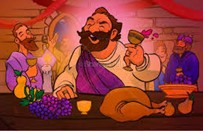
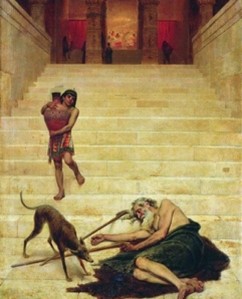
Sept 18-23 weekday homilies

Sept 18-23: Click on http://frtonyshomilies.com for missed homilies:

 Sept 18 Monday: Lk 7:1-10: 1 After he had ended all his sayings in the hearing of the people, he entered Capernaum. 2 Now a centurion had a slave who was dear to him, who was sick and at the point of death. 3 When he heard of Jesus, he sent to him elders of the Jews, asking him to come and heal his slave. 4 And when they came to Jesus, they besought him earnestly, saying, “He is worthy to have you do this for him, 5 for he loves our nation, and he built us our synagogue.”6 And Jesus went with them. When he was not far from the house, the centurion sent friends to him, saying to him, “Lord, do not trouble yourself, for I am not worthy to have you come under my roof; 7 therefore I did not presume to come to you. But say the word, and let my servant be healed. 8 For I am a man set under authority, with soldiers under me: and I say to one, `Go,’ and he goes; and to another, `Come,’ and he comes; and to my slave, `Do this,’ and he does it.” 9 When Jesus heard this he marveled at him, and turned and said to the multitude that followed him, “I tell you, not even in Israel have I found such faith.” 10 And when those who had been sent returned to the house, they found the slave well.

Context: Jesus’ healing of the centurion’s slave, described in today’s Gospel, shows us how God listens to our Faith-filled prayers and meets our needs. Matthew (8; 5-13) indicates that the centurion came to Jesus personally). Centurions were reliable, commanding officers, brave captains in charge of 100 soldiers in Rome and 80 soldiers in first century AD Palestine. They were the backbone of the Roman army. According to Luke’s account (Lk 7:1-10), this centurion loved the Jews, respected their religious customs, built a synagogue for them, loved his sick servant, trusted in Jesus’ power of healing, and was ready to face the ridicule of his fellow-centurions by pleading before a Jewish rabbi.

The remote healing: The centurion asked Jesus to shout a command, as the centurion did with his soldiers, so that the illness might leave his servant by the power of that order. Jesus was moved by the centurion’s Faith-filled request and rewarded the trusting Faith of this Gentile officer by performing a telepathic healing. When we ask for the intercession of the saints, we are like the centurion, acknowledging that we are not worthy, by our own merits, to stand before the Lord and bring Him our request.

Life message: 1) We need to grow to the level of the Faith of the centurion by knowing and personally experiencing Jesus in our lives. We do so by daily meditative reading of the Bible, by our daily personal and family prayers, and by frequenting the Sacraments, especially the Eucharistic celebration. The next step to which the Holy Spirit brings us is the complete surrender of our whole being and life to Jesus whom we have experienced, by rendering loving service to others, seeing Jesus in them. (Fr. Tony) (https://frtonyshomilies.com/) L/23

For additional reflections, click on: https://bible.usccb.org/podcasts/video; https://catholic-daily-reflections.com/daily-reflections/; https://www.epriest.com/reflections

Sept 19 Tuesday: (St. Januarius, Bishop, Martyr) For a short biography, click here: https://www.franciscanmedia.org/saint-of-the-day/saint-januarius

Lk 7:11-17: 11 Soon afterward he went to a city called Nain, and his disciples and a great crowd went with him. 12 As he drew near to the gate of the city, behold, a man who had died was being carried out, the only son of his mother, and she was a widow; and a large crowd from the city was with her. 13 And when the Lord saw her, he had compassion on her and said to her, “Do not weep.” 14 And he came and touched the bier, and the bearers stood still. And he said, “Young man, I say to you, arise.” 15 And the dead man sat up, and began to speak. And he gave him to his mother. 16 Fear seized them all; and they glorified God, saying, “A great prophet has arisen among us!” and “God has visited his people!” 17 And this report concerning him spread through the whole of Judea and all the surrounding country.

The context: Today’s Gospel presents one of the three stories in the Gospel where Jesus brings a dead person back to life. The other stories are those of Lazarus and of the daughter of Jairus, the synagogue leader. Today’s story is found only in Luke. Nain is a village six miles SE of Nazareth, and it is mentioned nowhere else in the Bible. The scene is particularly sad because the mother in this story, who had already lost her husband, has now lost her only son and her only means of support.

Jesus’ touch of human kindness: Jesus was visibly moved by the sight of the weeping widow, perhaps because he could foresee his own mother in the same position at the foot of his cross. His compassionate heart prompted him to console the widow saying: “Do not weep.” Then Luke reports, “He touched the bier and when the bearers stood still, he said, ‘Young man, I say to you, arise.’ And the dead man sat up and began to speak. And he gave him to his mother,” and participated in her indescribable joy. There were instances in the Old Testament of people being raised from death, by Elijah (1 Kgs 17:17-24), and Elisha (2 Kgs 4:32-37). Jesus’ miracle took place near the spot where the prophet Elisha had brought another mother’s son back to life again (see 2 Kgs 4:18-37). These miracles were signs of the power of God working through His prophets. In the case of the widow’s son in today’s Gospel, the miracle showed the people that Jesus, like Elijah and Elisha, was, at the least, a great prophet.

Life messages: 1) St. Augustine compares the joy of that widow to the joy of our Mother the Church when her sinful children return to the life of grace: “Our Mother the Church rejoices every day when people are raised again in spirit.” 2) The event also reminds us to have the same love and compassion for those who suffer that Jesus had. (Fr. Tony) (https://frtonyshomilies.com/) L/23

For additional reflections, click on: https://bible.usccb.org/podcasts/video; https://catholic-daily-reflections.com/daily-reflections/; https://www.epriest.com/reflections

Sept 20 Wednesday (St. Andrew Kim Tae-gon, Priest and Paul Chong Ha-Sang and Capmanions, Martyrs); For a short biography, click here: https://www.franciscanmedia.org/saint-of-the-day/saints-andrew-kim-taegon-paul-chong-hasang-and-companions. Lk 7: 31-35: 31 “To what then shall I compare the men of this generation, and what are they like? 32 They are like children sitting in the market place and calling to one another, `We piped to you, and you did not dance; we wailed, and you did not weep.’ 33 For John the Baptist has come eating no bread and drinking no wine; and you say, `He has a demon.’ 34 The Son of man has come eating and drinking; and you say, `Behold, a glutton and a drunkard, a friend of tax collectors and sinners!’ 35 Yet wisdom is justified by all her children.”

The context: The message of John the Baptist and the message of Jesus fell on deaf ears and met with stiff resistance from the scribes and the Pharisees who listened with pride, jealousy, prejudice, and spiritual blindness. Hence, they attributed the austerities of John the Baptist to the devil and saw Jesus’ table fellowship with sinners as “evidence” that he was a glutton and a drunkard – both “testifying” that Jesus’ reputation and silent Messianic claims were patently false.

Dog-in-the-manger attitude: Jesus compares the attitude of the Scribes and the Pharisees with that of street-children who want to entertain themselves by acting out wedding and funeral songs. They divide themselves into two groups. But when one group proposes to sing wedding songs and asks the other group to dance, the second group will refuse, proposing funeral songs instead, and asking the first group to act as a funeral procession, carrying one of them on their shoulders. In the end both groups will be frustrated. Jesus states that the scribes and Pharisees, because of their pride and prejudice, act exactly like these immature, irresponsible children. Jesus criticizes the unbelieving Jews for not listening either to John the Baptist, who preached a message of austerity, repentance, and God’s judgement on unrepentant sinners, or to Jesus, who preached the Good News of God’s love, mercy, forgiveness and salvation.

Life messages: 1) “Ignore and correct”: Some people will criticize us as they criticized Jesus and John the Baptist, even when we do good, correct things with the best of intentions. The best response is to ignore the critics, while examining our actions and correcting anything wrong we may find in them. 2) But hearing the Gospel implies the total acceptance and assimilation of what we hear and the incorporation of it into our daily lives. We should not be “selective listeners,” hearing only what we want to hear, and doing only what we like. 3) Like the generation of Jesus’ time, our age is marked by indifference and contempt, especially in regard to the things of Heaven. Indifference dulls our ears to God’s voice and to the Good News of the Gospel. Only the humble of heart can find joy and favor in God’s grace. (Fr. Tony) (https://frtonyshomilies.com/) L/23

For additional reflections, click on: https://bible.usccb.org/podcasts/video; https://catholic-daily-reflections.com/daily-reflections/; https://www.epriest.com/reflections

Sept 21 Thursday: (St. Mathew, Apostle and evangelist); For a short biography, click here: https://www.franciscanmedia.org/saint-matthew/Mt 9:9-13: (9 As Jesus passed on from there, he saw a man called Matthew sitting at the tax office; and he said to him, “Follow me.” And he rose and followed him. 10 And as he sat at table in the house, behold, many tax collectors and sinners came and sat down with Jesus and his disciples. 11 And when the Pharisees saw this, they said to his disciples, “Why does your teacher eat with tax collectors and sinners?” 12 But when he heard it, he said, “Those who are well have no need of a physician, but those who are sick. 13 Go and learn what this means, `I desire mercy, and not sacrifice.’ For I came not to call the righteous, but sinners.”

The context: Today’s Gospel episode of Matthew’s call as Jesus’ apostle reminds us of God’s love and mercy for sinners and challenges us to practice this same love and mercy in our relations with others. The call and the response: Jesus went to the tax-collector’s station to invite Matthew to become a disciple. Since tax-collectors worked for a foreign power and extorted more tax money from the people than they owed, the Jewish people, especially the Pharisees, hated and despised the tax collectors as traitors, considered them public sinners, and ostracized them. But Jesus could see in Matthew a person who needed Divine love and grace. That is why, while everyone hated Matthew, Jesus was ready to offer him undeserved love, mercy, and forgiveness. Hence, Matthew abandoned his lucrative job, because, for him, Christ’s invitation to become Jesus’ follower, was a promise of salvation, fellowship, guidance, and protection. Scandalous partying with sinners. It was altogether natural for Matthew to rejoice in his new calling by celebrating with his friends who were also outcasts. Jesus’ dining with all these outcasts in the house of a “traitor” scandalized the Pharisees, for whom ritual purity and table fellowship were important religious practices. Cleverly, they asked, not Jesus, but the young disciples, “Why does your master eat with tax collectors and sinners?” Jesus, coming to the rescue of the disciples, cut in and answered the question in terms of healing: “Those who are well do not need a physician; the sick do.” Then Jesus challenged the Pharisees, quoting Hosea, “Go and learn the meaning of the words, ‘I desire mercy, not sacrifice’” (Hos 6:6). Finally, Jesus clarified, “I did not come to call the righteous, but sinners.” [After the Ascension, Saint Matthew remained
for over ten years in Judea, writing his Gospel there in about the year 44.
Then he went to preach the Faith in Egypt and especially in Ethiopia, where he
remained for twenty-three years. The relics of Saint Matthew were for many
years in the city of Naddaver in Ethiopia, where he suffered his martyrdom, but
were transferred to Salerno in the year 954].

Life messages: 1) Jesus calls you and me for a purpose: Jesus has called us through our Baptism, forgiven us our sins, and welcomed us as members of the Kingdom. In fact, Jesus calls us daily, through the Word and through the Church, to be disciples and, so, to turn away from all the things that distract us and draw us away from God. 2) Just as Matthew did, we, too, are expected to proclaim Christ through our lives by reaching out to the unwanted and the marginalized in society with Christ’s love, mercy, and compassion. (Fr. Tony) (https://frtonyshomilies.com/) L/23

For additional reflections, click on: https://bible.usccb.org/podcasts/video; https://catholic-daily-reflections.com/daily-reflections/; https://www.epriest.com/reflections

Sept 22 Friday: Luke 8:1-3: 1 Soon afterward he went on through cities and villages, preaching and bringing the good news of the kingdom of God. And the twelve were with him, 2 and also some women who had been healed of evil spirits and infirmities: Mary, called Magdalene, from whom seven demons had gone out, 3 and Joanna, the wife of Chuza, Herod’s steward, and Susanna, and many others, who provided for them out of their means.

The context: Today’s Gospel describes how Jesus began his preaching and healing ministry in the company of the twelve Apostles and a group of women volunteers. Luke’s Gospel pays special attention to women. The female following of Jesus was out of the ordinary at the time and in the place where Jesus lived. In those days, strict rabbis would not speak to a woman in public, and very strict ones would not speak to their own wives in the streets or public places. In his Gospel, Luke provides the Blessed Virgin Mary’s recollections of her own history with Jesus whom she outlived, describes several women around Jesus, like Elizabeth, Mary’s kinswoman, the prophetess Anna, the sinful woman, Martha and Mary, the crippled woman, the woman with hemorrhage, the women who supplied the needs of Jesus and his Apostles out of their own resources, and, in the parables, the woman kneading yeast into the dough, the woman with the lost coin and the woman who tamed the judge.

The ministry and the associates: Jesus started preaching the “Good News” that God His Father is not a judging and punishing God, but a loving and forgiving God Who wants to save mankind through His Son Jesus. Luke mentions the names of a few women who helped Jesus’ ministry by their voluntary service and financial assistance. Some among them were rich and influential like Joanna, the wife of King Herod’s steward, Chuza. We meet Joanna again among the women who went to the tomb on the morning of the Resurrection (Lk 24:10). Some others like Mary of Magdala followed Jesus to express their gratitude for his healing of them. This mixture of different types of women volunteers, all attracted by the person and message of Jesus, supported his Messianic Mission by providing food and other material assistance to Jesus and the Apostles who proclaimed the Gospel by word and deed and by their communal and shared life. It is nice to know that our Lord availed Himself of their charity and that they responded to Him with such refined and generous detachment that Christian women feel filled with a holy and fruitful envy (St. Josemaria Escriva). At crucial moments, Jesus was better served by the women disciples than by the men.

Life message: 1) The evangelizing work of the Church needs the preaching of the missionaries and preachers, feeding and leading the believers in parishes. 2) This work also needs the active support of all Christians by their transparent Christian lives, fervent prayers and financial assistance. (Fr. Tony) (https://frtonyshomilies.com/) L/23

For additional reflections, click on: https://bible.usccb.org/podcasts/video; https://catholic-daily-reflections.com/daily-reflections/; https://www.epriest.com/reflections

Sept 23 Saturday: (St. Pius of Pietrelcina,(Padre Pio) Priest) For a short biography, click here:https://www.franciscanmedia.org/saint-of-the-day/saint-pio-of-pietrelcina

Luke 8: 4-15: 4 And when a great crowd came together and people from town after town came to him, he said in a parable: 5 “A sower went out to sow his seed; and as he sowed, some fell along the path, and was trodden under foot, and the birds of the air devoured it. 6 And some fell on the rock; and as it grew up, it withered away, because it had no moisture. 7 And some fell among thorns; and the thorns grew with it and choked it. 8 And some fell into good soil and grew, and yielded a hundredfold.” As he said this, he called out, “He who has ears to hear, let him hear.” 9 And when his disciples asked him what this parable meant, 10 he said, “To you it has been given to know the secrets of the kingdom of God; but for others they are in parables, so that seeing they may not see, and hearing they may not understand. 11 Now the parable is this: The seed is the word of God. 12 The ones along the path are those who have heard; then the devil comes and takes away the word from their hearts, that they may not believe and be saved. 13 And the ones on the rock are those who, when they hear the word, receive it with joy; but these have no root, they believe for a while and in time of temptation fall away. 14 And as for what fell among the thorns, they are those who hear, but as they go on their way they are choked by the cares and riches and pleasures of life, and their fruit does not mature.

The context: Today’s Gospel passage gives us the parable of the sower, the seeds sown, and the yield (depending upon the soil type). This, the first parable of Jesus in the New Testament about the Kingdom of Heaven, is also a parable interpreted by Jesus himself. It was intended as a warning to the hearers to be attentive, and to the apostles to be hopeful, about Jesus’ preaching in the face of growing opposition to Jesus and his ideas. The sower is God—through Jesus, the Church, the parents, and the teachers. The seed sown is the high-yielding word of God which is also described as “a sharp sword” (Is 49:2), “two-edged sword” (Heb 4:12), and “fire and hammer” (Jer 23:29).

Soil type and the yield: The hardened soil on the footpath represents people with minds closed because of laziness, pride, prejudice, or fear. The soil on flat rock pieces represents emotional types of people who go after novelties without sticking to anything and are unwilling to surrender their wills to God. “I will remove the heart of stone from their flesh and give them a heart of flesh” (Ezekiel 11:19). The soil filled with weeds represents people addicted to evil habits and evil tendencies, those whose hearts are filled with hatred, jealousy, or the greed that makes them interested only in acquiring money by any means and in enjoying life in any way possible. The good and fertile soil represents well-intentioned people with open minds and clean hearts, earnest in hearing the word and zealous in putting it into practice. Zacchaeus, the sinful woman, the thief on Jesus’ right side, St. Augustine, St. Francis of Assisi and St. Francis Xavier, among others, fall into this category of the good soil.

Life message: Let us become the good soil and produce hundred-fold harvests by earnestly hearing, faithfully assimilating and daily cultivating the word of God we have received, so that the Holy Spirit may produce His fruits in our lives. (Fr. Tony) (https://frtonyshomilies.com/) L/23

For additional reflections, click on: https://bible.usccb.org/podcasts/video; https://catholic-daily-reflections.com/daily-reflections/; https://www.epriest.com/reflections

O. T. 22 (Sept 3rd Sunday homily)

OT XXII (A) (Sept 3) Eight-minute homily in one page

Introduction: Today’s Gospel passage reminds us that Christian discipleship demands self-control (“Deny yourself”), the willingness to suffer (“take up your cross”), the readiness to follow Jesus by obeying his commandment of love, and generosity in surrendering our lives to God (“to offer our bodies as a living sacrifice to God” (Rom 12:1).(An anecdote may be added)

Scripture lessons summarized: Today’s readings explain how we should practice true, dynamic Christian discipleship. Jeremiah, in the first reading, is certainly a prototype of the suffering Christ. In the Responsorial Psalm (Ps 63), the Psalmist manifests his profound trust in God, just as Jeremiah himself does. In the second reading, Paul advises the Romans and us (Rom 12:1-2): to ‘’offer our bodies as a living sacrifice” to God by explicitly rejecting the ungodly behavior of the world around us and by discerning and doing the will of God. In today’s Gospel, Jesus takes his disciples by surprise when, after Peter’s great confession of Faith, Jesus announces that he “must go to Jerusalem and suffer greatly from the elders, the chief priests and the scribes, and be killed and on the third day be raised.” After correcting Peter’s protest, Jesus announces the three conditions of Christian discipleship: “Deny yourself, take up your cross and follow me.”

Life messages: # 1: We need to be “extremophiles” for Christ: True disciples of Christ are: a) truly compassionate: they are willing to visit and help the infected and the sick in hospitals, the incontinent elderly, the handicapped, and those who suffer dementia in nursing homes, and AIDS patients in hospices; b) truly humble: they areable to see that every good gift comes from God alone, and that His gifts to us of time, personal talents, and resources should inspire gratitude, not pride; c) truly patient: they are committed to working with challenging children, adolescents with problems, young adults who are struggling with their Faith, with the intellectually challenged and with those suffering dementia; d) truly forgiving: they are willing to forgive not just once, or twice, but again and again, because they know that God has forgiven them again and again; e) truly loving: they willingly visit people in prisons, in retirement homes, and in homeless shelters; and f) truly faithful: they are living out a committed, trusting relationship with God, with spouse, with family and friends.

# 2: We need to ask these questions as we examine our conscience. A true disciple examines his or her conscience every day, asking three questions about discipleship: a) Did I sacrifice a part of my time, talents, and income for my parish and the missionary activities of the Church? b) Did I practice self-control over my thoughts, words, deeds, and use of mass media, and put loving restriction on the cell phone and Internet activities of my children? c) Did I train my children in my Faith in a loving, providing, redeeming God by encouraging them, as we spend some time together as a family, praying and reading the Bible, and by teaching them through example and word to pardon each other, to ask for God’s pardon for our own sins and failures, to thank God for His blessings, and to participate in the Sunday school classes and youth programs?

OT XXII [A] (Sept 3) Jer 20:7-9; Rom 12:1-2; Mt 16:21-27 (L-23) 

Homily Starter Anecdotes # 1: “There is no Poland without a cross.” Years ago, when Poland was still under Communist control, the Prime Minister ordered that crucifixes be removed from classroom walls. Catholic Bishops attacked the ban, which had stirred waves of anger and resentment all across Poland. Ultimately the government relented, insisting that the law remain on the books, but agreeing not to press for removal of the crucifixes, particularly in the schoolrooms. But one zealous Communist school administrator, the director of the Mietnow Agricultural College, Ryszard Dobrynski, took the crosses down from his seven lecture halls where they had hung since the school’s founding in the twenties. Days later, a group of parents entered the school and hung more crosses. The administrator promptly had these taken down as well. The next day two-thirds of the school’s six hundred students staged a sit-in. When heavily-armed riot police arrived, the students were forced into the streets. Then they marched, crucifixes held high, to a nearby Church where they were joined by twenty-five hundred other students from nearby schools for a morning of prayer in support of the protest. Soldiers surrounded the Church. But the press was there as well, and pictures from inside of students holding crosses high above their heads flashed around the world. So did the words of the priest who delivered the message to the weeping congregation that morning. “There is no Poland without a cross.” (http://www.nytimes.com/1984/03/09/world/student-protest-swells-in-poland-return-of-crucifixes-is-demanded.html) — Perhaps the cross has come to symbolize comfort to us because we have had to sacrifice little in our lives. The more we are called upon to carry our own crosses, the more we will understand the one our Savior carried outside the city gates to the hill called Golgotha. That is why today’s Gospel challenges us to deny ourselves, take up our crosses and follow Jesus.

# 2: Jesus’ call to be extremophiles or “extreme-lovers.” Probably, you’ve never met these creatures called extremophiles. This is because they are extremely small microorganisms which live in environments where the Fahrenheit temperature ranges either from 170 to 215 degrees (water boils at 212 °F), or down to several degrees below freezing point — or in acidic media. One such extremophile is Pyrococcus furiosus. Pyro is only one of many microorganisms attracting the attention of scientists today. Biotechnologists are learning a lot from such microorganisms living way out there, in dangerous places like hot springs, polar ice caps, salty lakes and acidic fields. They live in conditions that would kill humans and most plants and animals. Extremophile microbes are also busy industrialists, reports The Futurist magazine, because they produce enzymes that are enormously useful in the food, chemical, pharmaceutical, waste treatment and other industries. Suppose you need an enzyme to replace bleaching by Chlorine …. (Cynthia G. Wagner, “Biotech Goes to Extremes,” The Futurist, October 1998). — Today’s reading points us to the Greatest Extremophile of all time. In the district of Caesarea Philippi, Jesus reveals himself to be an “extremophile,” showing his disciples that he “must go to Jerusalem and undergo great suffering at the hands of the elders and chief priests and scribes, and be killed, and on the third day be raised” (Mt 16:21). When Peter objects to this extremely painful prediction, Jesus rebukes him sharply: “Get behind me, Satan! … you are setting your mind not on Divine things but on human things.” He then tells his disciples, ”Whoever wishes to come after me must deny himself, take up his cross and follow me. For whoever wishes to save his life will lose it, but whoever loses his life for my sake will find it.” (16:24-25).

# 3: Quo vadis Domine?” There is an ancient legend about Peter, which became the basis for the Polish novel Quo Vadis written by Henryk Sienkievicz between 1895-1896 which became a motion picture in 1951.  At the time of the great persecution under Nero, the Christians of Rome told Peter to leave. “You’re too valuable,” they said. “Get out of town! Find your safety! Go to another place and preach the Gospel.” Peter hastily hurried out of town as fast as he could. But as he hurried along the Appian Way, away from the Eternal City, he was met by Christ, going toward the city. Peter said to him in Latin, “Quo vadis, Domine?” “Where are you going, Lord?” To which Jesus replied, “Back to Rome, to be crucified with my people. Where are you going, Peter?” Peter’s eyes filled with tears of remorse, as he turned and walked back to Rome, where, according to tradition, he was crucified head downward, feeling that he was not worthy to die in the same manner as had his Lord. —  Jesus’ question to Peter comes to us also: “Quo vadis?” “Where are you going?” Are we going with Christ, or away from him and from his cross? That’s the really important question. It doesn’t matter how far we have traveled. What does matter is the direction in which we are going.

# 4:They prayed in the stands. They prayed in the team huddles.” Like a burning fire within, the irresistible word of the Lord compels us to resist evil. It strengthens us to speak for the reign of God. The following high-impact story, circulated through the Internet, illustrates the challenges for today’s Christians as well as the appeal of Saint Paul “not to conform … but be transformed”. — “Tennessee Football”: This is a statement that was read over the PA system at the football game at Roanne County High School, Kingston, Tennessee, by school principal Jody McLeod.

  It has always been the custom of Roanne County High School football games, to say a prayer and play the National Anthem, to honor God and country. Due to a recent ruling by the Supreme Court, I am told that saying a Prayer is a violation of Federal Case Law. As I understand the law at this time, I can use this public facility to approve of sexual perversion and call it “an alternate lifestyle”, and if someone is offended, that’s OK. I can use it to condone sexual promiscuity, by dispensing condoms and calling it, “safe sex”. If someone is offended, that’s OK. I can use this public facility to present the merits of killing an unborn baby as a “viable means of birth control”. If someone is offended, no problem … I can designate a school day as “Earth Day” and involve students in activities to worship religiously and praise the goddess “Mother Earth” and call it “ecology”. I can use literature, videos and presentations in the classroom that depict people with strong, traditional Christian convictions as “simple minded” and “ignorant” and call it “enlightenment” … However, if anyone uses this facility to honor GOD and to ask HIM to bless this event with safety and good sportsmanship, then Federal Case Law is violated. This appears to be inconsistent at best, and at worst, diabolical. Apparently, we are to be tolerant of everything and anyone, except GOD and HIS commandments. Nevertheless, as a school principal, I frequently ask staff and students to abide by rules with which they do not necessarily agree. For me to do otherwise would be inconsistent at best, and at worst, hypocritical … I suffer from that affliction enough unintentionally. I certainly do not need to add an intentional transgression. For this reason, I shall “Render unto Caesar that which is Caesar’s” and refrain from praying this time. However, if you feel inspired to honor, praise and thank GOD and ask HIM, in the name of JESUS, to bless this event, please feel free to do so. As far as I know, that’s not against the law – yet.

 One by one, the people in the stands bowed their heads, held hands with one another and began to pray. They prayed in the stands. They prayed in the team huddles. They prayed at the concession stand and they prayed in the Announcer’s Box. The only place they didn’t pray was in the Supreme Court of the United States of America – the Seat of “Justice” in the “one nation, under GOD”. Somehow, Kingston, Tennessee remembered what so many have forgotten … We are given the freedom OF religions, not the freedom FROM religion. Praise GOD that HIS remnant remains! JESUS said, “If you are ashamed before men, then I will be ashamed of you before MY FATHER.” (Lectio Divina).

Introduction: The readings for this Sunday remind us that Christians are called to live their lives in a different way from others around them. Christian discipleship demands honesty, the willingness to suffer (“take up your cross”), generosity (“to offer our bodies as a living sacrifice to God”), and readiness to follow Jesus by obeying his commandment of love. Today’s readings explain how this Christian mission should be accomplished. They explain how we should know and live the will of God, accepting the suffering involved in doing so. These readings tell us as well that while suffering is an integral part of our earthly life, it is also our road to glory. There is no crown without a cross. Jeremiah, in the first reading, is a certainly a prototype of the suffering Christ. He tried to live the will of God bravely facing confrontations and persecution, and he continued to proclaim His message  because  the message itself “becomes like a fire, burning in my heart, imprisoned in my bones; I grow weary holding it in, I cannot endure it.”
In the Responsorial Psalm (Ps 63), the Psalmist sings, “O God, You are my God Whom I seek; for You my flesh pines and my soul thirsts, like the earth parched, lifeless and without water. … You are my Help, and in the shadow of Your Wings I shout for joy. My soul clings fast to You: Your right hand upholds me.” In the second reading, Paul advises the Romans and us (Rom 12:1-2): to ‘’offer our bodies as a living sacrifice” to God by explicitly rejecting the ungodly behavior of the world around us and by discerning and doing the will of God. He learned from his experience that commitment to God’s will required an attitude of non-conformity to one’s contemporary culture and drew hostility and physical danger on him because of his fidelity to Jesus.  In today’s Gospel, Jesus takes his disciples by surprise when, after Peter’s great confession of Faith, Jesus “began to show his disciples that he must go to Jerusalem and suffer greatly from the elders, the chief priests and the scribes, and be killed and on the third day be raised.” After correcting Peter’s protest, Jesus announces the three conditions of Christian discipleship: “deny yourself, take up your cross, and follow me.” Unless we constantly remind ourselves of the demands of this difficult vocation from God, we will fail to be the kind of disciples that Christ expects us to be.

The first reading: Jer 20:7-9 explained:  The prophet Jeremiah lived from about 650 B.C. to about 580 B.C. Most of his work was done in Judah’s capital, Jerusalem. Jeremiah was sent by God, “to tear up and to knock down, to destroy and to overthrow” (Jer 1:10). He tried to keep this people, who lived in an atmosphere of political intrigue and backstabbing, faithful to God. Jeremiah was regarded as a traitor by his own people because, as God’s mouthpiece, he had to foretell the dire results that would follow from their plan of revolt against the mighty power of Babylon. So, he became depressed and complained bitterly to God. The English word jeremiad means an elaborate and prolonged lamentation or tale of woe. Today’s first reading is the purest of jeremiads. In it, Jeremiah accuses Yahweh of tricking him and offers us a powerful description of someone suffering for obedience to his conscience.

Second reading (Rom 12:1-2) explained: In the second reading, Paul advises the Roman Christians that they must live their Christian lives in such a way that they differ both from the Jews and from the pagans. St. Paul calls them to adopt an attitude of sacrifice in their worship of God.  In order to do this, they must explicitly reject the behavior of the world around them. Paul tells them, and us (Rom 12:1-2): “Offer your bodies as a living sacrifice” to God.  Paul then explains that the sacrifices that should be offered are not the animals or grain of Jewish Temple worship, but their bodies “as a living sacrifice … spiritual worship.”   In this way, by non-conformity to their own age, they should differ from the Jews and the pagans, which would cost them suffering and sometimes their very lives, as we, in our turn, must do. Like Paul’s Christians, we, too, must “discern what is the will of God, what is good and pleasing and perfect,”– and then do it!

Gospel exegesis: “Get behind me, Satan!” After Peter had confessed his Faith that Jesus was the Messiah, the Son of God, Jesus, in today’s Gospel, explained to the apostles what the Messianic Mission and their responsive discipleship really meant. Jesus realized that, although he had predicted his suffering and death three times, his disciples were still thinking in terms of a conquering Messiah, a warrior king, who would sweep the Romans from Palestine and lead Israel to power. That is why Peter could not bear the idea of a suffering Messiah. It was then that Jesus rebuked him so sternly, “Get behind me, Satan,” in an attempt to nullify what was, in fact, a  temptation of the evil one urging Him to shrink from doing  the work for which He had come. It was the same kind of rebuke He had delivered to Satan in the wilderness. Origen suggests that Jesus was saying to Peter: “Peter, your place is behind me, not in front of me. It’s your job to follow me in the way I choose, not to try to lead me in the way YOU would like me to go.”  Satan is banished from the presence of Christ, and Peter is recalled to become, again, Christ’s follower. “This foundation-stone-become-stumbling-stone stands as a cautionary tale for all of us who are called to serve with authority in the Church, a reality that surely extends to parents with respect to their children and teachers with respect to students.” (Fr. Reginald Fuller).  — The Good News is that, by the grace of God, rehabilitation is not only possible but likely, if we pray.  Like Peter, the Church is often tempted to judge the success or failure of her ministry by the world’s standards. But Jesus teaches that worldly success is not always the Christian way. That is why Jesus decided that the time had come for him to confront the forces of the scribes and the Pharisees at the seat of their power, Jerusalem, realizing fully well what the agonizing consequences would be.

Three conditions of Christian discipleship: After correcting Peter for trying to divert him from what would be his way of the cross in Jerusalem,   Jesus declares three conditions for anyone who would become and live as his disciples: a) deny yourself b) take up your cross and c) follow me. A) Self-denial means evicting selfish thoughts, desires, and tendencies from our hearts and letting God fill our hearts with Himself. It also means being cleansed of all evil habits, enthroning God in in our hearts, and sharing Him with others. B) Carrying the cross with Jesus always entails pain and suffering. Our personal sufferings become the cross of Jesus when:  1) we suffer by serving others selflessly; 2) we give ourselves — our health, wealth, time and talents – to others until it hurts us; 3)  we join our physical, mental or emotional sufferings to Jesus’ and offer them with him to the Father in reparation for our sins and those of the world; and we work with the Spirit Who is purifying us through our personal sufferings or penitential practices. C) Following Jesus means that, as disciples of Christ, we should live our lives according to the word of God by obeying Jesus’ commandment of love. To follow someone who has asked us to “take up our cross” daily seems foolish.  But in the words of the Venerable Archbishop Fulton Sheen, “to be a fool for Christ is the greatest compliment the world can give. You and I are in good company, because most of the saints embraced the Cross of Christ and were considered fools for doing so.”  The Catechism teaches, “The way of perfection,” that is, the path leading to holiness, “passes by way of the Cross” (CCC #2015).  “There is no holiness without renunciation and spiritual battle” (CCC #2015). “Spiritual progress entails the ascesis and mortification that gradually lead to living in the peace and joy of the Beatitudes” (CCC #2015).

Losing life, finding life: Matthew was writing for the Christian community in the bitterest days of persecution – AD 80-90. Hence, he emphasizes Jesus’ teaching that a man who is faithful may die for his Faith in Jesus, but in dying he will live. The man who risks everything for Christ finds life.  On the other hand, the man who abandons his Faith for safety or security may live, but he is actually dying. History is full of noble souls who risked their lives for the sake of others. If certain scientists had not been prepared to take risks, many a medical cure would not exist.  If mothers were not prepared to take risks, no child would ever be born. If we’re honest with ourselves, we know that there are constant opportunities for us to choose to be true to the Gospel.  But the world is essentially opposed to the Gospel and those who live out its truths.   Archbishop Desmond Tutu was questioned once as to whether or not he was a politician.  He answered, “No, I am not. I am a Church person who believes that religion does not deal just with a certain compartment of life. Religion has relevance for the whole of life, and we have to say whether a particular policy is consistent with the policy of Jesus Christ or not, and if you want to say that that is political, then I will be a politician in those terms….My role, the role of people of Faith, is to be able to say: ‘Thus saith the Lord.'”

Life messages: # 1: We need to be extremophiles for Christ: True disciples of Christ are:  a) truly compassionate: they are willing to visit the infected and the sick in hospitals, the incontinent elderly, the handicapped, and those who suffer dementia in nursing homes, and AIDS patients in hospices; b) truly humble: they are able to see that every good gift comes from God alone, and that His gifts to us of time, personal talents, and resources should inspire gratitude, not pride; c) truly patient: they are committed to working with challenging children, adolescents with problems, young adults who are struggling with their Faith, with the intellectually challenged, and with those suffering dementia; d) truly forgiving: they are willing to forgive, not just once or twice but again and again, because they know that God has forgiven them again and again; e) truly loving: they willingly visit people in prisons, in retirement homes, and  in homeless shelters; f) truly faithful: they are living out a committed, trusting relationship with God, with spouse, with family and friends.

# 2: We need to ask these questions as we examine our conscience. A true disciple examines his or her conscience every day asking three questions about discipleship: a) Did I sacrifice a part of my time, talents, and income for my parish and the missionary activities of the Church? b) Did I practice self-control over my thoughts, words, deeds, and use of mass media, and put loving restriction on the cell phone and Internet activities of my children? c) Did I train my children in my Faith in a loving, providing, redeeming God by encouraging them as we spend some time together as a family praying and reading the Bible  and by teaching them through example and word to pardon each other, to ask for God’s pardon for  our own sins and failures, to thank God for His blessings and to participate in the Sunday school classes and youth programs?

 # 3: We need to ask additional questions. Does my Church offer a Faith strong enough to command a sacrifice on my part? Do I have enough Faith to offer up a genuine sacrifice for Christ’s sake? Can a Church in today’s self-centered culture ask its people to sacrifice something for the sake of the Gospel? Jesus’ challenge to all would-be disciples requires more than a “feel-good” spirituality. A true disciple asks, “Am I willing to sacrifice something for the Kingdom?”  What made it possible for first-century Christians to choose a martyr’s death? What has kept generations of Christians from losing Faith and falling apart when confronted by the violence and hatred of this world? How can I offer even the day-to-day sacrifices of my Faith that demand things I don’t want to do or give?  Can I sacrifice some of my time in order to visit a homeless shelter or soup kitchen? Can I sacrifice my job security and refuse to “go along” with a policy that is unjust? Can I sacrifice my need to be in control and let Christ do with me whatever he may will? Can I refuse to let my children watch television programs filled with sex and violence?

JOKE OF THE WEEK

Three holy, religious priests, a Dominican, a Franciscan, and a Jesuit were in the same hospice. All were near death. One evening, the Angel of Death appeared before them and informed them that it was their time. He said, however, that each could have a final request before accompanying him from this world as they had scrupulously practiced the triple norms of Christian discipleship in their pretty long lives. The Dominican went first, and he asked to gaze upon the face of his Savior. In an instant, the face of Christ appeared before him. He was satisfied and felt he could die with no regrets. The Franciscan was next. He asked to touch the wounds in the hands and feet of Jesus before he died. No sooner had he spoken than Christ appeared and invited him, as he did Thomas, to examine His wounds. The dying priest touched Christ’s hands and feet, wept with joy and was content and at peace.   Finally, the angel turned to the Jesuit and asked his final request. Without hesitation, the Jesuit replied: “I’d like a second opinion.”

USEFUL WEBSITES OF THE WEEK (For homilies & Bible study groups) (The easiest method  to visit these websites is to copy and paste the web address or URL on the Address bar of any Internet website like Google or MSN and press the Enter button of your Keyboard).

1) Fr. Nick’s collection of Sunday homilies from 65 priests & weekday homilies: https://www.catholicsermons.com/homilies/sunday_homilies

2) Fr. Don’ collection of video homilies & blogs: https://sundayprep.org/featured-homilies/ (Copy it on the Address bar and press the Enter button)

3) Fr. Geoffrey Plant’s beautiful & scholarly video classes on Sunday gospel, Bible & RCIA topics https://www.youtube.com/user/GeoffreyPlant20663)

4) Dr. Brant Pitre’s commentary on Cycle A Sunday Scripture for Bible Class: https://catholicproductions.com/blogs/mass-readings-explained-year-Biblical basis of Catholic doctrines: http://scripturecatholic.com/

5) Agape Catholic Bible Lessons: http://www.agapebiblestudy.com/

6) Fr. Justus S. J. Bible, theology, Art:  http://catholic-resources.org/

7)  Fr. Nick:  http://www.catholicsermons.com/homilies/sunday_homilies

8) Fr. Felix Justus S.J: http://catholic-resources.org/Bible/Evangelists.htm  L/23

       31- Additional anecdotes

1) Heroic modern cross bearers: Valerie Price, Maximilian Kolbe and Dom Helder Camara:  Here are the stories of three Christians who accepted the challenge of Christian discipleship given in today’s Gospel, by “denying themselves, taking up their crosses and following Jesus.” Twenty-three-year-old Valerie Price went to Somalia to work as a nurse. She wanted to help people who had nothing. She wanted to offer them a better way of life. Valerie was concerned about her safety, but nothing could stop her from doing her work. She was put in charge of a feeding center in Mogadishu. Through her efforts, children who had been near starvation were fed. Valerie even established a school so the children could learn and have some hope for the future. She became nationally known for her committed service.  Valerie, however, was killed by armed bandits outside the school she had started.   She was willing to risk her life to help other people.

St. Maximilian Kolbe was born in Poland. It seems that his early years – while good – were not that remarkable. He was devoted to Mary. He became a Conventual Franciscan priest.  His Faith was important to him. But when the Nazis invaded Poland in 1939, Kolbe saw the writing on the wall.  He knew that if he were to be a person of Faith – and be true to his Faith – he would probably have to suffer.  In February 1941, because he spoke out against the horror of the Nazis, he was arrested and imprisoned at Auschwitz.  On July 30, 1941, a prisoner escaped from Auschwitz, and in retaliation, the commandant of the camp lined up the inmates of cellblock 14 and ordered that ten of them be selected at random for punishment. They would be consigned to an underground bunker and starved to death. Ten men were selected. One of them, Francis Gajowniczek, cried out in tears, “My poor wife and children! I will never see them again.” At this point Maximilian Kolbe stepped forward and volunteered to take his place. The commandant accepted his offer, and so Fr. Maximillian Kolbe assumed his place among the condemned. By August 14, Kolbe was dead, his body cremated in the camp ovens.

Dom Helder Camara was an Archbishop of the poorest and least developed Archdiocese of Brazil.  But he has been described as “one of the shapers of the Catholic Church in the second half of the twentieth century.” Early in his life, he was part of a conservative political movement inspired by Italian Fascism. But as he became more and more involved in pastoral work in Rio de Janeiro, he became increasingly affected by the poor. In trying to relate the message of the Gospel to their sufferings, he underwent a radical conversion, which finally reached the point where he himself was labeled a Communist and called “the red bishop.” His was an outspoken witness for peace and social justice in a land ruled by a brutal military dictatorship. Dom Helder’s message was reflected in his style of leadership.   Instead of a pectoral cross of gold or silver, he wore a simple wooden cross. He moved out of the bishop’s palace and lived in a much poorer house.  He encouraged the training of lay catechists and opened the seminary doors to lay people and women. His own door was always open to any who sought him, and he presented himself as truly the servant of the people. His house was sprayed with machine-gun fire, his diocesan offices were repeatedly ransacked, he was banned for thirteen years by the government from any public speaking, the newspapers were not permitted to mention his name, and even the Church in Rome continually questioned his orthodoxy. When he retired as Archbishop of Recife, his conservative successor reversed nearly all his initiative. He died on 27 August 1999, aged 90. But his spirit lives on.

Valerie and St. Maximillian Kolbe and Don Helder Camara did not choose to suffer – they chose to live the Gospel, to be true to the covenant God offered them. Valerie wanted to serve the poor – she didn’t want to be shot to death. Maximillian Kolbe wanted to preach the Gospel in every way possible – he didn’t want to be starved to death. Don Helder Camara wanted to be with his people – he didn’t want to be reviled.

2) I will take your identification and wait here.” Bruce Riggins was working sacrificially with underprivileged people in London. When the reporter  asked one of these women what had inspired her Christian Faith and action, she shared her story of how seeing another Christian’s Faith converted her. She was a Jew fleeing the German Gestapo in France during World War II. She knew she was close to being caught, and she wanted to give up. When she came to the home of a French Huguenot, a widow working with the underground came to tell her it was time to flee to a new place. This Jewish lady said, “It’s no use, Ma’am, they’ll find me anyway. They are so close behind.” The Christian widow said, “Yes, they will find someone here, but it’s time for you to leave. Go with these people to safety; I will take your identification and wait here.” Then the Jewish woman understood. The Gestapo would come and find this widow and think she was the fleeing Jew. As Bruce Riggins listened to this story, the now-Christian woman of Jewish descent looked him in the eye and said, “I asked her why she was doing that and the widow responded, ‘It’s the least I can do; Christ has already done that and more for me.'” The widow was caught and imprisoned in the Jewish woman’s place, allowing the Jewish fugitive time to escape. Within six months, the Christian widow was dead in the concentration camp. The Jewish woman never forgot and became a follower of Christ through that one widow’s living sacrifice. — Who knows how many people will come to new life through the witness of our living sacrifice? What will it be for us? Mission field? Ministry? More committed service in our Church or in our workplace? Only we and God can decide. Whatever it is, let us just do it – present our bodies as a living sacrifice to God, holy and acceptable, deny ourselves, take up our cross and follow Jesus.

3) Generic Christians: As Maxie Dunnam was driving one day on Poplar Avenue, in Memphis, Tennessee, he noticed a bumper sticker on the car in front of him. He inched closer and saw that the bumper sticker read in big letters, “I am a Generic Christian.” That got his attention. He tried to get closer. Some smaller letters were written beneath the larger ones. He got dangerously close to the back of the car to read the words, “Ask me what I mean.” He was intrigued even more. What was the person with this bumper sticker trying to say? A couple of blocks later the driver pulled into a car wash. Dunnam had no intention of having his car washed that day. Nevertheless, he also turned in to the car wash hoping to meet and speak with the driver with the intriguing bumper sticker. The man told him that he was a member of a local congregation. He was so tired, though, of the denominational emphasis in so many churches that he wanted to proclaim a different kind of message. He wanted the world to know that he was a Christian not tied to any label – hence a generic Christian. The man might have had a point, but on further reflection Dr. Dunnam says, “I wonder if we don’t have too many generic Christians and not enough disciples who are ready to deny themselves, take up their crosses and follow Jesus as demanded by today’s Gospel.” [Maxie Dunnam, Congregational Evangelism, (Nashville: Discipleship Resources, 1992), p. 25]

4) Christians in the Roman amphitheater who accepted Jesus’ challenge: The year is AD 177. The place is the arena at Lyons, France and the sport is killing criminals, runaway slaves, and Christians. A letter from the local Church to a sister Church in Turkey describes what happened: “The Roman governor who ruled France in those days ordered the Christians to form a procession for the enjoyment of the crowd. First Maturus, then Sanctus, Blandina, and Attalus were led to face the lions in the amphitheater. The virgin Blandina, after the whips, after the lions, after the iron chair, was at last thrown into a basket and presented to a bull. For a time, the animal tossed her, but she had now lost any sense of what was happening, thanks to her Hope, her steadfast Faith and her close communion with Christ.” (Quoted by Christopher Kelly in Times Literary Supplement, 22 December 1995). The governor was so fond of violence that he ordered his soldiers to turn the faces of the mauled, mutilated, dying Christians in his direction, so he could enjoy their final moments of agony. The people who were in the stadium, the people who roared even louder than the lions when Blandina and her Christian companions were led into the arena, were not the rabble, but the respectable, the wealthy, the good, decent, law-abiding citizens of France. — Think we have finally risen above exploiting the kind of canned violence that the French and the Romans cheered at in their Coliseums? Like the ancient Romans and the French, we are bombarded daily by images of brutality on our computer, movie and TV screens, and we seem to need ever more heinous acts to quench our blood lust. “Today, experts estimate that by the end of elementary school, the average American child will have seen 8,000 screen murders and more than 100,000 acts of violence. In real life during the past decade, there has been a fifty-five percent increase in the number of juveniles arrested for murder. More American teens today die from violence than from disease” (Louis Moore, as quoted in Current Thoughts and Trends, January, 1996). — Today’s Gospel text acknowledges the painful reality that we live in a violent world and that we are a violent people. Consequently, we find it difficult to accept the challenge Jesus extends to those who would be true disciples: “Take up [your] cross and follow Me …. whoever loses his life for my sake will find it” (vv. 24-25). 

5) “…I’ll fight; while men go to prison…” Remember the words of General William Booth, founder of The Salvation Army and a friend to the down and out? Three months, before his death he wrote: “While women weep as they do now, I’ll fight; while little children go hungry as they do now, I’ll fight; while men go to prison, in and out, in and out, as they do now, I’ll fight; while there is a drunkard left, while there is a poor lost girl upon the streets, while there remains one dark soul without the light of God, I’ll fight – fight to the very end.”–  Can you imagine General Booth writing a book entitled Looking Out For Number One? What has happened to us? “If any man or woman would be my disciple,” Jesus says to us, “Let him deny himself and take up his cross and follow me.” That is the word we desperately need to hear. It is a call, as M. Scott Peck would phrase it to walk “a road less traveled.” In Zig Ziglar’s analogy, it is the lonely stairway as opposed to the crowded elevator. Or as Jesus himself once said, it is the narrow way that only a committed few will pursue.

6) There is no Poland without a cross.” Years ago, when Poland was still under Communist control, the Prime Minister ordered that crucifixes be removed from classroom walls. Catholic Bishops attacked the ban, which had stirred waves of anger and resentment all across Poland. Ultimately the government relented, insisting that the law remain on the books, but agreeing not to press for removal of the crucifixes, particularly in the schoolrooms. But one zealous Communist school administrator decided that the law was the law. So, one evening he had seven large crucifixes removed from lecture halls where they had hung since the school’s founding in the twenties. Days later, a group of parents entered the school and hung more crosses. The administrator promptly had these taken down as well. The next day two-thirds of the school’s six hundred students staged a sit-in. When heavily armed riot police arrived, the students were forced into the streets. Then they marched, crucifixes held high, to a nearby Church where they were joined by twenty-five hundred other students from nearby schools for a morning of prayer in support of the protest. Soldiers surrounded the Church. But the press was there as well, and pictures from inside of students holding crosses high above their heads flashed around the world. So did the words of the priest who delivered the message to the weeping congregation that morning. “There is no Poland without a cross.” — Perhaps the cross has come to symbolize comfort to us because we have had to sacrifice little in our lives. The more we are called upon to carry our own crosses, the more we will understand the one our Savior carried outside the city gates to the hill called Golgotha.

7) Mistaken identity: Mistaken identity is not all that uncommon, especially since there are only so many variations of our common facial features. After both Albert Schweitzer and Albert Einstein had gained worldwide fame and had had their pictures printed in a variety of media, some mistook the former for the latter. Once Schweitzer was approached hesitantly by a mother and daughter duo who asked if he were the great scientist, Einstein. Rather than disappoint them, with more magnanimous grace than he felt, Schweitzer signed an autograph, “Albert Einstein, by way of his friend, Albert Schweitzer.” Or take the case of Queen Elizabeth II of England. She was stopped on one occasion in Norfolk as she entered a tea shop. Two women were exiting carrying baskets of cakes and breads. One commented to her that she looked remarkably similar to the queen. “How very reassuring,” said the modest royal personage, and moved on. Her daughter, Princess Anne, had a similar encounter. At a sporting event, she was approached by a woman who said, “Has anyone ever told you that you look like Princess Anne?” She replied, “I think I’m better looking than she is!”  —  Mistaken identities may be commonplace, but on some occasions, they are more serious than others. Certainly, that is true in Matthew 16. Just before these verses, Jesus had asked his disciples what people were saying about him. Did they get it right? Peter did. But when Jesus explained that it was by undergoing a shameful death on the cross that he would accomplish his Messianic mission, Peter tried to discourage him and was challenged by Jesus for it, as described in today’s Gospel.

8) What it is that separates man from the great apes? Richard Leaky, the famous archeologist who worked in northern Kenya, discusses in his book, People of the Lake, what it is that separates man from the great apes. It is not man’s intelligence, says Leakey, but his generosity. Only human beings have the ability to share. Only human beings are capable of genuine compassion. Only human beings are capable of laying down their lives for a friend. — When it comes to taking up the cross of self-denial, however, many of us have not discovered our humanity. If we don’t care what happens to this world, who will? If we don’t feed the hungry, who will? If we don’t shelter the homeless, who will? If we don’t tell the world about Christ, who will? If we don’t pray and offer sacrifices, who will?

9) “That’s the reason, Ruth. No one else is doing it.” You may know the thrilling story of Glen Cunningham, a young man whose legs were so badly burned when he was a boy that doctors said he would never walk again. However, this determined champion went on to win an Olympic gold medal as a miler. Even more importantly, Glen Cunningham devoted his life to helping troubled young people. Once, his wife asked, “Glen, why do we have to give so much more than others? No one else is doing what we are.” — Glen answered, “That’s the reason, Ruth. No one else is doing it.”

 10) “The least compassionate people I ever knew.” Michael Slaughter in his book, Unlearning Church, tells about a religion editor from a local newspaper who came to his Church to interview him about a conference they were having. At the end of the interview, he asked if she went to Church. He assumed she did, since she was a religion editor. She said, “No, I am a Buddhist. I was raised in the Church,” she went on, “but about ten years ago, I became interested in Buddhism because the highest value of Buddhism is the value of compassion.” Michael Slaughter says her next comment made him feel as if she had put her hand in his chest and squeezed his heart. “The people I grew up around in the Church,” she added, “were some of the least compassionate people I ever knew.” — “Ouch,” says Michael Slaughter, and then he adds, “Yet Jesus is compassion made visible.” And he’s right. Jesus is compassion made visible. Having Jesus’ name, but not his heart is a dangerous combination. It can make us turn away people that Jesus is calling us to embrace.

11) The Hollywood movie, The Insider. In 1995, Jeffrey Wigand made headlines when he exposed illegal and unethical practices by his employer, Brown & Williamson, a major tobacco company. Overnight, Wigand lost his $300,000-per-year job. He became the target of death threats. Wigand faced tremendous pressure from former friends and colleagues. His ordeal was documented in the Hollywood movie, The Insider. — Today, Jeffrey Wigand is still the target of occasional threats. He is making only about one-tenth of his former salary. But he claims to be happier now than he’s ever been in his life. In an interview with Time magazine, Wigand commented, “I felt dirty before [as a cigarette executive]. Now I feel good . . . I don’t need the cars and fancy ties and all those trappings that consumed me once. My enjoyment comes when some kid comes up to me and says, ‘I’m never gonna smoke.’ I can take that to the bank, whatever bank you want to call it.” It takes nerve to offend your friends, offend your employer. Many Christians are pleased that Jesus died on a cross on their behalf, but they seem to try studiously to avoid taking up a cross of their own.

12) “My God, I could have bought back two more people with this ring:”  There is a powerful scene in the movie Schindler’s List. In the beginning of the story, a Czech businessman named Oskar Schindler builds a factory in occupied Poland using Jewish labor because, in those tragic days at the start of World War II, Jewish labor was cheap. As the war progresses, however, and he learns what is happening to the Jews under Adolph Hitler, Schindler’s motivations switch from profit to sympathy. He uses his factory as a refuge for Jews to protect them from the Nazis. As a result of his efforts, more than 1,100 Jews were saved from death in the gas chambers. You would think that Oskar Schindler would have felt quite pleased with himself, but at the end of the war Schindler stands in the midst of some of the Jews he has saved, breaks down in tears, takes off his gold ring and says, “My God, I could have bought back two more people [with this ring]. These shoes? One more person. My coat? Two more people. These cufflinks? Three more people.” There he stands, not gloating but weeping with regret that he has not done more.  — I wonder if one day you and I, as followers of Christ, will ask ourselves, “Could I have done more? Have I truly borne the cross of Christ?” That is the first question on today’s test: Is our Faith sacrificial? Is it costing us something?

13) Free legal service: Valerie Place was preaching in West Virginia one night. Two young lawyers were part of the congregation. Campolo’s sermon was on the cost of discipleship. At the conclusion of the service the invitation was given for people to commit themselves fully to Christian service. The two young lawyers did not come forward. However, they did accept the challenge to change their lives and seek ways in which they could more fully serve Christ. The two men practiced law together. As a result of the call to discipleship, these lawyers decided to offer free legal services to poor people in their county. This was a decision that went beyond the amount of free service that most law firms provide. These lawyers would help anyone in the county who needed their help – without cost. People responded to their generosity. Their commitment to helping the poor, though, changed their lives in ways they did not expect. They soon gained new paying customers. Even more surprising, a number of people who had been delinquent with their bills suddenly paid them in full. “I suppose they didn’t want to cheat lawyers who helped the poor,” one of the lawyers explained. — These men have taken the first step in becoming disciples of Jesus, and they are headed in the right direction. They are doing something significant for Christ in their everyday lives. [Tony Campolo, Wake up America! (San Francisco: Harper, 1991), pp. 83].

14) In baseball and in Christian life you “sacrifice…” In football, you “Tackle!” In baseball, you “catch flies…” In football, you “Punt!” In baseball, you “bunt…” Football is played on a “Gridiron”! Baseball is played on a “field…” In football, you “Score!” In baseball you “go home…” In football, you “Kill!” In baseball, you “sacrifice…” Baseball may be the only sport where you actually can hear this last word. It’s one of the few places anywhere that you hear it in a self-centered, “I-take-care-of-myself-and-worry-about-myself-and-I-don’t worry-about-anybody-else” society. In contrast to football, sacrifice may sound like a sign of weakness, but I hardly think of any of the Atlanta Braves or Minnesota Twins as weak. Baseball’s one thing; life is quite another. In our society, there are still Christians who sacrifice their lives for Christ and who really deny themselves and takes up their crosses. [The Gates of New Life, Charles Scribner’s Sons, 1940), p. 3]. — Here is a young man who wanted to be a lawyer, but his father died, and he had to leave school and work to keep things going at home. Here is a young woman who wanted to be a great doctor but was never admitted to medical school. Here is a businessman who had hoped all his life to make his business a great success, but the competition was much tougher than he had ever expected, and he soon found himself declaring bankruptcy. Here is a couple whose marriage is on the rocks. When it started out it was so sweet and good but now… now it’s just not the same. There is not a person in any congregation who has not sacrificed a hope, or a dream as burnt offering on the high altar of the providence of God.

15)  “I wasn’t hard enough on myself, that’s all.” During the Los Angeles Open Golf Tournament a few years ago, Arnold Palmer, the legendary golfer, was interviewed while practicing on the putting green. “Arnie,” he was asked, “What do you feel was wrong to make you play so poorly this past year?” Without looking up from his putting, Arnold answered in his own direct way, “I wasn’t hard enough on myself, that’s all.” Two hours after this brief interview, the same reporter came back to find Palmer still practicing on the putting green. The reporter concluded, “The greatness of Arnold Palmer is his choice of the hard way.” — Success in life requires a willingness to resist the lure of the easy way. A sound body requires that we exercise, eat the right foods, conquer bad habits. A sound mind requires that we read, that we observe, that we continually learn. A sound marriage requires that each partner go into it with the understanding that marriage is not a 50/50 proposition but a 70/30 one in which both parties give the 70. A sound family means that we take the time to be sensitive to the needs of our children and that we provide not only for their physical needs but for their emotional and spiritual needs as well. Such goals require sacrifice, they require perseverance, and they require determination. But every one of us knows that the path to personal success is the path of self-denial.

16) A Russian Soldier Fights for Christ: Every aspect of our lives, everything we do, can glorify God and help build up his Kingdom. The great Catholic apologist and writer G.K. Chesterton once said that when he became a believer, it even changed the way he brushed his teeth. This is one of the reasons why Christianity is such a dynamic religion — it isn’t limited to the sacristy and the altar; it overflows into everything we do and fills us with desires to do more and more. One of Pope St. John Paul II’s favorite phrases was a line written by St Ireneaus in the third century: “The glory of God is man fully alive.” The Christian God is a Father Who rejoices in seeing His children grow and flourish. Years ago, a book came out that told the story of a young man who had been drafted into the Russian Communist army. He was a Russian who loved his country, but he was also a Christian. Of course, Russian Communism had no room for Christianity; it was an atheist social system. And so, during his training, the officers paid special attention to this Christian soldier. They were constantly looking for opportunities to humiliate him in front of the other soldiers, to make life hard for him, so that he would give up his Christian Faith. But no matter how closely they watched him, they couldn’t find anything to punish him for. In every point of military discipline, he was the top soldier: he was always on time; his uniform was always impeccable; his performance was exceptional; his knowledge always complete. He was a Christian, and so everything he did, from kitchen duty to the parade ground, he did with love and excellence, making his whole life into a spiritual worship that was pleasing to God. (E- Priest).

17) Mary Lou Retton losing to win: In the 1984 Olympics at Los Angeles, 16-year-old Mary Lou Retton became the first American girl to win a gold medal in gymnastics. To accomplish this extraordinary feat, she had to make sacrifices during her two years of intensive training prior to the Olympics. While other teenagers were enjoying themselves with a full schedule of dating and dancing, Mary Lou Retton could only participate on a very limited basis. To improve her skills, she had to practice long hours in the gym; to nourish her body properly she had to follow a strict diet and practice long hours, and to increase her confidence she had to compete frequently in meets. — But what Mary Lou Retton gave up in terms of good times and junk food was little compared to what she gained when she won her Olympic gold medal. What she lost in the usual social life of a teenager she found in the special setting of becoming a champion gymnast – acceptance, camaraderie, and respect. Mary Lou Retton’s Olympic experience illustrates somewhat Christ’s paradox in today’s Scripture: “Whoever would save his life will lose it. But whoever loses his life for my sake will find it.” (Albert Cylwicki in His Word Resounds; quoted by Fr. Botelho).

 18) Saving one’s soul: “What good will it do you, even if you gain the whole world, if you lose your soul?” These are good words to recall when we are faced with important and difficult choices. Here is a modern example. The scene: a prison for political prisoners near Moscow (during the era of Stalin). Ivan knew at once that they wanted something from him. “Would you like a remission?” they asked him. ”What do I have to do?” he asked. “We’d like to transfer you to another prison to take charge of an important project. If you agree, you will be free in six months.” “What is the project?” “We want you to perfect a camera that works in the dark, and another miniature one that can be fitted to the jamb of a door, and which works when the door is opened. We know you can do this.” Ivan was perhaps the only person in the whole of Russia who could produce a blueprint for these devices. After seventeen years in prison the idea of going home appealed to him. Here surely was the answer to his wife Natasha’s prayer. All he had to do was invent a device that would set him free. “Could I not go on working on television sets as I am at present?” he asked. “You mean you refuse?” said the general. Ivan thought: Who would ever thank him? Were those people out there worth saving? Natasha was his lifelong companion. She had waited for him for seventeen years. “I couldn’t do it,” he said at last. “But you’re just the man for the job,” said the general. “We’ll give you time to make up your mind.” “I won’t do it. Putting people in prison because of the way they think is not my line. That’s my final answer.” — Ivan knew what his ‘no’ meant. A few days later he was on a train to Siberia to work in a copper mine where starvation rations, and probable death awaited him. No fate on earth could be worse. Yet he was at peace with himself. (Flor McCarthy in New Sunday and Holy Day Liturgies; quoted by Fr. Botelho).

 19) The cost of discipleship: Nelson Mandela spent twenty-seven years in prison or ten thousand days (approximately). Before that he was on the run for a couple of years. Of the time he was on the run he wrote later: “It wasn’t easy for me to separate myself from my wife and children, to say good-bye to the good old days when, at the end of a strenuous day at the office, I could look forward to joining my family at the dinner table, and instead to take up the life of a man hunted continuously by the police, living separated from those who are closest to me, facing continually the hazards of detection and of arrest. This was a life infinitely more difficult than serving a prison sentence.” [Long Walk to Freedom, 1994, (Little, Brown and Company).] — What drove him to make such great sacrifices was his love for his country. This was the ‘cross’ he carried because of his love for his people. (Flor McCarthy in New Sunday and Holy Day Liturgies; quoted by Fr. Botelho).

 20) Cross-road to life! In the 1998-99 persecutions against Gujarat’s Dangi Christians, many tales of Faith fortitude went unrecorded. I still remember the battered and bleeding youth, Sitaram Devasyabhai, who told me, “I will not give up Christianity even if they kill me!” Earlier in Karota village of the Dawada mission where I served as priest, Poslabhai Vasava confessed, “I find great strength in Jesus crucified although friends joke that I adore a helpless, naked deity.” A young Christian from Mumbai, Neil Gaikwad gave witness to self-sacrifice. For twelve hours during torrential rains that submerged Mumbai in July 2005, he swam to save the lives of 60 people trapped in a bus. Eyewitnesses said, Neil must’ve gone up and done 40-50 times to take people out.” Texan Lance Armstrong too combated cancer and went on to win the prestigious Tour de France cycle-rally on July 24, 2005, for an unprecedented 7th time in succession. — Neil and Lance demonstrate that life comes through dying to self, and all Cross-roads lead to Heaven. (Francis Gonsalves in Sunday Seeds for Gospel Deeds; quoted by Fr. Botelho).

 21) Salt March of Gandhi: One of the very important events in the history of struggle for Indian independence was the Historic Salt March. During British Colonialism in India, the British Salt Tax rule was imposed, making it illegal to sell or produce salt. Gandhiji saw this as an injustice to the people of India. Gandhiji decided to protest against it. He decided to lead 78 people through 240-mile journey from his Ashram to the coastal village of Dandi, Gujarat, on 12 March 1930.  The  March involved high risk. Hence, veteran politicians, and experienced leaders warned Gandhi about its consequences and tried to dissuade him. But, Gandhiji was determined. Thousands of Indians, inspired by his non-violent demonstration and strong will joined him on his march to the sea.–  It is a common experience that people try to stay in their comfort zone, and, so, try to dissuade those who struggle to come out of it — because it involves risk; it means daring into the unknown; it brings a lot of challenges, and it causes suffering. In today’s Gospel, Jesus shows his disciples that he must go to Jerusalem and undergo great suffering at the hands of the elders and chief priests and scribes, and be killed, and on the third day be raised. The Apostles could not accept this, and so missed the comfort of His promise that on the third day after his death, Jesus would rise.  (Fr. Bobby Jose).

22) Graceful acceptance of temporary suffering results in lasting glory: When a bud goes through the pain of bursting, it is transformed into a beautiful flower.  When a pupa struggles out of a cocoon, it is transformed into a charming butterfly. When a chicken breaks the shell and comes out it becomes a lovely bird.  When a seed bursts the pod and falls to the ground it begins to grow as a plant.  — When we undergo the suffering and pain of life we are strengthened.  Arthur Golden reminds us, “Adversity is like a strong wind.  It tears away from us all but the things that cannot be torn, so that we see ourselves as we really are.”  (Arthur Golden, Memoirs of a Geisha). St. Paul wrote:  “Suffering produces endurance, and endurance produces character, and character produces hope” (Romans 5:3-4).” Suffering is not the last thing in life. It leads us to something greater, as long as we are ready to accept its challenges.  “A bend in the road is not the end of the road… unless you fail to make the turn.”  (Fr. Bobby Jose).

23) Why do injustices prevail? Eugene Orowitz was a skinny, 100-pound sophomore at Collingswood High at Collingswood, N.J. One afternoon the gym coach held classes in the middle of the track field to show the kids how to throw a javelin. After instructions he let the kids try their hand at it. The longest throw was 30 yards. “You want to throw it too, Orowitz?” the coach asked Eugene. The other kids laughed at Eugene. Someone shouted “Careful! You’ll stab yourself!” Eugene pictured himself as a young warrior about to battle the enemy; he raised the javelin and threw it over 50 yards till it crashed into the empty bleachers, its tip broken. The coach ignoring his feat, looked at the broken head and said, “What the heck Orowitz, you broke the thing. It’s no good to the school any longer.” That summer Eugene began throwing the javelin in a vacant lot. By the end of the year he threw the javelin 211 feet, farther than any high schooler in the nation. He was given an athletic scholarship at the University of Southern California and he began dreaming of the Olympics. Then one day he didn’t warm up properly and tore the ligaments of his shoulder. That put an end to javelin throwing, his scholarship, and his dreams. Eugene dropped out of college and took a job in a warehouse. — The tragic story of Eugene Orowitz raises a vexing question which prophet Jeremiah asks in the first reading today.  Why does God let misfortune wreck the lives of so many good people?
(Mark Link in Sunday Homilies; quoted by Fr. Botelho).

24) The film, The Devil’s Advocate: When a talented small-town Southern lawyer, Kevin Lomax, discovers his client is guilty, he goes to the restroom to compose himself. He returns to the courtroom, humiliates the prosecution’s young witness and emerges victorious. Soon after, he is offered an opportunity to join a prestigious firm in New York. His wife is uncertain about the move and his very religious mother is against it, but he joins, and strange things happen in New York. Kevin’s wife is lonely and hallucinates, Kevin’s confidence in his work begins to falter, he is attracted to a female lawyer and his relationship with his wife suffers. He gets a wealthy but guilty businessman acquitted of murder charges. Kevin’s wife claims that she has been assaulted by John Milton the company’s head. When Kevin confronts Milton, he discovers that Milton is the devil incarnate who offers Kevin the world and the opportunity to sire an Antichrist. Milton reveals that Kevin is actually his son, and Kevin put a gun to his head and pulls the trigger. Suddenly, Kevin is back in the restroom where he had gone to plan the next move for his guilty client. He decides to do the right and noble thing – to discontinue defending the client, knowing that he will be disbarred. But as he leaves the courtroom, a journalist asks Kevin for an interview that will make him a celebrity. — The Devil’s Advocate deals explicitly with sin and the screenplay raises themes of God, the devil, salvation, damnation, and freewill. The film is about choices people have to make to live an upright life with all its challenges, or to live an easy life that leads to doom. Jesus, in today’s Gospel, reminds us that we have to make a choice for him or for the Satan. The way of the devil is attractive and comfortable. The way of the Messiah is the way of the Cross, hard, challenging but in the end fulfilling. (Peter Malone in Lights Camera..Faith!; quoted by Fr. Botelho).

25) Cheap grace and costly grace: Cheap grace is the preaching of forgiveness without requiring repentance, Baptism without Church discipline, Communion without confession, absolution without personal confession. Cheap grace is grace without discipleship, grace without the cross, grace without Jesus Christ living and incarnate. Costly grace is the treasure hidden in the field; for the sake of it a man will gladly go and sell all that he has. It is the pearl of great price, to buy which the merchant will sell all his goods. It is the kingly rule of Christ, for whose sake a man will pluck out the eye which causes him to stumble; it is the call of Jesus Christ at which the disciple leaves his nets and follows him. Costly grace is the Gospel which must be sought again and again, the gift which must be asked for, the door at which a man must knock. — Such grace is costly because it calls us to follow, and it is grace because, freely given, it calls us to follow Jesus Christ. It is costly because it costs a man his life, and it is grace because through it,  God gives a man the only true life. It is costly because it condemns sin, and grace because through it God justifies the sinner. Above all, it is costly because it cost God the life of his Son: “you were bought at a price,” and what has cost God much cannot be cheap for us. Above all, it is grace because God did not reckon his Son too dear a price to pay for our life but  freely and with love for us,  delivered him up for us. Costly grace is the Incarnation of God. (Dietrich Bonhoeffer, The Cost of Discipleship). Today’s Gospel challenges us to pray that we may accept an s make us of this  costly grace.

 26) Pope St. John Paul II on suffering: In his apostolic letter  of February 11, 1984, entitled Salvifici Doloris, Pope St. John Paul II speaks about suffering. Here is a summary: 1. Suffering is evil. Evil is the absence of good, rooted in sin, which can bring about death. This absence of good can cause greater suffering, if the one who suffers thinks he/she does not deserve such suffering. 2. There are different kinds of suffering: physical, spiritual, and psychological. There are also private sufferings like loneliness. And there  are common sufferings like those caused by epidemic, calamity, and famine. 3. Suffering comes from the world. It does not come from God. Yet the one who suffers usually turns to God to ask about the causes and objectives of suffering. 4. Suffering can be a punishment arising from the justice of God. It can also be a test, as it was with Job. And God can also permit suffering in order that it can serve as a seed for a greater good that will come because of it, like holiness, or greatness. 5. Our sufferings can also be joined with the sufferings of Christ for our salvation, or for that of others, not because Christ’s suffering are not enough, but because Christ has left his sufferings open to love so that the bitter sufferings of man mingled, with this love, may turn into a sweet spring which shall overflow into eternity.

27) “Take up your cross and follow me.” A certain lady who spent her time working for the Lord – visiting the sick and the bed-ridden, helping the elderly and the handicapped – was diagnosed with a knee-problem needing surgery. The surgery unfortunately, was not a success, and the woman was left in constant pain, unable to walk. It seemed that the Lord had ignored the prayers of this woman and her friends for a successful surgery. This was a woman who considered herself a personal friend of Jesus. She was utterly disappointed, and her cheerful disposition turned into sadness and gloom. One day she pulled herself together and shared with her confessor what was going on in her soul. The confessor suggested that she go into prayer and ask her Friend Jesus why he had treated her this way. And she did. The following day the priest met her and saw peace written all over her face in spite of her pain. “Do you know what Jesus said to me?” she began, “As I was looking at the crucified Jesus and telling him about my bad knee, he said to me, ‘Mine is worse.’” (Fr. Lakra).

 28) The intimate connection between carrying the cross and Christian discipleship: The following modern-day account gives insight into the intimate connection between carrying the cross and Christian discipleship: One of the most devastating events that anyone can experience is the death of a child. Some parents never recover from the shock and grief. For others time heals some of the pain, but there remains a deep sadness, that never quite goes away. Mayo and Karlene Ryan lived this parental nightmare. Their son, Timothy Ryan, lost his life in a tragic accident in 1986. Tim Ryan was a promising, delightful young man. He was a scholar and athlete, popular and respected at school and seemed to have endless potential, but less than one year after graduating from high school, Tim was gone, leaving behind shattered parents, family members and friends. Mayo, a longtime Poverello board member, and Karlene, a volunteer here for many years, were overcome with sorrow. Faith, friends, and the passage of time lessened some of the pain, but at some point, they decided that helping someone else might be a way of bringing some closure to the tragedy, and at the same time honor the memory of Tim. At the time of his death, Mayo and Karlene asked that remembrances be sent to the Poverello House in Tim’s name, and the Timothy Ryan Memorial Fund was started. The fund’s original purpose was to provide scholarships to men in the Poverello Resident Program. Over the years, the Timothy Ryan Memorial Fund has paid tuition to college and other vocational schools, provided specialized equipment, books and uniforms, and in general supported graduates of Poverello’s rehabilitation program in their training for a better life. There had been fewer candidates for the scholarship in the past couple of years, so Mayo and Karlene decided to turn their attention to the neighborhood surrounding Poverello, one of the poorest areas in the city. Thanks to the Ryan Fund and Mayo and Karlene’s personal contributions, children from King, Lincoln, Kirk, and Columbia Elementary Schools, 1,813 students in all, will begin their 2014-2015 school year with new backpacks, filled with items needed for school. cf. “Help for the Neighborhood” in Poverello News, July 2014, p. 3-4). (Lectio Divina).

29) Why not accept the irresistible force of God’s call as the prophet Jeremiah did? The following article by Paul Thigpen illustrates the prophetic ministry of Pope St. Paul VI (canonized October 19, 2018) and shows us how the Christians of today are called to witness to God’s truth about the sanctity of life and “not to conform themselves to this age” (Rom 12:2a)

I read an article yesterday in the Washington Post by a woman planning to have a third child. She noted, with some perplexity, a certain reaction she has encountered to her pregnancy. Some people complain – in all seriousness – that she and others like her are just “showing off”, ostentatiously advertising their financial security. Only well-off families, they insist, can afford three children. Well, just tell that to my parents. Mom and Dad barely eked out a living in our little family-owned business, a meat market where we kids grew up working alongside them to bring home the bacon. All five kids, that is. My folks would have been mystified by the notion that we five little ones were somehow a luxury they were presumptuous to take on. I was the third child, and I certainly never felt like a luxury.

Yet I don’t think Pope   St. Paul VI, who became pontiff the year my baby sister was born (1963), would have been mystified at all by this disturbing attitude. Why not? Because he described the context for its development in his encyclical letter Humanae vitae, whose 57th anniversary the Church commemorates on July 25, 2020. In this profound but controversial document on the transmission of human life, the Pope laid out the reasons why artificial contraception is gravely immoral. In it, he noted that the desire to contracept is only one of many modern attempts to extend our control over every aspect of life, including those aspects that represent a mystery not of our own making, much less of our own understanding. In short, it’s an endeavor to play God, and a dangerous one indeed. When much of a society comes to believe – as ours has – that the miracle of life’s transmission is simply one more mechanical function to manipulate at will, then the “product of conception”, as they are now termed (we once called them “children”) are viewed as nothing more than a commodity. So we feel free   to abort them. We buy and sell them. We use them as lab rats. We figure their costs to see whether we can work them into our financial plan – just one more budget item to be added or subtracted, according to how many other luxury items we might rank ahead of them. Pope St. Paul VI courageously declared that children are gifts from God to be gratefully received, not assets to be calculated or liabilities disposed of. Fifty-seven years later, we must acknowledge his prophetic insight – and mourn a world that has largely rejected his warning. (cf. “Paul VI, Pope and Prophet” in The Catholic Answer, July-August 2006, p. 4).   (Lectio Divina).

30) On Instructing the Instructors: Back in the 1950’s, when Catholics still spoke of Africa as a distinctly “mission” continent, a film on the missions in East Africa was shown to the children of St. Mary’s School in Corning, New York. A well-produced Technicolor movie, it illustrated both the earnest work of the missionaries and the devotion and the simple Christian dignity of the black African converts. Then, to fill out the movie hours, the projectionist concluded with an American film on sports-car games and contests. Daredevil drivers jumped their autos through flaming rings; stock-cars battled stock cars, racing about the field and bumping into each other in a madcap game. The contrast between the two moving pictures did not escape the kids. At the end of the show, a fifth-grader said to Sister Suzanne, “Why do we go over to convert the Negroes in Africa? They ought to come over here and convert us!” —  “… Do not conform yourselves to this age, but be transformed by the renewal of your mind, so that you may judge what is God’s will, what is good, pleasing and perfect.” (Rom 12:2, Today’s second reading). (Father Robert F. McNamara).

 31) “Whoever wishes to come after me must deny himself, take up his cross, and follow me.” Vincent Capodanno joined the Catholic Foreign Mission Society, Maryknoll, where he was ordained in 1958 to the priesthood. He went to the missions in Taiwan, where he served the Church and the people faithfully for six years. He developed by discernment a strong notion of serving as a chaplain in the military for those going to Vietnam and requested his order to allow him to serve as a chaplain. Eventually, the Maryknoll superiors granted this request, and, after finishing Officer Candidate School in 1966, Father Capodanno reported to the 7th Marines in Vietnam. As the chaplain for the battalion, his immediate focus was on the young enlisted troops or “grunts.” In fact, he was affectionately given the title of “Grunt Padre” by those he served.

It was during his second tour on September 4, 1967, with the 3rd Battalion, 5th Marines that Father Vincent Capodanno made the ultimate sacrifice. After hours of heavy fighting from a North Vietnamese ambush, Father Capodanno, himself seriously injured and refusing to be evacuated (having been wounded in the hand, arms, and legs while administering the Sacrament of the Anointing of the Sick to wounded Marines), ran to the assistance of a wounded corpsman and the Marine the corpsman was assisting, who were pinned down by an enemy machine gunner. Father Capodanno administered medical and spiritual attention to both of them. The enemy opened fire on the unarmed Father Capodanno, who sustained 27 bullet wounds and died making the ultimate sacrifice while serving his flock to the very end. — He was posthumously awarded the Medal of Honor in 1969 in addition to other military awards including the Purple Heart. Before his sacrificial death, he was widely known for his willingness to share the hardships of suffering Marines — “radiating Christ” to those around him. The cause for his sainthood has been opened by the Church and he has been declared a Servant of God. (Homiletic & Pastoral Review) (L/23)

 “Scriptural Homilies Cycle A (No. 49) by Fr. Tony: akadavil@gmail.com

Visit my website by clicking on https://frtonyshomilies.com/ for missed or previous Cycle C  & A homilies, 141 Year of FaithAdult Faith Formation Lessons” (useful for RCIA classes too) & 197 “Question of the Week.” Contact me only at akadavil@gmail.com. Visit https://www.catholicsermons.com/homilies/sunday_homilies  of Fr. Nick’s collection of homilies or Resources in the CBCI website:  https://www.cbci.in.  (Special thanks to Vatican Radio website http://www.vaticannews.va/en/church.html -which completed uploading my Cycle A, B and C homilies in May 2020)  Fr. Anthony Kadavil, C/o Fr. Jogi M. C. , St. Agatha Church, 1001 Hand Avenue, Bay Minette, Al 36507
 

Aug 28- Sept 2 weekday homilies

Aug 28-Sept 2: Click on http://frtonyshomilies.com for missed homilies):

Aug 28 Monday: St. Augustine, Bishop, Doctor of the Church: For a short biography, click here: https://www.franciscanmedia.org/saint-of-the-day/saint-augustine-of-hippo

Mt 23:13-22: 13 “But woe to you, scribes and Pharisees, hypocrites! because you shut the kingdom of heaven against men; for you neither enter yourselves, nor allow those who would enter to go in. 15 Woe to you, scribes and Pharisees, hypocrites! for you traverse sea and land to make a single proselyte, and when he becomes a proselyte, you make him twice as much a child of hell as yourselves. 16 “Woe to you, blind guides, who say, `If anyone swears by the temple, it is nothing; but if anyone swears by the gold of the temple, he is bound by his oath.’ 17 You blind fools! For which is greater, the gold or the temple that has made the gold sacred? 18 And you say, `If anyone swears by the altar, it is nothing; but if anyone swears by the gift that is on the altar, he is bound by his oath.’You blind ones, which is greater, the gift, or the altar that makes the gift sacred?20i One who swears by the altar swears by it and all that is upon it;21one who swears by the temple swears by it and by him who dwells in it;22one who swears by heaven swears by the throne of God and by him who is seated on it.

The context: It is the third day of the original “Holy Week” in Jerusalem, a day of controversy and personal attacks. The Master is under fire, and challenges the religious leaders of Israel, pronouncing the first three of the eight woes Jesus would levy levies against the religious leaders, calling them hypocrites and publicly humiliating them. The Judeo-Christians of Matthew’s early Christian community argued that the Gentile Christians should follow all Torah laws, oral laws, and oral traditions. Matthew’s account reminds them of the criticism Jesus laid against the scribes and Pharisees in today’s Gospel passage.

Sins of the Scribes and Pharisees: Matthew 23 gives us the Master’s scathing condemnation of the Jewish leadership, expressing the rolling thunder of Jesus’ anger and sorrow at the hypocrisy or double standard of the scribes and Pharisees. Jesus levels three accusations against the Pharisees: 1) they do not practice what they preach, 2) they adopt a very narrow and burdensome interpretation of the Torah, and 3) they seek public acknowledgment and glory for themselves rather than for God. Jesus calls them hypocrites because i) although they know that the essence of religion is loving one’s neighbors, seeing God in them, they teach that external observance of man-made laws alone is the real essence of religion; ii) although they are zealous missionaries in inviting converts to Judaism, they overburden the converts with man-made laws and regulations as the essence of Judaism; and iii) they try to bluff God by misinterpreting the Law and misleading the people. Jesus gives the example of swearing and accuses them of cleverly evading binding oaths and solemn promises by falsified interpretations.

Life message: 1) What Jesus wants is a pure heart, with no element of deceit. We should not follow the dog-in-the-manger policy of the Pharisees by not keeping God’s commandments ourselves and not allowing others to keep them. 2) Let us avoid frivolous swearing and oaths and all forms of hypocrisy and superstition in our religious life. (Fr. Tony) https://frtonyshomilies.com/ (L/23)

For additional reflections, click on: https://bible.usccb.org/podcasts/video; https://catholic-daily-reflections.com/daily-reflections/; https://www.epriest.com/reflections

Aug 29 Tuesday: Mk 6:17-29 (Martyrdom of St. John the Baptist ) For a short account, click here https://www.franciscanmedia.org/saint-of-the-day/martyrdom-of-saint-john-the-baptist 14 King Herod heard of it; for Jesus’ name had become known. Some said, “John the baptizer has been raised from the dead; that is why these powers are at work in him.” 15 But others said, “It is Elijah.” And others said, “It is a prophet, like one of the prophets of old.” 16 But when Herod heard of it he said, “John, whom I beheaded, has been raised.” 17 For Herod had sent and seized John, and bound him in prison for the sake of Herodias, his brother Philip’s wife; because he had married her. 18 For John said to Herod, “It is not lawful for you to have your brother’s wife.” 19 And Herodias had a grudge against him, and wanted to kill him. But she could not, 20 for Herod feared John, knowing that he was a righteous and holy man, and kept him safe. When he heard him, he was much perplexed; and yet he heard him gladly. 21 But an opportunity came when Herod on his birthday gave a banquet for his courtiers and officers and the leading men of Galilee. 22 For when Herodias’ daughter came in and danced, she pleased Herod and his guests; and the king said to the girl, “Ask me for whatever you wish, and I will grant it.” 23 And he vowed to her, “Whatever you ask me, I will give you, even half of my kingdom.” 24 And she went out, and said to her mother, “What shall I ask?” And she said, “The head of John the baptizer.” 25 And she came in immediately with haste to the king, and asked, saying, “I want you to give me at once the head of John the Baptist on a platter.” 26 And the king was exceedingly sorry; but because of his oaths and his guests he did not want to break his word to her….29

The context: Today’s Gospel presents the last scene of a tragic drama with three main characters, Herod, Herodias, and John the Baptist. Herod was a jealous, weak puppet-king with a very guilty conscience, who answered to Rome for his rule of one section of Israel, at that time a Roman subject-province. Herod feared the prophet John because John had publicly scolded him for divorcing his legal wife without adequate cause and for marrying his sister-in-law Herodias who was his niece, thus committing a double violation of Mosaic Law. Herodias was an immoral, greedy woman, stained by a triple guilt and enraged by John’s public criticism of her: 1) She was an unfaithful woman of loose morals. 2) She was a greedy and vengeful woman. 3) She was an evil mother who used her teenage daughter for the wicked purposes of murder and revenge by encouraging the girl to dance in public in the royal palace against the royal etiquette of the day. John the Baptist was a fiery preacher and the herald of the Promised Messiah. He was also a Spirit-filled prophet with the courage of his prophetic convictions who dared to criticize and scold an Oriental monarch and his proud wife in public.

God’s punishment: After the martyrdom of John, Herod was defeated by Aretas, the father of his first wife. Later, both Herod and Herodias were sent into exile by Caligula, the Roman emperor. (https://frtonyshomilies.com/) L/23

For additional reflections, click on: https://bible.usccb.org/podcasts/video; https://catholic-daily-reflections.com/daily-reflections/; https://www.epriest.com/reflections

Aug 30 Wednesday: Matthew 23:27-32:27 “Woe to you, scribes and Pharisees, hypocrites! for you are like whitewashed tombs, which outwardly appear beautiful, but within they are full of dead men’s bones and all uncleanness. 28 So you also outwardly appear righteous to men, but within you are full of hypocrisy and iniquity. 29 “Woe to you, scribes and Pharisees, hypocrites! for you build the tombs of the prophets and adorn the monuments of the righteous, 30 saying, `If we had lived in the days of our fathers, we would not have taken part with them in shedding the blood of the prophets.’ 31 Thus you witness against yourselves, that you are sons of those who murdered the prophets. 32 Fill up, then, the measure of your fathers.

The context: Today’s passage, again taken from chapter 23 of Matthew’s Gospel, gives the seventh and eighth accusations made against the Pharisees on the third day of the original “Holy Week” in Jerusalem, as Jesus addressed them in the Temple precincts. Jesus called them hypocrites seven times told them plainly that they were whitewashed tombs containing rotten stuff inside.

Hypocrisy exposed: Jesus compared the scribes and Pharisees to the tombs on the sides of the road leading to Jerusalem. In preparation for the three major Jewish feasts, the Scribes and Pharisees used to have these tombs whitewashed, so that the pilgrims would not be ritually defiled by unknowingly walking over one. In this seventh charge, Jesus accused the Pharisees of moral filth, of hiding injustice and immorality inside themselves and covering the corruption with “whitewash” — the pretenses of piety and religious fervor. In his eighth and final indictment, Jesus also criticized their false zeal in decorating the old monuments and rebuilding new monuments for the past prophets who had been persecuted and murdered by the forefathers of the Pharisees because these modern Pharisees had neither learned nor been changed by the messages of the now-dead prophets.

Life message: 1) We need to be men and women of integrity, sincerity, and good character originating from our Christian Faith and convictions without any element of hypocrisy in our Christian life. We should not make a show of holiness and religious fervor when we are not internally holy. Here is St. John Chrysostom’s (4th century) comment on the matter: “You have been counted worthy to become temples of God. But you have instead suddenly become more like sepulchers, having the same sort of foul smell. This is dreadful. It is extreme wretchedness that one in whom Christ dwells and in whom the Holy Spirit has worked such great works should turn out to be a sepulcher, a place for death, carrying a dead soul – a soul deadened by sins, a soul paralyzed – in a living body! (Fr. Tony) https://frtonyshomilies.com/ (L/23)

For additional reflections, click on: https://bible.usccb.org/podcasts/video; https://catholic-daily-reflections.com/daily-reflections/; https://www.epriest.com/reflections

Aug 31 Thursday: Matthew 24: 42-51: 42 Watch therefore, for you do not know on what day your Lord is coming. 43 But know this, that if the householder had known in what part of the night the thief was coming, he would have watched and would not have let his house be broken into. 44 Therefore you also must be ready; for the Son of man is coming at an hour you do not expect. 45 “Who then is the faithful and wise servant, whom his master has set over his household, to give them their food at the proper time? 46 Blessed is that servant whom his master when he comes will find so doing. 47 Truly, I say to you, he will set him over all his possessions. 48 But if that wicked servant says to himself, `My master is delayed,’ 49 and begins to beat his fellow servants, and eats and drinks with the drunken, 50 the master of that servant will come on a day when he does not expect him and at an hour he does not know, 51 and will punish him, and put him with the hypocrites; there men will weep and gnash their teeth.

The context: The central theme of today’s Gospel passage is the necessity for Faith and vigilant preparedness in the lives of Christ’s followers. The passage contains a pair of short parables in which the chief characters are a master (representing the risen Jesus), and his servants (Jesus’ followers, ourselves). Jesus warns the disciples that they must be prepared at all times because the Son of Man will come at an unexpected hour. According to the Fathers of the Church, Jesus’ words in this passage have two senses. In the narrower sense, the words refer to the Second Coming of Jesus, but in the broader sense they refer to the time of our own death, when God will call us to meet Him and to give Him an account of our life on earth. Jesus wants all of us to be ready at every moment to do God’s will by loving others through humble, sacrificial service.

Steadfast Faith and eternal vigilance: In the first part of this discourse, prior to today’s Gospel, Jesus teaches the disciples the need for constant vigilance, using the mini-parable of the thief and the treasure. We should not lose our treasure of Divine grace or close relationship with Jesus, like the man who awoke one morning to discover that a thief had stolen his wealth in the night. In the second part (today’s Gospel), Jesus exhorts the disciples to be steadfast in their Faith and ever vigilant. When he had to be away from home, a master would make a servant his steward and entrust to him the management of the household. A trusted steward was expected to run his master’s house well, to govern the master’s servants, and to administer the master’s estate. When his master was not at home, a wise and trustworthy steward was ever vigilant. He prepared himself for his master’s return at any time of the day or night by always doing his duties faithfully. Jesus illustrates the same point by using another mini-parable of the foolish and wicked steward who got drunk, abused the other servants, and was caught red-handed by his master.

Life message: 1) These parables encouraging “wakefulness” and “preparedness” are addressed to all believers. Since the time of our death is quite uncertain, we, too, must be ever ready to meet our Lord at any moment. Our Master should find us carrying out our tasks of love, mercy, and service, rather than leaving things undone or half-done or postponed. He should also find us at peace with God, ourselves and with our fellowmen (Eph 4:26) (Fr. Tony) https://frtonyshomilies.com/ (L/23)

For additional reflections, click on: https://bible.usccb.org/podcasts/video; https://catholic-daily-reflections.com/daily-reflections/; https://www.epriest.com/reflections

Sept 1 Friday: Mt 25:1-13: 1 “Then the kingdom of heaven shall be compared to ten maidens who took their lamps and went to meet the bridegroom. 2 Five of them were foolish, and five were wise. 3 For when the foolish took their lamps, they took no oil with them; 4 but the wise took flasks of oil with their lamps. 5 As the bridegroom was delayed, they all slumbered and slept. 6 But at midnight there was a cry, `Behold, the bridegroom! Come out to meet him.’ 7 Then all those maidens rose and trimmed their lamps. 8 And the foolish said to the wise, `Give us some of your oil, for our lamps are going out.’ 9 But the wise replied, `Perhaps there will not be enough for us and for you; go rather to the dealers and buy for yourselves.’ 10 And while they went to buy, the bridegroom came, and those who were ready went in with him to the marriage feast; and the door was shut. 11 Afterward the other maidens came also, saying, `Lord, lord, open to us.’ 12 …13

The context: Today’s parable, taken from Matthew’s Gospel, brings the usual warnings about preparation for the end of our own world, the end of our own times, and our own passage to another world. The parable tells us that a searching, watching, and growing heart is essential for a lively, dynamic Faith in God; it also asks us whether we are ready for these events and how we are preparing for them.

The parable: Since a wedding was a great occasion, the whole village would line up at the sides of the road to wish God’s blessings on the bride and groom in procession. The invited ones would join the procession, which started from the bride’s house, and ended at the groom’s house to take part in the week-long celebration. Since the bridegroom might come to the bride’s house unexpectedly, the bridal party had to be ready at any time, with virgins carrying lighted torches and reserve oil in jars. The five foolish virgins who could not welcome the groom’s party lost not only the opportunity of witnessing the marriage ceremony, but also of participating in the week-long celebration that followed. The local meaning is that the foolish virgins represent the “Chosen People of God” who were waiting for the Messiah but were shut out from the Messianic banquet because they were unprepared. The universal meaning is that the five foolish virgins represent those who fail to prepare for the end of their lives and for the Final Judgment. They do not put their Faith in Jesus and live it out by keeping Jesus’ Commandment to love others as Jesus Himself did.

Life messages: 1) We must be wise enough to remain ever prepared: Wise Christians carefully make their daily choices for God. They are ready to put the commandment of love into practice by showing kindness and forgiveness.

2) Let us be sure that our lamps are ready for the end of our lives: Spiritual readiness, preparation and growth come as a result of intentional habits built into one’s life. These include taking time for prayer and being alone with God; reading God’s Word; leading a Sacramental life; cooperating with God’s grace by offering acts of loving service to others; practicing moral faithfulness, and living always in loving obedience to Him. (Fr. Tony) https://frtonyshomilies.com/ (L/23)

For additional reflections, click on: https://bible.usccb.org/podcasts/video; https://catholic-daily-reflections.com/daily-reflections/; https://www.epriest.com/reflections

Sept 2 Saturday: Matthew 25:14-30: 14 “For it will be as when a man going on a journey called his servants and entrusted to them his property; 15 to one he gave five talents, to another two, to another one, to each according to his ability. Then he went away. 16 He who had received the five talents went at once and traded with them; and he made five talents more. 17 So also, he who had the two talents made two talents more. 18 But he who had received the one talent went and dug in the ground and hid his master’s money. 19 Now after a long time the master of those servants came and settled accounts with them. 20 And he who had received the five talents came forward, bringing five talents more, saying, `Master, you delivered to me five talents; here I have made five talents more.’ 21 His master said to him, `Well done, good and faithful servant; you have been faithful over a little, I will set you over much; enter into the joy of your master.’ 22 And he also who had the two talents came forward, saying, `Master, you delivered to me two talents; here I have made two talents more.’ 23 His master said to him, `Well done, good and faithful servant; you have been faithful over a little, I will set you over much; enter into the joy of your master.’ 24 He also who had received the one talent came forward, saying, `Master, I knew you to be a hard man, reaping where you did not sow, and gathering where you did not winnow; 25 so I was afraid, and I went and hid your talent in the ground. Here you have what is yours.’ 26 But his master answered him, `You wicked and slothful servant! You knew that I reap where I have not sowed, and gather where I have not winnowed? 27 Then you ought to have invested my money with the bankers, and at my coming I should have received what was my own with interest. 28 So take the talent from him and give it to him who has the ten talents. 29 For to everyone who has will more be given, and he will have abundance; but from him who has not, even what he has will be taken away. 30 And cast the worthless servant into the outer darkness; there men will weep and gnash their teeth.’

The context: The three parables in the twenty-fifth chapter of Matthew (The Wise and Foolish Virgins, The Talents, The Last Judgment) are about the end times, the end of the world, and the end of our lives. The parable of the talents is an invitation for each one of us to live in such a way that we make the best use of the talents God has given us. Then, at the hour of our death, God will say: “Well done, My good and faithful servant! Come and share the joy of your Master.” The parable challenges us to ask the questions: Are we using our talents and gifts primarily to serve God? Are we doing everything we can to carry out God’s will? The story: A very rich person, about to set off on a journey, entrusted very large sums of wealth (talents), to three of his slaves, each according to his personal ability: five, two, and one. Through skillful trading and investing, the first and second slaves managed to double their master’s money. Afraid of taking risk and lazy by nature, the third slave buried his talent in the ground. On the day of accounting, the master rewarded the two clever slaves (“Come, share your master’s joy.”), but punished the third slave whom he calls “wicked and slothful” (v. 26).

Life messages: 1) We need to trust God enough to make use of the gifts and abilities we have been given.Everyone is given different talents and blessings by God. So, we should ask ourselves how we are using our particular gifts in the service of our Christian community and the wider society. 2) We need to make use of our talents in our parish. We should be always willing to share our abilities in the liturgy, in Sunday school classes and in social outreach activities like feeding the hungry, housing the homeless, and visiting the sick and the shut-ins. 3) We need to trade with our talent of Christian Faith: All of us in the Church today have received at least one talent. We have received the gift of Faith. Our responsibility as men and women of Faith is not just to preserve and “keep” the Faith but to live it out daily and pass it on faithfully to the next generation in our family and in our parish community. (Fr. Tony) https://frtonyshomilies.com/ (L/23)

For additional reflections, click on: https://bible.usccb.org/podcasts/video; https://catholic-daily-reflections.com/daily-reflections/; https://www.epriest.com/reflections

OT XIV, Year A, Sunday, July 9th

Introduction: During the U. S. Independence Day celebrations yesterday, Americans probably heard all or part of Emma Lazarus’ poem inscribed on the base of the Statue of Liberty: “Give me your tired, your poor, your huddled masses yearning to breathe free…. Send these, the homeless tempest-tossed to me.” (https://youtu.be/rsRemx7ANg4) Today’s readings, especially the Gospel, give the same message in a more powerful way: “Take my yoke . . . and you will find rest.” ( A homily starter anecdote may be added)

Scripture lessons summarized: In the first reading, the prophet Zechariah consoles the Jews living in Palestine under Greek rule, promising them a “meek” Messianic King of peace riding on a donkey, who will give them rest and liberty. The Responsorial Psalm (Ps 145) praises and thanks a kind and compassionate God Who “raises up those who are bowed down” under heavy yokes. In the second reading, Paul tells the first-century Christian community  in Rome about two yokes, namely, the “flesh” and the “Spirit,” and he challenges them to reject the heavy and fatal yoke of the flesh and accept the light yoke of the Spirit of Jesus. Christian spirituality, according to Paul, proceeds from the initiative of the Holy Spirit and means living in the realm of the “Spirit” as opposed to the “flesh.” In the Gospel, Jesus offers rest to those “who labor and are burdened” if they will accept his “easy yoke and light burden.” By declaring that his “yoke is light,” Jesus means that whatever God sends us is made to fit our needs and our abilities exactly. The second part of Jesus’ claim is: “My burden is light.” Jesus does not mean that the burden is easy to carry, but that it is laid on us in love, that it is meant to be carried in love, and that love makes even the heaviest burden light.

Life messages:  1) We need to unload our burdens on the Lord. This “unloading” is the main purpose of our personal and family prayers and is one of the functions of Divine Worship in the Church. During our daily prayers in the evening, we ask God’s forgiveness for the sins and failures of day and receive the consoling assurance that we are reconciled with God and our fellow human beings. During the Holy Mass in our parish Church, we place our stress-filled lives on the altar and allow Jesus to cool down the overheated radiators of our hectic lives.  We also unload the burdens of our sins and worries on the altar and offer them and ourselves to God during the Holy Mass.

 2) We need to be freed from unnecessary burdens: Jesus lays the light burden of his commandment of love on us and yokes us with himself, giving us his strength through the Holy Spirit to fulfill that commandment. Jesus is also interested in lifting off our backs the burdens that suck the life out of us, so that he can place around our necks his own yoke that brings to us and to others through us, new life, new energy, and new joy. We are called, not only to find peace, refreshment and rest for ourselves, but also to live the kind of life through which others, too, may find God's peace, God's refreshing grace, and the joy of placing their lives in God's hands. 

OT XIV (A) (July 9): Zec 9:9-10; Rom 8:9, 11-13; Mt 11:25-30

Homily starter anecdotes # 1: Lord, I’ve done the best I can.” During the days of the Second Vatican Council, Pope St. John XXIII used to submit all his anxieties to God with this prayer every night: “Lord, Jesus, I’m going to bed. It’s your Church. Take care of it!”  American President Dwight David Eisenhower knew about that inner rest derived from submitting one’s daily life to God. He had that rest even while he was the leader of armed forces in World War II. His every decision during that awful conflict had monumental consequences. How did he deal with the pressure? Ike shared with his former pastor, Dean Miller that he didn’t try to carry his burden alone. Some nights when the strain became too great, Eisenhower would simply pray, “Lord, with your grace I’ve done the best I can. You take over until morning.” And he understood very well Jesus’ advice in today’s Gospel: “Come to Me, all who labor and are heavy laden, and I will give you rest” (Matthew 11 28).

# 2: Disturbing statistics on stress: A few years ago, Comprehensive Care Corporation of Tampa, Florida published a booklet about stress in our modern world. The facts are disturbing. (1) One out of four (that’s 25% of Americans) suffers from mild to moderate depression, anxiety, loneliness and other painful symptoms which are attributed mainly to stress. (2) Four out of five adult family members see a need for less stress in their daily lives. (3) Approximately half of all diseases can be linked to stress-related origins, including ulcers, colitis, bronchial asthma, high blood pressure and some forms of cancer. (4) Unmanaged stress is a leading factor in homicides, suicides, child-abuse, spouse-abuse, and other aggravated assaults. (5) The problem of stress is taking a tremendous toll economically, also. Americans are now spending $64.9 billion a year trying to deal with the issue of stress. That is why Jesus shared the “Good News” with us a long time ago when He said: “Come to me all of you who labor and are heavy laden and I will give you rest” (Matthew 11:28).

 # 3: Why me?” When we are tested with trials and overburdened with pain and suffering, we ask God, “Why me?” And we fail to count the innumerable blessings that we have received. Arthur Robert Ashe Jr. ((pronounced Ash) was an American professional tennis player. He is considered the best African- American male tennis player of all time. He won three Grand Slam titles. Ashe was the first black player selected to the Unites States David Cup team and the only black man ever to win the singles title at Wimbledon, the U.S. Open, and the Australian Open. Arthur Ashe was dying of AIDS which he got due to infected blood received during a heart surgery in 1983. From the world over, he received letters from his fans. One of them conveyed: “Why does God have to select you for such a bad disease?”. To this Arthur Ashe replied: “The world over—50 million children start learning tennis. 5 million of them learn to play tennis, 500,000 learn professional tennis, 50,000 come to the circuit, 5000 reach the grand slam, 50 reach the Wimbledon, 4 to semi-finals, 2 to finals. When I was the one holding the cup, I never asked God ‘Why me?’ And today in pain, I should not be asking GOD, ‘Why me?’”

Introduction: During the U. S. Independence Day celebrations on July fourth, most Americans probably heard all or part of the Emma Lazarus poem inscribed on the base of the Statue of Liberty: “Give me your tired, your poor, your huddled masses yearning to breathe free…. Send these, the homeless tempest-tossed to me.” Today’s readings, especially the Gospel, give the same message in a more powerful way: “Take my yoke . . . and you will find rest(Matthew 11:29).  In the first reading, the prophet Zechariah consoles the Jews living in Palestine under Greek rule, promising them a “meek” Messianic King of peace riding on a donkey, who will give them rest and liberty. The Responsorial Psalm (Ps 145) praises and thanks a kind and compassionate God Who “raises up those who are bowed down” (Psalm 145:14), under heavy burdens. In the second reading, Paul tells the first-century Christian community in Rome about two yokes, namely, the “flesh” and the “Spirit.” He challenges them to reject the heavy and fatal yoke of the flesh and to accept the light yoke of the Holy Spirit. Christian spirituality, according to Paul, proceeds from the initiative of the Holy Spirit and means living in the realm of the “Spirit” as opposed to the “flesh.” In the Gospel, Jesus offers rest to those “who labor and are burdened” (Matthew 11:29), if they will accept His “easy yoke and light burden” (Matthew 11:30). By declaring that his “yoke is easy,” Jesus means that whatever God sends us is made to fit our needs and our abilities exactly. The second part of Jesus’ claim is: “My burden is light.” Jesus does not mean that the burden is easy to carry but that it is laid on us in love, that it is meant to be carried in love, and that love makes even the heaviest burden light.

The first reading (Zec 9:9-10) explained: Alexander the Great conquered Judah in 333 BC. At the time of the prophet Zechariah, Judah had been a subject state for a very long time.  The prophet began by announcing that the Lord would conquer Judah’s foes and liberate Judah. Then, he described Judah’s new king who would rule them in peace and prosperity. (Zechariah 9:1-8). Although this is interpreted as a Messianic prophecy and is applied to Jesus, the promised Messiah, in the days of Zechariah, the promise simply referred to an “anointed person,” or king, because anointing was the kernel of the royal enthronement ceremony in Judah.    In those days, the king used a donkey for ceremonial rides in times of peace and a horse during wartime, indicating that the purpose of the King in Israel was not imperialism but justice and fidelity to a higher, invisible King — God. The donkey represented simplicity, stability and peaceful days of rest. Thus, the prophet was promising that the people enslaved by the Greeks and the Babylonians would have their long-awaited rest, peace and prosperity.   In today’s Gospel, Jesus, the true Messiah, invites all the overburdened ones to his side for lasting peace and perfect rest.

The second reading (Romans (8:9, 11-13) explained: Here Paul speaks of two yokes, namely, the “flesh” and the “Spirit.”  Before coming to Jesus, we are in the flesh (sin), debtors to the flesh; we live according to the flesh, and so we die.  If we belong to Christ, the Spirit of God dwells in us, and He will set us free from the flesh and will restore our mortal bodies to life. Though we cannot rescue ourselves from “this body of death” (Romans 7:24-25), we have been rescued by Christ. Even so, we remain under the yoke of the flesh to the extent that we try to save ourselves and “earn” salvation by our own unaided efforts in keeping all the rules and regulations in the finest detail.   Such a view shows pride.   Rather we’re called to be yoked to the Spirit, to let the Spirit dwell in us, sanctifying us not by our works but by the undeserved grace of God, the only Power capable of bringing Life from death. We have God alone to thank for this undeserved grace, and we thank Him by willingly observing His commandments and serving others with love.

Gospel exegesis: A blow to intellectual pride: In the first part of the Gospel, Jesus is condemning intellectual pride.  He knows that ordinary people with large, sensitive hearts can accept the “Good News” he preaches, while proud intellectuals cannot. Even the learned rabbis of Jesus’ time recognized that the simplest people were often nearer to God than the most learned.   They composed stories to show that ordinary people often practiced great love and compassion, for instance, the story of the man who lent his tools to someone in need, or the woman who helped her neighbors.  Jesus says that such people will inherit Heaven, rather than the learned and the “wise” who pride themselves on   their intellectual achievements but do not love.

Jesus’ unique claim to be God’s perfect reflection: “No one really knows the Father except the Son, and him to whom the Son chooses to reveal Him” (Matthew 11:27). The claim that Jesus alone can reveal God to men forms the center of the Christian Faith. Jesus makes the same claim in different words, as we see in the Last Supper discourse. Jesus says, “He who has seen me has seen the Father” (Jn 14:9). What Jesus says is this: “If you want to see what God is like, if you want to see the mind of God, the heart of God, the nature of God, if you want to see God’s whole attitude to men — look at Me!”

Invitation to accept Jesus’ easy yoke: Near the final section of today’s Gospel, Jesus promises a worldwide dominion of peace, not as the world gives peace but as the Spirit gives it. Here, Jesus addresses people who are desperately trying to find God, who are exhausted by the search for truth, who are desperately trying to be good, and who find the task impossible. God gave His People basic guidelines for a holy life, but the Pharisees ended up making God’s Law inaccessible and impossible to follow. For the orthodox Jew, religion was (and still is), a matter of burdens:  613 Mosaic laws and thousands of oral interpretations, which dictated every aspect of life.  Jesus invites burdened Israel and us to take his yoke upon our shoulders. In Palestine, ox-yokes were made of wood and were made to fit the ox comfortably. For a contemporary analogy, consider the advantages of new, high-tech, custom-made athletic equipment. The yoke of Christ can be seen as the sum of our Christian responsibilities and duties. To take the yoke of Christ is to enter into a relationship with Christ as his loving servants and subjects and to conduct ourselves accordingly. The yoke of Christ is not just a yoke from Christ but also a yoke with him. A yoke is fashioned for a pair — for a team working together. So we are not yoked alone to pull the plow by our own unaided power; we are yoked together with Christ to work with Him using His strength. By saying that his “yoke is easy” (11:30), Jesus means that whatever God sends us is made to fit our needs and our abilities exactly.

Accept the light burden of Jesus’ teaching: The second part of Jesus’ claim is: “My burden is light” (11:30). Jesus does not mean that the burden is easy to carry, but that it is laid on us in love. This burden is meant to be carried in love, and love makes even the heaviest burden light. When we remember the love of God, when we know that our burden is to love, both directly and by loving men, the God Who loves us, then the burden becomes easy. Jesus is returning to the simplicity of God’s original Covenant and Law, giving people what they need to guide them on their path easily.  By following Jesus, a man will find peace, rest, and refreshment. Although we are not overburdened by the Jewish laws, we are burdened by many other things: business, concerns about jobs, marriage, money, health, children, security, old age and a thousand other things. Jesus’ concern for our burdens is as real as his concern for the law-burdened Jews of his day.   “Come to me, all you that are weary and are carrying heavy burdens and I will give you rest” (11:28).    Jesus still gives us rest! Is Jesus calling on those who are carrying heavy loads to come and add a yoke to their burden? Doesn’t that sound like adding affliction to the afflicted? No! Jesus is asking us to cast away our burdens and take on his yoke. This is because, unlike the burdens we bear, his yoke is easy and his burden light. The yoke of Jesus is the love of God. By telling us: “Take my yoke . . . and you will find rest(11:29), Christ is asking us to do things the Christian way. When we center in God, when we follow God’s commandments, we have no heavy burdens. Our burden becomes light and easy when we remember that our burden is to love God, both directly, and by loving others, seeing God living  in them.

 Life messages: 1) We need to unload our burdens before the Lord. One of the effects of Worship for many of us is that it gives us a time for rest and refreshment, when we let the overheated radiators of our hectic lives cool down before the Lord. This is especially true when we unload the burdens of our sins and worries on the altar and offer them to God during the Holy Mass. But whether we are in Church, alone in our quiet spot where we come before God each day, in our homes, or in the homes of our friends and neighbors, we find that prayer and Christian fellowship bring us the rest and refreshment that we all need so much. There is nothing quite like coming to the Lord and setting aside our burdens for a while – nothing quite like having our batteries recharged, our radiators cooled down, and our spirits lifted. Jesus promises us rest from the burdens that we carry — rest from the burdens of sins, legalism, and judgment, from the weight of anxiety and worry, from the yoke of unrewarding labor, and from the endless labor for that which cannot satisfy. The absolution and forgiveness, which, as repentant sinners, we receive in the Sacrament of Reconciliation, take away our spiritual burden and enable us to share the joy of the Holy Spirit.

 2) We need to be freed from unnecessary burdens: Life's greatest burden is not having too much to do, nor having too much demanding our attention and care. Some of the happiest folk are the busiest and those who care the most.   Rather, the greatest burden we have is our constant engagement with the trivial and the unimportant, with the temporary and the passing, and with the ultimately uncontrollable and unpredictable. The issue in life is not whether we shall be burdened, but with what we shall be burdened. The question is not “Shall we be yoked?” but “To what and with whom shall we be yoked?” Jesus has no interest in unburdening us from our exaggerated self-esteem and from other modern infatuations (which are themselves debilitating burdens), in order to leave us with nothing to carry, no work to do. Instead, Jesus is interested in lifting off our backs the burdens that drain us and suck the life out of us, so that he can place around our necks his own yoke, his burden, that brings to us and to others through us, new life, new energy, new joy. God's incomparable, compassionate forgiveness is a gift that releases us into life with God as responsible human beings who want to grow deeper in love and joyful obedience. We are called not only to find peace, refreshment and rest for ourselves, but also to live the kind of life through which others, too, may find God's peace, God's refreshing grace, and the joy of placing their lives in God's hands. 

JOKES OF THE WEEK

1)  Rest and peace: Doctor: Your husband needs rest and peace. Here are some sleeping pills. Wife: When must I give them to him? Doctor: They are for you…

 2) The pills for mental rest, which make you restless: George came home from the psychiatrist looking very worried. “What’s the problem?” his wife asked. “The doctor told me I could have no worry and perfect peace of mind if I take a pill every day for the rest of my life,” he explained. “So what? Lots of people have to take a pill every day their whole lives,” she replied. “I know,” said George, “but the doctor gave me only four pills!”

3) In search of rest: A man had been driving all night and by morning was still far from his destination. He decided to stop at the next city he came to and park somewhere quiet so he could get an hour or two of sleep. As luck would have it, the quiet place he chose happened to be on one of the city’s major jogging routes. No sooner had he settled back to snooze when there came a knocking on his window. He looked out and saw a jogger running in place.  “Excuse me, sir,” the jogger said, “do you have the time?” The man looked at the car clock and answered, “8:15”. The jogger said thanks and left. The man settled back again, and was just dozing off when there was another knock on the window and another jogger. “Excuse me, sir, do you have the time?” “8:25!” The jogger said thanks and left. Now the man could see other joggers passing by and he knew it was only a matter of time before another one disturbed him. To avoid the problem, he got out a pen and paper and put a sign in his window saying, “I do not know the time!” Once again, he settled back to sleep. He was just dozing off when there was another knock on the window. “Sir, sir? It’s 8:45!”

USEFUL WEBSITES OF THE WEEK (For homilies & Bible study groups) (The easiest method  to visit these websites is to copy and paste the web address or URL on the Address bar of any Internet website like Google or MSN and press the Enter button of your Keyboard).

  1. 1)Fr. Nick’s collection of Sunday homilies from 65 priests & weekday homilies: https://www.catholicsermons.com/homilies/sunday_homilies  
6)      The Church News: http://www.eclesiales.org/english/index.html
7)      Catholic Resources: http://www.catholic.org/
8)      Bible pronunciation Guide:  http://netministries.org/Bbasics/bwords.htm
9)      Word on Fire sermons by Bishop Barron: https://www.wordonfire.org/resources/browse/scripture/
  1. https://www.youtube.com/watch?feature=player_detailpage&v=bLi4btCP11U 
    (Story of Elvis Presley’s heroine Dolores Hart becoming Mother Hart)
11)http://bibleencyclopedia.com/goodsalt/Matthew_11_2.htm    
12) http://bibleseo.com/wp-content/uploads/2009/03/yoke.jpg?49044   
Video resources: 1)Video Sunday-Scripture study by Fr. Geoffrey Plant: https://www.youtube.com/user/GeoffreyPlant2066
2) Fearless Imam refutes the terrorists: https://youtu.be/vUe4SbpN5-E
3) Cast your burden on to Jesus: https://youtu.be/5c7xqV_pbjg

 28 Additional anecdotes:

1) “The tired part of me is inside and out of reach“: In 1863, the Civil War was raging, and the end was far from sight. Abraham Lincoln was out for a ride with his friend and aide Noah Brooks. Brooks, noticing the president’s obvious fatigue, suggested that he take a brief rest when they got back to the White House. “A rest,” Lincoln replied, “I don’t know about a rest. I suppose it’s good for the body, but the tired part of me is inside and out of reach.” Lincoln was acknowledging a very important truth. There are many sources of fatigue. Physical fatigue may be the most benign. There is fatigue that comes from stress, fatigue that comes from worry, fatigue that comes not only from worrying about the future but also worrying about the past, and fatigue that comes from trying to be something we are not. What we really need is not time off nor time away. Rather, what we need is time that is filled with meaning and purpose – time that is saturated with the grace of God. What we need, according to this wonderful Gospel paradox, is a different burden, Christ’s, and a new yoke, His.

2) Overpowering or Empowering Presence:Most great personalities have a dominating and overpowering influence on people they come in contact with. Some prefer to keep their distance from the common folk who admire them. In his biography of George Washington, Richard Brookhiser says: “George Washington is with us every day, on our dollar bills and on our quarters. He looks down on us from Mount Rushmore. In the national capital that bears his name he has the most prominent memorial. More schools, streets and cities bear his name than that of any other American, and historians rank him among the greatest Presidents America has had. However, the omnipresence of Washington does not translate into familiarity. He is in our textbooks and in our wallets, but not in our hearts. The fault is partly Washington’s, since he tended to distance himself from the people.” -But Jesus let the people, especially the simple ones, come to him! (Flor McCarthy in New Sunday and Holy Day Liturgies; quoted by Fr. Botelho)

3) “If I keep my bow always stretched, it will break.” Once, St. Anthony the hermit was relaxing with his disciples outside his hut when a hunter came by. The hunter was surprised and mildly shocked to see the saint taking it easy.   This was not his idea of what a monk should be doing, and he rebuked the saint.  But Anthony said, “Bend your bow and shoot an arrow.”  The hunter did so. “Bend it again and shoot another,” said Anthony.  The hunter did so– again and again.  At last the hunter said, “Father Anthony, if I keep my bow always stretched, it will break.” “So, it is with a monk,” replied Anthony. “If we push ourselves beyond measure, we will break; it is right from time to time to relax our efforts.” Jesus gives us the same message in today’s Gospel.

4)  “I’m afraid they’re all wondering where I went.” An elderly woman at the nursing home received a visit from one of her fellow Church members. “How are you feeling?” the visitor asked. “Oh,” said the lady, “I’m just worried sick!” “What are you worried about, dear?” her friend asked. “You look like you’re in good health. They are taking care of you, aren’t they?” “Yes, they are taking very good care of me.” “Are you in any pain?” she asked. “No, I have never had a pain in my life.” “Well, what are you worried about?” her friend asked again. The lady leaned back in her rocking chair and slowly explained her major worry. “Every close friend I ever had has already died and gone on to Heaven,” she said. “I’m afraid they’re all wondering where I went.” (bounce-jokeseveryday-1807004@ripple.dundee.net )

5) Worriers or warriors? Author Stephanie Stokes Oliver in her book, Daily Cornbread, asks whether we are worriers or warriors. Chronic worriers let their anxiety and fear interfere with living their life to the fullest. They manifest their worry in physical symptoms like headaches and knotted muscles. Worriers seem unable to take control of their situation and make a positive change for themselves. Warriors, on the other hand, find healthy ways to deal with their fears. They don’t automatically shut down and go into crisis mode. They trust that God will sustain them. Warriors take positive action to change a negative situation. (Stephanie Stokes Oliver, New York: Doubleday, 1999). Astronaut Jim Lovell is a warrior. In a news conference, he was asked about Apollo 13. He was in command of that spacecraft when it experienced an explosion on its way to the moon. With their oxygen almost gone, their electrical system out, their spaceship plunging toward lunar orbit, it appeared Lovell and his crew would be marooned hundreds of thousands of miles from Earth. Lovell was asked, “Were you worried?” Such as obvious question drew snickers. But then Lovell gave a surprising answer. “No, not really.” he said. “You see, worry is a useless emotion. I was too busy fixing the problem to worry about it. As long as I had one card left to play, I played it.” [Second Thoughts–One Hundred Upbeat Messages for Beat-up Americans by Mort Crim (Health Communication, Inc., Deerfield Beach, Florida, 1997), p. 154]. Jim Lovell is a warrior.

6) “My yokes fit well.” In Jesus’ time, oxen were linked together by means of a wooden yoke across their necks. The Interpreter’s Dictionary of the Bible teaches this about yokes: “The carpenter probably made both yokes and plows. Joseph and Jesus undoubtedly had experience in making yokes.” William Barclay makes the following statement in his commentary on Matthew: “There is a legend that Jesus made the best ox-yokes in all Galilee, and that from all over the country men came to him to buy the best yokes that skill could make. In those days as now, shops had their signs above the door; and it has been suggested that the sign above the door of the carpenter’s shop in Nazareth may well have been: “My yokes fit well.” It may well be that Jesus is here using a picture from the carpenter’s shop in Nazareth where he had worked throughout the silent years.”

7) WORK, PLAY, LOVE and WORSHIP: The Mayo Clinic announced a sure cure for getting rid of that tired feeling. Tests revealed that people are chronically tired because they live unbalanced lives. And so they took Dr. Richard Clark Cabot’s famous formula for life – WORK, PLAY, LOVE and WORSHIP. These are the ultimates of life that must be held in proper balance – work, play, love and worship. The Mayo Clinic made them a symbol, four arms of equal length. They said that whenever one or more of those arms becomes a stub, then the result in unhappiness, and unhappiness is usually the forerunner of fatigue. Thus, a businessman’s arm may be long on work but short on play and worship. A debutante’s arm may be long on play and short on work. A spinster may be long on work and worship and short on play and love. The old saying that “all work and no play make Jack a dull boy” is psychologically sound. And so, “all work and no worship” leads to chronic fatigue. It’s a simple, psychological and physical fact.

8) Twenty-four hours’ work: Grandpa clocked in long hours on the railroad or in the mines, but when he came home there were no faxes waiting for him to answer, no cellular phones or e-mail to interrupt his after-dinner smoke. Home was home, not a pit-stop for data-gathering before heading back to the office. Today, there is no downtime, no escape from other people. We have cell phones in the car and beepers in our pockets. We carry them to the Church, to the beach, and to the bathroom. Says Dr. Mark Moskowitz of the Boston Medical Center:   ”A lot of people are working twenty-four hours a day, seven days a week, even when they’re not technically at work. It’s a guaranteed formula for breakdown.” Today’s Gospel message is for them.

9) Shirt of a happy man: A story is told of a king who was suffering from a malady and was advised by his astrologer that he would be cured if the shirt of a contented man were brought to him to wear. People went out to all parts of the kingdom after such a person, and after a long search they found a man who was really happy…but he did not possess a shirt. (Pastor’s Professional Research Service, “Happiness”). That is why Oscar Wilde wrote, “In this world there are only two tragedies. One is not getting what one wants, and the other is getting it.” He was trying to warn us no matter how hard we work at being successful, success will not satisfy us. By the time we get there, having sacrificed so much on the altar of being successful, we will realize that success was not what we wanted.

10) Pacifier for stress:  A young mother was describing a terrible day she had experienced. The washing machine broke down, the telephone kept ringing, her head ached, and the mail carrier brought a bill she had no money to pay. Almost to the breaking point, she lifted her one-year-old into his highchair, leaned her head against the tray, and began to cry. Without a word, her son took his pacifier out of his mouth and stuck it in hers. It goes with the pressures of modern life. Some of us are stressed out, and we are tired. Today’s Gospel prescribes a way out for stress.

11) “And now, with God’s help, I shall become myself.” Soren Kierkegaard (pronounced Kerkegor) was a Danish philosopher who suffered bouts of extreme melancholy, undoubtedly due to a difficult upbringing. One day he wrote in his Journal, “And now, with God’s help, I shall become myself.” What a liberating thought: “And now, with God’s help, I shall become myself.” Not what others exp  ect me to be. Not some unrealistic image I have of myself. No, with God’s help I shall become who I really am. No more stressful pretenses. No more misguided strivings. I will relax and be me. When we feel accepted by Christ, then for the first time in our life we become free. When we are yoked to Jesus, we no longer have to prove to the world that we belong.

12) “A Work-Weary World?” Michael Boyer wrote an article for National Geographic entitled, “A Work-Weary World?” that may give us a little comfort. He notes that Americans are famous for their work ethic. However, according to a study by the International Labor Organization we are no longer the world leaders in hours worked per year. South Korea’s booming economy necessitates a six-day work-week. In the past few years, South Koreans have averaged 2,390 hours of work per year, as compared to the 1,792 hours of work per year in the U.S. Workers in Japan, Poland, Australia, and New Zealand also worked more hours than U.S. workers. Swedish workers clocked the fewest work hours in an average year, only about 1,337. (2) Now before you pack your bags for Sweden, remember those cold, dark winters. Also, you don’t speak the language. Some of you, I know, are weary from work.

13) “I have lots more remedies!”  Have you heard about the farmer who went to a government bureaucrat specializing in animal health? The farmer sought help from the “expert” because ten of his chickens had suddenly died. The government expert instructed the farmer to give aspirin to all the surviving chickens. Two days later, however, the farmer returned. Twenty more chickens had died. What should he do now? The expert said quickly: “Give all the rest castor oil.” Two days later, the farmer returned a third time and reported 30 more dead chickens. The government expert now strongly recommended penicillin. Two days later a sad farmer showed up. All the rest of his chickens had now died. They were all gone. “What a shame,” said the expert, “I have lots more remedies!”  The world offers many so-called remedies to the problem of stress: – Get away – Run away – Fly away – Take a pill to ease your nerves – Take a drink to drown your sorrows – Take a shot to kill the pain – Get drunk, take drugs, sleep a lot.  But the truth is most of them don’t work. Jesus prescribes just one remedy for stress: “Come to Me, all you who are weary and burdened, and I will give you rest.”

14)” Veni, vidi, dormivi!”: National Public Radio had a story about a club that has been formed at a high school in Greenwich, Connecticut. The club is called the Power Nap Club! A student group goes to a room at the end of the school day where they turn off the lights, put their heads on their desks, plug in a tape of quiet classical music, and take what they call a “power nap” for about a half hour. “Their club tee‑shirts are decorated with a cardinal (the school mascot), wearing a little nightcap on his head. Inscribed on the tee‑shirt is a new version of an old Latin motto, “Veni, vidi, dormivi: I came, I saw, I slept!” The club was formed not because these are lazy high school students, but exactly the reverse. These kids are going to school all day, participating in sports, volunteering in the community, going to Church or mosque or synagogue, and holding down part‑time jobs. They’re exhausted. And they’ve learned that just a little nap makes all the difference in the world” (Carlton Young). In today’s Gospel, Jesus says to us and to them, “Come to Me, all you who are weary and burdened, and I will give you rest.”

15) The Jewish parable on the burden of Mosaic Law: “There was a poor widow who had two daughters and who owned a field. When she began to plough, Moses said to her through his Law, ‘You must not plough with an ox and an ass together.’ When she began to sow, the Law said, ‘You must not sow your field with mingled seed.’ When she began to reap and to make stacks of corn, it said, ‘When you reap your harvest in your field, and have forgotten a sheaf in the field, you shall not go back to get it’ (Deut.24:19), and ‘You shall not reap your field to its very border’ (Lev.19:9). When she began to thresh, the law said, ‘Give me the heave-offering, and the first and second tithe.’ She accepted the ordinance and gave them all to God.

“What did the poor woman then do? She sold her field, and bought two sheep, to clothe herself from their fleece, and to have profit from their young. When they bore their young, Aaron the priest (who represented the Law) said, ‘Give me the first-born.’ So she accepted the decision, and gave them to him. When the shearing time came, Aaron said again, ‘Give me the first of the fleece of the sheep’ (Deut.18:4). Then she thought: ‘I cannot stand up against this man. I will slaughter the sheep and eat them.’ Then Aaron said, ‘Give me the shoulder and the two cheeks and the stomach’(Deut.18:3). The woman said, ‘Even when I have killed them, I am not safe. Behold they shall be devoted.’   Aaron said, ‘In that case they belong entirely to me’ (Num.18:14). He took them and went away and left her weeping with her two daughters.” — The story is a parable of the continuous demands that the Law made upon men in every   activity of life. These demands were indeed a burden.   Jesus invites us to take his yoke upon our shoulders. (Taken from William Barclay).

16) “Do you have any idea who I am?”  The Los Angeles Times published the story of a commercial airline flight cancellation which resulted in a long line of travelers trying to get bookings on another flight. One man in the line grew increasingly impatient with the slow-moving line.  At last, he pushed his way to the front and angrily demanded a first-class ticket on the next available flight. “I’m sorry,” said the ticket agent, “First I’ll have to take care of the people who were ahead of you in the line.” The irate man then pounded his fist on the ticket counter, saying, “Do you have any idea who I am?” Whereupon, the ticket agent picked up the public address microphone and said, “Attention, please! There is a gentleman at the ticket counter who does not know who he is. If there is anyone in the airport who can identify him, please come to the counter.” Hearing this, the man retreated, and the people waiting in line burst into applause. — We are like this man.  We have forgotten how to wait patiently. In today’s Gospel, Jesus invites us to learn his meekness and humility.

17) The buzzard, the bat and the bumblebee: If you put a buzzard in a pen that is 6 feet by 8 feet and is entirely open at the top, the bird, in spite of its ability to fly, will be an absolute prisoner.  The reason is that a buzzard always begins a flight from the ground with a run of 10 to 12 feet.  Without space to run, as is its habit, it will not even attempt to fly, but will remain a prisoner for life in a small jail with no top. The ordinary bat that flies around at night, a remarkably nimble creature in the air, cannot take off from a level place. If it is placed on the floor or flat ground, all it can do is shuffle about helplessly and, no doubt, painfully, until it reaches some slight elevation from which it can throw itself into the air.  Then, at once, it takes off like a flash. A bumblebee, if dropped into an open tumbler, will be there until it dies, unless it is taken out.  It never sees the means of escape at the top, but persists in trying to find some way out through the sides near the bottom…  It will seek a way where none exists, until it completely destroys itself. — In many ways, we are like the buzzard, the bat, and the bumblebee.  We struggle about with all our problems and frustrations, never realizing that all we have to do is look up! That’s the answer, the escape route and the solution to any problem!  Just look up. Sorrow looks back, Worry looks around, But Faith looks up! Listen to Jesus’ invitation in today’s Gospel: “Come to Me, all you who are weary and burdened, and I will give you rest.”

18) They sent two limousines to the airport to receive the 1979 Nobel Peace Prize winner:  Mother Teresa of Calcutta, a Roman Catholic nun of Albanian stock who had cared for the poor and sick in India for more than 30 years, was named the winner of the 1979 Nobel Peace Prize. The Nobel Committee said that it had decided to honor her as much for her organizing and managerial skills as for her compassion and dedication to the poor. Mother Teresa founded her order, the Society of the Missionaries of Charity, in Calcutta’s slums in 1948 when she opened her first school with special permission from Rome to live outside a convent. Her work among the poor of Calcutta, where her society’s workers collect the dying and destitute from the streets, has spread to 50 Indian cities and more than 25 countries, from Papua, New Guinea to the United States, with a branch also in the South Bronx. But the “powers-that-be” didn’t know how to deal with her! They sent two limousines to the airport to meet her, one for her, and one for her luggage! She arrived smiling, with her personal belongings in a shopping bag, and the welcoming committee was completely at a loss what to do. They would have no problem at all with heads of state, and other dignitaries but, with this little frail woman who had some sort of extraordinary aura about her, this made them feel powerless, and they were in awe in the presence of a power and a strength with which they were totally unfamiliar. That is what Jesus speaks of today in the Gospel.

19) My Mother taught me Humility and Real Responsibility: Indra Nooyi from Chennai, India is the fifth CEO in PepsiCo’s 44-year history. She recounted the day 14 years ago when she was told that she would be made president of PepsiCo and be named to the board of directors. She said she was “overwhelmed” but her mother’s reaction was, she said, “Let the news wait. Can you go out and get some milk?” Ms Nooyi recalled her mother telling her when she reacted to this “disregard” of her good news, “Let me explain something to you. You might be president of PepsiCo. You might be on the board of directors. But when you enter this house, you’re the wife, you’re the daughter, you’re the daughter-in-law, you’re the mother. You’re all of that. Nobody else can take that place. So leave that damned crown in the garage. And don’t bring it into the house.” “You know, I’ve never seen that crown,” the corporate honcho said. [Fr. Kayala (http://www.tkayala.com/2014/07/14-sunday-come-to-me-all-who-are.html#more)]

20) The Sweetest Sound: There is a story that Hebrew families tell their children to help them understand the third commandment. The third commandment reads, “Six days you shall labor but on the seventh you shall rest.” The story is called, “The Sweetest Sound.” The main character in the story is King Ruben. It goes something like this.  The king asked his royal subjects, “What is the sweetest melody of all?” Early the next morning they gathered all sorts of musicians. The sound awoke the king and all morning he listened to their tunes. But, after listening to all of them he could not tell which was the sweetest sound. Finally, one subject suggested they all play together. It was so noisy the king couldn’t think.  About that moment a woman, dressed in her Sunday best, pushed to the front of the crowd and stepped forward. “O, king,” she said, “I have the answer to your question.” The king was surprised since she had no instrument. “Why didn’t you come earlier?” he asked. She replied, “I had to wait until the setting of the sun.” The musicians were still playing, and the king told them all to stop.  The woman then took two candles and placed them on the king’s balcony rail. She lit them just as the sun continued to set. The flames glowed in the evening darkness. She then lifted her voice and said, “Blessed art thou, O Lord, Our God, King of the universe, who sanctified us with the Commandments and commanded us to kindle the Sabbath lights.” She then said, “He who has an ear, let him hear.”  Everyone was completely still. “What is that?” asked the king. He could not hear a sound. The woman then replied, “What you hear is the sound of rest, the sweetest melody of all.”  — Jesus said, “Come to Me, all who labor and are heavy-laden, and I will give you rest.” This is also the sweetest sound any of us can hear. [Keith Wagner, True Freedom; quoted by Fr. Kayala (http://www.tkayala.com)]

21) Adding to our burdens or lightening them: Once upon a time an abbot and a young monk lived together in a hut. Eventually the abbot was impressed by the spiritual progress of the young monk. He let him live on his own in a riverbank hut. Each night the young monk used to put out his religious habit to dry. It was his only possession. One morning he was dismayed to find that his only habit had been torn by rats. He begged for a second habit from the villagers. When the rats destroyed that one, he got a cat. But now he had to beg not only for food for himself but milk for the cat. To get around that,  he bought a cow. Then he had to buy a land for the cow to graze. Then he hired workers to cultivate the excess land. Checking on the workers was heavy work. So, he married a wife to do the job. Soon he was the wealthiest person in the village. He built himself a beautiful mansion where his hut stood. After several years the abbot visited him and asked the young monk. “Why are you living in such a mansion? What is the meaning of all this?” The young monk answered, “There was no other way to protect my religious habit from the rats!” (John Pichappilly in The Table of the Word; quoted by Fr. Kayala).

22) The Gospel of service: One of the “saints” of the Zen religion is a priest named Tetsugen, who was the first to translate the holy books of his Faith into Japanese. Many years ago, the priest sought to print several thousand copies of the books in order to make the texts of Japan’s religion available to everyone.  He traveled the length and breadth of Japan to raise the money for the printing.  Rich and poor alike donated to the project.  The priest expressed equal gratitude to each donor, whether their gift amounted to hundreds of pieces of gold or a few pennies. After ten long years, Tetsugen had enough money for the printing. But just as the making of the holy books was about to begin, the river Uji overflowed its banks, leaving thousands of people without food and shelter.  The priest halted the project immediately and used all of the money he worked so hard to raise to help the hungry and homeless. Then Tetsugen began the work of raising the funds all over again.  It took another ten years of travel and begging before he collected the money, he needed to publish the holy book.  But an epidemic spread across the country.  Again, the priest gave away all he had collected to care the sick, the suffering and dying. A third time Tetsugen set out on his travels and, twenty years later, his dream of having the holy books printed in Japanese was finally realized. The printing blocks that produced the first edition are on display at the Obaku Monastery in Kyoto.  The Japanese tell their children that Tetsugen actually published three editions of the holy book; the first two are invisible, but far superior to the third. — Jesus invites us to embrace the joyful sense of fulfillment that can only be realized by “learning” from his example of humility and gratitude, to take on his “yoke” of humble, joyful service to one another as we journey together to the dwelling place of God.  Like Tetsugen, we proclaim the Gospel most effectively and meaningfully not in words but in the generosity and compassion we extend to others.  In our work for justice, in our dedication to reconciliation, in our welcome to all who approach our tables, we make the word of God of a living reality in our own time and place. (Connections).

23) Worries of the rich: In his book Affluenza, the psychologist Oliver James points out that ‘almost a quarter of Britain suffers serious emotional distress, such as depression and anxiety, and another quarter are on the verge thereof. Put bluntly, half of us are in a bad way… those earning over £50,000… were recently shown to be more prone to depression and anxiety than those earning less.’

24) Jesus the yoke maker: There is a wonderful legend concerning the quiet years of Jesus, the years prior to his visible ministry. The legend claims that Jesus the carpenter was one of the master yoke-makers in the Nazareth area. People came from miles around for a yoke, hand-carved and crafted by Jesus son of Joseph. When customers arrived with their team of oxen Jesus would spend considerable time measuring the team, their height, the width, the space between them, and the size of their shoulders. Within a week, the team would be brought back and he would carefully place the newly made yoke over the shoulders, watching for rough places, smoothing out the edges and fitting them perfectly to this particular team of oxen. That’s the yoke Jesus invites us to take. Do not be misled by the word “easy,” for its root word in Greek speaks directly of the tailor-made yokes: they were “well-fitting.” The yoke Jesus invites us to take, the yoke that brings rest to weary souls, is one that is made exactly to our lives and hearts. The yoke he invites us to wear fits us well, does not rub us nor cause us to develop sore spirits and is designed for two. His yokes were always designed for two. And our yoke-partner is none other than Christ himself…(Sermons.com)

25) Gossiping secretary: There is a story told of a woman who had a terrible problem with gossip. She worked as a parish secretary, knew a lot about the comings and goings of parishioners, and related these facts almost compulsively to whoever would listen. She heard the Gospel all the time; she knew it was wrong; but she couldn’t stop. One day she admitted her problem to a priest. The priest simply asked her what she feared would happen if she stopped gossiping. After reflecting for a moment, she finally replied, “I’m afraid that I’ll be boring, that people will lose interest in me.” Deep down, she was afraid that she was not lovable in her own right. The priest then suggested that she bring this fear to Christ in prayer. When this woman did so, she sensed Christ telling her, “Fear not.” She felt Christ loving her, supporting her and giving her strength. She kept the practice up; she kept going to Christ with the root of her temptation; she kept receiving his assurance. Things didn’t change overnight, of course. But little by little she was transformed. Because she became convinced that she was loved quite apart from her gossip, she gradually let go of the habit and she experienced peace and consolation. Often, when we struggle with a burden of sin and are not at peace, it’s because there’s a deeper cause, some fear or insecurity that we have not yet brought to Christ for healing. Christ invites us today saying, “Come to me, all you who labor and are burdened, and I will give you rest.” (Fr. Lakra)

26) POPE FRANCIS’ WORDS OF ENCOURAGEMENT

Weep not for what you have lost, fight for what you have.

Weep not for what is dead, fight for what was born in you.

Weep not for the one who abandoned you, fight for  who is with you.

Weep not for those who hate you, fight for those who want you.

Weep not for your past, fight for your present struggle.

Weep not for your suffering, fight for your happiness.

With things that are happening to us, we begin to learn that nothing is impossible to solve, just move forward. 

27) Growing in humility St. Benedict of Nursia, the founder of Western monasticism, laid down in his famous Rule, twelve steps for a monk to grow in the virtue of humility. Here are a few of them, summarized and adapted for laypersons today. (Of course, to apply these also requires the virtue of prudence.) Consciously obey all of God’s commandments and whatever you see to be his will. Obediently submit to those persons in authority over you. Endure difficulties without complaining inwardly or outwardly. Confess your sins and faults in the sacrament of Penance. Admit to yourself you are full of faults and not all that special. Restrain yourself from speaking and say only what is necessary. http://www.catholicculture.org/culture/library/dictionary/index.cfm?id=34023  (L/20)

28) “Seed on good ground” God has wonderful ways of communicating His word to us. He also has wonderful ways of getting us to accept that word without in the least interfering with our free will. Here is a remarkable story that proves both points. Father William Naughton was pastor of the church of SS. Peter and Paul, Elmira, New York, in the late 1940’s. In 1946 he started a class for sixteen people who had asked to be instructed in the Catholic faith. To break the ice at their first meeting, he asked each of the sixteen to tell the rest what had prompted them to seek entrance into the Church. Most of those questioned probably gave interesting but not unusual reasons: they had been baptized Catholics but never raised as such; they had married Catholics, or planned to do so; and so forth. One woman, however, told a tale that startled everybody and opened up new vistas on God’s ways of working.

On a certain day, said this housewife, she heard a dog barking loud and long outside her house. Looking out the window to see what was happening, she saw that the dog was dragging somebody’s coat along the ground. He would tug it a few feet, stop and bark, and then tug it a few feet farther.The housewife at once went out, snatched the coat away from the dog, and sent him packing: She took the garment indoors and began to inspect it. At this point it was soiled and rather badly ripped. Whose was it? She looked into the pockets for some identification of ownership. All she found was a Catholic prayerbook, and, this had no owner’s name on it. But the prayer book now caught her fancy. She started reading it, and went on until she had finished it. “I had never thought of religion before,” she told the instruction class. “But after reading the book, I decided to attend some Catholic services. I liked what I saw, so here I am!” “The seed that falls on good ground,” says today’s psalm response, “will yield a fruitful harvest.” This housewife was evidently “good ground.” But the way God sowed the seed of His word was certainly striking. As St. Gregory the Great would have said: “It was not by chance but in God’s providence.” Who but a tender, even a playful God, would have thought of using a barking dog as a messenger of the Good News? (Father Robert F. McNamara)

29) “I have a dream.” Jacob’s dream is a revelation of his destiny. It gives us a glimpse of what lies ahead for him. In the same way, the people of our times are also gifted with “dreams”. Martin Luther’s “dream” has a social-mystical quality that is deeply inspiring and transforming. The following is an excerpt from the speech, “I Have a Dream”, given by civil rights worker, Martin Luther King on August 28, 1963, at the Lincoln Memorial in Washington D.C.

Let us not wallow in the valley of despair, I say to you today, my friends. And so even though we face the difficulties of today and tomorrow, I still have a dream. It is a dream deeply rooted in the American dream.

I have a dream that one day this nation will rise up and live out the true meaning of the creed: “We hold these truths to be self-evident, that all men are created equal.”

I have a dream that one day on the red hills of Georgia, the sons of former slaves and the sons of former slave owners will be able to sit down together at the table of brotherhood.

I have a dream that one day the state of Mississippi, a state sweltering with the heat of injustice, sweltering with the heat of oppression, will be transformed into an oasis of freedom and justice.

I have a dream that my four little children will one day live in a nation where they will not be judged by the color of their skin but by the content of their character.

I have a dream today!

I have a dream that one day, down in Alabama, with its vicious racists, with its governor having his lips dripping with the words of “interposition” and “nullification” – one day right there in Alabama little black boys and black girls will be able to join hands with little white boys and white girls as sisters and brothers.

 I have a dream today!

I have a dream that one day every valley shall be exalted, and every hill and mountain shall be made low, the rough places will be made plain, and the crooked places will be made straight; “and the glory of the Lord shall be revealed and all flesh shall see it together”.

This is our hope, and this is the faith that I go back to the South with.

With this faith, we will be able to hew out of the mountain of despair a stone of hope. With this faith, we will be able to transform the jangling discords of our nation into a beautiful symphony of brotherhood. With this faith, we will be able to work together, to pray together, to struggle together, to go to jail together, to stand for freedom together, knowing that we will be free one day.(Lectio Divina).

  “Scriptural Homilies Cycle A (No. 41) by Fr. Tony: akadavil@gmail.com

Visit my website by clicking on https://frtonyshomilies.com/ for missed or previous Cycle C homilies, 141 Year of Faith “Adult Faith Formation Lessons” (useful for RCIA classes too) & 197 “Question of the Week.” Contact me only at akadavil@gmail.com. Visit https://www.catholicsermons.com/homilies/sunday_homilies  of Fr. Nick’s collection of homilies or Resources in the CBCI website:  https://www.cbci.in.  (Special thanks to Vatican Radio website http://www.vaticannews.va/en/church.html -which completed uploading my Cycle A, B and C homilies in May 2020)  Fr. Anthony Kadavil, C/o Fr. Joji M. C. , St. Agatha Church, 1001 Hand Avenue, Bay Minette, Al 36507

O. T. 27 (Oct 1) Sunday homily

O.T. XXVII [C] (Oct 2) Eight-minute homily in one page (L/22)

Introduction:  All three readings for the 27th Sunday in Ordinary Time speak a lot about “Faith” and how it works in our lives. “To one who has Faith, no explanation is necessary. To one without Faith, no explanation is possible.” (St. Thomas Aquinas). It is this Faith that is the nucleus of all of our readings today. They give us three dimensions of Faith. The theological virtue of Faith enables us to believe something to be true and therefore worthy of trust simply because it has been revealed to us by God. In his instructions to Timothy, Paul, who elsewhere defined Faith as, “the assurance of the things hoped for,” shows Faith operating as a believing, trusting, loving relationship with Christ, Finally, Christian Faith is that trusting Faith in God in action, expressed by steadfast loyalty, fidelity and total commitment to Him, resulting in our offering ourselves to Him in those we encounter, through our humble, loving service.

Scripture lessons, summarized: The first reading presents Faith as trusting in God and faithfully living out His Covenant with us. Here, Faith is shown as hope and steadfast expectation in the face of suffering and delay. God assures the prophet that Faith gives us access to Divine power, and, hence, the just will live righteous lives in the midst of encircling evil because of their Faith.  In today’s Responsorial Psalm (Ps 95), God is characterized as a sturdy rock and a caring shepherd, surely worthy of our trusting Faith. In the second reading, Paul presents Faith as our acceptance of Jesus as the fulfillment of the promises of God.  Paul stresses the need for a living Faith in, and loyalty to, Christ’s teachings handed down to us by the Church. Hence, Faith is belief in, and acceptance of, revealed truths based on the authority and veracity of God, and Hope is trust in God. In today’s Gospel, Jesus teaches his Apostles that Faith is sharing in God’s power, and, hence, even in small quantities, it allows God to work miracles in our lives and in the lives of others. It is Faith, meaning reliance on, or confidence in, God, which makes one just, putting him into right relation with God and neighbor.  While the Apostles ask for an increase in the quantity of their Faith Jesus reminds them, and so us, that the quality of one’s Faith is more important than the quantity. A small amount of deep Faith can accomplish great things if that small amount of Faith is placed in a great, mighty, and all-powerful God. Using a master-servant parable, Jesus also teaches them, and us, that for Faith to be effective, it must be linked with trust, obedience and total commitment — an active submission to God with a willingness to do whatever He commands.

Life messages: 1) We need to thank God, giving Him the credit for our well- being.  Most of us are inclined to forget God’s providence when our earthly affairs are going well.  We pray to Him only when trouble strikes.  In His Infinite Goodness, God often answers such prayers. Stronger Faith enables us to accept the adversities and the trials of life asking God, “Increase our Faith, Lord!” at all times.

 2) We need to increase our Faith by becoming dutiful servants of God.   We grow in Faith as we act in Faith. A sincere Christian can find many ways to help to make Christ known to his neighbor.  A quiet word, a charitable gesture, an unselfish interest in a neighbor’s troubles can do more good than a series of sermons given by some renowned theologian.

3) We need to grow in Faith by using the means Christ has given us in his Church.  We must cultivate our Faith through prayer, Bible study, participation in the Holy Mass (‘the mystery of Faith”) and leading a well-disciplined spiritual life.

OT XXVII [C] (Oct 2) Hb 1:2-3; 2:2-4; II Tm 1:6-8, 13-14; Lk 17:5-10

Homily starter anecdotes: # 1:   Blondin, the French tightrope walker became world-famous in June of 1859, when he walked on a tightrope stretched over quarter of a mile across the mighty Niagara Falls. He became the first person to accomplish this amazing feat.  He walked across 160 feet above the waterfalls several times, each time with a different daring feat – once in a sack, on stilts, on a bicycle, in the dark, and once even carrying a stove and cooking an omelet! A large crowd gathered, and a buzz of excitement ran along both sides of the riverbank. The crowd “Oooooohed!” and “Aaaaahed!” as Blondin carefully walked across one dangerous step after another — blindfolded and pushing a wheelbarrow. Upon reaching the other side, the crowd’s applause was louder than the roar of the falls! Blondin suddenly stopped and addressed his audience: “Do you believe I can carry a person across in this wheelbarrow?” The crowd enthusiastically shouted, “Yes, yes, yes. You are the greatest tightrope walker in the world. You can do anything!” “Okay,” said Blondin, “Get in the wheelbarrow. ” The Blondin story goes that no one did although all had faith in his ability! Later in August of 1859, his manager, Harry Colcord, showed his faith in Blondin and did ride on Blondin’s back across the Falls. (https://youtu.be/nEHv1Rcn9YQ). In today’s Gospel, Jesus challenges his disciples to have such a Faith in him so that God can  work miracles through them and in their lives.  (https://frtonyshomilies.com/).   

2)   Pavarotti: My Own Story: Luciano Pavarotti was the charismatic successor of the legendary opera tenor, Enrico Caruso.  In his autobiography, Pavarotti: My Own Story, he describes how he was trained by a great master, Arrigo Pola. “Everything Pola asked me to do, I did, – day after day, blindly. For six months we did nothing but vocalize and work on vowels.” Pavarotti worked hard under Pola for two and a half years and then worked just as hard under Maestro Ettore Campogalliani for another five years. Finally, after putting so much faith and trust in his mentors, Pavarotti made a breakthrough at a concert in Salsomaggiore in Northern Italy where he thrilled the audience and was catapulted into fame. This story about faith and trust leads us into today’s readings which focus on the same themes. As Luciano Pavarotti put his trust in his teachers, today’s Gospel instructs that we too must put our trust in our mentor Jesus Christ. (Albert Cylwicki in His Word Resounds). (https://frtonyshomilies.com/).   

3) Little child’s Faith in action:  When Southern author and poet Laverne W. Hall was asked her definition of Faith, she couched it in the following narrative. Summer sun and a lack of rain had left the fields parched and brown. As they tended their wilting crops, the townspeople worriedly searched the sky for any sign of relief. Days turned into arid weeks and still no rain came. The ministers of the local churches announced that there would be a special service to pray for rain on the following Saturday. They requested that everyone bring an object of Faith for inspiration. At the appointed hour, everyone turned out en masse, filling the town square with anxious faces and hopeful hearts. The ministers were touched to see the variety of objects clutched in prayerful hands; prayer books, Bibles, crosses, rosaries, etc. Just as the hour of prayer was concluding, and as if by some Divine cue, a soft rain began to fall. Cheers swept the crowd as they held their treasured objects high in gratitude and praise. From the middle of the crowd, one faith symbol seemed to overshadow all the others; a small nine-year-old child had brought an umbrella! Without speaking a word, the child enunciated that quality of authentic Faith which expresses itself in commitment. By bringing the umbrella, the child affirmed the fact that Faith is more than intellectual assent to a set of revealed truths or theological doctrines. (Patricia Datchuck Sánchez). (https://frtonyshomilies.com/).   

4)Expecto patronum (For children’s Mass): Let us begin with Harry Potter in the magic novel, and the film based on it, Harry Potter and the Prisoner of Azkaban. One night in the misty moonlight of Hogwarts Castle, the evil dementors are closing in on Harry. The shadowy, hooded figures are trying to capture his soul. Harry has only one chance — use the “Patronum” magic spell. So, he summons every ounce of belief because the “Patronum” spell demands absolute faith in its power. Pointing his magic wand at the dementors Harry shouts, “Expecto patronum.“ (https://youtu.be/xlxxWFENWr8) The spell works. A silvery stag gallops forth, the dementors fall back. Harry Potter is safe because he had faith in the power of his magic word. Today’s readings ask us to have such a Faith in the power of God.   (https://frtonyshomilies.com/).   

Introduction:  All three readings for the 27th Sunday in Ordinary Time speak a lot about “Faith” and how it works in our lives. They give us three dimensions of Faith. The theological virtue of Faith enables us to believe something to be true and therefore worthy of trust simply because it has been revealed to us by God. In his instructions to Timothy, Paul, who elsewhere defined Faith as “the assurance of the things hoped for,” shows Faith operating as a believing, trusting, loving relationship with Christ. Finally, Christian Faith is that trusting Faith in God in action, expressed by steadfast loyalty, fidelity and total commitment to Him, resulting in our offering ourselves to Him in those we encounter through our humble, loving service.

Scripture readings summarized: The first reading defines Faith as trusting in God and faithfully out His Covenant with us. Here, Faith is presented as trust and steadfast expectation in the face of suffering and delay. God assures the prophet that although “the rash one” that is one who does not believe, “has no integrity, “the just one, because of his Faith, will live” because he will lead a righteous life in the midst of encircling evil.  Faith, then, is the foundation of faithfulness; and faithfulness strengthens Faith.  In today’s Responsorial Psalm (Ps 95), God is characterized as a sturdy rock and a caring shepherd, surely worthy of our trusting Faith. This reminds us of St. Augustine’s advice to “pray as though everything depended on God and work as though everything depended on you.” The second reading explains why Faith gives us a new way of looking at things and a new way of living.  Paul reminds Timothy, and us that  Faith is our acceptance of Jesus as the fulfillment of the promises of God.  Paul stresses the need for a living Faith in, and loyalty to, Christ’s teachings, which have been handed down to us by the Church. Hence, Faith is belief in, and acceptance of, revealed truths, based simply on the authority and veracity of God, and Hope is trust in God. Faith not only enables us to be faithful; it also strengthens us to be courageous. Faith grows as we put it to use by obediently rendering humble service to God in others. In today’s Gospel, Jesus teaches his Apostles that Faith allows us to share in God’s power, and, hence, even in small quantities, deep Faith enables Him to work miracles in our lives and in the lives of others. It is Faith which makes one just, putting him into right relation with God and neighbor.  In the Bible, Faith means reliance on, or confidence in, God, and Hope is the expectation of a better future.  While the Apostles ask for an increase in the quantity of their Faith, Jesus reminds them, and us, that the quality of their faith is more important.  Using a master-servant parable, Jesus also teaches them, and us,  that, for Faith to be effective, it must be linked with trust, loving obedience and total commitment — an active submission to God and a willingness to do whatever He commands, even in tough times.

First reading: Habakkuk 1:2-3; 2:2-4, explained:  Habakkuk was a minor prophet who lived during the fall of Jerusalem in 586 B.C. and encouraged his fellow Jews to retain their Faith during this disaster. He interprets Faith as a persistent confidence in God’s saving power. The first two chapters of the Book of Habakkuk are in the form of a dialogue between the prophet and God. The prophet repeatedly complains, and the Lord answers each time.  Around 600 BC, God’s people had been unfaithful, and, as a deserved punishment for their sins, God permitted a pagan nation, Babylon, to invade Jerusalem. What distressed the prophet was that Judah’s punishment came at the hands of brutal pagans who were overly aggressive. It looked as if bad were being punished by worse. To Habakkuk, it seemed that the Lord God was strengthening the arm of injustice in not punishing the excesses of His people’s enemy. He saw this as unworthy of God’s holiness and justice. Hence, the prophet cried out to God, “How long, Lord, am I to cry for help while you will not listen?  I cry out to you, ‘Violence!’–Yet you do not save.”   But God told His prophet to trust in Him, to persevere and to be patient, because He was aware of both the goodness of the good people and the evil they fought against.  The reading concludes with the positive answer from God: “The just man, because of Faith, shall live” [Hb 2:4; Rom 1:17; Gal 3:11; Heb 10:38].  This means that that the righteous, or just, one is steadfast in faithfulness, even in the midst of violence and destruction, and this faithfulness assures life. Faith here is not simply assent to a series of doctrines, but includes trust, with a steadfast expectation of release in the face of suffering and delay.  The just man lives because he keeps his relationship with God.  The word “Faith” (emunah) used here refers to a living Faith, a Faith expressed in actions, a Faith with works (Jas 2:17, 26).  Therefore, it can only be concluded that Faith without works is indeed dead. “Faith is compounded of belief and love as well as of trust and confidence amid trials and tribulations” (The Jerome Biblical Commentary, page 297, # 39, 4b).

Second reading: II Timothy 1:6-8, 13-14 explained: Raymond E. Brown (An Introduction to the New Testament, Doubleday, New York: 1997) suggests that 2 Timothy was written not long after Paul’s death as a farewell testament by someone very close to him during his last days. Therefore, these words of encouragement should be understood as part of an eloquent and passionate appeal by the greatest Christian apostle that his work should continue beyond his death through generations of disciples.  Although Timothy had been groomed as Paul’s successor in the ministry, he had apparently grown disillusioned at the Christian community’s lukewarmness and was somewhat embarrassed by Paul’s current status as prisoner. Hence, Paul encouraged Timothy to persevere, stressing the need for a living Faith: “Hold to the standard of sound teaching that you have heard from me, in the Faith and Love that are in Christ Jesus.” The graces of ordination (which Timothy had received), include “power” to master every situation, self-sacrificing “love” expressed in affectionate service to the community, and the “self-control” essential for Christian leadership. The Deposit of Faith entrusted to him had to be handed on to the next generation, with Hope in, and Love for, Jesus Christ. Faith and love cannot be separated, and “Faith, Hope and Charity are the foundation of Christian moral activity.  They are the pledge of the presence and action of the Holy Spirit in the faculties of the human being” (CCC #1813).  In saying to Timothy, “I am reminding you to fan into flame the gift that God gave you when I laid my hands on you,” Paul was asking Timothy and his people to “get up and do something!” Paul urged Timothy and his community to cultivate thewillingness to tend and foster the gifts of Faith daily (“stir into a flame the gifts of God”) and to live bravely in the face of difficulty. Paul means both that the Faith proclaimed by the gathered assembly must continue to be spoken in personalized, daily words and works, and  that Jesus who is encountered and celebrated at the weekly liturgy should also be recognized and cared for in the poor, the needy, the hungry, the thirsty,  the naked, the lonely, and the oppressed. In other words, our Christian Faith is our bond with God and our communion with one another in the “fire” of Love, the Holy Spirit. We need to “fan [that small fire] into a flame” and keep it blazing.  That takes grace, vigilance and effort.  If we are really serious about our Faith, we will spend time with God in prayer, in reflection, in Adoration of Jesus in the Blessed Sacrament, and in the prayerful reading of Scripture.  

Gospel exegesis: The context: When Jesus demanded of his disciples that they respond with unconditional and unlimited forgiveness to their repentant offenders (vv 3-4), the disciples asked Jesus for more Faith so that they could meet this demand.  In addition, the Apostles were asking for greater confidence and trust in God, so that they might work the miracles which they had seen Jesus perform, like the withering of a fig-tree by a simple command. Jesus responded by telling them of the power of Faith — even a very little Faith (vv 5-6).  He used the parables of the mustard seed and the good servant to help them understand the need for strong Faith. Jesus tells us that the way we evaluate whether we are living by Faith is whether we are faithful in “doing all [we] have been commanded to do.

a) The parable of the mustard seed:If you have faith the size of a mustard seed.”  Faith is used here in three senses.  1) First, Faith means “trust.”   People “have faith in their banks” because their accounts are insured.  Similarly, we must put our trust in the authority of God and in the truth of His doctrines. St. Paul defines Faith as confidence and certainty (Hebrews 11:1).  2) Second, Faith refers to assent to doctrines about God taught by Jesus and the Church (e.g., our belief in the truths listed in the Nicene Creed and the Apostles’ Creed).   3) Third, Faith   refers to a “bond” or “relationship,” with God.   Jesus tells us that if we have even a small relationship with our Heavenly Father, we can do anything.  No matter how weak it seems, Faith is an overwhelming power.  Even a little dose of Faith can direct our lives, comfort us when we are discouraged and challenge us when we are complacent. Jesus did not ask the Apostles to move trees or mountains, but rather to forgive their repentant brothers and sisters.  Such a requirement demands Faith, and the Apostles (representing all Church leaders), responded by asking that their faith be increased to meet such a demanding challenge.  Jesus reminds them that it is not the greatness of their Faith, but rather the greatness of God’s power working through them that will move mountains (Mt 17:20; Mk 11:23).  Forgiveness is a gift of God’s grace, activated through Faith.  When a person of Faith is trustingly receptive to God’s power, all things become possible — even moving mountains or forgiving bitter enemies. 

Faith strong enough to plant a tree in the sea:  Planting a tree in the sea using words alone sounds impossible and ridiculous to us.  But, using this cartoon metaphor, Jesus challenges us to attempt the difficult things of life.  The tree Jesus mentions is a variety of large, deeply rooted mulberry tree that grows in the Middle East.  By this strange example, Jesus shows us that we, too, can perform miracles.   We must be ready to attempt things that the worldly, the wise and the sophisticated laugh at. Here are two examples. 1) A middle-aged mother went back to complete her teacher training.  She specialized in helping children with learning difficulties.  In a large school she worked with a class of what others called “the retarded.”  Because she had actually asked for this difficult class, some teachers treated her as though she were insane.   Wasn’t this truly “planting trees in the sea?”   2) A priest in Africa deliberately committed a small crime in order to get himself put in a prison where he could minister to those who needed him most.   He was “planting a tree in the sea!”  He had true Faith!

b) The parable of the Under-Appreciated Servant: This parable teaches that Faith requires action. It also gives us a lesson in theological Humility, reminding us that, as followers of Jesus, we are God’s servants. This becomes evident in the parable about the master who expects his servant to carry out his orders.  When the servant returns from working in the fields, he also has housework to do.  His master does not feel indebted to his servant for his fidelity in doing what is all part of his duty.  In the same manner, the Apostles, and we, are expected to carry out the orders Jesus gives us.  They, and we, are the servants of the Gospel. So, we can never feel that we have worked “enough.” We must regard ourselves as God’s servants, as did Jesus who came “not to be served, but to serve” (Matthew 20:28). Service to God and neighbor is a voluntary or free act which springs from a generous and merciful heart.  It is a sacred duty which we owe to God.  When we serve the poor, we are simply serving at the Lord’s Table and waiting on Him while He eats and drinks.  As we work for the Lord in Faith, He works in us, transforming us.

 Jesus instructs his disciples to say, “We are unprofitable servants.”  The New English Bible gives the correct translation: “We are servants and deserve no credit.” The Greek original suggests simply that these servants should not expect anything further, i.e., that they should not be looking for special attention or approval. We also must realize that our ability to lead a good life, to love other people, and to serve God is not our own doing.  These things come from our relationship with God.  Even when we forgive others, it is by the grace of God through Faith.  He is our Source of power, and without His help we are useless servants.  We acknowledge our bond with God as the source of our virtue.  The stronger our relationship with God, the more will we be empowered to forgive others and do good to them.

Life messages: 1) We need to thank God, giving Him the credit for our well-being.  Following the example of the Apostles, we must pray for greater Faith and trust in God.  Most of us are inclined to forget God’s providence when our earthly affairs are going well.  How often do we thank Him when we enjoy good health, or when our home-life and business are going smoothly?  How many of us thank God for all the gifts we have received?  We often attribute our good health to correct use of food and exercise.  Often, we attribute our success to our hard work and intelligence.  It is only when a storm arises in our life that we think of God.  We pray to Him only when trouble strikes.  In His Infinite Goodness, God often answers such prayers. If, however, we had thought of Him every day and realized His place in our lives, with how much more confidence would we approach Him in our hour of need?  If our own personal lives were stronger in Faith, how much more readily would we accept the adversities and the trials that God sends us?   This is why we must ask God today to “increase our Faith” at all times.

2)  We need to increase our Faith by becoming dutiful servants of God.   A zealous Christian can speak more convincingly to his or her neighbor about the need for God and an upright life through his or her own daily actions than through explaining religious doctrines. A sincere Christian can find many ways to help to make Christ known to his neighbor.  A quiet word, a charitable gesture, an unselfish interest in a neighbor’s troubles can do more good than a series of sermons given by some renowned theologian. There are always people around us who need help. We can help them — God expects it of us. Faith is increased by serving others, not by being served. Faith is increased when we manifest our love towards others, our family, friends and strangers.  When we isolate ourselves from the world, we lose our Faith.

3) We need to grow in Faith by using the means Christ has given us in His Church.  We must cultivate our Faith through prayer, Bible study, and leading a well-disciplined spiritual life. Faith is the gift of God—so we must pray that God will increase our Faith.  Time spent with God in prayer is fundamental to the development of Faith.  We must pray for a Faith that is strong enough to overcome the difficulties and crises we face daily.  In addition, association with people of Faith builds Faith.  Hence, our participation in the Holy Mass (“the mystery of Faith”), and the life of the Church is important.  Because of the Eucharistic Meal on the altar and   the Sacramental graces at our disposal, we find that we are not unprofitable servants, but instruments and agents of Jesus, Who, through the power of Divine Love, helps us to reap a harvest worthy of Him.  Sacred Scriptures inform and correct our Faith.  Without the guidance of the Scriptures, our Faith tends to be weak.    We grow in Faith as we act in Faith.  Every gift of God is strengthened by the exercise of it. Someone has said, “Charity means pardoning what is unpardonable, or it is no virtue at all. Hope means hoping when things are hopeless, or it is no virtue at all. And faith means believing the incredible, or it is no virtue at all.”

JOKES OF THE WEEK: 1) Faith of a little boy: A little boy wanted $100.00 very much, and his mother told him to pray to God with Faith.  He prayed and prayed for two weeks, but nothing turned up.  Then he decided perhaps he should write God a letter requesting the $100.00. When the postal authorities received the letter addressed to God, they opened it up and decided to send it to the President. The President was so impressed and touched that he instructed his secretary to send the little boy a check for $5.00. He thought that this would appear to be a lot of money to a little boy. The little boy was delighted with the $5.00 and sat down to write a thank-you letter to God, which ran as follows:” “Dear God: Thank you very much for the money.  I noticed that you had to send it through Washington.  Dad said that, as usual, they deducted $95.00 for themselves in the name of ‘Homeland Security’ to save our country from terrorists.”

2) Faith of a little girl: “Whales can’t swallow people,” the teacher said. “Even though they are large mammals, their throats are very small.” “But the Bible teaches us that Jonah was swallowed by a whale,” the little girl replied.  “My mom says Bible is God’s words, and it must be correct.” “That just can’t be,” the teacher said. “It’s physically impossible.” “If so, when I get to Heaven, I will ask Jonah,” said the little girl. The teacher looked down at her, smiled and asked, “What if Jonah went to Hell?” The little girl replied, “Then you can ask him yourself when you get there.”

USEFUL WEBSITES OF THE WEEK (For homilies & Bible study groups

1) Fr. Don’ collection of video homilies & blogs: https://sundayprep.org/featured-homilies/ (Copy it on the Address bar and press the Enter button)

2) Fr. Geoffrey Plant’s beautiful & scholarly video classes on Sunday gospel, Bible & RCIA topics:   https://www.youtube.com/user/GeoffreyPlant20663)

3)Fr. Nick’s collection of Sunday homilies from 65 priests & weekday homilies: https://www.catholicsermons.com/homilies/sunday_homilies  

4) Dr. Brant Pitre’s commentary on Cycle C Sunday Scripture for Bible Class: https://catholicproductions.com/blogs/mass-readings-explained-year-Biblical basis of Catholic doctrines: http://scripturecatholic.com/

5)    Agape Catholic Bible Lessons: http://www.agapebiblestudy.com/   

6) Scriptural evidence for Catholic doctrines: http://www.scripturecatholic.com/index.html

7) Faith magazine: http://faithmag.com/

8) The Official Vatican Website: http://www.vatican.va, (Documents, photos etc.)

23-Additional anecdotes:

1) “Give me a lever, long enough, and a place to put it on, and I will move the world?” Was it Archimedes, the ancient Greek scientist, who said, “Give me a lever, long enough, and a place to put it on, and I will move the world?” What a claim! Surprising of course. Theoretically, the claim of Archimedes is perfectly sound. But evidently, in the physical world, it may seem an impossibility. However, in the spiritual realm, it is definitely possible. For, there is such a lever, and it is called ‘FAITH’; there is a place to put it on, and it is called ‘GOD’; and there is a power that can swing that lever, and it is called ‘MAN’. Another claim we also find in the Gospel Reading of today from St. Luke: If you had faith the size of a mustard seed, you would say to this mulberry tree, ‘Be uprooted and planted in the sea,’ and it would obey you.”Is it really true? Can it really happen? Today’s readings answer those questions. (Fr. Lakra).  (https://frtonyshomilies.com/).   

2) “Is anyone else up there?” The story is told of a man who fell off a mountain cliff. Half-way down the cliff he succeeded in grabbing the branch of a tree. There he was, dangling on the branch, unable to pull himself up yet knowing that letting go of the branch he would definitely fall to his death. Suddenly the man got an idea. He looked up to Heaven and shouted, “Is anyone up there?” A voice came from heaven, “Yes, I am here. I am the Lord. Do you believe in Me?” The man shouted back, “Yes, Lord, I believe in You. I really believe. Please help me.” The Lord says, “All right! If you really believe in Me, you have nothing to worry about. I will save you. Now let go of the branch.” The man thinks about it for a moment and then shouts back, “Is anyone else up there?” (https://frtonyshomilies.com/).    

3) All the fresh water you could ever need: A man was lost in the desert and was near death for lack of water. Soon he came across a pump with a bucket hung on the handle and a note. The note read as follows: “Below, you will find all the fresh water you could ever need, and the bucket contains exactly enough water to fill the pump to start it working.” It takes GREAT FAITH to pour out the whole content of the bucket for a promise of unlimited water. What would we do? Jesus demands such a Faith. (https://frtonyshomilies.com/).   

4) “Be cast into the sea.” The October 5th, 1988 issue of Christian Century carried the story of a couple who have found a meaningful way of expressing their Faith. Millard Fuller was a successful lawyer. But he was dissatisfied. He had it all, and he decided he had virtually nothing. One day he decided to do something about it. He and Linda, his wife, walked out of the law practice, sold all their possessions, gave the money to the poor, and joined Clarence Jordon at Koinonia Farms, a Christian Community outside Americus, Georgia. Together with other Christians of the community, they searched for a focus for their lives that would have meaning. Eventually, they established an organization that has come to be called Habitat for Humanity. You have read about them. President Carter worked with them, pounding nails. The wonderful idea is simply, in Millard Fuller’s words, that “all God’s people ought to have simple, decent, affordable housing.” So they work along with others, find some poor, decent folk who are willing to work to better their situations, and they work along with them to build a simple, decent house to live in. And when they are done, these folks have a house at a cost that is affordable. Habitat for Humanity is having a remarkable impact on people all over this country. It is miraculous how homes, hundreds of homes, are being built for families who need and deserve such housing because this couple put their Faith into action. The result has been nothing short of miraculous. It is comparable to saying to a tree, “Be cast into the sea,” and a moment later there is nothing but a hole in the ground. (Dr. Norm Lawson). (https://frtonyshomilies.com/).    

 5) “Just do it.” The sales manager of a large Real Estate firm was interviewing an applicant for a sales job. “Why have you chosen this career?” he asked. “I dream of making a million dollars in Real Estate, like my father,” the young man replied. “Your father made a million dollars in Real Estate?” asked the impressed sales manager. No,” replied the young man. “but he always dreamed of it.” Have you ever noticed that the Bible never mentions the dreams of the Apostles? It doesn’t even mention the ideas of the Apostles. However, it devotes an entire book to the Acts of the Apostles. Some of the most impressive commercials on television have been the Nike shoe commercials with the theme, “Just do it.” These commercials have normally featured famous athletes, such as Bo Jackson, to get their message across. These commercials carry a good message for all of us, not just for people who are physically challenged. However, if the people at Nike think they invented the phrase, “Just do it,” they might be surprised to find that they are a few thousand years late. In Ezra 10:4 we read, “Be of good courage and do it.” (Or, we could translate it, “Just do it.”) This is, in effect, the answer Jesus gave his disciples when they asked him to increase their Faith. He said, “Just do it,” to paraphrase him in today’s language. This is a curious answer to a request for more Faith. “Just do it.” (https://frtonyshomilies.com/).   

6) “Mr. Jeremy Bentham, present but not voting.” There are people with lots of Faith who still contribute very little to God’s kingdom. They are like a man Ernest Fitzgerald tells about in his book, Keeping Pace. The man was a wealthy English philanthropist named Jeremy Bentham. In his will, Mr. Bentham bequeathed a fortune to a London hospital on whose Board of Directors he had sat for decades. There was, though, one peculiar stipulation. Mr. Bentham’s will read that in order for the hospital to keep the money, he, Jeremy Bentham, had to be present at every board meeting. So, for over 100 years the remains of Jeremy Bentham were brought to the board room every month and placed at the head of the table. And for over 100 years in each secretary’s minutes was a line that read: “Mr. Jeremy Bentham, present but not voting.” Two-thirds of the world and 50 percent of all Church members will not even roll out of bed on Sunday morning. They don’t need more Faith. They just need to roll out of bed. [Michael B. Brown, Be All That You Can Be (Lima, Ohio: CSS Publishing Company, Inc., 1995), pp. 55-56]. (https://frtonyshomilies.com/).   

7) “We are doing the best we can.”  I read an amusing tale recently about a group of French prisoners of war during World War II. These prisoners were forced to work in a German munitions factory. Upon realizing that the very bombs they were building were being used to destroy their beloved homeland, they made the decision to create a malfunction in the devices that detonate the bombs. The bombs were designed to explode on impact. But with the changes that the prisoners made, the bombs were “harmless ” – no explosion occurred. Puzzled by so many failed attacks, the French government finally conducted an investigation. Upon opening the bombs, they found slips of paper inside bearing these words: We are doing the best we can with what we’ve got, where we are, every chance we get. [Jay Strack, Everything Worth Knowing I Learned Growing Up in Florida (Dallas: Word Publishing, 1993).] That would be a good motto for the Church. We can pray until we are blue in the face for God to give us more Faith, but God wants us to get into action using the Faith we already have. (https://frtonyshomilies.com/).   

8) “Fr. John, I figured out the meaning of life!” Father John Dear tells about a friend of his who died several years ago from cancer. She was a very lively, outgoing person, says Father Dear, who worked in two big parishes in Long Island, New York and was very involved in many good causes, including the struggle to abolish the death penalty and nuclear weapons. Just before she died, she said to him, “John, I figured out the meaning of life!”

He said, “Really?!”

She said, “When you’re a child and a teenager, you serve. When you are in your twenties and beginning life and starting a family, you serve. When you are in your thirties and forties, you serve. When you are middle age, you serve. When you are in your sixties and seventies and starting to retire, you serve. When you move into your eighties and start to slow down, you serve. When you get sick, you serve. When you are dying, you serve. On your last day, as you die, you serve.” (http://www.johndear.org/sermons_homilies/welldoneservant.html). That’s true. You serve. Without fuss. Sometimes it’s with very little recognition and not a lot of glory. It’s only when you pass over to the other side, to be received into the arms of Jesus that you hear those ultimate words of commendation, “Well done, my good and faithful servant. Come, share my joy.” (https://frtonyshomilies.com/).   

9) “There is an angel in there” One day the great Michelangelo attracted a crowd of spectators as he worked. One child in particular was fascinated by the sight of chips flying and the sound of mallet on chisel. The master was shaping a large block of white marble. Unable to contain her curiosity, the little girl inquired, “What are you making?” He replied, “There is an angel in there, and I must set it free.” Every Christian at his or her Confirmation is handed a large cold white marble block called religion. We must then take the mallet in hand and set to work. Religion is not our goal, but we must first start there. Now, there are many names for religion. At times we do call it religion, but we often use other words and images to describe it. Sometimes we call it our Faith. Jesus spoke in terms of the Kingdom of God. We say we are the Church, Christians, or Disciples. There are many names with varying nuances of meaning but in the end they all describe the same thing. We are a people of Faith, Faith in Christ to be sure, but Faith nonetheless. (https://frtonyshomilies.com/).   

10)  “I am coming home. Nobody wears shoes here.”  Many years ago, a famous shoe company sent one of its salespeople to a faraway country to start a business.  After a few months he sent back the message: “I am coming home.  Nobody wears shoes here.”  The same company sent another salesperson to the same backward area.  After a few months she sent this message to the home office: “Send more order forms! Nobody wears shoes here! Hence, I can sell more shoes.”  The second salesperson saw the opportunity in her situation – not the difficulty.  She succeeded because she had faith in her product, faith in the people and faith in her ability to canvass customers.   Today’s readings tell us that if we have a little Faith – even the smallest amount – in God’s power, which He is glad to share with us, then we’re on the right track. (https://frtonyshomilies.com/).   

 11) Mountain-moving     Faith: An old woman regularly read the Bible before retiring at night. One day she came across the passage that said: “If you have Faith as little as a mustard seed and ask the mountain to go away, it will go.” She decided to test the efficacy of the passage. There was a hillock behind her house. She commanded the hillock to go away from there and went to bed. In the morning she got up as usual and remembered her command to the hillock. She wore her spectacles and peered through the window. The hillock was there. Then she muttered to herself, “Ah! That’s what I thought.”  – What she thought was that the mountain would not move. While her outer mind gave the command, her inner mind was convinced that she was giving a futile order. She did not have even an atom of Faith! (G. Francis Xavier in The World’s Best Inspiring Stories; quoted by Fr. Botelho). (https://frtonyshomilies.com/).   

12) I believeAt the end of World War II, it is reported, the Allied soldiers were searching farmhouses for snipers. In one abandoned house, which was almost a heap of rubble, they had to use their flashlights to get to the basement. On the crumbling wall, they spotted a Star of David.  It had obviously been scratched by a victim of the Jewish Holocaust. And beneath it was the following message in clear but rough lettering: “I believe in the sun -even when it does not shine.  I believe in love – even when it is not shown. I believe in God – even when He does not speak.” -Like the Holocaust victim who had inscribed those uplifting words on the basement wall, Mother Teresa believed in the sun-even when it did not shine. She believed in love -even when it was not shown. And she believed in God -even when God did not speak. In her secret and personal letters Mother Teresa revealed that for almost 50 years, she went through what is best described as “the dark night of the soul,” driving her to doubt the existence of Heaven and even God. Said a Jesuit priest, Fr. James Martin, “I have never read a saint’s life where the saint has had such an intense spiritual darkness. No one knew she was that tormented.” Like all of us, Mother Teresa was but human. And it is only natural that we, like her, will experience times of doubt, loneliness, dryness and even denial. “Blessed are those who have not seen and yet believe!” (James Valladares in Your Words O Lord, Are Spirit, and They Are Life; quoted by Fr. Botelho). (https://frtonyshomilies.com/).    

13) Be careful in whom you place your trust! Before modern radio and television became so sophisticated, a telephone operator used to get a call every afternoon asking for the correct time. She was always able to give this information with great confidence. The reason for this was that she always checked her watch, and adjusted it when needed, when the whistle blew for the closing time in the local factory. One day her watch stopped. The telephone rang inquiring for the correct time. She explained her predicament. Her watch had stopped, and she had no way of ascertaining the correct time until the factory whistle sounded some time later.  The caller then explained his predicament. He was calling today, as he had done every other day, from the same local factory, and he had always adjusted his clock, when necessary, to agree with whatever time it was in the telephone exchange. -Be careful in whom you place your trust! (Jack McArdle in And That’s the Gospel Truth; quoted by Fr. Botelho). (https://frtonyshomilies.com/).    

14) Mustard-seed Faith: You have heard of Dorothy Day, a woman many considered a living saint. Many admirers came to visit her, to have a look at her, to cherish her, to speak to her, to touch her, if possible. Sometimes they would tell her, “You are a saint,” or she would overhear others saying of her, “She is a saint.” She would get upset, turn to the speaker, and say, “Don’t say that. Don’t make it too easy for yourself. Don’t escape this way. I know why you are saying, ‘she is a saint.’ You say that to convince yourself that you are different from me, that I am different from you. I am not a saint. I am like you. You could do what I do. You don’t need any more than you have; get kicking, please.”  -A mustard seed is very tiny; there is a chance of losing it if it is not handled carefully. Likewise, Faith: if it is not handled carefully there is a chance of losing it. We have to feed Faith. Do not despise small beginnings, for the Lord rejoices to see the work begin. (Zech 4:10) Let us look at the Bible. Against a towering giant, a brook pebble seems futile. But God used such a pebble to topple Goliath. Compared to the tithes of the wealthy, a widow’s coins seem puny. But Jesus used them to inspire us. Moses had a staff. David had a sling. Samson had a jawbone. Rahab had a string. Mary had some ointment. Dorcas had a needle. All were used by God. (John Pichappilly in The Table of the Word; quoted by Fr. Botelho). (https://frtonyshomilies.com/).    

15) Accusing God: The year is 1965. The place is a synagogue in Russia. The Jewish writer Elie Wiesel, who survived Auschwitz concentration camp as a boy, is attending the service. His eyes are fixed on the old rabbi who is praying and sighing as though in a trace. An ancient, bewildering sadness seems to come from the old man; he appears to be living elsewhere, resigned to all that has happened. Wiesel has a mad thought that the rabbi will shake himself, pound the pulpit, and cry out his pain, his rage, his truth. In his heart he addresses the rabbi: ‘Do something, say something, free yourself tonight and you will enter our people’s legend; let the hushed reality buried inside you for so many years explode; speak out, say what oppresses you – one cry, just one, will be enough to bring down the walls that encircle and crush you’. My eyes pleaded with him, prodded him. In vain. For him it was too late. He had suffered too much, endured too many ordeals for too many years. He no longer had the strength to imagine himself free. So nothing happened. Nothing interrupted the rhythm of the solemn service. Wiesel was hoping that the old rabbi would find a voice to express suffering, that he would name the anguish that fidelity to God can bring. Suffering can deaden boldness of spirit; but it can also give the sufferer a liberating madness to become God’s accuser. And Judaism, which Pope St. John Paul II has called “our elder brother in Faith”, has given us a tradition of boldness in dealing with God. It is the boldness of Faith which dares to scream at God. (Denis McBride in Seasons of the Word; quoted by Fr. Botelho). (https://frtonyshomilies.com/).    

16) Blame-game without trusting in God: There is a humorous story of an updated piece of advice to a new pastor. On his very first day in office, this new pastor got a call from his predecessor. He congratulated him on his new charge and told him that in the centre drawer of the desk in the office he had left three envelopes, each numbered, which he was to open in order when he got into trouble. After a short-lived honeymoon with the congregation, the heat began to rise and the pastor decided to open the first envelope. The note inside read, “If it will help, blame me for the problem. After all, I am gone and have new problems of my own.” That worked for a while, but then things went bad again. The pastor opened the second envelope, which read, “Blame the congregation. They have a lot of other interests. They can take it.” That worked for a while, but then the storm clouds gathered again, and in desperation the pastor went to the drawer and opened the third envelope. The message read, “Prepare three envelopes!” (Harold Buetow in God Still Speaks: Listen! (Quoted by Fr.       Botelho).(https://frtonyshomilies.com/).   

17) Mustard seed-size faith:  Dirt carpeted the floor. Rats scurried beneath the grated vent. Roaches roamed the walls and crawled over sleeping prisoners. The only source of light peeked through three holes near the fifteen-foot ceiling. The cell offered no bunk, no chair, no table, and no way out for American General Robbi Risner. For seven and one-half years, North Vietnamese soldiers held him and dozens of other soldiers in the Zoo, a POW camp in Hanoi.     Misery came standard issue. Solitary confinement, starvation, torture, and beatings were routine. Interrogators twisted broken legs, sliced skin with bayonets, crammed sticks up nostrils and paper in mouths. Screams echoed throughout the camp, chilling the blood of the other prisoners….      How do you survive seven and one-half years in such a hole? Cut off from family. No news from the United States. What do you do? Here is what Risner did. He stared at a blade of grass. Several days into his incarceration he wrestled the grate off a floor vent, stretched out on his belly, lowered his head into the opening, and peered through a pencil-sized hole in the brick and mortar at a singular blade of grass. Aside from this stem his world had no color. So he began his days with head in vent, heart in prayer, staring at the green blade of grass. Today’s Gospel calls it a mustard seed-size faith. [Max Lucado, Every Day Deserves a Chance (Thomas Nelson Publications, 2007). (https://frtonyshomilies.com/).   

18) “I can’t see you:” During the terrible days of the Blitz, a father, holding his small son by the hand, ran from a building that had been struck by a bomb. In the front yard was a shell hole. Seeking shelter as quickly as possible, the father jumped into the hole and held up his arms for his son to follow. Terrified, yet hearing his father’s voice telling him to jump, the boy replied, “I can’t see you!” The father, looking up against the sky tinted red by the burning buildings, called to the silhouette of his son, “But I can see you. Jump!” The boy jumped, because he trusted his father. The Christian faith enables us to face life or meet death, not because we can see, but with the certainty that we are seen; not that we know all the answers, but that we are known. (Donner Atwood). (https://frtonyshomilies.com/).   

19) “There is an angel in there and I must set it free.” One day the great Michelangelo attracted a crowd of spectators as he worked. One child in particular was fascinated by the sight of chips flying and the sound of mallet on chisel. The master was shaping a large block of white marble. Unable to contain her curiosity, the little girl inquired, “What are you making?” He replied, “There is an angel in there, and I must set it free.” Every Christian at their confirmation or conversion is handed a large cold white marble block called religion. We must then take the mallet in hand and set to work. Religion is not our goal, but we must first start there. Now there are many names for religion. At times we do call it religion, but we often use other words and images to describe it. Sometimes we call it our Faith. Jesus spoke in terms of the Kingdom of God. We say we are the Church, Christians, or Disciples. There are many names with varying nuances of meaning but in the end they all describe the same thing. We are a people of Faith, Faith in Christ to be sure, but Faith nonetheless. We are not a business or institution. We do not sell or produce anything. We advocate no earthly cause. We serve no worldly authority. We come to a Church building made by men. And to do what? Practice our Faith. (Fr.      Kayala). (https://frtonyshomilies.com/).   

20) “Is it something to make soup of?” A legend says that once upon a time, a Japanese peasant died and went to heaven. The first thing that he saw was a long shelf with something very strange looking upon it. “What is that?” he asked. “Is it something to make soup of?” “No,” was the reply. “These are ears. They belonged to persons whom, when they lived on earth heard what they ought to do in order to be good, but they didn’t pay any attention to it. So, when they died their ears came to heaven, but the rest parts of their bodies did not.” After a while, the peasant saw another shelf with very queer things on it. “What is it?” he again asked. “Is that something to make soup of?” “No,” was the answer. “These are tongues. They once belonged to people in the world who told people to do good and how to live good but they themselves never did as they told others to do. So, when they died, their tongues came to heaven, but the rest parts of their bodies could not enter.” Then, again the peasant roamed around heaven and he saw another shelf. “What is it?” he asked again. “Is it something to make soup of?” “No,” was again the answer. “These are hearts. They once belonged to people who enthusiastically preached about love, how to love others and be loved. But they themselves did not practice it. So, when they died their hearts came to heaven, but the rest parts of their bodies did not.” Is this what we want to have happen in our own life? Maybe yes, maybe no. But the sure thing is this will happen to us if we do not move and act. Well, our Gospel today talks about Faith. Jesus’ apostles ask Him: “Increase our faith.” And Jesus answers: “If you have faith the size of a mustard seed, you would say to mulberry tree, ‘Be uprooted and planted in the sea,’ and it would obey you.” (Fr. Benitez) (https://frtonyshomilies.com/).  

21) With the strength that comes from God: St. Paul’s young friend and disciple, Timothy, gets a wonderful “pep talk” in today’s first reading. The Holy Spirit, says Paul, gives us the gift of courage, not the vice of cowardice. So we should never shrink from bearing our share of “hardship which living up to the Gospel entails.” And we should never be ashamed to praise God to others.

The Joseph P. Kennedy family of Hyannisport needs no introduction to Americans or to the world. They have had a host of admirers and a host of foes. But nobody can deny that this Irish-American family has assumed leadership courageously. And their mother, Rose Fitzgerald Kennedy, has clearly had a lot to do with setting for them an example of courage.

When Rose Kennedy, long a widow, reached the age of 93 in 1983. A reporter for Parade magazine interviewed this woman of strong convictions and strong practical Catholic faith. Rose, the interviewer knew very well, had known tragedy as well as glory. If most of her sons and daughters had made headlines, she also had one daughter under permanent institutional care. She had lost not only her husband, but her oldest son, Joe (in war), her daughter, Kathleen (in an air accident), her sons, President John F. Kennedy and Senator Robert F. Kennedy (at the hands of assassins). But Rose had marched ahead despite her many griefs, and she still marched off to Mass each morning. “I would rather have been” she said, “the mother of a great son than to have written a great work or painted a great masterpiece.” This is a forthright acknowledgement of the creative role of a mother in God’s plan. Admitting her trials to the interviewer, she said “I have always believed that God never gives a cross to bear larger than we can carry. No matter what, God wants us to be happy. He doesn’t want us to be sad. Birds sing after a storm, Why shouldn’t we?” That first sentence was an echo of St. Paul. The last four sentences are pure Rose Kennedy, a deeply Christian reflection. If a secular journalist flattered me with an interview, would I make a point of speaking God’s praises? I really wonder, and just wondering makes me ashamed. (Fr. Robert F. McNamara). (https://frtonyshomilies.com/).  

22) I always feel terrible when I hear this “Mustard Seed” parable (Lk 17:5-10)! My faith will never be so strong as to physically transplant trees. You are misunderstanding the purpose and intent of this parable. Indeed, if the “goal” is always to go around “testing” our faith by commanding trees to be uprooted, one of two things will happen. Either we will experience a gigantic deforestation situation, or we will have a lot of unhappy people who think their faith level is demonstrably ‘zilch’! Jesus loves to use exaggeration to make a point, a common literary device in every culture of every age. You will remember an example used by Jesus in the gospel five weeks ago (hate your father and mother, wife and children, etc…, Lk 14:26). We call it “hyperbole,” and use it regularly (e.g., “It’s raining cats and dogs”). It is legitimate to use if what it describes is really true. The “truth” is that even though the Mustard Seed looks so tiny and powerless, compare that seed with the effect its planting will bring after a few years! Faith is like that: it may seem powerless, based on an image of a dead man on a cross. But it will produce incredible results when we live that faith and share that faith, because that dead man on the cross rose from the dead, and is our Salvation! Change is always possible, because His dynamic Spirit dwells within us. It is a power so strong that it can be compared to a person telling a tree to be transplanted into the ocean! So simply do your daily Christian duties, including sharing your faith, and let God take care of the growth. (Fr. Robert F. McNamara). (https://frtonyshomilies.com/).  

23) “Unworthy servant.” When St. Francis de Sales was nineteen years old he fell seriously sick. At that time, 1587, medical students practiced on cadavers (corpses) which were generally stolen from graves. Thinking he was dying, Francis told his favorite teacher: “Sir, arrange my funeral as you see fit. I ask only that after my funeral you give my body to medical students.” “But that would be a disgrace to your family,” objected the tutor. The young saint insisted: “It is very consoling to me as I lie dying, to think that I have been a useless servant during life. I will at least be of some good after death.” Here was a learned and holy young man who felt that he had accomplished nothing. All the saints were like that. They called themselves, in the words of today’s gospel: “Unworthy servants.”(Msgr. Arthur Tonne). (https://frtonyshomilies.com/).  L/22

“Scriptural Homilies” Cycle C(No. 53) by Fr. Tony:akadavil@gmail.com

isit my website by clicking on https://frtonyshomilies.com/ for missed or previous Cycle C homilies, 141 Year of Faith “Adult Faith Formation Lessons” (useful for RCIA classes too) & 197 “Question of the Week.” Contact me only at akadavil@gmail.com. Visit https://www.catholicsermons.com/homilies/sunday_homilies  of Fr. Nick’s collection of homilies or Resources in the CBCI website:  https://www.cbci.in.  (Special thanks to Vatican Radio website http://www.vaticannews.va/en/church.html -which completed uploading my Cycle A, B and C homilies in May 2020)  Fr. Anthony Kadavil, Chaplain, Sacred Heart Residence of the Little Sisters of the Poor, 1655 McGill Ave, Mobile, AL 36604

OT XXVI (C) Homily, September 25, 2022

Introduction: The main theme of this Sunday’s readings is the warning that the selfish and extravagant use of God’s blessings, like wealth, without sharing them with the poor and the needy is a serious sin deserving eternal punishment. Today’s readings stress the Covenant responsibility of the rich for the poor, reminding us of the truth that wealth without active mercy for the poor is great wickedness. It warns us against making money the goal of our existence.

Scripture lessons: Amos, in the first reading, issues a powerful warning to those who seek wealth at the expense of the poor and who spend their time and their money on themselves alone. He prophesies that those rich and self-indulgent people will be punished by God with exile because they don’t care for their poor and suffering brothers. The Responsorial Psalm (Ps 146) praises Yahweh, who cares for the poor. In the second reading, Paul admonishes Timothy and us to pursue virtue (“righteousness, devotion, faith, love, patience, and gentleness”); compete well for the faith; lay hold of eternal life; keep the commandment of love, and not wealth.. In today’s Gospel, Jesus gives us a warning, pointing to the destiny of the rich man who neglected his duty to show mercy to poor Lazarus. The rich man was punished, not for having riches, but for neglecting the Scriptures and what they taught on sharing his blessings with the poor.

Life messages: 1) We are all rich enough to share our blessings with others.  God has blessed each one of us with wealth or health or special talents or social power or political influence or a combination of many blessings. The parable invites us to share what we have been given with others in various ways instead of using everything exclusively for selfish gains.

2) We need to remember that sharing is the criterion of Last Judgment: Matthew (25:31ff) tells us that all six questions to be asked of each one of us by Jesus when He comes in glory as our judge are based on how we have shared our blessings from him  (food, drink, home, mercy and compassion), with our brothers and sisters, anyone in need, for Jesus identifies himself with each of them.

3) We need to treat the unborn as our brother/sister Lazarus. Lazarus in the 21st century is also our pre-born brother and sister. Many of these babies are brutally executed in their mother’s wombs. Their cries for a chance to live are rejected 4400 times a day in our country. The rich man was condemned for not treating Lazarus as his brother. We also will be condemned for our selfishness if we do not treat the preborn as our brothers and sisters.

4) Our choices here determine the kind of eternity we will have. It has been put this way: “Where we go hereafter depends on what we ‘go after,’ here!” Where we will arrive depends on what road we travel. We will get what we choose, what we live for. We are shaping our moral character to fit forever in one of two places.

OT XXVI [C] (Sept 25): Am 6:1a, 4-7; 1Tm 6:11-16; Lk 16:19-31

Homily starter anecdotes:  # 1: The parable that challenged Dr. Albert Schweitzer is the parable of the rich man and Lazarus. This story Jesus told made a man with three doctoral degrees (one in medicine, one in theology, one in philosophy), study medicine, leave civilization with all its culture, and amenities and go to the jungles of darkest Africa to serve as a missionary doctor for 47 years. It was this parable which induced a man, who was recognized as one of the best soloists and concert organists in all Europe, to go to a place where there were no organs to play! It was this powerful parable which so intensely motivated a man that he gave up a teaching position as university professor in Vienna, Austria to go to help people who were so deprived that they were still living in the superstitions of the dark ages, for all practical purposes. At the age of 38, he became a full-fledged medical doctor with specialization in tropical medicine. At the age of 43, he left for Africa where he opened a hospital on the edge of the jungle in what was then called Equatorial Africa. He died there in 1965 at the age of 90. The man, of course, was Dr. Albert Schweitzer who won the Nobel Peace Prize in 1952.  The single parable that so radically altered his life, according to him, was our text for this morning, the parable of the rich man and Lazarus, the beggar. — That parable convinced Schweitzer that the rich, Europe, should share its riches with the poor, Africa, and that he should start the process. (https://frtonyshomilies.com/).  

# 2: Half to doctors and half to lawyers: Cecil John Rhodes was an enormously wealthy man. He was an English-born businessman, mining magnate, and politician in South Africa. He was the founder of the diamond company De Beers, which today markets 40% of the world’s rough diamonds and at one time marketed 90%. An ardent believer in colonialism and imperialism, he was the founder of the state of Rhodesia to perpetuate his name.  One day a newspaperman remarked to him, “You must be very happy.” Rhodes replied, “Happy! No! I spent my life amassing a fortune, only to find that I have spent half of it on doctors to keep me out of the grave, and the other half on lawyers to keep me out of jail!” — He reminds us of the rich man of Jesus’ parable in today’s Gospel. (https://frtonyshomilies.com/).  

# 3: “The Fortunate Fifth” versus the “Forgotten Four-Fifths“. America is increasingly becoming a caste society. We call it a two-coupon society – with severe social separation of the two sets of coupon clippers. The top 10 or 20 percent of the population (50 million), clip their stock coupons and treasury certificates. Their kids go to private schools, while the public schools are deteriorating. Their mail goes Federal Express while the postal service is deteriorating. Their bottled water is delivered to the door while the water system becomes more and more contaminated. The rest of Americans, 200 million, are standing at supermarket check-outs, the poorest members clipping food stamps, while the dwindling middle-class members clip food coupons. Doug Henwood calls this division, “The Fortunate Fifth” versus the “Forgotten Four-Fifths.” Neither group is able to see reality as it is – one group has its head in the clouds, arched in the air above the pain and poverty, while the other has its head is in the sand and dirt, enmeshed in the grind and grime of eking out a living in a service economy and unable to lift up its head for hope or help or anything much else beyond survival. Whitehead groups the poor class into the “traditional poor” (primarily holding part-time service occupations with no benefits), and a frighteningly expanding new group of the poorer than poor known widely as “the underclass” – two million-plus Americans who are permanently homeless and psychologically hopeless, without voice or face in popular culture. New York University’s Lawrence M. Mead shows how many of the ghetto poor are “seceding from mainstream institutions – breaking the law, dropping out of school, not learning English, declining to work.” This “internal secession” he deems as threatening to the nation as the South’s secession in 1861. [See Mead, “The Democrats’ Dilemma,” Commentary 93 (January 1992), 44.] — Like the rich man and Lazarus in today’s Gospel parable, these two groups are separated by a chasm predetermined by their economic status. (https://frtonyshomilies.com/).  

4) You’ll learn more from that than anything I can tell you.” The story is told of a Franciscan monk in Australia assigned to be the guide and ‘gofer’ to Mother Teresa when she visited New South Wales. Thrilled and excited at the prospect of being so close to this great woman, he dreamed of how much he would learn from her and what they would talk about. But during her visit, he became frustrated. Although he was constantly near her, the friar never had the opportunity to say one word to Mother Teresa. There were always other people for her to meet. Finally, her tour was over, and she was due to fly to New Guinea. In desperation, the Franciscan friar spoke to Mother Teresa: “If I pay my own fare to New Guinea, can I sit next to you on the plane so I can talk to you and learn from you?” Mother Teresa looked at him. You have enough money to pay airfare to New Guinea?” she asked. “Yes,” he replied eagerly. — “Then give that money to the poor,” she said. “You’ll learn more from that than anything I can tell you.” Mother Teresa understood that Jesus’ ministry was to the poor and she made it hers as well. (Quoted  by Fr. Lakra). (https://frtonyshomilies.com/).  (https://frtonyshomilies.com/).  

Introduction: The  main theme of this Sunday’s readings is the warning that the selfish and extravagant use of God’s blessings, like wealth, with no share going to the poor and the needy, is a serious sin deserving eternal punishment. Today’s readings stress the truth that wealth without active mercy for the poor is great wickedness. It warns us against making money the goal of our existence. At the end of our lives God checks only what kind of persons we were and what good we did for others. We are on the right road when we use our earthly wealth to attain our heavenly goal. Amos, in the first reading, issues a powerful warning to those who seek wealth at the expense of the poor and who spend their time and their money only on themselves. He prophesies that those rich and self-indulgent people will be punished by God with exile because they don’t care for their poor and suffering brothers. The Responsorial Psalm (Ps. 146) praises Yahweh, Who cares for the poor. In the second reading, Paul admonishes us to “pursue righteousness, devotion, faith, love, patience, and gentleness” – noble goals in an age of disillusionment – rather than riches. In today’s Gospel, Jesus gives us a warning, pointing to the destiny of the rich man who neglected his duty to show mercy to poor Lazarus. The rich man was punished, not for having riches, but for neglecting the Scriptures and what they taught.

First reading, Amos 6:1, 4-7, explained: Amos’ message from the Lord God was couched in a series of oracles, words,  woes, and visions. Today’s first reading (Amos 6:1a, 4-7), is taken from the third woe (6:1-14), concerning self-indulgence, an excellent companion text for today’s Gospel. The prophet Amos laments the self-indulgence and fraternal indifference of the wealthy both in Zion (Southern Kingdom) and Samaria (Northern Kingdom, to which the Lord God had sent Amos as His prophet), who are “living a life of luxury, heedless of the misfortunes of others, of the ‘ruin of Joseph,’” notes the Navarre Bible. Because of this, the people of the Northern Kingdom will be conquered by the Assyrians and will go into exile first. They did so in 721 BC.  The collapse of Joseph is not Judah’s collapse. But by designating the Northern Kingdom “Joseph,” the Lord God, through Amos, calls attention to the patriarchal traditions Israel shares with Judah. What kind of brother satisfies expensive tastes while his younger brother suffers? The Lord God tells them that the solidarityone expects of brothers cannot be found among Judah’s elite either; they, too, are people who prefer good food and drink to coming to the aid of other suffering members of the same family. Hence, the Lord God says that He will punish those rich and unsympathetic people of Judah with exile as well. The prophecy was fulfilled when the Southern Kingdom – Judah with Jerusalem as its capital- was razed to the ground in 587 BC by the army of Babylonian King Nebuchadnezzar, and its elite rich were led to a humiliating and punishing exile in Babylon. The words of Amos will always be a reminder to us of the call from God for social justice and social inclusion, for, “God takes the side of the poor and needy,” and the Responsorial Psalm concludes with the observation, “The fatherless and the widow He sustains, but the way of the wicked He thwarts – The Lord shall reign forever; your God, O Zion, through all generations, Alleluia.”

Second Reading, 1 Timothy 6:11-16 explained: Timothy held a position in the church at Ephesus like that of the modern Bishop. He was relatively young and of mixed Jewish and Gentile parentage. In the letter, the senior apostle Paul gives the young bishop advice and encouragement. After warning  Timothy (6:10) that “the love of money is the root of all kinds of evil, and in their eagerness to be rich some have wandered away from the Faith and pierced themselves with many pains,” he reminds Timothy, the ordained priest and consecrated Bishop, of the Faith he had confessed at his Baptism, of his obligation to “pursue righteousness, devotion, faith love, patience, and gentleness”  and of his ongoing call to bear witness to Christ as a loyal teacher and practicer of that Faith.  The message for us is that the generous sharing of our talents and resources is the necessary response of our Christian commitment.

Gospel exegesis: (Watch the video homily: https://www.youtube.com/watch?v=j7p4QsmZbWs ) Objectives: Jesus told this parable to condemn the Pharisees for their love of money and lack of mercy for the poor. He also used the parable to correct three Jewish misconceptions held and taught by the Sadducees: 1) Material prosperity in this life is God’s reward for moral uprightness, while poverty and illness are God’s punishment for sins. Hence, there is no need to help the poor and the sick for they have been cursed by God. 2) Since wealth is a sign of God’s blessing, the best way of thanking God is to enjoy it by leading a life of luxury and self-indulgence in dress, eating and drinking, of course, after giving God His portion as tithe. 3) The parable also addresses the Sadducees’ false doctrine which denied the soul’s survival after death, and, so, the consequent retribution our deeds and neglects in this life will receive in the next. Jesus challenges these misconceptions through the parable and condemns the rich who ignore the poor they encounter.  The parable also offers an invitation to each one of us to be conscious of the sufferings of those around us and to share our blessings generously.

One-act-play: The parable is presented as a one act play with two scenes. The opening scene presents the luxurious life of the rich man in costly dress, enjoying five course meals every day, in contrast to the miserable life of the poor, sick beggar living in the street by the rich man’s front door, competing with stray dogs for the crumbs discarded from the rich man’s dining table. The name ‘Lazarus’ means ‘God is my help.’ Despite a life of misfortune and suffering, Lazarus does not lose hope in God.  As the curtain goes up for the second scene, the situation is reversed. The beggar Lazarus is enjoying Heavenly bliss as a reward for his fidelity to God in his poverty and suffering, while the rich man is thrown down into the excruciating suffering of Hell as punishment for not doing his duty of showing mercy to the poor, sharing with the beggar at his door the mercies and blessings God has given him.

Why punishment for the innocent? Naturally, we are tempted to ask the question, why was the rich man punished? Because he continued to commit the sin of omission although he did not drive either the poor beggar or the stray dogs from in front of his door nor did he prevent either from sharing the discarded crumbs and leftovers from his table. He did not kick Lazarus. He was not cruel to him. The sin of the rich man was that he never noticed Lazarus  as a human being and a brother, an who represents a fact of life: the poor, the sick, and the unfortunate who are always around us. He did no wrong, but he did nothing good, either. The problem that rich Dives encountered was that he seemed oblivious to the fact that poor Lazarus was right there outside his gate, and he did not recognize him nor his obligation in charity and justice to help him! In the Catholic teaching, that is the sin of omission (not doing what one is supposed to do). The Fathers of the Church find three culpable omissions in the rich man in the parable. a) He neglected the poor beggar at his door by not helping him to treat his illness or giving him a small house to live in. b) He ignored the scrolls of Sacred Scriptures kept on his table reminding him of Yahweh’s commandment in the book of Leviticus (15:7-11) “Don’t deny help to the poor. Be liberal in helping the widows and the homeless.” c) He led a life of luxury and self-indulgence, totally ignoring the poor people around him, with Cain’s attitude: “Am I the guardian of my brother?” It is not wrong to be rich, but it is wrong not to share our blessings with our less fortunate brothers and sisters. d) He forgot the truth that money is an instrument that can buy everything but happiness and can purchase a ticket to every place but Heaven. e) Although he was greatly blessed with much by way of comfort and enjoyed a life of luxury, his response to his blessedness was serious social blindness and insensitivity to both the needs of the poor and suffering around him and to genuine justice. One third of the total world population is homeless and without food; 500 million are malnourished; 14,000 die every day because they eat nothing. Why does this happen? Because of the sins of omission of those people who selfishly monopolize God’s blessings for themselves.

What is wrong with working hard to acquire a decent standard of living? Nothing really, though there might be some serious questions about where to draw the line that separates a decent standard of living from conspicuous consumption! The real problem is not wealth in itself, but what it can do to us. When we have enough and maybe more than enough to live comfortably, we may begin to forget our dependence on God. We could begin to think we have it made, like the rich man in the Gospel, and become infected with terminal complacency. A comfortable sufficiency can lead to self-indulgence which blinds us to the needs of others. This is what both Amos and Jesus condemn in today’s readings.

The lessons taught: This parable teaches important lessons: a) It reminds us that eventually all of us will experience God’s justice after our death (“particular judgment”), when we are asked to give an account of our lives. b) It points to the Law and the Prophets (the Sacred Scriptures), as ways to learn how to practice righteousness and sacrificial sharing. c) It looks ahead to our resurrection (“neither will they be convinced if someone rises from the dead”), and the reality that the people who heed nothing and die unrepentant will suffer for it. d) God permits injustices in this life, though not in the next. e) Perhaps the main lesson of this parable is that supreme self-love is total moral depravity and making self-gratification one’s supreme goal in life does not merely lead to sin – it is sin.

Pope Saint John Paul II in Yankee Stadium in New York in 1979, during his first visit as Pope to the United States said that this parable “must always be present in our memory; it must form our conscience.” “We cannot stand idly by, enjoying our own riches and freedom, if, in any place, the Lazarus of the twentieth century stands at our doors.” Almost fifty years ago,  Pope Saint Paul VI [canonized October 14, 2018, by Pope Francis] spoke of the campaign against hunger in these words: “It is a question of building a world where every person can live a fully human life… where the poor man Lazarus can sit down at the same table with the rich man” (Populorum Progressio 47). Christ is the true rich man who has made himself utterly poor for our sakes for He left the wealth of Heaven to enter our spiritual poverty on Earth.   He comes to us not only in Holy Communion, though that is, by far, the greatest of His gifts to us, but He comes to us also in the poor.  He is the poor man who sits at our doorsteps and on our streets.  He hides the wounds of the Cross under those of addiction and poverty.  He suffers in all who are poor, needy or abandoned, from the child in the womb to the old person dying alone, from the poorest of the poor in Africa to those unjustly imprisoned.  What we do or fail to do for them we do or fail to do for  Jesus.

Life messages: 1) We are all rich enough to share our blessings with others.  God has blessed each one of us with wealth or health or special talents or social power or political influence or a combination of many blessings. The parable invites us to share what we have been given with others in various ways, instead of using everything exclusively for selfish gains.

2) We need to remember that sharing is the criterion of the Last Judgment: Matthew (25:31ff), tells us that all six questions to be asked of each one of us by Jesus when He comes in glory as our judge are based on how we have shared our blessings from Him  (food, drink, home, mercy, and compassion), with our brothers and sisters, anyone in need,in whom he is found. Here is the message given by Pope St. John Paul II in Yankee Stadium, New York during his first visit to the U.S., October 2, 1979. “The parable of the rich man and Lazarus must always be present in our memory; it must form our conscience. Christ demands openness to our brothers and sisters in need – openness from the rich, the affluent, the economically advanced; openness to the poor, the underdeveloped, and the disadvantaged. Christ demands an openness that is more than benign attention, more than token actions or halfhearted efforts that leave the poor as destitute as before or even more so. …We cannot stand idly by, enjoying our own riches and freedom, if, in any place, the Lazarus of the 20th century stands at our doors.”

3) We need to treat the unborn as our brother/sister Lazarus. The Lazarus of the 21st century is also our preborn brother and our preborn sister. These babies are brutally executed in their mother’s wombs. Their cries for a chance to live are rejected 4400 times a day in our country. This Lazarus is the person torn apart and thrown away by abortion. The rich man was condemned for not treating Lazarus as his brother. We also will be condemned for our selfishness if we do not treat the preborn as our brother and sister. “Who am I to interfere with a woman’s choice to abort?” I am a brother, a sister of that child in the womb! I am a human being who has enough decency to stand up and say “NO!” when I see another human being about to be killed. I am a person gifted with enough wisdom to realize that injustice to one human being is injustice to every human being, and that my own life is only as safe as the life of the preborn child. Finally, I am a follower of the One who said, “Whatsoever you do to the least of my brothers, you do to me.”

4) Our choices here determine the kind of eternity we will have. It has been put this way: “Where we go hereafter depends on what we ‘go after,’ here!” Where we will arrive depends on what road we travel. We get what we choose, what we live for. We are shaping our moral character to fit forever in one of two places.

JOKE OF THE WEEK

1) “Oh Lord, hit him again!” The parish church was badly in need of repair. So the pastor called a special meeting inside the Church to raise funds. At the assembly the pastor explained the need of an emergency fund for plastering the roof and supporting pillars and the other areas which needed repair. He invited pledge of contributions. After a brief pause Mr. Murphy, the richest man in the parish, volunteered he would give 50 dollars. Just as he sat down, a hunk of plaster fell from the ceiling on the head of Mr. Murphy. He jumped up looking terribly startled and corrected himself: “I meant to say 500 dollars.” The congregation stood silent and stunned. Then a lone voice cried out: “Oh Lord, hit him again!”

2) Jesus died between two thieves.” An old pastor was dying. He sent a message for his IRS agent and his lawyer (both Church members), to come to his home. When they arrived, they were ushered up to his bedroom. As they entered the room, the dying pastor held out his hands and motioned for them to sit on each side of the        bed. The pastor grasped their hands, sighed contentedly, smiled and stared at the ceiling. For a time, no one said anything. Both the IRS agent and lawyer were touched and flattered that the old pastor would ask them to be with him during his final moment. They were however puzzled because the pastor had never given any indication that he particularly liked either one of them. Finally, the lawyer asked, “Father, why did you ask the two of us to come?” The old pastor mustered up some strength, then said weakly, “Jesus died between two thieves, and that’s how I want to go, too.”

3) Drowsy Living: There is a sign series on the West Virginia Turnpike that says, “Driving while drowsy can put you to sleep – permanently.” Drowsy, uncaring living can put us to sleep – permanently. That kind of person, Jesus says, is separating himself from God until it becomes permanent, digging a chasm between himself and Heaven that even the love of God cannot bridge. (Carveth Mitchell, The Sign in the Subway, CSS Publishing Company).

4) Grab as many bottles as you can.  The old beer adage which I am sure you all remember and follow went like this: You only go around once, so grab as many bottles as you can. We do go around only once in this world, as you may have noticed, or perhaps not, and we should grab every opportunity to do good that we encounter.

5) “It’s my dad’s.” Harry and his neighbor Joe often borrowed things from each other. One day, Harry asked to borrow Joe’s ladder. Joe said, “Sorry Harry, I’ve lent it to my son.”  Remembering a saying that his grandma often used to tell him, Harry said, “Joe, you should never lend anything to your children because you’ll never get it back.”  Joe replied, laughing, “Don’t worry, it’s not my ladder. It’s my dad’s.”

6) “I wish you would beat me half to death.” A man was walking on the beach one afternoon kicking up the sand. There on the beach was a bottle and as he walked he kicked the bottle into the surf. Out of the bottle came a mysterious being… a Genie. “Because you have freed me you are granted three wishes…but be advised that with each one your mother-in-law will receive double what you ask for.” Thinking seriously the man responded, “ I would like $10,000,000.” “Granted and your mother-in-law will receive twenty million.” “Next wish”…..I would like 10 new cars, Corvettes, Ferrari, Vipers, “Granted but you know your mother-in-law will receive 20 new cars.” Great. “This is your last wish now so think about it seriously”…..The man thought and thought and finally he responded, “I wish you would beat me half to death.” Is the story true? Could it possibly take place? A silly little joke but many sons-in-law might say “Amen!” We laugh at the story  but in reality the little joke reveals a hidden truth about at least one man…he really did not care for his mother-in-law. He who laughs the most probably……I’ll just leave it at that.

USEFUL WEBSITES OF THE WEEK (For homilies & Bible study groups

1) Fr. Don’ collection of video homilies & blogs: https://sundayprep.org/featured-homilies/ (Copy it on the Address bar and press the Enter button)

2) Fr. Geoffrey Plant’s beautiful & scholarly video classes on Sunday gospel, Bible & RCIA topics https://www.youtube.com/user/GeoffreyPlant20663)

3)Fr. Nick’s collection of Sunday homilies from 65 priests & weekday homilies: https://www.catholicsermons.com/homilies/sunday_homilies  

4) Dr. Brant Pitre’s commentary on Cycle C Sunday Scripture for Bible Class: https://catholicproductions.com/blogs/mass-readings-explained-year-Biblical basis of Catholic doctrines: http://scripturecatholic.com/

5)    Agape Catholic Bible Lessons: http://www.agapebiblestudy.com/   

6) Audio Bible Pronunciation Guide: http://netministries.org/bbasics/bbwords.htm

7) St. Anthony Messenger Online: http://www.americancatholic.org/,

8) US Catholic Online: http://uscatholic.claretians.org/site/PageServer?pagename=usc_homepage.

9) The New Testament Gateway: http://www.ntgateway.com/

10) Video talk on the parable (Non-Catholic): i) https://youtu.be/FUtr5kyfnS8; ii) https://youtu.be/Pzpvqym9whY

11) Pope Francis on the parable: https://www.humanthreadcampaign.org/blog/pope-francis-on-the-rich-man-and-poor-lazarus/ & https://georgiabulletin.org/news/2017/02/pope-francis-lent-message-rich-man-lazarus-word-gift-persons-gift/

12) (Watch the video homily: https://www.youtube.com/watch?v=j7p4QsmZbWs for good exegesis


17 Additional anecdotes

1) “America’s Mansions.” There used to be a television show, America’s Mansions, that featured homes of the extremely rich in the U. S. One was the Vanderbilt estate in Hyde Park, New York constructed by a wealthy industrialist of the nineteenth century. It is a fifty-four-room home, with a breathtaking view of the Hudson River and the Catskill Mountains in the distance. Another feature was the home of Bill Gates the richest man in the world. Its building cost was over $53 million.  It is a fifty-four-room house: a 66,000 square foot complex with seven bedrooms, 24 bathrooms, six fireplaces and an 11,500 square-foot inner sanctum for privacy. The financier Nelson Peltz’s mansion on his waterfront estate in Florida is worth $75 million. The original price of the Bel-Air Mansion owned by Iris Cantor, the widow of Gerald Cantor, was $60 million. (http://www.forbes.com).  We find it hard to imagine living in such luxury. But neither can we imagine the poverty found around the world.   Here is the report of the United Nations Human Development Commission. “The richest fifth [20 percent] of the world’s people consumes 86 percent of all goods and services, while the poorest fifth [20 percent] consumes just 1.3 percent.” The three richest people in the world have assets that exceed the combined gross domestic product of the 48 least developed countries. “Americans spend $8 billion a year on cosmetics–$2 billion more than the estimated annual total needed to provide basic education for everyone in the world.” Each day over 700 million people do not get enough to eat. Each year twelve million children below the age of five starve to death in a world that produces enough food for everyone to eat over 4 pounds of food a day. 250,000 go blind each year because of vitamin deficiency in their diet. In Latin America, forty million abandoned children live on the streets. Even in the United States about three million people are homeless at least a part of each year. — In today’s Gospel, Jesus suggests a remedy: share your blessings generously with others instead of using them selfishly — thus making yourselves eligible for eternal punishment. (https://frtonyshomilies.com/).  

2)  Here is the image of God covered with rags! There is a Jewish story about Rabbi Joshua, the son of Levi, and his trip to Rome in the third century. He was astounded to see the magnificence of the buildings, especially the care lavished upon statues which were covered with exquisite cloths to protect them from the summer heat. As he was admiring the beauty of Roman art, a beggar plucked at his sleeve and asked for a crust of bread. The sage looked at the statues and turning to the beggar in rags said: “Here are statues of stones covered with expensive clothes, and here is a man created in the image and likeness of God covered with rags. A civilization that pays more attention to statues than to human beings shall surely perish.” — Telling the parable of the rich man and Lazarus in today’s Gospel, Jesus asks us the same question: What are our “statues,” our priorities? The poor and powerless, the illiterate, the homeless, the ill? (https://frtonyshomilies.com/).  

3) “A diet plan I can recommend!”: Guideposts magazine, several years ago, published an account of how a young woman named Mary Bowers MacKorell found an effective weight loss plan. Mary’s doctor told her she needed to lose several pounds. She went through many diet plans, counted her calories and used dietetic foods, but found she just didn’t have the necessary willpower. One day she received a pamphlet about needy people in her mail. Pictured on the pamphlet was a dark-skinned, scrawny, near skeletal boy. MacKorell says that she experienced a kind of spiritual shock treatment at the sight of the starving child. She began to think more seriously about how she could take off unnecessary pounds and put them where they were needed on this starving child. “At last I had a spiritual motivation for reducing,” she said. “Under God’s guidance I formed a practical plan and carried it through. For a period of ten days I ate only two meals a day, skipping lunch. Each day at the lunch hour I sipped a sugar free drink and looked at the picture of the starving boy. I prayed to God to bless him and let my extra weight be transferred to him or someone like him. For each lunch I omitted I placed in a box for missions one dollar saved. Now there is a diet plan I can recommend.” The parable of the rich man and Lazarus in today’s Gospel gives all of us a similar diet plan. (https://frtonyshomilies.com/).  

4) “I have so much, and you have so little.”  There is a story about David Rockefeller of Chase Manhattan Bank when he was traveling through South America. A group of bank officials of the government of Uruguay invited him for lunch, hoping for a sizable loan. The affair was held at a club that was famous locally for its magnificent cold appetizer buffet. Rockefeller passed through the line first and, thinking this to be the entire meal, served himself generously. Once seated, he noticed that others had taken skimpier portions. “I have so much,” he said to the president of Banco Central, “and you have so little….” “I am glad you mentioned that Mr. Rockefeller” interrupted his host, “because that is exactly what we want to talk to you about!”* — You and I are not Rockefellers, but we, too, have so many blessings and talents from God. Others have so little. The 5 billionth baby was born on planet earth recently. Chances are very, very high that baby will live all his or her life poorly clothed, poorly housed, poorly fed. That is because most of the babies born today are in the so-called third world where poverty is the rule and not the exception. Hence, today’s Gospel parable challenges us to share our blessings with the less fortunate ones in our society. (https://frtonyshomilies.com/).  

5) Hell full of Lutherans: There is a town in Norway named Hell. A couple of Lutherans from the U.S. visited Norway some time back and then sent a postcard to their pastor back home. He read it at a meeting of the parish council. “Dear Father,” it said, “We passed through Hell today, and we’re concerned. Almost everyone here seems to be Lutheran.” [Leonard R.N. Ashley, The Amazing World of Superstition . . . (New York: Bell Publishing Co., 1988).] — In today’s Gospel Jesus reminds us that Hell is a realty, and it is meant for selfish people.  (https://frtonyshomilies.com/).  

6) “He doesn’t believe in Hell.” You may have heard about a young woman about to get married who said to her mother, “I can’t marry him, mother. He’ is an atheist and he doesn’t believe there is a Hell.” — Her mother responded, “That’s all right, dear! Marry him, and between the two of us I am sure we can convince him.” (https://frtonyshomilies.com/).  

7) Making a Difference: Some of you are old enough to remember Eleanor Roosevelt, wife of President Franklin D. Roosevelt. She arrived at the seat of power as a president’s wife, but her power was much more pronounced than that of any other First Lady. Mrs. Roosevelt was a one-woman war on poverty during the Depression. She visited coal mines, hospitals, and squatters’ camps all over the nation. She traveled around the world, speaking with kings, presidents, and the destitute with equal enthusiasm and compassion. During her husband’s presidency, she acted as unofficial ambassador to the world and devil’s advocate to his conscience and the conscience of a nation. She achieved all this in spite of the fact that she was painfully shy. After her husband’s death, with no official capacity, Mrs. Roosevelt continued to be a spokesperson for dozens of causes. When President Truman appointed her to the newly-formed United Nations, he was confident that he had given Mrs. Roosevelt a perfect platform from which to launch a worldwide fight for fairness and equality. Everyone she came into contact with felt the power of her convictions. Her work on the “Bill of Human Rights” for the United Nations came to fruition after four years of arduous effort. To date, this document has been used as the basis for the constitutions of sixty nations! Eleanor Roosevelt was on a mission, and she made a major difference in our world. [Sheila Murray Bethel, Making a Difference, (New York: Berkley Books, 1990).] — If you and I are not as powerful as we ought to be, maybe it is because we have no mission burning in our soul. God has not given us a spirit of timidity, but of power. God has also given us a spirit of love. (https://frtonyshomilies.com/).  

8) “Grandfather’s Corner,” is the story of an old man who lived with his son and his son’s wife and children. The man was almost deaf and blind and had difficulty eating without spilling his food. Occasionally, he would drop a bowl and break it. His son and daughter-in-law thought it was disgusting and made the old man eat in a corner behind the stove. They gave him a wooden bowl which could not be broken. One day the old man’s little grandson was working with some pieces of wood. When his father asked what he was doing, he replied, “I’m making a trough for you and mother to eat out of when I’m grown up.” From that moment on, the grandfather rejoined the family at the table. No one ever said another word about it. [Leo Buscaglia, Bus 9 to Paradise (New York: Wm. Morrow & Co., 1986), pg. 249.] — What goes around comes around. The way we treat other people is the way we will be treated. That is especially true within the family. The boy saw how his father treated his grandfather and assumed that it was an acceptable way to treat someone who was old. In today’s parable Jesus warns us that we will reap in the next world what we sow in this world. (https://frtonyshomilies.com/).  

9) Caring and sharing with the poor: Dr. Samuel Johnson was a great lexicographer, writer, critic and conversationalist. He was the first one to make an attempt to write an English Dictionary. William Barclay gives this account of his kindness and generosity. “Surely one of the loveliest pictures in literary history is the picture of Johnson, in his own days of poverty, coming home in the small hours of the morning, and as he walked along the Strand, slipping pennies into the hands of waifs and strays who were sleeping in the doorways because they had nowhere else to go. When someone asked him how he could bear to have his house filled with ‘necessitous and undeserving people,’ Johnson answered, “If I did not assist them no one else would, and they must not be lost for want.” — Dr. Johnson cared and was concerned about the beggars, and the strays that flocked to him. (John Rose in John’s Sunday Homilies; quoted by Fr. Botelho). (https://frtonyshomilies.com/).  

10)  Dear       Abby: The Dear Abby column once received a letter from a 15-year-old girl which read as follows: Dear Abby, “Happiness is not having your parents scold you if you come home late, having your own bedroom, and getting the telephone call you’ve been hoping for. Happiness is belonging to a popular group, being dressed as well as anybody, and having a lot of spending money. Happiness is something I don’t have! 15 and Unhappy.”  Shortly after the letter was published, Dear Abby received a reply from 13-year-old girl who wrote: Dear Abby: “Happiness is being able to walk and talk, to see and hear. Unhappiness is reading a letter from a 15-year-old girl who can do all four things and still says she isn’t happy. I can talk, I can see, I can hear. But I can’t walk! 13 and Happy.”  These letters reflect two different points of view on happiness. Today’s Gospel parable does the same. (Albert Cylwicki in His Word      Resounds; quoted by Fr. Botelho). (https://frtonyshomilies.com/).  

11) Vanity of           Wealth: The famous Greek law-giver Solon once went on a vacation to the town of Lydia, now in Turkey. It boasted the richest king in the world, named Croesus. Solon, the great philosopher, – quite detached from all possessions of this world – decided to visit the man who seemed to find all his happiness in wealth. As soon as he got to the place, Croesus decided to show his vaults. “What do you think of that?” he demanded triumphantly. But Solon kept silent and so the king went on, “Who do you think is the happiest man in the world? The philosopher thought for a moment, and then named two obscure Greeks whose names Croesus had never heard before. The king was angered because he had been cheated out of a compliment, so he asked sharply for an explanation. Solon answered, “No man can be considered really happy whose heart is wedded to material things. They pass and their owner becomes a widow. To widows belongs grief. Nor can the man himself who passes away and can take none of his gold with him. Again, it is only grief.” (Frank Michalic in 1000 Stories You Can Use; quoted by Fr. Botelho). (https://frtonyshomilies.com/).  

12) The parable which transformed St. Vincent de Paul and Frederick Ozanam: September 27th is the feast of Saint Vincent de Paul. In 16th century France, Saint Vincent de Paul observed the disparity between the rich and the poor. As a priest, he had the opportunity to experience the aristocratic life as well as the life of the destitute poor in Paris. He organized groups of women called Charities who gave their time and belongings to the poor. Some of these women chose the consecrated life and became the first female congregation to live a consecrated life “in the world,” and not in the cloister. Saint Vincent de Paul and Saint Louise de Marillac founded this congregation, named the “Daughters of Charity.”  Our first U.S.-born saint, Mother Elizabeth Ann Seton, founded the U.S. branch of the Daughters of Charity. Two centuries after Saint Vincent de Paul, a 20-year old college student, Frederick Ozanam, and five other students, witnessed the dire poverty of the lower social classes in Paris. They decided to dedicate themselves to the poor, after the example of Saint Vincent de Paul. In 1833, they established the “Conference of Charity of Saint Vincent de Paul,” soon to be called “The Society of Saint Vincent de Paul.” —  They were determined to bring not only bread but friendship to the poor. They would not ignore the Lazaruses at their door in 19th century Paris. Frederic Ozanam was beatified by Pope John Paul II in 1997. (https://frtonyshomilies.com/).  

13) `What do they have to move?’ Dr. Leo Buscalgia tells of an experience he had in Cambodia years ago. He noticed that during monsoon season the people’s way of life changed. The great rains washed away their houses, so the people lived on great communal rafts, several families together. Dr. Buscalgia writes: “I went down there on a bicycle and there they were. I thought I’d help these people move and become part of their community. The Frenchwoman whom I was talking with just laughed. — `What do they have to move?’ she asked. `Nature has taught them the only thing they have is from the top of their head to the bottom of their feet. Themselves, not things. They can’t collect things because every year the monsoon comes.'” (https://frtonyshomilies.com/).  

14) Near death experiences: On January 18, 1989, around 11:45 a.m., thirty-nine-year-old Larry Donald Piper’s Ford Escort collided head-on with a semi-truck. EMTs arrived shortly thereafter and pronounced him dead at the scene. Unconscious in the wrecked vehicle, Piper claims to have spent ninety minutes at the entrance to heaven, seeing deceased loved ones, hearing celestial music, and walking toward heaven’s gate. Before he entered, however, God sent him back. Piper’s book, 90 Minutes in Heaven, which recounts his near-death experience, remained on the New York Times best-seller list for more than five years and has sold over six million copies. Even more recently, in the 2010 New York Times best-selling book, Heaven is for Real, Todd Burpo relates the near-death experience of his then-three-year-old son, Colton. The book recounts Colton’s journey to Heaven, where he personally met Jesus riding a rainbow-colored horse and sat in Jesus’ lap when angels sang songs to him. Burpo’s book has since sold over 10 million copies and was adapted into a feature film, earning over $100 million at the box office. Other near-death-experiences are recorded in books like 23 Minutes in Hell by Bill Weise (2006), The Boy Who Came Back from Heaven written by Kevin Malarkey (2010), and Proof of Heaven by Eben Alexander (2012). — While I think the subjective experiences of near-deathers do little to prove their claims, the sales record of books such as these certainly proves one thing—our culture is curious, even obsessed, about the afterlife. We want to know what happens after death. What will we see? What will we feel? Does Jesus really have brown hair, blue eyes, and a rainbow-colored horse!? Rather than relying on the notoriously unreliable experiences of others, Christians ought to rely on Scripture. The Bible tells us, “No eye has seen, no ear has heard, no mind has conceived what God has prepared for those who love him, but God has revealed it to us by his Spirit. The Spirit searches all things, even the deep things of God” (1 Corinthians 2:9-10). (Rev Scott Bayles). (https://frtonyshomilies.com/).  

15) They have Moses and the prophets: The rich man in today’s Gospel realized only after death the full gravity of his selfishness toward poor Lazarus. Then (to his credit) he did beg “Father Abraham” to send Lazarus back to warn the deceased’s brothers to be more unselfish. But Abraham replied, “Why? They already know right from wrong. Moses and the prophets have taught them that. If they ignore Moses and the prophets they will not resopond to someone coming to them after his death. —  There is nothing more frightening to contemplate than a man stubbornly committed to sin. Misusing his free will, he has deliberately chosen what honest conscience tells him is wrong. Even God cannot rescue him from his willful blindness. (https://frtonyshomilies.com/).  

16) Leon Czolgosz is perhaps an illustration. On September 6, 1901, in Buffalo, Czolgosz assassinated U.S. President William McKinley. He was found guilty and sentenced to electrocution at Auburn Prison. Leon was of Polish Catholic background, but had become a professed atheist, anarchist, and terrorist. Prison authorities, according to custom, reminded the prisoner that he had a right to see a clergyman. He did ask for pictures of available clergy of various faiths. The pastor of Auburn’s Holy Family Church sent a sheaf of pictures to the prison, delivered by an altar boy, Patrick Byrne. Czolgosz chose Father Theophil Szadzinski, the pastor of St. Stanislaus Church in Rochester, who happened to be in Auburn. Father Theophil went to the jail accompanied by Patrick Byrne and another altar boy. The boys waited in the outer office. After a long time, the priest came out. Pat asked him anxiously what success he had had. “Paddy” said Father Theophil, “priests don’t talk about such things.”– Now it is possible that the assassin had a change of heart the moment before the switch was turned on. But there was no record that he died reconciled to God. Ironically, Paddy Byrne, the altar boy who had been so concerned about Czolgosz’s conversion himself died at the hands of another sort of atheistic radicals a half century later. Patrick J. Byrne had grown up to be a prominent Maryknoll missionary in the Far East. In 1949 Pope Pius XII made him a bishop and apostolic delegate to Korea. But one year later the Korean Communists overran the capital, Seoul, captured a host of foreigners, among them Bishop Byrne, and made them take a “Death March” across the country. Bishop Byrne died of the hardships of that forced trek on November 25, 1950. Good deeds have far-reaching effects. So, unfortunately, do evil ones. (Fr. Robert F. McNamara). (https://frtonyshomilies.com/).  

17) Who are you in this story?  Don’t forget that just about all Gospel stories act as a “mirror,” and you can see yourself clearly if you put on your “honesty” glasses. Who do you associate yourself with: the poor old beggar Lazarus, or the rich man Dives? If you say “neither,” then you just might need to clean your eyeglasses. Too many times we fall into the “trap” of making “Self” the center of our lives. We become complacent, just like the people of Northern Israel were doing at the time of the Prophet Amos. We hear in the First Reading (Amos 6:1a, 4-7) that the rich were simply ignoring the poor, one of the worst injustices that can happen to a person or to a strata of society. Is it possible that we may think once we make out our check for the Sunday collection, we have taken care of the poor? Not necessarily so. Do you know if your Parish in turn tithes its income to the poor sector? How much, in fact, does your Parish give to the poor from that collection basket? An attitude of “Indifference” – the sin of Dives – might say, “that’s Father’s problem.” Not so! Dives represents each one of us, whenever we become indifferent to the plight of the poor in any way whatsoever. If you think rich Dives got what he deserved, take a closer look into that mirror of scripture. Recognize anyone? If not, God bless you for your generosity and kind heart! If you do recognize yourself, it is never too late to care for God’s special ones, the materially poor – that is the Good News for each one of us. A final question for us: who is “spiritually” poor in this gospel story, and in our personal life story? (Fr. Robert F. McNamara). (https://frtonyshomilies.com/).   L/22

“Scriptural Homilies” Cycle C(No. 53) by Fr. Tony:akadavil@gmail.com

Visit my website by clicking on https://frtonyshomilies.com/ for missed or previous Cycle C homilies, 141 Year of Faith “Adult Faith Formation Lessons” (useful for RCIA classes too) & 197 “Question of the Week.” Contact me only at akadavil@gmail.com. Visit https://www.catholicsermons.com/homilies/sunday_homilies  of Fr. Nick’s collection of homilies or Resources in the CBCI website:  https://www.cbci.in.  (Special thanks to Vatican Radio website http://www.vaticannews.va/en/church.html -which completed uploading my Cycle A, B and C homilies in May 2020)  Fr. Anthony Kadavil, Chaplain, Sacred Heart Residence of the Little Sisters of the Poor, 1655 McGill Ave, Mobile, AL 36604

Suggested intercessory prayers  for Sept 25th Sunday, The Priest Day)

Having heard proclaimed the saving works of God among us, let us now bring before the God of joy and promise our needs.

For God’s holy Church: May our pope, bishops and priests continue to minister in humble justice and faithful service. Let us pray to the Lord.

For nations and their governments: May they hear the call to work toward peace, justice and equity between one another and for the people they serve. Let us pray to the Lord.

For all who have suffered abuse: May those who have suffered abuse find strength, hope and peace. Let us pray to the Lord.

For an increase in religious vocations: May men and women respond to the Christ’s call to serve the Church in the priesthood, diaconate or religious life. Let us pray to the Lord.

For all who suffer from sickness, hunger or loneliness: May they find in our communities faithful support and generous kindness. Let us pray to the Lord.

For those struggling with doubt, anxiety or fear: May the peace of Christ embrace them and lead them to his comforting light. Let us pray to the Lord.

Concluding prayer by the priest (From Serra flyer)