Respect Life Sunday (OCT 2, 2022) Homily 1-page summary(L/22)
Facts on attacks on human life: a) Abortion: The number of unborn children slaughtered in the wombs of their mothers in the last 25 years is 1200 million in the world and 37 million in the USA. (4400 per day in the US). Almost half of the women in the US over the age of 40 have undergone an abortion, with or without the consent of the baby’s father. b) Euthanasia: Hundreds of old or terminally-ill people are killed in advanced countries under the names “mercy-killing” or euthanasia. c) Suicides and Physician-Assisted Suicides: Suicide is the eighth leading cause of death for all US men. It took the lives of 30,622 people in USA. in 2001. Suicide is the third leading cause of death for 15-19-year-old youngsters (19 adolescents each day), and only 5% of suicides are attributed to mental illness. d) Homicides e) Embryo-destruction for scientific experiments.
Why should we respect life? 1) TheBible teaches that life is a gift of God and, hence, we have to respect it from womb to tomb. Abortion attempts to destroy a work of God. Based on the word of God, the Church teaches that an unborn child, from the moment of its conception in its mother’s womb, is precious because it carries an immortal soul. 2)It is God’s commandment that we shall not kill. (Ex 20:13: “You shall not kill”). The circumstances of the baby’s conception do not change the evil of abortion: it is still a baby who is killed. Every tiny human embryo can grow into a child, and modern medical technology can enable it to survive outside its mother’s womb after five and a half months. 3) International Law forbids the killing of innocent, defenseless people. Abortion is the killing of a defenseless child in its safest abode, the womb, by its own mother, mostly for selfish motives. 4)Abortion harms women physically, emotionally, psychologically, socially, and spiritually. 93% of the abortions in America are for convenience. The mother’s health is an issue only 3% of the time, and the baby’s health is an issue 3% of the time. Rape and incest are issues only 1% of the time. Ninety-three percent of all abortions in America are performed because of selfishness, just because someone doesn’t want a child! 5) Advocates of pro-choice follow a dangerous principle of far-reaching consequences in the society. If it is justifiable to kill unwanted children by abortion, then the old, the sick, the handicapped, the mentally ill, and the retarded can also be killed – and so can any member of a “socially/politically unacceptable” minority!
Life messages: 1) We need to respect and protect all forms of human life from conception to natural death; we need to work and pray vigorously to end the culture of death. 2) We need to speak and act against abortion in private and in the public forum. Protecting human life is no more a sectarian creed than the Declaration of Independence is a sectarian document. Because all rights depend on life, the right to life is the most fundamental issue of all; if that is eliminated, the rest will follow. 3) We need to work to have the government enact anti-abortion, anti-euthanasia, and anti-Physician-assisted suicide laws; these killings violate justice, and, therefore, the command of God to love one another. 4) We need to give real care, support, and assistance to mothers with unwanted pregnancies who are contemplating abortion. Helping a woman choose life affirms and empowers her. 5) We need to teach the Church’s doctrines on abortion. The Church cares about the women who have had abortions, forgives them, heals them, and brings them peace with God, with their lost children, and with themselves. The Church reminds us that abortion is a mortal sin but promises any woman who has had an abortion that if she truly repents of her sin, she will find welcome and forgiveness.
RESPECT FOR LIFE SUNDAY (Oct 2, 2022) (SANCTITY OF LIFE SUNDAY)
Homily Starter Anecdotes# 1:Thou shall not kill.” A Sunday school teacher was discussing the Ten Commandments with her five- and six-year-olds. After explaining the commandment “Honor thy father and thy mother,” she asked, “Is there a commandment that teaches us how to treat our brothers and sisters?” Without missing a beat, one little boy answered, “Thou shall not kill.” This is the main message for “Respect for Life Sunday.”
#2: Two dark days in American history and bright day: March 6, 1857, was a very dark day in American history. By a 7-2 vote, the United States Supreme Court declared that Afro-Americans were not legal persons. Rather, they were property. They could be used, sold, beaten, and even killed. Slavery was upheld. In 1868, fortunately, the 14th Amendment to the Constitution secured the rights of blacks to full personhood. Slavery was overturned, and the equality of all people before the law was upheld. Notice, the law did not GIVE blacks this equality. They always had it! God made them equal. What happened in the 14th Amendment was that the law recognized the rights the slaves had from God; human law was brought into line with God’s law. But another dark day came on January 22, 1973. By another 7-2 vote, the United States Supreme Court said that this 14th Amendment DOES NOT APPLY to children in the first nine months of life, that is, the nine months they live in their mother’s wombs. Therefore, during this time – that is, during ALL the nine months of pregnancy – the court said that a mother might end the life of her child by abortion. By this Roe vs. Wade decision, abortion was made legal in all 50 states. In a historic and far-reaching decision, the U.S. Supreme Court officially reversed Roe v. Wade in June, 2022, declaring that the constitutional right to abortion, upheld for nearly a half century, no longer exists. Writing for the court majority, Justice Samuel Alito said that the 1973 Roe ruling and repeated subsequent high court decisions reaffirming Roe “must be overruled” because they were “egregiously wrong,” the arguments “exceptionally weak” and so “damaging” that they amounted to “an abuse of judicial authority.”
Facts and figures: a) Abortion: The number of unborn children slaughtered in the wombs of their mothers in the last 25 years is 1200 million in the world and 37 million in the U.S.A. (4400 per day in the U.S.). Almost half of women in the US over the age of 40 have undergone an abortion, with or without the consent/insistence of the baby’s father. (The number of people killed on 9/11/2001 is not quite 3000. During the dictatorship of Hitler some 6 million Jews lost their lives in 12 years).
b) Euthanasia: Hundreds of old or terminally ill people are killed in advanced countries, under the names “mercy-killing” or euthanasia.
c) Suicides and Physician-Assisted Suicides: According to the National Alliance on Mental Illness, suicide is the 10th leading cause of death in the U.S., the 3rd leading cause of death for people aged 10–14 and the 2nd leading cause of death for people aged 15–24. In 2016, the Centers for Disease Control and Prevention (CDC) reported that nearly 45,000 lives were lost to suicide, and only 5% of suicides are attributed to mental illness.
1) The Bible teaches that life is a gift of God, and, hence, we have to respect it from womb to tomb. Abortion attempts to destroy a work of God. Based on the word of God, the Church teaches that an unborn child, from the moment of its conception in its mother’s womb, is precious because it carries an immortal soul. In reference to pregnant women, the term “with child” occurs twenty-six times in the Bible. The term “with fetus” never occurs. The Bible never uses anything less than human terms to describe the unborn (Ex 21:22-23). In Lk 1:36, 41, we are told that Elizabeth conceived a “son” and that the “babe” leaped in her womb. God does not say that a “fetus” leaped in her womb! Elizabeth greets Mary (in her early pregnancy) as ‘my Lord’s mother.” If God allows a child to be conceived, then God obviously has a plan for unborn children (Jer 1:5; Lk 1:13-17; Gn 4:25; Jgs 13:3-5), and so to abort an unborn child is to stop a plan of God: “Before I formed you in the womb I knew you, before you were born I dedicated you, a prophet to the nations I appointed you..” (Jer 1:5). “You formed my inmost being; you knit me in my mother’s womb. I praise You, so wonderfully You made me; wonderful are Your works!” Ps 139:13-14.
2)It is God’s commandment that we shall not kill. (Ex 20:13: “You shall not kill”). The circumstances in which the baby was conceived do not change the evil of abortion: it is still a baby who is killed. Every tiny human embryo can only grow into a child, and modern medical technology can enable it to survive outside its mother’s womb after five-and-a-half months. At two weeks pregnancy, the baby can move alone. The baby’s heart starts beating from the 25th day and its brain starts functioning on the 40th day. Unfortunately, the Jews still consider that life begins after birth. No wonder, many Jews are for choice. Dt 27:25 says, “Cursed be he that takes reward to slay an innocent person. And all the people shall say, Amen,” andabortion involves the shedding of innocent blood. In abortion by suction, the unborn child is literally vacuumed from the mother’s womb during the early stages of pregnancy. In the currette-type abortion the child is cut from the mother’s womb with a spoon-like object. In the caesarean type abortion, the baby is surgically removed from the mother and allowed to suffocate, because the child’s lungs aren’t developed. In the Salt Brine technique, the unborn child is literally “pickled” to death by the injection of a strong salt solution. In partial-birth abortion the child is partially delivered, then stabbed in the skull to have his or her brains sucked out. RU-486 abortion pills inhibit pregnancy hormones and 1-7 weeks old child is evicted from the womb. Hence, all types of abortions are violations of the fifth commandment.
3) International Law forbids the killing of innocent, defenseless people. Abortion is the killing of a defenseless child in its safest abode by its own mother, mostly for selfish motives.
4) Abortion harms women physically, emotionally, psychologically, socially, and spiritually. 93% of the abortions in America are for convenience. The mother’s health is an issue only 3% of the time, and the baby’s health is an issue 3% of the time. Rape and incest are issues only 1% of the time. Ninety-three percent of all abortions in America are performed because of selfishness, just because someone doesn’t want a child!
5) Advocates of pro-choice follow a dangerous principle of far-reaching consequences in society. If it is justifiable to kill unwanted children by abortion, then the old, the sick, the handicapped, the mentally ill, the retarded and the “socially/politically unacceptable” can also be killed.
Life messages
1) We need to respect and protect all forms of human life from conception to natural death; we need to work and pray vigorously to end the culture of death.
2) We need to speak and act against abortion in private and public forums. Protecting human life is no more a sectarian creed than the Declaration of Independence is a sectarian document. Because all rights depend on life, the right to life is the most fundamental issue of all; if that is eliminated, the rest will follow.
3) We need to work to have the government enact anti-abortion, anti-euthanasia, and anti-Physician-assisted suicide laws; these killings violate justice, and therefore the command of God to love one another.
4) We need to give real care, support, and assistance to mothers with unwanted pregnancies, contemplating abortion. Helping a woman choose life affirms and empowers her.
5) We need to teach the Church’s doctrines on abortion. The Church cares about the women who have had abortions, forgives them when they repent, heals them, and brings them peace with God, with their lost children, and with themselves. The Church promises any woman who has had an abortion that if she truly repents of her sin, and confesses it in the Sacrament of Reconciliation, she will find welcome and forgiveness. Sacramental confession is necessary, because abortion (the murder of the child conceived), is a mortal sin, and it brings an automatic excommunication upon those who procure it, perform it, or cooperate in it.
Additional anecdotes: 1) Pro-abortion media: British lawmakers are reviewing the country’s pro-abortion laws. The review came about after publication of pictures of babies as young as twelve weeks stretching and kicking in the womb. Carl Sandburg wrote, “A baby is God’s opinion that the world should go on.” Yet, almost one-third of respondents to The New York Times poll favor legal abortion. Is the pro-life position so weak that many cannot accept it? The answer is negative, but most of the national media favor abortion, and many readers accept journalists’ opinions as infallible. The Los Angeles Times published a study on national newspapers by a Pulitzer Prize-winning journalist. Here are some conclusions. Most major newspapers support abortion on their editorial pages – the Los Angeles Times among them. 80 to 90% of US journalists favor abortion rights. If one is for unborn human life, one is called an extremist. It is not “politically correct,” according to most newspapers, to be pro-life. There is more defense for owls, whales, and seals. Mark Twain says correctly, “We revere all forms of life except human.” Incidentally, do not be intimidated by the fact 80 to 90% of US journalists are for abortion; 80 to 90% of German journalists were for Hitler! The overwhelming majority of Germans took their cue from journalists and supported Hitler. One consequence was the murder of eleven million civilians, primarily Jews, in infamous concentration camps. Only one-third of the colonists supported the American Revolution in the 18th century. Abolitionists in the 19th century never numbered more than 100,000. The vast majority of our citizens could not imagine a country without the British king or slavery. A few could and changed the USA forever. (Fr. Gilhooley).
Papal statements: 1) The Church opposes abortion but embraces with mercy those who have made this mistake. Let’s all take encouragement from these words of Pope St. John Paul II: “I would now like to say a special word to women who have had an abortion. The Church is aware of the many factors which may have influenced your decision, and she does not doubt that in many cases it was a painful and even shattering decision. The wound in your heart may not yet have healed. Certainly, what happened was, and remains, terribly wrong. But do not give in to discouragement, and do not lose hope. Try, rather, to understand what happened and face it honestly. If you have not already done so, give yourselves over with humility and trust to repentance. The Father of mercies is ready to give you His forgiveness and His peace in the Sacrament of Reconciliation. To the same Father and to His mercy you can with sure hope entrust your child.” (Evangelium Vitae, #99).
2)”It is impossible to further the common good without acknowledging and defending the right to life, upon which all the other inalienable rights of individuals are founded and from which they develop.” (Evangelium Vitae).
3) Since the first century the Church has affirmed the moral evil of every procured abortion. This teaching has not changed and remains unchangeable. Direct abortion, that is to say, abortion willed either as an end or a means, is gravely contrary to the moral law: “You shall not kill the embryo by abortion and shall not cause the newborn to perish.74 God, the Lord of life, has entrusted to men the noble mission of safeguarding life, and men must carry it out in a manner worthy of themselves. Life must be protected with the utmost care from the moment of conception: abortion and infanticide are abominable crimes.”75 (CCC # 2271,Note: 74Didache; 75 Vatican II ,Gaudium et Spes, 51, 3)
4) “Through the mystery of the Incarnation, the Son of God confirmed the dignity of the body and soul that constitute the human being” (Pope Benedict XVI, Dignitas Personae, 7).
“Human history shows, however, how man has abused and can continue to abuse the power and capabilities that God has entrusted to him, giving rise to various forms of unjust discrimination and oppression of the weakest and most defenseless; the daily attacks on human life; the existence of large regions of poverty where people are dying from hunger and disease and the many [wars and] conflicts that still divide peoples and cultures. These, sadly, are only some of the most obvious signs of how man can make bad use of his abilities and [lose] the awareness of his lofty and specific vocation to collaborate in the creative work of God” (Pope Benedict XVI, Dignitas Personae, 36).
“We must, then, dear friends, be continuously vigilant to protect the dignity of human life at every turn – in our homes, our schools, our places of work and recreation, and our halls of justice and legislation. Our times call for nothing less than our determined commitment to ‘the energetic promotion of a new culture of life’” (Dignitas personae, 36). (Cardinal Justin Regali, “Respect Life Mass: Cathedral Basilica of Saints Peter and Paul, October 4, 2009).
In every voice raised in defense of life, “there shines a great ‘yes’ to the recognition of the dignity and inalienable value of every single and unique human being called into existence” (Pope Benedict XVI, Dignitas Personae, 37).
5) Pope St. John Paul II: “Together, may we offer this world of ours new signs of hope and work to ensure that justice and solidarity will increase and that a new culture of human life will be affirmed for the building of an authentic civilization of truth and love” (Evangelium Vitae, 6). Pope St. John Paul II is an example of the Church’s conversion in its pro-life stance: “To choose life involves rejecting every form of violence, the violence of poverty and hunger, the violence of armed conflict, the violence of criminal trafficking in drugs and arms, the violence of mindless damage to the natural environment.”
6) Pope Francis on abortion: Pope Francis on Sunday couldn’t have been firmer in calling it a “very grave sin” and a “horrendous crime.” “I was thinking on the attitude of sending the kids back before they’re born, this horrendous crime, they send them back because it’s better like that, because it’s more comfortable, it’s a great responsibility- a very grave sin,” The comments came in an interview with the Italian Catholic media outlets TV2000 and Blu Radio, released on Sunday after the closing of the Jubilee Year of Mercy (8 December 2015-20 November 2016).
Catechism of the Catholic Church:
#2270. “Human life must be respected and protected absolutely from the moment of conception. From the first moment of his existence, a human being must be recognized as having the rights of a person – among which is the inviolable right of every innocent being to life. ‘Before I formed you in the womb, I knew you, and before you were born, I consecrated you.’ – Jer 1:5. ‘My frame was not hidden from you, when I was being made in secret, intricately wrought in the depths of the earth.’- Ps 139:15.”
#2271. “Since the first century, the Church has affirmed the moral evil of every procured abortion. This teaching has not changed and remains unchangeable. Direct abortion, that is to say, abortion willed either as an end or a means, is gravely contrary to the moral law: You shall not kill the embryo by abortion and shall not cause the newborn to perish. [Didache 2, 2: SCh 248, 148; cf. Ep.Barnabae
19, 5: PG 2, 777; Ad Diognetum 5, 6: PG 2, 1173; Tertullian, Apol. 9: PL
1, 319-320.] God, the Lord of life, has entrusted to men the noble mission of safeguarding life, and men must carry it out in a manner worthy of themselves. Life must be protected with the utmost care from the moment of conception: abortion and infanticide are abominable crimes. [GS 51 # 3.]”
#2272. “Formal cooperation in an abortion constitutes a grave offense. The Church attaches the canonical penalty of excommunication to this crime against human life. ‘ A person who procures a completed abortion incurs excommunication latae sententiae‘ [CIC, can. 1398] — ‘by the very commission of the offense,’ [CIC,
can. 1314.] and subject to the conditions provided by Canon Law. [Cf. CIC, cann. 1323-1324.] The Church does not thereby intend to restrict the scope of mercy. Rather, she makes clear the gravity of the crime committed, the irreparable harm done to the innocent who is put to death, as well as to the parents and the whole of society.”
#2274. “Since it must be treated from conception as a person, the embryo must be defended in its integrity, cared for, and healed, as far as possible, like any other human being. Prenatal diagnosis is morally licit, ‘if it respects the life and integrity of the embryo and the human fetus and is directed toward its safeguarding or healing as an individual…. It is gravely opposed to the moral law when this is done with the thought of possibly inducing an abortion, depending upon the results: a diagnosis must not be the equivalent of a death sentence.’ [CDF, Donum vitae I, 2.]”
#2322. “From its conception, the child has the right to life. Direct abortion, that is, abortion willed as an end or as a means, is a ‘criminal’ practice (GS 27 # 3), gravely contrary to the moral law. The Church imposes the canonical penalty of excommunication for this crime against human life.”
Biblical teaching that the unborn child is a human child (Fr. Jose Panthaplamthottyil CMI)
Since October is Respect Life Month, I am giving below some of the Bible verses which remind us that an unborn child is a human being. In Psalm 139 the psalmist writes, “For You created my inmost being; You knit me together in my mother’s womb. I praise You because I am fearfully and wonderfully made; Your works are wonderful; I know that full well(13). Job has the same perspective. He says, “Your hands shaped me and made me… Remember that You molded me like clay…You gave me life and showed me kindness, and in Your providence watched over my spirit” (Job 10:8-12). In the Book of 2 Maccabees this is how a mother talks about life in the womb: “I do not know how you appeared in my womb; it was not I who endowed you with breath and life, I had not the shaping of your every part. It was the Creator of the world Who made everyone and ordained the origin of all things” (2 Maccabees 7:22). Jeremiah was called by God to become his prophet while he was still in the womb of his mother. “Before I formed you in the womb I knew you, before you were born I set you apart; I appointed you as a prophet to the nations” (Jeremiah 1:5). The Prophet Isaiah writes, “Before I was born the Lord called me; from my mother’s womb He has spoken my name” (Isaiah 49:1). Paul the apostle had the conviction his call came while he was still in the womb of his mother. He writes, “God, who set me apart from my mother’s womb and called me by His grace…” (Galatians 1:15). Remember what happened when Mary went to visit Elizabeth and greeted her. In the Gospel of St. Luke we read, “When Elizabeth heard Mary’s greeting, the baby leaped in her womb, and Elizabeth was filled with the Holy Spirit. In a loud voice she exclaimed: “Blessed are you among women, and blessed is the Fruit of your womb. But why am I so favored, that the mother of my Lord should come to me?” (1:41-43). The word of God does not say a ‘fetus’ leaped in her womb; instead it says “a baby!” In the case of Mary, she was only in the early weeks of her pregnancy! However, Elizabeth acknowledged Mary “as the mother of my Lord!”
Prayer to End Abortion: Lord God, I thank you today for the gift of my life, and for the lives of all my brothers and sisters. I know there is nothing that destroys more life than abortion, Yet, I rejoice that You have conquered death by the Resurrection of Your Son. I am ready to do my part in ending abortion. Today I commit myself never to be silent, never to be passive, never to be forgetful of the unborn. I commit myself to be active in the pro-life movement, and never to stop defending life until all my brothers and sisters are protected, and our nation once again becomes a nation with liberty and justice, not just for some, but for all. Through Christ our Lord. Amen! L/21
INTERCESSORY PRAYERS FOR RESPECT LIFE SUNDAY 2022
1 – For all newborn babies: that they may teach us the consummate beauty and value of every human life; we pray to the Lord:
2 – For newly married couples: that their love for each other may nourish their Faith and strengthen their commitment to do God’s will; we pray to the Lord:
3 – That all government leaders may recognize and promote the inalienable right to life of every person from conception to natural death; we pray to the Lord:
4 – For those who await death in prisons, in hospitals, and at home: that we may remember them in prayer, beg God’s mercy for their sins, and love them as Christ loves us; we pray to the Lord:
5 – For those who, like Simeon and Anna, have grown old: that we may treasure their lives and rejoice in their presence; we pray to the Lord:
6 – That like the Good Samaritan, we may seek to serve the weakest and most forgotten, and preserve the lives of those threatened by violence or selfishness; we pray to the Lord:
7 – For every woman who has had an abortion: that she may be given the grace to embrace the mercy of God and know healing, strength, and holiness; we pray to the Lord:
8 – For those who work for the healing of mothers and their children: that God may strengthen their resolve and make their hands gentle, yet strong; we pray to the Lord:
9 – For all who work for the Gospel of Life and especially for those who teach: for patient endurance and joy; we pray to the Lord:
Respect life Sunday resources: visit these very useful resources:
“Scriptural Homilies” Cycle C (No. 53b) by Fr. Tony:akadavil@gmail.com
Visit my website by clicking on akadavil. Visit https://www.catholicsermons.com/homilies/sunday_homilies under CBCI or Fr. Tony for my website version. (Special thanks to Vatican Radio website- http://www.vaticannews.va/en/church.html -which completed uploading my Cycle A, B and C homilies in May 2020) Fr. Anthony Kadavil, Chaplain, Sacred Heart Residence of the Little Sisters of the Poor, 1655 McGill Ave, Mobile, AL 36604
O.T. XXVIII [C] Sunday (Oct 9) Eight-minute homily in one page
Introduction: The central theme of today’s readings is gratitude – in particular, the expression of gratitude God expects from us. Today’s Gospel story of ‘the forgetful lepers presents a God Who desires gratitude from us for the many blessings we receive from Him, and Who feels pain at our ingratitude.
Scripture lesson summarized: Naaman, the Syrian military commander in the first reading, was an outcast, not only because of his leprosy, but because he was also a non-Israelite, a pagan. But he returned to thank the Prophet Elisha for curing his leprosy, and as a sign of his gratitude, transferred his allegiance to the God of Israel.
St. Paul, in the second reading, advises Timothy to be grateful to God even in his physical sufferings and amid the dangers associated with spreading the Word of God because God will always be faithful to His people.
Today’s Gospel story tells us of a single non-Jewish leper (a “Samaritan, considered by the Jews as heretic”), who returned to thank Jesus for healing him, while the nine Jewish lepers went their way. Perhaps, they were under the false impression that healing was their right as God’s “chosen people.” So, they hurried off to obtain health certificates from the priests. “Where are the other nine?” Jesus asked the returned Samaritan and the crowd rhetorically. Today’s readings also remind us that Faith and healing go hand in hand. It was Faith that prompted Naaman to plunge himself into the waters of the Jordan River, and it was Faith in Jesus which prompted the lepers to present themselves first to Jesus and then to the priests. The readings also demonstrate the universal love of God for all peoples, including the Samaritans (whom the Israelites hated), and the pagans, Israel’s enemies, whom Naaman represented.
Life Messages:1) We need to learn to be thankful to God and to others. We can express our gratitude to our loving and providing God by offering grace before meals and by allotting a few minutes of the day for family prayer. Let us show our gratitude to our forgiving God by forgiving others and by loving God in them, radiating His love, mercy, and compassion to all we encounter, including our families and friends. It is by taking good care of our old and sick parents that we express our gratitude to them for the loving sacrifices they have made in raising us.
2) We need to celebrate the Holy Eucharist as the supreme act of thanksgiving: The Greek word “Eucharist” meansprofoundly religious and thoroughly spiritual “thanksgiving.” When we celebrate Holy Mass together, we are thanking God for giving us the great gift of His Son in the Holy Eucharist so that we can share His Divine life and recharge our spiritual batteries, and for giving us His teaching, guiding, strengthening Holy Spirit. We express our thanks to God as a parish community by sharing our time, talents, and material blessings in the various ministries and services of the parish and by our active participation in its outreach programs in the community.
OT XXVIII [C] (Oct 9): II Kgs 5:14-17; II Tm 2:8-13; Lk 17:11-19
Homily starter anecdotes: # 1: “I’m just so glad and thankful I can hear and see.” Perhaps the most grateful person I’ve ever heard of was an old woman in an extended care hospital. She had some kind of wasting disease, her different powers fading away over the march of months. A student of mine happened to meet her on a coincidental visit. The student kept going back, drawn by the strange force of the woman’s joy. Though she could no longer move her arms and legs, she would say, “I’m just so happy and grateful to God that I can move my neck.” When she could no longer move her neck, she would say, “I’m just so glad and thankful I can hear and see.” — When the young student finally asked the old woman what would happen if she lost her senses of hearing and sight, the gentle lady said, “I’ll just be so grateful that you come to visit.” (Rev. John Kavanaugh S. J.) (https://frtonyshomilies.com/).
# 2: Two lists: Perhaps Daniel Defoe gave us some good advice through his fictitious character Robinson Crusoe. The first thing that Crusoe did when he found himself on a deserted island was to make out a list. On one side of the list he wrote down all his problems. On the other side of the list he wrote down all of his blessings. On one side he wrote: I do not have any clothes. On the other side he wrote: But it’s warm and I don’t really need any. On one side he wrote: All of the provisions were lost. On the other side he wrote: But there’s plenty of fresh fruit and water on the island. And on down the list he went. In this fashion he discovered that for every negative aspect about his situation, there was a positive aspect, something to be thankful for. – Is it, perhaps, time for us to sit down and take an inventory of our blessings. (https://frtonyshomilies.com/).
# 3: Expressing our gratitude: In 1976 Louise Fletcher was awarded the Oscar for best actress for her role as Nurse Ratched in the movie One Flew Over the Cuckoo’s Nest. She had given up acting for eleven years to raise her children before she won that role after five big-name actresses had turned it down. In accepting her Academy Award, Louise Fletcher did a very dramatic thing. With her voice breaking with emotion she faced a national television audience and said: “For my mother and my father, I want to say thank you for teaching me to have a dream. You are seeing my dream come true.” (https://youtu.be/pGl5U7nNlkY) — Louise Fletcher delivered the message in sign language as she spoke because both of her parents were deaf-mutes and were watching from their home in Alabama. (Albert Cylwicki in His Word Resounds). (https://frtonyshomilies.com/).
# 4: “Then where’s his hat?” Winston Churchill loved to tell the story of the little boy who fell off a pier into deep ocean water. An older sailor, heedless of the great danger to himself, dove into the stormy water, struggled with the boy, and finally, exhausted, brought him to safety. Two days later the boy’s mother came with him to the same pier, seeking the sailor who rescued her son. Finding him, she asked, “You dove into the ocean to bring my boy out?” “I did,” he replied. The mother angrily demanded, “Then where’s his hat?” — In today’s Gospel Jesus tells the story of nine ungrateful lepers. (https://frtonyshomilies.com/).
Introduction:The central theme of today’s readings is gratitude – in particular, the expression of gratitude God expects from us. By describing Jesus’ miraculous healing of the ten lepers from a physically devastating and socially isolating disease, today’s Gospel presents a God Who desires gratitude from us for the many blessings we receive from Him, and Who feels pain at our ingratitude.
Scripture readings summarized: Naaman, the Syrian Military General in the first reading, was an outcast not only because of his illness; he was also a non-Israelite. But he returned to thank the Prophet Elisha for the cure of his leprosy. His rich reward having been declined by the Prophet, Naaman, as a sign of his gratitude, transferred his spiritual allegiance to the God of Israel. In the Responsorial Psalm, (Ps 98), the Psalmist urges us, “Sing joyfully to the Lord, all you lands; Break into song; sing praise!” in thanksgiving to God who has “done wondrous deeds,” for all of us. St. Paul, in the second reading, advises Timothy to be grateful to God even in his physical sufferings and amid the dangers associated with spreading the Word of God, because God will always be faithful to His people. Today’s Gospel story tells us of a single non-Jewish leper (a Samaritan “heretic”), who returned to praise God and to thank Jesus for healing him, while the other nine newly-healed Jewish lepers went their way, perhaps under the false impression that healing was their right as God’s Chosen People. They did not seem to feel indebted to Jesus or to God for the singular favor they had received. Instead, they hurried off to obtain a health certificate from the priests. “Where are the other nine?” Jesus asked the Samaritan leper and the crowd rhetorically. “Has none but this foreigner returned to give thanks to God?” Today’s readings also remind us that Faith and healing go hand in hand, as do Faith and reconciliation. It was Faith that prompted Naaman to plunge himself into the waters of the Jordan River, and it was Faith in Jesus which prompted the lepers to present themselves first to Jesus and then to the priests. Finally, the readings demonstrate God’s love for all peoples, including the Samaritans (whom the Israelites hated), and the pagans, Israel’s enemies whom Naaman represented.
First reading (2 Kings 5:14-17) explained: The narrator describes a vivid expression of thanksgiving (hodah) made by the pagan Naaman, the army commander of the King of Aram, (in present-day Syria; its capital was Damascus), at his healing from leprosy through the power of Yahweh. When the prophet Elisha refused to accept Naaman’s costly gifts as reward for the healing, the grateful Naaman asked the prophet’s permission to take two mule-loads of earth with him from Yahweh’s land of Israel, so that when he got back to Damascus, he could place an altar for Yahweh on the soil, and so pray to Yahweh on the soil of Israel. Most people at that time had a crude, physical and territorial notion of Divinity. It was just understood that one god governed the land of Aram, and another god held sway over the territory of Israel, and so on. If one wanted to worship the God of Israel in another country, one had to take some of Israel’s soil with one, dump it on the ground in the other country and stand on it. That way, one would “be in Israel,” and so could worship Israel’s God. The grateful Naaman who had come to Faith in the Lord God through this miracle worked to heal him of leprosy, promised that he would accept Yahweh as his only God and would now offer holocausts to Him alone
Second Reading (2 Timothy 2:8-13) explained: In the Church at Ephesus, Timothy held an office that would evolve into that of a Bishop. Paul, a senior Apostle now in prison, loved his young, one-time missionary companion and friend of long standing. Today’s passage is part of Paul’s encouragement to Timothy. Paul tells Timothy that he willingly accepts his suffering –“even to the point of chains, like a criminal” – as a grateful Apostle of Jesus, “for the sake of those who are chosen, so that they, too, may obtain the salvation that is in Christ Jesus, together with eternal glory”(vv 9, 10). Part of the Christian life-experience includes the physical sufferings and dangers associated with spreading the Word of God [1 Cor 15:31; 2 Cor 4:8-11]. Paul reminds us that, “even if we are unfaithful, God will remain faithful;” and, hence, we must be grateful to God, even in our sufferings. “I give thanks to my God through Jesus Christ for all of you.”(Rom 1:8)
Gospel exegesis:Leprosy as God’s punishment: Jesus was on the border between Galilee and Samaria where He was met by a band of ten lepers, including among one Samaritan among the Jews. They had been drawn together by their common misery and, in their shared illness, ignored their traditional enmity. Biblical leprosy rarely included Hansen’s disease (leprosy proper). It was mostly skin diseases like ringworm, psoriasis, leukoderma, and vitiligo. The suffering of lepers in Biblical times was chiefly due to the way they were treated by the religious society of the day (Interpreter’s Bible). They were deemed unclean, unfit to be counted among a people who considered themselves “a kingdom of priests, a holy nation” (Ex 19:6). “Leprosy” was a terrible disease becauseits victims were separated from their families and society. Lepers were treated as sinners who were being punished by God with a contagious disease. The punishment given to Miriam (the complaining sister of Moses (Nm 12:9-10), to Gehazi (the greedy servant of the prophet Elisha: “The leprosy of Naaman shall cling to you and your descendants forever”-II Kgs 5:27) and to King Uzziah (for burning incense in the Temple, a right reserved for priests ( 2 Chr 26:19), supported this Jewish belief that leprosy was God’s punishment for sins.
Mosaic restrictions on lepers: The Mosaic Law (Lv 13:44-46), demands that a) the priest shall declare the leper unclean; b) the leper shall keep his garments rent and his head bare; c) he shall muffle his beard; d) he shall cry out, ‘Unclean, unclean’; and e) he shall dwell apart, making his abode outside the camp. God commands the Israelites “to put out of the camp everyone who is leprous”(Nm 5:2-3). Over 3000 words (Lv, chapters 13-14), govern the inspection of suspected lepers, their isolation, and the procedure for declaring the healed leper clean. As a general rule, when a Jewish leper was healed, he had to go to the local priest for public confirmation that he was now clean and was permitted to return home and mix with the general public.
The parallels: The Fathers of the Church note three parallels between the Gospel story and the story of Naaman, the Gentile who was also healed of leprosy. First, both Naaman and the Samaritan leper were foreigners who sought healing from a Godly Jew. Second, both were ordered to perform a small, seemingly irrelevant action. Elisha told Naaman to bathe in the river Jordan seven times. Jesus told the ten lepers to show themselves to the priest who could certify a healing. In both stories, healing took place only after they left the presence of the Godly Jew to obey. Third, both Naaman and the Samaritan returned, praising God, to the one who had commanded them to go.
The Samaritan hero: This incident recounting the thankfulness of the cleansed Samaritan leper is narrated only in Luke’s Gospel and provides an instance of Jesus holding up a non-Jew (Lk 17:18), as an example of goodness and Faith pleasing to God to his Jewish contemporaries. Moreover, it is the Faith in Jesus manifested by the foreigner that has brought him salvation (Lk 17:19. (New American Bible notes). Here a Samaritan is presented as the model of Faith and gratitude. Luke was himself a Gentile, a foreigner, and so he delights in recounting stories of foreigners whom God has blessed. A Samaritan is the hero of this episode. The thanks and praise of the Samaritan was a natural response to the free and undeserved mercy of God. The Samaritan knew that he had been in the right place at the right time, and that such an opportunity might never occur again for him. The Samaritan had not earned the kindness of God. He had simply asked for it–and it was freely given. He knew he couldn’t earn it; he was an outcast, a Samaritan. Having accepted God’s grace, his natural response was give thanks and praise. Both the author of 2 Kings and the Evangelist Luke wanted to make an important theological point about outsiders. No story in all the Gospels so poignantly shows man’s ingratitude. The lepers came to Jesus with desperate longing, and the merciful Lord cured them. But nine of them never came back to give thanks. As Charles H. Talbert (Reading Luke, A Literary and Theological Commentary on the Third Gospel, Crossroad Pub. Co., New York: 1984) has explained, the Samaritan looked beyond the gift of healing to its Giver and responded appropriately.
Ingratitude and gratitude: In both the Old Testament and the New Testament, God laments over man’s ingratitude. “Hear, O heavens, and listen, O earth, for the LORD speaks: Sons have I raised and reared, but they have disowned me! An ox knows its owner, and an ass, its master’s manger; But Israel does not know, My people have not understood. Ah! Sinful nation, people laden with wickedness, evil race, corrupt children! They have forsaken the LORD, spurned the Holy One of Israel and apostatized” (Is 1:2-4). “He came to what was his own, but his own people 7 did not accept him” (Jn 1:11). Hence,the Word of God invites us to be thankful. At the tomb of Lazarus, Jesus raised his eyes and said, “Father, I thank you for hearing me” (Jn 11:41). St. Paul advises us: “Give thanks always and for everything in the name of our Lord Jesus Christ to God the Father” (Eph 5:20). “And whatever you do, in word or in deed, do everything in the name of the Lord Jesus, giving thanks to God the Father through him” (Col 3:17). Ps 107:1 advises us: “Give thanks to the LORD Who is good, Whose love endures forever!” The medieval Christian mystic, Meister Eckhart, suggests that if the only prayer we say in our lifetime is “Thank-You,” that would suffice. “To speak gratitude is courteous and pleasant, to enact gratitude is generous and noble, but to live gratitude is to touch Heaven”Johannes A. Gaertner). Are we, on a constant and consistent basis, offering our thanks to God by how we use our time, our talents, and our treasure as good stewards? “What is the chief goal of human life?” the Westminster Catechism asks in its opening question, and answers, “To glorify God and enjoy Him forever.” The old Baltimore Catechism asks a similar question, “Why did God make you?” and gives the response, “God made me to know Him, to love Him, to serve Him in this world, and to be happy with Him in the next.” A chief way we do either of these things, is by thanking God moment by moment for the gifts that God lavishes upon us.
Gratitude at the Holy Mass: Fr. Roger Landry beautifully explains the connection between the Holy Mass and Jesus’ thanksgiving. At every Mass we’re called to grow in this spirit of thanksgiving, because the Eucharist is Jesus’ own prayer of Thanksgiving to the Father. The Greek word from which we derive the word “Eucharist” means “thanksgiving.” During the Mass, the priest says, “Let us give thanks to the Lord our God.” Everyone responds, “It is right and just.” And then the priest replies with a saying of great theological depth: “It is truly right and just, our duty and our salvation, always and everywhere to give you thanks, Lord, Holy Father, almighty and ever-living God.” It’s right, it’s just, it’s fitting, it’s appropriate for us to give God thanks, “always and everywhere.” Before Jesus said the words of consecration on the night he was betrayed, the vigil of his crucifixion, he took bread and, as we’ll hear anew today, “gave thanks.” He gave thanks, because it is right always and everywhere, our duty and our salvation, to do so. He gave thanks because he was constantly thanking the Father. He gave thanks because he knew that the Father would bring the greatest good out of the greatest evil of all time which would happen to him after that first Mass in the Upper Room was done. He gave thanks because it would be through his passion, death, and Resurrection, that Jesus would institute the means by which we would be able to enter into his own relationship with the Father. The Mass is the school in which we participate in Jesus’ own thanksgiving, the thanksgiving the Church makes continuously from the rising of the sun to its setting.
Life Messages:1) We need to learn to be thankful to God and to others. Often, we are ungrateful to God. Although we receive so much from Him, we often take everything as our due, without recognizing and appreciating that everything we have or receive is His free gift. We allow the negatives of our lives to hide the blessings He is giving us — minor negatives like some health problems, financial worries, conflicts with a neighbor, co-worker, or spouse. Besides, we are often thankful only when we compare ourselves with less fortunate people. In times of need, we pray with desperate intensity, but as time passes, we forget God. Many of us fail to ask a blessing on our selves and the food God has given us before our meals, to offer Him a prayer of thanksgiving after each meal, or to allot a few minutes of the day for family prayers of praise, thanks, contrition, and petition. God gave us His Only-begotten Son, but we seldom give Him a word of thanks. Often, we are also ungrateful to our parents and consider them a nuisance, although in the past we were dependent on them for literally everything. Similarly, we owe a great debt of gratitude to our families, friends, teachers, doctors, bosses/employees, and pastors–but we often do not think to thank them. Hence, in the future, let us be filled with daily thanksgiving to God and to others for the countless gifts we have received. Let us show our gratitude to our forgiving, loving God by forgiving others and by radiating His love, mercy and compassion to othersin whom He dwells. We must strive to be like Naaman the Syrian, and like the one leper who returned to thank Jesus, and to follow the example of the Virgin Mary who demonstrated her gratefulness to God through her obedience and Faith. We must be grateful to God for everything, even suffering, for that is a means of sanctification and love for God Incarnate Who suffered for us and all mankind. We need to turn back to Him daily in repentance and gratitude.
2) We need to celebrate the Holy Eucharist as the supreme act of thanksgiving: The Greek word “Eucharist” meansprofoundly religious and thoroughly spiritual “thanksgiving.” Thanksgiving is the attitude we should adopt in worship. When we celebrate Holy Mass together, we are thanking God for the great gift of His Son whose sacrifice formed us into the People of God. We thank God for the gift of the Holy Spirit, through Whom we bring the presence of the Lord to others. Saying our thanks to God together with the parish community, sharing our time, talents and material blessings in the parish, and sharing the Heavenly Bread of Thanksgiving, the Holy Eucharist, are the simple forms of thanksgiving we can offer every Sunday, or even daily, in response to God’s blessings.
3) Let us realize the truth that we all need healing from our spiritual leprosy. Although we may not suffer from physical leprosy, the “spiritual leprosy” of sin makes us unclean. Jesus is our Savior who wants to heal us from this leprosy of sin. Since Jesus is not afraid to touch our deepest impurities, let us not hide them. Just as the lepers cried out to Jesus for healing, let us also ask him to heal us from the spiritual leprosy of sins including impurity, injustice, hatred and prejudice.
JOKES OF THE WEEK
1) “The pigs don’t.” The story is told of a farmer who went into town for a little breakfast. As his meal was set before him, he bowed his head and offered a silent prayer. The man at the next table derided him, “Hey, does everybody do that where you come from?” “No,” said the farmer. “The pigs don’t.”
2) A high five and thanks. Sally was thirty years old and had been married for seven years. She lived in Atlanta and was very active in the parish, but she and her husband Jim had been unsuccessful in starting a family. One day she visited her pastor and informed him that her engineer husband had taken a very good job with a reputable firm in Chicago. Hence, they would be moving from Atlanta to Chicago. Her pastor told her that he was going on a pilgrimage to Israel and assured her that he would light a candle at the birthplace of Jesus at Bethlehem for their special intention of being blessed with children. Ten years later their former pastor, while on a tour of Chicago, was invited by Sally to visit her family. When the pastor called on Sally he found to his great joy and astonishment that she was blessed with five children. “Congratulations Sally, I am glad to learn that my candle at Bethlehem really worked,” he said. After a while he enquired, “Where is your husband?” “He’s gone to Bethlehem,” Sally replied, “to thank Jesus, and to blow out that darn candle!”
4) “I can chew my food”: It was Thanksgiving season in the nursing home. The small resident population had been gathered around their humble Thanksgiving table, and the director asked each in turn to express one thing for which he or she was thankful. “Thanks” were expressed for a home in which to stay, families, etc. One little old lady, when her turn came, said, “I thank the Lord for two perfectly good teeth left in my mouth, one in my upper jaw and one in my lower jaw. They match so well that I can chew my food.”
5) Thanks to the guide: A man was lost in the woods. Later, in describing the experience, he told how frightened he was and how he had even finally knelt and prayed. Someone asked, “Did God answer your prayer?” “Oh, no,” the man replied. “Before God had a chance, a guide came along and showed me the way out.”
6) None died: Two old friends met each other on the street one day. One looked forlorn, almost on the verge of tears. His friend asked, “What has the world done to you, my old friend? “The sad fellow said, “Let me tell you: three weeks ago, my uncle died and left me forty thousand dollars.” “That’s a lot of money.” “But you see, two weeks ago, a cousin I never even knew died, and left me eighty-five thousand dollars, free and clear.” “Sounds to me that you’ve been very blessed.”“You don’t understand!” the sad one interrupted. “Last week my great-aunt passed away. I inherited almost a quarter of a million from her. — Now the man’s friend was really confused. “Then, why do you look so glum?” “This week . . . no relative died!”
USEFUL WEBSITES OF THE WEEK (For homilies & Bible study groups)
1) Empty bag of gratitude: There is an interesting story about two Angels who were sent to the Earth. The cries and petitions of the people reach the doorsteps of Heaven constantly. So once God decided that he should send the angels to the Earth to collect them directly from the people. Thus, two angels were sent to the Earth with carrying bags. One was commissioned to collect all the petitions, and the other was asked to collect gratitude. The angel that was collecting the petitions found the bag full in minutes and flew up to heaven many times. But the angel that was collecting gratitude could not even fill a bag. — It seems to be human nature to forget to say, “Thank you.” Samuel Leibowitz, a brilliant criminal lawyer, saved 78 people from the electric chair; not one thanked him. Art King had the radio program, “Job Center of the Air.” He supposedly found jobs for 2500 people, of whom, only ten ever thanked him. An official of the post office, in charge of the Dead Letter Box in Washington, D.C., reported, one year, that he had received hundreds of thousands of letters addressed to “Santa Claus” asking him to bring many things, but after Christmas, only one letter came to the box thanking Santa Claus for bringing the toys asked for. (King Duncan) (https://frtonyshomilies.com/).
2) Accept my sincere acknowledgments.” James Madison, the fourth President of the United States, is known as the Father of the American Constitution. Madison was known for his spotless character. In his old age, the venerable ex-President suffered from many diseases, took a variety of medicines and managed to live a long life. An old friend from the adjoining county of Albemarle sent him a box of vegetable pills and begged to be informed whether they helped him. In due time Madison replied as follows: “My dear friend, I thank you very much for the box of pills. I have taken them all, and while I cannot say that I am better since taking them, it is quite possible that I might have been worse if I had not taken them, and so I beg you to accept my sincere acknowledgments.” (https://frtonyshomilies.com/).
3) “Not one of them ever thanked me.” From off the coast of Evanston Illinois there comes the story of a shipwreck. The students of Northwestern University came to the rescue. One student, Edward Spenser, personally saved the lives of 17 persons that day. — Years later a reporter was writing a follow-up story on the event, and went to interview the now elderly Spenser. When asked what was the one thing that stood out about the incident in his mind. Spenser replied: “I remember that of the seventeen people I saved that day, not one of them ever thanked me.” (https://frtonyshomilies.com/).
4) “I can’t tell you how much your letter meant to me.” In the book A Window on the Mountain, Winston Pierce tells of his high school class reunion. A group of the old classmates were reminiscing about things and persons they were grateful for. One man mentioned that he was particularly thankful for Mrs. Wendt, for she, more than anyone, had introduced him to Tennyson and the beauty of poetry. Acting on a suggestion, the man wrote a letter of appreciation to Mrs. Wendt and addressed it to the high school. The note was forwarded and eventually found the old teacher. About a month later the man received a response. It was written in a feeble longhand and read as follows: “My dear Willie, I can’t tell you how much your letter meant to me. I am now in my nineties, living alone in a small room, cooking my own meals, lonely, and like the last leaf of fall lingering behind. You will be interested to know that I taught school for forty years and yours is the first letter of appreciation I ever received. It came on a blue, cold morning and it cheered me as nothing has for years. Willie, you have made my day.” — Let us remember the words of the Apostle Paul: “Rejoice always, pray constantly, give thanks in everything; for this is the will of God in Christ concerning you” (Philemon 4: 4). (https://frtonyshomilies.com/).
5) “That’s all the more reason we ought to give in thanks.” In a little Church, there were the father and mother of a young man killed in a military battle. One day, they came to the pastor and told him they wanted to give a monetary gift as a memorial to their son who died in battle. The pastor said, “That’s a wonderful gesture on your part.” He asked if it was okay to tell the congregation, and they said that it was. The next Sunday he told the congregation of the gift given in memory of the dead son. On the way home from Church, another couple was driving down the highway when the father said to his wife, “Why don’t we give a gift because of our son?” And his wife said, “But our son didn’t die in any conflict! Our son is still alive!” Her husband replied, “That’s exactly my point! That’s all the more reason we ought to give in thanks to God.” — We too often build fences around forgiveness, faith, duty, and gratitude. In passages like this one, Jesus encourages us to remove those fences in order to achieve the possibilities of the Christian life. (https://frtonyshomilies.com/).
6) “I’m thankful I’m going to see my grandmother.” On the radio, a reporter was conducting one of those man-in-the-street interviews. Out among the pedestrians he was asking, “What are you thankful for?” Some were grateful for their health. Some gave thanks because they had good jobs to provide for their families. One lady whispered in broken English, “Much happy to live in America.” One man was even thankful because the doctor said he could eat all the turkey he wanted. But the most enchanting remark of all was that of a wee little girl who said, “I’m thankful I’m going to see my grandmother so I can tell her how much I love her.” — Now that is really thanksgiving. It is going beyond mere “thanksgetting” and thanksgiving. It is taking your eyes off yourself and focusing on another. (https://frtonyshomilies.com/).
7) “God is great, God is good, and we thank him for our food.” Greg Anderson, in Living Life on Purpose,tells a story about a man whose wife had left him. He was completely depressed. He had lost faith in himself, in other people, in God–he found no joy in living. One rainy morning this man went to a small neighborhood restaurant for breakfast. Although several people were at the diner, no one was speaking to anyone else. Our miserable friend hunched over the counter, stirring his coffee with a spoon. In one of the small booths along the window was a young mother with a little girl. They had just been served their food when the little girl broke the sad silence by almost shouting, “Momma, why don’t we say our prayers here?” The waitress who had just served their breakfast turned around and said, “Sure, honey, we can pray here. Will you say the prayer for us?” And she turned and looked at the rest of the people in the restaurant and said, “Bow your heads.” Surprisingly, one by one, the heads went down. The little girl then bowed her head, folded her hands, and said, “God is great, God is good, and we thank Him for our food. Amen.” That prayer changed the entire atmosphere. People began to talk with one another. The waitress said, “We should do that every morning.” — “All of a sudden,” said our friend, “my whole frame of mind started to improve. From that little girl’s example, I started to thank God for all that I did have and stopped majoring in all that I didn’t have. I started to be grateful.” (https://frtonyshomilies.com/).
8) Be grateful for Christian Faith: There is a story about a Monastery in Portugal. The monastery is perched high on a 300-foot cliff. The only way the monastery can be reached is by a terrifying ride in a swaying basket, attached to a single rope pulled by several strong monks. One day an American tourist was about to ride up in the basket. However, he became very nervous when he noticed that the rope was quite old and quite frayed. Timidly, he asked: “How often do you change the rope?” One of the monks replied: “Whenever it breaks!!!” — Many people today treat Faith like that. They never turn to Faith until something breaks. But, thank God, there are others who realize that the Christian Faith is a life-style that works in practical daily living. It is not just some last resort. It is the way to live. It is the way to relate to other people. It is the way to serve and honor God. (https://frtonyshomilies.com/).
9) Thanks, But No Thanks! Three men were fishing on a lake one day, when Jesus walked across the water and joined them in the boat. When the three astonished men had settled down enough to speak, the first man asked humbly, “Jesus, I’ve suffered from back pain ever since I lifted a very heavy long-range gun in the Viet Nam war. Could you help me?” “Of course, My son,” Jesus said. When Jesus touched the man’s back, the man felt relief for the first time in years. The second man, who wore very thick glasses and had a hard time reading and driving, asked if Jesus could do anything about his eyesight. Jesus smiled, removed the man’s glasses and tossed them in the lake. When the glasses hit the water, the man’s eyesight cleared up and he could see everything distinctly. Then Jesus turned to the third man. “What can I do for you?” he asked. At this, the man put up his hands defensively and cried: “Don’t touch me! I’m on long-term disability.” (https://frtonyshomilies.com/).
10) Song of Norway. There was a beautiful motion picture released in November, 1970 entitled, Song of Norway. It was about Edvard Grieg’s struggle to succeed as a composer. Grieg had a friend who assisted him during the time of struggle. Indeed, Grieg’s friend poured his life into making this brilliant young composer a success. Later this friend lay dying and he sent word to Edvard, “Come see me.” — But Edvard was now a star. There were concerts and receptions and famous people to meet and Edvard never made it back to his friend’s bedside. Edvard Grieg may have been a great composer, but as a man, his life was surely lacking. (https://frtonyshomilies.com/).
11) Empty thank-you basket: There is an ancient legend about two angels who flew to earth to gather people’s prayers. Wherever people bowed in prayer by their bedside at night, in a chapel, or on the side of a mountain the angels stopped and gathered the prayers into their baskets. Before long the basket carried by one of the angels grew heavy with the weight of what he had collected, but that of the other remained almost empty. Into the first were put prayers of petition. “Please give me this….Please I want that.” Into the other went the “Thank you” prayers. “Your basket seems very light,” said one angel to the other. — “Yes,” replied the one who carried the ‘Thank-You’ prayers. “People are usually ready enough to pray for what they want, but very few remember to thank God when He grants their requests.” (https://frtonyshomilies.com/).
12) “Now Thank We All Our God.” You can even be thankful during the most difficult of circumstances in life. It’s true! Imagine a man who conducted forty to fifty funerals a day, burying nearly 4500 people in one year. Among those dying would be his wife. Towards the end, the deaths would be so frequent that the bodies would just be placed in trenches, without burial rites. Imagine also that this brave person would be so thankful for these experiences that he’d write one of the Church’s most popular hymns, “Now Thank We All Our God,” sung by Christians of all denominations. This particular hymn was written in Germany in the early 1600s during the Thirty Years’ War. Its author was Martin Rinkart, a Lutheran pastor in the town of Eilenburg in Saxony. He lived in a walled city, the walls being the reason it was a place of hiding for thousands of refugees. The over-crowding brought on the epidemic of plague and famine. All other officials and pastors fled, leaving Rinkart alone to care for the dying. The war dragged on; the suffering continued. Yet through it all, he never lost courage or Faith, and even during the darkest days of Eilenburg’s agony, he was able to write this hymn because he kept his mind on God’s love when the world was filled with hate. He kept his mind on God’s promises of Heaven when the earth was a living Hell: Now thank we all our God, with hearts and hands and voices, Who wondrous things hath done, In whom the world rejoices …[So] keep us in His grace, and guide us when perplexed, and free us from all ills, in this world and the next. [Christopher Idle, Stories of Our Favorite Hymns, (William B. Eerdmans Publishing Company, Grand Rapids, Michigan, 1980), p. 19.)] — Even when he was waist deep in destruction, Pastor Rinkart was able to lift his sights to a higher plane. He kept his mind on God’s love when the world was filled with hate. Can we not do the same – we whose lives are almost trouble-free, compared with the man who wrote that hymn?
13) “Thank-you Doctor!”: Some years ago I visited a doctor friend of mine. He was almost crying with joy. He showed me an envelope which contained an amount of money and a letter which said, “Doctor, when I was sick you helped me and never asked for anything because you knew that I could not pay. I have just landed a fairly good job. I am sending you something from my first pay packet just to say, ‘thank you’.” — My doctor friend commented, “You do not often meet that kind of gratitude!” (Father Gerry Pierse) (https://frtonyshomilies.com/).
14) Schindler’s List:Oskar Schindler was a German industrialist, who, during World War II, single-handedly and tenaciously saved thousands of Polish Jews from the horrors and brutalities of incarceration in the diabolical concentration camps. As the war ended, the defeated Germans pulled out of Poland, and the people eagerly awaited the arrival of the Russians. But just before the Russians arrived, Oskar Schindler, fearing for his safety, decided to flee westwards as well. When word got around that Oskar Schindler was planning to leave, the people he saved rallied together and began to discuss ways and means to express their heartfelt gratitude. But they had little to offer him. Suddenly, one man opened his mouth and pointed to the gold bridge-work on his teeth. “Take this please, and give it to Oskar.” That was indeed a very noble gesture, but the people would not hear of it. “Please,” begged the man, “please take it away. Were it not for Oskar, the SS would have taken it anyway. And my teeth would have been in a heap in some SS warehouse, along with the golden fangs of many others.” — So the people agreed. One of them who was a dentist in Cracow, extracted the gold. He passed it on to a jeweler, who melted it and fashioned a ring. On the inner rim of that ring, he inscribed the following words from the Talmud, “The one who saves a single life saves the entire world.” (James Valladares in Your Words, O Lord, Are Spirit, and They Are Life; quoted by Fr. Botelho). (https://frtonyshomilies.com/).
15) “Thank you so much for assisting me on the highway!”: One night at 11:30 p.m., an older African-American woman was standing on the side of an Alabama highway trying to endure a lashing rain storm. Her car had broken down and she desperately needed a ride. Soaking wet, she decided to flag down the next car. A young white man stopped to help her, generally unheard of in those conflict-filled 1960’s. The man took her to safety, helped her get assistance and put her into a taxicab. She seemed to be in a big hurry, but wrote down his address and thanked him. Seven days went by and a knock came on the man’s door. To his surprise, a giant console color TV was delivered to his home. A special note was attached. It read: “Thank you so much for assisting me on the highway the other night. The rain drenched not only my clothes, but also my spirits. Then you came along. Because of you, I was able to make it to my dying husband’s bedside just before he passed away… God Bless you for helping me and unselfishly serving others.” Sincerely, Mrs. Nat King Cole. (Nat King Cole was a great American Musician). Fr Eugene Lobo S.J. (https://frtonyshomilies.com/).
16) Attitude of Gratitude: Some years ago, the movie What About Bob? came out. It humorously depicted a division of humanity between those who were grateful and those ungrateful. Richard Dreyfuss starred as a psychologist who has everything: a lovely wife and children, a dream house, a successful practice and a best-selling book which gives advice for problem solving. But the psychologist himself has a problem: nothing makes him happy. By way of contrast, he has a patient named Bob who possesses very little, but shows a dog-like gratitude for any scrap he receives. Played by Bill Murphy, Bob winds up at the psychiatrist’s home as an uninvited dinner guest. He savors each item of food, loudly expressing his satisfaction. Unaccustomed to such gratefulness, the wife is pleased, but her husband grows more and more irritated until he finally explodes, slamming his fists on the table and telling Bob to be quiet. — Our genuine happiness lies not in what we achieve, but in how we receive. A sense of accomplishment is important, but much more significant is having an attitude of gratitude. Our ability to receive the great gift of Faith depends on our attitude of gratitude. (John Pichappilly in The Table of the Word). (https://frtonyshomilies.com/).
17) Best of Gifts:There is a huge fortress on a hill overlooking the town of Weinsberg in Germany. One day far back in feudal times, the fortress was surrounded by the enemy. The commander of the enemy troops agreed to let all women and children leave the fortress. He also agreed to allow each woman take one valuable possession with her. Imagine the amazement and frustration of the commander when he saw each woman leave the fortress with her husband on her back! — Charity begins at home. The hardest place to practice the Gospel is at home in my own house. (Jack McArdle in And that’s the Gospel Truth!)(https://frtonyshomilies.com/).
18)Ingratitude is capital offense:In his best-known work, Gulliver’s Travels, Dublin-born poet and satirist, Jonathan Swift (1667-1745) invited his contemporaries to confront the dark, seamy side of human nature. Through the exploits of his featured character, Gulliver on his travels to four imaginary lands, Swift exposed the malice and venality of society, the frivolity of its intellectual concerns and its repeated failures, both as regards virtue and wisdom. By way of contrast, Swift offered the example of the society of the Lilliputians among whom such shortcomings as ingratitude were regarded as criminal. In a description of the law in Lilliput, he wrote: “Ingratitude is reckoned among them as a capital offense; for they reason thus, that whoever makes ill return to his benefactors must needs be a common enemy to the rest of mankind, from whom he had received no obligation. And, therefore, such a man is not fit to live”(sic). Swift admitted in a letter to his friend, Alexander Pope, that he used his pen so harshly in order to “vex the world rather than divert it.” –Could it be that the Lucan evangelist included the narrative of the nine ungrateful lepers who were healed by Jesus to similarly vex his readers? Inasmuch as many of us are, at times, culpable of such ingratitude, then perhaps a certain degree of vexation, i.e., discomfort, is warranted. (Patricia Datchuck Sánchez) (https://frtonyshomilies.com/).
19) Mountain-moving faith: An old woman regularly read the Bible before retiring at night. One day she came across the passage that said: “If you have Faith as little as a mustard seed and ask the mountain to go away, it will go.” She decided to test the efficacy of the passage as there was a hillock behind her house. She commanded the hillock to go away from there and went to bed. In the morning she got up as usual and remembered her command to the hillock. She wore her spectacles and peered through the window. The hillock was there. Then she muttered to herself, “Ah! That’s what I thought.” – What she had thought was that the mountain would not move. While her outer mind gave the command, her inner mind was convinced that she was giving a futile order. She did not have even an atom of faith! (G. Francis Xavier in The World’s Best Inspiring Stories; quoted by Fr. Botelho). (https://frtonyshomilies.com/).
20) Kindness and gratitude:One day, so says an old legend, God gave a banquet for all his servants, and a really grand feast it was. All the virtues came and had a fine time. Humility was there, sitting in the lowest place at the table. Patience was there and didn’t mind at all being served last. Faith and Hope sat together on one side, while Justice and Peace sat together on the other side. Everyone was having a wonderful time. At the height of the banquet, Charity noticed that two of the virtues were strangers to each other. He was surprised because he thought they were always together, and he had purposely placed them side by side for that reason. He came down to them and asked each one whether she had met her partner before. When they said they had not, Charity introduced them, “Kindness, I want you to meet Gratitude.” Both the virtues were so surprised to find out who the other was. Kindness said to Gratitude, “We are supposed to be together always. Where one of us is, the other should be. Isn’t it a pity that we have never really met before.” –Yes, Kindness and Gratitude are supposed to be together always. Where one is, there the other should also be. (Fr. Lakra). (https://frtonyshomilies.com/).
21) The presence of God who gives us healing and consolation in our afflictions: The following story illustrates the presence of God who gives us healing and consolation in our afflictions (cf. Julie Garmon, “Fearless: What Prayer Can do” in GUIDEPOSTS, June 2010, p. 86). I couldn’t believe what my doctor was telling me. “I need to monitor you closely, Julie, for whatever might come next.” I had just been diagnosed with two autoimmune disorders – celiac disease and Sjogren’s Syndrome. What more could happen? “I wish I could be more definite, Julie”, my doctor continued. “But autoimmune illnesses cause the body to attack healthy tissue. They are really quite unpredictable.” As I let his office, I felt a cold rush of fear. How could I live like this? The minute I got home; I went looking for help on the internet. The information there was even more vague and frightening. By bedtime, my mind was whirling with negative thoughts. My body was under attack from itself. How could that be? I couldn’t close my eyes until I’d said a prayer, “Oh, God, I feel so alone. So vulnerable. Help me know that You are with me.” In the morning I was still so preoccupied with worry that I barely made it to my yoga class in time. I walked in, took a swig from my water bottle and tried to calm down. As Velda, our instructor led us through the poses, I breathed deeply to clear my mind. Today, that was impossible. At the end of the class I lay tense on my mat, my mind racing. All was quiet. Then Velda did something totally unexpected, something she had never done in the year I had been taking her class. “Our Father, who art in heaven …” she began to recite. She was ending the class with the Lord’s Prayer! Others soon joined in. The sound of those voices praying soothed me deeply. My mind cleared. The tension in my shoulder eased. The knot in my stomach disappeared. Peace filled me.– I made sure to thank Velda. “I needed that prayer more than the yoga today”, I told her. “You know, I didn’t plan to do that”, she said. “But something told me I just had to say it.” Or Someone. I rolled up my mat and headed home. I knew that no matter what the future held, God, not fear, would be leading me through it. (https://frtonyshomilies.com/).22)Shirley Caesar Lyrics: “No Charge” (https://youtube/CJAfz-Pvfrw)
My sister’s little boy came in the kitchen one evening While she was fixing supper And he handed her a piece paper he had been writing on And after wiping her hands on an apron She took the letter in her hands and read it And this is what it said:
For mowing the yard, five dollars And for making up my own bed this week, one dollar For going to the store, fifty cents And playing with little brother while you went shopping, twenty five cents Taking out the trash, one dollar And for getting a good report card, five dollars And for raking the yard, two dollars Total owed, fourteen seventy five
Well, she looked at him standing there expecting And a thousand memories began to flash through her mind So she picked up the pen and she turned the letter over And this is what she wrote to that little boy:
For the 9 months I carried you growing inside of me: no charge For the nights I sat up with you doctored you and prayed for you: no charge For the time and tears and the costs through the years, there is no charge When you add it all, up the real cost of my love is no charge
For the nights filled with dread and the worries ahead: no charge For the advice and the knowledge and the costs of your college: no charge For the toys, food, and clothes and for wiping your nose, there’s no charge my son When you add it all the real cost of my love is: no charge.
After that Mom finished writing to that little boy He looked up at her with grand big ol’ tears in his eyes And he said, “Mama, I sure do love you!” And then he reached out and he got the letter and he turned it over And he wrote in grand big words: Paid in full
23) “If We Have Died with Him, We Shall Also Live with Him.” In the spring of 1982, the Vatican newspaper, Osservatore Romano, carried a statement that must have startled most American readers. It said that John Paul II had approved the official opening of the cause of canonization of an American priest who had died as recently as 1957. His name was Fr. Solanus Casey, O.F.M. Cap. “Who?” I asked myself. I had never heard of this Detroit Franciscan. That appears to be the point. Fr. Casey was being considered for sainthood precisely because he was a man of outstanding simplicity and humility, who shunned the spotlights. Born 1870 in Oak Park, Wisconsin, Bernard Casey was the sixth in line of the sixteen children born to very ordinary Irish immigrant parents. “Barney” quit school at 14 in order to help support his family, now at one job, now another (including that of a streetcar motorman). Meanwhile, he felt that he was ultimately called to the priesthood. The Milwaukee archdiocesan seminary accepted him, but he could not master Latin and German, as the course required, so he was dropped from its rolls. This set him thinking that his call might be to a religious order. He turned to the Capuchin Franciscans. They welcomed Barney, and on December 23, 1896, he was formally received and given the religious name “Solanus.” Once again, however, he had trouble with learning the Latin vital for priestly studies. His superior did call him to priestly ordination in 1904, but because of his deficiencies in theological studies, Father Casey was permitted only to offer Mass and never to preach or hear confessions. Solanus accepted their judgment with perfect good grace. Wherever he was assigned, whether in Milwaukee or in New York’s Harlem, he held the humblest offices: doorkeeper, sacristan, trainer of altarboys, moderator of the young women’s sodality. In addition to these tasks, however, he developed an effective special apostolate to the poor, the sick, the people with problems. As Pope John Paul II might put it, Solanus did “ordinary things in an extraordinary way.” If this “unknown” American friar is ever deemed worthy to be declared a saint, we can praise the Father in Christ’s words, “What You have hidden from the learned and clever You have revealed to the merest children,” (Mt 11:15). — In a country like ours, where people are liable to give wealth, position and comfort the highest priority, Barney Casey will also remind us of St. Paul’s more sober assurance to Timothy, “If we have died with Him we shall also live with Him.” (Today’s second reading.) (Fr. Robert F. McNamara). (https://frtonyshomilies.com/).
24) Give Thanks to the Lord, Invoke His Name:The reading from the second Book of Kings is strange. Why does Naaman haul away a pile of dirt? What is so special about Palestinian dirt? We have to remember that Naaman was a Gentile, a pagan, and in those days people connected a god and his power with a particular locality. You were closest to the god and his power when you were in his territory. Naaman had experienced the power and the mercy of the God of Israel and had come to believe that this was the only God, the universal God. He wanted to give thanks and praise for his cure by offering sacrifice on an altar built on soil from Israel. This would be a sign of unity with the land of Israel where God was present in a special way. St. Luke tells us of another foreigner cured of leprosy. Jesus tells the ten lepers to go to the priests and fulfill the requirements of the Mosaic Law,and on their way, they were healed. For this leper, a Samaritan, this presented a problem. Which temple should he go to, the Jewish Temple in Jerusalem or the Samaritan temple on Mt. Gerizim? Like Naaman, he had a concern for the proper place to find the presence of the Lord. But then he realized that neither temple is the place to find God’s presence. The place to find the presence of God is the person of Jesus Christ: wherever Jesus is, that is the place to encounter the healing presence of God and it is there he should give thanks and praise to God. —These stories remind us that God’s mercy and gifts are not limited by the barriers which we humans set up. Lord, may we follow the example of Naaman and the Samaritan. Remind us of the many gifts we have received from Your hand. May they inspire us to give You thanks and praise for all You have done for us. Forgive us for the times we fail to care and love those around us. (Fr. Robert F. McNamara). (https://frtonyshomilies.com/).
25)“And Never Catch Up To You!” There’s an old story about an Irishman who was down on his luck and was panhandling on Fifth Avenue before the annual St. Patrick’s Day parade got underway in New York City. As a couple strolled by, he called out: “May the blessing of the Lord, which brings love and joy and wealth and a fine family, follow you all the days of your life.” There was a pause as the couple passed his outstretched hand without contributing. Then he shouted after them, “And Never Catch Up To You!” (Parables, Etc. (Saratoga Press, P.O. Box 8, Platteville, CO, 80651)
26) Winning lottery ticket for the disaster victims: Let me tell you about someone I just read about in HeroicStories recently. It was in a story titled, “The Ticket” by Tony Keyes and edited by Joyce Schowalter. If you remember, in August of this year [2004], Japan’s west coast was hit by another typhoon, #16 of the Pacific season. It was fourth of a in a record-breaking series of ten typhoons to hit the mainlan [Facts and Details, Typhoons in Japan https://factsanddetails.com/japan/cat26/sub160/item856.html#chapter-6.%5D TV news featured pictures of roads washed away, bridges collapsed, houses half-buried in mud and debris, cars washed away by the floodwaters, along with pictures of people on rooftops, waiting to be rescued, waving and calling for help to the helicopters filming them. Thousands were evacuated until the floodwaters receded. A few days later, there was a story that illustrates thankfulness in the fullest. Somebody sent a letter to the Fukui disaster management center, one of the prefectures or states which was hit the hardest. The letter was addressed to the Governor. The letter expressed condolences to those who had suffered loss, and offered assistance in the form of a lottery ticket. The writer apologized for sending the ticket without cashing it, and for not delivering it in person, but wished to remain anonymous. The Governor found out that while the return address on the letter was bogus, the ticket was real. It was a ticket for the nationwide lottery that had been held a month before. It wasn’t just any ticket — it was the top prize ticket of 200 million yen (US $1.8 million). After the taped news report, the announcer wondered aloud what kind of person would do such a thing. That person had held this winning ticket for over a month, probably planning all the ways he or she could enjoy this newfound wealth, probably wondering how to invest it, how much to splurge, what to buy first, whether or not to about quit working, how life would change. And yet this person, who received a once-in-a-lifetime stroke of good luck, realizing that others really needed that good luck, was selfless enough to give it all away anonymously, humble enough to apologize for not delivering the money in person, and wise enough to realize that helping others is a far bigger prize than any amount of lottery winnings. — And the ticket sent the spirit of Thankfulness throughout that area. It was a gift within a gift. Because every person helped by that ticket was Thankful and whenever they met anyone else, they had to wonder, “Is this the person who was selfless, wise and humble enough to give up their lottery ticket to help us in our time of need? Is this the one I should thank?” (HeroicStories #554: 5 October 2004 www.HeroicStories.com). — That’s a person or a family who had a real “Gratitude Adjustment.
27) Attitude of gratitude: I just read about a woman named Cheryl Stephens who definitely had this Gratitude Attitude I’m talking about. She didn’t need a Gratitude Adjustment. She could be the poster person for the concept of Gratitude. She was a young mother struggling with cancer yet was determined to continue ministering to others. Cheryl went home to Jesus on November 19, 2003 at age 44. Her friends say she lived out Philippians 1:21, “For to me, to live is Christ, and to die is gain.” The following is a poem Cheryl wrote in 1984, long before her bout with cancer.
Remember me not for who I was But for who Jesus was in me. Remember me not for the things I’ve done But for the things Jesus did through me. Remember me not as one who loved Without remembering that “He first loved me.” Remember me not as one who gave But one to whom much was given. Remember me not as one who spoke of God But as one who knew God through His Son, Jesus. Remember me not as one who prayed But remember the One to whom I prayed. Remember me not as one who was strong But as one who cried out to God to be my strength. Remember me not as one who died But as one who lives forever because I have believed. Remember not my life and death For they will profit you nothing. But please . . . remember the life and death of Jesus. For He gave His life that we might live. He died that we might never have to, and He rose again That we might have eternal life. Remember not me, but do remember Jesus’ (. “If Only For This Life” by Marilyn Anderes, Good News, March/April 2004, p. 44)
28) Thank you, Dear Abby.” You’ve all heard of “Dear Abby” and her newspaper column. Well, one day, “Dear Abby” suggested that her readers write and thank a school teacher who had made a difference in their lives. Shortly after that, she received a letter which really shows the importance of saying “thank you.” “Dear Abby,” the letter said, “You can imagine how thrilled I was to receive a letter from a student I taught sixty-two years ago! He wanted to thank me for staying after school to teach him how to tell time when he was in the second grade. Abby, I am ninety-five years old and live in a nursing home. I don’t expect to have many more surprises as happy as this one. Thank you!” (Erskine White).
30) Leprosy in the past: Leprosy is no longer the scourge of humanity it once was. This is mainly a tribute to the “multi-drug therapy (dapsone with rifampicin, plus clofazimine for some types of disease),” which renders the treated person non-infectious. Hansen’s disease is caused by a slow-growing bacterium, Mycobacterium leprae, ” which “may take up to 20 years to develop the signs of the infection.’ The means of transmission for this disease are not well understood., but we do know that “prolonged, close contact with someone with untreated leprosy over many months is needed to catch the disease. Once treatment has begun, the treatment halts the spread of the disease but does not undo the nerve damage already aquired.” This treatment has greatly reduced the spread of Hansen’s disease world-wide — CDC.
Before these “miracle drugs” were developed, however, men and women stricken with the disease were subjected not only to the reality of great suffering, slowly leading to death, but also to the emotional pain of exile from their communities and separation from those whom they loved. Lepers were seen as the living dead. Ancient Egyptians called leprosy “death before death.” In the Middle Ages funeral masses were offered for lepers even to the point of bringing the leper to the Church, covering him with a black pall and finally casting several spades of dirt on the pathetic leper huddled under the pall.” Having been declared dead, lepers were required to wear or carry a bell or claxon as a warning for nonlepers so that the latter could avoid contact with the infected person. Their wives or husbands were considered as being widowed. Their children were orphans. Their property was divided as with a natural death. During the Middle Ages – as evidence of concern for lepers – hospices were developed for them, largely under the auspices of Christian religious orders. The hospice development meant that, even though lepers could not live freely and openly in society, at least they need not wander aimlessly and hopelessly, unsheltered and uncared for. However, once a leper entered a hospice, he or she could not ever leave the hospice. The penalty for leaving was death. In all fairness, it must be noted that there were no medical alternatives to segregation for lepers. It was a contagious illness. It was a debilitating illness. It was a terminal illness. With no way to cure it, only quarantine provided a possibility for halting its spread. It was the theory of quarantine which led to the development of a colony for lepers on Molokai in the Hawaiian Islands. (Rev. Carroll Gunkel). L/22
Visit my website by clicking on https://frtonyshomilies.com/for missed or previous Cycle C homilies, 141 Year of Faith “Adult Faith Formation Lessons” (useful for RCIA classes too) & 197 “Question of the Week.” Contact me only at akadavil@gmail.com. Visit https://www.catholicsermons.com/homilies/sunday_homilies of Fr. Nick’s collection of homilies or Resources in the CBCI website: https://www.cbci.in. (Special thanks to Vatican Radio website http://www.vaticannews.va/en/church.html -which completed uploading my Cycle A, B and C homilies in May 2020) Fr. Anthony Kadavil, Chaplain, Sacred Heart Residence of the Little Sisters of the Poor, 1655 McGill Ave, Mobile, AL 36604
Oct 3-8:Click onhttp://frtonyshomilies.com for missed homilies: Oct 3 Monday: Lk 10: 25-37: 25 And behold, a lawyer stood up to put him to the test, saying, “Teacher, what shall I do to inherit eternal life?” 26 He said to him, “What is written in the law? How do you read?” 27 And he answered, “You shall love the Lord your God with all your heart, and with all your soul, and with all your strength, and with all your mind; and your neighbor as yourself.” 28 And he said to him, “You have answered right; do this, and you will live.” 29 But he, desiring to justify himself, said to Jesus, “And who is my neighbor?” 30 Jesus replied, “A man was going down from Jerusalem to Jericho, and he fell among robbers, who stripped him and beat him, and departed, leaving him half dead. 31 Now by chance a priest was going down that road; and when he saw him he passed by on the other side. 32 So likewise a Levite, when he came to the place and saw him, passed by on the other side. 33 But a Samaritan, as he journeyed, came to where he was; and when he saw him, he had compassion, 34 and went to him and bound up his wounds, pouring on oil and wine; then he set him on his own beast and brought him to an inn, and took care of him. 35 And the next day he took out two denarii and gave them to the innkeeper, saying, `Take care of him; and whatever more you spend, I will repay you when I come back.’ 36 Which of these three, do you think, proved neighbor to the man who fell among the robbers?” 37 He said, “The one who showed mercy on him.” And Jesus said to him, “Go and do likewise.”
The context: A scribe asked Jesus a very basic religious question: “What should I do to inherit eternal life?” In answer to the question, Jesus directed the scribe’s attention to the Sacred Scriptures. The Scriptural answer is, “Love God and express it by loving your neighbor.” However, to the scribe, the word “neighbor” meant another scribe or Pharisee, never a Samaritan or a Gentile. Hence, the scribe insisted on further clarification of the word “neighbor.” So, Jesus told him the parable of the Good Samaritan. The parable clearly indicates that a “neighbor” is anyone who needs help. Thus, the correct approach is not to ask who our neighbor is, but instead, to ask, “Am I a good neighbor to those I meet, helping them in their needs?” The Good Samaritan is a symbol of Jesus, himself, in his role as Savior of the world. The parable: In the parable of the Good Samaritan, Jesus presents three philosophies of life concerning our relationship with our neighbor: 1) the philosophy of the thieves who robbed the Samaritan: “What is yours is mine; I will take it by force. 2) the philosophy of the Jewish priest and the Levite: “What is mine is mine; I won’t part with it.” 3) the philosophy of the Samaritan: “What is mine is yours as well. I shall share it with you.
Life message: We need to have hearts of mercy: We need to remember that the road from Jerusalem to Jericho passes right through our home, parish and workplace. Jesus is inviting us to show mercy and kindness to those who are being hurt or mistreated on any of the “Jericho Roads” of our lives in our family, neighborhood, school, workplace, and parish. (Fr. Tony) (https://frtonyshomilies.com/) L/22
Oct 4 Tuesday (St. Francis of Assisi): https://www.franciscanmedia.org/saint-of-the-day/saint-francis-of-assisi; (St. Francis of Assisi) https://www.franciscanmedia.org/saint-of-the-day/saint-francis-of-assisi(Mt 11:25-30)St. Francis of Assisi is the best known and the most loved thirteenth century Italian saint. He was born in Assisi, Italy, the son of a rich merchant. As a carefree young man, he loved singing, dancing and partying. He joined the military and returned ill, as a changed man. He marked his conversion by hugging and kissing a leper. While at prayer in the Church of St. Damiano, he heard the message: “Francis go and repair my Church because it is falling down.” Francis took the command literally and got money by selling goods from his father’s warehouse. His father was furious and publicly disowned and disinherited Francis. Francis promptly gave back to his father everything except his hairshirt1 and started living as a free man, wearing sackcloth and begging for food. Possessing nothing, he started preaching the pure Gospel of Jesus. Strangely enough a few youngsters were attracted to Francis’ way of life and joined him. 1[Isidore O’Brien, OFM, Francis
of Assisi: Mirror of Christ (Chicago, Illinois: Franciscan Herald Press, 1978)
pp.43-44]
Pope Innocent III had a vision of Francis supporting the leaning Church of St. Johns Lateran in Rome. Subsequently, he approved the Religious Order begun by Francis, namely the Friars Minor [Lesser Brothers] which practiced Charity as a fourth vow along with Poverty, Chastity and Obedience. Soon, the Franciscan Order became very popular, attracting large numbers of committed youngsters. The friars traveled throughout central Italy and beyond, preaching and inviting their listeners to turn from the world to Christ. In his life and preaching, Francis emphasized simplicity and poverty, relying on God’s providence rather than worldly goods. The brothers worked, or begged, for what they needed to live, and any surplus was given to the poor. Francis wrote a more detailed Rule, which was further revised by the new leaders of the Franciscans. He gave up leadership of the Order and went to the mountains to live in secluded prayer. There he received the Stigmata, the wounds of Christ. Francis became partially blind and ill during his last years. He died at Portiuncula on October 4th, 1226 at the age of 44.
Francis called for simplicity of life, poverty, and humility before God. In all his actions, Francis sought to follow, fully and literally, the way of life demonstrated by Christ in the Gospels. Francis loved God’s gifts to us of nature, animals, and all natural forces, praising God for these “brothers and sisters.” One of Francis’s most famous sermons is one he gave to a flock of birds during one of his journeys. “From that day on, he solicitously admonished the birds, all animals and reptiles, and even creatures that have no feeling, to praise and love their Creator.” Francis is well known for the “Canticle of Brother Sun.” Written late in the saint’s life, when blindness had limited his sight of the outside world, the canticle shows that his imagination was alive with love for God in His creation.
Life messages: 1) Let us learn to practice the spirit of detachment of St. Francis that we may be liberated from our sinful attachments, addictions and evil habits. In poverty one makes oneself available for the Kingdom. Once the goods are no longer one’s own, they become available for all. Goods are made to be shared. Let us preach the Good News of Jesus’ love, mercy and forgiveness as St. Francis did, by imbuing the true spirit of the Gospel, loving all God’s creation and leading transparent Christian lives radiating Jesus all around us. Tony (https://frtonyshomilies.com/) L/22:
Lk 11:1-4: 1 He was praying in a certain place, and when he ceased, one of his disciples said to him, “Lord, teach us to pray, as John taught his disciples.” 2 And he said to them, “When you pray, say: “Father, hallowed be thy name. Thy kingdom come. 3 Give us each day our daily bread; 4 and forgive us our sins, for we ourselves forgive every one who is indebted to us; and lead us not into temptation.”The context: The disciples were fascinated by watching their Master Jesus at prayer. They knew that John the Baptist had taught his disciples how to pray. In response to the request made by one of the apostles, Jesus taught the beautiful prayer, Our Father. The Catechism of the Catholic Church teaches that the Our Father “is truly the summary of the whole Gospel” (CCC #2761). The great mystical Doctor of the Church Saint Teresa of Ávila gave this advice while praying the Lord’s Prayer: “Much more is accomplished by a single word of the Our Father said, now and then, from our heart, than by the whole prayer repeated many times in haste and without attention.” And Saint Thérèse of Lisieux said that the “Our Father” was one of the prayers she prayed when she felt so spiritually barren that she could not summon up a single worthwhile thought.
A prayer in two parts: In the first part of the prayer, we address God, lovingly acknowledging Him as our Heavenly Father, praising and worshipping Him. Then we ask Him that His Holy Will may be done by us in our lives on earth as perfectly as it is done in Heaven. In the second part, we ask our Father’s blessings on our present time (daily bread), our past (forgiveness of sins) and our future (protection against the tempter and his temptations). In this part we also invite the Triune God into our lives. We bring in 1) God the Father, the Provider, by asking for daily bread, 2) God the Son, our Savior, by asking forgiveness for our sins and 3) God the Holy Spirit, our Guide, Advocate, Comforter, and Illuminator, by asking for protection and deliverance from evil.
Special stress on spirit of forgiveness: In this prayer, Jesus instructs us to ask for forgiveness from others for our offenses and to give unconditional forgiveness to others for their offenses against us as a condition for receiving God’s forgiveness ourselves. (Fr. Tony) (https://frtonyshomilies.com/) L/22
Oct 6 Thursday: (St. Bruno, Priest; https://www.franciscanmedia.org/saint-of-the-day/saint-bruno; Blessed Marie, Rose Durocher, Virgin (U. S. A.) https://www.franciscanmedia.org/saint-of-the-day/blessed-marie-rose-durocher; Lk 11:5-13: 5 And he said to them, “Which of you who has a friend will go to him at midnight and say to him, `Friend, lend me three loaves; 6 for a friend of mine has arrived on a journey, and I have nothing to set before him’; 7 and he will answer from within, `Do not bother me; the door is now shut, and my children are with me in bed; I cannot get up and give you anything’? ..13The context: After teaching a model prayer, Jesus instructs his disciples to pray to God their Heavenly Father with the same boldness, daring, intimacy, conviction, persistence, and perseverance that both Abraham and the “friend in need” in the parable used. Jesus gives us the assurance that God will not be irritated by our requests, nor will He be unwilling to meet them with generosity. Jesus stresses the power of intercessory prayer and the necessity for persistence, perseverance, trusting Faith, and the boldness of Faith in our prayer.
The parable: By presenting the parable of the “friend in need,” Jesus emphasizes our need for that persistent and persevering prayer which acknowledges our total dependence on God. In the ancient Hebrew world, hospitality was the essence of one’s goodness, and, hence, to welcome a visitor without food and drink was unthinkable. A traveler who was traveling in the evening to avoid the heat of the afternoon might well arrive late at night. So in this parable, when a man received an unexpected guest late at night and found his cupboard bare, he went to the man next door, woke him up, and asked him for a loaf of bread. Because of the persistence of his neighbor, Jesus says, the householder though not willing to get up for friendship’s sake, would get up and give him the bread he needed for his guest. This parable of Friend at Midnight is both an assurance that prayer is always answered and an encouragement to pray. This parable stresses the necessity for our persisting in prayer as the expression of our total dependence on God. St. Paul says, “Be constant in prayer” (Rom 12:12), “pray at all times” (Eph 6:18), “be steadfast in prayer” (Col 4:2), and “pray constantly” (2 Thes 5:17). Jesus assures us, “Knock and the door will be opened”(Lk 11: 10).
Life messages: We need to stop giving lame excuses for not praying. Modern Christians give four lame excuses for not praying: 1) We are “too busy.” This excuse should send us to our priorities list, where God needs to be first of all, if we are to be able to live in His peace. That settled, we will find that prayer in every form is our living connection with Him through which He gives us Grace, fills us with His love for us, and helps us to become our true selves. Then, with His help, we will be able to discern the truly important things in our lives and eliminate the unimportant and/or distracting, debilitating, and useless items. 2) We “don’t believe that prayer does that much good, other than giving us the psychological motivation to be better persons.” Such people forget the fact that prayer establishes and augments our responsive relationship with God, the Source of our power. 3) “A loving God should provide for us and protect us from the disasters of life, such as diseases or accidents, without our asking Him.” True – and He does! Prayer is not meant to inform God; it expresses our awareness of our need for God Who loves us unconditionally, and of our trusting dependence upon Him. 4) “Prayer is boring.” People who use this excuse forget the fact that prayer is a conversation with God: listening to God speaking to us through the Bible and talking to God through personal and family prayers. We can’t have a close relationship with anyone, including God, without persistent and intimate conversation. ((https://frtonyshomilies.com/) L/22: Additional reflections: Click onhttps://bible.usccb.org/podcasts/video; https://catholic-daily-reflections.com/daily-reflections/;https://www.epriest.com/reflections
Lk 1:26-38: This feast was established by Pope St. Pius V in thanksgiving for the victory at Lepanto, 7 Oct 1571, which stopped the Turkish invasion of Europe. Importance: The word Rosary means “Crown of Roses,” and each prayer in the Rosary is considered a flower presented to Mary. It is called the “Breviary of the Common People” and the “Psalms of the Illiterate” and “a compendium of the Gospel,” Pope Pius XII) The prayers we repeat are Biblical and hence “inspired,” and the mysteries we meditate upon are taken from the lives of Jesus and Mary. The “Our Father” is a prayer taught by Jesus Himself. The “Hail Mary” is also rooted in the Scriptures. Its first half echoes the words of the Archangel Gabriel and those of Elizabeth, both addressed to Mary. The rest of our petition, “Holy Mary, Mother of God,pray for us, sinners, now and at the hour of our death” is added by the Church, seeking Mary’s intercession for all of us. The third prayer — the “Glory be to the Father….” — ancient in its wording, surely reflects the unceasing prayer of adoration and praise found in the Book of Revelation. The various events in the lives of Jesus and Mary on which we meditate during the Rosary are expressions of the Paschal Mystery, that is, the Life, Death, Resurrection, Ascension of Jesus to Heaven and Decent of the Holy Spirit, in which Mary shared.
History: Prayer using rosary beads is as old as mankind. The Hindus in India used to recite the thousand names of their gods and goddesses and their “mantra” prayers using multi-beaded rosaries, and their sages wear such rosaries around the neck, constantly rolling the beads in prayer. The Jews used beads to repeat the psalms, the Laws of Moses and the memorized sayings of the prophets. The Muslims use rosaries with a hundred beads for their prayer. In the ninth century, the Christian monks who recited the 150 psalms instructed the illiterate common people to recite the Our Father 150 times. It was in the eleventh century that the Europeans added the Hail Mary to the Our Father. In 1214, according to the legend, the Blessed Virgin Mary appeared to St. Dominic Guzman, founder of the Order of Preachers, commonly known now as the Dominicans and instructed him to pray the Rosary in a new form as an effective antidote against the Albigensian heresy. The Rosary devotion attained its present form around 1500 A.D. An additional boost to the Rosary devotion was given in 1917, when our Blessed Mother, in her sixth apparition to the three shepherd children, on the thirteenth of May, asked them to, “Say the Rosary every day… Pray, pray a lot and offer sacrifices for sinners… I am Our Lady of the Rosary.” The “Fatima prayer” (O my Jesus forgive us our sins, save us from the fires of Hell and lead all souls to Heaven, especially those who are most in need of Your mercy), requested by Mary herself at Fatima (July 13, 1917), was added following the “Glory be…” after the 1930 acceptance by the Bishop of the apparitions as genuine. Pope St. John Paul II enriched the Rosary by adding the “Luminous Mysteries” (Rosarium Virginis Mariae).
How to pray the Rosary: The ideal is to recite at least five decades of the Rosary (and if possible, the entire twenty), with one’s whole family daily. We need to say the Rosary slowly enough to make its recitation devout and reverent. We are to reflect for a minute or two on the mystery, and then concentrate on the meaning of the prayers as we say them, to avoid distractions. Besides saying the Rosary with others in the family before bedtime, let us make it a habit of reciting the Rosary during our journey to the workplace and during our exercises. (https://frtonyshomilies.com/) L/22 (Additional reflections: Click onhttps://bible.usccb.org/podcasts/video; https://catholic-daily-reflections.com/daily-reflections/;https://www.epriest.com/reflections
Oct 8 Saturday: Lk 11:27-28: 27 As he said this, a woman in the crowd raised her voice and said to him, “Blessed is the womb that bore you, and the breasts that you sucked!” 28 But he said, “Blessed rather are those who hear the word of God and keep it!”
The context: A woman in the audience was so impressed by Jesus’ powerful refutation of the slander (that Jesus collaborated with the devil in exorcisms), that she shouted a blessing, praising the mother of Jesus: “Blessed is the womb that bore you, and the breasts that you sucked!” She meant that any woman would be proud to have such a great son. Jesus tells her that His mother is more blessed for obeying the word of God throughout her life.
The reason for real blessedness: Completing the truth of the blessing the woman had pronounced, Jesus states that the real source of blessedness is the willingness to hear and the readiness to obey the word of God. Mary heard God’s message at the Annunciation, and her prompt response was, “I am the handmaid of the Lord; let it be done to me according to your word”(Lk 1:38). That is why she could boldly proclaim to her cousin Elizabeth in her canticle, “All generations will call me blessed”(Lk 1:48). No one listened more attentively to the word of God than Mary did. She “kept all these things, reflecting on them in her heart” (Lk 2:10). Jesus clarified the same truth on another occasion, stating that His true mother and brothers and sisters are those who hear the word of God and do it (Lk 8:21). In today’s Gospel, Jesus declares that that those who hear God’s word and keep it are more blessed than those who are related to Him only by blood.
Life messages: 1) We become the members of the Heavenly family of the Triune God, that is, we are made children of God and brothers and sisters of Jesus, by our Baptism. But it is our fidelity in hearing the word of God and in putting that word into practice in our daily lives that makes us really blessed. What makes a person happy in this life and in the life to come is precisely the fulfillment of God’s will, as we learn through the attentive reading of, and listening to, His words. (https://frtonyshomilies.com/) L/22
O.T. XXVII [C] (Oct 2) Eight-minute homily in one page (L/22)
Introduction: All three readings for the 27th Sunday in Ordinary Time speak a lot about “Faith” and how it works in our lives. “To one who has Faith, no explanation is necessary. To one without Faith, no explanation is possible.” (St. Thomas Aquinas). It is this Faith that is the nucleus of all of our readings today. They give us three dimensions of Faith. The theological virtue of Faith enables us to believe something to be true and therefore worthy of trust simply because it has been revealed to us by God. In his instructions to Timothy, Paul, who elsewhere defined Faith as, “the assurance of the things hoped for,” shows Faith operating as a believing, trusting, loving relationship with Christ, Finally, Christian Faith is that trusting Faith in God in action, expressed by steadfast loyalty, fidelity and total commitment to Him, resulting in our offering ourselves to Him in those we encounter, through our humble, loving service.
Scripture lessons, summarized: The first reading presents Faith as trusting in God and faithfully living out His Covenant with us. Here, Faith is shown as hope and steadfast expectation in the face of suffering and delay. God assures the prophet that Faith gives us access to Divine power, and, hence, the just will live righteous lives in the midst of encircling evil because of their Faith. In today’s Responsorial Psalm (Ps 95), God is characterized as a sturdy rock and a caring shepherd, surely worthy of our trusting Faith. In the second reading, Paul presents Faith as our acceptance of Jesus as the fulfillment of the promises of God. Paul stresses the need for a living Faith in, and loyalty to, Christ’s teachings handed down to us by the Church. Hence, Faith is belief in, and acceptance of, revealed truths based on the authority and veracity of God, and Hope is trust in God. In today’s Gospel, Jesus teaches his Apostles that Faith is sharing in God’s power, and, hence, even in small quantities, it allows God to work miracles in our lives and in the lives of others. It is Faith, meaning reliance on, or confidence in, God, which makes one just, putting him into right relation with God and neighbor. While the Apostles ask for an increase in the quantity of their Faith Jesus reminds them, and so us, that the quality of one’s Faith is more important than the quantity. A small amount of deep Faith can accomplish great things if that small amount of Faith is placed in a great, mighty, and all-powerful God. Using a master-servant parable, Jesus also teaches them, and us, that for Faith to be effective, it must be linked with trust, obedience and total commitment — an active submission to God with a willingness to do whatever He commands.
Life messages: 1) We need to thank God, giving Him the credit for our well- being. Most of us are inclined to forget God’s providence when our earthly affairs are going well. We pray to Him only when trouble strikes. In His Infinite Goodness, God often answers such prayers. Stronger Faith enables us to accept the adversities and the trials of life asking God, “Increase our Faith, Lord!” at all times.
2) We need to increase our Faith by becoming dutiful servants of God. We grow in Faith as we act in Faith. A sincere Christian can find many ways to help to make Christ known to his neighbor. A quiet word, a charitable gesture, an unselfish interest in a neighbor’s troubles can do more good than a series of sermons given by some renowned theologian.
3) We need to grow in Faith by using the means Christ has given us in his Church. We must cultivate our Faith through prayer, Bible study, participation in the Holy Mass (‘the mystery of Faith”) and leading a well-disciplined spiritual life.
OT XXVII [C] (Oct 2) Hb 1:2-3; 2:2-4; II Tm 1:6-8, 13-14; Lk 17:5-10
Homily starter anecdotes: # 1: Blondin, the French tightrope walker became world-famous in June of 1859, when he walked on a tightrope stretched over quarter of a mile across the mighty Niagara Falls. He became the first person to accomplish this amazing feat. He walked across 160 feet above the waterfalls several times, each time with a different daring feat – once in a sack, on stilts, on a bicycle, in the dark, and once even carrying a stove and cooking an omelet! A large crowd gathered, and a buzz of excitement ran along both sides of the riverbank. The crowd “Oooooohed!” and “Aaaaahed!” as Blondin carefully walked across one dangerous step after another — blindfolded and pushing a wheelbarrow. Upon reaching the other side, the crowd’s applause was louder than the roar of the falls! Blondin suddenly stopped and addressed his audience: “Do you believe I can carry a person across in this wheelbarrow?” The crowd enthusiastically shouted, “Yes, yes, yes. You are the greatest tightrope walker in the world. You can do anything!” “Okay,” said Blondin, “Get in the wheelbarrow. ” The Blondin story goes that no one did although all had faith in his ability! Later in August of 1859, his manager, Harry Colcord, showed his faith in Blondin and did ride on Blondin’s back across the Falls. (https://youtu.be/nEHv1Rcn9YQ). In today’s Gospel, Jesus challenges his disciples to have such a Faith in him so that God can work miracles through them and in their lives. (https://frtonyshomilies.com/).
2) Pavarotti: My Own Story: Luciano Pavarotti was the charismatic successor of the legendary opera tenor, Enrico Caruso. In his autobiography, Pavarotti: My Own Story, he describes how he was trained by a great master, Arrigo Pola. “Everything Pola asked me to do, I did, – day after day, blindly. For six months we did nothing but vocalize and work on vowels.” Pavarotti worked hard under Pola for two and a half years and then worked just as hard under Maestro Ettore Campogalliani for another five years. Finally, after putting so much faith and trust in his mentors, Pavarotti made a breakthrough at a concert in Salsomaggiore in Northern Italy where he thrilled the audience and was catapulted into fame. This story about faith and trust leads us into today’s readings which focus on the same themes. As Luciano Pavarotti put his trust in his teachers, today’s Gospel instructs that we too must put our trust in our mentor Jesus Christ. (Albert Cylwicki in His Word Resounds). (https://frtonyshomilies.com/).
3) Little child’s Faith in action: When Southern author and poet Laverne W. Hall was asked her definition of Faith, she couched it in the following narrative. Summer sun and a lack of rain had left the fields parched and brown. As they tended their wilting crops, the townspeople worriedly searched the sky for any sign of relief. Days turned into arid weeks and still no rain came. The ministers of the local churches announced that there would be a special service to pray for rain on the following Saturday. They requested that everyone bring an object of Faith for inspiration. At the appointed hour, everyone turned out en masse, filling the town square with anxious faces and hopeful hearts. The ministers were touched to see the variety of objects clutched in prayerful hands; prayer books, Bibles, crosses, rosaries, etc. Just as the hour of prayer was concluding, and as if by some Divine cue, a soft rain began to fall. Cheers swept the crowd as they held their treasured objects high in gratitude and praise. From the middle of the crowd, one faith symbol seemed to overshadow all the others; a small nine-year-old child had brought an umbrella! Without speaking a word, the child enunciated that quality of authentic Faith which expresses itself in commitment. By bringing the umbrella, the child affirmed the fact that Faith is more than intellectual assent to a set of revealed truths or theological doctrines. (Patricia Datchuck Sánchez). (https://frtonyshomilies.com/).
4)“Expecto patronum“ (For children’s Mass): Let us begin with Harry Potter in the magic novel, and the film based on it, Harry Potter and the Prisoner of Azkaban. One night in the misty moonlight of Hogwarts Castle, the evil dementors are closing in on Harry. The shadowy, hooded figures are trying to capture his soul. Harry has only one chance — use the “Patronum” magic spell. So, he summons every ounce of belief because the “Patronum” spell demands absolute faith in its power. Pointing his magic wand at the dementors Harry shouts, “Expecto patronum.“ (https://youtu.be/xlxxWFENWr8) The spell works. A silvery stag gallops forth, the dementors fall back. Harry Potter is safe because he had faith in the power of his magic word. Today’s readings ask us to have such a Faith in the power of God. (https://frtonyshomilies.com/).
Introduction: All three readings for the 27th Sunday in Ordinary Time speak a lot about “Faith” and how it works in our lives. They give us three dimensions of Faith. The theological virtue of Faith enables us to believe something to be true and therefore worthy of trust simply because it has been revealed to us by God. In his instructions to Timothy, Paul, who elsewhere defined Faith as “the assurance of the things hoped for,” shows Faith operating as a believing, trusting, loving relationship with Christ. Finally, Christian Faith is that trusting Faith in God in action, expressed by steadfast loyalty, fidelity and total commitment to Him, resulting in our offering ourselves to Him in those we encounter through our humble, loving service.
Scripture readings summarized: The first reading defines Faith as trusting in God and faithfully out His Covenant with us. Here, Faith is presented as trust and steadfast expectation in the face of suffering and delay. God assures the prophet that although “the rash one” that is one who does not believe, “has no integrity, “the just one, because of his Faith, will live” because he will lead a righteous life in the midst of encircling evil. Faith, then, is the foundation of faithfulness; and faithfulness strengthens Faith. In today’s Responsorial Psalm (Ps 95), God is characterized as a sturdy rock and a caring shepherd, surely worthy of our trusting Faith. This reminds us of St. Augustine’s advice to “pray as though everything depended on God and work as though everything depended on you.” The second reading explains why Faith gives us a new way of looking at things and a new way of living. Paul reminds Timothy, and us that Faith is our acceptance of Jesus as the fulfillment of the promises of God. Paul stresses the need for a living Faith in, and loyalty to, Christ’s teachings, which have been handed down to us by the Church. Hence, Faith is belief in, and acceptance of, revealed truths, based simply on the authority and veracity of God, and Hope is trust in God. Faith not only enables us to be faithful; it also strengthens us to be courageous. Faith grows as we put it to use by obediently rendering humble service to God in others. In today’s Gospel, Jesus teaches his Apostles that Faith allows us to share in God’s power, and, hence, even in small quantities, deep Faith enables Him to work miracles in our lives and in the lives of others. It is Faith which makes one just, putting him into right relation with God and neighbor. In the Bible, Faith means reliance on, or confidence in, God, and Hope is the expectation of a better future. While the Apostles ask for an increase in the quantity of their Faith, Jesus reminds them, and us, that the quality of their faith is more important. Using a master-servant parable, Jesus also teaches them, and us, that, for Faith to be effective, it must be linked with trust, loving obedience and total commitment — an active submission to God and a willingness to do whatever He commands, even in tough times.
First reading: Habakkuk 1:2-3; 2:2-4, explained: Habakkuk was a minor prophet who lived during the fall of Jerusalem in 586 B.C. and encouraged his fellow Jews to retain their Faith during this disaster. He interprets Faith as a persistent confidence in God’s saving power. The first two chapters of the Book of Habakkuk are in the form of a dialogue between the prophet and God. The prophet repeatedly complains, and the Lord answers each time. Around 600 BC, God’s people had been unfaithful, and, as a deserved punishment for their sins, God permitted a pagan nation, Babylon, to invade Jerusalem. What distressed the prophet was that Judah’s punishment came at the hands of brutal pagans who were overly aggressive. It looked as if bad were being punished by worse. To Habakkuk, it seemed that the Lord God was strengthening the arm of injustice in not punishing the excesses of His people’s enemy. He saw this as unworthy of God’s holiness and justice. Hence, the prophet cried out to God, “How long, Lord, am I to cry for help while you will not listen? I cry out to you, ‘Violence!’–Yet you do not save.” But God told His prophet to trust in Him, to persevere and to be patient, because He was aware of both the goodness of the good people and the evil they fought against. The reading concludes with the positive answer from God: “The just man, because of Faith, shall live” [Hb 2:4; Rom 1:17; Gal 3:11; Heb 10:38]. This means that that the righteous, or just, one is steadfast in faithfulness, even in the midst of violence and destruction, and this faithfulness assures life. Faith here is not simply assent to a series of doctrines, but includes trust, with a steadfast expectation of release in the face of suffering and delay. The just man lives because he keeps his relationship with God. The word “Faith” (emunah) used here refers to a living Faith, a Faith expressed in actions, a Faith with works (Jas 2:17, 26). Therefore, it can only be concluded that Faith without works is indeed dead. “Faith is compounded of belief and love as well as of trust and confidence amid trials and tribulations” (The Jerome Biblical Commentary, page 297, # 39, 4b).
Second reading: II Timothy 1:6-8, 13-14 explained: Raymond E. Brown (An Introduction to the New Testament, Doubleday, New York: 1997) suggests that 2 Timothy was written not long after Paul’s death as a farewell testament by someone very close to him during his last days. Therefore, these words of encouragement should be understood as part of an eloquent and passionate appeal by the greatest Christian apostle that his work should continue beyond his death through generations of disciples. Although Timothy had been groomed as Paul’s successor in the ministry, he had apparently grown disillusioned at the Christian community’s lukewarmness and was somewhat embarrassed by Paul’s current status as prisoner. Hence, Paul encouraged Timothy to persevere, stressing the need for a living Faith: “Hold to the standard of sound teaching that you have heard from me, in the Faith and Love that are in Christ Jesus.” The graces of ordination (which Timothy had received), include “power” to master every situation, self-sacrificing “love” expressed in affectionate service to the community, and the “self-control” essential for Christian leadership. The Deposit of Faith entrusted to him had to be handed on to the next generation, with Hope in, and Love for, Jesus Christ. Faith and love cannot be separated, and “Faith, Hope and Charity are the foundation of Christian moral activity. They are the pledge of the presence and action of the Holy Spirit in the faculties of the human being” (CCC #1813). In saying to Timothy, “I am reminding you to fan into flame the gift that God gave you when I laid my hands on you,” Paul was asking Timothy and his people to “get up and do something!” Paul urged Timothy and his community to cultivate thewillingness to tend and foster the gifts of Faith daily (“stir into a flame the gifts of God”) and to live bravely in the face of difficulty. Paul means both that the Faith proclaimed by the gathered assembly must continue to be spoken in personalized, daily words and works, and that Jesus who is encountered and celebrated at the weekly liturgy should also be recognized and cared for in the poor, the needy, the hungry, the thirsty, the naked, the lonely, and the oppressed. In other words, our Christian Faith is our bond with God and our communion with one another in the “fire” of Love, the Holy Spirit. We need to “fan [that small fire] into a flame” and keep it blazing. That takes grace, vigilance and effort. If we are really serious about our Faith, we will spend time with God in prayer, in reflection, in Adoration of Jesus in the Blessed Sacrament, and in the prayerful reading of Scripture.
Gospel exegesis:The context: When Jesus demanded of his disciples that they respond with unconditional and unlimited forgiveness to their repentant offenders (vv 3-4), the disciples asked Jesus for more Faith so that they could meet this demand. In addition, the Apostles were asking for greater confidence and trust in God, so that they might work the miracles which they had seen Jesus perform, like the withering of a fig-tree by a simple command. Jesus responded by telling them of the power of Faith — even a very little Faith (vv 5-6). He used the parables of the mustard seed and the good servant to help them understand the need for strong Faith. Jesus tells us that the way we evaluate whether we are living by Faith is whether we are faithful in “doing all [we] have been commanded to do.”
a) The parable of the mustard seed: “If you have faith the size of a mustard seed.” Faith is used here in three senses. 1) First, Faith means “trust.” People “have faith in their banks” because their accounts are insured. Similarly, we must put our trust in the authority of God and in the truth of His doctrines. St. Paul defines Faith as confidence and certainty (Hebrews 11:1). 2) Second, Faith refers to assent to doctrines about God taught by Jesus and the Church (e.g., our belief in the truths listed in the Nicene Creed and the Apostles’ Creed). 3) Third, Faith refers to a “bond” or “relationship,” with God. Jesus tells us that if we have even a small relationship with our Heavenly Father, we can do anything. No matter how weak it seems, Faith is an overwhelming power. Even a little dose of Faith can direct our lives, comfort us when we are discouraged and challenge us when we are complacent. Jesus did not ask the Apostles to move trees or mountains, but rather to forgive their repentant brothers and sisters. Such a requirement demands Faith, and the Apostles (representing all Church leaders), responded by asking that their faith be increased to meet such a demanding challenge. Jesus reminds them that it is not the greatness of their Faith, but rather the greatness of God’s power working through them that will move mountains (Mt 17:20; Mk 11:23). Forgiveness is a gift of God’s grace, activated through Faith. When a person of Faith is trustingly receptive to God’s power, all things become possible — even moving mountains or forgiving bitter enemies.
Faith strong enough to plant a tree in the sea: Planting a tree in the sea using words alone sounds impossible and ridiculous to us. But, using this cartoon metaphor, Jesus challenges us to attempt the difficult things of life. The tree Jesus mentions is a variety of large, deeply rooted mulberry tree that grows in the Middle East. By this strange example, Jesus shows us that we, too, can perform miracles. We must be ready to attempt things that the worldly, the wise and the sophisticated laugh at. Here are two examples. 1) A middle-aged mother went back to complete her teacher training. She specialized in helping children with learning difficulties. In a large school she worked with a class of what others called “the retarded.” Because she had actually asked for this difficult class, some teachers treated her as though she were insane. Wasn’t this truly “planting trees in the sea?” 2) A priest in Africa deliberately committed a small crime in order to get himself put in a prison where he could minister to those who needed him most. He was “planting a tree in the sea!” He had true Faith!
b) The parable of the Under-Appreciated Servant: This parable teaches that Faith requires action. It also gives us a lesson in theological Humility, reminding us that, as followers of Jesus, we are God’s servants. This becomes evident in the parable about the master who expects his servant to carry out his orders. When the servant returns from working in the fields, he also has housework to do. His master does not feel indebted to his servant for his fidelity in doing what is all part of his duty. In the same manner, the Apostles, and we, are expected to carry out the orders Jesus gives us. They, and we, are the servants of the Gospel. So, we can never feel that we have worked “enough.” We must regard ourselves as God’s servants, as did Jesus who came “not to be served, but to serve” (Matthew 20:28). Service to God and neighbor is a voluntary or free act which springs from a generous and merciful heart. It is a sacred duty which we owe to God. When we serve the poor, we are simply serving at the Lord’s Table and waiting on Him while He eats and drinks. As we work for the Lord in Faith, He works in us, transforming us.
Jesus instructs his disciples to say, “We are unprofitable servants.” The New English Bible gives the correct translation: “We are servants and deserve no credit.” The Greek original suggests simply that these servants should not expect anything further, i.e., that they should not be looking for special attention or approval. We also must realize that our ability to lead a good life, to love other people, and to serve God is not our own doing. These things come from our relationship with God. Even when we forgive others, it is by the grace of God through Faith. He is our Source of power, and without His help we are useless servants. We acknowledge our bond with God as the source of our virtue. The stronger our relationship with God, the more will we be empowered to forgive others and do good to them.
Life messages: 1) We need to thank God, giving Him the credit for our well-being. Following the example of the Apostles, we must pray for greater Faith and trust in God. Most of us are inclined to forget God’s providence when our earthly affairs are going well. How often do we thank Him when we enjoy good health, or when our home-life and business are going smoothly? How many of us thank God for all the gifts we have received? We often attribute our good health to correct use of food and exercise. Often, we attribute our success to our hard work and intelligence. It is only when a storm arises in our life that we think of God. We pray to Him only when trouble strikes. In His Infinite Goodness, God often answers such prayers. If, however, we had thought of Him every day and realized His place in our lives, with how much more confidence would we approach Him in our hour of need? If our own personal lives were stronger in Faith, how much more readily would we accept the adversities and the trials that God sends us? This is why we must ask God today to “increase our Faith” at all times.
2) We need to increase our Faith by becoming dutiful servants of God. A zealous Christian can speak more convincingly to his or her neighbor about the need for God and an upright life through his or her own daily actions than through explaining religious doctrines. A sincere Christian can find many ways to help to make Christ known to his neighbor. A quiet word, a charitable gesture, an unselfish interest in a neighbor’s troubles can do more good than a series of sermons given by some renowned theologian. There are always people around us who need help. We can help them — God expects it of us. Faith is increased by serving others, not by being served. Faith is increased when we manifest our love towards others, our family, friends and strangers. When we isolate ourselves from the world, we lose our Faith.
3) We need to grow in Faith by using the means Christ has given us in His Church. We must cultivate our Faith through prayer, Bible study, and leading a well-disciplined spiritual life. Faith is the gift of God—so we must pray that God will increase our Faith. Time spent with God in prayer is fundamental to the development of Faith. We must pray for a Faith that is strong enough to overcome the difficulties and crises we face daily. In addition, association with people of Faith builds Faith. Hence, our participation in the Holy Mass (“the mystery of Faith”), and the life of the Church is important. Because of the Eucharistic Meal on the altar and the Sacramental graces at our disposal, we find that we are not unprofitable servants, but instruments and agents of Jesus, Who, through the power of Divine Love, helps us to reap a harvest worthy of Him. Sacred Scriptures inform and correct our Faith. Without the guidance of the Scriptures, our Faith tends to be weak. We grow in Faith as we act in Faith. Every gift of God is strengthened by the exercise of it. Someone has said, “Charity means pardoning what is unpardonable, or it is no virtue at all. Hope means hoping when things are hopeless, or it is no virtue at all. And faith means believing the incredible, or it is no virtue at all.”
JOKES OF THE WEEK: 1) Faith of a little boy: A little boy wanted $100.00 very much, and his mother told him to pray to God with Faith. He prayed and prayed for two weeks, but nothing turned up. Then he decided perhaps he should write God a letter requesting the $100.00. When the postal authorities received the letter addressed to God, they opened it up and decided to send it to the President. The President was so impressed and touched that he instructed his secretary to send the little boy a check for $5.00. He thought that this would appear to be a lot of money to a little boy. The little boy was delighted with the $5.00 and sat down to write a thank-you letter to God, which ran as follows:” “Dear God: Thank you very much for the money. I noticed that you had to send it through Washington. Dad said that, as usual, they deducted $95.00 for themselves in the name of ‘Homeland Security’ to save our country from terrorists.”
2) Faith of a little girl: “Whales can’t swallow people,” the teacher said. “Even though they are large mammals, their throats are very small.” “But the Bible teaches us that Jonah was swallowed by a whale,” the little girl replied. “My mom says Bible is God’s words, and it must be correct.” “That just can’t be,” the teacher said. “It’s physically impossible.” “If so, when I get to Heaven, I will ask Jonah,” said the little girl. The teacher looked down at her, smiled and asked, “What if Jonah went to Hell?” The little girl replied, “Then you can ask him yourself when you get there.”
USEFUL WEBSITES OF THE WEEK (For homilies & Bible study groups
1) “Give me a lever, long enough, and a place to put it on, and I will move the world?”Was it Archimedes, the ancient Greek scientist, who said, “Give me a lever, long enough, and a place to put it on, and I will move the world?” What a claim! Surprising of course. Theoretically, the claim of Archimedes is perfectly sound. But evidently, in the physical world, it may seem an impossibility. However, in the spiritual realm, it is definitely possible. For, there is such a lever, and it is called ‘FAITH’; there is a place to put it on, and it is called ‘GOD’; and there is a power that can swing that lever, and it is called ‘MAN’. Another claim we also find in the Gospel Reading of today from St. Luke: “If you had faith the size of a mustard seed, you would say to this mulberry tree, ‘Be uprooted and planted in the sea,’ and it would obey you.”Is it really true? Can it really happen? Today’s readings answer those questions. (Fr. Lakra). (https://frtonyshomilies.com/).
2) “Is anyone else up there?” The story is told of a man who fell off a mountain cliff. Half-way down the cliff he succeeded in grabbing the branch of a tree. There he was, dangling on the branch, unable to pull himself up yet knowing that letting go of the branch he would definitely fall to his death. Suddenly the man got an idea. He looked up to Heaven and shouted, “Is anyone up there?” A voice came from heaven, “Yes, I am here. I am the Lord. Do you believe in Me?” The man shouted back, “Yes, Lord, I believe in You. I really believe. Please help me.” The Lord says, “All right! If you really believe in Me, you have nothing to worry about. I will save you. Now let go of the branch.” The man thinks about it for a moment and then shouts back, “Is anyone else up there?” (https://frtonyshomilies.com/).
3) All the fresh water you could ever need: A man was lost in the desert and was near death for lack of water. Soon he came across a pump with a bucket hung on the handle and a note. The note read as follows: “Below, you will find all the fresh water you could ever need, and the bucket contains exactly enough water to fill the pump to start it working.” It takes GREAT FAITH to pour out the whole content of the bucket for a promise of unlimited water. What would we do? Jesus demands such a Faith. (https://frtonyshomilies.com/).
4) “Be cast into the sea.” The October 5th, 1988 issue of Christian Century carried the story of a couple who have found a meaningful way of expressing their Faith. Millard Fuller was a successful lawyer. But he was dissatisfied. He had it all, and he decided he had virtually nothing. One day he decided to do something about it. He and Linda, his wife, walked out of the law practice, sold all their possessions, gave the money to the poor, and joined Clarence Jordon at Koinonia Farms, a Christian Community outside Americus, Georgia. Together with other Christians of the community, they searched for a focus for their lives that would have meaning. Eventually, they established an organization that has come to be called Habitat for Humanity. You have read about them. President Carter worked with them, pounding nails. The wonderful idea is simply, in Millard Fuller’s words, that “all God’s people ought to have simple, decent, affordable housing.” So they work along with others, find some poor, decent folk who are willing to work to better their situations, and they work along with them to build a simple, decent house to live in. And when they are done, these folks have a house at a cost that is affordable. Habitat for Humanity is having a remarkable impact on people all over this country. It is miraculous how homes, hundreds of homes, are being built for families who need and deserve such housing because this couple put their Faith into action. The result has been nothing short of miraculous. It is comparable to saying to a tree, “Be cast into the sea,” and a moment later there is nothing but a hole in the ground. (Dr. Norm Lawson). (https://frtonyshomilies.com/).
5) “Just do it.” The sales manager of a large Real Estate firm was interviewing an applicant for a sales job. “Why have you chosen this career?” he asked. “I dream of making a million dollars in Real Estate, like my father,” the young man replied. “Your father made a million dollars in Real Estate?” asked the impressed sales manager. No,” replied the young man. “but he always dreamed of it.” Have you ever noticed that the Bible never mentions the dreams of the Apostles? It doesn’t even mention the ideas of the Apostles. However, it devotes an entire book to the Acts of the Apostles. Some of the most impressive commercials on television have been the Nike shoe commercials with the theme, “Just do it.” These commercials have normally featured famous athletes, such as Bo Jackson, to get their message across. These commercials carry a good message for all of us, not just for people who are physically challenged. However, if the people at Nike think they invented the phrase, “Just do it,” they might be surprised to find that they are a few thousand years late. In Ezra 10:4 we read, “Be of good courage and do it.” (Or, we could translate it, “Just do it.”) This is, in effect, the answer Jesus gave his disciples when they asked him to increase their Faith. He said, “Just do it,” to paraphrase him in today’s language. This is a curious answer to a request for more Faith. “Just do it.” (https://frtonyshomilies.com/).
6) “Mr. Jeremy Bentham, present but not voting.” There are people with lots of Faith who still contribute very little to God’s kingdom. They are like a man Ernest Fitzgerald tells about in his book, Keeping Pace. The man was a wealthy English philanthropist named Jeremy Bentham. In his will, Mr. Bentham bequeathed a fortune to a London hospital on whose Board of Directors he had sat for decades. There was, though, one peculiar stipulation. Mr. Bentham’s will read that in order for the hospital to keep the money, he, Jeremy Bentham, had to be present at every board meeting. So, for over 100 years the remains of Jeremy Bentham were brought to the board room every month and placed at the head of the table. And for over 100 years in each secretary’s minutes was a line that read: “Mr. Jeremy Bentham, present but not voting.” Two-thirds of the world and 50 percent of all Church members will not even roll out of bed on Sunday morning. They don’t need more Faith. They just need to roll out of bed. [Michael B. Brown, Be All That You Can Be (Lima, Ohio: CSS Publishing Company, Inc., 1995), pp. 55-56]. (https://frtonyshomilies.com/).
7) “We are doing the best we can.” I read an amusing tale recently about a group of French prisoners of war during World War II. These prisoners were forced to work in a German munitions factory. Upon realizing that the very bombs they were building were being used to destroy their beloved homeland, they made the decision to create a malfunction in the devices that detonate the bombs. The bombs were designed to explode on impact. But with the changes that the prisoners made, the bombs were “harmless ” – no explosion occurred. Puzzled by so many failed attacks, the French government finally conducted an investigation. Upon opening the bombs, they found slips of paper inside bearing these words: We are doing the best we can with what we’ve got, where we are, every chance we get. [Jay Strack, Everything Worth Knowing I Learned Growing Up in Florida (Dallas: Word Publishing, 1993).] That would be a good motto for the Church. We can pray until we are blue in the face for God to give us more Faith, but God wants us to get into action using the Faith we already have. (https://frtonyshomilies.com/).
8) “Fr. John, I figured out the meaning of life!” Father John Dear tells about a friend of his who died several years ago from cancer. She was a very lively, outgoing person, says Father Dear, who worked in two big parishes in Long Island, New York and was very involved in many good causes, including the struggle to abolish the death penalty and nuclear weapons. Just before she died, she said to him, “John, I figured out the meaning of life!”
He said, “Really?!”
She said, “When you’re a child and a teenager, you serve. When you are in your twenties and beginning life and starting a family, you serve. When you are in your thirties and forties, you serve. When you are middle age, you serve. When you are in your sixties and seventies and starting to retire, you serve. When you move into your eighties and start to slow down, you serve. When you get sick, you serve. When you are dying, you serve. On your last day, as you die, you serve.” (http://www.johndear.org/sermons_homilies/welldoneservant.html). That’s true. You serve. Without fuss. Sometimes it’s with very little recognition and not a lot of glory. It’s only when you pass over to the other side, to be received into the arms of Jesus that you hear those ultimate words of commendation, “Well done, my good and faithful servant. Come, share my joy.” (https://frtonyshomilies.com/).
9) “There is an angel in there” One day the great Michelangelo attracted a crowd of spectators as he worked. One child in particular was fascinated by the sight of chips flying and the sound of mallet on chisel. The master was shaping a large block of white marble. Unable to contain her curiosity, the little girl inquired, “What are you making?” He replied, “There is an angel in there, and I must set it free.” Every Christian at his or her Confirmation is handed a large cold white marble block called religion. We must then take the mallet in hand and set to work. Religion is not our goal, but we must first start there. Now, there are many names for religion. At times we do call it religion, but we often use other words and images to describe it. Sometimes we call it our Faith. Jesus spoke in terms of the Kingdom of God. We say we are the Church, Christians, or Disciples. There are many names with varying nuances of meaning but in the end they all describe the same thing. We are a people of Faith, Faith in Christ to be sure, but Faith nonetheless. (https://frtonyshomilies.com/).
10) “I am coming home. Nobody wears shoes here.” Many years ago, a famous shoe company sent one of its salespeople to a faraway country to start a business. After a few months he sent back the message: “I am coming home. Nobody wears shoes here.” The same company sent another salesperson to the same backward area. After a few months she sent this message to the home office: “Send more order forms! Nobody wears shoes here! Hence, I can sell more shoes.” The second salesperson saw the opportunity in her situation – not the difficulty. She succeeded because she had faith in her product, faith in the people and faith in her ability to canvass customers. Today’s readings tell us that if we have a little Faith – even the smallest amount – in God’s power, which He is glad to share with us, then we’re on the right track. (https://frtonyshomilies.com/).
11) Mountain-moving Faith: An old woman regularly read the Bible before retiring at night. One day she came across the passage that said: “If you have Faith as little as a mustard seed and ask the mountain to go away, it will go.” She decided to test the efficacy of the passage. There was a hillock behind her house. She commanded the hillock to go away from there and went to bed. In the morning she got up as usual and remembered her command to the hillock. She wore her spectacles and peered through the window. The hillock was there. Then she muttered to herself, “Ah! That’s what I thought.” – What she thought was that the mountain would not move. While her outer mind gave the command, her inner mind was convinced that she was giving a futile order. She did not have even an atom of Faith! (G. Francis Xavier in The World’s Best Inspiring Stories; quoted by Fr. Botelho).(https://frtonyshomilies.com/).
12) I believe…At the end of World War II, it is reported, the Allied soldiers were searching farmhouses for snipers. In one abandoned house, which was almost a heap of rubble, they had to use their flashlights to get to the basement. On the crumbling wall, they spotted a Star of David. It had obviously been scratched by a victim of the Jewish Holocaust. And beneath it was the following message in clear but rough lettering: “I believe in the sun -even when it does not shine. I believe in love – even when it is not shown. I believe in God – even when He does not speak.” -Like the Holocaust victim who had inscribed those uplifting words on the basement wall, Mother Teresa believed in the sun-even when it did not shine. She believed in love -even when it was not shown. And she believed in God -even when God did not speak. In her secret and personal letters Mother Teresa revealed that for almost 50 years, she went through what is best described as “the dark night of the soul,” driving her to doubt the existence of Heaven and even God. Said a Jesuit priest, Fr. James Martin, “I have never read a saint’s life where the saint has had such an intense spiritual darkness. No one knew she was that tormented.” Like all of us, Mother Teresa was but human. And it is only natural that we, like her, will experience times of doubt, loneliness, dryness and even denial. “Blessed are those who have not seen and yet believe!” (James Valladares in Your Words O Lord, Are Spirit, and They Are Life; quoted by Fr. Botelho). (https://frtonyshomilies.com/).
13) Be careful in whom you place your trust! Before modern radio and television became so sophisticated, a telephone operator used to get a call every afternoon asking for the correct time. She was always able to give this information with great confidence. The reason for this was that she always checked her watch, and adjusted it when needed, when the whistle blew for the closing time in the local factory. One day her watch stopped. The telephone rang inquiring for the correct time. She explained her predicament. Her watch had stopped, and she had no way of ascertaining the correct time until the factory whistle sounded some time later. The caller then explained his predicament. He was calling today, as he had done every other day, from the same local factory, and he had always adjusted his clock, when necessary, to agree with whatever time it was in the telephone exchange. -Be careful in whom you place your trust! (Jack McArdle in And That’s the Gospel Truth; quoted by Fr. Botelho). (https://frtonyshomilies.com/).
14) Mustard-seed Faith: You have heard of Dorothy Day, a woman many considered a living saint. Many admirers came to visit her, to have a look at her, to cherish her, to speak to her, to touch her, if possible. Sometimes they would tell her, “You are a saint,” or she would overhear others saying of her, “She is a saint.” She would get upset, turn to the speaker, and say, “Don’t say that. Don’t make it too easy for yourself. Don’t escape this way. I know why you are saying, ‘she is a saint.’ You say that to convince yourself that you are different from me, that I am different from you. I am not a saint. I am like you. You could do what I do. You don’t need any more than you have; get kicking, please.” -A mustard seed is very tiny; there is a chance of losing it if it is not handled carefully. Likewise, Faith: if it is not handled carefully there is a chance of losing it. We have to feed Faith. Do not despise small beginnings, for the Lord rejoices to see the work begin. (Zech 4:10) Let us look at the Bible. Against a towering giant, a brook pebble seems futile. But God used such a pebble to topple Goliath. Compared to the tithes of the wealthy, a widow’s coins seem puny. But Jesus used them to inspire us. Moses had a staff. David had a sling. Samson had a jawbone. Rahab had a string. Mary had some ointment. Dorcas had a needle. All were used by God. (John Pichappilly in The Table of the Word; quoted by Fr. Botelho). (https://frtonyshomilies.com/).
15) Accusing God:The year is 1965. The place is a synagogue in Russia. The Jewish writer Elie Wiesel, who survived Auschwitz concentration camp as a boy, is attending the service. His eyes are fixed on the old rabbi who is praying and sighing as though in a trace. An ancient, bewildering sadness seems to come from the old man; he appears to be living elsewhere, resigned to all that has happened. Wiesel has a mad thought that the rabbi will shake himself, pound the pulpit, and cry out his pain, his rage, his truth. In his heart he addresses the rabbi: ‘Do something, say something, free yourself tonight and you will enter our people’s legend; let the hushed reality buried inside you for so many years explode; speak out, say what oppresses you – one cry, just one, will be enough to bring down the walls that encircle and crush you’. My eyes pleaded with him, prodded him. In vain. For him it was too late. He had suffered too much, endured too many ordeals for too many years. He no longer had the strength to imagine himself free. So nothing happened. Nothing interrupted the rhythm of the solemn service. Wiesel was hoping that the old rabbi would find a voice to express suffering, that he would name the anguish that fidelity to God can bring. Suffering can deaden boldness of spirit; but it can also give the sufferer a liberating madness to become God’s accuser. And Judaism, which Pope St. John Paul II has called “our elder brother in Faith”, has given us a tradition of boldness in dealing with God. It is the boldness of Faith which dares to scream at God. (Denis McBride in Seasons of the Word; quoted by Fr. Botelho).(https://frtonyshomilies.com/).
16) Blame-game without trusting in God:There is a humorous story of an updated piece of advice to a new pastor. On his very first day in office, this new pastor got a call from his predecessor. He congratulated him on his new charge and told him that in the centre drawer of the desk in the office he had left three envelopes, each numbered, which he was to open in order when he got into trouble. After a short-lived honeymoon with the congregation, the heat began to rise and the pastor decided to open the first envelope. The note inside read, “If it will help, blame me for the problem. After all, I am gone and have new problems of my own.” That worked for a while, but then things went bad again. The pastor opened the second envelope, which read, “Blame the congregation. They have a lot of other interests. They can take it.” That worked for a while, but then the storm clouds gathered again, and in desperation the pastor went to the drawer and opened the third envelope. The message read, “Prepare three envelopes!” (Harold Buetow in God Still Speaks: Listen! (Quoted by Fr. Botelho).(https://frtonyshomilies.com/).
17) Mustard seed-size faith: Dirt carpeted the floor. Rats scurried beneath the grated vent. Roaches roamed the walls and crawled over sleeping prisoners. The only source of light peeked through three holes near the fifteen-foot ceiling. The cell offered no bunk, no chair, no table, and no way out for American General Robbi Risner. For seven and one-half years, North Vietnamese soldiers held him and dozens of other soldiers in the Zoo, a POW camp in Hanoi. Misery came standard issue. Solitary confinement, starvation, torture, and beatings were routine. Interrogators twisted broken legs, sliced skin with bayonets, crammed sticks up nostrils and paper in mouths. Screams echoed throughout the camp, chilling the blood of the other prisoners…. How do you survive seven and one-half years in such a hole? Cut off from family. No news from the United States. What do you do? Here is what Risner did. He stared at a blade of grass. Several days into his incarceration he wrestled the grate off a floor vent, stretched out on his belly, lowered his head into the opening, and peered through a pencil-sized hole in the brick and mortar at a singular blade of grass. Aside from this stem his world had no color. So he began his days with head in vent, heart in prayer, staring at the green blade of grass. Today’s Gospel calls it a mustard seed-size faith. [Max Lucado, Every Day Deserves a Chance (Thomas Nelson Publications, 2007). (https://frtonyshomilies.com/).
18) “I can’t see you:” During the terrible days of the Blitz, a father, holding his small son by the hand, ran from a building that had been struck by a bomb. In the front yard was a shell hole. Seeking shelter as quickly as possible, the father jumped into the hole and held up his arms for his son to follow. Terrified, yet hearing his father’s voice telling him to jump, the boy replied, “I can’t see you!” The father, looking up against the sky tinted red by the burning buildings, called to the silhouette of his son, “But I can see you. Jump!” The boy jumped, because he trusted his father. The Christian faith enables us to face life or meet death, not because we can see, but with the certainty that we are seen; not that we know all the answers, but that we are known. (Donner Atwood).(https://frtonyshomilies.com/).
19) “There is an angel in there and I must set it free.” One day the great Michelangelo attracted a crowd of spectators as he worked. One child in particular was fascinated by the sight of chips flying and the sound of mallet on chisel. The master was shaping a large block of white marble. Unable to contain her curiosity, the little girl inquired, “What are you making?” He replied, “There is an angel in there, and I must set it free.” Every Christian at their confirmation or conversion is handed a large cold white marble block called religion. We must then take the mallet in hand and set to work. Religion is not our goal, but we must first start there. Now there are many names for religion. At times we do call it religion, but we often use other words and images to describe it. Sometimes we call it our Faith. Jesus spoke in terms of the Kingdom of God. We say we are the Church, Christians, or Disciples. There are many names with varying nuances of meaning but in the end they all describe the same thing. We are a people of Faith, Faith in Christ to be sure, but Faith nonetheless. We are not a business or institution. We do not sell or produce anything. We advocate no earthly cause. We serve no worldly authority. We come to a Church building made by men. And to do what? Practice our Faith. (Fr. Kayala). (https://frtonyshomilies.com/).
20) “Is it something to make soup of?” A legend says that once upon a time, a Japanese peasant died and went to heaven. The first thing that he saw was a long shelf with something very strange looking upon it. “What is that?” he asked. “Is it something to make soup of?” “No,” was the reply. “These are ears. They belonged to persons whom, when they lived on earth heard what they ought to do in order to be good, but they didn’t pay any attention to it. So, when they died their ears came to heaven, but the rest parts of their bodies did not.” After a while, the peasant saw another shelf with very queer things on it. “What is it?” he again asked. “Is that something to make soup of?” “No,” was the answer. “These are tongues. They once belonged to people in the world who told people to do good and how to live good but they themselves never did as they told others to do. So, when they died, their tongues came to heaven, but the rest parts of their bodies could not enter.” Then, again the peasant roamed around heaven and he saw another shelf. “What is it?” he asked again. “Is it something to make soup of?” “No,” was again the answer. “These are hearts. They once belonged to people who enthusiastically preached about love, how to love others and be loved. But they themselves did not practice it. So, when they died their hearts came to heaven, but the rest parts of their bodies did not.” Is this what we want to have happen in our own life? Maybe yes, maybe no. But the sure thing is this will happen to us if we do not move and act. Well, our Gospel today talks about Faith. Jesus’ apostles ask Him: “Increase our faith.” And Jesus answers: “If you have faith the size of a mustard seed, you would say to mulberry tree, ‘Be uprooted and planted in the sea,’ and it would obey you.” (Fr. Benitez) (https://frtonyshomilies.com/).
21) With the strength that comes from God:St. Paul’s young friend and disciple, Timothy, gets a wonderful “pep talk” in today’s first reading. The Holy Spirit, says Paul, gives us the gift of courage, not the vice of cowardice. So we should never shrink from bearing our share of “hardship which living up to the Gospel entails.” And we should never be ashamed to praise God to others.
The Joseph P. Kennedy family of Hyannisport needs no introduction to Americans or to the world. They have had a host of admirers and a host of foes. But nobody can deny that this Irish-American family has assumed leadership courageously. And their mother, Rose Fitzgerald Kennedy, has clearly had a lot to do with setting for them an example of courage.
When Rose Kennedy, long a widow, reached the age of 93 in 1983. A reporter for Parade magazine interviewed this woman of strong convictions and strong practical Catholic faith. Rose, the interviewer knew very well, had known tragedy as well as glory. If most of her sons and daughters had made headlines, she also had one daughter under permanent institutional care. She had lost not only her husband, but her oldest son, Joe (in war), her daughter, Kathleen (in an air accident), her sons, President John F. Kennedy and Senator Robert F. Kennedy (at the hands of assassins). But Rose had marched ahead despite her many griefs, and she still marched off to Mass each morning. “I would rather have been” she said, “the mother of a great son than to have written a great work or painted a great masterpiece.” This is a forthright acknowledgement of the creative role of a mother in God’s plan. Admitting her trials to the interviewer, she said “I have always believed that God never gives a cross to bear larger than we can carry. No matter what, God wants us to be happy. He doesn’t want us to be sad. Birds sing after a storm, Why shouldn’t we?” That first sentence was an echo of St. Paul. The last four sentences are pure Rose Kennedy, a deeply Christian reflection. If a secular journalist flattered me with an interview, would I make a point of speaking God’s praises? I really wonder, and just wondering makes me ashamed. (Fr. Robert F. McNamara). (https://frtonyshomilies.com/).
22) I always feel terrible when I hear this “Mustard Seed” parable (Lk 17:5-10)! My faith will never be so strong as to physically transplant trees. You are misunderstanding the purpose and intent of this parable. Indeed, if the “goal” is always to go around “testing” our faith by commanding trees to be uprooted, one of two things will happen. Either we will experience a gigantic deforestation situation, or we will have a lot of unhappy people who think their faith level is demonstrably ‘zilch’! Jesus loves to use exaggeration to make a point, a common literary device in every culture of every age. You will remember an example used by Jesus in the gospel five weeks ago (hate your father and mother, wife and children, etc…, Lk 14:26). We call it “hyperbole,” and use it regularly (e.g., “It’s raining cats and dogs”). It is legitimate to use if what it describes is really true. The “truth” is that even though the Mustard Seed looks so tiny and powerless, compare that seed with the effect its planting will bring after a few years! Faith is like that: it may seem powerless, based on an image of a dead man on a cross. But it will produce incredible results when we live that faith and share that faith, because that dead man on the cross rose from the dead, and is our Salvation! Change is always possible, because His dynamic Spirit dwells within us. It is a power so strong that it can be compared to a person telling a tree to be transplanted into the ocean! So simply do your daily Christian duties, including sharing your faith, and let God take care of the growth. (Fr. Robert F. McNamara). (https://frtonyshomilies.com/).
23)“Unworthy servant.” When St. Francis de Sales was nineteen years old he fell seriously sick. At that time, 1587, medical students practiced on cadavers (corpses) which were generally stolen from graves. Thinking he was dying, Francis told his favorite teacher: “Sir, arrange my funeral as you see fit. I ask only that after my funeral you give my body to medical students.” “But that would be a disgrace to your family,” objected the tutor. The young saint insisted: “It is very consoling to me as I lie dying, to think that I have been a useless servant during life. I will at least be of some good after death.” Here was a learned and holy young man who felt that he had accomplished nothing. All the saints were like that. They called themselves, in the words of today’s gospel: “Unworthy servants.”(Msgr. Arthur Tonne). (https://frtonyshomilies.com/). L/22
isit my website by clicking on https://frtonyshomilies.com/for missed or previous Cycle C homilies, 141 Year of Faith “Adult Faith Formation Lessons” (useful for RCIA classes too) & 197 “Question of the Week.” Contact me only at akadavil@gmail.com. Visit https://www.catholicsermons.com/homilies/sunday_homilies of Fr. Nick’s collection of homilies or Resources in the CBCI website: https://www.cbci.in. (Special thanks to Vatican Radio website http://www.vaticannews.va/en/church.html -which completed uploading my Cycle A, B and C homilies in May 2020) Fr. Anthony Kadavil, Chaplain, Sacred Heart Residence of the Little Sisters of the Poor, 1655 McGill Ave, Mobile, AL 36604
Introduction:The main theme of this Sunday’s readings is the warning that the selfish and extravagant use of God’s blessings, like wealth, without sharing them with the poor and the needy is a serious sin deserving eternal punishment. Today’s readings stress the Covenant responsibility of the rich for the poor, reminding us of the truth that wealth without active mercy for the poor is great wickedness. It warns us against making money the goal of our existence.
Scripture lessons: Amos, in the first reading, issues a powerful warning to those who seek wealth at the expense of the poor and who spend their time and their money on themselves alone. He prophesies that those rich and self-indulgent people will be punished by God with exile because they don’t care for their poor and suffering brothers. The Responsorial Psalm (Ps 146) praises Yahweh, who cares for the poor. In the second reading, Paul admonishes Timothy and us to pursue virtue (“righteousness, devotion, faith, love, patience, and gentleness”); compete well for the faith; lay hold of eternal life; keep the commandment of love, and not wealth.. In today’s Gospel, Jesus gives us a warning, pointing to the destiny of the rich man who neglected his duty to show mercy to poor Lazarus. The rich man was punished, not for having riches, but for neglecting the Scriptures and what they taught on sharing his blessings with the poor.
Life messages: 1) We are all rich enough to share our blessings with others. God has blessed each one of us with wealth or health or special talents or social power or political influence or a combination of many blessings. The parable invites us to share what we have been given with others in various ways instead of using everything exclusively for selfish gains.
2) We need to remember that sharing is the criterion of Last Judgment: Matthew (25:31ff) tells us that all six questions to be asked of each one of us by Jesus when He comes in glory as our judge are based on how we have shared our blessings from him (food, drink, home, mercy and compassion), with our brothers and sisters, anyone in need, for Jesus identifies himself with each of them.
3) We need to treat the unborn as our brother/sister Lazarus. Lazarus in the 21st century is also our pre-born brother and sister. Many of these babies are brutally executed in their mother’s wombs. Their cries for a chance to live are rejected 4400 times a day in our country. The rich man was condemned for not treating Lazarus as his brother. We also will be condemned for our selfishness if we do not treat the preborn as our brothers and sisters.
4) Our choices here determine the kind of eternity we will have. It has been put this way: “Where we go hereafter depends on what we ‘go after,’ here!” Where we will arrive depends on what road we travel. We will get what we choose, what we live for. We are shaping our moral character to fit forever in one of two places.
OT XXVI [C] (Sept 25): Am 6:1a, 4-7; 1Tm 6:11-16; Lk 16:19-31
Homily starter anecdotes:# 1: The parable thatchallenged Dr. Albert Schweitzer is the parable of the rich man and Lazarus. This story Jesus told made a man with three doctoral degrees (one in medicine, one in theology, one in philosophy), study medicine, leave civilization with all its culture, and amenities and go to the jungles of darkest Africa to serve as a missionary doctor for 47 years. It was this parable which induced a man, who was recognized as one of the best soloists and concert organists in all Europe, to go to a place where there were no organs to play! It was this powerful parable which so intensely motivated a man that he gave up a teaching position as university professor in Vienna, Austria to go to help people who were so deprived that they were still living in the superstitions of the dark ages, for all practical purposes. At the age of 38, he became a full-fledged medical doctor with specialization in tropical medicine. At the age of 43, he left for Africa where he opened a hospital on the edge of the jungle in what was then called Equatorial Africa. He died there in 1965 at the age of 90. The man, of course, was Dr. Albert Schweitzer who won the Nobel Peace Prize in 1952. The single parable that so radically altered his life, according to him, was our text for this morning, the parable of the rich man and Lazarus, the beggar. — That parable convinced Schweitzer that the rich, Europe, should share its riches with the poor, Africa, and that he should start the process. (https://frtonyshomilies.com/).
# 2: Half to doctors and half to lawyers: Cecil John Rhodes was an enormously wealthy man. He was an English-born businessman, mining magnate, and politician in South Africa. He was the founder of the diamond company De Beers, which today markets 40% of the world’s rough diamonds and at one time marketed 90%. An ardent believer in colonialism and imperialism, he was the founder of the state of Rhodesia to perpetuate his name. One day a newspaperman remarked to him, “You must be very happy.” Rhodes replied, “Happy! No! I spent my life amassing a fortune, only to find that I have spent half of it on doctors to keep me out of the grave, and the other half on lawyers to keep me out of jail!” — He reminds us of the rich man of Jesus’ parable in today’s Gospel. (https://frtonyshomilies.com/).
# 3: “The Fortunate Fifth” versus the “Forgotten Four-Fifths“. America is increasingly becoming a caste society. We call it a two-coupon society – with severe social separation of the two sets of coupon clippers. The top 10 or 20 percent of the population (50 million), clip their stock coupons and treasury certificates. Their kids go to private schools, while the public schools are deteriorating. Their mail goes Federal Express while the postal service is deteriorating. Their bottled water is delivered to the door while the water system becomes more and more contaminated. The rest of Americans, 200 million, are standing at supermarket check-outs, the poorest members clipping food stamps, while the dwindling middle-class members clip food coupons. Doug Henwood calls this division, “The Fortunate Fifth” versus the “Forgotten Four-Fifths.” Neither group is able to see reality as it is – one group has its head in the clouds, arched in the air above the pain and poverty, while the other has its head is in the sand and dirt, enmeshed in the grind and grime of eking out a living in a service economy and unable to lift up its head for hope or help or anything much else beyond survival. Whitehead groups the poor class into the “traditional poor” (primarily holding part-time service occupations with no benefits), and a frighteningly expanding new group of the poorer than poor known widely as “the underclass” – two million-plus Americans who are permanently homeless and psychologically hopeless, without voice or face in popular culture. New York University’s Lawrence M. Mead shows how many of the ghetto poor are “seceding from mainstream institutions – breaking the law, dropping out of school, not learning English, declining to work.” This “internal secession” he deems as threatening to the nation as the South’s secession in 1861. [See Mead, “The Democrats’ Dilemma,” Commentary 93 (January 1992), 44.] — Like the rich man and Lazarus in today’s Gospel parable, these two groups are separated by a chasm predetermined by their economic status. (https://frtonyshomilies.com/).
4) “You’ll learn more from that than anything I can tell you.”The story is told of a Franciscan monk in Australia assigned to be the guide and ‘gofer’ to Mother Teresa when she visited New South Wales. Thrilled and excited at the prospect of being so close to this great woman, he dreamed of how much he would learn from her and what they would talk about. But during her visit, he became frustrated. Although he was constantly near her, the friar never had the opportunity to say one word to Mother Teresa. There were always other people for her to meet. Finally, her tour was over, and she was due to fly to New Guinea. In desperation, the Franciscan friar spoke to Mother Teresa: “If I pay my own fare to New Guinea, can I sit next to you on the plane so I can talk to you and learn from you?” Mother Teresa looked at him. “You have enough money to pay airfare to New Guinea?” she asked. “Yes,” he replied eagerly. — “Then give that money to the poor,” she said. “You’ll learn more from that than anything I can tell you.” Mother Teresa understood that Jesus’ ministry was to the poor and she made it hers as well. (Quoted by Fr. Lakra). (https://frtonyshomilies.com/). (https://frtonyshomilies.com/).
Introduction: The main theme of this Sunday’s readings is the warning that the selfish and extravagant use of God’s blessings, like wealth, with no share going to the poor and the needy, is a serious sin deserving eternal punishment. Today’s readings stress the truth that wealth without active mercy for the poor is great wickedness. It warns us against making money the goal of our existence. At the end of our lives God checks only what kind of persons we were and what good we did for others. We are on the right road when we use our earthly wealth to attain our heavenly goal. Amos, in the first reading, issues a powerful warning to those who seek wealth at the expense of the poor and who spend their time and their money only on themselves. He prophesies that those rich and self-indulgent people will be punished by God with exile because they don’t care for their poor and suffering brothers. The Responsorial Psalm (Ps. 146) praises Yahweh, Who cares for the poor. In the second reading, Paul admonishes us to “pursue righteousness, devotion, faith, love, patience, and gentleness” – noble goals in an age of disillusionment – rather than riches. In today’s Gospel, Jesus gives us a warning, pointing to the destiny of the rich man who neglected his duty to show mercy to poor Lazarus. The rich man was punished, not for having riches, but for neglecting the Scriptures and what they taught.
First reading, Amos 6:1, 4-7, explained: Amos’ message from the Lord God was couched in a series of oracles, words, woes, and visions. Today’s first reading (Amos 6:1a, 4-7), is taken from the third woe (6:1-14), concerning self-indulgence, an excellent companion text for today’s Gospel. The prophet Amos laments the self-indulgence and fraternal indifference of the wealthy both in Zion (Southern Kingdom) and Samaria (Northern Kingdom, to which the Lord God had sent Amos as His prophet), who are “living a life of luxury, heedless of the misfortunes of others, of the ‘ruin of Joseph,’” notes the Navarre Bible. Because of this, the people of the Northern Kingdom will be conquered by the Assyrians and will go into exile first. They did so in 721 BC. The collapse of Joseph is not Judah’s collapse. But by designating the Northern Kingdom “Joseph,” the Lord God, through Amos, calls attention to the patriarchal traditions Israel shares with Judah. What kind of brother satisfies expensive tastes while his younger brother suffers? The Lord God tells them that the solidarityone expects of brothers cannot be found among Judah’s elite either; they, too, are people who prefer good food and drink to coming to the aid of other suffering members of the same family. Hence, the Lord God says that He will punish those rich and unsympathetic people of Judah with exile as well. The prophecy was fulfilled when the Southern Kingdom – Judah with Jerusalem as its capital- was razed to the ground in 587 BC by the army of Babylonian King Nebuchadnezzar, and its elite rich were led to a humiliating and punishing exile in Babylon. The words of Amos will always be a reminder to us of the call from God for social justice and social inclusion, for, “God takes the side of the poor and needy,” and the Responsorial Psalmconcludes with the observation, “The fatherless and the widow He sustains, but the way of the wicked He thwarts – The Lord shall reign forever; your God, O Zion, through all generations, Alleluia.”
Second Reading, 1 Timothy 6:11-16 explained: Timothy held a position in the church at Ephesus like that of the modern Bishop. He was relatively young and of mixed Jewish and Gentile parentage. In the letter, the senior apostle Paul gives the young bishop advice and encouragement. After warning Timothy (6:10) that “the love of money is the root of all kinds of evil, and in their eagerness to be rich some have wandered away from the Faith and pierced themselves with many pains,” he reminds Timothy, the ordained priest and consecrated Bishop, of the Faith he had confessed at his Baptism, of his obligation to “pursue righteousness, devotion, faith love, patience, and gentleness” and of his ongoing call to bear witness to Christ as a loyal teacher and practicer of that Faith. The message for us is that the generous sharing of our talents and resources is the necessary response of our Christian commitment.
Gospel exegesis: (Watch the video homily:https://www.youtube.com/watch?v=j7p4QsmZbWs ) Objectives: Jesus told this parable to condemn the Pharisees for their love of money and lack of mercy for the poor. He also used the parable to correct three Jewish misconceptions held and taught by the Sadducees: 1) Material prosperity in this life is God’s reward for moral uprightness, while poverty and illness are God’s punishment for sins. Hence, there is no need to help the poor and the sick for they have been cursed by God. 2) Since wealth is a sign of God’s blessing, the best way of thanking God is to enjoy it by leading a life of luxury and self-indulgence in dress, eating and drinking, of course, after giving God His portion as tithe. 3) The parable also addresses the Sadducees’ false doctrine which denied the soul’s survival after death, and, so, the consequent retribution our deeds and neglects in this life will receive in the next. Jesus challenges these misconceptions through the parable and condemns the rich who ignore the poor they encounter. The parable also offers an invitation to each one of us to be conscious of the sufferings of those around us and to share our blessings generously.
One-act-play: The parable is presented as a one act play with two scenes. The opening scene presents the luxurious life of the rich man in costly dress, enjoying five course meals every day, in contrast to the miserable life of the poor, sick beggar living in the street by the rich man’s front door, competing with stray dogs for the crumbs discarded from the rich man’s dining table. The name ‘Lazarus’ means ‘God is my help.’ Despite a life of misfortune and suffering, Lazarus does not lose hope in God. As the curtain goes up for the second scene, the situation is reversed. The beggar Lazarus is enjoying Heavenly bliss as a reward for his fidelity to God in his poverty and suffering, while the rich man is thrown down into the excruciating suffering of Hell as punishment for not doing his duty of showing mercy to the poor, sharing with the beggar at his door the mercies and blessings God has given him.
Why punishment for the innocent? Naturally, we are tempted to ask the question, why was the rich man punished? Because he continued to commit the sin of omission although he did not drive either the poor beggar or the stray dogs from in front of his door nor did he prevent either from sharing the discarded crumbs and leftovers from his table. He did not kick Lazarus. He was not cruel to him. The sin of the rich man was that he never noticed Lazarus as a human being and a brother, an who represents a fact of life: the poor, the sick, and the unfortunate who are always around us. He did no wrong, but he did nothing good, either. The problem that rich Dives encountered was that he seemed oblivious to the fact that poor Lazarus was right there outside his gate, and he did not recognize him nor his obligation in charity and justice to help him! In the Catholic teaching, that is the sin of omission (not doing what one is supposed to do). The Fathers of the Church find three culpable omissions in the rich man in the parable. a) He neglected the poor beggar at his door by not helping him to treat his illness or giving him a small house to live in. b) He ignored the scrolls of Sacred Scriptures kept on his table reminding him of Yahweh’s commandment in the book of Leviticus (15:7-11) “Don’t deny help to the poor. Be liberal in helping the widows and the homeless.” c) He led a life of luxury and self-indulgence, totally ignoring the poor people around him, with Cain’s attitude: “Am I the guardian of my brother?” It is not wrong to be rich, but it is wrong not to share our blessings with our less fortunate brothers and sisters. d) He forgot the truth that money is an instrument that can buy everything but happiness and can purchase a ticket to every place but Heaven. e) Although he was greatly blessed with much by way of comfort and enjoyed a life of luxury, his response to his blessedness was serious social blindness and insensitivity to both the needs of the poor and suffering around him and to genuine justice. One third of the total world population is homeless and without food; 500 million are malnourished; 14,000 die every day because they eat nothing. Why does this happen? Because of the sins of omission of those people who selfishly monopolize God’s blessings for themselves.
What is wrong with working hard to acquire a decent standard of living? Nothing really, though there might be some serious questions about where to draw the line that separates a decent standard of living from conspicuous consumption! The real problem is not wealth in itself, but what it can do to us. When we have enough and maybe more than enough to live comfortably, we may begin to forget our dependence on God. We could begin to think we have it made, like the rich man in the Gospel, and become infected with terminal complacency. A comfortable sufficiency can lead to self-indulgence which blinds us to the needs of others. This is what both Amos and Jesus condemn in today’s readings.
The lessons taught: This parable teaches important lessons: a) It reminds us that eventually all of us will experience God’s justice after our death (“particular judgment”), when we are asked to give an account of our lives. b) It points to the Law and the Prophets (the Sacred Scriptures), as ways to learn how to practice righteousness and sacrificial sharing. c) It looks ahead to our resurrection (“neither will they be convinced if someone rises from the dead”), and the reality that the people who heed nothing and die unrepentant will suffer for it. d) God permits injustices in this life, though not in the next. e) Perhaps the main lesson of this parable is that supreme self-love is total moral depravity and making self-gratification one’s supreme goal in life does not merely lead to sin – it is sin.
Pope Saint John Paul II in Yankee Stadium in New York in 1979, during his first visit as Pope to the United States said that this parable “must always be present in our memory; it must form our conscience.” “We cannot stand idly by, enjoying our own riches and freedom, if, in any place, the Lazarus of the twentieth century stands at our doors.” Almost fifty years ago, Pope Saint Paul VI [canonized October 14, 2018, by Pope Francis] spoke of the campaign against hunger in these words: “It is a question of building a world where every person can live a fully human life… where the poor man Lazarus can sit down at the same table with the rich man” (Populorum Progressio 47). Christ is the true rich man who has made himself utterly poor for our sakes for He left the wealth of Heaven to enter our spiritual poverty on Earth. He comes to us not only in Holy Communion, though that is, by far, the greatest of His gifts to us, but He comes to us also in the poor. He is the poor man who sits at our doorsteps and on our streets. He hides the wounds of the Cross under those of addiction and poverty. He suffers in all who are poor, needy or abandoned, from the child in the womb to the old person dying alone, from the poorest of the poor in Africa to those unjustly imprisoned. What we do or fail to do for them we do or fail to do for Jesus.
Life messages: 1) We are all rich enough to share our blessings with others. God has blessed each one of us with wealth or health or special talents or social power or political influence or a combination of many blessings. The parable invites us to share what we have been given with others in various ways, instead of using everything exclusively for selfish gains.
2) We need to remember that sharing is the criterion of the Last Judgment: Matthew (25:31ff), tells us that all six questions to be asked of each one of us by Jesus when He comes in glory as our judge are based on how we have shared our blessings from Him (food, drink, home, mercy, and compassion), with our brothers and sisters, anyone in need,in whom he is found. Here is the message given by Pope St. John Paul II in Yankee Stadium, New York during his first visit to the U.S., October 2, 1979. “The parable of the rich man and Lazarus must always be present in our memory; it must form our conscience. Christ demands openness to our brothers and sisters in need – openness from the rich, the affluent, the economically advanced; openness to the poor, the underdeveloped, and the disadvantaged. Christ demands an openness that is more than benign attention, more than token actions or halfhearted efforts that leave the poor as destitute as before or even more so. …We cannot stand idly by, enjoying our own riches and freedom, if, in any place, the Lazarus of the 20th century stands at our doors.”
3) We need to treat the unborn as our brother/sister Lazarus. The Lazarus of the 21st century is also our preborn brother and our preborn sister. These babies are brutally executed in their mother’s wombs. Their cries for a chance to live are rejected 4400 times a day in our country. This Lazarus is the person torn apart and thrown away by abortion. The rich man was condemned for not treating Lazarus as his brother. We also will be condemned for our selfishness if we do not treat the preborn as our brother and sister. “Who am I to interfere with a woman’s choice to abort?” I am a brother, a sister of that child in the womb! I am a human being who has enough decency to stand up and say “NO!” when I see another human being about to be killed. I am a person gifted with enough wisdom to realize that injustice to one human being is injustice to every human being, and that my own life is only as safe as the life of the preborn child. Finally, I am a follower of the One who said, “Whatsoever you do to the least of my brothers, you do to me.”
4) Our choices here determine the kind of eternity we will have. It has been put this way: “Where we go hereafter depends on what we ‘go after,’ here!” Where we will arrive depends on what road we travel. We get what we choose, what we live for. We are shaping our moral character to fit forever in one of two places.
JOKE OF THE WEEK
1) “Oh Lord, hit him again!” The parish church was badly in need of repair. So the pastor called a special meeting inside the Church to raise funds. At the assembly the pastor explained the need of an emergency fund for plastering the roof and supporting pillars and the other areas which needed repair. He invited pledge of contributions. After a brief pause Mr. Murphy, the richest man in the parish, volunteered he would give 50 dollars. Just as he sat down, a hunk of plaster fell from the ceiling on the head of Mr. Murphy. He jumped up looking terribly startled and corrected himself: “I meant to say 500 dollars.” The congregation stood silent and stunned. Then a lone voice cried out: “Oh Lord, hit him again!”
2) “Jesus died between two thieves.” An old pastor was dying. He sent a message for his IRS agent and his lawyer (both Church members), to come to his home. When they arrived, they were ushered up to his bedroom. As they entered the room, the dying pastor held out his hands and motioned for them to sit on each side of the bed. The pastor grasped their hands, sighed contentedly, smiled and stared at the ceiling. For a time, no one said anything. Both the IRS agent and lawyer were touched and flattered that the old pastor would ask them to be with him during his final moment. They were however puzzled because the pastor had never given any indication that he particularly liked either one of them. Finally, the lawyer asked, “Father, why did you ask the two of us to come?” The old pastor mustered up some strength, then said weakly, “Jesus died between two thieves, and that’s how I want to go, too.”
3) Drowsy Living: There is a sign series on the West Virginia Turnpike that says, “Driving while drowsy can put you to sleep – permanently.” Drowsy, uncaring living can put us to sleep – permanently. That kind of person, Jesus says, is separating himself from God until it becomes permanent, digging a chasm between himself and Heaven that even the love of God cannot bridge. (Carveth Mitchell, The Sign in the Subway, CSS Publishing Company).
4) Grab as many bottles as you can. The old beer adage which I am sure you all remember and follow went like this: You only go around once, so grab as many bottles as you can. We do go around only once in this world, as you may have noticed, or perhaps not, and we should grab every opportunity to do good that we encounter.
5) “It’s my dad’s.” Harry and his neighbor Joe often borrowed things from each other. One day, Harry asked to borrow Joe’s ladder. Joe said, “Sorry Harry, I’ve lent it to my son.” Remembering a saying that his grandma often used to tell him, Harry said, “Joe, you should never lend anything to your children because you’ll never get it back.” Joe replied, laughing, “Don’t worry, it’s not my ladder. It’s my dad’s.”
6) “I wish you would beat me half to death.” A man was walking on the beach one afternoon kicking up the sand. There on the beach was a bottle and as he walked he kicked the bottle into the surf. Out of the bottle came a mysterious being… a Genie. “Because you have freed me you are granted three wishes…but be advised that with each one your mother-in-law will receive double what you ask for.” Thinking seriously the man responded, “ I would like $10,000,000.” “Granted and your mother-in-law will receive twenty million.” “Next wish”…..I would like 10 new cars, Corvettes, Ferrari, Vipers, “Granted but you know your mother-in-law will receive 20 new cars.” Great. “This is your last wish now so think about it seriously”…..The man thought and thought and finally he responded, “I wish you would beat me half to death.” Is the story true? Could it possibly take place? A silly little joke but many sons-in-law might say “Amen!” We laugh at the story but in reality the little joke reveals a hidden truth about at least one man…he really did not care for his mother-in-law. He who laughs the most probably……I’ll just leave it at that.
USEFUL WEBSITES OF THE WEEK(For homilies & Bible study groups
1) “America’s Mansions.” There used to be a television show, America’s Mansions, that featured homes of the extremely rich in the U. S. One was the Vanderbilt estate in Hyde Park, New York constructed by a wealthy industrialist of the nineteenth century. It is a fifty-four-room home, with a breathtaking view of the Hudson River and the Catskill Mountains in the distance. Another feature was the home of Bill Gates the richest man in the world. Its building cost was over $53 million. It is a fifty-four-room house: a 66,000 square foot complex with seven bedrooms, 24 bathrooms, six fireplaces and an 11,500 square-foot inner sanctum for privacy. The financier Nelson Peltz’s mansion on his waterfront estate in Florida is worth $75 million. The original price of the Bel-Air Mansion owned by Iris Cantor, the widow of Gerald Cantor, was $60 million. (http://www.forbes.com). We find it hard to imagine living in such luxury. But neither can we imagine the poverty found around the world. Here is the report of the United Nations Human Development Commission. “The richest fifth [20 percent] of the world’s people consumes 86 percent of all goods and services, while the poorest fifth [20 percent] consumes just 1.3 percent.” The three richest people in the world have assets that exceed the combined gross domestic product of the 48 least developed countries. “Americans spend $8 billion a year on cosmetics–$2 billion more than the estimated annual total needed to provide basic education for everyone in the world.” Each day over 700 million people do not get enough to eat. Each year twelve million children below the age of five starve to death in a world that produces enough food for everyone to eat over 4 pounds of food a day. 250,000 go blind each year because of vitamin deficiency in their diet. In Latin America, forty million abandoned children live on the streets. Even in the United States about three million people are homeless at least a part of each year. — In today’s Gospel, Jesus suggests a remedy: share your blessings generously with others instead of using them selfishly — thus making yourselves eligible for eternal punishment. (https://frtonyshomilies.com/).
2) Here is the image of God covered with rags! There is a Jewish story about Rabbi Joshua, the son of Levi, and his trip to Rome in the third century. He was astounded to see the magnificence of the buildings, especially the care lavished upon statues which were covered with exquisite cloths to protect them from the summer heat. As he was admiring the beauty of Roman art, a beggar plucked at his sleeve and asked for a crust of bread. The sage looked at the statues and turning to the beggar in rags said: “Here are statues of stones covered with expensive clothes, and here is a man created in the image and likeness of God covered with rags. A civilization that pays more attention to statues than to human beings shall surely perish.” — Telling the parable of the rich man and Lazarus in today’s Gospel, Jesus asks us the same question: What are our “statues,” our priorities? The poor and powerless, the illiterate, the homeless, the ill? (https://frtonyshomilies.com/).
3) “A diet plan I can recommend!”:Guideposts magazine, several years ago, published an account of how a young woman named Mary Bowers MacKorell found an effective weight loss plan. Mary’s doctor told her she needed to lose several pounds. She went through many diet plans, counted her calories and used dietetic foods, but found she just didn’t have the necessary willpower. One day she received a pamphlet about needy people in her mail. Pictured on the pamphlet was a dark-skinned, scrawny, near skeletal boy. MacKorell says that she experienced a kind of spiritual shock treatment at the sight of the starving child. She began to think more seriously about how she could take off unnecessary pounds and put them where they were needed on this starving child. “At last I had a spiritual motivation for reducing,” she said. “Under God’s guidance I formed a practical plan and carried it through. For a period of ten days I ate only two meals a day, skipping lunch. Each day at the lunch hour I sipped a sugar free drink and looked at the picture of the starving boy. I prayed to God to bless him and let my extra weight be transferred to him or someone like him. For each lunch I omitted I placed in a box for missions one dollar saved. Now there is a diet plan I can recommend.” The parable of the rich man and Lazarus in today’s Gospel gives all of us a similar diet plan. (https://frtonyshomilies.com/).
4) “I have so much, and you have so little.” There is a story about David Rockefeller of Chase Manhattan Bank when he was traveling through South America. A group of bank officials of the government of Uruguay invited him for lunch, hoping for a sizable loan. The affair was held at a club that was famous locally for its magnificent cold appetizer buffet. Rockefeller passed through the line first and, thinking this to be the entire meal, served himself generously. Once seated, he noticed that others had taken skimpier portions. “I have so much,” he said to the president of Banco Central, “and you have so little….” “I am glad you mentioned that Mr. Rockefeller” interrupted his host, “because that is exactly what we want to talk to you about!”* — You and I are not Rockefellers, but we, too, have so many blessings and talents from God. Others have so little. The 5 billionth baby was born on planet earth recently. Chances are very, very high that baby will live all his or her life poorly clothed, poorly housed, poorly fed. That is because most of the babies born today are in the so-called third world where poverty is the rule and not the exception. Hence, today’s Gospel parable challenges us to share our blessings with the less fortunate ones in our society. (https://frtonyshomilies.com/).
5) Hell full of Lutherans: There is a town in Norway named Hell. A couple of Lutherans from the U.S. visited Norway some time back and then sent a postcard to their pastor back home. He read it at a meeting of the parish council. “Dear Father,” it said, “We passed through Hell today, and we’re concerned. Almost everyone here seems to be Lutheran.” [Leonard R.N. Ashley, The Amazing World of Superstition . . . (New York: Bell Publishing Co., 1988).] — In today’s Gospel Jesus reminds us that Hell is a realty, and it is meant for selfish people. (https://frtonyshomilies.com/).
6) “He doesn’t believe in Hell.” You may have heard about a young woman about to get married who said to her mother, “I can’t marry him, mother. He’ is an atheist and he doesn’t believe there is a Hell.” — Her mother responded, “That’s all right, dear! Marry him, and between the two of us I am sure we can convince him.” (https://frtonyshomilies.com/).
7) Making a Difference: Some of you are old enough to remember Eleanor Roosevelt, wife of President Franklin D. Roosevelt. She arrived at the seat of power as a president’s wife, but her power was much more pronounced than that of any other First Lady. Mrs. Roosevelt was a one-woman war on poverty during the Depression. She visited coal mines, hospitals, and squatters’ camps all over the nation. She traveled around the world, speaking with kings, presidents, and the destitute with equal enthusiasm and compassion. During her husband’s presidency, she acted as unofficial ambassador to the world and devil’s advocate to his conscience and the conscience of a nation. She achieved all this in spite of the fact that she was painfully shy. After her husband’s death, with no official capacity, Mrs. Roosevelt continued to be a spokesperson for dozens of causes. When President Truman appointed her to the newly-formed United Nations, he was confident that he had given Mrs. Roosevelt a perfect platform from which to launch a worldwide fight for fairness and equality. Everyone she came into contact with felt the power of her convictions. Her work on the “Bill of Human Rights” for the United Nations came to fruition after four years of arduous effort. To date, this document has been used as the basis for the constitutions of sixty nations! Eleanor Roosevelt was on a mission, and she made a major difference in our world. [Sheila Murray Bethel, Making a Difference, (New York: Berkley Books, 1990).] — If you and I are not as powerful as we ought to be, maybe it is because we have no mission burning in our soul. God has not given us a spirit of timidity, but of power. God has also given us a spirit of love. (https://frtonyshomilies.com/).
8) “Grandfather’s Corner,” is the story of an old man who lived with his son and his son’s wife and children. The man was almost deaf and blind and had difficulty eating without spilling his food. Occasionally, he would drop a bowl and break it. His son and daughter-in-law thought it was disgusting and made the old man eat in a corner behind the stove. They gave him a wooden bowl which could not be broken. One day the old man’s little grandson was working with some pieces of wood. When his father asked what he was doing, he replied, “I’m making a trough for you and mother to eat out of when I’m grown up.” From that moment on, the grandfather rejoined the family at the table. No one ever said another word about it. [Leo Buscaglia, Bus 9 to Paradise (New York: Wm. Morrow & Co., 1986), pg. 249.] — What goes around comes around. The way we treat other people is the way we will be treated. That is especially true within the family. The boy saw how his father treated his grandfather and assumed that it was an acceptable way to treat someone who was old. In today’s parable Jesus warns us that we will reap in the next world what we sow in this world. (https://frtonyshomilies.com/).
9) Caring and sharing with the poor: Dr. Samuel Johnson was a great lexicographer, writer, critic and conversationalist. He was the first one to make an attempt to write an English Dictionary. William Barclay gives this account of his kindness and generosity. “Surely one of the loveliest pictures in literary history is the picture of Johnson, in his own days of poverty, coming home in the small hours of the morning, and as he walked along the Strand, slipping pennies into the hands of waifs and strays who were sleeping in the doorways because they had nowhere else to go. When someone asked him how he could bear to have his house filled with ‘necessitous and undeserving people,’ Johnson answered, “If I did not assist them no one else would, and they must not be lost for want.” — Dr. Johnson cared and was concerned about the beggars, and the strays that flocked to him. (John Rose in John’s Sunday Homilies; quoted by Fr. Botelho). (https://frtonyshomilies.com/).
10) Dear Abby:The Dear Abby column once received a letter from a 15-year-old girl which read as follows: Dear Abby, “Happiness is not having your parents scold you if you come home late, having your own bedroom, and getting the telephone call you’ve been hoping for. Happiness is belonging to a popular group, being dressed as well as anybody, and having a lot of spending money. Happiness is something I don’t have! 15 and Unhappy.” Shortly after the letter was published, Dear Abby received a reply from 13-year-old girl who wrote: Dear Abby: “Happiness is being able to walk and talk, to see and hear. Unhappiness is reading a letter from a 15-year-old girl who can do all four things and still says she isn’t happy. I can talk, I can see, I can hear. But I can’t walk! 13 and Happy.” These letters reflect two different points of view on happiness. Today’s Gospel parable does the same. (Albert Cylwicki in His Word Resounds; quoted by Fr. Botelho). (https://frtonyshomilies.com/).
11) Vanity of Wealth: The famous Greek law-giver Solon once went on a vacation to the town of Lydia, now in Turkey. It boasted the richest king in the world, named Croesus. Solon, the great philosopher, – quite detached from all possessions of this world – decided to visit the man who seemed to find all his happiness in wealth. As soon as he got to the place, Croesus decided to show his vaults. “What do you think of that?” he demanded triumphantly. But Solon kept silent and so the king went on, “Who do you think is the happiest man in the world? The philosopher thought for a moment, and then named two obscure Greeks whose names Croesus had never heard before. The king was angered because he had been cheated out of a compliment, so he asked sharply for an explanation. Solon answered, “No man can be considered really happy whose heart is wedded to material things. They pass and their owner becomes a widow. To widows belongs grief. Nor can the man himself who passes away and can take none of his gold with him. Again, it is only grief.” (Frank Michalic in 1000 Stories You Can Use; quoted by Fr. Botelho). (https://frtonyshomilies.com/).
12) The parable which transformed St. Vincent de Paul and Frederick Ozanam:September 27th is the feast of Saint Vincent de Paul. In 16th century France, Saint Vincent de Paul observed the disparity between the rich and the poor. As a priest, he had the opportunity to experience the aristocratic life as well as the life of the destitute poor in Paris. He organized groups of women called Charities who gave their time and belongings to the poor. Some of these women chose the consecrated life and became the first female congregation to live a consecrated life “in the world,” and not in the cloister. Saint Vincent de Paul and Saint Louise de Marillac founded this congregation, named the “Daughters of Charity.” Our first U.S.-born saint, Mother Elizabeth Ann Seton, founded the U.S. branch of the Daughters of Charity. Two centuries after Saint Vincent de Paul, a 20-year old college student, Frederick Ozanam, and five other students, witnessed the dire poverty of the lower social classes in Paris. They decided to dedicate themselves to the poor, after the example of Saint Vincent de Paul. In 1833, they established the “Conference of Charity of Saint Vincent de Paul,” soon to be called “The Society of Saint Vincent de Paul.” — They were determined to bring not only bread but friendship to the poor. They would not ignore the Lazaruses at their door in 19th century Paris. Frederic Ozanam was beatified by Pope John Paul II in 1997. (https://frtonyshomilies.com/).
13) `What do they have to move?’ Dr. Leo Buscalgia tells of an experience he had in Cambodia years ago. He noticed that during monsoon season the people’s way of life changed. The great rains washed away their houses, so the people lived on great communal rafts, several families together. Dr. Buscalgia writes: “I went down there on a bicycle and there they were. I thought I’d help these people move and become part of their community. The Frenchwoman whom I was talking with just laughed. — `What do they have to move?’ she asked. `Nature has taught them the only thing they have is from the top of their head to the bottom of their feet. Themselves, not things. They can’t collect things because every year the monsoon comes.'” (https://frtonyshomilies.com/).
14) Near death experiences: On January 18, 1989, around 11:45 a.m., thirty-nine-year-old Larry Donald Piper’s Ford Escort collided head-on with a semi-truck. EMTs arrived shortly thereafter and pronounced him dead at the scene. Unconscious in the wrecked vehicle, Piper claims to have spent ninety minutes at the entrance to heaven, seeing deceased loved ones, hearing celestial music, and walking toward heaven’s gate. Before he entered, however, God sent him back. Piper’s book, 90 Minutes in Heaven, which recounts his near-death experience, remained on the New York Times best-seller list for more than five years and has sold over six million copies. Even more recently, in the 2010 New York Times best-selling book, Heaven is for Real, Todd Burpo relates the near-death experience of his then-three-year-old son, Colton. The book recounts Colton’s journey to Heaven, where he personally met Jesus riding a rainbow-colored horse and sat in Jesus’ lap when angels sang songs to him. Burpo’s book has since sold over 10 million copies and was adapted into a feature film, earning over $100 million at the box office. Other near-death-experiences are recorded in books like 23 Minutes in Hell by Bill Weise (2006), The Boy Who Came Back from Heaven written by Kevin Malarkey (2010), and Proof of Heaven by Eben Alexander (2012). — While I think the subjective experiences of near-deathers do little to prove their claims, the sales record of books such as these certainly proves one thing—our culture is curious, even obsessed, about the afterlife. We want to know what happens after death. What will we see? What will we feel? Does Jesus really have brown hair, blue eyes, and a rainbow-colored horse!? Rather than relying on the notoriously unreliable experiences of others, Christians ought to rely on Scripture. The Bible tells us, “No eye has seen, no ear has heard, no mind has conceived what God has prepared for those who love him, but God has revealed it to us by his Spirit. The Spirit searches all things, even the deep things of God” (1 Corinthians 2:9-10). (Rev Scott Bayles). (https://frtonyshomilies.com/).
15) They have Moses and the prophets: The rich man in today’s Gospel realized only after death the full gravity of his selfishness toward poor Lazarus. Then (to his credit) he did beg “Father Abraham” to send Lazarus back to warn the deceased’s brothers to be more unselfish. But Abraham replied, “Why? They already know right from wrong. Moses and the prophets have taught them that. If they ignore Moses and the prophets they will not resopond to someone coming to them after his death. — There is nothing more frightening to contemplate than a man stubbornly committed to sin. Misusing his free will, he has deliberately chosen what honest conscience tells him is wrong. Even God cannot rescue him from his willful blindness. (https://frtonyshomilies.com/).
16) Leon Czolgosz is perhaps an illustration. On September 6, 1901, in Buffalo, Czolgosz assassinated U.S. President William McKinley. He was found guilty and sentenced to electrocution at Auburn Prison. Leon was of Polish Catholic background, but had become a professed atheist, anarchist, and terrorist. Prison authorities, according to custom, reminded the prisoner that he had a right to see a clergyman. He did ask for pictures of available clergy of various faiths. The pastor of Auburn’s Holy Family Church sent a sheaf of pictures to the prison, delivered by an altar boy, Patrick Byrne. Czolgosz chose Father Theophil Szadzinski, the pastor of St. Stanislaus Church in Rochester, who happened to be in Auburn. Father Theophil went to the jail accompanied by Patrick Byrne and another altar boy. The boys waited in the outer office. After a long time, the priest came out. Pat asked him anxiously what success he had had. “Paddy” said Father Theophil, “priests don’t talk about such things.”– Now it is possible that the assassin had a change of heart the moment before the switch was turned on. But there was no record that he died reconciled to God. Ironically, Paddy Byrne, the altar boy who had been so concerned about Czolgosz’s conversion himself died at the hands of another sort of atheistic radicals a half century later. Patrick J. Byrne had grown up to be a prominent Maryknoll missionary in the Far East. In 1949 Pope Pius XII made him a bishop and apostolic delegate to Korea. But one year later the Korean Communists overran the capital, Seoul, captured a host of foreigners, among them Bishop Byrne, and made them take a “Death March” across the country. Bishop Byrne died of the hardships of that forced trek on November 25, 1950. Good deeds have far-reaching effects. So, unfortunately, do evil ones. (Fr. Robert F. McNamara). (https://frtonyshomilies.com/).
17) Who are you in this story? Don’t forget that just about all Gospel stories act as a “mirror,” and you can see yourself clearly if you put on your “honesty” glasses. Who do you associate yourself with: the poor old beggar Lazarus, or the rich man Dives? If you say “neither,” then you just might need to clean your eyeglasses. Too many times we fall into the “trap” of making “Self” the center of our lives. We become complacent, just like the people of Northern Israel were doing at the time of the Prophet Amos. We hear in the First Reading (Amos 6:1a, 4-7) that the rich were simply ignoring the poor, one of the worst injustices that can happen to a person or to a strata of society. Is it possible that we may think once we make out our check for the Sunday collection, we have taken care of the poor? Not necessarily so. Do you know if your Parish in turn tithes its income to the poor sector? How much, in fact, does your Parish give to the poor from that collection basket? An attitude of “Indifference” – the sin of Dives – might say, “that’s Father’s problem.” Not so! Dives represents each one of us, whenever we become indifferent to the plight of the poor in any way whatsoever. If you think rich Dives got what he deserved, take a closer look into that mirror of scripture. Recognize anyone? If not, God bless you for your generosity and kind heart! If you do recognize yourself, it is never too late to care for God’s special ones, the materially poor – that is the Good News for each one of us. A final question for us: who is “spiritually” poor in this gospel story, and in our personal life story? (Fr. Robert F. McNamara). (https://frtonyshomilies.com/). L/22
Visit my website by clicking on https://frtonyshomilies.com/ for missed or previous Cycle C homilies, 141 Year of Faith “Adult Faith Formation Lessons” (useful for RCIA classes too) & 197 “Question of the Week.” Contact me only at akadavil@gmail.com. Visit https://www.catholicsermons.com/homilies/sunday_homilies of Fr. Nick’s collection of homilies or Resources in the CBCI website: https://www.cbci.in. (Special thanks to Vatican Radio website http://www.vaticannews.va/en/church.html -which completed uploading my Cycle A, B and C homilies in May 2020) Fr. Anthony Kadavil, Chaplain, Sacred Heart Residence of the Little Sisters of the Poor, 1655 McGill Ave, Mobile, AL 36604
Suggested intercessory prayers for Sept 25th Sunday, The Priest Day)
Having heard proclaimed the saving works of God among us, let us now bring before the God of joy and promise our needs.
For God’s holy Church: May our pope, bishops and priests continue to minister in humble justice and faithful service. Let us pray to the Lord.
For nations and their governments: May they hear the call to work toward peace, justice and equity between one another and for the people they serve. Let us pray to the Lord.
For all who have suffered abuse: May those who have suffered abuse find strength, hope and peace. Let us pray to the Lord.
For an increase in religious vocations: May men and women respond to the Christ’s call to serve the Church in the priesthood, diaconate or religious life. Let us pray to the Lord.
For all who suffer from sickness, hunger or loneliness: May they find in our communities faithful support and generous kindness. Let us pray to the Lord.
For those struggling with doubt, anxiety or fear: May the peace of Christ embrace them and lead them to his comforting light. Let us pray to the Lord.
Concluding prayer by the priest (From Serra flyer)
Sept 19-24: Click on http://frtonyshomilies.comfor missed homilies: Sept 19, Monday: (St. Januarius, Bishop, Martyr): (https://www.franciscanmedia.org/saint-of-the-day/saint-januarius) Lk 8:16-18: 16 “No one after lighting a lamp covers it with a vessel, or puts it under a bed, but puts it on a stand, that those who enter may see the light. 17 For nothing is hid that shall not be made manifest, nor anything secret that shall not be known and come to light. 18 Take heed then how you hear; for to him who has will more be given, and from him who has not, even what he thinks that he has will be taken away.”
The context: Today’s Gospel passage is taken from Luke’s version of Jesus’ teachings after telling the parable of the sower. It reminds us that we are the light of the world and that our duty is to receive and radiate around us Christ’s Light of love, mercy, compassion, and forgiveness. The image of light and lamp: Lamps help people to see, move and work in the dark, and their light prevents our stumbling and falling down. For the Jews, light represented the inner beauty, truth, and goodness of God. God’s Light illumines our lives with light, celestial joy, and everlasting peace. The glory of the Lord shone around the shepherds at Bethlehem (Lk 2:9); Paul experienced the presence of God in a blinding Light (Acts 9:3; 22:6); God “dwells in inaccessible Light” (1 Tm 6:16). That is why Jesus claims to be the Light of the world. When the Light of Christ shines in our hearts, we will be able to recognize who we are, who our neighbors are, and who God is, and to see clearly how we are related to God and our neighbors. When we live in Christ’s Light, we will not foolishly try to hide truths about ourselves from ourselves, from our neighbors, or from God. Christ’s Light will also remind us of the consequences of our loving the darkness of sinful ways and bad habits.
The paradox of the rich getting richer: In today’s Gospel, Jesus makes the comment, “for to him who has will more be given,” following the warning “Take heed how you hear….” Jesus is telling us that if we listen to Him with open minds and open hearts and walk in Jesus’ Light, the tiny bit of wisdom and understanding that we’ve already gained will grow and grow with God’s help. If, on the other hand, our hearts are closed to Jesus, even the little bit of wisdom that we think we’ve got will be lost. Jesus is not talking about money or wealth in any form. When we prayerfully immerse ourselves in the Scriptures, we are encountering God Himself. Jesus is talking about the extent and depth of our connectedness to God. If we are already deeply rooted in God, our spirits will grow larger, richer, and fuller by the day. But if our connection to the Lord is only superficial, it certainly won’t grow, and it may well not last at all.
Sept 20 Tuesday: (Saints Andrew Kim Tae-gon, Priest and Paul Chong Ha sang, and companions, Martyrs): (https://www.franciscanmedia.org/saint-of-the-day/saints-andrew-kim-taegon-paul-chong-hasang-and-companions) (Lk 8:19-21):19 Then his mother and his brothers came to him, but they could not reach him for the crowd. 20 And he was told, “Your mother and your brothers are standing outside, desiring to see you.” 21 But he said to them, “My mother and my brothers are those who hear the word of God and do it.”
The context: As Jesus became a strong critic of the Jewish religious authorities, his cousins, bringing his Mother with them (as a wedge in the door, so Jesus would listen to them?) came to take him back to Nazareth by force, perhaps because they feared that he would be arrested and put to death
Jesus’ plain statement: Today’s Gospel episode seems to suggest that Jesus ignored the request of his mother and close relatives who had traveled the long distance of twenty miles, probably on foot, to talk to him. But everyone in the audience knew how Jesus loved his mother and had taken care of her until he started his public ministry. Besides, Jesus’ plain answer, "My mother and my brothers are those who hear the word of God and do it," was indeed a compliment to his mother who had always listened to the word of God and obeyed it. It also dismissed, without mentioning them, all claims kindred might make which would interfere with His Messianic Mission. In other words, Jesus was declaring, “Blessed are those who heard and kept the word of God as Mary was faithfully doing" (Vatican II, Lumen Gentium, 58). Jesus was also using the occasion to teach his listeners a new lesson in their relationship with God. Being a disciple of Jesus, or a Christian, means first and foremost having a deep, growing and personal relationship of love and unity with God the Father, the Son, and the Holy Spirit and with all who belong to God as His children. Jesus changes the order of relationships and shows us that true kinship is not just a matter of flesh and blood. God’s gracious gift to us is His adoption of us as His sons and daughters. This gift enables us to recognize all those who belong to Christ, actually or potentially, as our brothers and sisters. Our adoption as sons and daughters of God transforms all our relationships and requires a new order of loyalty to God and His Kingdom in absolute, unquestioned, first place. Everyone who does the will of the Father, that is to say, who obeys Him, is a brother or sister of Christ, because he or she is like Jesus who always fulfilled the will of his Father.
Life messages: 1) Let us remember that by Baptism we become the children of God, brothers and sisters of Jesus and members of the Heavenly family of the Triune God. Hence, we have the two-fold obligation to treat others with love and respect and to share our love with them by corporal and spiritual works of mercy. 2) Let us grow as true disciples of Jesus by becoming hearers as well as doers of the word of God. (Fr. Tony) (https://frtonyshomilies.com/) L/22 Additional reflections:Click onhttps://bible.usccb.org/podcasts/video; https://catholic-daily-reflections.com/daily-reflections/;https://www.epriest.com/reflections.
Sept 21 Wednesday: (St. Matthew, Apostle, Evangelist): Mt 9:9-13: (https://www.franciscanmedia.org/saint-matthew/9 As Jesus passed on from there, he saw a man called Matthew sitting at the tax office; and he said to him, “Follow me.” And he rose and followed him. 10 And as he sat at table in the house, behold, many tax collectors and sinners came and sat down with Jesus and his disciples. 11 And when the Pharisees saw this, they said to his disciples, “Why does your teacher eat with tax collectors and sinners?” 12 But when he heard it, he said, “Those who are well have no need of a physician, but those who are sick. 13 Go and learn what this means, `I desire mercy, and not sacrifice.’ For I came not to call the righteous, but sinners.”
The context: Today’s Gospel episode of Matthew’s call as Jesus’ apostle reminds us of God’s love and mercy for sinners and challenges us to practice this same love and mercy in our relations with others. The call and the response: Jesus went to the tax-collector’s station to invite Matthew to become a disciple. Since tax-collectors worked for a foreign power and extorted more tax money from the people than they owed, the Jewish people, especially the Pharisees, hated and despised the tax collectors as traitors, considered them public sinners, and ostracized them. But Jesus could see in Matthew a person who needed Divine love and grace. That is why, while everyone hated Matthew, Jesus was ready to offer him undeserved love, mercy, and forgiveness. Hence, Matthew abandoned his lucrative job, because, for him, Christ’s invitation to become Jesus’ follower, was a promise of salvation, fellowship, guidance, and protection. Scandalous partying with sinners. It was altogether natural for Matthew to rejoice in his new calling by celebrating with his friends who were also outcasts. Jesus’ dining with all these outcasts in the house of a “traitor” scandalized the Pharisees, for whom ritual purity and table fellowship were important religious practices. Cleverly, they asked, not Jesus, but the young disciples, “Why does your master eat with tax collectors and sinners?” Jesus, coming to the rescue of the disciples, cut in, and answered the question in terns of healing: “Those who are well do not need a physician; the sick do.” Then Jesus challenged the Pharisees, quoting Hosea, “Go and learn the meaning of the words, ‘I desire mercy, not sacrifice’” (Hos 6:6). Finally, Jesus clarified, “I did not come to call the righteous, but sinners.” [After the Ascension, Saint Matthew remained for over ten years in Judea, writing his Gospel there in about the year 44. Then he went to preach the Faith in Egypt and especially in Ethiopia, where he remained for twenty-three years. The relics of Saint Matthew were for many years in the city of Naddaver in Ethiopia, where he suffered his martyrdom, but were transferred to Salerno in the year 954].
Life messages: 1) Jesus calls you and me for a purpose: Jesus has called us through our Baptism, forgiven us our sins, and welcomed us as members of the Kingdom. In fact, Jesus calls us daily through the Word and through the Church, to be disciples and, so, to turn away from all the things that distract us and draw us away from God. 2) Just as Matthew did, we, too, are expected to proclaim Christ through our lives by reaching out to the unwanted and the marginalized in society with Christ’s love, mercy, and compassion. (Fr. Tony) (https://frtonyshomilies.com/) L/22Additional reflections:Click onhttps://bible.usccb.org/podcasts/video; https://catholic-daily-reflections.com/daily-reflections/;https://www.epriest.com/reflections.
Sept 22 Thursday: Lk 9:7-9: 7) Now Herod the tetrarch heard of all that was done, and he was perplexed, because it was said by some that John had been raised from the dead, 8 by some that Elijah had appeared, and by others that one of the old prophets had risen. 9 Herod said, “John I beheaded; but who is this about whom I hear such things?” And he sought to see him.
The context: Although King Herod respected and feared John the Baptist as a great prophet, he was not converted, and he was maneuvered into beheading John by his vengeful, intolerant, immoral, jealous wife Herodias. When his personal staff started reporting stories to Herod about the new prophet, Jesus, as the reappearance of Elijah the prophet, Herod expressed his fear that Jesus was the reincarnation of John the Baptist whom he had unjustly killed. He wanted to see Jesus — not to hear Jesus preaching of the Good News, but in order to get rid of his fear and feelings of guilt.
The haunting conscience: Herod Antipas was one of the several sons of Herod the Great, the King of Israel who had divided his kingdom among four of his sons. Herod Antipas ruled over Galilee and Perea from 4 BC to 39 AD. The conscience of this immoral oriental tyrant Herod started destroying his peace of mind when he realized the heinousness of his crimes of an illicit and immoral relationship with his niece and sister-in-law, Herodias, in gross violation of Mosaic laws, and his cooperation in the murder of John the Baptist. His discomfort led him, not to repentance, but to the fear that John had come back from the dead to punish him, a fear that might have prompted Herod’s wish to see Jesus in person. His wish was finally realized when Jesus was dragged to him during Jesus’ trial before Pilate. But Jesus did not yield to Herod’s demand for a miracle and kept silence.
Life messages: 1) We need to keep our conscience clean by repenting of our sins and being reconciled with God and His Church. Otherwise, our sins will haunt us, making our lives miserable. 2) It is necessary that we should have a clear understanding of Who Jesus really is. We need to see, experience and accept Jesus as our personal Lord and Savior. Such an acceptance should lead us to a total adoption of Jesus’ ideas and ideals and way of life. Otherwise, we will be like Herod, who resembled the people who flock to healing services today, looking for miracles but not for Jesus. If our following of Jesus causes in us no change that transforms our souls and radiates Jesus outward from us, our attempts to have mountain-top experiences will be meaningless and vain. (Fr. Tony) (https://frtonyshomilies.com/) L/22
Sept 23 Friday: (St. Pius of Pietrelcina or Padre Pio, Priest)https://www.franciscanmedia.org/saint-of-the-day/saint-pio-of-pietrelcina ) Lk 9:18-22: 18 Now it happened that as he was praying alone the disciples were with him; and he asked them, “Who do the people say that I am?” 19 And they answered, “John the Baptist; but others say, Elijah; and others, that one of the old prophets has risen.” 20 And he said to them, “But who do you say that I am?” And Peter answered, “The Christ of God.” 21 But he charged and commanded them to tell this to no one, 22 saying, “The Son of man must suffer many things, and be rejected by the elders and chief priests and scribes, and be killed, and on the third day be raised.”
The context: Today’s Gospel passage is the first of the three times when Jesus foretells His Passion, death and Resurrection. It consists of two sections, the Messianic confession of Peter and the prediction of the Passion by Jesus.
Jesus as the Christ, our Lord and Savior: Today’s Gospel explains the basis of our Faith as the acceptance of Jesus as the Christ, our Lord and Savior. It also tells us that Christ Jesus became our Savior by his suffering, death and Resurrection. According to Matthew (16:13-19), and Mark (8:27-30), this famous profession of Faith by Peter took place at Caesarea Philippi, at present called Banias, twenty-five miles northeast of the Sea of Galilee. Jesus realized that if the apostles did not know Who He really was, then His entire ministry, suffering and death would be useless. Hence, Jesus decided to ask a question in two parts. 1) “What is the public opinion about Me? “and 2) “What is your personal opinion? “Their answer to the first question was: “Some say John the Baptist; but others say, Elijah; and others, that one of the old prophets has risen.”Peter volunteered to answer the second question, saying: “You are the Christ of God.” But Jesus charged and commanded them to tell this to no one and predicted His Passion and death.
Life messages: Let us experience Jesus as our Lord: 1) We experience Jesus as our personal Savior by listening to him through the daily, meditative reading of the Bible, by talking to him through daily, personal and family prayers, by offering him our lives on the altar in frequent attendance at Holy Mass, by being reconciled with him every night, asking pardon and forgiveness for our sins, and by receiving the Sacrament of Reconciliation whenever we are in mortal sin.
2) The next step is the surrender of our lives to Jesus by rendering humble and loving service to others with the strong conviction that Jesus is present in every person. (Fr. Tony) (https://frtonyshomilies.com/) L/22
Sept 24 Saturday: Lk 9: 43-45: 43 And all were astonished at the majesty of God. But while they were all marveling at everything he did, he said to his disciples, 44 “Let these words sink into your ears; for the Son of man is to be delivered into the hands of men.” 45 But they did not understand this saying, and it was concealed from them, that they should not perceive it; and they were afraid to ask him about this saying.
The context: Coming down from the mountain after His Transfiguration, Jesus healed an epileptic boy. Today’s Gospel begins with the reaction of the crowds to this cure: “and all were astonished at the majesty of God.” But Jesus uses this occasion of high popularity to explain that, in order to reveal Jesus’ real majesty, “the Son of Man is to be delivered into the hands of men.”
Jesus’ least understood prediction: His coming suffering and death: In fact, Jesus foretold three times great suffering through betrayal, rejection, and the punishment of a cruel death. The Apostles could not take it in because they were dreaming of a political messiah in Jesus. Besides, Jesus showed His glory to three of them on the mountain and baffled everyone by instantly healing an epileptic boy whom the Apostles could not heal, so plainly, no one could do this to Jesus by their own power. In addition, Jesus’ disciples were really frightened by such a prediction, perhaps fearing the same fate for themselves. They may also have been ignorant of the “Suffering Servant” prophecy of Isaiah, where the Messiah was pictured as making atonement for sins through suffering and death. When Jesus called Himself the “Son of Man,” the Apostles got the impression of the Messiah coming in glory as described by Daniel.
Life messages: 1) Jesus paid the ransom for our sins by His blood and freed us from the tyranny of sin and death through the Resurrection. Hence, it is our duty to live and die as free children of God, freed from all types of slavery to sin, evil habits and addictions. 2) We should ask Jesus for help to carry our daily crosses in the same spirit of atonement for our sins and those of others that marked Jesus’ willing, sacrificial sufferings and death for all of us. (Fr. Tony) (https://frtonyshomilies.com/) L/22
Introduction: Today’s readings remind us that we are God’s stewards, and that God expects faithful and prudent stewardship from us. They challenge us to use our God-given talents and blessings, like wealth, wisely to attain Heavenly bliss. (You may add an anecdote)
Scripture lessons summarized: In the first reading, Amos, the prophet of social justice, condemns the crooked business practices of the 8th century BC Jewish merchants of Judea and reminds the Israelites and us to be faithful to our Covenant with Yahweh, God of Justice. We need to practice justice and mercy to all, as God’s faithful stewards. Amos warns us also against setting making money by any means as the goal of our life. Today’s Responsorial Psalm (Ps 113) reminds us that the All-seeing God protects and cares for the poor. In the second reading, St. Paul instructs the first century Judeo-Christians to become true stewards of the Gospel of Jesus, the only mediator, by preaching the “Good News” to the pagans and by including them in intercessory prayers, too. Today’s Gospel story tells us about the crooked, but resourceful, manager and challenges us to use our blessings — time, talents, health and wealth – wisely and justly so that they will serve us for our good in eternity. We use our earthly wealth wisely when we spend it for our own needs in moderation and when we love and help the needy around us, because these are the purposes for which God has entrusted His blessings to us.
Life messages:1) We need to be faithful in the little things of life: Let us remember Saint John Chrysostom’s warning, “Faithfulness in little things is a big thing,” and the reminder of St. Theresa of Calcutta (Mother Teresa, canonized September 4, 2016 by Pope Francis), “Do little things with great love.” Hence, let us not ignore doing little things, like acknowledging a favor with a sincere “thank you,” congratulating others for their success, sharing in their sorrows and/or offering them help and support in their needs. 2) We need to use our spiritual resources wisely. The manager in Jesus’ story used all his resources to secure his future. We must be no less resourceful. We have at our disposal the Holy Mass and the Seven Sacraments as sources of Divine grace, the Holy Bible as the word of God for daily meditation and practice, and the teaching authority of the Spirit-guided Church to direct us in our Christian life. We need to use these resources in such a way that it will be said of us, “And the master commended them because they acted so prudently.”
3) We need to be prepared to give an account of our stewardship. We insure our houses against fire, storms, flood, and thieves, just as we insure our lives, buying life insurance, health insurance, and car insurance. In the same way, let us “insure” ourselves (with God, not Prudential!) for the one thing that most certainly will happen, namely, our meeting God to give Him an account of our lives. What really matters, at that time of our Private Judgment by God at the moment of our death is how wisely we have used our blessings during our life, lovingly and generously sharing them with others in need.
OT XXV [C] (Sept 18): Readings: Am 8:4-7; I Tm 2:1-8; Lk 16:1-13
Homily starter anecdotes: # 1: “That is the hotel I have just built for you to manage.” One stormy night many years ago, an elderly couple entered the lobby of a small hotel and asked for a room. The clerk explained that because there were three conventions in town, the hotel was filled. He added, “But I can’t send a nice couple like you out in the rain at 1 o’clock in the morning. Would you be willing to sleep in my room?” The couple hesitated, but the clerk insisted. The next morning when the man paid his bill, he told the clerk, “You’re the kind of manager who should be the boss of the best hotel in the United States. Maybe someday I’ll build one for you.” The clerk smiled, amused by the older man’s “little joke.” A few years passed. Then one day the clerk received a letter from the elderly man recalling that stormy night and asking him to come to New York for a visit. A round-trip ticket was enclosed. When the clerk arrived, his host took him to the corner of 5th Avenue and 34th Street, where a grand new building stood. “That,” explained the elderly man, “is the hotel I have just built for you to manage.” “You must be joking,” the clerk said. “I most assuredly am not,” came the reply. “Who–who are you?” stammered the clerk. The man answered, “My name is William Waldorf Astor.” — That hotel was the original Waldorf-Astoria, one of the most magnificent hotels in New York. The young clerk who became its first manager was George C. Boldt. — This story reinforces today’s Gospel message about the prudent use of the earthly treasures and resources we have been given by God. If we use God‘s loving gifts to us to love others and help them in their need, He will be our reward in Heaven. (http://www.snopes.com/glurge/waldorf.asp) https://frtonyshomilies.com/
# 2: Returned overpayments: CNN reported that In March 1994, the huge defense contractor Martin Marietta returned to the Pentagon some 540 overpayments, totaling $135 million. Of course, that was nothing compared to the $1.4 billion in overpayments various defense contractors returned to the Pentagon in 1993. — With a fresh reading of the parable of the unjust steward in today’s Gospel in mind who was not concerned with truth and justice, but with his survival by any means, a report like that can tempt us to wonder. Defense contractors do not belong to altruistic organizations. So why did Martin Marietta really return $135 million to the Pentagon? And if $1.4 billion in overpayments was returned in 1993, was there more that should have been returned? We cannot know, and we cannot judge. We can pray for ourselves and our brothers and sisters that our own concern for truth and justice do not fail us in perilous situations!https://frtonyshomilies.com/
# 3: Waddling ducks: Søren Kierkegaard, the Danish philosopher, once told a story about a make-believe country where only ducks lived. On Sunday morning all the ducks came into Church, waddled down the aisle, waddled into their pews and squatted. Then the duck minister came in, took his place behind the pulpit, opened the Duck Bible and read, “Ducks! You have wings, and with wings you can fly like eagles. You can soar into the skies! Ducks! You have wings!” All the ducks yelled, “Amen!” and then they all waddled home. No one flew or even tried. [Jim Burns, Radically Committed (Dallas: Word Publishing, 1991).] — Friends, there’s just too much truth to that little fable. Using the parable of a rascal manager in today’s Gospel, Jesus challenges us to see that it is time for the children of light to quit waddling. It’s time for us to soar by using wisely our God-given talents and blessings for the welfare of others, thus glorifying God and becoming eligible for our eternal reward. May we be the people that Jesus praises because we, too, saw something that needed to be done and we did it.https://frtonyshomilies.com/
Central theme: All three selections for today’s liturgy pertain to the subject of faithful stewardship. They remind us that we are God’s stewards and that God expects faithful and prudent stewardship from us. They challenge us to use our God-given talents and blessings wisely to attain Heavenly bliss.
Scripture lessons summarized: In the first reading for today, Amos, the Prophet of social Justice, condemns the crooked business practices of the 8th century BC Jewish merchants of Judea, and reminds the Israelites and us to be faithful to our Covenant with Yahweh by practicing justice and mercy as God’s faithful stewards. He warns us also against making the goal of our life the gaining money by any means. In today’s Responsorial Psalm (Ps 113) , the Psalmist reminds us that the All-seeing God protects and cares for the poor, singing, “Who is like the Lord, our God, Who is enthroned on high / and looks upon the Heavens and the earth below? / He raises up the lowly from the dust; from the dunghill He lifts up the poor/ to seat them with princes, with the princes of His own people” (vv 5-8). In the second reading, St. Paul instructs the first century Judeo-Christians to become true stewards of the Gospel of Jesus, the only mediator, by preaching the “Good News” to pagans and including them in intercessory prayers as well. Today’s Gospel story tells us about a crooked, but resourceful, manager and challenges us to use our blessings — time, talents, health, and wealth – wisely and justly so that they will serve us for our good, in eternity. We use our earthly wealth wisely when we spend it for our own needs in moderation and when we love and help the needy around us, because these are the purposes for which God has entrusted His blessings to us.
First reading: Amos 8:4-7, explained:Amos, “the prophet of justice,” was the first of the writing prophets during the 38-year span when Uzziah was king of Judah (781-743 BC). For a long time, the territory we call the Holy Land was divided between a Northern Kingdom called Israel with Samaria as its capital, and a Southern Kingdom known as Judah with Jerusalem as its capital. In the 8th century BC, Israel was prosperous only for the upper classes. The corrupt business community exploited the poor people while the priests ignored both the corruption and the poor who suffered from it. In those days, commercial activities were forbidden on the Sabbath and during days around the New Moon. Not only did these predatory merchants resent the Sabbath rest as a loss of profits, but their business methods were completely unscrupulous. The businessmen wanted those sacred periods to be over so that they might get more time to make profits by their dishonest business practices like charging high prices and using false weights. Hence, the Lord God, through His Prophet Amos, warned them of the coming downfall of the Northern Kingdom of Israel because of its lack of Covenant morality, expressed by the abusive, disrespectful, arrogant treatment of the poor and the needy by the rich and powerful. “They trample the heads of the weak into the dust of the earth and force the lowly out of the way.” (2:7) In the Covenant relationship between God and his people, loving compassion and concern for the unfortunate, honesty, and integrity were supposed to be distinguishing qualities in the community. Amos unequivocally declared that God would not tolerate the abuse of the weak. The Psalmist concurs in today’s Responsorial Psalm.
Second reading: I Timothy 2: 1-8 explained: Paul struggled to get Jewish Christians and Gentile Christians to respect each other and not to compartmentalize God’s salvation. Hence, in today’s second reading, he reminds Timothy (a community leader equivalent to a bishop), and his congregation that God’s concern extends to all people, not just themselves. Some scholars think that some early Jewish Christians might have refused to pray for pagans, and that this passage was intended to correct that mistake. In this passage, Paul insists again that he has been called to take the Gospel to all peoples. He requests prayers for civil rulers and those in high positions, so that all people may live a quiet and peaceable life and come to salvation through the one mediator, Christ Jesus. This teaching is reflected in our modern Prayer of the Faithful, which should embrace the needs of the whole world, not just those of the Church.
Gospel exegesis: A strange parable: The parable of the crooked steward or dishonest manager has shocked good Church people for centuries. It appears that Truth Incarnate is praising a crooked business manager for deception, or that He who gave us the commandment, “Thou shalt not steal” is himself praising someone for violating it. St. Augustine said, “I can’t believe that this story came from the lips of our Lord.” Jesus tells a paradoxical story about the steward (manager), of the estate of a rich absentee landlord. The steward was an out-and-out rascal. But his boss praised him for his rascality because he acted with foresight. Facing the coming return of his master and an audit of his accounts, the steward cleverly converted the debtors of his master into his own debtors. He bought “friends” with his master’s money and used these “friends” to secure a means of livelihood for the rapidly and certainly approaching point when he would be dismissed (for his previous embezzlement). In Luke’s account there are four morals drawn from the story to unfold its meaning. The parable advises us to take inventory of the resources placed in our charge: time, talents, opportunities, health, intelligence, education, and other advantages. It also challenges us to use these resources wisely so that they will serve for our good in eternity.
Lessons of the parable as presented by Luke: 1. Let the children of light acquire the prudence of the children of this world (verse 8). The steward in the parable was a dishonest rascal who had been put in charge of his master’s estate. He was a type of broker. In business transactions, such a manager or broker would be paid by adding on something to what was borrowed, rather be given a percentage taken out of the master’s proceeds. For example, if someone borrowed 50 denarii or 50 barrels of oil, he would have to pay back the 50 to the master and another 10 — or 30 or 50 — to the broker, whatever the broker thought he could get. This dishonest steward was probably charging his clients exorbitant commissions in order to maximize his profits. His master was probably a Palestinian landlord residing in a large city. When caught red-handed for misappropriation of profits, the steward cleverly falsified the entries in the account books so that the debtors appeared to owe far less than their actual debt. What he was doing was eliminating most or all of his commission to earn the favor of his customers. The steward knew that when his master fired him, he would need friends. His dishonest plan would serve two purposes. First, the debtors would be grateful to him and would support him financially. Second, he would be in a position to exercise a little judicious blackmail to silence them if that became “necessary.”
‘The children of this world’ are the children of darkness who see and value only the things of this world. They live for this world, concentrate their attention on it, invest everything in it, give the energies of mind and body fully to it, and find in it their entire purpose for living. Christian believers, however, are ‘the children of light’ who see real, eternal, spiritual values as primary and regard temporal values as secondary. The children of this world regard themselves as owners, while true Christians regard themselves as mere stewards of God who view their resources as simply loaned to them by God. To the Christian, “riches” mean spiritual and human values. Our stewardship requires us to use our advantages to help others.
Obviously, Jesus was not commending the steward’s dishonesty. He was commending only his shrewd resourcefulness. The parable points out that Christians should be as prudent and resourceful in acquiring goodness as the steward was in acquiring money and making his future safe. Christians must give as much attention to things that concern their souls as they do to the things that concern worldly matters. In saving our souls and spreading the Good News, our Lord wants us to apply the same ingenuity and effort that other people put into their worldly affairs or into their attempts to attain some human ideal. In other words, our Christianity will begin to be real and effective when we spend as much time and effort on spiritual matters as we do on worldly activities, and when the Church uses the worldly business sense of a good steward in conducting its ministries.
2.Invest temporal goods to acquire eternal welfare. Jesus reminds us that earthly resources will eventually run out. Hence, our material possessions should be used for the good of others, to cement friendships wherein lie the real and permanent values of life. This can be done in two ways. (a) In regard to eternity. It was a Jewish belief that charity given to the poor would stand to a man’s credit in the world to come. A man’s true wealth consisted, not in what he owned, but in what he gave away. The right use of wealth, according to Jesus in the Gospel of Luke, means helping the poor, the hungry, and the starving. That is the way that we make friends with God and please God according to this text. There are many people in our parish who live lives of generosity. There are many people in the Catholic Church who understand that God has given us money so that we can be generous to the needy, the poor and the starving. Thus, many of us are making wise investments for the future. (b) In regard to this world. A man can use his wealth not only to make life easier for himself, but also for his brothers and sisters. Perhaps he will fund scholarships for students or give to charitable organizations and missionary endeavors. There are a million possibilities. We are on the right path if we are using our earthly wealth to attain our heavenly goal. “Money is an instrument that can buy everything but happiness and purchase a ticket to every place but Heaven.” Hence making money should not be the goal of our existence.
3. Integrity and fidelity are the true yardsticks for promotion and eternal reward (verse 10). A man’s way of fulfilling a small task is the best proof of his fitness or unfitness to be entrusted with a larger task. No man will be advanced to a higher office until he has given proof of his honesty and ability in a lower position. Jesus extends this principle to eternity. He calls us to faithfulness in little things because most of our life is made up of seemingly small opportunities to do good. Few of us can hope to “save the world.” Still, we can conduct our business in honesty, tutor a child, visit a person in a nursing home, or help a neighbor in distress and make a difference in his or her life. Then our Lord will welcome us with the words: “Well done, my good and faithful servant. Since you were faithful in small matters, I will give you great responsibilities. Come, share your master’s joy.” (Mt. 25:21).
How we handle our money and our possessions is a test of our character. It reveals whether or not we are morally qualified to receive the true riches of Heaven. How we treat what belongs to another is a test of our fitness to be entrusted with our own possessions. How do we treat others — their name, their possessions, their time, their ministry, their feelings, their family? The answer will reveal our fitness for true stewardship. This is why Jesus asked the question, “If you have not been faithful in that which is another man’s, who shall give you that which is your own?” (verse 12). While we live on earth, we are in charge of things which are not really ours. We cannot take them with us when we die. They are only lent to us–we are only stewards over them. On the other hand, in Heaven we will receive what is really and eternally ours. Our Heavenly destiny depends on how we use the things of earth. Jesus gives us this parable in order to help us to see that our time is coming to an end and that we need to prepare an accounting, checking whether we were using God’s gifts of wealth, health, talents, and other blessings selfishly or for His glory by sharing them with others. .
4. “No servant can serve two masters”(verse 13). In the Greco-Roman world, the master had exclusive possession of his slave. A slave had no spare time of his own, since every ounce of his energy belonged to his master. In this saying, Jesus reminds us that, like slaves, we cannot serve God on a part-time basis. Once a man chooses to serve God, every moment of his time and every atom of his energy belong to God. God is the most exclusive of masters. We belong to Him either totally or not at all. As Christians, we are called to serve God first. We must not use money and possessions exclusively to serve our own purposes. Let us remember the proverb, “Money can buy everything but true happiness, and it can purchase a ticket to every place except to Heaven.” This parable of serving two masters may seem ironic. Perhaps, Jesus was attacking the Sadducees and Pharisees. The Sadducees cheated a bit on the Mosaic Law so that they might accommodate themselves to the Roman government. The Pharisees made a big show of giving small amounts of money to the poor. The lesson is that we cannot be nominal Christians, calling ourselves “Christians” and committing little wrongs while expecting God’s praise.
Life messages:1) We need to be faithful in little things of life: Often we get so caught up in our work that we ignore the little things of life. But let us not ignore these little matters — things like dropping someone an encouraging note or extending people a simple, “Thank you.” Similarly, we ought to take time out of our workday to help others in small things. As Saint John Chrysostom said, “Faithfulness in little things is a big thing.” We may not be able to reach millions of people all over the world by satellite as famous talk-show hosts or televangelists do. But in our own part of the world, we can faithfully do little things to point people toward Jesus. Our future opportunities in the eternal service of God largely depend on our stewardship in handling the little opportunities we have had on earth. As St. Teresa of Calcutta (Mother Teresa, canonized September 4, 2016 by Pope Francis), used to recommend, “Do little things with great love.”
2) We need to act wisely, trusting in the power and assistance of God. Today’s parable gives us some practical advice. We are urged to stride into the future with confidence — not in ourselves or our abilities, but in the power and grace of God. The manager in Jesus’ story used all his resources to secure his future. We must be no less resourceful. At our disposal we have Hope in God’s justice, Faith in God’s assistance, trust in God’s grace and the reality of His Love within us. We have the Holy Mass and the Seven Sacraments as sources of Divine grace, the Holy Bible as the word of God for daily meditation and practice, and the Spirit-guided Church to direct us. These are the best possible resources; we need to use them in such a way that it will be said of us, “And the master commended them because they acted so wisely.”
3) We need to be prepared to give an account of our life. We are all stewards of what God has entrusted to us, so some day we will have to give Him an account of our stewardship. We prepare ourselves for all kinds of things, most of which never happen. But do we care enough for our souls to insure ourselves against the one thing that most certainly will happen? We must meet God and give an accounting. “For we must all appear before the judgment seat of Christ, so that each one may receive recompense, according to what he did in the body, whether good or evil” (II Corinthians 5:10). Jesus wants us to be as prudent in the spiritual realm as greedy businessmen are in the material realm. Thus, the only thing that will count in our favor is the testimony of those who will say, “Lord, when I was really in need, he gave to me, at cost to himself. He helped me along. He showed love to me and proved it by giving himself to me.”
JOKES OF THE WEEK
1)“Four and take two, myself.” A businessman who heads his own company interviewed three applicants for a job. As a test, he asks: “If you divide six by two, what’s the result?” “Three,” answered the first applicant. He was not hired for being too honest. “Two,” answered the second applicant. Again, he was not hired because he was dishonest and for being an ignorant fool. This third applicant answered, “Sir, if I were to divide six between you and me, I would rather give you four and take two, myself.” He was hired for being clever.
2) Wisdom of the children of the world: The local Jewish Rabbi is out jogging through the countryside. He encounters a man with two puppies for sale. He asks the man what kind of puppies they are, and the man responds, “They’re Jewish puppies, Rev. Rabbi.” The Rabbi thinks that it is so great that the next day he brings his wife to see these puppies for herself. He asks the man to tell his wife what kind of puppies they are, and the man responds, “They’re Catholic puppies.” The Rabbi looks puzzled and says, “Yesterday, you told me they were Jewish puppies.” The man smiles and says, “Yesterday, they were. But today, they have their eyes opened and a Catholic priest booked them offering a higher price and paying in advance!”
3) Trustworthy with dishonest wealth? Abraham wanted a new suit, so he bought a nice piece of cloth and then tried to locate a tailor. The first tailor he visited looked at the cloth and measured Abraham, then told him the cloth was not enough to make a suit. Abraham was unhappy with this opinion and sought another tailor. This tailor measured Abraham, then measured the cloth, and then smiled and said, “There is enough cloth to make a pair of trousers, a coat and a vest, please come back in a week to take your suit.” After a week Abraham came to take his new suit and saw the tailor’s son wearing trousers made of the same cloth. Perplexed, he asked, “Just how could you make a full suit for me and trousers for your son, when the other tailor could not make a suit only?” “It’s very simple,” replied the tailor, “The other tailor has two sons.”
3) Estate Planning: Dan was a single guy living at home with his father and working in the family business. When he found out he was going to inherit a fortune when his sickly father died, he decided he needed a wife with whom to share his fortune. One evening at an investment meeting he spotted the most beautiful woman he had ever seen. Her natural beauty took his breath away. “I may look like just an ordinary man,” he said to her, “but in just a few years, my father will die, and I’ll inherit 20 million dollars.” Impressed, the woman obtained his business card and three days later she became his stepmother.;Are crooked women so much better at estate planning than crooked men?
USEFUL WEBSITES OF THE WEEK(For homilies & Bible study groups)
1) Are you making plans for your long-term future…with God? Those who are going to retire ask two questions: 1) “How much money will I need to retire comfortably?” 2) “Will I be able to die with dignity?” The Presidential Commission on Retirement in the U.S. informs us that we will need about seventy percent of our present income to live about as we live today. If the present lifestyle costs us about $50,000, we are going to need about $35,000 to retire comfortably. According to PCR there are three resources for our income of the future: a) Social Security, b) the retirement program from our place of employment, and c) our savings account. But everybody knows that in the not-so-distant future, Social Security benefits will be reduced because there will not be a sufficient number of workers in the workforce to pay for the huge number of previously retired people still alive. In addition, seventy percent of the people working in America do not have a pension program through their employer. Besides, Americans in general are notoriously poor savers, and, hence, most of them have not saved enough money to pay the bills of their future retirement. So, can we be sure that when the end of our life comes we are not going to end up in bankruptcy and poverty? Are we making plans for our long-term future? How is our investment program doing? — Today’s Gospel asks the same question: Are we really wise in planning for our long-term future with God? Are we as wise in storing up for ourselves treasures in Heaven for our eternal retirement as we are in gathering treasures on earth for our retirement here? https://frtonyshomilies.com/
2) “Didn’t Speak Up:” With the Second World War behind him, the German Lutheran pastor, Martin Niemoeller, wrote his now famous confession called “I Didn’t Speak Up,” and it is apropos: “In Germany, the Nazis first came for the Communists, and I didn’t speak up because I wasn’t a Communist. Then they came for the Jews, and I didn’t speak up because I wasn’t a Jew. Then they came for the trade unionists, and I didn’t speak up because I wasn’t a trade unionist. Then they came for the Catholics, but I didn’t speak up because I was a Protestant. Then they came for me, and by that time there was no one left to speak for me.” — Would that all of those involved in the religious enterprise were as effective as the manager in this parable! “What shall I do…?” he immediately wondered. He quickly cleared his brain to answer that one. He did not deny the reality of his need to take action, and he escaped ingeniously. https://frtonyshomilies.com/
3) Crooked stockbroker and financial planner: Claude Lochet, of Orleans, Massachusetts, showed such charm and inspired such trust as a stockbroker and financial planner that dozens of retired persons and elderly widows invested their life savings with him. The thirty-four-year-old seemed to be the model of professionalism. Suddenly, in December 1991, Lochet disappeared. At first, foul play was suspected, but then it was learned that $1.7 million was missing from client accounts. Then Lochet’s van, with stubs for plane tickets to Paris, was discovered in the parking area of Kennedy Airport in New York. Embezzlement and larceny charges were brought against Lochet, but he could not be found. Meanwhile, Lochet’s elderly clients were left with big losses. Most who had invested through Lochet were living on fixed incomes or modest pensions. On February 21, 1992, “Prime Suspect,” a nationally syndicated television show that airs fugitive cases, described Lochet’s case. Two callers from Los Angeles telephoned to report that a man fitting Lochet’s description was living in their area. Lochet was arrested. None of the money was found. When Los Angeles Detective Carl Holmstrom asked Lochet why he stole $1.7 million from clients, the fugitive broker showed no remorse. His only comment? “Everybody does it.” [Dr. William P. Barker, Tarbell’s (Elgin, Illinois: David C. Cook Church Ministries, 1994).] — In today’s Gospel Jesus tells the story of such a con artist. https://frtonyshomilies.com/
4) The Dynamite King: Wise people know how to use their fortunes to improve their reputations. One morning in 1888, Alfred Nobel, one of the world’s leading industrialists, opened a French newspaper and was shocked to see his own obituary. It was a mistake, of course; it was Alfred’s brother who had died. However, Alfred Nobel had an opportunity to see himself as other people saw him. The obituary simply called him “The Dynamite King.” He had made a fortune in manufacturing and selling explosives, but it rankled with him to be thought only that way so Alfred Nobel decided to use his wealth to change his reputation. He immediately arranged his estate to establish the Nobel Prize, to be given each year to the person or persons who has done the most for the cause of world peace. — In the past century, it has long been forgotten that the name Nobel once meant “The Dynamite King.” Today the name stands synonymous with promoting world peace. (John T. Carroll and James R. Carroll, Preaching the Hard Sayings of Jesus pp. 116-117.) https://frtonyshomilies.com/
5)Shrewd farmer and the crooked lawyer: There was a story in the newspaper about a young lawyer who was called in from the big city to represent a large railroad company that was being sued by a farmer. It seems that the farmer’s prize cow was missing from a field through which the railroad passed, and the farmer was suing for the value of the cow. Before the case was to be tried, the lawyer cornered the farmer and convinced him to settle out of court for half of what he originally wanted. The farmer signed the necessary papers and then accepted the check. The young lawyer could not resist gloating a bit about his success. He said to the farmer, “You know, I couldn’t have won this case if it had gone to trial. The engineer was asleep, and the fireman was in the caboose when the train passed through your farm that morning. I didn’t have a single witness to put on the stand!” With a wry smile, the old farmer replied, “Well, I tell you young feller, I was a little worried about winning that case myself because that cow came home this morning.” — Both the farmer and the lawyer could have related to a shrewd crook Jesus told us about. https://frtonyshomilies.com/
6) Shrewd deposit of casino winnings: An elderly lady reported winnings of $6500 from the Tunica casinos last year. She claimed a charitable deduction for half of her winnings—$3250—which she gave to her Church. No, she did not tell her pastor where that contribution came from. Some of her friends asked her why she gave 50 percent to the Church rather than the customary 10 percent tithe which the Bible commends. She replied, “If God was good enough to let me win $6500, He ought to get half of it.” This lady reminds me of the dishonest steward of long ago. — We aren’t supposed to approve of the way they got their money; but we have to admire the shrewd and farsighted way in which they planned for the future. Even a crook can teach us something. https://frtonyshomilies.com/
7)Hurricane compensation: A man in Florida had survived Hurricane Andrew. One day one of his neighbors asked him, “So, what claims are you putting in?” The man had not suffered any damage to his house or car from the storm, so he answered, “None.” The neighbor couldn’t believe it. “Hey, here’s your opportunity to collect a few bucks,” the neighbor said. “The insurance companies are practically writing checks on the spot. How could anyone pass up putting in a claim for $5,000 for wet carpeting or a damaged car? After all, you’ve been paying premiums all these years. Why not get a little back?” — Does that sound familiar? The neighbor’s willingness to give in to the temptation to falsify a claim is not that unusual. One-third of those sampled by the University of Florida’s Insurance Research Center believe it’s okay to falsify an insurance application. One-half of them feel it’s all right to shade the truth in order to save on out-of-pocket deductibles. This is the state of ethics in our society today. That’s sad. For one thing, we all pay for such chicanery. And secondly, it’s getting so you don’t know whom you can trust.https://frtonyshomilies.com/
8)John D. Rockefeller in a skin-deep society: Our skin-deep society costs a lot of cash. It’s not just the plastic surgeons who are getting rich on $10,000 face-lifts or $3000 liposuctions. There are also the cosmetic companies, the clothing industries, the fitness gurus, the drug companies, and the diet doctors. What would happen if we took some of the cash we spend on making ourselves look good and invested it in doing good for others, or for their souls? A soul-deep life, Spirit-filled and Spirit-powered, remains ever vital, ever ready to serve the needs of the kingdom. Brian Tracey tells this story about John D. Rockefeller, a “robber baron” capitalist that some might also call a dishonest manager. “John D. Rockefeller, who became the richest man in the world, started as a clerk at $43.75 per week. Even at that small salary, he gave as much as 50 percent of his salary to his Church every week to contribute to the betterment of others. Years passed. When he was fifty-two years old, he was extraordinarily wealthy, perhaps the richest man in the world. He was also extremely sick, and his doctors told him that he would die within a year. He thought back on his early years and the pleasure he got from contributing to his Church, he resolved that he would spend his last year giving his money away. He sold half of his stock in the Standard Oil Company. He then began financing worthy causes around the country. — Something incredible happened. The more money he gave away, the better he felt. His health improved. His illnesses went away. He recovered completely. He went on to live to age 91, in excellent health. By the time he died, he had given away millions of dollars. Meanwhile, the value of the Standard Oil Stock he had kept had increased so much that he died with more money than he had when he was on his deathbed many years before.” [Brian Tracey, Focal Point (New York: AMACOM, 2002), 182-83.]https://frtonyshomilies.com/
9) “It works almost every time. “An insurance salesman stuck his head into a department store sales manager’s office. “You don’t want to buy any insurance, do you?” he asked timidly. “Young man, who taught you how to sell?” asked the sales manager. “Don’t ever ask that kind of question! Your problem is a lack of confidence. Give me an application blank. I’ll buy some insurance from you to give you confidence in yourself.” After completing the application, the sales manager gave the young man a lecture: “Now remember, each customer is different. Figure out what each one really wants. Then you will know how to develop an approach that fits.” “That is exactly what I do,” said the salesman. “I just gave you my approach for sales managers. It works almost every time.” (R. Robert Cueni, The Vital Church Leader, pp. 12-13). — Smart! In today’s Gospel Jesus challenges his followers to be, not just “smart,” but truly as wise in the things of Heaven. https://frtonyshomilies.com/
10)Armed robbery during Sunday worship: An interesting story appeared in the newspapers sometime back. Worshipers at the Second Metropolitan Missionary Baptist Church in Cleveland, Ohio, had a rude interruption during worship services earlier this year. Three guys wearing masks burst into the Church. One pulled out a gun and announced that the worshipers were to get out their money and remove their jewelry and rings. It was a tense moment for this congregation. But hold on. This hold-up was not what it appeared to be. It turns out that the Church’s pastor, the Rev. Napoleon A. Harris, IV, had staged the robbery to teach his congregation a lesson. The message was about “robbing God.” Rev. Harris said the lesson was one of “responsibility, accountability, and dependability.” “It is my job to convey God’s word,” Rev. Harris said. “There’s nothing comfortable about telling God’s word,” he said about his little staged drama. The police saw the incident in a different manner. They described the lesson as a dangerous game. Rev. Harris doesn’t understand the fuss. He said, “I teach practical lessons every week.” [“Spreading the Word by Hook or by Crook,” The Philadelphia Inquirer, (March 13, 1992), pg. 3.] — In today’s Gospel, Jesus is trying to teach us a practical lesson, and his story is just about as shocking. https://frtonyshomilies.com/
11) The Sting and Dirty Rotten Scoundrels: Remember how you laughed when you saw the movie, The Sting? Remember how great it was when Paul Newman and Robert Redford outwitted the gangsters, swindling them out of their money? If a little guy puts one over on his rich boss, what do we care? It’s funny. After all, the big guy is a money-grabbing capitalist, so maybe he deserves it! Remember the movie, Dirty Rotten Scoundrels? One crook tried to outwit another, and finally both got outwitted by a savvy woman. That’s funny. It is fun to see the little guy put one over on Mr. Big. In today’s Gospel, Jesus commends the clever, dishonest steward, not for what he has done to escape punishment and to deceive his master, but for the focused intelligence and energy he used in finding his “way out.” He was teaching us that it is this focus we need to use in preparing now for own Final Audit – for death comes unexpectedly! https://frtonyshomilies.com/
12) Golden handshake: There was a Home Building company which did business was on a very large scale. There is a story told about one of their building contractors, who was approaching the age of retirement. He had become very careless, and his working standards were constantly slipping. He began cutting corners, using inferior material, and taking shortcuts. He was quite pleased with himself, and he felt he was onto a good thing here. As time progressed, the standard of his work deteriorated. The houses were new, so the faults would not show up straightaway, and he would be well out of the business by then. The time of his retiring arrived, and it coincided with what was possibly the most shoddily built house he had ever produced. Imagine his surprise, at his retirement party, when his golden handshake was to be presented with the keys of that last house he had just completed! (Fr. Jack McArdle) https://frtonyshomilies.com/
13)Money Makers:When her husband, Ray Kroc, died in 1984, Joan Kroc was left with an estimated $700 million. Her wealth included an 8.7 percent share of the common stock of the McDonald’s food empire and full ownership of the San Diego Padres Baseball Franchise. Since that time this fast-food empress has become a woman of many causes. Besides giving sizable donations to nuclear-disarmament groups, the San Diego Zoo, St. Jude Children’s Hospital in Memphis, and the American Red Cross for African Famine relief, Joan Kroc has also been a steady supporter of the arts, alcohol and drug rehabilitation, medical research, wildlife preservation and programs to combat child abuse. Some skeptics dismiss her as a jet-set do-gooder, but close friends say that she becomes personally involved in many of the causes she supports. — Today’s readings from Scripture seem to be a blueprint for Joan Kroc’s use of money. She is the antithesis of the rich decried by the prophet Amos for trampling on the needy and taking unfair advantage of the poor. The Gospel reading is a collection of three separate statements Jesus made about money and material things, which Joan Kroc seems to have taken to heart. (Albert Cylwicki in His Word Resounds).https://frtonyshomilies.com/
14)Shrewd Paul Newman:In the precarious movie industry, actor, director Paul Newman has managed to remain a super-star for a long time. He is a man who has developed all his personal gifts to the full. His many fans throughout the world will attest to this point. In addition, he has enthusiastically lived verse 9 of today’s Gospel. “Use your worldly wealth to win friends for yourselves, so that when money is a thing of the past, you may be received into an eternal home.” Mr. Newman has given away more than 300 million dollars to various charitable causes. Additionally, he sponsors a camp for youngsters who are terminally ill. Sixteen hundred sick children receive a summer holiday in the country courtesy of the actor. This venture has cost him additional millions. — Billy Graham might have had Paul Newman in mind when he said, “God has given us two hands – one to receive with and the other to give with.” (Fr.James Gilhooley)https://frtonyshomilies.com/
15) $125 billion to charitable causes: At the urging of Bill Gates and Warren Buffett, forty of the world’s richest families have promised to give at least half of their fortunes to philanthropy. By taking the “Giving Pledge,” the forty families or individuals, most of whom are billionaires, are promising a collective sum of at least $125 billion to charitable causes, based on Forbes’ current estimates of their net worth and other data sources. According to the pledge, the giving can occur either during donors’ lifetimes or after their passing. Each has committed at least 50 percent of his or her net worth, but many have committed to larger percentages, Buffett said. The men and women taking the pledge are free to direct their money to causes of their choice, and the organization is not pooling any money or dictating areas of need. In fact, the pledge is non-binding, though the organizers say the billionaires are making a “moral commitment,” publicly signing their names to letters posted on a website, GivingPledge.org. (http://abcnews.go.com/WN/bill-gates-warren-buffett-organize-billionaire-giving-pledge/story?id=11325984)https://frtonyshomilies.com/
16)Make your choice: Jenny Lind, the great Swedish soprano disappointed many of her friends because she turned down so many big business contracts that would have made her world famous. One day a friend was surprised to find her sitting on a sunny seashore reading the New Testament. The friend rebuked the singer for not seizing her chances. Quickly, Jenny put her hand over the New Testament and said, “I have found that making vast sums of money was spoiling my taste for this.” Robert Kimchi says thus: “This world is a house; Heaven the roof, the stars the lights; the earth, with its fruits, a table spread; the Master of the house is the holy and blessed God; man is the steward, into whose hands the goods of this house are delivered; if he behaves himself well, he will find favor in the eyes of the Lord; if not, he will be turned out of his stewardship.” — We are all stewards; therefore, the day of accounting is there for each one of us. (John Rose in John’s Sunday Homilies; quoted by Fr. Botelho). https://frtonyshomilies.com/
17)Street-smart:An up-dated but innocent example of the children of this world being enterprising is the department store clerk who had broken all sales records. Modestly disclaiming credit, he explained to his boss, “A customer came in, and I sold him some fishhooks. “You will need a line for those hooks,” I said, and sold him some line. Then I told him, “You have to have a rod to go with the line,” and I sold him a rod. “You ought to have a boat so you can use your new rod in deep water,” I suggested, and sold him a boat. Next I told him, “You’ll need a boat trailer” and he fell for that too. Finally, I said, “How will you pull the trailer without a car? And guess what? He bought my car.” And the boss said, “But I assigned you to the greetings card department.” “That is right,” the salesman nodded. “This customer came to me for a get-well card for his girl, who had a broken hip. When I heard that I said to him, ‘You haven’t got anything to do for six weeks, so you might as well go fishing.'” (Harold Buetow in God Still Speaks: Listen! quoted by Fr. Botelho).https://frtonyshomilies.com/
18)An astute manager:A few years ago, a priest was giving a retreat to inmates in a federal prison in the South. One of the talks dealt with Jesus’ teaching on revenge. Jesus said: “You have heard that it was said, ‘An eye for an eye and a tooth for a tooth. When someone strikes you on [your] right cheek, turn the other one to him as well.” To illustrate Jesus’ point, the priest told the story of Jackie Robinson, the first black athlete to play in the major leagues. When Branch Rickey signed Jackie to a Dodger contract in 1945, he told him, “You will have to take everything they dish out to you and never strike back.” Rickey was right. On the field, pitchers brushed Jackie back with blazing fastballs, and opposing fans and teams taunted him. Off the field, he was thrown out of hotels and restaurants where the rest of the team stayed and ate. Through it all, Jackie kept his cool. He turned the other cheek. And so did Dodgers’ General Manager Rickey, who was abused by people for signing Jackie. The priest ended the story by asking the prisoners this question: “Where do you think black athletes would be today had Jackie Robinson and Branch Rickey not turned the other cheek?” After the talk, a prisoner said to the priest: “That’s a nice story, Father. But why didn’t you tell the whole story? Why didn’t you tell why Rickey and Robinson turned the other cheek? It wasn’t for love of God. It was for love of money. Rickey turned the other cheek because if he succeeded, he would make a fortune too.” The priest thought to himself for a minute: “If the prisoner’s right, then he’s just shot my nice little story right out of the water.” — But then the priest thought: “Hey! Wait a minute! If the prisoner’s right, then my story makes an even more important point!” It’s the same point Jesus makes in today’s Gospel. Jesus says: “The children of this world are more prudent in dealing with their own generation than are the children of light.” (Mark Link in Sunday Homilies). https://frtonyshomilies.com/
19)“Treason! Treason!” On 22 August 1485, in marshy fields near the village of Sutton Cheney in Leicestershire, Richard III led the last charge of knights in English history. A circlet of gold around his helmet, his banners flying, he threw his destiny into the hands of the god of battles. Among the astonished observers of this glittering panoply of horses and steel galloping towards them were Sir William Stanley and his brother Thomas, whose forces had hitherto taken no part in the action. Both watched intently as Richard swept across their front and headed towards Henry Tudor, bent only on eliminating his rival. As the King battled his way through Henry’s bodyguard, killing his standard bearer with his own hand and coming within feet of Tudor himself, William Stanley made his move. Throwing his forces at the King’s back he betrayed him and had him hacked down. Richard, fighting manfully and crying, “Treason! Treason!” was butchered in the bloodstained mud of Bosworth Field by a man who was there to support him. — This is just one the numerous examples of the dishonest stewards, found in our history. The desire for wealth and power lead men to practice injustice. That is the message that the parable of the dishonest servant gives us.https://frtonyshomilies.com/
(Fr. Bobby Jose)
20) Actor Paul Newman the superstar. In the precarious movie industry, actor Paul Newman has managed to remain a super-star for a long time. He is a man who has developed all his personal gifts to the full. His many fans throughout the world will attest to this point. In addition, he has enthusiastically lived verse 9 of today’s Gospel. “Use your worldly wealth to win friends for yourselves, so that when money is a thing of the past, you may be received into an eternal home.” Mr Newman has given away more than ten million dollars to various charitable causes. Additionally, he sponsors a camp for youngsters who are terminally ill. Sixteen hundred sick children receive a summer holiday in the country courtesy of the actor. This venture has cost him additional millions. Billy Graham might have Paul Newman in mind when he said, “God has given us two hands – one to receive with and the other to give with.” If anyone is following the admonition of Psalm 113, vs 7-8, it is Newman. “He raises up the lowly from the dust; from the dunghill he lifts up the poor to seat them with princes…” — The next few sentences from this preacher will come as a surprise to no one. Just as Newman is generous with the gifts that God has given to him, so should we Catholics. We need not be as lavish as he is. Yet, would it not be wonderful if proportionate to our wealth, whether large or small, we were? (Fr. Kayala).https://frtonyshomilies.com/
21)Worldly wise: Henry Ford was known for both his frugality and his philanthropy. He was visiting his family’s ancestral village in Ireland when two trustees of the local hospital found out he was there, and they managed to get in to see him. They talked him into giving the hospital $5,000 dollars (this was the 1930’s, so $5,000 dollars was a great deal of money). The next morning, at breakfast, he opened his newspaper to read the banner headline: “American Millionaire Gives Fifty Thousand to Local Hospital.” Ford wasted no time in summoning the two hospital trustees. He waved the newspaper in their faces. “What does this mean?” he demanded. The trustees apologized profusely. “Dreadful error,” they said. They promised to get the editor to print a retraction the very next day, stating that the great Henry Ford hadn’t given $50,000, but only $5,000. Well, hearing that, Ford offered them the other $45,000, under one condition: that the trustees erect a marble arch at the entrance of the new hospital, with a plaque that read, “I walked among you and you took me in.” (Billy D. Strayhorn, Let’s Make a Deal).https://frtonyshomilies.com/
22)And our dollars are God’s dollars! Some of us are good stewards – or may be just tight. Stumpy and his wife Martha went to a state fair every year and every year when Stumpy saw the antique bi-plane he would say, “Martha, I’d like to ride in that airplane.” And Martha always replied, “I know Stumpy, but that airplane ride costs 10 dollars, and 10 dollars is 10 dollars.”One year Stumpy and Martha went to the fair and Stumpy said, “Martha, I’m 81 years old. If I don’t ride that airplane, I might never get another chance.” And again, Martha replied, “Stumpy, that airplane ride costs 10 dollars, and 10 dollars is 10 dollars.” The pilot overheard them and said, “Folks, I’ll make you a deal. I’ll take you both up for a ride. If you can stay quiet for the entire ride and not say a word, I won’t charge you; but if you say one word it’s 10 dollars.” Stumpy and Martha agreed and up they went. The pilot did all kinds of twists and turns, rolls and dives, but not one word was heard. He did all his tricks over again, but still not a word. When they landed, the pilot turned to Stumpy and said, “By golly, I did everything I could think of to get you to yell out, but you didn’t.” Stumpy replied, “Well, I was gonna say something when Martha fell out, but 10 dollars is 10 dollars.” (Quoted by Fr. Larka).https://frtonyshomilies.com/
23)What impressed you most about United States?“Your garbage cans.” A famous economics professor from a great University in Europe was travelling through the United States. He visited many of the great buildings and institutions, the skyscrapers of the big cities, stadiums and hospitals. When he was about to return to Europe someone asked him: “What impressed you most about the United States?” Without a moment’s hesitation he replied: “Your garbage cans.” “Garbage cans?” echoed the interviewer, “what is so impressive about the garbage cans?” The professor explained: “Your garbage cans are loaded with wasted food. You Americans waste more food in a week than it would take to feed the children of one European country for a whole month.” — Why did the steward in today’s gospel lose his job? Because “he was wasting his master’s goods.” Every one of us is a steward. We are in charge of goods, talents, even people. All these things and persons belong to God. When we waste them, we are committing a sin of injustice and dishonesty. (Msgr. Arthur Tonne). https://frtonyshomilies.com/
24)Credit for being Enterprising:Today’s gospel parable about the wily steward is a little tricky to interpret. The steward, about to be fired by his employer for embezzling, commits one final act of embezzlement to win the favor of his master’s debtors, hoping that they will give him another job. Jesus does not praise the rascal for his dishonesty, but he does give him credit for his cleverness in “winning friends and influencing people.” Using our wits is all the more in order when we seek to win a hearing for a good cause by good means. It is only commonsense to speak to people in an idiom they can comprehend. Father Matteo Ricci followed that principle when he went to China in 1582 to bring the gospel to the proud Chinese. Ricci was a learned Italian Jesuit. He quickly realized that this “western” Gospel would sound strange to the pagan but highly cultured Chinese leaders whom he sought first to convert. He decided that he and his fellow missionaries could get nowhere with the “Mandarins” or scholars unless they first became “Mandarins” themselves. So they adopted the dress and life-style of this highly revered academic class, and set out to learn their language and literature perfectly. Ricci, in fact, succeeded so well with the language that some of his writings have become Chinese literary classics. Once he had gained the confidence of the scholars, Dr. Li (as he called himself) began by discussing with them the admirable rules of morality and social living of their great philosopher, Confucius. But Confucius had not given all the answers – nor raised all the questions. At these open points, Fr. Matteo gently interjected Christian teachings into the discussion. Thus, as Pope John Paul II recently said, “without imposing his views, he ended up by bringing many listeners to the explicit knowledge and authentic worship of God, the Highest Good.”– It was a painfully slow approach, but the only feasible one. The Gospel was not given to the West alone, but to the whole world. It must be, therefore, proclaimed, as at Pentecost, in a manner understandable to every nation. Only thus can mankind hear the message Christ addressed to all his children. (Father Robert F. McNamara).https://frtonyshomilies.com/ L/22
Visit my website by clicking on https://frtonyshomilies.com/for missed or previous Cycle C homilies, 141 Year of Faith “Adult Faith Formation Lessons” (useful for RCIA classes too) & 197 “Question of the Week.” Contact me only at akadavil@gmail.com. Visit https://www.catholicsermons.com/homilies/sunday_homilies of Fr. Nick’s collection of homilies or Resources in the CBCI website: https://www.cbci.in. (Special thanks to Vatican Radio website http://www.vaticannews.va/en/church.html -which completed uploading my Cycle A, B and C homilies in May 2020) Fr. Anthony Kadavil, Chaplain, Sacred Heart Residence of the Little Sisters of the Poor, 1655 McGill Ave, Mobile, AL 36604
Sept 12-17: Click on http://frtonyshomilies.comfor missed homilies: Sept 12 Monday: (The Most Holy Name of Mary):https://www.franciscanmedia.org/saint-of-the-day/most-holy-name-of-the-blessed-virgin-maryLk 7:1-10: 1 After he had ended all his sayings in the hearing of the people, he entered Capernaum. 2 Now a centurion had a slave who was dear to him, who was sick and at the point of death. 3 When he heard of Jesus, he sent to him elders of the Jews, asking him to come and heal his slave. 4 And when they came to Jesus, they besought him earnestly, saying, “He is worthy to have you do this for him, 5 for he loves our nation, and he built us our synagogue.”6 And Jesus went with them. When he was not far from the house, the centurion sent friends to him, saying to him, “Lord, do not trouble yourself, for I am not worthy to have you come under my roof; 7 therefore I did not presume to come to you. But say the word, and let my servant be healed. 8 For I am a man set under authority, with soldiers under me: and I say to one, `Go,’ and he goes; and to another, `Come,’ and he comes; and to my slave, `Do this,’ and he does it.” 9 When Jesus heard this he marveled at him, and turned and said to the multitude that followed him, “I tell you, not even in Israel have I found such faith.” 10 And when those who had been sent returned to the house, they found the slave well.Context: Jesus’ healing of the centurion’s slave, described in today’s Gospel, shows us how God listens to our Faith-filled prayers and meets our needs. Centurions were reliable, commanding officers, brave captains in charge of 80 soldiers in the first century AD.. They were the backbone of the Roman army. According to Luke’s account (Lk 7:1-10), this centurion loved the Jews, respected their religious customs, built a synagogue for them, loved his sick servant, trusted in Jesus’ power of healing, and was ready to face the ridicule of his fellow-centurions by pleading before a Jewish rabbi.
The remote healing: The centurion asked Jesus to shout a command, as the centurion did with his soldiers, so that the illness might leave his servant by the power of that order. Jesus was moved by the centurion’s Faith-filled request and rewarded the trusting Faith of this Gentile officer by performing a telepathic healing. When we ask for the intercession of the saints, we are like the centurion, acknowledging that we are not worthy, by our own merits, to stand before the Lord and bring Him our request.
Life messag: 1) We need to grow to the level of the Faith of the centurion by knowing and personally experiencing Jesus in our lives. We do so by daily meditative reading of the Bible, by our daily personal and family prayers and by frequenting the Sacraments, especially the Eucharistic celebration. The next step to which the Holy Spirit brings us is the complete surrender of our whole being and life to Jesus whom we have experienced, by rendering loving service to others seeing Jesus in them. (Fr. Tony) (https://frtonyshomilies.com/) L/22
Sept 13 Tuesday:(St. John Chrysostom, Bishop, Doctor of the Church):https://www.franciscanmedia.org/saint-of-the-day/saint-john-chrysostomLk 7:11-17: 11 Soon afterward he went to a city called Nain, and his disciples and a great crowd went with him. 12 As he drew near to the gate of the city, behold, a man who had died was being carried out, the only son of his mother, and she was a widow; and a large crowd from the city was with her. 13 And when the Lord saw her, he had compassion on her and said to her, “Do not weep.” 14 And he came and touched the bier, and the bearers stood still. And he said, “Young man, I say to you, arise.” 15 And the dead man sat up, and began to speak. And he gave him to his mother. 16 Fear seized them all; and they glorified God, saying, “A great prophet has arisen among us!” and “God has visited his people!” 17 And this report concerning him spread through the whole of Judea and all the surrounding country.
The context: Today’s Gospel presents one of the three stories in the Gospel where Jesus brings a dead person back to life. The other stories are those of Lazarus and of the daughter of Jairus, the synagogue leader. Today’s story is found only in Luke. Nain is a village six miles SE of Nazareth, and it is mentioned nowhere else in the Bible. The scene is particularly sad because the mother in this story, who had already lost her husband, has now lost her only son and her only means of support.
Jesus’ touch of human kindness: Jesus was visibly moved by the sight of the weeping widow, perhaps because he could foresee his own mother in the same position at the foot of his cross. His compassionate heart prompted him to console the widow saying: “Do not weep.” Then Luke reports, “He touched the bier and when the bearers stood still, he said, ‘Young man, I say to you, arise.’And the dead man sat up and began to speak. And he gave him to his mother,” and participated in her indescribable joy. There were instances in the Old Testament of people being raised from death, by Elijah (1 Kgs 17:17-24), and Elisha (2 Kgs 4:32-37). Jesus’ miracle took place near the spot where the prophet Elisha had brought another mother’s son back to life again (see 2 Kgs 4:18-37). These miracles were signs of the power of God working through His prophets. In the case of the widow’s son in today’s Gospel, the miracle showed the people that Jesus, like Elijah and Elisha, was, at the least, a great prophet.
Life messages: 1) St. Augustine compares the joy of that widow to the joy of our Mother the Church when her sinful children return to the life of grace: “Our Mother the Church rejoices every day when people are raised again in spirit.” 2) The event also reminds us to have the same love and compassion for those who suffer that Jesus had. (Fr. Tony) (https://frtonyshomilies.com/) L/22
Introduction: We celebrate this feast of the Exaltation of the Cross for two reasons: (1) to understand the history of the discovery and recovery of the True Cross and (2) to appreciate better the importance of the symbol and reality of Christ’s sacrificial love, namely, the cross in the daily life of every Christian.
History:The Feast of the Exaltation of the Holy Cross is one of twelve “Master feasts” celebrated in the Church to honor Jesus Christ, our Lord and Master. This feast is celebrated to memorialize the first installation of the remnants of the true cross of Jesus in the Church of the Holy Sepulcher at Mount Calvary, September 14, AD 335, and its reinstallation on September 14, AD 630. The original cross on which Jesus was crucified was excavated in AD 326 by a team led by St. Helena, the mother of the first Christian Roman Emperor, Constantine. The Emperor built the Church of the Holy Sepulcher on Calvary, it was consecrated on September 14, AD 335, and the remains of the cross were installed in it by Archbishop Maccharios of Jerusalem. After three centuries, the Persians invaded Jerusalem, plundered it of all valuables and took with them the relic of the Holy Cross. In AD 630, Heraclius II defeated the Persians, recaptured the casket containing the holy relic, and reinstalled it in the rebuilt Church, which was destroyed by Muslims in 1009. The crusaders rebuilt it as the present Church of the Holy Sepulcher in 1149. The largest fragment of the holy cross is now kept in Santa Croce Church in Rome. The first reading today (Nm 21:4b—9) describes how God healed the complaining Israelites through the brazen serpent. The second reading Phil 2:6-11) reminds us that Jesus, “ humbled himself, becoming obedient to the point of death, even death on a cross,” In today’s Gospel, answering the question raised by Nicodemus, Jesus cites the example of how, when the Israelites were in the desert, the impaled brazen serpent (representing the healing power of God), which God commanded Moses to raise, saved from death the serpent-bitten Israelites who looked at it (Nm 21:4-9). Then Jesus explains how He is going to save the world by dying on the cross.
Life messages: 1) We should honor and venerate the cross and carry it on our person to remind ourselves of the love of God for us and the price Jesus paid for our salvation. 2) The cross will give us strength in our sufferings and remind us of our hope of eternal glory with the risen Lord. With St. Paul, we express our belief that the “message of the cross is foolishness only to those who are perishing” (1Cor 1:18-24), and that we should “glory in the cross of Our Lord” (Gal 6:14). 3) We should bless ourselves with the sign of the cross to remind ourselves that we belong to Christ Jesus, to honor the Most Holy Trinity, and to ask the Triune God to bless us, save us and protect us from all danger and evil. 4) The crucifix should remind us that we are forgiven sinners and, hence, we are expected to forgive those who offend us and to ask for forgiveness whenever we offend others or hurt their feelings. (Fr. Tony) (https://frtonyshomilies.com/) L/22
Today we remember the spiritual martyrdom of the Mother of Jesus and her participation in the sufferings of her Divine Son. Mary is the Queen of martyrs because she suffered in spirit all Jesus suffered during His Passion and death, her spiritual torments were greater than the bodily agonies of the martyrs, and Mary offered her sorrows to God for our sake. The principal Biblical references to Mary’s sorrows are found in Lk 2:35 and Jn 19:26-27. Many early Church writers interpret the sword prophesied by Simeon as Mary’s sorrows, especially as she saw Jesus die on the cross. In the past, the Church celebrated two feasts to commemorate separately 1) the spiritual martyrdom of the Blessed Virgin Mary throughout her life as the mother of Jesus and 2) her compassion for her Divine Son during his suffering and death. The devotion to the Seven Dolors (sorrows) of Mary honors her for the motherly sufferings she endured during the whole life of Jesus on earth.In 1239 the seven founders of the Servite Order took up the sorrows of Mary who stood under the Cross as the main devotion of their religious Order. Originally, this day was kept on the Friday before Good Friday. It was Pope Pius XII who changed the date of the feast to the 15th of September immediately after the feast of the Triumph of the Cross. The nineteenth-century German mystic Anne Catherine Emmerich claimed to have received a vision in which Mary actually kisses the blood of Jesus in the many sacred places on the way of the cross. In his film, The Passion of the Christ, Mel Gibson, inspired by this vision, pictures Claudia, Pontius Pilate’s wife, secretly handing Mary cloths to collect the blood of Jesus from the streets of Jerusalem.The seven sorrows:There are seven times of great suffering in Mary’s life. These events remind many parents of their personal family experiences of sorrow and mourning for their dear children. 1) Hearing the prophecy of Simeon, 2) Fleeing with Jesus and Joseph into Egypt, to escape Herod’s soldiers sent to kill Jesus, 3) Losing Child Jesus in Jerusalem, 4) Meeting Jesus on the road to Calvary, 5) Standing at the foot of Jesus’ Cross, 6) Receiving the Body of Jesus as it is taken down from the Cross, and 7) The burial of Jesus.
Life message: 1) On this feast day let us pray for those who continue to endure similar sufferings that they may receive from God the strength that they desperately need to continue to carry their spiritual crosses. Let us try to enter into the sorrowing hearts of the mothers in Iraq, Afghanistan, Syria, Lebanon, Turkey, Nigeria and other terrorist-haunted nations and the mothers in the United States and other countries grieving for their children, soldiers and civilians alike. 2) Let us also remember with repentant hearts that it is our sins which caused the suffering of Jesus and Mary. [“At
the
cross her station keeping,/ Stood
the mournful
mother weeping, / Close to Jesus to the last.// Through her
heart, his sorrow
sharing, / All his bitter
anguish bearing, /
Now at length the sword has passed.” (Stabat
Mater)] (Fr. Tony) (https://frtonyshomilies.com/) L/22
Sept 16 Friday: (St. Cornelius, Pope )(https://www.franciscanmedia.org/saint-of-the-day/saint-cornelius and St. Cyprian, Bishop, Martyrs(https://www.franciscanmedia.org/saint-of-the-day/saint-cyprian ), Luke 8:1-3: 1 Soon afterward he went on through cities and villages, preaching and bringing the good news of the kingdom of God. And the twelve were with him, 2 and also some women who had been healed of evil spirits and infirmities: Mary, called Magdalene, from whom seven demons had gone out, 3 and Joanna, the wife of Chuza, Herod’s steward, and Susanna, and many others, who provided for them out of their means.
The context: Today’s Gospel describes how Jesus began his preaching and healing ministry in the company of the twelve Apostles and a group of women volunteers. Luke’s Gospel pays special attention to women. The female following of Jesus was out of the ordinary at the time and in the place where Jesus lived. In those days, strict rabbis would not speak to a woman in public, and very strict ones would not speak to their own wives in the streets or public places. In his Gospel, Luke provides Mary’s recollections of her own history with Jesus whom she outlived, describes several women around Jesus, like Elizabeth, Mary’s kinswoman, the prophetess Anna, the sinful woman, Martha and Mary, the crippled woman, the woman with hemorrhage, the women who supplied the needs of Jesus and his Apostles out of their own resources, and, in the parables, the woman kneading yeast into the dough, the woman with the lost coin and the woman who tamed the judge.
The ministry and the associates: Jesus started preaching the “Good News” that God His Father is not a judging and punishing God, but a loving and forgiving God Who wants to save mankind through His Son Jesus. Luke mentions the names of a few women who helped Jesus’ ministry by their voluntary service and financial assistance. Some among them were rich and influential like Joanna, the wife of King Herod’s steward, Chuza. We meet Joanna again among the women who went to the tomb on the morning of the Resurrection (Luke 24:10). Some others like Mary of Magdala were following Jesus to express their gratitude for the healing they had received from Jesus. This mixture of different types of women volunteers, all attracted by the person and message of Jesus, supported his Messianic Mission by providing food and other material assistance to Jesus and the Apostles who proclaimed the Gospel by word and deed and by their communal and shared life. It is nice to know that our Lord availed Himself of their charity and that they responded to Him with such refined and generous detachment that Christian women feel filled with a holy and fruitful envy (St. Josemaria Escriva). At crucial moments, Jesus was better served by the women disciples than by the men.
Life message: 1) The evangelizing work of the Church needs the preaching of the missionaries and preachers, feeding and leading the believers in parishes. 2) This work also needs the active support of all Christians by their transparent Christian lives, fervent prayers and financial assistance. (Fr. Tony) (https://frtonyshomilies.com/) L/22
Sept 17 Saturday:(St. Robert Bellarmine, Bishop, Doctor of the Church),(https://www.franciscanmedia.org/saint-of-the-day/saint-robert-bellarmine) St. Hildegard of Bingen, Virgin, Doctor of the Church) https://mycatholic.life/saints/saints-of-the-liturgical-year/saint-hildegard-of-bingen/ Luke 8: 4-15: 4 And when a great crowd came together and people from town after town came to him, he said in a parable: 5 “A sower went out to sow his seed; and as he sowed, some fell along the path, and was trodden under foot, and the birds of the air devoured it. 6 And some fell on the rock; and as it grew up, it withered away, because it had no moisture. 7 And some fell among thorns; and the thorns grew with it and choked it. 8 And some fell into good soil and grew, and yielded a hundredfold.” As he said this, he called out, “He who has ears to hear, let him hear.” 9 And when his disciples asked him what this parable meant, 10 he said, “To you it has been given to know the secrets of the kingdom of God; but for others they are in parables, so that seeing they may not see, and hearing they may not understand. 11 Now the parable is this: The seed is the word of God. 12 The ones along the path are those who have heard; then the devil comes and takes away the word from their hearts, that they may not believe and be saved. 13 And the ones on the rock are those who, when they hear the word, receive it with joy; but these have no root, they believe for a while and in time of temptation fall away. 14 And as for what fell among the thorns, they are those who hear, but as they go on their way they are choked by the cares and riches and pleasures of life, and their fruit does not mature.
The context: Today’s Gospel passage gives us the parable of the sower, the seeds sown, and the yield (depending upon the soil type). This, the first parable of Jesus in the New Testament about the Kingdom of Heaven, is also a parable interpreted by Jesus himself. It was intended as a warning to the hearers to be attentive, and to the apostles to be hopeful, about Jesus’ preaching in the face of growing opposition to Jesus and his ideas. The sower is God—through Jesus, the Church, the parents, and the teachers. The seed sown is the high-yielding word of God which is also described as “a sharp sword” (Is 49:2), “two-edged sword” (Heb 4:12), and “fire and hammer” (Jer 23:29).
Soil type and the yield: The hardened soil on the footpath represents people with minds closed because of laziness, pride, prejudice, or fear. The soil on flat rock pieces represents emotional types of people who go after novelties without sticking to anything and are unwilling to surrender their wills to God. “I will remove the heart of stone from their flesh and give them a heart of flesh” (Ezekiel 11:19). The soil filled with weeds represents people addicted to evil habits and evil tendencies, those whose hearts are filled with hatred, jealousy, or the greed that makes them interested only in acquiring money by any means and in enjoying life in any way possible. The good and fertile soil represents well-intentioned people with open minds and clean hearts, earnest in hearing the word and zealous in putting it into practice. Zacchaeus, the sinful woman, and the thief on Jesus’ right side, St. Augustine, St. Francis of Assisi and St. Francis Xavier, among others, fall into this category of the good soil.
Life message: Let us become the good soil and produce hundred-fold harvests by earnestly hearing, faithfully assimilating and daily cultivating the word of God we have received, so that the Holy Spirit may produce His fruits in our lives. (Fr. Tony) (https://frtonyshomilies.com/) L/22
O.T. XXIV [C] (Sept 11) Eight-minute homily in one-page (L/22)
Introduction: Today’s readings invite us to believe in a loving, patient, merciful, forgiving God. The Good News Jesus preached was that God is not a cruel, judging, punishing God. He is our loving and forgiving Heavenly Father Who wants to save everyone through His Son Jesus. He is always in search of His lost and straying children, as Jesus explains in the three parables of today’s Gospel. (Add a homily starter anecdote).
Scripture lessons summarized: Today’s first and second readings and Responsorial Psalm (Ex 32:14 + Psalm 51+ 1 Tm 1:16) point to God’s patience with his wayward children, and the Gospel selection (Lk 15:6,9-24) demonstrates His festive joy at their return. In today’s first reading, taken from Exodus, Moses is imploring a forgiving God to have mercy on the sinful people who have abandoned Him and turned to idol-worship. He reminds God of His promises to Abraham, Isaac and Jacob and to show mercy to His unfaithful people. Today’s Responsorial Psalm (Ps 51) is the song of the sinful man returning to God to seek His mercy. In today’s second reading, Paul tells Timothy that, although he, Paul, had been the greatest of sinners (as the former persecutor of the Church), God has shown great mercy towards him. Chapter 15 of Luke’s Gospel has been called “the Gospel within the Gospel,” because it is the distilled essence of the Good News about the mercy of our forgiving Heavenly Father. The whole chapter is essentially single parable, the “Parable of the Lost and Found,” with three parable illustrations: the story of the lost sheep, the story of the lost coin and the major story of the lost son. These stories remind us that we have a God who welcomes sinners and forgives their sins whenever they return to Him with genuine contrition and resolution. The Hebrew term forrepentance, teshuvá, means a return to God by a person who has already experienced God’s “goodness and compassion” (Ps. 51).
Life messages:1) We need to live every day as our merciful God’s forgiven children: Let us begin every day offering all our actions for God’s glory and praying for the strengthening anointing of the Holy Spirit so that we may obey God’s holy will by doing good and avoiding evil, and try to live in God’s presence everywhere. Before we go to bed at night, let us examine our conscience and confess to God our sins and failures of the day, asking His pardon and forgiveness. Let us resolve to receive the Sacrament of Reconciliation if we have fallen into serious sins. Let us continue to ask for God’s forgiveness before we receive Jesus in Holy Communion during the Holy Mass. Thus, let us live a peaceful life as forgiven prodigal children, getting daily reconciled with God our merciful and forgiving Father.
2) Let us ask God for the courage and good will to extend His forgiveness to others: Let us realize the truth that our brothers and sisters deserve and expect from us the same compassion, kindness, and forgiveness which we receive from our merciful God. As forgiven prodigals, we must become forgiving people, for Jesus taught us to pray, “forgive us our trespasses as we forgive those who trespass against us.” As we continue with the celebration of the Holy Mass, let us pray also for God’s Divine mercy on all of us who have fallen away from God’s grace. Let us open our eyes to see and ears to hear that Jesus is welcoming us back home!
OT XXIV [C] (Sept 11)Ex 32:7-11, 13-14; I Tm 1:12-17; Lk 15:1-32
Homily starter anecdotes # 1: Prodigal son’s prodigal father: He was a rebel, a college drop-out, a carouser, and a partier. He smoked, he drank Johnnie-Walker, he was a brawler, and he had more run-ins with the law than you would care to count. By his own admission, he was the quintessential prodigal son. But now, following the most respected, admired, and perhaps famous American of the twentieth century, Billy Graham, Franklin Graham not only has a tremendous, benevolent ministry called The Samaritan’s Purse, from which he meets needs all over the world, but is preaching the Gospel just as his dad did, to thousands and thousands of people. — He is where he is today because he had a father who made sure the door was always open for his prodigal son. (https://hopeonfranklingraham.weebly.com/). (https://frtonyshomilies.com/).
# 2: <1987 <2007 Miraculous rescue of Jessica McClure: For two days in October of 1987, not just a community, not just a state, not just a nation, but the entire world was watching with bated breath the drama of an eighteen-month-old little girl named Jessica McClure who had fallen twenty-two feet through an eight-inch opening in an oil pipeline at a daycare center. For fifty-eight solid hours over two and one-half days, drilling experts, highway construction equipment, pneumatic drills, special air vents, high pressure hydraulic drills, were employed in an unbelievable Herculean effort to rescue this one little girl. When she was finally pulled from that hole, an entire world cheered. When rescuers finally brought her to the surface, her head was bandaged. She was covered with dirt and bruises, and her right palm was immobilized to her face. She had to undergo five surgeries and lost one of her toes. Despite the size and diversity of the United States, the drama of Baby Jessica’s being lost and found touched hearts nationwide. Every parent hugged his/her own child a little tighter. For just a moment in time, one lost little girl became lost to each of them. And when everyone’s child, Baby Jessica, was found at last, an entire nation rejoiced. (Jessica is thirty years old in 2016, happily married to Daniel Morales and is a stay-at-home mom of two children, still carrying a scar on her forehead. At 25, she received $ 800,000 from the bank, the gifts people donated for her after her miraculous rescue as a child). — In today’s Gospel text, Jesus has the courage to suggest to his audience, especially those surly, grumbling Pharisees and scribes, that this is the kind of rejoicing that goes on in Heaven every time a sinner repents. (https://youtu.be/HBk5mlVYAZ4). (https://frtonyshomilies.com/).
3) “They’re looking for me:” There’s an old, old story, that I think is still funny. The phone rings and a little boy answers in a whisper: “Hello?” The caller says: “Hi, is your Mommy there? “Yes!” “Can I talk to her?” “No!” “Why not?” “She’s busy.” “What about your Daddy, can I talk to him?” “No! He’s busy.” “Well, is there anyone else there?” “My little sister.” “Is there anyone else there? Another adult?” “Uh, huh. The police.” “Can I talk to one of them?” “No, they’re busy.” “Is there anyone else there?” “Yes, the firemen.” “Can I talk to one of them?” “No, they’re busy, too.” Caller: “Good heavens, your whole family’s busy, the police and fire departments are there and they’re busy! What’s everybody doing?” The little boy giggled and whispered: “They’re looking for me.” — Today’s passage of Scripture is about searching and finding. And that’s an old story that illustrates the frantic nature of people who have lost something and are in search of it. (https://frtonyshomilies.com/).
# 4: Prodigal grandfather’s returned prodigal grandson: Billy Graham and Ruth Bell Graham also have a prodigal grandson Tullian Tchividjian, the middle of seven children born to Stephan Tchividjian and Billy Graham’s eldest daughter, Gigi. At 16, unable to obey his parents’ basic rules (like not bringing drugs in the house), he was escorted by police from his home. He dropped out of school and spent the next five years partying on South Beach. “I was a wild man. I lived a no-holds-barred lifestyle,” Tchividjian said. “If I believed it would bring me maximum pleasure in the moment, I did it, no matter what it was.” Eventually, he said, he bottomed out. He arrived home late one night, coming down from a high, and literally fell to the floor. “God, I have tried my best to ignore you and to do things my way,” he remembers praying. “I’m broken. I’m broken and in need of fixing.”– A classic prodigal son story followed. Tchividjian recommitted himself to Christ, entered the seminary, became a minister. He married and had three children. He started the New City Presbyterian Church, a 450-member church in Coconut Creek. He wrote a book, “Do I Know God?” It was published in 2007 and asks readers to ponder the title’s question. ( http://www.nbcnews.com/id/20377310/ns/us_news-faith/t/billy-grahams-kin-shares-prodigal-son-story/#.XUNfiknsbcs). (https://frtonyshomilies.com/).
The central themeof today’s readings is the invitation to believe in a loving, patient, merciful, forgiving God. Today’s readings remind us that God actively seeks out the lost, wants their repentance and rejoices when the lost are found. God is eager to be merciful toward us, not vengeful and punishing. He is always in search of His lost and straying children, as Jesus explains in the three parables of today’s Gospel.
Scripture readings summarized: Our God has always been a God of mercy and patience, a God who seeks out the lost, as shown in the experience of Israel in the desert (the first reading), and through the amazing mercy shown to Paul, the former persecutor of the Church (the second reading). The bridge between them, the Responsorial Psalm (Ps 51) is the song of the repentant sinner: “A clean heart create for me, O God, and a steadfast spirit renew within me.” Chapter 15 of Luke’s Gospel has been called “the Gospel within the Gospel,” because it is the distilled essence of the Good News about the mercy of our forgiving Heavenly Father. The whole chapter is essentially one single parable, the “Parable of the Lost and Found,” developed in two parabolic illustrations: the story of the lost sheep, the story of the lost coin, climaxed with the major parable of the lost son. All explore the experience of finding something that has been lost: a sheep, a coin and a son. Loss, searching, finding, rejoicing, and sharing of the joy is the pattern in the first two stories. All three stories remind us that we have a God who welcomes sinners and forgives their sins whenever they return to Him with genuine contrition and resolution. The Hebrew term for repentance, teshuvá, means a return to God by a person who has already experienced God’s “goodness and compassion” (Ps. 51).
The first reading (Exodus 32: 1-14) explained: The rhythm of man’s sin and God’s forgiveness pervades the Jewish and Christian Scriptures. In today’s passage, taken from Exodus, Moses is imploring God to have mercy on the sinful people who have abandoned Him and turned to idol-worship (the golden calf). Moses reminds God of His promises to Abraham, Isaac, and Jacob and insists that the people belong to God not to Moses whom God had commanded and authorized to lead them out of Egypt. God’s people break their covenant with the God who has just saved them. Such rank ingratitude calls for retribution, but God hears Moses’ plea and takes his people back. The reading concludes with the consoling passage: “So the Lord relented in the punishment He had threatened to inflict on His people,” in response to the audacious and unselfish plea of Moses. [Some Bible scholars consider this incident of idol-worship as an anachronized event: an event which took place later in Israel’s history and was then incorporated into the book of Exodus. They say the apostasy of the golden calf actually took place during the tenth century B.C.E. during the reign of Jeroboam I the first king of the northern kingdom of Israel. Jeroboam set up two golden calves in his sanctuaries, to keep the northern people from going to Jerusalem for worship in God’s Temple, thus safeguarding his own position as King of a separate Kingdom.
Second reading (I Tm 1:12-17) explained:The source for our second reading for today, 1 Timothy, is classified among the Pastoral Letters along with 2 Timothy and Titus. (It is believed by some Bible scholars to have been written by a disciple of Paul who was familiar with his mentor’s teachings and sympathetic to his concerns). Here Paul repeats his story of conversion, intending to offer to everyone who will listen, a challenge to conversion. As Saul of Tarsus, a zealous Jew, Paul persecuted the church of God, but not only is he forgiven, he is called to be an apostle. Paul always contrasts his life before Christ with his life after his Damascus experience. In today’s passage (1:12-17), Paul tells Timothy that, although he, Paul, had been the greatest of sinners, as a blasphemer and arrogant persecutor, God showed great mercy towards him. Paul’s sin was self-righteousness: he had been a zealot ready to persecute anyone he judged doctrinally unsound. It was Paul, then called Saul, who, approving the actions of St. Stephen’s stoners, had watched over their cloaks. In his letter, Paul reminds young Bishop Timothy of how God in His mercy changed Paul’s mind and pardoned him. “But I received mercy because I had acted ignorantly in unbelief, and the grace of our Lord overflowed for me with the Faith and Love that are in Christ Jesus.” Paul acknowledges the fact that he had wandered from the truth and rejoices that God first found him, then commissioned him to preach the Good News of God’s unconditional love, calling every prodigal home. Like John Newton, the eighteenth-century English composer of Amazing Grace, Paul declared his past openly. . . “I once was lost” . . . “I once was a blasphemer, a persecutor, a man filled with arrogance” (v. 13). Calling himself, “the worst of sinners,” and, “an extreme case,” (vv 15, 16), Paul invites us to marvel at the mercy of God and to find hope and help for dealing with our own need for conversion. Every forgiven and transformed prodigal can rejoice with Paul by offering honor and glory to the merciful and forgiving God.
Gospel exegesis:The parables of a loving and forgiving God: In the first two parables, there are the common elements of loss, searching, finding, rejoicing, and sharing of the joy. These parables show a God seeking sinners, but in the third parable, we see a God forgiving and receiving sinners. As a group, the parables tell us about God’s generosity in seeking and receiving the sinner and the joy of the sinner in being received by a forgiving and loving God. All three parables of Luke 15 end with a party or a celebration of the finding. Since the self-righteous Pharisees, who accused Jesus of befriending publicans and sinners, could not believe that God would be delighted at the conversion of sinners, Jesus told them the parable of the lost sheep and the shepherd’s joy on its discovery, the parable of the lost coin and the woman’s joy when she found it, and the parable of the lost and returned son and his Father’s joy. Besides presenting a God who is patiently waiting for the return of the sinners, ready to pardon them, these parables teach us of God’s infinite love and mercy. These three parables defend Jesus’ alliance with sinners and respond to the criticism by certain Pharisees and scribes of Jesus’ frequent practice of eating with and welcoming tax-collectors and sinners and of his receptivity to the lost among God’s people.
The lost sheep: Shepherding in Judaea was a hard and dangerous task. Pasture was scarce, and thorny scrub jungles with wild animals and vast desert areas were common, posing a constant threat to the wandering sheep. But the shepherds were famous for their dedicated, sacrificial service, perpetual vigilance, and readiness for action. Hence, the shepherd was the national symbol of Divine Providence and self-sacrificing love in Israel. Two or three shepherds might be personally responsible for the sheep owned by several families in a village. If any sheep was missing, one of the shepherds would go in search of it, sending the other shepherds home with the flock. The whole village would be waiting for the return of the shepherd with the lost sheep and would receive him with shouts of joy and of thanksgiving. That is the picture Jesus draws of God. God is as glad when a lost sinner is found as a shepherd is when a strayed sheep is brought home. Men may give up hope of reclaiming a sinner, but not so God. God loves those people who never stray from Him, but He expresses even greater joy when a lost sinner comes home.
The Lost Coin: The coin in question in this parable was a silver drachma. Since the houses were very dark, with one little circular window, and since the floor was made of beaten earth covered with dried reeds and rushes, it was practically impossible to find such a tiny coin. But the woman tried her best to get it back because it was worth more than a whole day’s wage for a workingman in Palestine. If the coin had been one of the ten silver coins attached by a silver chain to the traditional headdress of a married woman, it would have been as important to her as the wedding ring is in our society. Thus, we can understand the woman’s joy when at last she saw the glint of the elusive coin. God, said Jesus, is like that. The joy of God and of all the angels when one sinner comes home is like the joy of a woman who loses her most precious possession with a value far beyond money and then finds it again. We believe in the seeking the Love of God because we see that Love Incarnate in Jesus Christ, the Son of God, who came to seek and to save that which was lost.
The lost son: This has been called” the greatest short story in the world.” It speaks about the deep effects of sin, the self-destruction of hatred and jealousy, and the infinite mercy of God. This is a story of love, of conflict, of deep heartbreak, and of ecstatic joy. The scene opens on a well-to-do Jewish family. With the immaturity of a spoiled brat the younger son demands impudently of his gracious father, “Give me the portion of goods that falls to me.” Demanding one’s inheritance while one’s father was alive was equivalent to treating the father as dead. Under Jewish law, when a father divided his property between two sons, the elder son had to receive two-thirds and the younger one-third (Dt 21:17). In Jesus’ parable, the younger son offends his father a second time by selling out his share of the inheritance, and a third time by going to a “far country” and squandering all the money there. The land was sacred to the Jewish people because it was the Promised Land given to the Chosen People. Hence, each bit of land was considered holy, and no Israelite could lawfully sell his property (Lv 25:23, I Kgs 21). Ancient “social security” basically consisted in sons farming their father’s land and taking care of their parents until their parents died. death. Thus, in selling his land, the prodigal has sold his parents’ social security.
The conversion, return, and confession: When he becomes bankrupt, the prodigal son ends up feeding pigs, a task that was forbidden to a Jew (Lv 11:7; 14:8). Having sunk to the depths of economic, spiritual, and moral depravity, the prodigal finally “comes to his senses” (v 17). So he decides to return to his father, to ask his forgiveness and to beg for the status of a hired servant. When he sees his son returning, however, the ever-watchful father runs to him and gives him a cordial welcome along with a new robe, a ring and new shoes. (Why did the father run to receive his returning son? 1) To save him from stoning by others who would recognize him as a “stubborn and disobedient son.” “If a man have a stubborn and rebellious son, which will not obey the voice of his father, or the voice of his mother … all the men of the city shall stone him with stones, that he die ….(Dt. 21:18, 21). 2) To show his son his forgiving love.”). Symbolically, the robe stands for honor; the ring for authority (the signet ring gave a person the power of attorney), and the shoes for the son’s place as a member of the family (slaves did not wear shoes). The father also throws a great feast killing the “fatted calf’ reserved for the Passover feast so that all may rejoice at the wanderer’s return. The Vatican II document Lumen Gentium # 1 has a beautiful description of sin, saying that sin is before all else an offense against God and a rupture of communion with Him. At the same time, it damages communion with the Church. Hence conversion entails both God’s forgiveness and reconciliation with the Church which are expressed and accomplished liturgically by the sacrament of Penance/Reconciliation. So as we continue with the celebration of the Holy Mass, let us pray for those who have fallen away from the grace of God so that Divine mercy and forgiveness may reach out to them before it is too late. May their ears be opened so they will hear that Jesus is welcoming them back home.
The “Prodigal Father” and the self-righteous elder brother: The parable illustrates the wonder of God’s love and unconditional forgiveness. God seeks out the sinner and forgives him unconditionally. Jesus recounts the story of the elder brother as his response to the accusation by the self-righteous Pharisees that he was the friend of sinners. The elder brother represents the self-righteous Pharisees who would rather see a sinner destroyed than saved. He reflects the Pharisees’ attitude that obedience to Mosaic Law is a duty, not a loving service. Like the Pharisees, the elder brother resents and is jealous of his younger sibling, now restored to his place in the family, and levels accusations against him. As a self-righteous person, he refuses to forgive and refuses the love his father assures him is his (“All that I have is yours!” ) Thus, his grudge becomes a sin in itself, resulting in his self-exclusion from the banquet of his father’s love. That is what we all do when we sin. We exclude ourselves from the banquet of God’s love. Jesus does not tell us what the elder brother did then – leaving us to ponder the question and its application to ourselves!
Life messages:1) We need to live every day as our merciful God’s forgiven children: Let us begin every day by praying for the strengthening anointing of the Holy Spirit, so that we may learn how to obey God’s holy will by doing good, avoiding evil, and trying to live in God’s presence everywhere. Before we go to bed at night, let us examine our conscience and confess to God our sins and failures of the day, asking His pardon and forgiveness. Let us resolve to receive the Sacrament of Reconciliation if we have fallen into serious sins. Let us continue to ask for God’s forgiveness before we receive Jesus in Holy Communion during the Holy Mass. Thus, let us live a peaceful life as forgiven prodigal children, getting daily reconciled with God, our merciful and forgiving Father.
2) Let us ask God for the courage and good will to extend God’s forgiveness to others: Let us realize the truth that our brothers and sisters deserve and expect from us the same compassion, kindness and forgiveness which we receive from our merciful God. As forgiven prodigals, we must become forgiving people, for Jesus taught us to pray, “forgive us our trespasses as we forgive those who trespass against us.” As we continue with the celebration of the Holy Mass, let us pray also for God’s Divine mercy on all of us who have fallen away from God’s grace. Let us open our eyes to see and ears to hear that Jesus is welcoming us, and the, back home!
3) We need the Father’s Compassion: Some of us take the prodigal son as a role-mode: go astray at will and come back to be welcomed back! Some others are ‘good’ like the elder brother — not willing to forgive. Once we have returned to the Father and have been welcomed and accepted, we must emulate the love and forgiveness as shown by father in the story. As heirs to our Father we must practice love and forgiveness for all in need. Jesus is not asking us to be like either of the two brothers. Let us try and be like the father in the story. “Be made perfect as your heavenly Father is perfect.” Be compassionate as my Father.” (Joe Vempeny)
4) We need to forgive ourselves: There are many areas in our lives that need forgiveness and therefore repentance. A good place to start is ourselves. We often say to ourselves, ‘I can never forgive myself for doing that stupid thing.’ Because we have not forgiven ourselves, we feel bitter and angry – with ourselves, with others, with the world, and even with God. When we forgive and are forgiven, a great healing takes place in us. We learn to be humble. We also develop a positive outlook not only about God but also about ourselves, others, and our society. We then think and speak well of them and do them good. This transformation in ourselves is certainly cause for great rejoicing in heaven.
JOKE OF THE WEEK:1) The most unhappy character: The pastor told the story of “The Prodigal Son” to a first-grade class. To check on their understanding, he asked; “Who was the unhappy character in the story when the prodigal son returned?” An eager boy raised his hand and stated the simple truth. “The Fatted Calf.”
2) The self-righteous admirer. Bishop Sheen once told a story about a trip he made by plane, and how one of the attendants made a big fuss over him. “Do you want some more coffee, Your Excellency?” “Oh, my mother prays for you every day.” “I must write to her and tell her about seeing you.” About that time a big Texan who had had a little too much to drink, started cursing, making passes at the attendant and creating a big ruckus. Finally, the attendant who had had enough, walked up to the Texan and said, “Sir, I’m afraid I’m going to have to ask you to be quiet. Bishop Sheen, the famous televangelist is flying with us.” “Bishop Fulton J. Sheen is flying with us?” the Texan asked with surprise. Then he stumbled back to where Bishop Sheen was sitting and said, “Bishop Sheen, I’m so glad to meet you. I just want you to know how much your sermons have helped me to live an ideal Christian life!”
3) Pastor for the dinner on the return of the prodigal son. Mr. & Mrs. Dennis invited their pastor for the dinner hosted in honor of the return of their son after long years of his wandering life. As Mrs. Dennis busied herself preparing food, she asked her little daughter to set the table. When the pastor started the prayer before the meals, Mrs. Dennis noticed that her daughter forgot to place silverware for the pastor. Embarrassed at the oversight, Mrs. Dennis asked her little girl why she had not placed silverware for the pastor. “Because, Mom, I have heard Papa saying that our pastor eats like a horse!”
USEFUL WEBSITES OF THE WEEK (For homilies & Bible study groups)
1) “Paco, meet me at the Hotel Montana noon Tuesday.All is forgiven.” In Ernest Hemingway’s short story, a Spanish newspaper carried a poignant story about a father and his son. It went like this. A teen-aged boy, Paco, and his very wealthy father had a falling out, and the young man ran away from home. The father was crushed. After a few days, he realized that the boy was serious, so the father set out to find him. He searched high and low for five months to no avail. Finally, in a last, desperate attempt to find his son, the father put an ad in a Madrid newspaper. The ad read, “Dear Paco, Meet me at the Hotel Montana noon Tuesday. All is forgiven. I love you. Signed, Your Father. On Tuesday, in the office of Hotel Montana, over 800 Pacos showed up, looking for love and forgiveness from their fathers!! — What a magnet that ad was. Over 800 Pacos because Paco was a very common name!! In today’s Gospel Jesus tells the story of such a Paco and the joy it brings to his father and his heavenly Father. (https://frtonyshomilies.com/).
2) Prodigal girl December’s return: Many years ago, comedian Chonda Pierce met a young woman named December. December’s father was a pastor. December got the message early on that pastor’s children are supposed to be perfect. December knew she would never be good enough for the people at Church. So December began rebelling against her family’s and her Church’s expectations. By her late teens, she was living on the streets. She spent her nights partying, sleeping with any man who caught her eye. Sometimes, she would slip into her parents’ Church during the service, but she always left before anyone could talk to her. After she became pregnant, December decided to return to her parents. She expected shame and condemnation. Instead, December’s parents welcomed her back with open arms. — As she says, “The bottom line is that I came back to my family and God because they love me with no strings attached. They forgave me. . . I thought I could do something to make them disown me, but I was wrong.” [Chonda Pierce, It’s Always Darkest Before the Fun Comes Up (Grand Rapids, MI.: Zondervan, 1998), pp. 80-84).] (https://frtonyshomilies.com/).
3)Newsweek story of thereturn of the meth addict prodigal: In 1990, Michale Mohr’s son, Jeff, moved to Arizona to work as a computer technician. Michale, back in Portland, Oregon, looked forward to her son’s weekly calls. But after a few years in Arizona, Jeff’s phone calls began to taper off. When Michale’s letters to him were returned, she decided to investigate. Michale found out from Jeff’s friends that he had become addicted to crystal meth, a powerful drug. One day, Jeff had just walked away from his apartment. No one knew where he was. For the next three years, Michale Mohr made it her mission in life to find her son. She flew back and forth between Oregon and Arizona, canvassing Jeff’s old neighborhood and talking to his friends and associates. The police offered little help. Michale’s quest to find her drug‑addicted son led her into dangerous, run‑down neighborhoods. At one point, she even dressed as a homeless woman in order to relate to the street people she interviewed. Finally, after three years, Michale made contact with someone who knew Jeff. She remembers distinctly the day she found him. Jeff rode up on his bicycle. He had lost weight, his teeth were rotting, he was bruised from a recent beating. But he had ridden on his bicycle for ten miles in the sweltering Arizona heat to find her. They ran into each other’s arms. Jeff had been trying to fight his addiction, but he had been afraid to contact his mother, afraid of how his addiction might hurt her.– You will be happy to know that Jeff Mohr moved back to Oregon, got a steady job, and joined Narcotics Anonymous. (“The Seamier Side of Life” by Michale Mohr, Newsweek, August 18, 1997, p. 14.) (https://frtonyshomilies.com/).
4) From the Den of Lions to the land of freedom: In his book, Den of Lions (Crown Publishers, Inc., New York: 1993), Terry Anderson chronicled his journey from terrorist captivity for 12 months to freedom. Anderson, the Chief Middle East Correspondent for the Associated Press, was kidnapped from a street of Moslem West Beirut on March 16, 1985. In his book he recollects how he left the Church when he was young and slowly moved toward agnosticism for several years, “losing his way for a while,” doing evil things as did the “Prodigal Son.” During his first few weeks of confinement, Anderson was deprived of food, slapped, punched, kicked, cursed at and spat upon. With his legs and arms chained to a metal cot, he felt that he was, as he said, “on the edge of madness, of losing control completely, of breaking down.” From the edge of madness, he began to plead with his captors. His request for a Bible was granted and, in that moment,, he began the journey that would lead him back to God. By the time he had marked his fifth month in captivity, Anderson realized that it had been twenty-five years since he had admitted his weaknesses and failures through sacramental reconciliation. So, when the opportunity to do so arose, he was grateful. The chance for reconciliation with God was given through Father Lawrence Jenco, a Catholic priest and fellow hostage. As they sat together on the floor, Jenco’s warm smile and kindly manner enabled Anderson to ask God for forgiveness. “I have sinned,” he admitted, “in word and in thought, and in what I have done and what I have failed to do.” With his hand resting lightly on Anderson’s head, Father Jenco assured him, “In the name of a gentle loving God, you are forgiven.” Then he pulled the younger man’s head to his shoulder and hugged him. Both men were crying as one received the full flood of the other’s anger, guilt and remorse and returned only warmth, love and understanding. Although he would not be free to return home to the U.S. for another seven years, Anderson had already found his way home to God and the freedom of forgiveness. Secure in that experience, he also found the spiritual strength and stamina that enabled him to survive the remainder of his captivity. — Today’s Gospel passage describes how God rejoices at the return of his prodigal children, in the shepherd who found his lost sheep, the woman who found her lost silver coin, and the father of the prodigal son who got back his lost son. (Patricia Datchuck Sánchez). (https://frtonyshomilies.com/).
5) God of justice or God of forgiveness: On February 3rd of 1998, the State of Texas executed Miss Karla Faye Tucker Brown for her part in two extremely brutal murders committed in 1983. Karla was the first woman executed by Texas since the 1860’s and she was a born-again Christian. She had a childhood full of abuse and neglect, a youth as a prodigal daughter immersed in a world of drugs and immorality leading her to a sensational, brutal crime earning society’s ultimate punishment. In an attempt to steal a motor bike from the house of Jerry Lynn Dean, she and her boyfriend, Daniel Garrett, brutally murdered Jerry Dean and his girlfriend Deborah Thornton with pickaxes in Jerry’s house at night. — Karla was, to all appearances, a repentant murderer in the jail for 15 years. At the moment of her execution there were two groups of people outside the Texas state prison in Huntsville: a group protesting her execution, who were there praying for her, and a group demanding her execution, who were there cheering and jeering as she was received her lethal injection and died. The praying group was calling for love and mercy, and forgiveness, while the cheering group was calling for justice. The parable of the Prodigal Son reminds us today that for God, love, compassion, and forgiveness take precedence over blind justice. (https://frtonyshomilies.com/).
6) Prodigal son in Johannesburg: In his novel, Cry the Beloved Country (1948), South African educator, author and reluctant politician, Alan Paton, told the story of a father and son in Johannesburg. The boy had strayed to what Winston Churchill had called “that alien land where standards and ideals are lost” (a far country). Desperate to find his lost son, the father searched the entire city, street by street. Relentlessly, tirelessly, he traveled from reform school to Shanty Town, to the jails, inquiring of everyone he met until, at last, he found his wandering boy and brought him home. —Like the loving father featured in today’s Gospel, he did not reproach his son but rejoiced in the fact of their reunion. (https://frtonyshomilies.com/).
7) “Well, that’s cute, Mom. What is it?” A divorced woman found herself struggling with an increasingly rebellious teenage daughter. It all came to a head late one night when the police called her to pick up her daughter who had been arrested for drunk driving. The two of them didn’t speak on the way home or next day either, until at last the mother broke the tension by giving her daughter a small, gift-wrapped package. The girl opened it with an air of indifference and found inside a small rock. “Well, that’s cute, Mom. What is it?” “Read the card, dear,” the mother replied. As the girl did so, tears began to trickle down her cheeks, and she gave her mom a hug as the card fell to the floor. On the card her mother had written: “This rock is more than 200 million years old. That’s how long it’ll take before I give up on you.” —That’s what Jesus is telling us about God in today’s readings: He never gives up on us. (Fr. Clarke). (https://frtonyshomilies.com/).
8) “Tie a Yellow Ribbon Round the Old Oak Tree.” In 1973, Tony Orlando recorded the song, “Tie a Yellow Ribbon Round the Old Oak Tree.” It became the number one hit record for the year, became Tony Orlando’s theme song and grew into an American anthem of hope and homecoming, reunion and renewal. We have used it (and its yellow ribbon symbol), to welcome home soldiers, POW’s, hostages, and lost children. The song was probably inspired by the following story. A young man is on a train. He seems deeply troubled — nervous, anxious, afraid, fighting back the tears. An older man seated beside him senses that something is wrong, and he asks the younger man if he is all right. The young man, needing to talk, blurts out his story: Three years before, after an argument with his father one evening, the young man had run away from home! He had chased back and forth across the country looking for freedom and happiness and, with every passing day, had become more miserable. Finally, it dawned on him that, more than anything, he wanted to go home. Home was where he wanted to be, but he didn’t know how his parents felt about him now. He had written ahead that he would be passing by their back yard on the afternoon train on this day and if they forgave him, if they wanted to see him, if they wanted him to come home, to tie a white rag on the crabapple tree in the back yard. If the white rag were there, he would get off the train and come home; if not, he would stay on the train and stay out of their lives forever. Just as the young man finished his story, the train began to slow down as it pulled into the town where his family lived. Tension was heavy, so much so that the young man couldn’t bear to look. The older man said: “I’ll watch for you. You put your head down and relax close your eyes. I’ll watch for you.” As they came to the old home place, the older man looked and then touched the young man excitedly on the shoulder and said: “Look, son, look! You can go home! You can go home! There’s a white rag on every limb!” — Isn’t that a great story? The truth is: that powerful story is simply a modern re-telling of the greatest short story in history, namely, Jesus’ parable of the Prodigal Son. The story was probably inspired by the Parable of the prodigal son. (https://frtonyshomilies.com/).
9) “But he nearly killed the prodigal son!” A teenager came to his pastor for advice: “I left home,” said the boy, “and did something that will make my dad furious when he finds out. What should I do?” The pastor thought for a moment and replied, “Go home and confess your sin to your father, and he’ll probably forgive you and treat you like the prodigal son.” Sometime later the boy reported to his pastor, “Well, I told Dad what I did.” “And did he kill the fatted calf for you?” asked the priest. “No,” said the boy, “but he nearly killed the prodigal son!” (https://frtonyshomilies.com/).
10) Rescue of nine miners: On Wednesday, July 24, 2002, nine Pennsylvania miners were trapped 240 feet underground. For three days Americans followed the drama hoping and praying for a miracle. Within twenty-four hours of the disaster, the rescuers successfully lowered an air pipe to where they believed the miners were. By banging on the pipe, the miners signaled that they were alive. Only about a third of the way into the solid granite a 1500-pound drill bit broke. One miner later said, “We fought despair when the drilling stopped.” He found a pen and wrote a good-bye note to his family. Rescuers would not give up. Eventually they reached the miners and lifted each one to safety to the thundering applause of colleagues, reporters and family. — Today’s Gospel reminds us that the Church must recover its search and rescue mission, return to its apostolic roots, and start caring for lost people. That is our mission. As long as there is one lost person, all Heaven is concerned. (https://frtonyshomilies.com/).
11) “I once was lost, but now am found.” “Amazing Grace” is always listed among the favorite hymns. It is an old one, goingback to the 18th century. It was written by John Newton, who was on the sea from the time he was a little boy. When he was a young man, he became the captain of his own ship, a ship that brought African slaves to the colonies to work the plantations. Back in England, between voyages, he went to hear George Whitefield preach and was converted. He realized the evil of his occupation, left it, and became a priest in the Church of England and served the rest of his life as the rector of a little church in a town called Olney. He wrote a number of hymns which were printed in a collection called the “Olney Hymns,” (a classic collection of hymns in the Church), and “Amazing Grace” was one of them. Even people who are not members of churches, and those who do not profess Faith, find something about this hymn touching them. It is over two hundred years old. It is uncompromisingly Christian in its language. It is evangelical in its message, reflecting John Newton’s experience of being found: “I once was lost, but now am found.” — Maybe that is the clue to its popularity, because it could be called the Christian understanding of our relationship with God. God has found us. (https://frtonyshomilies.com/).
12) Rembrandt’s painting of the Prodigal Son: In 1986 Henri Nouwen, a Dutch theologian and writer, toured St. Petersburg, Russia, the former Leningrad. While there he visited the famous Hermitage where he saw, among other things, Rembrandt’s painting of the Prodigal Son. The painting was in a hallway and received the natural light of a nearby window. Nouwen stood for two hours, mesmerized by this remarkable painting. As he stood there the sun changed, and at every change of the light’s angle he saw a different aspect of the painting revealed. He would later write: “There were as many paintings in the Prodigal Son as there were changes in the day.” — Just as Henri Nouwen saw a half dozen different facets in Rembrandt’s painting of the Prodigal Son, so, too, are there many different angles in the story itself. (https://frtonyshomilies.com/).
13) Create him not: An old Jewish legend describes what happened when God created man. The legend says God took into counsel the Angels that stood about his throne. The Angel of Justice said; ‘Create him not, for if You do, he will commit all kinds of wickedness against his fellow man; ‘ The Angel of Truth said, ‘Create him not, for he will be false and deceitful to his brother and even to Thee.’ The Angel of Holiness stood and said; ‘Create him not, for he will follow that which is impure in Your sight and dishonor You to Your Face.’ Then stepped forward the Angel of Mercy, God’s most beloved angel, and said; ‘Create him, Heavenly Father, for when he sins and turns from the path of right and truth and holiness, I will take him tenderly by the hand, and speak loving words to him and then lead him back to You.’ (Fr. Chirackal). (https://frtonyshomilies.com/).
14) Five for Sorrow, Ten for Joy: In her novel, Five for Sorrow, Ten for Joy, author Rumer Godden tells an intriguing tale. The heroine of the story is Lise an English army girl who falls on hard times and becomes a prostitute after the liberation of Paris in World War II. Within a short time, she becomes the leading Madame in one of Paris’ smartest brothels owned by a man named Patrice. But Patrice soon tires of Madame Lise as his mistress and she is humiliated. In trying to help a younger prostitute escape from the same fate she suffered, Lise shoots and kills Patrice. So she is sent to prison where she meets the French Dominican Sisters of Bethanie. This is a community dedicated to serving whores, drug addicts and vagrants; some of the sisters were once themselves such unfortunates. Lise becomes one of the Sisters of Bethanie. — Sister Lise is a prototype of the lost sheep and the lost coin in today’s Gospel, reminding us that God’s grace is greater than our sins. (Albert Cylwicki in His Word Resounds; quoted by Fr. Botelho). (https://frtonyshomilies.com/).
15) Lost and Found: Everyone has lost something at one time or another. There is even a website complete with mobile app, http://www.lostandfound.com, that acts as a global ‘lost and found’ box. Users can report items missing and users can report items found. It is a good example of how technology can help people connect in a useful way. This is a gateway site for all of the physical things that can be retrieved and returned to their rightful owners. According to their statistics, about twice as many objects have been reported lost as have been reported found in the U.S. So, the site’s users are losing things at twice the rate they are finding them. — Haven’t we all had the experience of losing things that we know deep down we will never recover? Depending on the situation, we can feel disappointed, heartbroken, hopeless, or simply discouraged by our own inability to keep up with things. Isn’t it a wonderful relief to know that we will never fall into the ‘Lost Forever’ category? Isn’t it reassuring to know that God will never give up on us? Let us include a word of thanks in our prayers this week to acknowledge how grateful we are for that kind of gracious love. (Staff, www.Sermons.com). (https://frtonyshomilies.com/).
16) God Loves Me: There is a wonderful story about Maya Angelou. She is an active member now of Glide Memorial United Methodist Church in San Francisco. She wrote that years ago when she first came to San Francisco as a young woman she became sophisticated. She said that was what you were supposed to do when you go to San Francisco, you become sophisticated. And for that reason, she said she became agnostic. She thought the two went together. She said that it wasn’t that she stopped believing in God, just that God no longer frequented the neighborhoods that she frequented. She was taking voice lessons at the time. Her teacher gave her an exercise where she was to read out of some religious pamphlet. The reading ended with these words: “God loves me.” She finished the reading, put the pamphlet down. The teacher said, “I want you to read that last sentence again.” So, she picked it up, read it again, this time somewhat sarcastically, then put it down again. The teacher said, “Read it again.” She read it again. Then she described what happened. “After about the seventh repetition I began to sense there might be some truth in this statement. That there was a possibility that God really loves me, Maya Angelou. I suddenly began to cry at the grandness of it all. I knew if God loved me, I could do wonderful things. I could do great things. I could learn anything. I could achieve anything. For what could stand against me with God, since one person, any person, with God, forms a majority now.” (Mark Trotter, Collected Sermons, www.Sermons.com). (https://frtonyshomilies.com/).
17) Which Color Would You Be? Ralph Milton tells of the teacher who, for reasons of her own, asked the kids one day, “If all the bad children were painted red and all the good children were painted green, which color would you be?” Think about it. What color would you be? Red or Green? It is a tough question isn’t it when you pose only two options. One very wise child answered the teacher: “Striped.” — The reason I am going on about this point is simple. It seems to me that in the frame of the story – everyone but Jesus is striped. It is the same in the world today. We are a curious combination of the lost and the found. We are striped. We are, in some sense, not completely complete. It is hard language, this language of lost and found, especially for folks in the middle, as most of us are, most of the time. It seems too absolute. Rarely are we completely lost. And rarely are we completely found. There is always a part of us that needs to be dragged and cajoled into the light, and there is always a part of us that is already there in the light. For some it is more and for some it is less, but always some part. The wonderful thing is that God wants us to enter fully into the light. The wonderful thing is that God wants to bless us all richly to keep us safe, to make us strong, to help us be like a Shepherd who really cares for his sheep, or like a poor widow who really values all her coins. (Richard Fairchild, Seeking the Lost). (https://frtonyshomilies.com/
18) Joy of reconciliation: This story took place when I was a teenager. My father, who was seriously ill, emotionally vulnerable, and exceedingly sensitive, had an argument with my brother who was going through the pains of a teenage crisis. I do not remember what the conflict was about, but the mutual hurt it generated is forever etched in my memory. My weeping brother packed up his clothes and, before running away from home, advised me to take care of our beloved father and mother. A sense of sadness pervaded each family member. In the afternoon, my mother went to look for my brother. After many moments of anxious searching, my mother finally found him. She pleaded and prevailed upon him to come home. My father was very relieved to see him again safe and sound. My brother was equally happy to be home. It was a moment of joy for all. — Indeed, the grace of reconciliation is a cause for rejoicing. (Lectio Divina). (https://frtonyshomilies.com/).
19) For a shepherd, to save one erring soul is recompense enough: How intense the joy of a parent whose little one has wandered off, when the child has finally been recovered, safe and sound! In today’s parable, Jesus depicts the joy of a spiritual shepherd who has anxiously sought out and finally rescued a strayed soul. For a shepherd to save one erring soul is recompense enough. An American Franciscan priest, Father Sixtus O’Connor, had the privilege of saving more than one of the Nazi war criminals condemned at the Nuremberg Trials of 1946. According to the National Catholic News Service, Fr. O’Connor, who had been a parish priest in Manhattan, served during World War II as a U.S. Army chaplain in Germany. He had studied earlier in universities there and spoke German fluently. It was doubtless because of this fluency that he was retained in service after the close of the war and assigned as chaplain to the Nazi war-criminals imprisoned in the Nuremberg jail while they awaited trial. The prisoners came to respect this man of God because of his realism, Faith, serenity and compassion. Among the prisoners were found men who had held high positions in Nazidom: Baldur von Schirach head of the Nazi youth movement; Hans Fritzsche, deputy minister of propaganda; Hans Frank, Governor of Nazi-held Poland; and Ernst Kaltenbrunner, in charge of the Austrian Gestapo. Through prayer and patient discussion, Fr Sixtus had the happiness of changing the hearts of these four major leaders. Von Schirach, a lapsed Catholic, sentenced to 20 years in prison, returned to devout Catholicism. Herr Fritzche lived to praise the priest in memoirs. Kaltenbrunner was grateful for the priest’s defense when the Allied officials called him a total liar. He and Hans Frank made their peace with God before they were hanged. Frank, bound for the gallows, offered his life in atonement for his sins. What must have been Fr. O’Connor’s gratitude to God at that moment. And on the day that Hans Frank died contrite, how great must have been the “joy in heaven.” (Fr. Robert F. McNamara). (https://frtonyshomilies.com/).
20) “Tony, Tony, turn around. Something’s lost that must be found.” The tradition of invoking St. Anthony’s help in finding lost or stolen things traces back to a scene from his own life. As the legend goes, Anthony had a book of psalms that, in his eyes, was priceless. There was no printing press yet. Any book had value. This was his book of psalms, his prayer book. Besides, in the margins he’d written all kinds of notes to use in teaching students in his Franciscan Order. A novice who had already grown tired of living a religious life decided to leave the community. Besides going AWOL, he also took Anthony’s Psalter! When he went to his room to pray and found it missing, Anthony prayed it would be found and returned to him. After he prayed this prayer, the thieving novice fleeing through the forest, was met by a demon (okay, this part of the story is murky—how a negative could be an avenue of God’s good). Anyway, the demon told the thief to return the Psalter to Anthony and to return to the Franciscan Order. He did and was accepted back. Soon after Anthony’s death, people began praying through him to find or recover lost and stolen articles. (https://frtonyshomilies.com/).
21) “Oh, Daddy! I’ve found you at last!”In the timber mountains of the Northwest of USA a five-year-old boy was lost. Night came. The citizens and rangers searched frantically every cave and mountainside. Snow began to fall. Blanket upon blanket covered the forest floor, but no Bobby could be found. The next morning the father, fatigued from an all-night search, kicked against what seemed to be a log in the path but when the snow fell loose, a small boy sat up, stretched, yawned, and exclaimed: “Oh, Daddy! I’ve found you at last!”
— When we commit sin, we also wander away from God and are lost to Him. But God out of His abounding love and bountiful mercy goes out in search of us until He finds us. He is ‘the Father Who is ever eager to receive us back.’ (Fr. Lakra). (https://frtonyshomilies.com/). (L/22)
Visit my website by clicking onhttps://frtonyshomilies.com/for missed or previous Cycle C homilies, 141 Year of Faith “Adult Faith Formation Lessons” (useful for RCIA classes too) & 197 “Question of the Week.” Contact me only atakadavil@gmail.com. Visit https://www.catholicsermons.com/homilies/sunday_homilies of Fr. Nick’s collection of homilies or Resources in the CBCI website: https://www.cbci.in. (Special thanks to Vatican Radio website http://www.vaticannews.va/en/church.html -which completed uploading my Cycle A, B and C homilies in May 2020) Fr. Anthony Kadavil, Chaplain, Sacred Heart Residence of the Little Sisters of the Poor, 1655 McGill Ave, Mobile, AL 36604
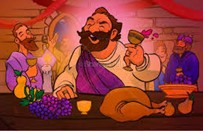
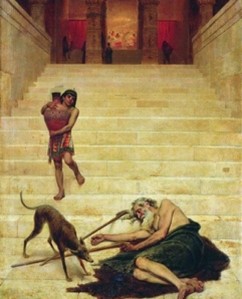
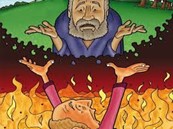
 Fr Tony's Homilies
You must be logged in to post a comment.