Feb 23-28: Feb 23 Monday: Mt 25:31-46 : 31 “When the Son of man comes in his glory, and all the angels with him, then he will sit on his glorious throne. 32 Before him will be gathered all the nations, and he will separate them one from another as a shepherd separates the sheep from the goats, 33 and he will place the sheep at his right hand, but the goats at the left. 34 Then the King will say to those at his right hand, `Come, O blessed of my Father, inherit the kingdom prepared for you from the foundation of the world; 35 for I was hungry and you gave me food, I was thirsty and you gave me drink, I was a stranger and you welcomed me, 36 I was naked and you clothed me, I was sick and you visited me, I was in prison and you came to me.’ 37 Then the righteous will answer him, `Lord, when did we see thee hungry and feed thee, or thirsty and give thee drink? 38 And when did we see thee a stranger and welcome thee, or naked and clothe thee? 39 And when did we see thee sick or in prison and visit thee?’ 40 And the King will answer them, `Truly, I say to you, as you did it to one of the least of these my brethren, you did it to me.’ 41 Then he will say to those at his left hand, `Depart from me, you cursed, into the eternal fire prepared for the devil and his angels; 42 for I was hungry and you gave me no food, I was thirsty and you gave me no drink, 43 …46
The context: Today’s Gospel describes the Last Judgment and its criterion using as an image the Palestinian shepherds’ practice of the nightly separation of the over-active, less docile goats from the docile sheep. Jesus promises that he will come in all his glory as a Judge (Christ’s Second Coming), to reward the good people and punish the bad people. This will be the final and the public separation of the good people from the evildoers.
The lessons: The parable teaches us that the main criterion of the Last Judgment will be the works of Christian charity, kindness, and mercy we have done, or not done, for others, for in everyone we have — knowingly or unknowingly — served, or refused to serve, Christ,. The parable tells us that Christ, the Judge, is going to ask us six questions, and all of them are based on how well we have cooperated with God’s grace to offer acts of charity, kindness, to everyone around us, because we have come to know through Faith that it is actually Jesus, dwelling in each of us, whom we serve. The first set of questions is: “I was hungry, thirsty, homeless. Did you give me food, drink, accommodation?” The second set of questions is: ”I was naked, sick, imprisoned. Did you clothe me? Did you help me by visiting me in my illness or in prison?” If the answers are yes, we will be eternally rewarded because we have cooperated with God’s grace by practicing charity. But if the answers are negative, we will be eternally punished. Mother Teresa of Calcutta said, “If sometimes our poor people have had to die of starvation, it is not because God didn’t care for them, but because you and I didn’t give, were not instruments of love in the hands of God, to give them that bread, to give them that clothing; because we did not recognize Christ, when once more Christ came in distressing disguise.”
Life messages: 1) The Holy Bible, the Seven Sacraments, the Ten Commandments and the precepts of the Church are all meant to help us to practice corporal and spiritual works of charity (mercy), in this life so that we may become able to receive God’s love, our eternal reward of Heavenly bliss.
2) Sins of omission (in which, we fail to recognize those in need as our brothers and sisters in Christ, and we fail to serve them in love), are very serious matters leading us toward eternal punishment. (https://frtonyshomilies.com/) L/26
Feb 24 Tuesday; Mt 6:7-15:7 “And when you are praying, do not use meaningless repetition as the Gentiles do, for they suppose that they will be heard for their 0many words. 8 “So do not be like them; for your Father knows what you need before you ask Him. 9″Pray, then, in this way: ‘Our Father who art in heaven, Hallowed be Thy name. 10 Thy kingdom come. Thy will be done, on earth as it is in heaven. 11 Give us this day our daily bread. 12 And forgive us our trespasses, as we forgive those who trespass against us. 13 And lead us not into temptation, but deliver us from evil. 14 For if you forgive men their trespasses, your heavenly Father also will forgive you; 15 but if you do not forgive men their trespasses, neither will your Father forgive your trespasses.”
The context: In today’s passage from the Sermon on the Mount, Jesus instructs the crowd that they should not pray like the Gentiles, repeating empty phrases. He means that true prayer is not so much a matter of the number of words as of the frequency and the love with which one turns towards God, raising one’s mind and heart to God. So, Jesus teaches them a model prayer. Jesus’ prayer, “Our Father,” consists of two parts. In the first part, we praise and worship God, addressing Him as our loving, caring, and providing Heavenly Father, asking Him to help us to do His Holy Will in our lives as obediently and lovingly as His Will is done in Heaven and, thus, remaining in His kingdom. In the second part, we present our petitions before the Triune God. First,we ask God for our present needs, food clothing, and shelter, (“give us this day our daily bread”), then for our past needs, especially for forgiveness of our sins (“forgive us our trespassesas we forgive those who trespass againstus”), and finally, for our future needs, protection against the tempter and his temptations (“and lead us not into temptation, but deliver us from evil”). In this part, we also bring the Trinitarian God into our lives. We bring in: 1) God the Father, the Provider, by asking for daily bread; 2) God the Son, our Savior, by asking forgiveness for our sins; and 3) God the Holy Spirit, the Paraclete, Who is our Guide, Advocate, Comforter, and Illuminator, by asking for protection and deliverance from evil. Special stress on the spirit of forgiveness:We are told to ask for forgiveness from others for our offenses against them, and to offer unconditional forgiveness to others for their offenses against us as a condition for receiving God’s forgiveness. Jesus clarifies, “If you forgive others their wrongs, your Father in Heaven will also forgive yours. If you do not forgive others, then your Father will not forgive you either” (Mt 6:14-15).
“For Thine is the Kingdom, the Power, and the Glory, now and forever. Amen.”The manuscripts of the Gospel of Matthew do not contain this phrase, nor do any of the Catholic translations. Martin Luther added this doxology to the Our Father in his translation of Matthew’s Gospel, and the King James editions of the Biblekeep it. The doxology is actually taken from the Divine Liturgy or Catholic Mass. Known as the final doxology, it takes up the first three petitions to our Father. By the final “Amen,” which means, “So be it”, we ratify what is contained in the prayer that God has taught us. Fr. Tony (https://frtonyshomilies.com/) L/26
Feb 25 Wednesday: Lk 11:29-32:29 When the crowds were increasing, he began to say, “This generation is an evil generation; it seeks a sign, but no sign shall be given to it except the sign of Jonah. 30 For as Jonah became a sign to the men of Nineveh, so will the Son of man be to this generation. 31 The queen of the South will arise at the judgment with the men of this generation and condemn them; for she came from the ends of the earth to hear the wisdom of Solomon, and behold, something greater than Solomon is here. 32 The men of Nineveh will arise at the judgment with this generation and condemn it; for they repented at the preaching of Jonah, and behold, something greater than Jonah is here.
The context: Since there had been many false prophets and false messiahs in the past, and since their pride and prejudice did not permit them to see the Messiah in a carpenter-from-Nazareth-turned-wandering-preacher, the Jewish religious leaders demanded that Jesus should show some “Messianic” signs and miracles taken from their list. They would not accept that the plethora of miracles, healings, and signs which Jesus had been performing everywhere, actually were the Messianic signs foretold by the prophets. It would be Levi-Matthew who in his Gospel, would painstakingly track down the prophetic sources of the Messianic Signs, and painstakingly attach attached them to Jesus’ miracles
Jesus’ negative response: Calling them an apostate generation who refused to believe in their own prophets and denied the hand of God in the miracles he worked, Jesus warned these religious leaders that they would be condemned on the Day of Judgment by the people of Nineveh and by the Queen of Sheba from the South. (Sheba, or Saba, was a southern kingdom centred on Yemen or Ethiopia, and possibly including both. The distance from Yemen to Jerusalem is 2084 miles). This is one of the instances in which Jesus held up Gentiles as models of Faith and goodness (other examples: the Canaanite woman in Mt 15, the centurion in Lk 7, the Good Samaritan story in Luke 10; etc.). The pagan Ninevites heard the voice of the Lord God in the prophet Jonah, repented, and were spared. The Queen of Sheba recognized God’s Wisdom in King Solomon, and she traveled to Israel to receive more of it. Nevertheless, Jesus gave the religious leaders challenging him, “the sign of Jonah.” It was the undeniable Messianic sign of his own Resurrection from the tomb on the third day after his death and burial, just as Jonah had spent three days in the belly of the giant fish before finally going to Nineveh to accomplish the mission God had originally given him.
Life messages: We need to recognize God-given signs in our lives: 1) Each Sacrament in the Church is an external sign representing God’s grace. 2) On the altar we re-present Christ’s sacrifice on the cross, using liturgical signs and prayers. 3) Everyone living with us or working with us is a sign of God’s living presence in our midst, inviting us to love and honor him or her as God’s child and the living Temple of the Holy Spirit. 4) All world events and all the events in our lives are signs of God’s care and protection for us, His children. 5) The Holy Bible is a sign of God communicating His message to us every day. So, let us learn from these God-given signs instead of looking for “signs” in weeping Madonnas, bleeding crucifixes and daily messages of visionaries. Fr. Tony (https://frtonyshomilies.com/) L/26
Feb 26 Thursday; Mt 7:7-12:7 “Ask, and it will be given you; seek, and you will find; knock, and it will be opened to you. 8 For everyone who asks receives, and he who seeks finds, and to him who knocks it will be opened. 9 Or what man of you, if his son asks him for bread, will give him a stone? 10 Or if he asks for a fish, will give him a serpent? 11 If you then, who are evil, know how to give good gifts to your children, how much more will your Father who is in heaven give good things to those who ask him! 12 So whatever you wish that men would do to you, do so to them; for this is the law and the prophets.
The context: In today’s Gospel, taken from the Sermon on the Mount, Jesus outlines the conditions for fruitful and effective prayer.
1) The first condition is trusting Faith and confidence in the goodness and promises of a loving Father. As a loving Father, God knows what to give, when to give, and how to give, irrespective of what we ask for. As One Who knows our past, present, and future, God knows what is best for us at any given time. He is a loving Father, and He will not give us evil things as did the grudging and mocking gods in Greek stories to their worshippers. Jesus explains this with two examples. Even a bad parent would not give a bread-shaped piece of limestone to his child asking for bread, or a stinging scorpion instead of a fish. So, all the experiences in our lives, including illnesses and tragedies, are permitted by a loving God with a definite purpose – to work in us for our ultimate good
2) Persistence in prayer is the second condition Patient, trusting persistence reflects our dependence on, and trust in, God. That is why Jesus asks us to keep on asking, seeking and knocking. St. Augustine explains God’s delay in answering our prayers as His way of stretching us, expanding our desire so as to enable us to receive the gift He desires to give us.
Life messages: 1) Let us remember that we can’t have a close relationship with anyone, especially with God, without daily, persistent, and intimate conversation, by lifting up our hearts and minds to God. 2) We need to remember the fact that prayer is a conversation with God, by, listening to God, speaking to us through the Bible and the Church and talking to God by our personal, family and liturgical prayers. 3) We need to stop giving lame excuses for not praying, like a) we are too busy; b) we believe that prayer doesn’t do that much good, other than giving us psychological motivation to be better persons; c) a loving God should provide for us and protect us from the disasters of life, such as disease or accidents, without our asking Him; or d) prayer is boring. Fr. Tony (https://frtonyshomilies.com/) L/26
Feb 27 Friday: Mt 5:20-26: 20 For I tell you, unless your righteousness exceeds that of the scribes and Pharisees, you will never enter the kingdom of heaven. 21 “You have heard that it was said to the men of old, `You shall not kill; and whoever kills shall be liable to judgment.’ 22 But I say to you that every one who is angry with his brother shall be liable to judgment; whoever insults his brother shall be liable to the council, and whoever says, `You fool!’ shall be liable to the hell of fire. 23 So if you are offering your gift at the altar, and there remember that your brother has something against you, 24 leave your gift there before the altar and go first be reconciled to your brother, and then come and offer your gift. 25 Make friends quickly with your accuser, while you are going with him to court, lest your accuser hand you over to the Judge, and the Judge to the guard, and you be put in prison; truly, I say to you, you will never get out till you have paid the last penny.”
The context: For the Scribes and the Pharisees, the external fulfillment of the precepts of the Mosaic Law was the guarantee of a person’s salvation. In other words, a man saved himself through the external works of the Law. Jesus rejects this view in today’s Gospel passage, taken from the Sermon on the Mount. For Jesus, justification or sanctification is a grace, a free, strengthening gift from God. Man’s role is one of cooperating with that grace by being faithful to it, and using it as God means it to be used. Jesus then outlines new moral standards for his disciples.
Control of anger: Anger is the rawest, strongest, and most destructive of human emotions. Describing three stages of anger and the punishment each deserves, Jesus advises his disciples not to get angry in such a way that they sin.
Anger in the heart (“brief stage of insanity” Cicero):It has two forms: a) a sudden, blazing flame of anger which dies down suddenly. b) a surge of anger which boils inside and lingers, so that the heart seeks revenge and refuses to forgive or forget. Jesus prescribes trial and punishment by the Village Court of Elders as its punishment.
Anger in speech: The use of words which are insulting, like (“raka“=“fool”), or damaging to the reputation (“moros” = a person of loose morals). Jesus says that such an angry (verbally abusive) person should be sent to the Sanhedrin, the Jewish religion’s Supreme Court, for trial and punishment.
Anger in action: Sudden outbursts of uncontrollable anger, which often result in physical assault or abuse. Jesus says that such anger deserves hellfire as its punishment.
In short, Jesus teaches that long-lasting anger is bad, contemptuous speech or destroying someone’s reputation is worse, and harming another physically is the worst.
Life messages: 1)Let us try to forgive,forget, and move toward reconciliation as soon as possible. St. Paul advises us “Be angry (righteous anger), but do not sin” (Eph 4:26). 2) When we keep anger in our mind, we are inviting physical illnesses like hypertension, and mental illnesses like depression. 3) Let us relax and keep silence when we are angry, pray for God’s strength for self-control, and ask Him for the grace, first to desire to forgive, and then the grace actually to do the forgiving of those who have injured us. Fr. Tony (https://frtonyshomilies.com/) L/26
Feb 28 Saturday: Mt 5:43-48: 43″You have heard that it was said, `You shall love your neighbor and hate your enemy.’ 44 But I say to you, Love your enemies and pray for those who persecute you, 45 so that you may be sons of your Father who is in heaven; for he makes his sun rise on the evil and on the good, and sends rain on the just and on the unjust. 46 For if you love those who love you, what reward have you? Do not even the tax collectors do the same? 47 And if you salute only your brethren, what more are you doing than others? Do not even the Gentiles do the same? 48 You, therefore, must be perfect, as your Heavenly Father is perfect
The context: Today’s Gospel passage is perhaps the central and the most famous section of the Sermon on the Mount. It gives us the Christian ethic governing personal relationship: one must love one’s enemies, as well as one’s neighbors, and show one’s love for one’s enemies by forgiving them and praying for them. Above all, it tells us that what makes Christians different is the grace with which we interact with others, treating them with loving kindness and mercy, especially when those others seemingly “don’t deserve it.” The Old Law never said we were to hate our enemies, but that was the way some Jews understood the matter. That is one reason why Jesus directly commands us to love our enemies and pray for those who persecute us; This command, obeyed, would fully demonstrate that we are the children of a merciful Heavenly Father. From the cross, Jesus, “living what he preached,” did for His enemies (those who called Him Enemy and, at that moment, were mocking him in his agony on the Cross what God demands of each of us: He forgave them Himself and then turned tot he Father and made excuses for them!
Lent II [A] Sunday (March 1) 1-page summary of an 8- minute homily L/26
Introduction: The common theme of today’s readings is metamorphosis or transformation. The readings invite us to work, with the assistance of the Holy Spirit, to transform and renew our lives during Lent, so that we may radiate the glory and grace of the transfigured Lord, which we have just received, all around us by our Spirit-filled lives.
Scripture lessons: The first reading describes the transformation of a pagan patriarch into a believer in the one God. His name will be transformed from Abram to Abraham and his small family into a great nation. All Abram has to do is to obey the Lord God’s command, and he does so. The second reading, taken from St. Paul’s second letter to Timothy, explains the type of Lenten transformation expected of us. We are transformed when we recognize the hand of a loving, providing, and disciplining God behind all our hardships, pain, and suffering and try our best to grow in holiness by cooperating with the grace of God given to us through Jesus and his Gospel. In the Transfiguration story in today’s Gospel, Jesus is revealed as a glorious figure, superior to Moses and Elijah. The primary purpose of Jesus’ Transfiguration was to allow Jesus to consult his Heavenly Father in order to ascertain His plan for His Son’s suffering, death, and Resurrection. The secondary aim was to make his chosen disciples aware of Jesus’ Divine glory, so that they might discard their worldly ambitions and their dreams of him as a conquering political Messiah, and that they might be strengthened in their time of trial. On the mountain,Jesus is identified out of the Cloud by the Heavenly Voice (God the Father), as “My beloved Son, in Whom I am well pleased!” On Jesus, the Holy Spirit would also descend as a dove, confirming for John (Jesus’ Precursor and Baptizer), the the identity of his cousin Jesus of Nazareth, as the Promised Messiah, as John publicly proclaimed. Thus, the Transfiguration narrative is a Christophany, that is, a manifestation or revelation of who Jesus really is. Describing Jesus’ Transfiguration, the Gospel gives us a glimpse of the Heavenly glory awaiting those who do God’s will by putting their trusting Faith in Him, as the Responsorial Psalm (Ps 33), for today, encourages us to do.
Life messages: (1) The Transubstantiation in the Holy Mass is the source of our strength. In each Holy Mass our offering of bread and wine becomes the Body and Blood of Jesus under the appearances of bread and wine. Hence, just as the Transfiguration of Jesus strengthened the Apostles in their time of trial, each Holy Mass should be our source of Heavenly strength for resisting evil when the evil one incites us to disobey the will of God and to choose to serve ourselves as gods turning our backs on God, rejecting His Love, Grace and salvation — and then yielding ourselves more completely to the evil one’s ways and lies. The Holy Mass, then is the best defense against the barrages of temptations for it provides us with and inexhaustible source a source of grace for renewing our lives during Lent and of strengthened protection against temptations at repeated attacks of the evil one. In addition, should be a source of daily transformation of both our minds and hearts, enabling us to see Jesus in every one of our brothers and sisters with whom we come in contact each day. (2) Each Sacrament that we receive transforms us. Baptism, for example, transforms us into sons and daughters of God and heirs of heaven. Confirmation makes us the temples of the Holy Spirit. By the Sacrament of Reconciliation, God brings the sinner back to the path of holiness. The Sacrament of the Anointing of the Sick, received in Faith, gains for the recipient complete spiritual healing, forgiveness for all our sins and whatever kind of Physical healing God knows will be best for us at that time.
(3) A message of hope and encouragement. In moments of doubt, pain and suffering, disappointment and despair, we need mountain-top experiences to reach out to God and listen to His consoling words: “This is my beloved son/daughter in whom I am well pleased.” Our Lenten penance will lead us to Easter joy.
LENT II [A] Sunday (March 1): Gn 12:1-4a; II Tm 1:8b-10; Mt 17:1-9
Homily starter anecdotes: # 1: “O Lord, open his eyes so he may see.”There is a mysterious story in 2 Kings that can help us understand what is happening in the Transfiguration. Israel was at war with Aram, and Elisha, the man of God, was using his prophetic powers to reveal the strategic plans of the Aramean army to the Israelites. At first the King of Aram thought that one of his officers was playing the spy, but when he learned the truth, he dispatched his troops to go and capture Elisha who was residing in Dothan. The Aramean troops moved in under cover of darkness and surround the city. In the morning Elisha’s servant is the first to discover that they are surrounded and fears for his master’s safety. He runs to Elisha and says, “Oh, my lord, what shall we do?” The prophet answers “Don’t be afraid. Those who are with us are more than those who are with them.” But who would believe that, when the surrounding mountainside is covered with advancing enemy troops? So, Elisha prays, “O Lord, open his eyes so he may see.” Then the Lord opens the servant’s eyes, and he looks and sees the hills full of horses and chariots of fire all around Elisha (2 Kings 6:8-23). — This vision was all that Elisha’s disciple needed to reassure him. At the end of the story, not only was the prophet of God safe, but the invading army was totally humiliated. (Fr. Munacci) (https://frtonyshomilies.com/).
# 2:“Lord, give me the grace for transformation.” The word transfiguration means a change in form or appearance. Biologists call it metamorphosis (derived from the Greek word metamorphoomai used inMatthew’s Gospel), to describe the change that occurs when a caterpillar becomes a butterfly. (Holo-metabolism, also called complete metamorphism, is a form of insect development which includes four life stages – as an embryo or egg, a larva, a pupa and an imago or adult). As children, we might have curiously watched the process of the caterpillar turning into a chrysalis and then bursting into a beautiful Monarch butterfly. Fr. Anthony De Mello tells the story of such a metamorphosis in the prayer life of an old man. “I was a revolutionary when I was young, and all my prayer to God was: ‘Lord, give me the grace to change the world.’ As I approached middle age and realized that half of my life was gone without changing a single soul, I changed my prayer to: ‘Lord, give me the grace to change all those who come in contact with me; just my family and friends and I shall be satisfied.’ Now that I am old and my days are numbered, I have begun to see how foolish I have been. My one prayer now is: ’Lord, give me the grace to change myself.’ If I had prayed for this right from the start, I should not have wasted my life.” (https://frtonyshomilies.com/).
# 3: Metamorphosis of a Grub into a Dragonfly: You will recall from 7th-grade science class that metamorphosis is the process by which a caterpillar becomes a butterfly and a tadpole becomes a frog. It’s a gradual change on the inside that produces a total transformation on the outside. Holo-metabolism, also called complete metamorphism, is a form of insect development which includes four life stages – as an embryo or egg, a larva, a pupa and an imago or adult. At the bottom of a pond some little grub worms or nymphs (larvae of dragonflies) are crawling around in the mud. Perhaps they wonder what happens to their members who climb up the stem of the water lily and never come back. They agree among themselves that the next one who is called to the surface will come back and tell them what happened. The next grub worm (nymph) that finds itself drawn to the surface by nature, crawls out on a lily leaf and emerges from its last molting skin as a beautiful adult dragonfly. It has been dark and murky down below, but the dragonfly sees that everything is bright and sunny in the upper world. Suddenly something begins to happen. The transformed grub spreads out two huge, beautiful, colored wings and flies back and forth across the pond to convey the glad tiding of its transfiguration to its friends. It can see the other grubs in the pond below, but they can’t see him. It also realizes that it cannot dive into the pond to convey the glad tidings of its great transformation. This metamorphosis is nothing in comparison to the glorious transformation awaiting us after our death. 1) https://youtu.be/-Hc5BYGQrP8 b 2) https://youtu.be/0C21zranBUw (https://frtonyshomilies.com/).
3) Metamorphosis of antlion to fly 4) Holo-metabolism of Butterflies
Introduction: The common theme of today’s readings is metamorphosis or transformation. The readings invite us both to work with the Holy Spirit as He goes about transforming us and renewing our lives during Lent, and to learn from His teaching and example, how to radiate the grace of the transfigured Lord to all around us by our Spirit-filled lives. The Transfiguration of Jesus on the mountain reminds us that the way of the cross leads to Resurrection and eternal life, and that the purpose of Lent is to help us better to enter into those mysteries.
Scripture readings summarized: Both the first and second readings present salvation history as a response to God’s call, a call going out to a series of key persons beginning with Abraham and culminating with Jesus Christ and His Apostles. Faith is presented here as the obedient, trusting response to the call of God which opens up channels in us, in the Church, and in the World, for the full, free, redemptive action of God in history, thus transforming the world. In answering this call, both Abram and Saul broke with the experiences of their past lives and moved into an unmapped future to become new “people of the Promise,” for a new life. The first reading presents the change or transformation of the patriarch Abram from a childless pagan tribesman into a man of Faith in the One God. This, years later, leads to God’s transforming his name from Abram to Abraham, and making him, as promised, the father of God’s chosen people, Israel. Today’s Responsorial Psalm (Ps 33) Response, “Lord, let Your Mercy be on us, as we place our trust in You,” reminds us that we must trust in the Lord ”Who is our Help and our Shield,” for, “Upright is the Word of the Lord, and all His works are trustworthy.” The second reading, taken from St. Paul’s second letter to Timothy, explains the type of Lenten life-transformation expected of us. Today’s Gospel describes Jesus’ Transfiguration during prayer on a mountain.
First reading: Genesis 12:1-4 explained: The reading from Genesis explains how blind obedience to God transforms the childless and pagan Abram into a believer in the one true God, and, later in his story, from Abram into the Abraham who became theprototype of trusting Faith and the father of God’s Chosen People. Blind obedience to God at His command transformed childless Abram into the Patriarch Abraham, a believer in the one God. Today’s passage is really the first encounter between Abram and God. Abram, a pagan, was prosperous in land and livestock, but he had no children, and that, to people of his time, was the most serious of all possible deprivations. So, God challenged him with an offer: “I will make of you a great nation.” But God’s requirements were absolute: “Go forth from the land of your kin.” Abram (from Ab, father, and ram, great) was from Ur in Chaldea (Gn 11:31) and, as one of Terah’s sons, journeyed with his family to Haran in upper Mesopotamia, about 900 miles north of Ur. The requirements were to become even more absolute when, after Abraham finally had a son of his own body through Sarah, the barren, God asked him to sacrifice that same son (Gn 22:1-18). God asks us, too, to leave our old life of sin behind, to go forth with Him into a period of repentance, renewal of life and transformation, and to give Him the whole of our being in loving surrender forever.
The second reading: II Timothy 1:8-10 explained: St. Paul’s letter to Timothy explains the type of Lenten life-transformation expected of us. We should be ready to bear hardship for the Gospel’s sake, and to be thankful to God for our call to holiness, not trusting in our own merits but in His grace to live obedient, loving, Faith-filled lives: “Bear your share of hardship for the Gospel with the strength that comes from God.” This passage has the following Lenten themes: a) bearing hardship for the sake of the Gospel; b) understanding that we are called not because of our own good works, but by undeserved grace; c) allowing God to make our belief, that we were drawn into the central reality in our daily living; and d) facing death while hoping for immortality, a share in the Resurrection. The phrase “manifest through the appearance of our Savior,” meaning after Jesus’ Resurrection from the dead, may also be a reference to today’s Gospel story of Jesus’ Transfiguration, traditionally read on the second Sunday of Lent.
Gospel exegesis:The objectives and the time of the Transfiguration:The primary purpose of Jesus’ Transfiguration was to consult his Heavenly Father in order to ascertain His plan for Our Lord’s suffering, death and Resurrection. The secondary aim was to make Jesus’ chosen disciples aware of His Divine glory, so that they might discard their worldly ambitions about a conquering political Messiah. A third purpose was to strengthen their Faith and Hope and to encourage them to persevere through the future ordeal (CCC #568). The Transfiguration took place in late summer, probably in AD 29, just prior to the Feast of Tabernacles. Hence, the Orthodox tradition celebrates the Transfiguration at about the time of the year when it actually occurred in order to connect it with the Old Testament Feast of Tabernacles. Western tradition celebrates the Transfiguration twice, first at the beginning of Lent with this Gospel account and second on August 6 with a full Feast Day liturgy.
The location of the Transfiguration was probably Mount Hermon in North Galilee, near Caesarea Philippi, where Jesus had camped for a week before the Transfiguration. The 9200-foot mountain was desolate. The traditional oriental belief that the transfiguration took place on Mount Tabor is based on Psalm 89:12. Mount Tabor, on the other hand, is a hill in the south of Galilee, less than 1000 feet high with a Roman fort on top of it, an unlikely place for solitude and prayer. But, says modern Bible scholar John McKenzie “It is far more probable that this mountain, like the mountain of the Sermon (Mt 5:11) has no geographical location. It is the symbolic mountain on which the events of Sinai are re-enacted in the life of the new Moses.”
The scene of Heavenly glory: The disciples received a preview of the glorious figure Jesus would become at Easter and beyond. While praying, Jesus was transfigured into a shining figure, full of Heavenly glory. This reminds us of Moses and Elijah who also experienced the Lord in all His glory. Moses had met the Lord in the burning bush at Mount Horeb (Ex 3:1-4). After his later encounter with God, Moses’ face shone so brightly that it frightened the people, and Moses had to wear a veil over his face (Ex 34:29-35). The luminosity of the face of Moses is also meant to signal the loving, welcomed invasion of God. Into his soul. The Jews believed that Moses was taken up in a cloud at end of his earthly life (Josephus, Antiquities of the Jews, 4. 326). Elijah had traveled for forty days to Mt. Horeb on the strength of the food brought by an angel (1 Kgs 19:8). At Mt. Horeb, Elijah sought refuge in a cave as the glory of the Lord passed over him (1 Kgs 19:9-18). Finally, Elijah, was taken directly to Heaven in a chariot of fire without experiencing death (2 Kgs 2:11-15). In addition, “Moses led his people out of slavery in Egypt, received the Torah on Mount Sinai and brought God’s people to the edge of the Promised Land. Elijah, the great prophet in northern Israel during the ninth century B.C., performed healings and other miracles and stood up to Israel’s external enemies and the wicked within Israel. Their presence in Matthew’s Transfiguration account emphasizes Jesus’ continuity with the Law (Moses) and the prophets (Elijah) in salvation history.” (Fr. Harrington S. J.)
These representatives of the Law and the Prophets, foreshadowed Jesus who is the culmination of the Law and the Prophets. Both prophets were initially rejected by the people but were vindicated by God. The Jews believed that these men did not die, because God Himself took Moses (Dt 34:5-6), and Elijah was carried to heaven in a whirlwind (2 Kgs 2:11). So, the implication is that although God spared Moses and Elijah the normal process of death, He did not spare His Son. Peter’s offer to pitch three tents (vs. 4) is an allusion to the feast of Sukkoth (Tabernacles, Tents, Booths) which commemorated the wilderness period when the Israelites lived in tents (Dt 16:13-15).
God the Father’s Voice from the Cloud: The book of Exodus describes how God spoke to Moses at Mount Sinai from the Cloud. God often made appearances in a cloud (Ex 24:15-17; 13:21-22; 34:5; 40:34; 1 Kgs 8:10-11). I Kgs 8:10 tells us how, by the cover of a cloud, God revealed His presence over the Ark of the Covenant and in the Temple of Jerusalem on the day of its dedication. The Jews generally believed that the phenomenon of the Cloud would be repeated when the Messiah arrived. God the Father, Moses, and Elijah approved the plan for Jesus’ suffering, death and Resurrection. God’s words from the Cloud: “This is my Son, the Beloved; with Him I am well pleased; listen to Him,” are the same words used by God at Jesus’ baptism (Mk 3:17). They summarize the meaning of the Transfiguration: on this mountain: God reveals Jesus as His Son — His beloved — the One in Whom He is well pleased and to Whom we must listen. The Catechism of the Catholic Church, #556, underlines the implication of the Lord’s baptism and his Transfiguration for our life: “On the threshold of the public life: the baptism; on the threshold of the Passover: the Transfiguration. Jesus’ baptism proclaimed the mystery of the first regeneration, namely, our Baptism. The Transfiguration is the sacrament of the second regeneration: our own Resurrection.” In the transfigured Jesus we see a preview of where we are going on this journey of Faith: to a transfigured humanity. But going down from the mountain he reminds us of the costs of this journey. Jesus, God’s Son and servant, is called to be a suffering servant. The road to the final transfiguration goes by way of Mount Calvary. Paul reminds us of this when he calls us to join him in suffering for the Gospel.
Life messages: (1) The Transubstantiation in the Holy Mass is the source of our strength. At the shortage of wine during the wedding of Cana, Jesus changed water into wine: one substance became another substance, and the appearances changed. In each Holy Mass our offering of bread and wine becomes the Body and Blood of Jesus under the unchanged appearances of bread and wine. Hence, just as Jesus’ Transfiguration strengthened the Apostles in their time of trial, each Holy Mass should be our source of Heavenly strength against our own temptations and our source for the renewal of our lives during Lent. In addition, communion with Jesus in prayer and in the Eucharist, should be a source of daily transformation for both our minds and hearts. We must also be transformed by becoming humbler and more selfless, sharing love, compassion, and forgiveness with others. But in our everyday lives, we often fail to recognize Jesus when he appears to us “transfigured,” hidden in someone who is in some kind of need. Jesus is happy when we attend to His needs in a needy person. With the eyes of Faith, we must see that Jesus truly IS, in every single one of our brothers and sisters in need – and that includes everybody! When we do see, and do act upon what we believe, we are indeed true Brothers and Sisters of Christ the children of God.
(2) Each Sacrament that we receive transforms us. Baptism transforms us into sons and daughters of God and heirs of heaven. Confirmation makes us the temples of the Holy Spirit. By the Sacrament of Reconciliation, God brings back each of us sinners back to the path of holiness. By receiving in Faith, the Sacrament of the Anointing of the Sick, we are spiritually, and, if God wills, physically, healed and our sins are forgiven (CCC #568). And so it is with Marriage, and most particularly with our reception of Jesus Himself, in the Eucharist and with Holy Orders in which a man becomes a Priest, an alter Christus, who with the Power of the Holy Spirit, offers the Sacrifice of the Mass and serves as a Shepherd of Jesus’ sheep.
(3) A message of hope and encouragement. In moments of doubt and during feelings of despair, the expectation of our transformation in Heaven helps us to reach out to God and listen to His consoling words: “This is my beloved son/daughter in whom I am well pleased.”
(4) We need these ‘mountain-top’ experiences in our own lives. We can share experiences like those of Peter, James, and John when we spend some extra time with Jesus in prayer during Lent. Perhaps we may want to fast for one day, taking only water, thus releasing spiritual energy, which in turn, can lift our thoughts to a higher plane. Such a fast may also help us to remember the starving millions in the world and make us more willing to help them.
JOKES OF THE WEEK:1) Lenten penance: There is a story of a father trying to explain Lent to his ten-year-old son. At one point, the father said, “You ought to give up something for Lent, something you will really miss, like candy.” The boy thought for a moment, then asked, “What are you giving up, Father?” “I’m giving up liquor,” the father replied.“But before dinner you were drinking something,” the boy protested. “Yes, but that was only sherry,” said the father. “I gave up hard liquor.” To which the boy replied, “Well then, I think I’ll give up hard candy.”
2) “I have decided to give up drinking for Lent:” An Irishman moves into a tiny hamlet in County Kerry, walks into the pub and promptly orders three beers. The bartender raises his eyebrows, but serves the man three beers, which he drinks quietly at a table, alone and orders three more. As this continued every day the bartender asked him politely, “The folks around here are wondering why you always order three beers?” “It’s odd, isn’t it?” the man replies, “You see, I have two brothers, and one went to America, and the other to Australia. We promised each other that we would always order an extra two beers whenever we drank.” Then, one day, the man comes in and orders only two beers. As this continued for several days, the bartender approached him with tears in his eyes and said, “Folks around here, me first of all, want to offer condolences to you for the death of your brother. You know-the two beers and all…” The man ponders this for a moment and then replies with a broad smile, “You’ll be happy to know that my two brothers are alive and well. It’s just that I, myself, have decided to give up drinking for Lent.”
3) “Don’t worry about me, Lord.” A certain missionary on a study trip to the Holy Land was visiting Jaffa (Joppa) where Peter was residing when he baptized Cornelius (Acts 10). The breath-taking beauty of this small seaside town was such that it inspired the missionary to come up with this joke: At the Transfiguration Peter offered to build three tents, one for Jesus, one for Moses and one for Elijah. Jesus said, “And what about you, Peter?” And Peter replies, “Don’t worry about me Lord! I got a better place in Jaffa.”
USEFUL WEBSITES OF THE WEEK (For homilies & Bible study groups) (The easiest method to visit these websites is to copy and paste the web address or URL on the Address bar of any Internet website like Google or MSN and press the Enter button of your Keyboard).
21- Additional anecdotes1) “You don’t really know how it works, do you, Mom?“ A little boy asked his mother, “Marriage makes you have babies, doesn’t it, Mom?” The mother reluctantly answered her son, “Well, not exactly. Just because you are married does not mean that you have a baby.” The boy continued his inquiry: “Then how do you have babies?” His mother, not very enthusiastic about continuing, answered, “It’s kind of hard to explain.” The boy paused and thought for a moment. He then moved closer to Mom, looked her right in eye, and carefully said, “You don’t really know how it works, do you, Mom?” — Believe it or not, today’s Gospel passage on theophany on a mountain is one of those “What does that mean, and how am I supposed to explain that?” sort of passages. It’s difficult because, as the little boy told his mother, we “don’t really know how it works.” And when you don’t know how something works, it’s hard to explain. (https://frtonyshomilies.com/).
2) Baby powder and Christian transformation: You might remember comedian Yakov Smirnoff. When he first came to the United States from Russia, he was not prepared for the incredible variety of instant products available in American grocery stores. He says, “On my first shopping trip, I saw powdered milk; you just add water, and you get milk. Then I saw powdered orange juice; you just add water, and you get orange juice. And then I saw baby powder, and I thought to myself, ‘What a country!’” Smirnoff was joking, but we make these assumptions about Christian Transformation—that people change instantly from sinners to saints. Catholics call it transformation through repentance and renewal of life, deriving strength through the word of God and the Sacraments to cooperate with God’s grace for doing acts of charity. Some other Christian denominations call it Sanctification of the believer. Whatever you call it, most denominations expect some quick fix for sin. According to this belief, when someone gives his or her life to Christ, accepting Him as Lord and personal Savior, and confesses his or her sins to Him, there an immediate, substantive, in-depth, miraculous change in habits, attitudes, and character. — Can we go to Church as if we are going to the grocery store to get Powdered Christian? The truth is that Disciples of Christ are not born by adding water to Christian powder, for there is no such powder, and disciples of Jesus Christ are not instantly born adult. They are slowly raised through many trials, sufferings, and temptations and by their active cooperation with the grace of God, expressed through works of charity. (Adapted from James Emery White, Rethinking the Church, by Baker). (https://frtonyshomilies.com/).
3) Edmund Hillary’s mountain-top experience on Mount Everest. The seniors among us certainly recall that amazing story 73 years ago, May 29, 1953. A New Zealand beekeeper named Edmund Hillary and a Sherpa guide, Tenzing Norgay, were the first ever to reach Everest’s summit. Here was a mountain – unreachable, tantalizing, fearsome, deadly – that had defeated 15 previous expeditions. Some of the planet’s strongest climbers had perished on its slopes. For many, Everest represented the last of the earth’s great challenges. The North Pole had been reached in 1909; the South Pole in 1911. But Everest, often called the Third Pole, had defied all human efforts – reaching its summit seemed beyond mere mortals. Now success! And heightening the impact even further was the delicious coincidence of their arrival just before the coronation of Queen Elizabeth II and the dramatic announcement of their triumph on the morning of the coronation. It was literally a “mountaintop experience.” — The mountaintop experience recounted in today’s Gospel a moment ago had Jesus and His three closest Apostles – Peter, James, and John – going up on a high mountain where they experienced the miraculous Transfiguration undergone by Jesus, making His Heavenly glory visible to His disciples. (https://frtonyshomilies.com/).
4) “I just want you to know that I love you.” Did you hear the story about an inattentive, workaholic husband who suddenly decided to surprise his wife with a night to remember? He went down to the department store and bought her the expensive dress she had been admiring. He bought her a large bottle of perfume to go with it. He ordered tickets to the Broadway play she had been wanting to see and made reservations at their favorite restaurant. On his way home he stopped by the florist and bought two dozen red roses which he carried home under his arm. Upon arriving home, he exploded through the door, hugged his wife affectionately and told her what he had done. “I just want you to know that I love you; I appreciate you; I adore you.” Instead of melting in the man’s arms his wife started screaming at the top of her voice. “This has been the worst day of my life,” she shouted. “It was awful at the office. We lost our biggest account; my co-workers were obnoxious; the clients were unreasonable. I came home to find the kids had broken my favorite lamp; the babysitter is quitting; and the water heater is out; and now surprise of surprises, my normally sober husband comes home drunk!” — When today’s Gospel starts talking about a Transfiguration with radiant faces and glowing garments and visitors from the dead, we become more than a little suspicious. What is going on here? All along the question remains: Are we willing to let ourselves be engulfed in mystery, inspired by glory, transformed by encounters of a Divine kind? That’s what the Transfiguration of Jesus is all about. (https://frtonyshomilies.com/).
5) The new Prioress is turning monastic life into “one big party.” A most unusual protest took place in a convent in New Jersey. Four nuns locked themselves in a tiny second floor infirmary and took a vow of “near silence.” They were protesting new rules established by their new prioress, Mother Theresa Hewitt. It seems that Mother Theresa had introduced television, secular videos, recorded music, bright lights, and (horror of horrors) daily “sweets” into the convent. The sweets consisted of a tin of candy which was passed around each day and each nun was supposed to indulge. In the words of one of the protesting nuns (who were among the younger nuns in the order, by the way) the new prioress was turning monastic life into “one big party.” In order to express their revulsion at these ungodly changes, the four sisters locked themselves away. — We can sympathize. There is much in our brave new world from which I would like to withdraw. I can sympathize with Simon Peter who wanted to build three booths and stay on the mountaintop of the Transfiguration in the presence of Jesus, Moses, and Elijah. Unfortunately, he was not given that option, and neither are we. We must live in this world of strident, discordant noise. There is no retreat. (https://frtonyshomilies.com/).
6) Movie preview: You go into the movie theatre, find a seat that’s suitable. You find a place for your coat, sit down, and get ready to watch the movie. The house lights dim; the speakers crackle as the dust and scratches on the soundtrack are translated into static, and an image appears on the screen. It is not the film you came to see. It is the preview of coming attractions, a brief glimpse of the highlights of a film opening soon. The moviemakers and theater owners hope the preview will pique your interest enough to make you want to come back and see the whole film. — On the Mount of the Transfiguration, Peter, James, and John, the inner circle of Jesus’ disciples, were given a preview of coming attractions. Today’s Gospel gives us a splendid preview of Jesus, radiant in Divine glory, his mortal nature brilliantly, though not permanently, transfigured — a dazzling preview of His Divinity, unalloyed and perfectly pure, shining in glory like the very sun. This was a “sneak preview, “ in other words, of Easter and of His final coming in Glory to take us Home, the triumphant climax of the epic love story between God and humanity. (https://frtonyshomilies.com/).
7) “I had an hour of Glory on a windswept hill.” Dr. William Stidger once told of a lovely little 90-year-old lady named Mrs. Sampson. Mrs. Sampson was frail, feeble, even sickly. But Dr. Stidger said that when he was discouraged, he always went to visit Mrs. Sampson. She had a radiant spirit that was contagious. One day he asked this 90-year-young woman, “What is the secret of your power? What keeps you happy, contented and cheerful through your sickness?” She answered with a line from a poem, “I had an hour of Glory on a windswept hill.” Bill Stidger said, recounting this experience, “I knew she had been in touch with God and that was the whole reason for her cheerfulness.”– Listen again to her words: “an hour of Glory on a windswept hill.” It sounds very much like the experience Peter, James and John had on the Mount of Transfiguration. (https://frtonyshomilies.com/).
8) “What did you do with the ship?”A brilliant magician was performing on an ocean liner. But every time he did a trick, the Captain’s parrot would yell, “It’s a trick. He’s a phony. That’s not magic.” Then one evening during a storm, the ship sank while the magician was performing. The parrot and the magician ended up in the same lifeboat. For several days they just glared at each other, neither saying a word to the other. Finally, the parrot said, “OK, I give up. What did you do with the ship?”– The parrot couldn’t explain that last trick! It was too much to comprehend, even for a smart parrot. — Peter was like that parrot after witnessing the Transfiguration scene. He said to Jesus, “Rabbi, it is good for us to be here. Let us put up three tents-one for you, one for Moses, and one for Elijah.” (https://frtonyshomilies.com/).
9) The Mountain Top. John A. Redhead, Jr. tells of a father and son who have a really good relationship. Among their many good times together, one stood out above all the rest: It was a hike up a particular mountain where they seemed to reach the height of a beautiful friendship. After they returned home, there came a day when things did not seem to run as smoothly. The father rebuked the son, and the son spoke sharply in return. An hour later, the air had cleared. “Dad,” said the son, “whenever it starts to get like that again, let’s one of us say ‘The Mountain Top.’” So, it was agreed. In a few weeks another misunderstanding occurred. The boy was sent to his room in tears. After a while, the father decided to go up and see the boy. He was still angry until he saw a piece of paper pinned to the door. The boy had penciled three words in large letters: “The Mountain Top.” That symbol was powerful enough to restore the relationship of father and son. (Harry Emerson Fosdick, Riverside Sermons (New York: Harper and Brothers, 1958).) — Come with me to the mountain. It is there that relationships can be made right. Come with me to the mountain. See who Jesus is. See what, by his grace, you and I can yet become. (https://frtonyshomilies.com/).
10) The Church of Transfiguration: The traditional site for the Transfiguration is Mount Tabor, a high mountain in the north country of Israel. Over the years, the Church has gone where Peter could not go, and we have built what he could not build. Helena, mother of Constantine, built a sanctuary on the top of Mount Tabor in 326 A.D. By the end of the sixth century, three churches stood on the mountaintop, one each for Jesus, Moses, and Elijah. More shrines were built there over the next 400 years, and Saladin destroyed them all in 1187. A fortress built in 1212 was destroyed by the end of the thirteenth century. The summit was abandoned for another six hundred years, until a Greek Orthodox community built a monastery there. Sometime later, the Franciscans built a Latin basilica on the highest point of the summit, where they now maintain worship services and a website. The site can be reached at http://www.christusrex.org/www1/ofm/san/tab00mn/html) (https://frtonyshomilies.com/).
11) “Then you can imagine how humble and awkward I feel in yours.” Winston Churchill knew the difference between celebrities and heroes. In the summer of 1941, Sergeant James Allen Ward was awarded the Victoria Cross for climbing out onto the wing of his Wellington bomber at 13,000 feet above ground to extinguish a fire in the starboard engine. Secured only by a rope around his waist, he managed to smother the fire and return along the wing to the aircraft’s cabin. Churchill, an admirer as well as a performer of swashbuckling exploits, summoned the shy New Zealander to 10 Downing Street. Ward, struck dumb with awe in Churchill’s presence, was unable to answer the Prime Minister’s questions. Churchill surveyed the unhappy hero with some compassion. “You must feel very humble and awkward in my presence,” he said, “Yes, Sir,” managed Ward. “Then you can imagine how humble and awkward I feel in yours,” returned Churchill. [Max Anders, Jesus (Nashville: Thomas Nelson Publishers, 1995), p. 24.] — Churchill knew he was in the presence of a real hero. So did the disciples. In fact, they knew they were in the presence of Someone whose significance went beyond celebrity, even beyond heroic. He was their Lord, their Master, their King. If we are wise, Jesus will be our Lord, our Master, our King. If we are wise, Christ will be our Hero, too. (https://frtonyshomilies.com/).
12) “Let me build three booths here” Do you remember how President Reagan insisted he had done the right thing after he visited the cemetery in Bitburg, West Germany, despite the fact that it contained the bodies of at least twenty-nine Nazi SS soldiers, and later, as if to offset the visit to Bitburg, made a pilgrimage to one of the concentration camps? His argument, supporting his contention that he had done a good deed, was based on what he learned about the manner in which the German people actually make pilgrimages to some of the death camps to keep alive the terrible memory in adults and make children realize how awful those camps were. Graphic and gruesome photographs and news stories of the atrocities, uncovered after the Allies liberated them, are posted in prominent places so no one will ever forget. — “Let me build three booths here” was Peter’s way of marking the spot of Jesus’ Transfiguration so no one would ever forget. (https://frtonyshomilies.com/).
13) The shepherd’s pipe once played by Moses: John Killinger tells the legend about “the simple shepherd’s pipe once played by Moses when he kept his father-in-law’s flocks. When the pipe was discovered, many years after Moses’ death, it was decided that it should be put on display for the benefit of his admirers. But it looked far too common for such an important purpose, so someone suggested that it be embellished by an artist. A few centuries later, when the pipe was given a new home in an upscale museum, a committee said it needed improving yet again. So, another artist was employed to overlay it in fine gold and silver filigree. The result, in the end, was a breathtaking piece of art, a marvelous sight indeed. It was so beautiful, in fact, that no one ever noticed that it was no longer capable of the clear, seductive notes once played upon it by Moses.” [God, the Devil, and Harry Potter (New York: Thomas Dunne, 2002), 162-3]. — How do we tell what voices to listen to, whose advice to take, what directives are important, and what we should just let fall on deaf ears? In today’s Gospel text, the Divine Voice from the enshrouding Cloud offered Peter, James, and John simple, straightforward words: “This is my Beloved Son, listen to him.” (https://frtonyshomilies.com/).
14) Into Thin Air: A few years ago, a book was published that described a different kind of mountaintop experience. It was Jon Krakauer’s book Into Thin Air. It was his description of a disastrous expedition in which he took part – a climb up Mount Everest. Mount Everest is the highest point on earth, rising 29,029 feet above sea level. Hundreds of people have died trying to scale its slopes. On May 10, 1996, climbers from three different expeditions attempting to reach the summit of Everest found themselves in a traffic jam as they approached the final ascent. An unexpected storm suddenly came up, claiming the lives of eight of the climbers. Jon Krakauer was in one of those three groups. The title of his book, Into Thin Air, comes partially from an experience he had on top of the mountain. As he was beginning his slow descent back down the mountain, Krakauer became concerned about his oxygen supply. He was going to stop and rest for a few moments while he waited on others who were still making it to the top. So, he asked Andy Harris, a guide with another team with whom he had become close friends, to turn down his oxygen supply, so as to conserve it for the trip back. Harris turned the knob on the back of his pack, and Krakauer sat, to wait for the rest of his team. There atop Everest, Krakauer says he had this moment of absolute clarity as he gazed out over the craggy peaks of the Himalayan Mountains. After a difficult journey up, he felt in control for the first time on the trip. And then . . . his oxygen ran out. You see, his friend Andy Harris had turned the knob in the wrong direction: he hadn’t turned it down, he’d turned it up. The moment of absolute clarity that Krakauer experienced was the result of an oversupply of oxygen‑rich air. His feeling of control was an illusion. [Jon Krakauer, Into Thin Air (Villard Books, 1997)]. — That moment of terror for Jon Krakauer is comparable to what Peter, James and John felt as the mountain on which they stood suddenly became enveloped by a Cloud, and they heard a Voice from that Cloud. They were terrified. Jesus said to them, as he often had to say to them, “Don’t be afraid.” (https://frtonyshomilies.com/).
15)“I just want to hold on to the ball as long as I can.” Some of you who are baseball fans, remember former major league catcher and TV personality Joe Garagiola. Garagiola is a great storyteller. He tells a story about baseball legend Stan Musial. Musial came to the plate in a critical game. The opposing pitcher in the game was young and nervous. Garagiola was catching, and he called for a fastball to be pitched to Musial. The pitcher shook his head. He didn’t want to throw that pitch. Joe signaled for a curve, and again the pitcher shook him off. Then he signaled for a change-up. Still the pitcher hesitated. Garagiola went out to the mound to talk to his young pitcher. He said, “I’ve called for every pitch in the book; what do you want to throw?” “Nothing,” was the pitcher’s reply. “I just want to hold on to the ball as long as I can.” — Well, who can blame him? Musial was a legendary hitter. And that’s the way many of us are living — holding on as long as we can to our grudges, holding onto our resentments, holding onto our fears. Why? Because we’re afraid to let go. Listen, friend. Jesus is here today, and he is saying to you, “Don’t be afraid.” Don’t be afraid. Listen to his voice. This day can mean the beginning of a new you. (https://frtonyshomilies.com/).
16) Missing the point: Once upon a time, a man took his new hunting dog on a trial hunt. After a while, he managed to shoot a duck and it fell into the lake. The dog walked on the water, picked up the duck and brought it to his master. The man was stunned. He didn’t know what to think. He shot another duck and again it fell into the lake and, again, the dog walked on the water and brought it back to him. What a fantastic dog – he can walk on water and get nothing but his paws wet. The next day he asked his neighbor to go hunting with him so that he could show off his hunting dog, but he didn’t tell his neighbor anything about the dog’s ability to walk on water. As on the previous day, he shot a duck and it fell into the lake. The dog walked on the water and got it. His neighbor didn’t say a word. Several more ducks were shot that day and each time the dog walked over the water to retrieve them and each time the neighbor said nothing and neither did the owner of the dog. Finally, unable to contain himself any longer, the owner asked his neighbor, “Have you noticed anything strange, anything different about my dog?”“Yes,” replied the neighbor, “Your dog doesn’t know how to swim.” — The neighbor missed the point completely. He couldn’t see the wonder of a dog that could walk on water; he could only see that the dog didn’t do what other hunting dogs had to do to retrieve ducks – that is to swim. The disciple, Peter, was good at missing the point at the theophany of Transfiguration as is clear from his declaration: “I will make three tents here, one for you, one for Moses and one for Elijah.” (https://frtonyshomilies.com/).
17)The Transfiguration: Rabbi Abraham Twersky tells a story about his great-grandfather who was sitting with other rabbinical scholars studying the Talmud when it was decided to take a break for refreshments. One of the groups offered to pay for the refreshments, but there was no one who volunteered to go for them. According to Twersky, in his book Generation to Generation, his great-grandfather said, “Just hand me the money, I have a young boy who will be glad to go.” After a rather extended period, he finally returned with the refreshments, and it became obvious to all that the rabbi himself had gone and performed the errand. — Noticing their discomfort, the rabbi explained: “I didn’t mislead you at all. You see, many people outgrow their youth and become old men. I have never let the spirit of my youth depart. And as I grew older, I always took along with me that young boy I had been. It was that young boy in me that did the errand.” (Gerard Fuller in Stories for all Seasons) (https://frtonyshomilies.com/).
18)Film: Phenomenon –Transforming Light: In the film,George Malley is a simple, pleasant, and popular man who lives in a small town where he fixes cars and experiments in growing vegetables in his garden. He turns 37 and after his birthday celebration, he is knocked unconscious by a bright light in the sky that falls towards him and explodes. When he comes to, he has been transformed. His I.Q has soared, and he develops telekinetic powers. He begins to speed-read and is able to translate for the local doctor when he is treating a non-English speaking patient. The townspeople are puzzled because George has always been so ordinary. A scientist interviews and tests him. George is apprehended by the FBI who are suspicious about his amazing knowledge and contacts. Meanwhile, his friends support him; so does Lace, a furniture maker with two small children whom George begins to court. Eventually his physical condition deteriorates, and the FBI keeps him in custody in a hospital. He escapes and returns to Lace, and we discover the reasons for his extraordinary intelligence before he dies. Lace mourns for George. A year later the whole town and his friends gather to celebrate his birthday as his memory and spirit live on. (Peter Malone in ‘Lights, Camera… Faith!’) –As we journey in life, may we be transformed by touches of His presence!(Fr. Botelho)(https://frtonyshomilies.com/).
19)Finding God on the mountain?The 17th century English poet, John Donne, tells of a man searching for God. He is convinced that God lives on the top of a mountain at the end of the earth. After a journey of many days, the man arrives at the foot of the mountain and begins to climb it. At the same time God says to the angels: “What can I do to show My people how much I love them?” He decides to descend the mountain and live among the people as one of them. As the man is going up one side of the mountain, God is descending the other side. They don’t see each other because they are on opposite sides of the mountain. On reaching the summit, the man discovers an empty mountaintop. Heartbroken, the man concludes that God does not exist. — Despite speculation to the contrary, God does not live exclusively on mountaintops, in deserts, or at the end of the earth, or even in some Heaven. God dwells among and within human beings and in the Person of Jesus. Staying on in the safety of the mountain is what Peter would prefer. During the Transfiguration, Peter and his companions get a glimpse of the future glory of Jesus’ Resurrection. They want nothing more. However, after they come down the mountain, they are told by Jesus that the glory they witnessed would be real only after he had gone through suffering and death. — We too will share in his glory, only by sharing in his suffering and death. (Simon K. inThe Sunday Liturgy; quoted by Fr. Botelho).(https://frtonyshomilies.com/).
20) IT’S BETTER HIGHER UP!” There is a story told of a certain woman who was always bright, cheerful and optimistic, even though she was confined to her room because of illness. She lived in an attic apartment on the fifth floor of an old, rundown building. A friend visiting her one day brought along another woman – a person of great wealth. Since there was no elevator, the two ladies began the long climb upward. When they reached the second floor, the well-to-do woman commented,“What a dark and filthy place!” Her friend replied, “It’s better higher up.” When they reached the third landing, the remark was made, “Things look even worse here.” Again, the reply, “It’s better higher up.” The two women finally reached the attic level, where they found the bedridden saint of God. A smile on her face radiated the joy that filled her heart. Although the room was clean and flowers were set on the windowsill, the wealthy visitor could not get over the stark surroundings in which this woman lived. She blurted out, “It must be very difficult for you to be here like this!” — Without a moment’s hesitation the shut-in, pointing towards heaven, responded, “IT’S BETTER HIGHER UP.” (Fr. Lakra). (https://frtonyshomilies.com/).
21) Transfiguration of a dreamer: Elizabeth Sherill, a veteran writer who suffers from an arthritic neck, writes about an eventful meeting that she and her husband, John, had with Berendina Maazel, an 81-year old widow who needs a motorized wheelchair to move more than few steps (cf. “Berendina’s Dream” in Guideposts magazine, February 2005, p.10-12). At the age of 17, during the German occupation of Holland where she was born, Berendina became ill with a strange malady that left her in complete agony. Totally paralyzed for six months, she almost died in a looted ward where her father, a doctor, worked. Later diagnosed as rheumatoid arthritis, her vicious illness would never allow her to have a single hour free of pain, for all her life. A gifted artist, Berendina is a tiny, bone-thin woman with a ravaged face, a crooked spine and terribly twisted hands. But there is a beauty about her, some quality that Elizabeth couldn’t define. When she asked Berendina, “How did you ever keep going?” The latter answered, “By hanging onto my dreams!” Her father told her that when God plants a dream, he also provides the strength to reach for it. Indeed, Berendina did not allow her malady to stifle her dreams. She did fulfill her dreams to go to art school, to work in her chosen field of stage design, to travel, and to get married. While recuperating at Los Angeles Orthopedic Surgery from yet another surgery, Berendina requested an aide to wheel her to meet the other patients. When she was brought to the children’s wing and saw the youngsters in wheelchairs, God gave her the biggest dream of all. The dream: to help provide the resources for handicapped children that had not been available for her. She fulfills this dream by painting, and 100 % of the proceeds from her paintings benefit the work with children. Elizabeth’s final narrative seems to be a modern-day Transfiguration account. “Berendina’s studio is at the rear of the house, about as far as she can walk. Night had fallen while we talked, but when we entered the studio it was like stepping into the sunlight. Radiant landscapes, vibrant flowers, soaring birds! What was the special feeling in that room? Joy, certainly. Beauty. Wellness – not a hint that the painter of these canvases had ever suffered a moment’s ill health. Yes, the room was alive! Alive like the woman who for 64 years has looked through pain to her dreams.” — The Transfiguration account (Mt 17:1-9) proclaimed in the liturgical assembly on the Second Sunday of Lent is meant to illumine the Lenten spiritual journey of the Church toward the Easter glory. (Lectio Divina) (https://frtonyshomilies.com/).
22) Transformation with age:Genesis tells us that Abram was at that moment 75 years old. Now, it is true that for some mysterious reason (probably symbolic) the Bible attributes extraordinarily long lives to the patriarchs. No matter, here. It is clear that God picked Abram precisely because he was no youth, but a man of long experience and ripe wisdom. Abraham lived his life by responding fully to God’s call to journey with Him, and he responded whenever he heard His voice. He reacted without question, trusting completely in God. For that reason, he is honored with the title “Father of our Faith” and extolled in Hebrews 11 for his faithfulness to God. — Actually, some people’s leadership improves with age; others start second and more notable careers late in life. Thus, Anna Mary Robertson Moses (better known as “Grandma Moses”) began her career as a painter when 80, and continued it until her death in 1961 at the age of 101. Konrad Adenauer (1876-1967) was a minor political figure in Germany – the mayor of Cologne – until arrested by the Nazis in 1933. After World War II, when 69, he was called upon to engineer the recovery of Germany. When he retired in 1963 at 87, not only Germany but the world hailed “Der Alte” (“The Old Man”) for his successful achievement. Finally, Cardinal Angelo Roncalli was 75 when elected pope in 1958. He reigned as Pope John XXIII for only five years, but during that time, he launched Vatican II, one of the most influential ecumenical councils in the history of the Church. — Of course, not all senior citizens are physically and mentally ready for prolonged or second careers. But they should not automatically be treated as liabilities. Rather, these people can become distinct assets to society. Their presence reminds us of a past that has given us all we are. Their experience can help us to barge ahead more confidently into a future that has yet to come. (Father Robert F. McNamara). (https://frtonyshomilies.com/).
23) The story of rejuvenation of the eagle: (a fable without scientific basis) The eagle has the longest lifespan of its species and can live up to 70 years… but to reach this age, the eagle must make a hard decision. In its 40th year its long and flexible talons can no longer grab prey which serves as food, its long and sharp beak becomes bent and its aged and heavy wings, due to their thick feathers, stick to its chest and make it difficult to fly. Then, the eagle is left with only two options; die or go through a painful process of change which lasts 150 days. The process requires that the eagle fly to a mountain top and sit on its nest. There the eagle knocks its beak against a rock until it plucks it out. Then the eagle waits for a new beak to grow back. It will pull out its talons and when new talons grow back, the eagle starts plucking its old aged feathers. After five months, the eagle takes its famous flight of rebirth and lives for 30 more years. — This story helps us to consider, why is change needed? Many times, in order to survive, we have to start a change process. We sometimes need to get rid of old memories, habits, and other past traditions. Only freed from past burdens, can we take advantage of the present. (This story is untrue. Eagles do not live for 70 years, more like 30 in the wild, they do not lose their beak (it would lead to certain death), and they never go through a rebirth stage. You can read more about the debunking of this story at https://www.snopes.com/fact-check/rebirth-of-the-eagle/) .
24)Impossible Becomes Possible: Raphael (1483-1520) became an orphan at 11, but it did not prevent him from becoming one of the master painters of the Italian High Renaissance. When he was only 25, he was commissioned by Pope Julius II to paint at the Vatican. In 1514, he was appointed as the architect of the new St. Peter’s Basilica. When he died at the age of 37 on Good Friday, he was still working on a beautiful painting of the transfiguration of Jesus. His student, Giulio Romano, completed this work. If you want to see this painting by Raphael, look at the cover of this bulletin. In the upper half of this famous painting, we see Jesus floating in the air, surrounded by Moses and Elijah. The Apostles Peter, John, and James are also seen in the upper half. The lower half of this painting gives the picture of the apostles trying unsuccessfully, to drive out a demon from a boy, as narrated in the Gospel account of Mathew (17:1-21) According to Giorgio Vasari, a 16th-century painter, and biographer, the Transfiguration is Raphael’s most beautiful and most divine painting. According to scholars, by having two parts of this painting, Raphael intended to show the redemptive power of Jesus in the context of the inability of man to save himself, as shown in the failure of the apostles to drive out a demon from a boy. What was impossible for the apostles was possible for Jesus because he was the beloved Son of our Heavenly Father. — As pointed out by Raphael, we cannot free ourselves from the power of evil by our own strength. However, with the help of Jesus, we can be freed from the clutches of evil. But to be freed from the power of evil, we must listen to Jesus, as reminded by our Heavenly Father at the time of the transfiguration. During this Season of Lent, let us try to become fully committed to listening to the words of Jesus. If we listen to him, what is impossible will become possible for us. (Fr. Jose P. CMI) L/26
Kindly visit my website by clicking on https://frtonyshomilies.com/ for missed or previous Cycle A homilies, 141 Year of Faith “Adult Faith Formation Lessons” (useful for RCIA classes too) & 197 “Question of the Week.” Please contact me by email only atakadavil@gmail.com. For additional homilies, you may visithttps://www.catholicsermons.com/homilies/sunday_homilies of Fr. Nick’s collection of homilies or Resources in the CBCI website: https://www.cbci.in. (Special thankstoVatican Radio website http://www.vaticannews.va/en/church.html -which completed uploading my Cycle A, B and C homilies from 1998 to 2020) My post-retirement U. S. postal address is Fr. Anthony Kadavil, Fr. Anthony Kadavil, C/o Fr. Joseph M. C. , St. Agatha Church, 1001 Hand Avenue, Bay Minette, Al, U. S. A. 36507
Feb 23-28: Feb 23 Monday: Matthew 25:31-46 : "When the Son of man comes in his glory, and all the angels with him, then he will sit on his glorious throne. 32 Before him will be gathered all the nations, and he will separate them one from another as a shepherd separates the sheep from the goats, 33 and he will place the sheep at his right hand, but the goats at the left. 34 Then the King will say to those at his right hand, `Come, O blessed of my Father, inherit the kingdom prepared for you from the foundation of the world; 35 for I was hungry and you gave me food, I was thirsty and you gave me drink, I was a stranger and you welcomed me, 36 I was naked and you clothed me, I was sick and you visited me, I was in prison and you came to me.’ 37 Then the righteous will answer him, `Lord, when did we see thee hungry and feed thee, or thirsty and give thee drink? 38 And when did we see thee a stranger and welcome thee, or naked and clothe thee? 39 And when did we see thee sick or in prison and visit thee?’ 40 And the King will answer them, `Truly, I say to you, as you did it to one of the least of these my brethren, you did it to me.’ 41 Then he will say to those at his left hand, `Depart from me, you cursed, into the eternal fire prepared for the devil and his angels; 42 for I was hungry and you gave me no food, I was thirsty and you gave me no drink, 43 …46
The context: Today’s Gospel describes the Last Judgment and its criterion using as an image the Palestinian shepherds’ practice of the nightly separation of the over-active, less docile goats from the docile sheep. Jesus promises that he will come in all his glory as a Judge (Christ’s Second Coming), to reward the good people and punish the bad people. This will be the final and the public separation of the good people from the evildoers.
The lessons: The parable teaches us that the main criterion of the Last Judgment will be the works of Christian charity, kindness, and mercy we have done, or not done, for others, in whom we have actually served, or not served, Christ, knowingly or unknowingly. The parable tells us that Christ, the Judge, is going to ask us six questions, and all of them are based on how we have cooperated with God’s grace to do acts of charity, kindness, and mercy for others because Jesus actually dwells in them. The first set of questions: “I was hungry, thirsty, homeless. Did you give me food, drink, accommodation?” The second set of questions: ”I was naked, sick, imprisoned. Did you clothe me? Did you help me by visiting me in my illness or in prison?” If the answers are yes, we will be eternally rewarded because we have cooperated with God’s grace by practicing charity. But if the answers are negative, we will be eternally punished. Mother Teresa of Calcutta said, “If sometimes our poor people have had to die of starvation, it is not because God didn’t care for them, but because you and I didn’t give, were not instruments of love in the hands of God, to give them that bread, to give them that clothing; because we did not recognize Christ, when once more Christ came in distressing disguise.”
Life messages: 1) The Holy Bible, the Seven Sacraments, the Ten Commandments and the precepts of the Church are all meant to help us to practice corporal and spiritual works of charity (mercy), in this life so that we may become able to receive God’s love, our eternal reward of Heavenly bliss. 2) Sins of omission (in which, we fail to recognize those in need as our brothers and sisters in Christ, and we fail to serve them in love), are very serious matters leading us toward eternal punishment. (https://frtonyshomilies.com/) L/23
Feb 24 Tuesday; Mt 6:7-15: Mt 6: 7-15: 7 "And when you are praying, do not use meaningless repetition as the Gentiles do, for they suppose that they will be heard for their 10many words. 8 "So do not be like them; for 11your Father knows what you need before you ask Him. 9 "12Pray, then, in this way: ‘Our Father who is in heaven, Hallowed be Your name. 10 ’13Your kingdom come. 14Your will be done, on earth as it is in heaven. 11 ’15Give us this day our daily bread. 12 ‘And 16forgive us our debts, as we also have forgiven our debtors. 13 ‘And do not lead us into temptation, but 17deliver us from 18evil. [For Yours is the kingdom and the
power and the glory forever. Amen.'] 14 "19For if you forgive others for their transgressions, your heavenly Father will also forgive you. 15 "But 20if you do not forgive others, then your Father will not forgive your transgressions.
The context: In today’s passage from the Sermon on the Mount, Jesus instructs the crowd that they should not pray like the Gentiles, repeating empty phrases. He means that true prayer is not so much a matter of the number of words as of the frequency and the love with which one turns towards God, raising one’s mind and heart to God. So, Jesus teaches them a model prayer. Jesus’ prayer, “Our Father,” consists of two parts. In the first part, we praise and worship God, addressing Him as our loving, caring, and providing Heavenly Father and asking Him to help us to do His Holy Will in our lives as obediently and lovingly as His Will is done in Heaven and, thus, to remain remaining in His kingdom. In the second part, we present our petitions before the Triune God. First,we ask God for our present needs, food clothing, and shelter, (“give us this day our daily bread”), then for our past needs, especially for forgiveness of our sins (“forgive us our trespassesas we forgive those who trespass againstus”), and finally, for our future needs, protection against the tempter and his temptations (“and lead us not into temptation, but deliver us from evil”). In this part, we also bring the Trinitarian God into our lives. We bring in: 1) God the Father, the Provider, by asking for daily bread; 2) God the Son, our Savior, by asking forgiveness for our sins; and 3) God the Holy Spirit, the Paraclete, Who is our Guide, Advocate, Comforter, and Illuminator, by asking for protection and deliverance from evil. Special stress on the spirit of forgiveness:We are told to ask for forgiveness from others for our offenses against them, and to offer unconditional forgiveness to others for their offenses against us as a condition for receiving God’s forgiveness. Jesus clarifies, “If you forgive others their wrongs, your Father in Heaven will also forgive yours. If you do not forgive others, then your Father will not forgive you either” (Mt 6:14-15).
“For Thine is the Kingdom, the Power, and the Glory, now and forever. Amen.”The manuscripts of the Gospel of Matthew do not contain this phrase, nor do any of the Catholic translations. Martin Luther added this doxology to the Our Father in his translation of Matthew’s Gospel, and the King James editions of the Biblekeep it. The doxology is actually taken from the Divine Liturgy or Catholic Mass. Known as the final doxology, it takes up the first three petitions to our Father. By the final "Amen," which means, "So be it", we ratify what is contained in the prayer that God has taught us. Fr. Tony (https://frtonyshomilies.com/) L/26
Feb 25 Wednesday: Lk 11:29-32:29 When the crowds were increasing, he began to say, "This generation is an evil generation; it seeks a sign, but no sign shall be given to it except the sign of Jonah. 30 For as Jonah became a sign to the men of Nineveh, so will the Son of man be to this generation. 31 The queen of the South will arise at the judgment with the men of this generation and condemn them; for she came from the ends of the earth to hear the wisdom of Solomon, and behold, something greater than Solomon is here. 32 The men of Nineveh will arise at the judgment with this generation and condemn it; for they repented at the preaching of Jonah, and behold, something greater than Jonah is here.
The context: Since there had been many false prophets and false messiahs in the past, and since their pride and prejudice did not permit them to see the Messiah in a carpenter-from-Nazareth-turned-wandering-preacher, the Jewish religious leaders demanded that Jesus should show some “Messianic” signs and miracles taken from their list. They would not accept that Jesus’ numerous miraculous healings were the Messianic signs foretold by the prophets.
Jesus’ negative response: Calling them an apostate generation who refused to believe in their own prophets and denied the hand of God in the miracles he worked, Jesus warned these religious leaders that they would be condemned on the Day of Judgment by the people of Nineveh and by the Queen of Sheba from the South. (Sheba, or Saba, was a southern kingdom centred on Yemen or Ethiopia, and possibly including both. The distance from Yemen to Jerusalem is 2084 miles). This is one of the instances in which Jesus held up Gentiles as models of Faith and goodness (other examples: the Canaanite woman in Mt 15, the centurion in Lk 7, the Good Samaritan story in Luke 10; etc.). The pagan Ninevites heard the voice of the Lord God in the prophet Jonah, repented, and were spared. The Queen of Sheba recognized God’s Wisdom in King Solomon, and she traveled to Israel to receive more of it. Nevertheless, Jesus gave the religious leaders challenging him, “the sign of Jonah.” It was the undeniable Messianic sign of his own Resurrection from the tomb on the third day after his death, just as Jonah had spent three days in the belly of the giant fish before finally going to Nineveh to accomplish the mission God had originally given him.
Life messages: We need to recognize God-given signs in our lives: 1) Each Sacrament in the Church is an external sign representing God’s grace. 2) On the altar we re-present Christ’s sacrifice on the cross using liturgical signs and prayers. 3) Everyone living with us or working with us is a sign of God’s living presence in our midst, inviting us to love and honor him or her as God’s child and the living Temple of the Holy Spirit. 4) All world events and all the events in our lives are signs of God’s care and protection for us, His children. 5) The Holy Bible is a sign of God communicating His message to us every day. So, let us learn from these God-given signs instead of looking for signs in weeping Madonnas, bleeding crucifixes and daily messages of visionaries. Fr. Tony (https://frtonyshomilies.com/) L/23
Feb 26 Thursday; Mt 7:7-12:7 "Ask, and it will be given you; seek, and you will find; knock, and it will be opened to you. 8 For everyone who asks receives, and he who seeks finds, and to him who knocks it will be opened. 9 Or what man of you, if his son asks him for bread, will give him a stone? 10 Or if he asks for a fish, will give him a serpent? 11 If you then, who are evil, know how to give good gifts to your children, how much more will your Father who is in heaven give good things to those who ask him! 12 So whatever you wish that men would do to you, do so to them; for this is the law and the prophets.
The context: In today’s Gospel, taken from the Sermon on the Mount, Jesus outlines the conditions for fruitful and effective prayer.
1) The first condition is trusting Faith and confidence in the goodness and promises of a loving Father. As a loving Father, God knows what to give, when to give, and how to give, irrespective of what we ask for. As One Who knows our past, present, and future, God knows what is best for us at any given time. He is a loving Father, and He will not give us evil things as the grudging and mocking gods in Greek stories did to their worshippers. Jesus explains this with two examples. Even a bad parent would not give a bread-shaped piece of limestone to his child asking for bread, or a stinging scorpion instead of a fish. So, all the experiences in our lives, including illnesses and tragedies, are permitted by a loving God with a definite purpose – to work in us for our ultimate good
2) Persistence in prayer is the second condition Patient, trusting persistence reflects our dependence on, and trust in, God. That is why Jesus asks us to keep on asking, seeking and knocking. St. Augustine explains God’s delay in answering our prayers as His way of stretching us, expanding our desire so as to receive the gift He desires to give us.
Life messages: 1) Let us remember that we can’t have a close relationship with anyone, especially with God, without daily, persistent, and intimate conversation, by lifting up our hearts and minds to God. 2) We need to remember the fact that prayer is a conversation with God, by, listening to God speaking to us through the Bible and the Church and talking to God by our personal, family and liturgical prayers. 3) We need to stop giving lame excuses for not praying, like a) we are too busy; b) we believe that prayer doesn’t do that much good, other than giving us psychological motivation to be better persons; c) a loving God should provide for us and protect us from the disasters of life, such as disease or accidents, without our asking Him; or d) prayer is boring. Fr. Tony (https://frtonyshomilies.com/) L/26
Feb 27 Friday:Mt 5:20-26: 20 For I tell you, unless your righteousness exceeds that of the scribes and Pharisees, you will never enter the kingdom of heaven. 21 "You have heard that it was said to the men of old, `You shall not kill; and whoever kills shall be liable to judgment.’ 22 But I say to you that every one who is angry with his brother shall be liable to judgment; whoever insults his brother shall be liable to the council, and whoever says, `You fool!’ shall be liable to the hell of fire. 23 So if you are offering your gift at the altar, and there remember that your brother has something against you, 24 leave your gift there before the altar and go; first be reconciled to your brother, and then come and offer your gift
The context: For the Scribes and the Pharisees, the external fulfillment of the precepts of the Mosaic Law was the guarantee of a person’s salvation. In other words, a man saved himself through the external works of the Law. Jesus rejects this view in today’s Gospel passage, taken from the Sermon on the Mount. For Jesus, justification or sanctification is a grace, a free, strengthening gift from God. Man’s role is one of cooperating with that grace by being faithful to it, and using it as God means it to be used. Jesus then outlines new moral standards for his disciples.
Control of anger: Anger is the rawest, strongest, and most destructive of human emotions. Describing three stages of anger and the punishment each deserves, Jesus advises his disciples not to get angry in such a way that they sin.
Anger in the heart (“brief stage of insanity” Cicero): It has two forms: a) a sudden, blazing flame of anger which dies suddenly. b) a surge of anger which boils inside and lingers, so that the heart seeks revenge and refuses to forgive or forget. Jesus prescribes trial and punishment by the Village Court of Elders as its punishment.
Anger in speech: The use of words which are insulting (“raka“=“fool”), or damaging to the reputation (“moros” = a person of loose morals). Jesus says that such an angry (verbally abusive) person should be sent to the Sanhedrin, the Jewish religion’s Supreme Court, for trial and punishment.
Anger in action: Sudden outbursts of uncontrollable anger, which often result in physical assault or abuse. Jesus says that such anger deserves hellfire as its punishment.
In short, Jesus teaches that long-lasting anger is bad, contemptuous speech or destroying someone’s reputation is worse, and harming another physically is the worst.
Life messages: 1)Let us try to forgive,forget, and move toward reconciliation as soon as possible. St. Paul advises us “Be angry (righteous anger), but do not sin” (Eph 4:26). 2) When we keep anger in our mind, we are inviting physical illnesses like hypertension, and mental illnesses like depression. 3) Let us relax and keep silence when we are angry, pray for God’s strength for self-control, and ask Him for the grace, first to desire to forgive, and then actually to forgive, those who have injured us. Fr. Tony (https://frtonyshomilies.com/) L/26
Feb 28 Saturday: Mt 5:43-48: "You have heard that it was said, `You shall love your neighbor and hate your enemy.’ 44 But I say to you, Love your enemies and pray for those who persecute you, 45 so that you may be sons of your Father who is in heaven; for he makes his sun rise on the evil and on the good, and sends rain on the just and on the unjust. 46 For if you love those who love you, what reward have you? Do not even the tax collectors do the same? 47 And if you salute only your brethren, what more are you doing than others? Do not even the Gentiles do the same? 48 You, therefore, must be perfect, as your heavenly Father is perfect
The context: Today’s Gospel passage is perhaps the central and the most famous section of the Sermon on the Mount. It gives us the Christian ethic of personal relationship: love one’s enemies, as well as one’s neighbors, and show one’s love for one’s enemies by forgiving them and praying for them. Above all, it tells us that what makes Christians different is the grace with which we interact with others, treating them with loving kindness and mercy, especially when those others seemingly don’t deserve it. The Old Law never said to hate enemies, but that was the way some Jews understood it. Jesus commands us to love our enemies and pray for those who persecute us in order todemonstrate that we are children of a merciful Heavenly Father. From the cross, Jesus, living what he preached, did as he commands us to do, praying to God His Father for Mercy for all of those who were responsible for the Crucifixion – which includes all fallen humankind, and so ourselves — saying, “Father forgive them; they know not what they do.” (Lk 23:34). A Christian has no personal enemies. If we only love our friends, we are no different from pagans or atheists.
We need to love our neighbors and our enemies, too: The Greek word used for loving enemies is not storge(= affection or natural love towards family members), or philia (= friendship, love of close friends), or eros (= romance) (passionate love between a young man and woman), but agápe (= unconditional selfless love) which is the invincible benevolence, or good will, for another’s highest good. Sinceagápe, or unconditional love, is not natural, practicing it is possible only with God’s help. Agápe love is a choice more than a feeling. We choose to love our enemies because Jesus loved them enough to die for them, and they, too, are the children of our God. We have in the Acts of the Apostles the example of St. Stephen, the first Christian martyr, who, like Jesus on the cross, prayed for those who were putting him to death.
Life Messages: We are to try to be perfect, to be like God: 1) We become perfect when we fulfill God’s purpose in creating us: with His help, to become God-like. 2) We become perfect when, with His ongoing help, we try to love as God loves, to forgive as God forgives, and to show unconditional good will and universal benevolence as God does. Perfection means we are striving to live each and every moment doing God’s will, using or cooperating with the grace of God. Fr. Tony (https://frtonyshomilies.com/) L/26
Lent I [A] (Feb 22) Eight-minute homily in one page (L/26)
Introduction:Lent is primarily the time of intense spiritual preparation for conquering our temptations, using the means Jesus used during his forty days of preparation in the desert for his public life. It is also the time of repenting for our sins and renewing our lives so that we can celebrate Easter with our Risen Lord Who conquered sin and death by his suffering, death and Resurrection. Today’s readings teach us that we are always tempted by the devil, by the world, and by our own selfish interests. So, we need to cooperate actively with God’s grace, if we are to conquer our temptations and practice prayer, self-control, and charity.
Scripture lessons:The first reading, taken from the book of Genesis describes the “Original Temptation" – “You will be like gods, knowing what is good and what is evil." Adam and Eve were given the freedom to make a choice to live for God, dependent upon, and obedient to, His will, or to say no to God. The temptation to evil led Adam and Eve to an act of faithlessness and sin. In contrast, today’s Gospel from St. Matthew shows us how Jesus Christ conquered temptation by relying on Faith in God’s Word and authority.
In the second reading, St. Paul describes how the disobedience of Adam, who fell to Satan’s Original Temptation, brought him and us sin, death, and a broken relationship with God. Paul explains that Christ regained for us a right relationship with God by his perfect obedience to God his Father. Today’s Gospel teaches us how the "desert experience" of fasting, praying, and soul-strengthening enabled Jesus to confront his temptations successfully and then to preach the Good News of salvation. The tempter urges Jesus to turn stones into loaves of bread. But Jesus rejects that temptation — to mistrust His Father by satisfying his own immediate, temporal needs — thus reducing His Divine mission to self-satisfaction! The tempter then suggests that Jesus prove that he is really the Son of God by jumping off the parapet of the Temple. Jesus rejects this as a temptation to act as God’s superior and demand He prove His Trustworthiness! Finally, Jesus rejects the temptation to idolatry, even if worshipping Satan would enrich and empower Jesus with all kingdoms of the world.
Life messages: 1) We are to confront and conquer temptations as Jesus did, using the means Jesus employed. Every one of us is tempted to seek sinful pleasures, easy wealth, and a position of authority, power, and glory, and to use any means, even unjust or sinful ones, to gain these things. Jesus serves as a model for us in conquering temptations by strengthening himself through prayer, penance, and the effective use of the Word of God. Hence, during this Lent, let us confront our evil tendencies with prayer (especially by participating in the Holy Mass), with penance, and with meditative reading of the Bible.
2) We are to grow in holiness during Lent through prayer, reconciliation, and sharing: a) by finding time to be with God every day of Lent, speaking to Him in fervent prayer, and listening to Him through the meditative reading of the Bible; b) by offering penitential acts of reparation for our sins; c) by getting reconciled with God through the Sacrament of Reconciliation and reconciled with others by asking their forgiveness for our offenses against them; d) by sharing our love with others through selfless, humble service, almsgiving, and helping those in need.
LENT I [A] (Feb 22) Gen 2:7-9, 3:1-7; Rom 5:12-19; Mt 4:1-11
Homily starter anecdotes#1: Alluring music of the Sirens: The story of the Sirens in Greek mythology describes the negative and positive ways of fighting temptations. The Sirens are creatures with the heads of beautiful women and the bodies of attractive birds. They lived on an island (Sirenum scopuli– a group of three small rocky islands). With the irresistible charm of their song, they lured mariners to their destruction on the rocks surrounding their island (Homer’s Odyssey XII, 39-54, 158-200; Virgil’s Aeneid V, 42-44; Ovid’s Metamorphoses XIV, 88-89). They sang so sweetly that all who sailed near their home in the sea were fascinated and drawn to the shore, only to be destroyed. When Odysseus, the hero of the Odyssey, was going to pass that enchanted spot he first ordered his sailor comrades to put wax in their ears, so that they might not hear the luring and bewitching strains, and then, wanting to hear the music for himself, he ordered his crew to tie him to the mast and not to release him no matter what happened. Thus, he defeated the Sirens and saved his crew. Jesus compares his disciples with the children of the bridal chamber. These people were selected friends of the bridegroom who feasted in the company of the bride and groom during a week of honeymoon. Nobody expected them to fast. Jesus declares that his disciples will fast when the Bridegroom (Jesus himself), is taken away from them. One of the fruits of the Spirit is joy, and it is mentioned next after love in St Paul’s list, “…love, joy, peace, patience, kindness, goodness, faithfulness, gentleness and self-control” (Gal 5:22). Hence, we are to welcome the joys of Christian life as ordering himself to be tied to the mast and But King Tharsius chose a better and positive way of conquering Sirens’ temptations. He took the great Greek singer and lyrist Orpheus along with him. Orpheus took out his lyre and sang a song so clear and ringing that it drowned the sound of those lovely, fatal voices of the Sirens. — Today’s readings advise us that the best way to break the charm of this world’s alluring voices during Lent is not by trying to shut out the music with ear-plugs, but to have our hearts and lives filled with the sweeter music of prayer, penance, the word of God, self-control, and acts of charity. Then temptations will have no power over us (RH). (https://frtonyshomilies.com/).
# 2: Temptation to keep large carnivores as pets: Antoine Yates lived in New York City and for some inexplicable reason brought home a 2-month-old tiger cub “Ming” and later an alligator, “Al”. It’s not clear where he found them. But they were with him for two years — in his apartment. What was a little tiger cub, became a 500-pound Bengal tiger and a mini alligator had turned into three-footer! It was inevitable. The police got a call about a “dog” bite and when they got to the 19-story public housing apartment building, they discovered Yates in the lobby with injuries to his right arm and leg. Someone alerted them of the possibility of a “wild animal” at his apartment. A fourth-floor resident complained that urine had seeped through her ceiling from Yates’ apartment. When they arrived, the police peered through a hole and saw the huge cat prowling around in the apartment. To make a long story short, it took a contingent of officers at the door, and some rappelling from the roof to use a dart gun to bring this animal under control. When they entered the apartment, they found the big cat lying atop some newspapers. The alligator was nearby. Both animals were relocated to shelters. — As for Yates, he missed his tiger and alligator, demonstrating that it’s possible to be in love with the very things that can kill you. That is what happens to those who entertain temptations in the form of evil thoughts and desires, evil habits and addictions. (http://www.cnn.com/2003/US/Northeast/10/04/nyc.tiger/) For more details, visit : https://en.wikipedia.org/wiki/Ming_of_Harlem (https://frtonyshomilies.com/).
# 3: “On the ninth trip around the block, there it was!” A comical, but illustrative, story shows us how adept we are at rationalizing our actions: A very overweight man decided that it was time to shed a few pounds. He went on a new diet and took it seriously. He even changed his usual driving route to the office in order to avoid his favorite bakery. One morning, however, he arrived at the office carrying a large, sugar-coated coffee cake. His office mates roundly chided him, but he only smiled, shrugged his shoulders and said, “What could I do? This is a very special cake. This morning, from force of habit, I accidentally drove by my favorite bakery. There in the window were trays of the most delicious goodies. I felt that it was no accident that I happened to pass by, so I prayed, ‘Lord, if you really want me to have one of these delicious coffee cakes, let me find a parking place in front of the bakery.’ Sure enough, on the ninth trip around the block, there it was!” — Temptation is strong, but we must be stronger. We should not tempt fate, and we should not rationalize our actions. (https://frtonyshomilies.com/).
Introduction: Ours is a vibrant culture, always in pursuit of happiness. Death is an obscenity, hidden by cascades of flowers and relegated to remote burial lawns on the edge of town. Sin is denied, camouflaged, psychoanalyzed, and repressed — not confessed. We don’t really sin. We make mistakes of judgment. If a popular politician lies, he or she is only being human. Lent is a time to look at such temptations, sins, and their consequences. It is a time that reminds us of the human journey of fall and redemption. Like Adam and Eve, and Jesus, we all face temptations. Originally, Lent was the season when those about to be baptized repented of their sins and sought to know the Lord Jesus more intimately. Then it became a season for the baptized to do the same. We are challenged yearly to die to sin so that we may rise again to the new life in Christ. Since the Church begins the season with a reflection on the origins of sin among us, the main themes in today’s readings are temptation, sin, guilt, and forgiveness. We are told of the temptations offered to our Lord, submission to which would have destroyed his mission. Today’s readings give us the notion that testing comes to us by an agency apart from and in opposition to God. But the truth is that, while testing comes from the outside, temptation comes from within us. nevertheless, the Good News remains good: though we are tempted and often succumb, God’s grace still provides the way of salvation for us. The ultimate temptations in life are NOT those that only push us to “do” things we aren’t supposed to “do”; rather they are the ones that push us to “be” persons we weren’t made to “be.” — Let us then during this Lenten season very earnestly pray, as Jesus has taught us to pray to Our Father in heaven – “Lead us not into temptation [that is, “put us not to the test”] but deliver us from evil.”
The first reading from the book of Genesis (Gen 2:7-9, 3:1-7) describes the “Original Temptation” – “You will be like gods, knowing what is good and what is evil.” This is the story of the first sin, disobedience to the only command God gave them in the Garden: not to eat the fruit of theTree of the Knowledge [experience] of Good and Evil. It tells us that Adam and Eve were given the responsibility of making the fundamental choice to obey or disobey the Lord God, that is, to choose to be dependent upon, and obedient to His will, or to refuse His Authority and be gods for themselves! Like Adam and Eve, we are all tempted to put ourselves in God’s place. Consequently, we resent every limit on our freedom, and we don’t want to be held responsible for the consequences of our choices. In Genesis, we witness how temptation to evil led Adam and Eve to an act of faithlessness and sin, losing the Life of God in the process, as well their first home in the Garden. In contrast, today’s Gospel from St. Matthew shows us how Jesus Christ conquered temptation by relying on Faith in God’s Word and authority. Are we tempted to serve the gods of our inordinate desires instead of serving our loving and providing God? Today’s Responsorial Psalm (Ps 51) presents our contrition or acknowledgment of guilt before God: “Against Thee, thee only, have I sinned.”
The second reading (Rom 5:12-19) explained: St. Paul describes how the disobedience of Adam who fell to Satan’s Original Temptation brought him and us both death and a broken relationship with God. He presents Adam who did not resist temptation with its evil consequences for humanity, and Christ, who did resist temptation. and so gave humanity the promise of new Life. Paul reminds us of the social consequences of sin. Sin is never a private affair, affecting only myself. When we sin, all our relationships are affected: our relationship with our inner self, our relationships with our brothers and sisters, our relationship with our God and our relationship with nature and the world in which we live. Paul says that just as sin and death came through Adam, salvation and life come through Christ. Paul compares human sin and its consequences to Christ’s saving action and its restorative effects on humankind. Christ regained for us the right relationship with God that Paul calls justification, which comes to us as undeserved grace. Thus, Paul’s words to the Romans describe humanity’s rehabilitation by grace. The first Adam brought disobedience, sin, condemnation, and death. The new Adam has brought obedience, righteousness, justification, and eternal life. (St. Paul uses what theologians call typology to help us understand exactly what Jesus has done for us and how he established for us a new life, overcoming what Adam and Eve wrought for us. He sees Adam as a type or foreshadowing of Christ).
Today’s Gospel (Mt 4:1-11) teaches us how the “desert experience” of fasting, praying, and soul-strengthening was a kind of spiritual “training camp” for Jesus which enabled him to confront his temptations successfully, and then to preach the Good News of salvation. The Gospel also prescribes a dual action plan for Lent: (1) We should confront our temptations and conquer them as Jesus did, by fasting, prayer, and the Word of God. (2) We should renew our lives by true repentance and live the Good News of God’s love, mercy, and forgiveness.
Gospel exegesis:(A) Forty days of fasting and prayer in the desert: The Holy Spirit led Jesus into the huge fifteen-by-thirty-five mile desert between the mountain of Jerusalem and the Dead Sea so that he could pray to the Father about the public ministry that he was about to commence. “Forty days” was a Hebrew expression meaning a considerable period of time, as seen in various incidents in Jewish history: a) the 40 days of rain in Noah’s time which Noah spent in the ark in prayer; b) the 40 days which Moses spent on the mountain with God (Ex. 24:18); c) the 40 days the prophet Elijah traveled on the strength of the meal which the angel had given him (II Kg. 19:8).
(B)The temptations. The graphic descriptions of the temptations of Jesus given in Matthew and Luke are sometimes interpreted as the dramatic presentation of a single temptation Jesus experienced throughout his public life. The devil was trying to entice Jesus away from his mission to die for all of us, so that he could become, instead, a political messiah of power and fame according to the Jewish expectation, while using His Divine power to avoid suffering and death. In this account, we are given a glimpse of the inner struggle of Jesus as he faced the question of how to accomplish his mission. Matthew presents Jesus as conquering the tempter and beginning his preaching in Galilee. We always encounter temptation in its three major forms: power, prestige, and prosperity with two qualifying terms: “more” and “control.” We want “more” of everything and “control” of our destiny, feeling that only we know what is best for ourselves. Jesus’ temptations remind us of the temptations Israel experienced in the desert. The first temptation recalled God’s gift of manna to Israel in the desert (Exodus 16:4-8) and tested him in his capacity as the Son of God. The second temptation was a test of Jesus’ authentic sonship and it recalled the wilderness incidents wherein Israel complained against God and demanded Him to show His power by providing for their needs. Then in the third test, Jesus is offered a vision of all the world’s kingdoms in their splendor, to be entirely his – if he would bow down before Satan in worship! Jesus was shown those kingdoms, just as Moses, atop Mt. Nebo, surveyed the promised land (Dt 34:1-4), and just as the Responsorial Psalm (Ps 2:6-8) describes God giving his Messiah-son-king the nations of the earth as an inheritance. The first temptation has to do with Jesus’ own need for food. The second temptation involves a wider circle in Jerusalem and the Temple. Finally, the third temptation takes in the whole world. Matthew saw the sequence of the three temptations as significant, in that they moved to greater heights, from stones on ground level, to the pinnacle of the temple in Jerusalem, and finally to a mountain top from which all the kingdoms of the earth could be surveyed. The progression was also greater in intensity and scope, from personal food to power in Israel, and then to rule over the whole world.
The gradation in temptations: The three temptations – turn stones into bread (4:3); jump off the Temple pinnacle (4:6); worship Satan (4:9) – demonstrate three kinds of control: material, spiritual and civil. They correspond to three wrong evaluations: 1) those who have material resources are blessed by God; 2) those who have spiritual powers are blessed by God; 3) those who have national power are blessed by God. These, in turn, correspond to three human-Divine bargains: 1) I will worship You if you make me rich; 2) I will worship You if You endow me with magical powers; and 3) I will worship You if You give me political power. These temptations of Jesus are traditionally treated as archetypes of the temptations we experience: the temptation to satisfy personal needs by material possessions, the temptation to perform miraculous deeds for oneself by spiritual power, and the temptation to seek political power and social influence by evil means. But Jesus dismisses all three temptations using the Word of God. He quotes the Law from Scripture itself: “One does not live by bread alone” (Dt 8:3); “Do not put the Lord your God to the test” (6:16); “Worship the Lord, your God” (6:13). Each time the devil tempts him Jesus responds with a quote from the Book of Deuteronomy which describes the experience of Israel during her forty years in the desert.
The first temptation: Is it possible to fast forty days and live to tell the tale? The New York Times says the average person can go for thirty days without eating. Gandhi and the Irish prisoners in British jails in Belfast fasted even longer. Mitch Snyder, the US advocate for the homeless, fasted fifty-one days. The first temptation could not have been better timed. Jesus had been fasting for forty days. He was entitled to eat. Even Israel in the Old Testament was miraculously fed with manna. Why not the Son of God? “Turn these stones into loaves of bread. Use your power to satisfy your physical need. You are entitled to food after a forty-day fast.” The temptation was that Jesus use the miraculous powers God had given Him to use for His mission to provide for himself. This first temptation of Jesus was not merely the urge to satisfy his hunger by some miraculous deed. It also had implications as to how Jesus would respond to the physical needs of others, especially their need for food. Matthew tells us, for example, that Jesus miraculously fed a multitude of people (14:13-21 and 15:32-39). Jesus would be seen as the Messiah who provided for their pressing needs.
The very seat of religious life, namely, the sacred precincts of the Temple itself became the scene of the second temptation. The devil was suggesting that, on the basis of Scripture, Jesus must believe in and insist on Divine protection: if He were the Son of God, He had the right to expect safety and protection from His heavenly Father. Here Jesus is pressured either to identify Himself as God’s Son and Messiah, or to discredit His mission by apparently either denying His trust in God, the truth of Scripture, or His own right to speak in God’s Name. An additional temptation for Jesus was to use his miraculous powers to amaze people and thereby attract followers.
In thethird temptation, the devil wanted Jesus to enter the world of political power to establish his own Kingdom instead of choosing the path that would lead to suffering, humiliation and death. It was a temptation to do the right thing using the wrong means. Jesus was being tempted to win the world by worshipping the devil. Why not compromise a bit? Why not strike a deal with the evil powers? Spirit-filled, sanctified, spiritually vibrant Christians are still subject to the same temptations. We need companionship, acceptance, the approval of others, love, and appreciation. We are tempted to fulfill these legitimate needs using the wrong means.
(C) The preaching: The Greek word used for preaching is kerussein meaning a herald’s proclamation of his king’s message. Jesus’ preaching bore the notes of authority, certainty and reliability – as coming from God his Father.
(D) Call to repentance:Metánoia the Greek word used in Matthew for repentance, meant a change of mind which included being sorry for sin and its consequences, and turning away from sinful thoughts, words, and deeds, thus reversing our life-direction from ourselves to God.
(E)The message: believe in the Good News: “Believe in” means accept Jesus’ words as Truth, based on his authority as the Son of God. The content of Jesus’ message was called Good News because it corrected the incorrect Jewish belief (and the bad news), that God was an angry, demanding, punishing judge, and taught the Good News that God is a loving, merciful, forgiving Father Who wants to save everyone from the bondage of sin through His Son. Hence, St. Paul calls it Good News of hope (Col 1:23), peace (Eph 6:15), promise (Eph 3:6), immortality (Tm 1:10) and salvation (Eph 1:13).
Life messages:1) We are to confront and conquer temptations as Jesus did, using the means he employed. Every one of us is tempted to seek sinful pleasures, easy wealth, and a position of authority, power, and glory, and to use any means, even unjust or sinful ones, to gain these things. Jesus serves as a model for us in conquering temptations by strengthening himself through prayer, penance, and the active use of the Word of God. Temptations make us more powerful warriors of God by strengthening our minds and hearts. By constantly struggling against temptations, we become stronger. Each time one is tempted to do evil but does good, one becomes stronger. Further, we are never tempted beyond our power. In his first letter, St. John assures us: “Greater is the One Who is in us, than the one who is in the world (1 Jn 4: 4). We may be strengthened by St. Paul’s words in 1 Cor 10:13: “No testing has overtaken you, that is not common to everyone. God is faithful, and [God] will not let you be tested beyond your strength, but with the testing [God] will also provide the way out so that you may be able to endure it.” Hence, during this Lent, let us confront our evil tendencies by prayer (especially by participating in the Holy Mass), by penance, and by meditative reading of the Bible.
2)We are togrow in holiness by prayer, reconciliation and sharing during Lent: a) by finding time to be with God every day of Lent, speaking to Him in fervent prayer, and listening to Him through the meditative reading of the Bible; b) by repenting of our sins daily and asking God’s forgiveness every night at bedtime; c) by being reconciled with God through the Sacrament of Reconciliation; d) by being reconciled with others, forgiving them the hurts they have caused us and asking their pardon for the hurts we have inflicted on them; e) by sharing our love with others through selfless, humble service, almsgiving, and helping those in need; f) by living the Gospel, or the Good News, of God’s love, mercy, and forgiveness in our lives, thus bearing true Christian witness.
3) Lent is the time for the desert experience. We can set aside a place and time to be alone daily with God, a time to distance ourselves from the many noises that bombard our lives every day, a time to hear God’s word, a time to rediscover who we are before God, and a time to say yes to God and no to Satan as Jesus did.
(“Our generation has had no Great War, no Great Depression. Our war is spiritual. Our depression is our lives.” Chuck Palahniuk).
JOKE OF THE WEEK“I gave them up for Lent!” A Catholic priest working in an inner city was walking down an alley one evening on his way home when a young man came down the alley behind him and poked a knife against his back. “Give me your money,” the young man said. The priest opened his jacket and reached into an inner pocket to remove his wallet, exposing his clerical collar. “Oh, I’m sorry, Father,” said the young man, “I didn’t see your collar. I don’t want YOUR money.” Trembling from the scare, the priest removed a cigar from his shirt pocket and offered it to the young man. “Here,” he said. “Have a cigar.” “Oh, no, I can’t do that,” the young man replied, “I gave them up for Lent!”
Making peace with his penance:A priest spied a parishioner enjoying some tasty smoked sausage on Friday during Lent — a strict no-no in the Church. The priest, being a pragmatic soul, told the man for his penance he was to bring a load of lumber to the church to help repair the roof. The man grumbled but went off to do his penance. He arrived at the church on the next Friday and proceeded to dump a huge load of sawdust into the parking lot. “What’s this?” the priest wanted to know. “I told you your penance was a load of lumber, not sawdust.” The man replied coolly, “Well, if that sausage I ate was meat, then this sawdust is lumber.”
Just have a beer: A man took his young son to a baseball game. While they were sitting there, he asked the boy what he was going to give up for Lent. The boy replied, “I don’t know, Dad. What are you going to give up?” His father said, “I’ve thought about this a lot and decided to give up liquor.” Later in the game, the beer man came by, and the man ordered a beer. His son objected, “Hey, I thought you were giving up liquor!” His dad answered, “Hard liquor, son. I’m giving up hard liquor. This is just a beer.” To which the boy replied, “Well then, I’m giving up hard candy.”
Fish ‘n’ chips: It is February 22, the third Friday of Lent, and the faithful parishioner stumbles through pouring rain past hamburger huts and steak houses into the monastery at Mount Angel and requests shelter. He’s just in time for dinner and is treated to the best fish and chips he’s ever had. After dinner, he goes into the kitchen to thank the chefs. He’s met by two brothers, “Hello, I’m Brother Michael, and this is Brother Francis.” “I’m very pleased to meet you. I just wanted to thank you for a wonderful dinner. The fish and chips were the best I’ve ever tasted. Out of curiosity, who cooked what?” Brother Michael replies, “Well, I’m the fish friar.” The man turns to the other brother and says, “Then you must be . . .” “Yes, I’m afraid I’m the chip monk.”
“I, myself, have decided to give up drinking for Lent.” A bartender notices that every evening, without fail, one of his patrons orders three beers. After several weeks of noticing this pattern, the bartender asks the man why he always orders three beers. The man says, “I have two brothers who have moved away to different countries. We promised each other that we would always order an extra two beers whenever we drank as a way of keeping up the family bond.” Several weeks later, noticing that the man only ordered two beers, the bartender said, “Please accept my condolences on the death of one of your brothers. You know, the two beers and all…” The man replied, “You’ll be happy to hear that my two brothers are alive and well… It’s just that I, myself, have decided to give up drinking for Lent.”
USEFUL WEBSITES OF THE WEEK (For homilies & Bible study groups) (The easiest method to visit these websites is to copy and paste the web address or URL on the Address bar of any Internet website like Google or MSN and press the Enter button of your Keyboard).
27- Additional anecdotes:1) “I’m already working on a murder case!” The local sheriff was looking for a deputy, and one of the applicants — who was not known to be the brightest academically — was called in for an interview. “Okay,” began the sheriff, “What is 1 and 1?” “Eleven,” came the reply. The sheriff thought to himself, “That’s not what I meant, but he’s right.” Then the sheriff asked, “What two days of the week start with the letter ‘T’?” “Today & tomorrow,” replied the applicant. The sheriff was again surprised over the answer, one that he had never thought of himself. “Now, listen carefully. Who killed Abraham Lincoln?” asked the sheriff. The jobseeker seemed a little surprised, then thought really hard for a minute and finally admitted, “I don’t know.” The sheriff replied, “Well, why don’t you go home and work on that one for a while?” The applicant left and wandered over to his pals who were waiting to hear the results of the interview. He greeted them with a cheery smile, “The job is mine! The interview went great! First day on the job and I’m already working on a murder case!” — In our Gospel reading this morning, (Mt 4:1-11), it is Jesus’ first day on the job. Immediately he is confronted with three major temptations. And he is confronted with this basic question: Will he take the crown without the cross? (Rev. Brett Blair) (https://frtonyshomilies.com/).
2) “I only want to get my nose in:” An Arab fable tells of a miller who was startled by seeing a camel’s nose thrust in at the door of the tent where he was sleeping. “It’s very cold outside,” said the camel, “I only want to get my nose in.” The nose was allowed in, then the neck, finally the whole body. Soon the miller began to be inconvenienced by such an ungainly companion in a room not large enough for both. “If you are inconvenienced,” said the camel, “you may leave; as for myself I shall stay where I am.” — “Give but an inch,” says Lancelot Andrews, “and the devil will take an ell; if he can get in an arm, he will makeshift to shove in his whole body.” (https://frtonyshomilies.com/).
3) Devil’s timing: In basketball, things change much more quickly than in football. This is partly because there are three-point shots; partly because of the trumping effect of last second foul shots; partly because the basketball court is still the same size it’s always been while players are all now seven feet tall, weigh 250 pounds, and can dunk from the free-throw line. The basketball score, the balance of power, in any game seems as though it can change in an instant. In basketball, two minutes left on the clock is an eternity. Entire games are played, entire lifetimes are lived, in those last two minutes. Unless your team is down by more than 20 points, you still have a chance. That’s why the most nail-biting, hair-raising, ulcerating, blood-pressure-raising moments in sports are in the last 10 seconds of neck-and-neck basketball games. In the last few seconds of a one-point game the test becomes not of skill, or style, or strength. No: at that crunch-point everything comes down to timing. — In the big game – the game of life – timing is everything. Does anyone doubt the devil’s timing when he arrived to accompany Jesus after he had spent forty days and forty nights of fasting in the wilderness? Jesus was exhausted, hungry, alone, tired, wobbly. The devil wrongly calculated that Jesus would be a perfect victim. But his timing is often perfect when he tempts us. (https://frtonyshomilies.com/).
4) “The higher up you go, the stronger the timber grows.” A group of mountain hikers came across an old woodsman with an axe on his shoulder. “Where are you going?” they asked him. “I’m headed up the mountain to get some wood to repair my cabin.” “But why are you going up the mountain?” they asked incredulously. “There are plenty of trees all around us here.” “I know,” he said, “but I need strong timber and it grows only on the highest elevations, where the trees are tested and toughened by the weather around them. The higher up you go, the stronger the timber grows.” — And that is what God desires for us, that through the winds of trial and the storms of temptation we may grow strong and live on a higher level: strong to resist the devil’s urging, strong to serve God, and strong as we stand together in Faith and loving service to one another. Take my advice, and stay close to each other, worship regularly and often, avoid temptation when it comes your way, and fill your hearts with God’s word. (https://frtonyshomilies.com/).
5) “Micro-chipped” their dogs and cats. An increasing number of responsible pet owners have now “micro-chipped” their dogs and cats. A small “chip” is injected under the skin and when a special scanner is run over the chip, the creature’s whole history is made available—-pet’s name, owner’s name, home address, home phone, vet’s name, vet’s phone, medications taken. It’s all there. Most animal shelters now have these scanners. When a lost or wandering animal is brought in, “scanning” is the first procedure. Often the “lost” is “found,” immediately. Parents of teenagers have gotten the message too. An increasing number of parents—-with, or more often without, their teen’s knowledge—-“bug” their kids’ car to keep track of where they are at all times. Tiny spy cameras can also keep an eye on driving habits, speed, and who gets in and out of the car. . . . I see some teenagers looking at their parents very nervously right now. . .More familiar are parental controls put on e-mail accounts, alerting mom and dad when inappropriate web sites are accessed, or e-mails received. For example, we have an AOL alert on our 10- and 12-year old’s email accounts. — But think again. Even in such a “Big Brother is watching” world, the truth is that there is just too much temptation, and too strong an urge to misbehave, to ever keep track of everything. Today’s Gospel teaches us how to defeat temptations using Jesus’ techniques. (Rev. Leonard Sweet) (https://frtonyshomilies.com/).
6) “What did you miss the most?” After his famous expedition to the South Pole, Admiral Richard E. Byrd was riding on a train. A man came up to him and asked, “What did you miss the most down at the South Pole?” Byrd answered that they missed a lot of things. Some of them they didn’t mind missing, and others they did; some they were very glad to get away from. He said he was discussing that very thing in the middle of the six months long Polar night with one of the Irishmen in the camp, Jack O’Brien. Byrd asked, “Jack,what are you missing most from civilization?” Jack answered without any hesitation, “Temptation!” —Temptation is a very real part of life: temptation to stray from the values we hold dear, temptation to take short cuts, to avoid struggle, to find the easy way through. (Rev. King Duncan) (https://frtonyshomilies.com/).
7) “A man who has no more temptations.” In the stories of the Desert Fathers there is one concerning Abbot John the Dwarf. Abbot John prayed to the Lord that all passion be taken from him. His prayer was granted. He became impassible. In this condition he went to one of the elders and said: “You see before you a man who is completely at rest and has no more temptations.” The elder surprised him. Instead of praising him, the elder said: “Go and pray to the Lord to command some struggle to be stirred up in you, for the soul is matured only in battles.” Abbot John did this, and when the temptations started up again, he did not pray that the struggle be taken away from him. Instead, he prayed: “Lord, give me strength to get through the fight.” [Thomas Merton, The Wisdom of the Desert (New York: New Directions, 1960), p. 56-57.] (https://frtonyshomilies.com/).
8) “Run, D.J., run!” William H. Hinson tells about an amusing article that appeared in his local paper. Over the past several years in Houston, Texas there has been a rash of incidents in which dogs have attacked small children. As a result, the newspapers have run several stories about the attacks, some of which have been pretty gruesome. There was one, however, involving a little boy called D.J. that was not so tragic. A reporter asked D.J. how he managed to come away from a recent dog attack unharmed. You can almost picture the serious expression on the little guy’s face as he said, “Well, right in the middle of the attack, the Lord spoke to me.” “Oh, really?” asked the reporter, “And what did God say?” “He said, ‘Run, D.J., run!'” the young man reported. [William H. Hinson, Reshaping the Inner You (New York: Harper & Row, Publishers, 1988).] — There may have been times in your life in which God has whispered,”Run, Jim, run!” Or “Run, Sally, Run!” This is a particularly valuable message when we are tempted by the devil.(Rev. King Duncan) (https://frtonyshomilies.com/).
9) “I’m back, thanks to God!”Betty Hutton was a famous movie star and huge box office attraction back in the 40’s and 50’s. But Betty Hutton got lost. Family problems, emotional problems, illness, bankruptcy, depression, and alcoholism stole her life away. In her trouble, she cried to the Lord, and the Lord heard her cry. The Lord delivered her from the forces of wickedness, restored her soul, and called her life back to order, making her a new person. As a new woman, Betty Hutton made a comeback in the theatrical world playing Mrs. Hennigan in the Broadway musical Annie. At the first performance, the program notes contained extensive biographical sketches of the cast members — except for Betty Hutton. Under her picture and name were five words, “I’m back, thanks to God!” [James W. Moore, Some Things Are Too Good Not To Be True (Nashville: Dimensions for Living, 1994).] — Somebody here today needs to experience down in his or her heart, God’s great delivery and write on the biography of his or her life, “I’m back, thanks to God.” (https://frtonyshomilies.com/).
10) Confess your corporate sins: A moving documentary on Abraham Lincoln shows us that the revered American president considered the Civil War to be a great sin. But the greater offense against the Almighty, in Lincoln’s mind, was the sin of slavery. In his Second Inaugural address Lincoln said, “If God wills that [this war] continue, until all the wealth piled by the bond-man’s two hundred and fifty years of unrequited toil shall be sunk, and until every drop of blood drawn with the lash, shall be paid by another drawn with the sword, as was said three thousand years ago, so still it must be said: ‘The judgments of the Lord, are true and righteous altogether’” [A Documentary History of the United States, edited by Richard D. Heffner(New York: The New American Library of World Literature, Inc., 1956), p. 157.] — Lincoln believed that there would be no redemption for this nation until our corporate sin was confessed. But Lent and Lincoln have now been vaporized by a culture that refuses to face its violent and racist history. To confess our corporate sin is to admit weakness, to disclose our vulnerability, and to diminish our self-esteem. — Thus, we indeed resemble the culture, which H. Richard Niebuhr so aptly described two generations ago when he wrote, “A God without wrath brought men without sin into a kingdom without judgment through the ministrations of a Christ without a cross.” [The Kingdom of God in America, (New York, Harper Brothers, 1937), p. 193.] (https://frtonyshomilies.com/).
11) “Now, that's temptation." William Willimon, in his book What's Right with the Church (San Francisco: Harper & Row, Publishers, 1985), tells about leading a Sunday School class that was studying the temptation of Jesus in the wilderness. After careful study and explanation of each of the three temptations, Dr. Willimon asked, "How are we tempted today?" A young salesman was the first to speak. "Temptation is when your boss calls you in, as mine did yesterday, and says, 'I'm going to give you a real opportunity. I'm going to give you a bigger sales territory. We believe that you are going places, young man.' ‘But I don't want a bigger sales territory,’ I told him. ‘I'm already away from home four nights a week. It wouldn't be fair to my wife and daughter.’ ‘Look,’ my boss replied, ‘we're asking you to do this for your wife and daughter. Don't you want to be a good father? It takes money to support a family these days. Sure, your little girl doesn't take much money now, but think of the future. Think of her future! I'm only asking you to do this for them,’ the boss said. -- The young man told the class, "Now, that's temptation." (https://frtonyshomilies.com/).
12) “You knew what I was when you picked me up”We are often tempted by material things, opportunities, and possibilities of contemporary life – items that we generally know will only lead us away from God. The choice to avoid such temptations is ours and, thus, we must be wary of their allure. A Native American folk tale describes this problem: One day an Indian youth, in an effort to prepare for manhood, hiked into a beautiful valley, green with trees and decorated with many lovely flowers. There he fasted and prayed, but on the third day he looked up at the surrounding mountains and noticed one tall and rugged peak capped with snow. He decided that he would test himself by climbing this mountain. Thus, he put on his buckskin shirt, wrapped a blanket around his shoulders, and set out to climb the peak. When he reached the top he looked out from the rim to the world so far below. Then he heard a rustling sound and, looking around, saw a snake slithering about. Before he could move, the snake spoke to him, “I am about to die. It’s too cold for me up here; I am freezing. There is little food and I am starving. Please put me under your shirt where I will be warm and take me down the mountain.” The young man protested, “No. I have been forewarned about your kind. You are a rattlesnake. If I pick you up you will bite me and I might die.” But the snake answered, “Not so. I will treat you differently. If you do this for me, you will be special to me, I will not harm you, and you will receive whatever you want.” The young man resisted for some time, but this was a very persuasive snake with beautiful diamond markings. At last, the young man tucked the snake under his shirt and carried it down the mountain. Once in the valley he gently placed the snake on the ground. Suddenly the snake coiled, rattled, and then bit the man on the leg. “You promised me!” cried the youth. — “You knew what I was when you picked me up,” said the snake, which then slithered away. (https://frtonyshomilies.com/).
13) “First, I want to hear that harmonica!” A young man was sent to Spain by his company to work in a new office they were opening there. He accepted the assignment because it would enable him to earn enough money to marry his long-time girl-friend. The plan was to pool their money and, when he returned, put a down payment on a house, and get married. As he bid his sweetheart farewell at the airport, he promised to write her every day and keep in touch. However, as the lonely weeks slowly slipped by, his letters came less and less often and his girlfriend back home began to have her doubts. “Spain is filled with beautiful women,” she wrote, “and after all you are a handsome man.” When he received that letter, the young man wrote her right back declaring that he was paying absolutely no attention to the local girls. “I admit,” he wrote, “that I am tempted. But I find myself so busy with my work that I have no time for such foolishness.” However, in the very next mail delivery, the young man received a package from his sweetheart. It contained a harmonica and a note. “I’m sending you this harmonica,” his girlfriend wrote, “so you will have something to take your mind off those girls.” The young man wrote her back, thanking her for the gift and promising her that he would practice the harmonica every night and think only of her. Finally, after months of waiting, the day came for him to return to the States and his sweetheart was waiting for him at the airport. As he rushed forward to embrace her, she held up restraining hand and said sternly, “Hold on there. First, I want to hear that harmonica!” — She was a wise young lady. She knew the power of temptation and the weakness of the human heart. And so did Jesus. (Rev. Lee Griess) (https://frtonyshomilies.com/).
14) “Get behind me Satan.” Experiencing marital problems, a Christian couple sought out the advice of a marriage counselor. After numerous sessions, it became quite evident that their problems centered on monetary issues. “You have to quit spending money foolishly,” he said. “The next time you feel tempted just forcefully say, “Get behind me Satan!” They both agreed that this would work within a week. The husband quit making his weekly stop at the tool section in the local hardware store and his wife, a chronic spendthrift obsessed with purchasing the latest fashions, ceased buying dresses every time she went out to the mall. For whenever they got the urge to spend money, they would both repeat the words, the counselor told them, “Get behind me Satan.” However, by the third week the woman succumbed to her weakness and bought an extremely expensive evening gown. Her husband was furious “Why didn’t you say, ‘Get behind me Satan’?” “I did” replied his wife. “But when I did, I heard a response.” “Yeah, and what was that response?” growled back her husband. “Well I heard him say, ‘It looks better from the back than it does from the front!’” (Sent by Deacon Gary) (https://frtonyshomilies.com/).
15) Eagle in Niagara Falls: It was a cold, winter day. A carcass on an ice floe floated slowly down the Niagara River. An Eagle flying overhead spied the easy prey below and descended upon it. He began to eat. As he did, the water of the river began slowly pushing the floe toward the falls. But could not the eagle, stretch forth his great wings and fly? Could he not, at the very brink of the falls, leap into the safety of the air? Had he not done so a thousand times before? So slowly, he continued to eat. As he waited, the water of the river began pushing the floe faster and faster and closer and closer to the falls, until the roar of the falls began to echo throughout the canyon. — He waited until the very mists of the falls began rising above his head. Finally, he stretched forth his great wings to fly. Unknown to him, his talons, sunk in the frozen flesh of his prey and sunk in the ice of the floe, had frozen solid. His fate was sealed. He struggled, and he struggled, and he tried to get away, but he could not, until at last, the floe went over the falls and onto the rocks below. He had waited too long. (Knight’s Master Book of New Illustrations). (https://frtonyshomilies.com/).
16) Surf torture: The U.S. Navy has a Special Forces team called the SEALS. It takes a lot to become part of this elite group. One of the many physical challenges that SEALS in training must complete is called “surf torture.” Basically, the entire class must wade into the surf zone to their waistline and then sit down with arms linked. The whole time they are there the waves crash into them, hence the term “surf torture”. The biting cold water quickly sucks out all of the body’s warmth and before long, the entire class shivers in unison as the waves crash over their heads. The plan calls for submersion to the brink of hypothermia, then the trainees get pulled out for some calisthenics to warm up – then back in the surf for more conditioning. The training session has been proven a very successful way to teach prospective SEALS how to fend off the effects of hypothermia mentally. –= That is exactly what God is doing with us by permitting temptations. (https://frtonyshomilies.com/).
17) St. Ignatius Loyola Gets Smart:St. Ignatius Loyola was a Christian knight from the Basque country of northern Spain. He inherited all the swashbuckling worldliness of the flashiest Spanish gallants, and as a young man he threw himself into the battles with France that raged in the borderlands surrounding his home. There he was blasted with a cannonball. The break in his leg was badly set and, in his vanity, he told them to break it again and reset it properly. The whole process took months of recuperation. Bored stiff, he asked for some romance novels to read. None were available in the castle, but there was a Life of Christ and a few volumes of lives of the saints. Just to pass the time, he began to read them. Soon he began to relish them. By the time he recovered, he had become firmly convinced of the vanity of earthly glory. He made a pilgrimage and began leading a truly Christian life, laying deep foundations of intense and heartfelt prayer and building up an impressive spiritual edifice of self-denial, charity, and dedication to the Kingdom of Christ. He then took up studies for the priesthood in Europe’s greatest university, even though he was twice as old as most of the students. He gathered some fellow students around him and convinced them to dedicate their lives completely to serve the cause of Christ. — That little group became the seed of the Company of Jesus, later known as the Society of Jesus and, familiarly as the Jesuits, which has had more of an impact on the world, perhaps, than any other. This Order has had more Saints than any other institution besides the Church itself. Since its foundation in 1541, there has never been a day in which the earth has not been blessed with the presence of a Jesuit who was later canonized as a saint. (https://frtonyshomilies.com/).
18) Triumph and Tragedy of Mel Gibson: Many of us know who Mel Gibson is and how he messed up his life after making The Passion of the Christ. It wasn’t coincidence. My theory is that he did so much good through this movie that it brought on him a lot of attacks by the evil one as revenge for the spiritual good done by the film. Because he wasn’t “careful” enough or did not recognize all the fame and wealth what that had come his way as his new spiritual battlefield, Gibson wasn’t ready for battles that came after he had finished the Passion movie. Because of his well-documented paranoia, he repeatedly roared threats to kill his estranged ex-wife of 28 years and burn down her house. He alludes to having earlier hit her hard enough to break several of her teeth—something he claims she “deserved.” — Mel’s former wife surely knows that not only is Mel a racist, homophobe, misogynist, and an anti-Semite, he is a drug- and alcohol-abuser and a violent or potentially violent man. Why did he have all these tragedies after the great triumph of his career, The Passion of the Christ, which grossed over $604 million worldwide? Because he ignored Peter’s advice, “Stay sober and alert. Your opponent the devil is prowling like a roaring lion looking for someone to devour. Resist him, solid in your Faith. (1 Pt 5:8-9a). (Adapted from Fr Matuesz Rudzik). (https://frtonyshomilies.com/).
19)Lent Day 35 – The Lesson of Lough Derg:
I don’t know any other place on earth that better exemplifies purgative suffering than Lough Derg. Otherwise known as St. Patrick’s Purgatory, this Irish island was purportedly visited by St. Patrick in the 5th century. The saint came there in order to embark on a penitential retreat of forty days and forty nights. There, pilgrims from the Middle Ages to the present day, have journeyed there, in imitation of Patrick, to do penance and to pray. When the retreatants arrive, they are instructed immediately to take off their shoes and socks, and they endure the three-day process barefoot, regardless of the weather. That first day, they fast (eating nothing but dry bread and a soup composed of hot water and pepper), and they move through a series of prayers and spiritual exercises. The first night, they are compelled to stay awake, fasting from sleep. If someone dozes off, his fellow pilgrims are expected to wake him up. The following day, they continue with their fast and their exercises, but they are allowed to sleep that night. The third day involves still more prayer and culminates with confession and Mass. After the liturgy, the pilgrims put their shoes back on and are ferried across to the mainland. Those who come to Lough Derg take their spiritual lives with utter seriousness, and that is precisely why they are willing to endure hardship – even imposing it on themselves – in order to deepen their communion with God. They know that there are certain tendencies within their bodies and souls that are preventing the achievement of full friendship with God and therefore they seek, quite sensibly, to discipline themselves. — St. John Henry Newman commented that the ascetical principle is basic to a healthy Christianity. He meant that Christians, at their best, understand that our sinful nature has to be chastised, disciplined, and rightly ordered. When the ascetical instinct disappears (as it has in much of Western Christianity), the spiritual life rapidly becomes superficial and attenuated, devolving into an easy “I’m okay and you’re okay,” attitude. The whole point of the Christian life is to find joy, but the attainment of true joy comes, in a sinful world, at the cost of some suffering. (Bishop Robert Barron). (https://frtonyshomilies.com/).
20)Why Penance?Once upon a time a very earnest young man visited a famous rabbi. He told the rabbi that he wanted to become a rabbi and asked for his advice. It was wintertime. The rabbi stood at the window looking out into the yard while the rabbinical candidate gave him a glowing account of his piety and learning. The young man said, “You see, Rabbi, I always dress in spotless white like the sages of old. I never drink any alcoholic beverages; only water ever passes my lips. I perform numerous penances. For instance, I always carry sharp-edged nails inside my shoes to mortify me. Even in the coldest weather. I lie naked in the snow to punish my flesh. And to complete my penance, I take a dozen lashes every day on my bare back.” As the young man spoke, a stable boy led a white horse into the yard and took him to the water trough. The horse drank his fill of water, and having done so, rolled in the snow, as horses sometimes do. “Just look!” cried the rabbi. “That animal, too, is dressed in white. It also drinks nothing but water, has nails in its shoes and rolls naked in the snow. Also, rest assured, it gets its daily ration of lashes on the rump from its master. Now, I ask you, is it a saint, or is it a horse?” — The point the rabbi was making was that penance is not an end in itself. What is the purpose of penance? Is it meant to undo the past? The past is done. Is it meant to persuade God to erase our sins and forgo the punishment we deserve for them? Why penance? (Flor McCarthy in New Sunday & Holy Day Liturgies; quoted by Fr. Botelho). (https://frtonyshomilies.com/).
22.True Penance:A wealthy Jewish merchant treats a poor old man with rudeness and disdain as they travel together on a train. When they arrive at their common destination, the merchant finds the station thronged with pious Jews waiting in ecstatic joy to greet the arrival of one of the holiest rabbis in Europe, and learns to his chagrin that the old man in his compartment is that saintly rabbi. Embarrassed at his disgraceful behavior and distraught that he missed a golden opportunity to speak in privacy to a wise and holy man, the merchant pushes his way through the crowd to find the old man. When he reaches him, he begs the rabbi’s forgiveness and requests his blessing. — The old man answered, “To receive forgiveness you must go out and beg it from every poor old person in the world.” (Brian Cavanaugh inThe Sower’s Seed; quoted by Fr. Botelho). (https://frtonyshomilies.com/).
22) “Begone Satan!”In 1988, Martin Scorsese film The Last Temptation of Christ, based on the Nikos Kazantzakis novel, made waves, worldwide. The core controversy was Jesus’ relationship with Mary Magdalene. In 2005, Dan Brown’s novel, The Da Vinci Code, was similarly sensational. Now, a new film, The Aquarian Gospel, is being shot to unveil Jesus’ hidden years during which he imbibes Indic wisdom with a beautiful Indian confidante named Saraswati. This film is set to become a box-office hit in India, at least, since the mademoiselle in question is the sexy Indian actress, Mallika Sherawat. — Let us not labor to disclose the devilry of fanciful films. But reflections upon Christ’s first temptation will assist our Lenten observances. May Lent lead us to prayer, fasting, and almsgiving, so that every “first temptation” might be met with a resolute “Begone, Satan!” (Francis Gonsalves in Sunday Seeds for Daily Deeds; quoted by Fr. Botelho). (https://frtonyshomilies.com/).
23)You look different…A number of years ago Doug Alderson wrote a beautiful article in Campus Life magazine. It described his 2,000-mile hike down the Appalachian Trail. Doug had just graduated from high school and had lots of unanswered questions: Was there a God? What was the purpose of life? What was his purpose in Life? Commenting on all this, Doug wrote: “There had to be more to life than money, TV, parties and getting high…My hike was a search for inner peace, a journey to find myself.” The hike proved to be more difficult than Doug anticipated. At times the trail became dangerously steep. The days were often rainy. Doug’s clothes got soaked, his feet got wet, his body shivered and ached at night. But Doug didn’t give up. The long hours of walking and climbing gave Doug a chance to think. They also gave him a chance to get to know himself better. There was no one around to influence him. Five months later Doug reached home. He was a different person. Even his dog eyed him strangely, as if to say, “Where have you been? What have you done? You look different.” — Doug was different. He had found what he was searching for. There was a God. Life had a purpose, and he had a role to play in it. Doug summed up his experience this way: “I was more my own person. I liked what I saw in myself.” (Mark Link in Sunday Homilies; quoted by Fr. Botelho). (https://frtonyshomilies.com/).
24)Temptations:A lark flying safely high in the air, observed a small object moving slowly along the path in a garden below. Out of curiosity it descended to take a closer look. He discovered it was a small wagon with a cat pulling it and chanting all the time, “Fresh worms for sale. Fresh worms for sale!” Interested, the lark alighted on the path -but at a safe distance. He asked what the worms were selling for. “Three nice worms for one feather from your wing.” said the cat. The lark thought that was a bargain and pulled a feather from his wing and enjoyed the delicious worms. Then he took off and soared again but the thought of those juicy worms brought him down to the wagon again. This time he bought twice as many, and bartered away two more feathers. The same thing happened several more times. But the pussycat was watching closely. — Robbed of wing power, the lark was not able to get away when the cat sprang at him… and thus met his death in the garden where temptation had proved too strong for him. (Msgr. Arthur Tonne in Tonic for the Heart; quotedby Fr. Botelho). (https://frtonyshomilies.com/).
25)To become the person, you once needed:When Sara became ill many years ago, bulimia was not yet a household world. Filled with guilt at her uncontrollable behavior, she was taken to specialist after specialist until someone was able to identify the problem as something much more than teenage rebellion. Slowly she fought her way back from the edge. Sara was surrounded by many loving adults, but no one could understand why she was doing this to herself. She didn’t understand it either. Sara fought her disease alone and managed to conquer it. Now happily married, Sara read a story in her local newspaper about a new support group for those suffering from bulimia. Although Sara had not suffered from its symptoms since she was a teenager, she was intrigued by the idea of a support group and went to the meeting. It was a powerful experience. The desperately ill young people there touched her heart. While she felt unable to help them, she cared about them and continued attending the meetings. Other than saying she had bulimia as a girl, Sara revealed little about herself at the meetings; she sat quietly and listened to the stories of others. As she was about to leave one of the sessions, Sara was stopped by a painfully thin girl who thanked her for coming and told her how much it meant to know her. The girl’s eyes filled with tears. Sara responded with her usual graciousness but was puzzled. Sara could not recall ever speaking to this girl and did not even know her name. As she drove home, Sara wondered how she could have forgotten something so important to someone else. She was almost home when it dawned on her. Her husband, who met her at the front door, was surprised to see that she had been crying. “Sara, what’s wrong?” he asked. A smile broke through her tears. “Harry, I’ve become the person I needed to meet,” she told him and walked into his arms. [From My Grandfather’s Blessings by Rachel Naomi Remen, M.D.] — The lesson of the Transfiguration is that there exists within each one of us the Spirit of God to become the person God calls us to be. (Connections) (https://frtonyshomilies.com/).
26) “You shall not put God to the test!”: Perhaps the Bible phrase with which our Lord answered Satan in the desert, “You shall not put the Lord your God to the test,” is better known in its older translation, “You shall not tempt the Lord your God.” No matter — either version tells us, “Don’t shake your fist at God!” One American of yore who did “shake his fist at God” was Robert Green Ingersoll (1833-1899), a free-thinking lawyer, politician, and public speaker who rejoiced in the moniker, “The Great Agnostic.” Ingersoll, born in Dresden, N.Y., south of Geneva, was a self-educated man, the rationalist son of an orthodox Congregationalist minister. After studying law, he was admitted to the Illinois Bar. During the Civil War, he formed a regiment, was named its colonel, saw action, and was also held for some months as a prisoner of war. After the War he turned Republican and served as attorney general of Illinois. As a delegate to the 1876 Republican National Convention, he was given the honor of nominating the party’s presidential candidate, James G. Blaine. Blaine lost, but Ingersoll’s nomination speech was such a classic that he was much in demand afterwards as a lecturer. Indeed, he could earn as much as $3,500 for a single talk. Col. Ingersoll spoke on many things, but preferred religious (or rather, irreligious), subjects — especially exposés of God, Moses, the Devil, and Superstition. He attacked common belief with scientific “proofs.” As a speaker, he loved to shock. When he lectured on God, for instance, he started by taking out his watch and declaring, “If there is a God, I will give him five minutes to strike me dead.” This was truly “shaking his fist at God.” Of course, Ingersoll always won – not because God was dead, but because He IS infinitely patient. Robert Ingersoll meanwhile had high hopes that Republicans in power would promote him to important civil office. They never did because, very sensibly, they didn’t want to raise to a position of power one who so delighted in offending the religious sensibilities of the majority of Americans. — As Lent begins, we who believe in God can only pray the He may be as patient with us as He was with Robert Green Ingersoll. (Father Robert F. McNamara). (https://frtonyshomilies.com/).
27) “All right, Mom! But please do not look.”A young mother wanted to quit smoking. She knew it was bad for her health and the people around her. For her, it had been a vicious cycle of quitting and restarting. Each relapse was inflicting a heavier toll on her body and self-esteem. One tension-filled day, while on a busy run to do the shopping, the urge to light up a cigarette was overpowering. Without knowing why, she pleaded to her three-year old son, seated beside her on the car’s front seat, to do something. He answered with disarming seriousness, “All right, Mom! But please do not look.” She peeked anyway. The little boy was bowing his head in prayer, with the palms of his hands joined. — The mother knew that she could not betray the faith of her praying son. The desire for a cigarette left her. From then on, she had more strength to cope with her weakness. Her little son had helped her to overcome temptation and addiction. (Lectio Divina). (https://frtonyshomilies.com/).
28) Temptation trap for ring-tailed monkeys: Men who trap animals in Africa for zoos in America say that one of the hardest animals to catch is the ring-tailed monkey. For the Zulus of that continent, however, it’s simple. They’ve been catching this agile little animal with ease for years. The method the Zulus use is based on knowledge of the animal. Their trap is nothing more than a melon growing on a vine. The seeds of this melon are a favorite of the monkey. Knowing this, the Zulus simply cut a hole in the melon, just large enough for the monkey to insert his hand to reach the seeds inside. The monkey will stick his hand in, grab as many seeds as he can, then start to withdraw it. This he cannot do. His fist is now larger than the hole. The monkey will pull and tug, screech and fight the melon for hours. But he can’t get free of the trap unless he gives up the seeds, which he refuses to do. Meanwhile, the Zulus sneak up and nab him. (Fr. Tony Kayala) (https://frtonyshomilies.com/).L/26
Give Up for Lent: GIVE UP grumbling! Instead, “In everything give thanks.” Constructive criticism is OK, but “moaning, groaning, and complaining” are not Christian disciplines.
GIVE UP 10 to 15 minutes in bed! Instead, get up, and use that time in prayer, Bible study and personal devotion.
GIVE UP looking at other people’s worst points. Instead, concentrate on their best points. We all have faults. It is a lot easier to have people overlook our shortcomings when we overlook theirs first.
GIVE UP speaking unkindly. Instead, let your speech be generous and understanding. It costs so little to say something kind and uplifting. Why not check that sharp tongue at the door?
GIVE UP your hatred of anyone or anything! Instead, learn the discipline of love. “Love covers a multitude of sins.”
GIVE UP your worries and anxieties! Instead, trust God with them. Anxiety spends emotional energy on something we can do nothing about — like tomorrow! Live today and let God’s grace be sufficient.
GIVE UP TV one evening a week! Instead, visit some lonely or sick person. There are those who are isolated by illness or age. Why isolate yourself in front of the “tube?” Give someone a precious gift: your time!
GIVE UP buying anything but essentials for yourself! Instead, give the money to God. The money you would spend on the luxuries could help someone meet basic needs. We are called to be stewards of God’s riches, not consumers.
GIVE UP judging by appearances and by the standard of the world! Instead, learn to give up yourself to God. There is only one who has the right to judge, Jesus Christ. (Craig Gates, Jackson, MS, “What to Give up for Lent”)
Summary of WHAT TO GIVE UP in Lent
Give up complaining. . . . . . . .focus on gratitude.
Give up pessimism. . . . . . . . . become an optimist.
Give up harsh judgments . . .think kindly thoughts.
Give up worry. . . . . . . . . . . . . trust Divine Providence.
Give up discouragement. . . . .be full of hope.
Give up bitterness. . . . . . . . . . turn to forgiveness.
Give up hatred. . . . . . . . . . . . . return good for evil.
Give up negativism . . . . . . . . .be positive.
Give up anger. . . . . . . . . . . . . .be more patient.
Give up pettiness. . . . . . . . . . .become mature.
Give up gloom. . . . . ………enjoy the beauty all around you.
Give up jealousy. . . . . . . . . . . .pray for trust.
Give up gossiping. . . . . . . . . . .control your tongue.
Give up sin. . . . . . . . . . . . . . . . turn to virtue.
Give up giving up. . . . . . . . . . . hang in there!
If we were......
If we were:
— knives, Lent would be a time to sharpen our cutting
edges.
— cars, Lent would be a time for an oil change and tune-up.
— swimming pools, Lent would be a time to filter the dirt
from our water.
— gardens, Lent would be a time to fertilize our soil and dig
out our weeds.
— carpets, Lent would be a time to get power-cleaned.
— VCRs, Lent would be a time to clean our heads and adjust
our tracking.
— computers, Lent would be a time to overhaul our disk
drive.
— highways, Lent would be a time to repair our cracks and
fill our potholes.
— TV sets, Lent would be a time to adjust our focus and our
fine-tuning.
— silverware, Lent would be a time to clean away our tarnish.
— batteries, Lent would be a time to be recharged.
— seeds, Lent would be a time to germinate and reach for
the sun.
But we are none of those things.
We are people who -- sometimes do wrong things: we need
to atone for them.
-- sometimes get spiritually lazy: we need to get back into
shape.
-- sometimes become selfish: we need to stretch out of our
narrowness and begin giving again.
-- sometimes lose sight of our purpose on earth and the
immense promise within us: we need to regain our
           vision.

And because we are also people who sometimes tend to put those things off, we need a special sort of official time to
concentrate on doing them. So we have Lent. The Easter candy will taste sweeter, the Easter flowers will bloom more brightly, the Easter Sunday sun will shine more warmly, if we become better people - and all because of how we spend these next forty days.
Kindly visit my website by clicking on https://frtonyshomilies.com/ for missed or previous Cycle A homilies, 141 Year of Faith “Adult Faith Formation Lessons” (useful for RCIA classes too) & 197 “Question of the Week.” Please contact me by email only atakadavil@gmail.com. For additional homilies, you may visithttps://www.catholicsermons.com/homilies/sunday_homilies of Fr. Nick’s collection of homilies or Resources in the CBCI website: https://www.cbci.in. (Special thankstoVatican Radio website http://www.vaticannews.va/en/church.html -which completed uploading my Cycle A, B and C homilies from 1998 to 2020) My post-retirement U. S. postal address is Fr. Anthony Kadavil, Fr. Anthony Kadavil, C/o Fr. Joseph M. C. , St. Agatha Church, 1001 Hand Avenue, Bay Minette, Al, U. S. A. 36507
1. What is Lent? According to the Universal Norms for the Liturgical Year and the General Roman Calendar [.pdf]: 27. Lent [is a liturgical season that] is ordered to preparing for the celebration of Easter, since the Lenten liturgy prepares for celebration of the Paschal Mystery both catechumens, by the various stages of Christian initiation, and the faithful, who recall their own Baptism and do penance.
2. Where does the word “Lent” come from? The Catholic Encyclopedia notes: The Teutonic word Lent, which we employ to denote the forty days’ fast preceding Easter, originally meant no more than the spring season. Still, it has been used from the Anglo-Saxon period to translate the more significant Latin term quadragesima (French carême, Italian quaresima, Spanish, cuaresma), meaning the “forty days”, or more literally the “fortieth day”. This in turn imitated the Greek name for Lent, tessarakoste (fortieth), a word formed on the analogy of Pentecost (pentekoste), which last was in use for the Jewish festival before New Testament times.
3. When does Lent begin and end? The Universal Norms state:
28. The forty days of lent run from Ash Wednesday up to but excluding the Mass of the Lord’s Supper exclusive. This mean that Lent begins at 12:01 a.m. on Ash Wednesday and runs to just before the Mass of the Lord’s Supper on the evening of Holy Thursday. As soon as the Mass of the Lord’s Supper starts, it’s a new liturgical season: Triduum.
4. Is Lent exactly forty days long as currently celebrated? No, it’s actually a little longer than forty days. The number is approximative, for spiritual purposes. More info on the precise number of days visit: http://jimmyakin.com/2011/03/annual-lent-fight-2011-ed.html#duration
5. Are the Sundays in Lent part of Lent?
Yes. See question 1 for the duration of Lent. It runs from Ash Wednesday to Holy Thursday. No exceptions are made for Sundays. Furthermore: The Sundays of this time of year are called the First, Second, Third, Fourth, and Fifth Sundays of Lent [emphasis added]. The Sixth Sunday, on which Holy Week begins, is called, “Palm Sunday of the Passion of the Lord.”
6. Why is the number forty significant?
Pope Benedict XVI explains: Lent recalls the forty days of our Lord’s fasting in the desert, which He undertook before entering into His public ministry. We read in the Gospel: “Jesus was led up by the Spirit into the wilderness to betempted by the devil. He fasted for forty days and forty nights, and afterwards he was hungry” (Mt 4,1-2). Like Moses, who fasted before receiving the tablets of the Law (cf. Ex 34,28) and Elijah’s fast before meeting the Lord on Mount Horeb (cf. 1 Kings19,8), Jesus, too, through prayer and fasting, prepared Himself for the mission that lay before Him, marked at the start by a serious battle with the tempter [Message for Lent 2009].
7. What are the rules for fasting in Lent? Ash Wednesday and Good Friday are days of fast. The law of fast binds those who are from 18 to 59 years old, unless they are excused for a sufficient reason (e.g., a medical condition that requires more frequent food, etc.). According to the Church’s official rules (as opposed to someone’s personal summary of them): The law of fasting allows only one full meal a day, but does not prohibit taking some food in the morning and evening, observing—as far as quantity and quality are concerned—approved local custom [Apostolic Constitution Paenitemini, Norms, III:2].
The system of mitigated fasting that is required by law thus allows for “one full meal” and “some food” in the morning and evening. The Church’s official document governing the practice of fasting does not encourage scrupulous calculations about how much the two instances of “some food” add up to, though obviously each individually is less than a full meal, since only one of those is allowed.
8. What are the rules for abstinence in Lent?
Ash Wednesday and all Fridays of Lent are days of abstinence (as well as Good Friday). An exception is if a solemnity falls on a Friday, but no solemnities fall on Fridays in 2026, so all Fridays are days of abstinence.
The law of abstinence binds those who are 14 years old or older. According to the Church’s official rules: The law of abstinence forbids the use of meat, but not of eggs, the products of milk or condiments made of animal fat [Paenitemini, Norms III:1].
9. Do you have to give up something for Lent? If you do, can you have it on Sundays?
The traditional custom of giving up something for Lent is voluntary. Consequently, if you give something up, you set the parameters. If you choose to allow yourself to have it on Sundays as to promote joy on this holy day, that is up to you.
Feb 16 Monday: Mk 8:11-13:11The Pharisees came and began to argue with him, seeking from him a sign from heaven, to test him. 12 And he sighed deeply in his spirit, and said, “Why does this generation seek a sign? Truly, I say to you, no sign shall be given to this generation.” 13 And he left them and getting into the boat again he departed to the other side.
The context: The Pharisees of Jesus’ time had a long list of fifty extraordinary signs which they expected from the real promised Messiah, to distinguish him from false claimants. Some of the false messiahs in the past had claimed that they could divide the Jordan River into two sections or cause the huge stony walls of Jerusalem to fall by a single word. Hence, the Pharisees demanded that Jesus show some miracles from their list of Messianic signs.
Jesus’ reply: Jesus knew that the proud, hard-hearted, prejudiced Pharisees were unwilling to accept the signs he had been working as the Messianic signs foretold by the prophets. Others of them, he knew were not interested in his message but only in seeing signs and wonders. Hence, according to Mark, Jesus unequivocally denied the demand for an additional Messianic sign. But according to Mt 12:38-42 and Lk 11:29-32, Jesus offered them another sign — the miracle of Jonah, the sign of the death and Resurrection of Christ — knowing well that not even this remarkable proof would lead the Pharisees to shed their pride.
Life message: 1) It is very sad to see superstitious Christians travelling miles to see a miraculous statue of a Madonna shedding tears of blood or oil, while at the same time, they fail to see the presence of Jesus as he promised — in the Bible, in the Holy Eucharist, in the worshipping community or in one’s fellow Christians.– in the Bible, in the Holy Eucharist, in the worshipping community or in one’s fellow Christians.
2) Let us pray for the grace of increased Faith in the genuine teachings of Jesus. Fr. Tony (https://frtonyshomilies.com/) L/26
Mk 8:14-21: 14 Now they had forgotten to bring bread; and they had only one loaf with them in the boat. 15 And he cautioned them, saying, “Take heed, beware of the leaven of the Pharisees and the leaven of Herod.” 16 And they discussed it with one another, saying, “We have no bread.” 17 And being aware of it, Jesus said to them, “Why do you discuss the fact that you have no bread? Do you not yet perceive or understand? Are your hearts hardened? 18 Having eyes do you not see, and having ears do you not hear? And do you not remember? 19 When I broke the five loaves for the five thousand, how many baskets full of broken pieces did you take up?” They said to him, “Twelve.” 20 “And the seven for the four thousand, how many baskets full of broken pieces did you take up?” And they said to him, “Seven.” 21 And he said to them, “Do you not yet understand?”
The context: The Jews considered fermentation by yeast as equivalent to putrefaction and, hence, something evil. That is why Jesus equated evil influence with leaven. Jesus considered the hypocrisy of the Pharisees and the immoral life of the king Herod as leaven corrupting the dough of Israel. Hence, he gave the warning against their evil influence to his disciples while they were crossing the Lake in a boat.
The misunderstanding and correction: The Apostles in the boat misunderstood Jesus’ warning as a scolding for their having forgotten to bring enough bread for all of them. Hence, Jesus reminded them of his miraculous provision of bread in the feedings of the five thousand and of the four thousand people as evidence that they did not have to worry about food they had forgotten to bring for their supper. The twelve baskets full of leftovers after the miraculous feeding five thousand people represent the twelve tribes of Israel whom God first established as His chosen people to preserve the belief in the one true God. The seven baskets full of leftovers after the miraculous feeing of the four thousand people represent the seven nations of the Gentiles to whom salvation is extended. Jesus clarifies by these miracles that while salvation is universal, the way to salvation is through him, the Messiah. He warns his disciples to beware of the false ways of salvation offered by the two extreme philosophies of the Pharisees and the King Herod and the Herodians.
Life messages: 1) With trusting Faith, let us rely on the miraculous provision God has in store for us in our daily life (in the word of God and the Holy Eucharist), when we do our share of work sincerely.
2) Let us take Jesus’ warning against allowing the evil influence of the society around us to define and defile (the leaven of hypocrisy, immorality, pride and prejudice), but let us rely on the power of the Holy Spirit dwelling within us and guiding, protecting, and enlightening the Church. (https://frtonyshomilies.com/) L/26
Introduction:Ash Wednesday (dies cinerum), is the Church’s Yom Kippur or “Day of Atonement.” The very name of the day comes from the Jewish practice of mourning and doing penance wearing “sackcloth and ashes.” The Old Testament tells us how the people of Nineveh, King Ben Hadad of Syria, and Queen Esther fasted, wearing sackcloth and/or ashes.In the early Church, Christians who had committed serious sins were instructed to do public penance, wearing sackcloth and ashes. The Church instructs us to observe Ash Wednesday and Good Friday as days of full fast and abstinence, and all Fridays of Lent as days of Abstinence from Meat. Fasting and abstinence in Lent is prescribed to reinforce our penitential prayer during the Lenten season.
Scripture lessons summarized:In the first reading, the prophet Joel, insists that we should experience a complete conversion of heart, not simply regret for our sins. The Responsorial Psalm (Ps 51) for today, provides us with an excellent prayer of repentance and a plea for forgiveness. Saint Paul, in the second reading, advises us “to become reconciled to God.” Today’s Gospel instructs us to assimilate the true spirit of fasting and prayer, rather than just settling for the external legalities
The blessing of the ashes and the significance of the day: The priest, dipping his thumb into ashes (collected from burnt palms from the previous year’s Palm Sunday), marks the forehead of each penitent with the sign of the cross, saying the words, “Remember that you are dust and to dust you will return” or “Repent and believe in the Gospel.” By marking the sign of the cross with ashes on the foreheads of her children, the Church gives us: 1- a firm conviction that a) we are mortal beings, b) our bodies will become dust when buried and ashes if cremated, and c) our life-span is very brief and unpredictable; 2- a strong warning that we will suffer eternal misery if we do not repent of our sins, become reconciled with God, ask His pardon and forgiveness, and do penance in reparation; and 3- a loving invitation to realize and acknowledge our sinful condition, then return to our loving and forgiving God with true repentance asking Him to help us a renewal our lives, as the prodigal son did.
Ash Wednesday Messages:# 1: We need to purify and renew our lives during the period of Lent by repentance, which means expressing sorrow for sins by turning away from occasions of sin and making a right turn to God. We need to express our repentance by becoming reconciled with God daily, by asking for forgiveness from those whom we have offended and by giving unconditional forgiveness# 2: We need to offer prayerful fasting and acts of penance for our sins,following the example of Jesus before his public ministry. Fasting reduces our “spiritual obesity” or the excessive accumulation of “fat” in our soul in the form of evil tendencies, evil habits, and evil addictions. Fasting also gives us additional moral and spiritual strength and encourages us to share our blessings with the needy. It offers us more time to be with God in prayer. It encourages us to share our food and goods with the needy. Fasting also makes our minds clearer and more receptive to receiving the sacred nourishment of God’s Word in Scripture and in Holy Eucharist. (Thomas Merton). L/26For additional reflections, click on: https://bible.usccb.org/podcasts/video;https://catholic-daily-reflections.com/daily-reflections/; https://www.epriest.com/reflect
Feb 19 Thursday: Lk 9:22-25 22 Jesus said to his disciples, “The `Son of Man must suffer greatly and be rejected by the elders, the chief priests, and the scribes, and be killed, and on the third day raised. 23 And he said to all, “If any man would come after me, let him deny himself and take up his cross daily and follow me. 24 For whoever would save his life will lose it; and whoever loses his life for my sake, he will save it. 25 For what does it profit a man if he gains the whole world and loses or forfeits himself?
The context: After Peter had made his famous declaration of Faith in Jesus as God and the Messiah, Jesus plainly warned his disciples about his suffering death and Resurrection. But the Apostles were unwilling to accept such a fate for their master. Hence, Jesus declared the three conditions of discipleship which he expected from his followers, as given in today’s Gospel.
The Three Conditions: 1) Deny yourself. 2) Take up your cross. 3) Follow Me. 1) Denying oneself involves a) cleansing of the heart by the eviction of self and the removal of all evil tendencies and addictions from the heart with the help of the Holy Spirit, b) the enthronement of God in the heart and the dedication of oneself to Him, and c) the surrendering of one’s life to the enthroned God through loving, selfless service of others for God’s glory. 2) Taking up one’s cross means, not only accepting gracefully from God our pains and suffering, but also accepting the pain involved in serving others, in sharing our blessings with them, and in controlling our evil tendencies. Carrying one’s cross becomes easier when we compare our light crosses with the heavier ones given to terminally-ill patients and to exploited people living under subhuman conditions. The realization that Jesus carries with us the heavier part of our cross also makes our cross-bearing easier and more salvific. 3) Follow Me means one is to follow Jesus by obeying the word of God and adjusting one’s life accordingly. One living as Jesus’ disciple should be ever ready to obey as Jesus directs one — through His words in the Bible and through the teaching authority He has instituted in the Church.
The paradox of saving/losing and losing/saving life: According to Bible commentators, the word “life” is here used, clearly, in a double sense: the earthly life of man in flesh and time and his eternal Life of happiness in Heaven. Hence, what Jesus means is that whoever wishes to save his (earthly), life will lose his (eternal), Life. But whoever loses his (earthly), life by spending it for Jesus and the Gospel, will save his (eternal), Life.
Life message: We need to love the cross, wear the cross, carry the crosses we are given, and transform these God-given crosses of our life into the instruments of our salvation by working with the Holy Spirit. (https://frtonyshomilies.com/) L/26
Feb 20 Friday: Mt 9: 14-15: Mt 9:14-15:14 Then the disciples of John came to him, saying, “Why do we and the Pharisees fast, but your disciples do not fast?” 15 And Jesus said to them, “Can the wedding guests mourn as long as the bridegroom is with them? The days will come, when the bridegroom is taken away from them, and then they will fast.”
The context: Today’s Gospel passage gives Jesus’ reply to the question asked by a few disciples of John the Baptist about fasting and feasting. Prayer, fasting, and almsgiving were the three-cardinal works of Jewish religious life. Hence, John’s disciples wanted to know why they and the Pharisees fasted, while Jesus’ disciples were seen feasting with him and never fasting. Jesus’ reply: Jesus responded to their sincere question using three metaphors: the metaphor of the “children of the bridal chamber,” the metaphor of patching torn cloth and the metaphor of wineskins (Mk 2:18-20; Lk 5:33-35). In today’s Gospel passage taken from Matthew, Jesus compares his disciples with the children of the bridal chamber. These people were selected friends of the bridegroom who feasted in the company of the bride and groom during a week of honeymoon. Nobody expected them to fast. Jesus declares that his disciples will fast when the Bridegroom (Jesus himself), is taken away from them. One of the fruits of the Spirit is joy, and it is mentioned next after love in St Paul’s list, “…love, joy, peace, patience, kindness, goodness, faithfulness, gentleness and self-control” (Gal 5:22). Hence, we are to welcome the joys of Christian life as well as the crosses it offers us. The Fathers of the Church interpret the image of the bridegroom and bride as referring to Christ and his Church. Some explain it topologically: as long as the Spouse is with us, we are not able to mourn; but when, by our sin, we turn from Jesus, then is the time for tears and fasting. Yet others apply the words of Christ to the Holy Eucharist. The parable does not condemn the strictness of John, nor does it condemn fasting. The disciples of Christ kept the fasts prescribed by the Law, but they did ignore those imposed by the Pharisees.
Life messages: 1) Fasting reduces the excessive accumulation of fat in our soul in the form of evil tendencies and evil habits (= spiritual obesity). In addition, fasting gives us additional moral and spiritual strength: it offers us more time to be with God in prayer and encourages us to share our food and goods with the needy. We fast so as to share in the sufferings of the Body of Christ (Col 1:24). 2) We need to be adjustable Christians with open and elastic minds and hearts: The Holy Spirit, working actively in the Church and guiding the Magisterium — the teaching authority in the Church — enables the Church to have new visions, new ideas, new adaptations, and new ways of worship in the place of old ones. So, we should have the generosity and good will to follow the teachings of the Church (https://frtonyshomilies.com/) L/26
Feb 20 Friday: Mt 9: 14-15: Mt 9:14-15:14 Then the disciples of John came to him, saying, “Why do we and the Pharisees fast, but your disciples do not fast?” 15 And Jesus said to them, “Can the wedding guests mourn as long as the bridegroom is with them? The days will come, when the bridegroom is taken away from them, and then they will fast.”
The context: Today’s Gospel passage gives Jesus’ reply to the question asked by a few disciples of John the Baptist about fasting and feasting. Prayer, fasting, and almsgiving were the three-cardinal works of Jewish religious life. Hence, John’s disciples wanted to know why they and the Pharisees fasted, while Jesus’ disciples were seen feasting with him and never fasting. Jesus’ reply: Jesus responded to their sincere question using three metaphors: the metaphor of the “children of the bridal chamber,” the metaphor of patching torn cloth and the metaphor of wineskins (Mk 2:18-20; Lk 5:33-35). In today’s Gospel passage taken from Matthew, Jesus compares his disciples with the children of the bridal chamber. These people were selected friends of the bridegroom who feasted in the company of the bride and groom during a week of honeymoon. Nobody expected them to fast. Jesus declares that his disciples will fast when the Bridegroom (Jesus himself), is taken away from them. One of the fruits of the Spirit is joy, and it is mentioned next after love in St Paul’s list, “…love, joy, peace, patience, kindness, goodness, faithfulness, gentleness and self-control” (Gal 5:22). Hence, we are to welcome the joys of Christian life as well as the crosses it offers us. The Fathers of the Church interpret the image of the bridegroom and bride as referring to Christ and his Church. Some explain it topologically: as long as the Spouse is with us, we are not able to mourn; but when, by our sin, we turn from Jesus, then is the time for tears and fasting. Yet others apply the words of Christ to the Holy Eucharist. The parable does not condemn the strictness of John, nor does it condemn fasting. The disciples of Christ kept the fasts prescribed by the Law, but they did ignore those imposed by the Pharisees.
Life messages: 1) Fasting reduces the excessive accumulation of fat in our soul in the form of evil tendencies and evil habits (= spiritual obesity). In addition, fasting gives us additional moral and spiritual strength: it offers us more time to be with God in prayer and encourages us to share our food and goods with the needy. We fast so as to share in the sufferings of the Body of Christ (Col 1:24). 2) We need to be adjustable Christians with open and elastic minds and hearts: The Holy Spirit, working actively in the Church and guiding the Magisterium — the teaching authority in the Church — enables the Church to have new visions, new ideas, new adaptations, and new ways of worship in the place of old ones. So, we should have the generosity and good will to follow the teachings of the Church (https://frtonyshomilies.com/) L/26
Feb 21 Saturday: St. Peter Damian, Bishop, Doctor of the Church: Lk 5: 27-32: Lk 5:27-32: 27After this he went out, and saw a tax collector, named Levi, sitting at the customs post; and he said to him, “Follow me.” 28 And he left everything, and rose and followed him. 29 And Levi made him a great feast in his house; and there was a large company of tax collectors and others sitting at table with them. 30 And the Pharisees and their scribes murmured against his disciples, saying, “Why do you eat and drink with tax collectors and sinners?” 31 And Jesus answered them, “Those who are well have no need of a physician, but those who are sick; 32 I have not come to call the righteous, but sinners to repentance.
The context: Today’s Gospel episode of Matthew’s call to be Jesus’ Apostle reminds us of God’s love and mercy for sinners and challenges us to practice this same love and mercy in our relations with others.
The call and the response: Jesus went to the tax collector’s post to invite Matthew to become his disciple. Since tax collectors worked for a foreign power, extorted more tax money from the people than they owed, and thus made themselves rich by extortion, they were hated and despised as traitors by the Jewish people, and were considered public sinners by the Pharisees. But Jesus could see in Matthew a person who needed Divine love and grace. While everyone hated Matthew, Jesus was ready to offer him undeserved love, mercy, and forgiveness. Hence, Matthew abandoned his lucrative job, because for him, Christ’s call to follow him was a promise of salvation, fellowship, guidance, and protection.
Scandalous partying with sinners: It was altogether natural for Matthew to rejoice in his new calling by celebrating with his friends. Jesus’ dining with outcasts in the house of a “traitor” scandalized the Pharisees for whom ritual purity and table fellowship were important religious practices. Hence, they asked the disciples, “Why does your master eat with tax collectors and sinners?” Jesus Himself answered their question, stressing his ministry as healer: “Those who are well do not need a physician; the sick do.” Then, in Matthew’s account, quoting Hosea, Jesus challenged the Pharisees, “Go and learn the meaning of the words, ‘I desire mercy, not sacrifice” Hos 6:6.) Finally, Jesus clarified his position, “I did not come to call the righteous, but sinners.”
Life messages: 1) Jesus calls you and me for a purpose: Jesus has called us through our Baptism, has forgiven our sins, and has welcomed us as members of the Kingdom, he Church, Jesus’ Mystical Body He calls us through the Word and through his Church to be his disciples and to turn away from all the things that distract us and draw us away from God. 2) Just as Jesus did, and Matthew did, we, too, are expected to preach Christ through our lives by reaching out to the unwanted and the marginalized in society with Christ’s love, mercy, and compassion.
OT VI [A] Sunday (Feb 15) Eight-minute homily in one page (LP/26)
Introduction: Today’s readings challenge us to choose freely and wisely to observe the laws given by a loving and caring God. He revealed His laws to His Chosen People through Moses and the prophets in the Old Testament, and through His own Son, Jesus, in the New Testament. For the Israelites, the Torah was not a set of laws, but the instruction or teaching intended to promote the holiness and wholeness of each believer. It was the revealed will of a caring God, for the people with whom had He made His covenant. In today’s gospel Jesus as a new law-giver reinterprets four Mosaic laws. (An anecdote may be added)
Scripture lessons: The first reading, taken from Sirach, contains the clearest statement in the Old Testament concerning the God-given freedom of the human will. It exonerates God from all responsibility for evil in the world. “If you choose, you can keep the commandments . . . before you are life and death, whichever you choose shall be given you.” In the second reading, Paul challenges his Corinthian believers to appreciate the wisdom of God’s saving plan for His people, a plan hidden for ages but now revealed by the Spirit. In the selection from the Sermon on the Mount in today’s Gospel, while challenging his disciples to live a life of justice and righteousness which should exceed that of the scribes and Pharisees, Jesus, as the new lawgiver, sets forth his own position with regard to the Law given through Moses, by providing new interpretation and meaning for the old laws. In today’s Gospel passage, Jesus explains the real meaning of three Mosaic laws concerning murder, adultery, divorce and false oaths. Anger is murder, impure look is adultery and unlawful divorce is double violation of natural law and covenant with God and false oaths are sacrilegious.
Life messages: 1) We need to obey God’s Law, appreciating its basic principles: In obeying God’s law and Church law, let us remember the two basic principles on which these laws are based, namely, the principle of reverence and the principle of respect. In the first four of the Ten Commandments, we are asked to reverence God, reverence His holy Name, reverence His holy day, and reverence our father and mother. The next six commandments instruct us to respect life, one’s personal integrity and good name, the legal system, another’s property and another's spouse. Our obedience to these laws must be prompted by love of God and gratitude to God for His blessings. Jesus explains that anger is murder, evil thoughts, words, looks and behavior are adultery, unlawful divorce is sinful and false oaths are sacrilegious.
2) We need to forgive,forget, and move toward reconciliation as soon as possible. St. Paul advises us “Be angry (righteous anger) but do not sin” (Eph 4:26). When we keep anger in our spirit, we are inviting physical illnesses, like hypertension, and mental illnesses, like depression. Let us relax and keep silence when we are angry, wait before acting on our anger, giving it time to detoxify and cool off, pray for God’s strength for self-control, and give the Holy Spirit time to help us to see the event through Jesus’ eyes instead of through anger’s eyes. 3) We need tobe trueto God, to ourselves, and to others. Let us allow God’s word of truth to penetrate our minds and hearts and to form our consciences, making us men and women of integrity. (LP/26)
O T VI [A] (Feb 15): Sir 15:15-20, I Cor 2:6-10, Mt 5:17-37
Homily starter anecdotes:1) “I’ve got good news and bad news.” A cartoon in a national magazine shows Moses with two tablets under his arm coming down a mountain. “I’ve got good news and bad news,” he says. “The good news is I got Him down to ten. The bad news is adultery is still in there.” Danish theologian Søren Kierkegaard once said: “Most people believe that the Christian Commandments are intentionally a little too severe, like setting a clock half an hour ahead to make sure of not being late in the morning.” Cable TV wizard, Ted Turner said that the Ten Commandments are out of date. I wonder which ones he would scrap. “Thou shalt not kill?” Absurd. Or “Thou shalt not steal?” Try stealing CNN’s signal without paying for it. Probably he had in mind, “Thou shalt not commit adultery.” Turner has been wrong before. — The Ten Commandments will never be obsolete. Adultery is just as serious now as it was then. And neither God in the Old Testament nor Jesus in the New “intentionally [made His Commandments] a little too severe.” Jesus knew that happiness comes from living according to God’s laws. Breaking those laws, or sinning, brings unhappiness and even death. The life of integrity, or righteousness, is the life God intends for us to live. So according to the Sermon on the Mount, integrity is a big deal. (https://frtonyshomilies.com/).
2) Passion and Reason: The Greek philosopher, Plato, four hundred years before Christ, wrote of two horses in the human heart, Passion and Reason. Passion is the wild untamed horse with boundless strength and energy, but very hard to control and direct. Reason is the tamed horse, accustomed to the reins, disciplined in stride and responding to directions. A chariot hitched to a pair of Passions might go anywhere but would surely crash or overturn before long. However, a charioteer who selects a pair of Reasons will be too cautious and fearful to go anywhere worthwhile. But if Passion and Reason can be paired, then the powerful energy is harnessed, and the journey of life can be enjoyed. – The teaching of Jesus strongly affirms the need for rules, but rules are to be understood as a means to the end, which is a life of spiritual strength and commitment. (Sylvester O’Flynn in The Good News of Mathew’s Year). (https://frtonyshomilies.com/).
3) Anger destroyed his life:Two great men were born in the year 1564 A.D. One man, Shakespeare, lived to the age of fifty-two and became the greatest dramatist of the English language. The other, Christopher Marlowe, perished midway in his life at the age of twenty-nine, because of his anger. Christopher wrote some of the best tragical plays at a very young age. One of his best plays is The Tragical History of the Life and Death of Dr. Faustus. Had he lived longer he probably would have become greater than Shakespeare. But he was a man given to anger. He picked up a quarrel with a man in a tavern. That man challenged him to a sword fight unto death. They both fought and Christopher was mortally wounded and later succumbed to his injuries. A great promise was terminated because of anger. (John Rose in John’s Sunday Homilies). (https://frtonyshomilies.com/).
Introduction: Today’s readings challenge us to choose freely and wisely in order to observe the laws given us by a loving and caring God. God revealed His laws through Moses and the prophets in the Old Testament and through His own Son, Jesus, in the New Testament. For the Israelites, the Torah was not a set of laws, but the instructions or teachings intended to promote the holiness and wholeness of each believer. It was the revealed will of a caring God for His Chosen People, those with whom He had made His covenant.
Scripture lessons summarized: The first reading, from Sirach, contains the clearest statement in the Old Testament concerning the God-given freedom of the human will and exonerating God from all responsibility for evil in the world. “If you choose, you can keep the commandments . . . before you are life and death, whichever you choose shall be given you.” In the second reading, Paul challenges his Corinthian believers to appreciate the wisdom of God’s saving plan for His people, a plan hidden for ages but now revealed by the Spirit. In today’s Gospel, while challenging his disciples to live a life of justice and righteousness which would exceed that of the scribes and Pharisees, Jesus sets forth his own position with regard to the Law given through Moses by providing a new interpretation and meaning for the old laws. Jesus shows us how to go to the root of the commandments about murder, adultery, divorce, taking foolish oaths, retaliation against, and love of, neighbor.
First reading, Sirach 15:15-20 explained: The book of Sirach, one of the seven “Deuterocanonical” books, was written very late in Old Testament times. The author lived in a cosmopolitan, mostly pagan, community that did not support his religious values. Hence, his book was intended for Diaspora, Jews who were exposed to the pervasive influence of a Hellenistic culture which believed that humans were helpless pawns in the hands of the gods. He asserted that there should be no compromise with the prevailing culture when it came to keeping God’s law. God never forces us to do good or evil. It is our free choice to obey or disobey God’s laws, and we are responsible for the serious consequences of our choices. This is the clearest statement in all of the canonical and deuterocanonical OT writings on the subject of human free will. This reading and the Gospel lend solemnity and authority to each other. The Responsorial Psalm (Ps 119), declares, ”Blessed are they who observe His decrees, who seek Him with all their heart” (v 2)
The second reading, 1 Corinthians 2:6-10 explained. Paul herecontrasts the wisdom of the prevailing Greek culture with the wisdom of God, advising Christians to seek true wisdom in God’s revelation instead of indulging in endless discussions of Greek philosophy. God in His wisdom has saved us through Jesus and prepared for those love Him, “What eye has not seen, and ear has not heard and what has not entered the human heart.”
Gospel exegesis:Jesus came to give the Torah its full meaning: In Jesus’ time, the Law was understood differently by different groups of the Jews to be 1) The Ten Commandments, 2) The Pentateuch, 3) The Law and the Prophets, or 4) The oral (Scribal) and the written Law. The Jews believed that the Torah (Law given through Moses), was the eternal and unchangeable Self-revelation of God. (According to a 3rd century rabbi, Moses gave 365 prohibitions and 248 positive commands. David reduced them to 11 in Psalm 15. Isaiah made them 6 (Isaiah 33:14, 15). Micah 6:8 binds them into 3 commands. Habakkuk reduces them all to one great statement: “The just shall live by Faith.”) Jesus, and later Paul, considered the oral Law as interpreted by the scribes a heavy burden on the people and criticized it, while honoring the Mosaic Law and the teachings of the prophets. Today’s Gospel passage, fromJesus’ “Sermon on the Mount,” presents Jesus as giving the highest compliments to the Mosaic Law, although he himself would be condemned later and crucified as a Lawbreaker. Jesus says that, as the word of God, the Old Testament has a Divine authority and deserves total respect. Its moral precepts are to be respected because they are, for the most part, specific, Divine-positive promulgations of the natural law. For the Scribes and the Pharisees, the external fulfillment of the precepts of the Mosaic Law was a guarantee of a person’s salvation. Jesus rejects this view in today’s Gospel passage, taken from the “Sermon on the Mount.” For Jesus, justification, or sanctification, is a grace from God. Man’s role is one of cooperating with that grace by being faithful to it. Jesus then outlines the new moral standards for his disciples. In today’s Gospel, Jesus says that he did not come to destroy the Torah but to bring it to perfection by bringing out its inner meaning, because Jesus Himself is the ultimate Self-revelation of God, the Lawgiver. Jesus also explains the real meaning of three Mosaic laws concerning murder, adultery and false oaths.
Respect life in all its stages, in words and deed: Jesus explains that the fifth commandment means respecting life in all its stages by honoring others in words and deeds. This means that we have to control our anger because it is the rawest, strongest and most destructive of human emotions. Describing three stages of anger and the punishment each deserves, Jesus advises his disciples not to get angry in such a way that they sin. 1) Anger in the heart (“brief stage of insanity”-- Cicero), has two forms: a) a sudden, blazing flame of anger which dies suddenly. b) a surge of anger which boils inside and lingers so that the heart seeks revenge and refuses to forgive or forget. Jesus prescribes trial and sentencing by the Village Court of Elders. 2) Anger in speech: Using words which are insulting (“raka“=“fool”), or damaging to the reputation (“moros” meaning a person of loose morals). Jesus says that such an angry one should be sent to the Sanhedrin or Jewish religion’s Supreme Court for trial and sentencing. 3) Anger in action: Sudden outbursts of uncontrollable anger often result in physical assault or abuse. Jesus says that such anger deserves hellfire as its punishment. In short, Jesus teaches that long-lasting anger is bad, contemptuous speech or destroying someone’s reputation is worse and harming another physically is the worst.
Jesus’ teaching on sexual sins: In his Sermon on the Mount, Jesus outlines a new moral code for his followers, which is different from the Mosaic moral code. Jesus insists that adultery, the violation of the sixth commandment, is also committed through willfully generated evil and impure thoughts and desires which are willingly sustained in the mind. Our hands become agents of sin according to what we touch and how we touch, in lust or greed or violence. Our eyes become agents of sins according to what they look at. When Jesus recommends mutilation of eyes and hands, he is not speaking literally, because we have more sins than we have body-parts. Besides, even if all offending parts were removed, our minds — the source of all sins – would still be intact, causing us to sin by thoughts and desires. So, Jesus teaches us that, just as a doctor might remove a limb or some part of the body, like an infected gall bladder, inflamed appendix, etc., in order to preserve the life of the whole body, so we must be ready to part with anything that causes us to commit grave sin or which leads to spiritual death. Hence, these warnings are actually about our attitudes, dispositions, and inclinations. Jesus recommends that our hands become agents of compassion, healing and comfort and that our eyes learn to see the truth, goodness and beauty around us.
Jesus’ clear teaching on divorce: According Matthew’s version, adultery is the only ground for sanctioning divorce. Based on the NT teachings given in Mk 10:1-12, Mt. 5:31-32; Mt. 19:3-9; Lk 16:18; and 1 Cor 7:10-11, the Catholic Church teaches that marriage is a sacrament involving both a sacred and legal contract between a man and a woman and, at the same time, is a special covenant with the Lord. “Divorce is also a grave offense against the natural law. Besides, it claims to break the contract, to which the spouses freely consented, to live with each other till death …. Divorce is immoral also because it introduces disorder into the family and into society” (CCC # 2384, 2385).
We are to be men and women of integrity and character: According to the teachings of the Jewish rabbis, the world stands fast on truth, justice and peace; hence, liars, slanderers, scoffers and hypocrites will not enter Heaven. The rabbis classified two types of oaths as offensive to God: 1) frivolous oaths using God’s name to support a false statement, because this violates the second commandment and 2) evasive oaths using words like Heaven, Jerusalem, or my head, because God is everywhere, and He owns everything. Jesus interprets the Mosaic Law on oaths to mean that we should be righteous men and women of integrity and character. If one is honest in one’s words and deeds, there is no need for one to support one’s statements and transactions with oaths or swearing. How forceful are honest words! (Jb 6:25). An oath is a solemn invocation of God (So help me, God!) to bear witness to the truth of what one asserts to be the case or to the sincerity of one’s undertakings in regard to future actions. It is necessary and admissible to ask God’s help in the discharge of an important social duty (e.g., President’s oath of office), or while bearing witness in a court of law (“I will tell the truth, the whole truth, and nothing but the truth … “So, help me, God.”). Jesus teaches, “Say yes when you mean yes and say no when you mean no” (Mt 5:37). That is, he invites us to live in truth in every instance and to conform our thinking, our words, and our deeds to the truth.
Life messages:1) We need to obey God’s Law, appreciating its basic principles: In obeying God’s law and Church law, let us remember the two basic principles on which these laws are based, namely, the principle of reverence and the principle of respect. In the first four of the Ten Commandments we are asked to reverence God, His holy Name and His holy Day and to reverence our father and mother. Th next six commandments instruct us to respect life, one’s personal integrity and good name, the legal system, another’s property and another's spouse. Our obedience to the laws must be prompted by our love for God and our gratitude to God for His blessings.
2) We need to forgive, forget, and move toward reconciliation as soon as possible. St. Paul advises us “Be angry (righteous anger) but do not sin” (Eph 4:26). When we keep anger in our spirit, we are inviting physical illnesses, like hypertension, and mental illnesses, like depression. Let us relax and keep silence when we are angry, wait before acting on our anger, give it time to detoxify and cool off, pray for God’s strength for self-control, and give the Holy Spirit time to help us see the event through Jesus’ eyes instead of through anger’s eyes.
3) We need to be true to God, to ourselves and to others. Let us allow God’s word of truth to penetrate our minds and hearts and to form our consciences, making us men and women of integrity.

Jokes of the Week
1) Bless my ex-sister. Two sisters spent the day fighting. That evening they prepared for bed, still mad at each other. As usual, each knelt by the side of her bed for their prayers. “Dear God,” the 8-year-old began, “Bless Daddy and Mommy, bless our cat and dog.” Then she stopped. Her mother gently prodded, “Didn’t you forget somebody?” She glared across the bed at her 6-year-old sister and added, “And, oh yes, God, bless my ex-sister.” [Pulpit Resource (Jan-Mar 1992), p. 14.]
2) You win the war: My wife and I have a rule. We don’t fight on Saturday nights. You know why? Because I have to preach on Sunday morning. Now I don’t want you to get the idea that we fight the other six nights of the week. Quite frankly, I gave her an unconditional surrender several years ago. Husbands let me teach you a lesson that will save you a lot of grief. When it comes to your wife, if you lose the battle, you win the war. (Rev. Curtis Fussell).
3) “But if he is alive in the morning.” Little Johnny had a quarrel with his younger brother, Willy. Before he said his night prayers, Johnny’s mother said to him, “Now I want you to forgive your brother.” But Johnny was not in a forgiving mood.” No, I won’t forgive him”, he said. Mother tried persuasions of every motherly variety, but nothing worked. Finally, she said, “What if your brother were to die tonight? How would you feel if you knew that you hadn’t forgiven him?” Johnny gave in or so it seemed. “All right, I forgive him,” he said, “but if he is alive in the morning, I’ll get even with him.” — The Gospel invites us to reconcile with our brothers and sisters before we come to him. (John Pichappilly in The Table of the Word)
USEFUL WEBSITES OF THE WEEK (For homilies & Bible study groups) (The easiest method to visit these websites is to copy and paste the web address or URL on the Address bar of any Internet website like Google or MSN and press the Enter button of your Keyboard).
1) A marriage that disintegrated over a bar of soap. Philip Yancey in his book, What’s So Amazing About Grace? tells about a novel by a Nobel prize-winning author that illustrates how anger nursed in the heart destroys a marriage. In the novel, Love in the Time of Cholera, Gabriel Garcia Marquez portrays a marriage that disintegrates over a bar of soap. “It was the wife’s job to keep the house in order, including provision of towels, toilet paper, and soap in the bathroom. One day she forgot to replace the soap, an oversight that her husband mentioned in an exaggerated way (‘I’ve been bathing for almost a week without any soap’), and that she vigorously denied. Although it turned out that she had indeed forgotten, her pride was at stake and she would not back down. For the next seven months they slept in separate rooms and ate in silence. “Even when they were old and placid,” writes Marquez, “they were very careful about bringing it up, for the barely healed wounds could begin to bleed again as if they had been inflicted only yesterday. — How can a bar of soap ruin a marriage? Because neither partner would say, ‘Stop. This cannot go on. I’m sorry. Forgive me.’” Today’s Gospel gives Jesus’ teaching on the indissolubility of marriage. (https://frtonyshomilies.com/).
2) Whichever you choose:John Trippe of Rochester, New York, developed a kidney malfunction at the age of five. By the time he was 27, this condition had so worsened that he was bedridden and constantly on a dialysis machine. There was only one possible permanent remedy, physicians assured the family – a kidney transplant. Transplant donors are usually sought among members of the patient’s family. Unfortunately, none of the older members of the Trippe family was found to qualify; neither the parents nor John’s four sisters. That left kid-brother Jerry who was only 16. It was a big decision for a teen-ager, so the family was careful to bring no pressure upon him. John himself, however much he desired to regain his health, neither encouraged Jerry to take the tests nor discouraged him. The choice had to be his own. Jerry decided to take the tests because he wanted to. He volunteered to submit to the almost excessive number of examinations required. He almost had to fight his way to be considered. The doctors and technicians warned him again and again to think twice about doing something he might live to regret. Final results of the tests showed that John and Jerry’s system matched closely. Hence there was 80-90% chance of successful transplant which could give John at least 24 more years to live. Jerry gave his consent. The operation took place November 17, 1981. The transfer of the one kidney from brother to brother was a success, and both recovered nicely. When an interviewer of the Democrat and Chronicle asked Jerry why he had fought so hard to give up a kidney, he said, “I love John, and I wanted to do it. It’s as simple as that!”– One of God’s gifts most like God Himself is His Gift to us of our free will. As today’s first reading says, “There are set before you fire and water: to whichever you choose, stretch forth your hand.” We can choose fire and be burned, or water and be refreshed. But we can choose, of our own free will. What better motive is there for choosing to sacrifice a part of our life than because we love our brother? (Fr. Robert F. McNamara) (https://frtonyshomilies.com/).
3) “Blessed are they who follow the Law of the Lord!” A story is told about Fiorello LaGuardia, who, when he was mayor of New York City during the worst days of the Great Depression and all of WWII, was called by adoring New Yorkers ‘the Little Flower’ because he was only five foot four and always wore a carnation in his lapel. He was a colorful character who used to ride the New York City fire trucks, raid speakeasies with the police department, take entire orphanages to baseball games, and whenever the New York newspapers were on strike, he would go on the radio and read the Sunday funnies to the kids. One bitterly cold night in January of 1935, the mayor turned up at a night court that served the poorest ward of the city. LaGuardia dismissed the judge for the evening and took over the bench himself. Within a few minutes, a tattered old woman was brought before him, charged with stealing a loaf of bread. She told LaGuardia that her daughter’s husband had deserted her, her daughter was sick, and her two grandchildren were starving. But the shopkeeper, from whom the bread was stolen, refused to drop the charges. “It’s a real bad neighborhood, your Honor.” the man told the mayor. “She’s got to be punished to teach other people around here a lesson.” LaGuardia sighed. He turned to the woman and said “I’ve got to punish you. The law makes no exceptions–ten dollars or ten days in jail.”But even as he pronounced sentence, the mayor was already reaching into his pocket. He extracted a bill and tossed it into his famous Stetson hat saying: “Here is the ten dollar fine which I now remit; and furthermore, I am going to fine everyone in this courtroom fifty cents for living in a town where a person has to steal bread so that her grandchildren can eat. Mr. Bailiff, collect the fines and give them to the defendant.” So the following day the New York City newspapers reported that $47.50 was turned over to a bewildered old lady who had stolen a loaf of bread to feed her starving grandchildren, fifty cents of that amount being contributed by the red-faced grocery store owner, while some seventy petty criminals, people with traffic violations, and New York City policemen, each of whom had just paid fifty cents for the privilege of doing so, gave the mayor a standing ovation.In this story we see how the mayor of New York City maintained and defended the laws under his jurisdiction, not by merely keeping them himself, but much more than that by showing respect, even to the accused and being compassionate to her and helping her out at the same time. — Today is the 6th Sunday in Ordinary Time, and through the Scripture Readings of today God calls us to a radical way of living. We are called to be more than just moral: God calls us to be virtuous. (https://frtonyshomilies.com/)..
4) “Never curse the umpire: Angelo Bartlett Giamatti was the President of Yale University, and later, the seventh Commissioner of Major League Baseball. Giamatti loved baseball. He felt that the structure of the game was a paradigm of the human journey in which all of us seek to break from the box, make a wide turn and get home safely. At his memorial service, Giamatti’s son recalled endless hours in which his father (clad in a vest, a tie and a Red Sox cap) pitched them in to him. His son also recalled a word of advice, forcefully delivered after a Little League argument at first base (with father admonishing son): “Never curse the umpire. He’s the only one who knows the rules.” It was Giamatti’s contention, you see, that the beauty of the game … indeed, the very ballet of the game … required someone who could define the difference between ball and strike, fair and foul, safe and out, and who could also articulate the rules that give the game its structure. — For the rules are to baseball as the law is to life. They are not the game. But without them, the game has no meaning. Or, as a character exclaims in Woody Allen’s excellent film Crimes and Misdemeanors: “Without the law, all is darkness.” In today’s Gospel, Jesus reinterprets the Mosaic laws giving them a new meaning. (https://frtonyshomilies.com/).
5) Stealing a hammer is no big deal? A man confessed to his pastor that he stole something, a hammer, from the steel mill where he worked. Everybody was doing it, he said. No big deal. His pastor, though, told him about a report in the newspapers that thefts at this particular mill averaged out to a thousand dollars a week. His hammer along with what others were taking was costing the company over $50,000 a year. “To make up for that loss,” his pastor noted, “the factory raises the price of steel. Consequently, everyone who buys a car, purchases an appliance, remodels his house, etc., has to pay the price for your hammer. You didn’t hurt the company,” his pastor assured him, “you hurt everybody in this city” [B.A. Botkin, ed., A Treasury of American Anecdotes (New York: Galahad Books), pp. 205-206).] — And that’s true. We hurt the entire society when integrity is not maintained. It pays to be a person of integrity. (https://frtonyshomilies.com/).
6) Excluded from both groups: An amusing anecdote relates the experience of a group of theologians who were debating predestination and free will. Their arguing escalated to the point that the group divided into two factions. But one theologian was undecided as to which group he favored; finally, he decided to side with those who believed in predestination. When he came to join them, they asked, “Who sent you here?” “Nobody”, he replied, “I came of my own free will!” “Free will?!” they shouted. “You belong with the other group.” When he turned and tried to join the proponents of free will, they inquired, “When did you decide to join us?” “I didn’t decide,” the theologian responded. “I was sent here!” At this, the group shut him out saying, “You can’t join us unless you choose to do so by your own free will.” — In the end, the theologian was excluded from both groups. A similar debate concerning human free will forms the backdrop for today’s first reading from Jesus Ben Sirach. (Patricia Datchuck Sánchez) (https://frtonyshomilies.com/).
7) Phenol in the leaves: Recently, ecologists at the University of Washington found that willow trees transmit a warning to other willows from as far away as two hundred feet. When caterpillars are attacking, the trees emit a chemical signal that travels on the wind. This enables distant trees to prepare their protection, phenol in the leaves which is distasteful the caterpillars. This advance warning of an attack amazes scientists: The individual trees have the ability to behave in a way that benefits, not just themselves, but the whole species. [Melanie Brown, PH.D. Attaining Personal; Greatness, (New York: William Morrow and Company, Inc., 1987).] — Are we not a higher form of species than willow trees? That is why the Sermon on the Mount insists that we should treat other people as we would like to be treated. (https://frtonyshomilies.com/).
8) Dead body on the mattress for funeral: Henry Nouwen tells the story of a family he knew in Paraguay. The father, a Doctor, spoke out against the military regime there and its human rights abuses. Local police took their revenge on him by arresting his teenage son and torturing him to death. The father responded with the most powerful protest imaginable. At the funeral, the father displayed his son’s body as he had found it in the jail – naked, scarred from the electric shocks and cigarette burns and beatings. All the villagers filed past the corpse, which lay, not in a coffin, but on the blood-soaked mattress from the prison. [Philip Yancey, Disappointment with God, (Grand Rapids: Zondervan, 1988), p. 185.] — Is that not what God did at Calvary? He laid it all out there so all of us could see the price that must be paid for humanity’s refusal to obey God’s Law. (https://frtonyshomilies.com/).
9) Manage your anger: Richard F. Shepard in his book, In Enemy Waters, tells about two men he saw pummeling each other in a gutter where each had a car half-parked, one frontward, one backward, in a parking space. The irrationality of it all, he says, was emphasized by a sign in front of the parking place that said, “No Parking.” Of course, the point wasn’t that they were both trying to park in a no parking zone. The point was that they both were probably carrying around anger that was just waiting to erupt. There was an article in the newspapers about two men in Philadelphia who got into an argument over who was the better point guard, Allen Iverson of the 76ers or Gary Payton of the Seattle Supersonics. Words turned to gunfire and when the smoke cleared two innocent bystanders–a man and a woman, both of whom were parents of small children — lay dead. — Do you think that either combatant in those fights really cared that much the parking space, or who was the better point guard? Of course not. They were simply venting anger. Anger can make you do stupid things. (https://frtonyshomilies.com/).
10) “Don’t let her brush your hair.” In the book, Wit and Wisdom from the Peanut Butter Gang, by H. Jackson Brown, Jr. some children offer advice on spotting and dealing with anger. Morgan, age 11 says, “When your mom is mad at your dad, don’t let her brush your hair.” Lezlee, age 11 advises, “When your mother is mad and asks you, ‘Do I look stupid?’ it’s best not to answer her.” — Children become quite adept at spotting the signs of anger because so often they become the unsuspecting target of adult anger. Martin Luther King admonished his people “to avoid not only violence of deed but violence of spirit.” That’s sound advice based on the Sermon on the Mount. (https://frtonyshomilies.com/).
11) Angry argument splitting a family:The Knot of Vipers by Nobel prize winner Francois Mauriac tells a similar story of an old man who spends the last decades of his marriage sleeping down the hall from his wife. A rift had opened thirty years before over whether the husband showed enough concern when their five-year-old daughter fell ill. Now, neither husband nor wife is willing to take the first step. Every night he waits for her to approach him, but she never appears. Every night she lies awake waiting for him to approach her, and he never appears. Neither will break the cycle that began years before. Neither will forgive.” [Harold H. Bloomfield, M.D., Making Peace with your Parents, (Ballantine Books, 1983).] — Shall we say it again? “Stupid! Stupid! Stupid!” But it happens. Do not harbor negative thoughts in your heart. Often healing comes as soon as one party is willing to take the first step. (https://frtonyshomilies.com/).
12) What is the Sermon on the Mount? George Barna is a well-known Christian pollster and religious sociologist. One of his recent surveys opened with this indictment, “Americans revere the Bible, but, by and large, they don’t read it. And because they don’t read it, they have become a nation of Biblical illiterates.” Some of the data behind that summary is as follows: * Fewer than half of all adults can name the Four Gospels. * Sixty percent of Americans can’t name even five of the Ten Commandments. * Eighty-two percent believe that the proverb, “God helps those who help themselves” is found in Scripture. For those who identify themselves as serious Christians, the percentage is only one percent better! * Twelve percent of adults think Joan of Arc was Noah’s wife! * Fifty percent of graduating high school seniors think Sodom and Gomorrah were husband and wife! [Quoted in R. Albert Mohler, “The Scandal of Biblical Illiteracy,”Southern Seminary: The Tie,” Spring 2006, Vol. 74, No. 1, inside cover] (https://frtonyshomilies.com/).
13) "Stop the car and let me out!" Have you ever noticed that anger can cause us to do some dumb things? Several years ago, William F. Merten, of Mt. Clemens, Michigan, wrote to Readers’ Digest to tell about a memorable argument he had with his wife. The argument was well under way as they left a party one evening. Once they were in the car, words were flying. The area they were driving through was not the best, so they stopped arguing just long enough to lock the doors. Then they started again. Merton’s wife had really worked up a storm, and after a few choice words from him, she shouted, "Stop the car and let me out!" Merton pulled over to the curb. His wife unlocked the door and got out, but then looked around and got back in again. Looking a little sheepish she said, "Take me to a better neighborhood." That broke them both up – and the argument too! Anger can cause us to do some dumb things. [William F. Merton in “Our Argument…. Argument too” –Reader’s Digest (Oct. 1983). (https://frtonyshomilies.com/).
14) Road rage: One of the phenomena we are seeing now in America is what is called road rage. Recently, on the Golden State Freeway in Sylmar, CA, Delfina Moralis and her daughter were irritated by an unnamed driver. Other motorists saw the two women tailgate a van and make angry gestures at the driver. When the van exited from the freeway, Mrs. Moralis followed closely and then got into position to spin her tires and splash the van with mud. She quickly spun around flinging mud and then drove up the ramp from which both vehicles had just exited. In her state of anger, she lost her bearings and treated the off ramp like an on ramp. She drove straight into oncoming freeway traffic. She and her daughter were instantly killed when they crashed into a Federal Express truck. -- Anger, like that, can not only cause you to become a murderer in your heart but it can become the murderer of yourself. (https://frtonyshomilies.com/).
15) Da Vinci’s Last Supper: The story is told that when the painter Leonardo Da Vinci was painting “The Last Supper,” he had an intense and bitter argument with a fellow painter. Da Vinci began to think of a way to get back at this guy. He came up with a devious plan. He decided to paint the face of his enemy as the face of Judas Iscariot so it would be captured for all time, and that is exactly what he did. When people came to look at his work, while it was still in progress, they immediately knew who “Judas” was. Da Vinci got great joy out of portraying this man as Judas Iscariot. But as he continued his work on the painting of Jesus and his disciples, he finally came to the face he had saved for the very end-the face of Jesus. But he drew a mental blank. He had what writers call “writer’s block.” He could not paint a thing. Finally, God convicted him and showed him the trouble was he had painted the face of his enemy as the face of Judas Iscariot. — He realized that his hatred and bitterness was keeping him from being able to face the face of Christ. So, he went back to the image of Judas and painted some nebulous face. He went to his painter enemy, asked forgiveness, and they were reconciled. Then he went back and could clearly paint the face of Christ and finish one of the world’s greatest portraits. (https://frtonyshomilies.com/).
16) “I was also taught that you forgive people, no matter what.” The date was June 11, 1963; the place – The University of Alabama at Tuscaloosa. Vivian Malone, a young black woman, enrolled that day as a freshman. Federal troops ensured her entrance, but the doorway was blocked by Governor George Wallace. Holding out for segregation, the governor ultimately failed, and Ms. Malone became the first African American to graduate from the University of Alabama. Vivian wasn’t the only newcomer that day. James Hood was at her side and needed encouragement. So, she slipped him a note; on it was this prayer: “Whatever may be our adversary this day, our Father, help us to face it with courage, for it can be conquered when Thou art with us. In faith we pray in the name of Jesus. Amen.” Years later, after an assassination attempt and a deep change of heart, Wallace was rolled in his wheelchair into the Dexter Avenue Baptist Church in Montgomery, and there, asked forgiveness. More particularly, the former governor regretted how he had treated Vivian and sought her forgiveness face to face. He wanted to make amends before he died. At their meeting, Vivian told him that she had forgiven him years earlier. Interviewed in 2003, she was asked about the meeting: “You said you’d forgiven him many years earlier?” “Oh yes.” “And why did you do that?” Her reply: — “This may sound weird. I’m a Christian, and I grew up in the Church. And I was taught that — just as I was taught that no other person was better than I — that we were all equal in the eyes of God. I was also taught that you forgive people, no matter what. And that was why I had to do it. I didn’t feel as if I had a choice.” (Edited by Newsweek, October 24, 2005, 10. (https://frtonyshomilies.com/).
17) Volunteers, please: Dr. Emil Coccaro has studied anger for decades. He says many hotheads suffer from a newly named pathology, Intermittent Explosive Disorder (I.E.D). Dr. Coccaro is championing treatment with the drug Depakote. — Oddly enough, an effort to find volunteers with volatile tempers for the clinical studies has been unproductive. Apparently, few people see their anger as a problem, and that is itself part of the problem. (PreachingToday.com) (https://frtonyshomilies.com/).
18) “You have room for one more VIP.” In 1962 came the Cuban missile crisis. It was a nuclear war standoff between the US and the USSR. In the event of attack, two thousand of the most important people in the US government were to be saved in a bomb shelter dug into a Virginia mountain. One VIP was Earl Warren, Chief Justice of the US Supreme Court. When he was handed his survival pass, Warren asked, “Where is my wife’s?” He was told she was not a VIP. Smiling, he handed the pass back. “In that case,” he said, “you have room for one more VIP.” — This is the type of marriage Jesus had in mind because nowhere in the 5000 years of recorded history was marriage in worse shape than when Jesus came with its high rate of divorce denying all rights to wives. (Fr.James Gilhooley). (https://frtonyshomilies.com/).
18) “I can’t help it.” A famous Jimmy Carter story illustrates this in a humorous way. When he was running for president, Carter mentioned in an interview that, although he had never been unfaithful to his wife, he had, he admitted, “committed adultery in my heart.” Back on the campaign trail, a married couple approached Carter, “This is my wife,” the man said with a smile, “but, please Mr. Carter, but don’t lust after her in your heart.” Carter looked at the portly, middle-aged lady and said, “I can’t help it.” — Well, Jimmy Carter had a way of being self-effacing. It was one of his better qualities. The whole issue of lustful desires is something that we need to approach with humility and good humor. When a person thinks he has it all under control and starts looking down on others, it often precedes a fall. (Fr.Phil Bloom) (https://frtonyshomilies.com/).
20) Be reconciled first:Little Johnny had a quarrel with his younger brother, Willie. Before he said his night prayers, Johnny’s mother said to him, “Now I want you to forgive your brother.” But Johnny was not in a forgiving mood. “No, I won’t forgive him.” He said. Mother tried persuasions of every motherly variety, but nothing worked. Finally, she said, “What if your brother were to die tonight? How would you feel if you knew you hadn’t forgiven him?” Johnny gave in, or so it seemed. “All right, I forgive him.” He said, “but if he’s alive in the morning, I’ll get even with him.” –Today’s Gospel invites us to be reconciled with our brothers and sisters first, before we come to him. (John Pichappilly in The Table of the Word). (https://frtonyshomilies.com/).
21) Making choices out of love: Once Baal Shen, a Jewish Rabbi had a dream. He was in Heaven. He saw two empty seats and asked the angel for whom they were reserved. The angel told him one was for him and the other was for his companion if he used his intelligence. Baal Shen went to see his companion and found that although he was a Jew, he was not following the Jewish laws. He was a very happy man with a lovely family. The Rabbi asked him why he was not following the Jewish law. He said that he was very happy that he loved God and his neighbor. Then Baal Shen visited hell and found two empty seats there too. The devil told him one seat was for him and the other was for his companion. Baal Shen then went to his companion and found that he was a strict Jew who kept all the external laws, but he and his family were not happy. The Rabbi told him to change but he was not ready to change as he considered himself righteous for observing all the laws. From this Baal Shen concluded that truly good and happy people are righteous. But not all the righteous are good and happy. — We can be true to our calling as Christians if in addition to our love for God and neighbor we also attempt to keep the spirit of the law we practice, intact. – “The Sabbath was made for man and not man for the Sabbath.” (Elias Dias in Divine Stories for Families). (https://frtonyshomilies.com/).
22) St. Thecla Shows the Power of a Grace-Filled Heart: Every once in a while, God reveals to the world the true power of a heart that is full of His grace and love. Take St. Thecla, for example. She grew up in the first century, a well-educated, young pagan woman who lived in the Greek city of Iconium. She became a Christian when St. Paul and St. Barnabas arrived and began to preach there. She fell in love with Christ through their teaching and witness, was baptized, received Holy Communion, and consecrated her entire life to the Lord. Her pagan parents and fiancée were furious with this decision. They did everything possible to convince her to abandon her Christian faith and her consecration. But she persevered. Finally, they turned her over to the authorities (Christians were being persecuted at the time because they refused to worship the local, pagan false gods). The governor put her on trial, but she refused to give up her Faith. Even after eight days of prison, she still refused. They condemned her to death by burning. But when they tied her to the stake in the local arena and lit the fire, the eager crowds were amazed: miraculously, the flames left her entirely unharmed! And so, the frustrated governor sent her to the larger city of Antioch for execution. There she was put into an arena with an un-caged lion. The lion roared and circled around her, baring its teeth, as she knelt in prayer, then lay down beside her, licking her feet. They released three more lions – but the results were the same. Finally, the authorities gave up and set her free, and she spent the rest of her life in prayer and service, spreading the good news about Jesus Christ and his plan of salvation. — Jesus looks to the heart, because he knows that that’s what really matters: a heart full of his grace can overcome any obstacle, withstand any trial, and conquer any evil. (E- Priest) (https://frtonyshomilies.com/).
23) “Going beyond…” A soldier who was a Christian made it his practice to conclude every day with Bible reading and prayer. As his fellow soldiers gathered in the barrack and retired for the night, he would kneel by his bunk and offer prayers to the Lord. The other soldiers saw this and began to mock and harass him. But one night the abuse went beyond verbal assault. As the soldier bowed before His Lord in prayer, one antagonist threw his boot through the dark and hit him in the face. The other soldiers snickered and jeered, hoping for a fight. But there was no retaliation. The next morning when the taunting soldier awoke, he was startled to discover something at the foot of his bed. For all to see there were his boots, returned and polished. — That is the Christian spirit taught by today’s Gospel. (Stephen Lawson in Absolutely Sure). (https://frtonyshomilies.com/).
24) Lutz Long and Jesse Owens: Most people then had heard of Jesse Owens, who won four gold medals in the Berlin Olympics in 1936. But who had heard of Lutz Long? Lutz was one of Germany’s top athletes in the 1936 games. He was one of Adolf Hitler’s favourites. In the long-jump trials he broke the Olympic record. Only one man could possibly beat him –Jesse Owens. Just before Jesse’s turn came to qualify, Hitler left his seat and walked out. It was viewed as a snub of the black athlete, who did not fit Hitler’s Aryan supremacy theory. His snub affected Jesse, it made him mad and he fouled his first and second attempt to qualify. With just one try left he panicked. Then Jesse felt a hand on his shoulder and looked around to see Lutz. He suggested Jesse draw a line a few inches short of the take-off board and jump from there. It worked and Jesse qualified. That moment marked the beginning of a close friendship between Jesse and Lutz. In the days ahead Jesse won three gold medals with Lutz cheering him at each event. Then came the long jump finals, it pitted Jesse against Lutz. Jesse won! He recalls what happened next: “While Hitler glared, Lutz held up my hand and shouted to the gigantic crowd, ‘Jes-se Ow-ens! Jes-se Ow-ens!’ The stadium picked it up. ‘Cha-zee Oh-wenz! Cha-zee Oh-wenz!” My hair stood on end. Ordinary athletes don’t help their opponents. But Lutz Long was no ordinary athlete. He did for Jesse what he would have liked Jesse to do for him. Ordinary athletes don’t celebrate their opponent’s victory. Lutz rejoiced in Jesse’s victory. Ordinary athletes are usually forgotten a few years after their career ends. But Lutz was remembered half a century later. Every four years at Olympic time, the clip of Lutz chanting ‘Jes-se Ow-ens’ was shown worldwide on television. –All this speaks to us about the passage we just read from Matthew’s Gospel, where Jesus demands that we go beyond what is the norm, motivated by love. (Mark Link in Sunday Homilies). (https://frtonyshomilies.com/).
25)Peter Pan:There is a delightful scene in James Matthew Barrie’s famous play, Peter Pan. Peter is in the children’s bedroom. They’re all jumping up and down with excitement. Peter has just flown across the room, and now the children want to fly too. They try to fly from the floor, then try to fly from the bed, but they can’t do it. “How did you do it?” John asks Peter. Peter answers, “It’s easy, John. Just think wonderful, beautiful thoughts. They will lift you off the ground and send you soaring into the air.” –It’s the same way with the Christian life. The way to live a Christian life is to “think wonderful, beautiful thoughts.” They will lift you off the ground and send you soaring to Heaven. (Mark Link in Sunday Homilies). (https://frtonyshomilies.com/).
26) “To be, or not to be: that is the question” To some extent every man is a split personality. There is a part of him which is attracted to good, and part of him which is attracted to evil. William Shakespeare presents this conflict beautifully in his play Hamlet. On a dark winter night, a ghost walked the ramparts of Elsinore Castle in Denmark. Discovered first by a pair of watchmen, then by the scholar Horatio, the ghost resembled the recently deceased King Hamlet, whose brother Claudius had inherited the throne and married the king’s widow, Queen Gertrude. When Horatio and the watchmen brought Prince Hamlet, the son of Gertrude and the dead king, to see the ghost, it spoke to him, declaring ominously that it was indeed his father’s spirit, and that he was murdered by none other than Claudius. Ordering Hamlet to seek revenge on the man who had usurped his throne and married his wife, the ghost disappeared with the dawn. Prince Hamlet devoted himself to avenging his father’s death, but, because he was contemplative and thoughtful by nature, he delayed, entering into a deep melancholy and even apparent madness. He thought of taking his life: “To be, or not to be: that is the question” . Hamlet was unable to make a decision. One part of him instigated him to end everything in death. But the other part told him that it was against the commandment of God. — We all experience this inner tension. So long as there is this inner tension, this inner conflict, life must be insecure. In such circumstances the only way to safety, is to eradicate the desire for the forbidden thing for ever. The standard Jesus demands from us is not only our deeds but also our thoughts should be pure. So, Jesus forbids forever the anger which broods, the anger which will not forget, the anger which refuses to be pacified, the anger which seeks revenge. (Fr. Bobby Jose). (https://frtonyshomilies.com/).
27) Beyond the letter of the Law: While explaining the ABCs of Christianity to an aged tribal chieftain, a missionary was stressing the don’ts more than the do’s. “You mean I must not take my friends’ wives?” clarifies the chieftain. “That’s right!” said the missionary. “And not rob their goats and cattle?” The missionary nodded. “And not kill warring chieftains?” queried the chieftain again. “Yes!” replied the missionary. “Then,” concluded the chieftain, “I’ll be a good Christian because I am too old to do any of those things.”– We often reduce Christianity to a long list of don’ts forgetting that the essence of Christianity is the ‘spirit’ behind them. (Francis Gonsalves in Sunday Seeds for Daily Deeds). (https://frtonyshomilies.com/).
28) Criterion of corruption: A cartoon in New Yorker magazine: Two clean-shaven middle-aged men are sitting together in a jail cell. One inmate turns to the other and says: “All along, I thought our level of corruption fell well within community standards.” — But in today’s Gospel, Jesus insists that our righteousness should exceed that of the scribes and the Pharisees. (https://frtonyshomilies.com/).
29) Develop the virtue of forgiveness: Once the son of King Louis XVI was taken prisoner by a rival nation and sent to the torture room. The French Dauphin was held prisoner by one of the most difficult jailors. The jailor was waiting to lay his hands upon this poor helpless child, for having been born into the royal family. Every day, the jailor would increase his torture a little more, and each time the child would quietly bear it all, praying to God. One day the jailor asked him, “What would you do, Capeto, if the Vendeanos set you free? What would you do with me? Would you have me hanged?” The little boy smiled and said: “I would forgive you.” — Forgiveness is one of the noblest virtues of man. As St. Francis de Sales once said, “If, someone in hatred were to pluck out my left eye, I think I could look kindly at him with my right eye. If he plucked that one out too, I would still have the heart with which to love him.”(G. Francis Xavier in 101 Inspiring Stories). (https://frtonyshomilies.com/).
30) Dentist’s mirror: Evangelist Fred Brown used three images to describe the purpose of the Law. First, he likened it to a dentist’s little mirror, which he sticks into the patient’s mouth. With the mirror, he can detect any cavities. But he doesn’t drill with it or use it to pull teeth. It can show him the decayed area or other abnormality, but it can’t provide the solution. Brown then drew another analogy. He said that the law is also like a flashlight. If suddenly at night the lights go out, you use it to guide you down the darkened basement stairs to the electrical box. When you point it toward the fuses, it helps you see the one that is burned out. But after you’ve removed the bad fuse, you don’t try to insert the flashlight in its place. You put in a new fuse to restore the electricity. In his third image, Brown likened the law to a plumb line. When a builder wants to check his work, he uses a weighted string to see if it’s true to the vertical. But if he finds that he has made a mistake, he doesn’t use the plumb line to correct it. He gets out his hammer and saw. — The law points out the problem of sin; it doesn’t provide a solution. (Quoted by Fr. Tony Kayala).
31) “Man is the only animal that blushes.” Somebody asked Charles Darwin the proponent of the theory of evolution the question, “Is there anything that is true only of man?” Darwin answered: “Man is the only animal that blushes.” And what does it mean to blush? It means that there is an innate capacity for embarrassment. And what is “an innate capacity for embarrassment,” if not an internal awareness that one is falling short of expected standards of behavior and deportment? Consider Adam and Eve. The Bible says that when they violated God’s commandment “their eyes were opened and they knew they were naked.” Who told them they were naked? Here we are, talking about the world’s first blush, as recorded in the world’s first story. — In today’s Gospel, Jesus teaches us how to obey God’s laws so that we need not blush. (https://frtonyshomilies.com/).
32) Unexploded bombs become more dangerous with time: In 1994, Christopher Burns wrote an article, “Wars’ Lethal Leftovers Threaten Europeans,” on the casualties of war — not the most current one with its Improvised Explosive Devices but of wars that officially ended seventy-eight years ago in the case of World War II (1946) and one hundred twenty-three years ago as regards World War I (1919). How is that? “The bombs of World War II are still killing in Europe. They turn up, and sometimes blow up, at construction sites, in fishing nets, or on beaches decades after the guns that loosed them had fallen silent. Hundreds of tons of explosives are recovered every year in France alone. Thirteen old bombs exploded in France in 2009, killing twelve people and wounding eleven, the Interior Ministry said. ‘I’ve lost two of my colleagues,’ said Yvon Bouvet, who heads a government team in the Champagne-Ardennes region that defuses explosives from both World War I and World War II…. ‘Unexploded bombs become more dangerous with time,’ Bouvet said. ‘With corrosion inside, the weapon becomes more unstable, the detonator can be exposed.’”(PreachingToday.com). — What is true of buried bombs is true of lingering anger. It explodes when we least expect it. That is why Jesus advises us to manage our anger in the Sermon on the Mount. (https://frtonyshomilies.com/).
33) Anger — I Told You Not to Bite: There are times when expressing our anger is the proper thing to do. There is an old story of a Swami at a village temple in Bengal, who claimed to have mastered anger. When his ability to control his anger was challenged, he told the story of a cobra who used to sit by the path and bite people on their way to the temple. The Swami went to visit with the snake to end the problem. Using a mantra, he called the snake to him and brought it into submission. Telling the snake that it was wrong to bite people, the Swami persuaded it to promise never to do it again. And when the people saw that the snake now made no move to bite them, they grew unafraid. Unfortunately, before long the village boys were tormenting the poor snake by dragging it through the village. Later the Swami again visited the snake to see if he had kept his promise. He found the snake miserable and hurting. The Swami, on seeing this, exclaimed, “You are bleeding. Tell me how this has come to be.” The snake was in anguish and blurted out that he had been abused ever since the Swami had made him promise to stop biting people. To which the swami said, “I told you not to bite, but I did not tell you not to hiss.” (Rev King Duncan) (Quoted by Fr. Tony Kayala). (https://frtonyshomilies.com/).
34) Destructive Anger: In the Spring of 1894, the Baltimore Orioles came to Boston to play a routine baseball game. But what happened that day was anything but routine. The Orioles’ John McGraw got into a fight with the Boston third baseman. Within minutes all the players from both teams had joined in the brawl. The warfare quickly spread to the grandstands. Among the fans the conflict went from bad to worse. Someone set fire to the stands and the entire ballpark burned to the ground. Not only that, but the fire spread to 107 other Boston buildings as well. — Anger, my brothers and sisters, is destructive. It poisons relationships. It often brings violence. (Quoted by Fr. Tony Kayala). (https://frtonyshomilies.com/).
35) As Forgiving as Children:Leo Buscalgia writes of observing two children having an argument. The children were quarreling over some insignificant things. “You’re stupid!” one said to the other. “Well, so are you!” the other replied. “Not as stupid as you!” the first one said. “Oh, yeah?” the other one said. “That’s what you think.” When Buscalgia passed by the playground not more than ten minutes later, these two children were playing together again, having forgotten the whole thing. — “No brooding, no wounded egos, no blame, no dredging up the past, no recriminations,” Buscalgia writes. “There it was, a brief and honest exchange of angry feelings, an even briefer cooling off period, and all was forgiven. — Children are certainly much more forgiving than adults,” Buscalgia concludes. “Somewhere in the process of growing up we seem to have become experts at holding grudges, cradling fragile egos and unforgiving natures.” (Leo F. Buscalgia) (Quoted by Fr. Tony Kayala). (https://frtonyshomilies.com/). LP/26
Kindly visit my website by clicking on https://frtonyshomilies.com/ for missed or previous Cycle A homilies, 141 Year of Faith “Adult Faith Formation Lessons” (useful for RCIA classes too) & 197 “Question of the Week.” Please contact me by email only atakadavil@gmail.com. For additional homilies, you may visithttps://www.catholicsermons.com/homilies/sunday_homilies of Fr. Nick’s collection of homilies or Resources in the CBCI website: https://www.cbci.in. (Special thankstoVatican Radio website http://www.vaticannews.va/en/church.html -which completed uploading my Cycle A, B and C homilies from 1998 to 2020) My post-retirement U. S. postal address is Fr. Anthony Kadavil, Fr. Anthony Kadavil, C/o Fr. Joseph M. C. , St. Agatha Church, 1001 Hand Avenue, Bay Minette, Al, U. S. A. 36507
Feb 9-14: Feb 9 Monday: Mk 6: 53-56:53 And when they had crossed over, they came to land at Gennesaret, and moored to the shore. 54 And when they got out of the boat, immediately the people recognized him, 55 and ran about the whole neighbourhood and began to bring sick people on their pallets to any place where they heard he was. 56 And wherever he came, in villages, cities, or country, they laid the sick in the marketplaces, and besought him that they might touch even the fringe of his garment; and as many as touched it were made well.
The context: Gennesaret was a tract of land four miles long on the western border of the Sea of Galilee, lying between current-day Tabgha and ancient Magdala. Known as the “Paradise of Galilee,” its land had rich soil in which farmers were able to grow walnuts, dates, olives, figs, and grapes. Since the strip of land bordered on the Sea of Galilee, it served as a fishing center as well. Today’s Gospel passage describes the reaction of the people of Gennesaret when the healing and preaching miracle-worker, Jesus, unexpectedly landed on their shore. They considered it a golden opportunity to hear his message and to get all their sick people healed by bringing them to Jesus with trusting Faith in his Divine power. They were confident that even touching Jesus’ garment would heal the sick. Actually, they may have been more interested in having the healer to heal their sick people than in taking in Jesus’ preaching which offered them spiritual healing. Our innate human tendency, as fallen selfish people in a fallen world, is to “USE” others to get something from them. We “make use of” God when we call Him only when we are in need or when we are sick, or when tragedy strikes us,and fail to thank Him when He helps us. Some of us “make use of” the Church only to be baptized, married and buried. Sometimes, we “make use of” our friends to get their company, help and support. Sometimes even grown-up children make use of their parents’ home for eating and sleeping without returning anything to their parents, who might rightly expect, but do not ask, a return, from them.
Life message: 1) A healing greater than physical healing is available to us especially in the Sacrament of Reconciliation. Hence, we should have a much deeper desire to seek out Jesus in the confessional than the people of Jesus’ day had for physical healing.
2) Instead of making use of God, let us learn to live in His presence, and recognize His presence in others in the community.
2) When we present our needs before Him, let us do so with expectant Faith and gratitude, and promise Him with the help of His grace that we will do His will.
3) Let us also hasten (“scurry”) to Mass, hasten to bring people to Jesus, or hasten to say prayers with your children at night? Do we hasten to see the face of Jesus in our neighbors? Tony (https://frtonyshomilies.com/) L/26
Feb 10 Tuesday: St. Scolastica, Virgin☹https://www.franciscanmedia.org/saint-of-the-day/saint-scholastica) Mk 7:1-13:1 Now, when the Pharisees gathered together to him, with some of the Scribes, who had come from Jerusalem, 2 they saw that some of his disciples ate with hands defiled, that is, unwashed. 3 (For the Pharisees, and all the Jews, do not eat unless they wash their hands, observing the tradition of the elders; 4 and when they come from the market place, they do not eat unless they purify themselves; and there are many other traditions which they observe, the washing of cups and pots and vessels of bronze.) 5 And the Pharisees and the scribes asked him, “Why do your disciples not live according to the tradition of the elders, but eat with hands defiled?” 6 And he said to them, “Well did Isaiah prophesy of you hypocrites, as it is written, `This people honors me with their lips, but their heart is far from me; 7 in vain do they worship me, teaching as doctrines the precepts of men.’ 8 You leave the commandment of God, and hold fast the tradition of men.” 9 And he said to them, “You have a fine way of rejecting the commandment of God, in order to keep your tradition! 10 For Moses said, `Honor your father and your mother’; and, `He who speaks evil of father or mother, let him surely die’; 11 but you say, `If a man tells his father or his mother, What you would have gained from me is Korban’ (that is, given to God) — 12 then you no longer permit him to do anything for his father or mother, 13 thus making void the word of God through your tradition which you hand on. And many such things you do.”
The context: Today’s Gospel passage describes Jesus’ confrontation by the Scribes and the Pharisees sent from Jerusalem by the Jewish religion’s Supreme Court, the Sanhedrin, to assess Jesus’ “heretical teachings.” They first asked Jesus wwhy he did not command his disciples to do the ritual washing of hands before meals or during a banquet. Exodus 30:17ff had laid down rules for how the priests should wash their hands before offering sacrifice, but Jewish tradition had extended this purification to all Jews before every meal, in an effort to give meals a religious significance. Ritual purification was a symbol of the moral purity a person should have when approaching God. One should have a clean conscience and clean mind. But the Pharisees had focused on the mere external rite. Therefore, Jesus restored the genuine meaning of these precepts of the Law, the purpose of which was to teach the right way to render homage to God.
Jesus’ explanation: Jesus shocked his questioners by accusing them of hypocrisy and giving lip-service to God while ignoring His teachings, replacing them with man-made interpretations. As an example, Jesus pointed out how they were cleverly evading God’s commandment to honor one’s parents by falsely interpreting the precept of Korban. According to their interpretation, one could be freed from taking care of one’s parents in their old age by declaring the money or property meant for their support as “Korban,” or a special offering to God. Jesus told them that the true source of defilement was a person's heart and mind. True religion should not be mere external observances disconnected from the mind and the intentions.
Life messages: 1) We need to remember that the essence of religion is a personal relationship with God and with our fellow-human beings, not merely the external observances of religion. 2) God expects from us what He always gives us in abundance through Jesus — that generosity and good will which urge us to practice more mercy, offer more kindness, show more willingness to forgive offenses, and exercise more readiness to serve others lovingly and sacrificially. Fr. Tony (https://frtonyshomilies.com/) L/26:
Feb 11 Wednesday: Our Lady of Lourdes: Mk 7: 14-23: Our Lady of Lourdes): https://www.franciscanmedia.org/our-lady-of-lourdes/ and the 34th World Day of the Sick (introduced by Pope St.John Paul II in 1992): It was three years and two months after the proclamation of the dogma of the Immaculate Conception by Blessed Pope Pius IX (1854) that Mary appeared for the first time (February 11, 1858), to St. Bernadette Soubirous in the grotto at Massabielle, in Lourdes, France. Bernadette, a 14-year-old peasant girl, was the oldest daughter among the six children of Francois Soubirous and Louise Casterot. One day Bernadette went to the rocky area to collect firewood with her sister and a friend. It was when she was left behind by the other two near a big rock that Bernadette heard a loud noise. As she turned to investigate, she caught sight of a very beautiful Lady clothed in white with a rosary hanging on her arm standing in a grotto in the rock wall. The beautiful Lady smiled at her and summoned her to pray the rosary and they prayed together. Bernadette received 18 apparitions of our Lady starting in February and ending in July 1858. (Watch the movie: Song of Bernadette:https://youtu.be/wLKFAKIfn-w )Additional reflections: https://bible.usccb.org/podcasts/video;https://catholic-daily-reflections.com/daily-reflections/; https://www.epriest.com/reflections
On her 18th appearance, the Holy Virgin gave the young visionary the answer to her pastor’s question, “Who are you?” In the local language Mary said, “I am the Immaculate Conception.”During her previous appearances, theBlessed Virgin Mary had instructed Bernadette to tell people to pray and do penance. All must pray especially for the conversion of sinners. Our Lady instructed Bernadette to go and tell her pastor that she wished a chapel to be built on the spot where she was appearing, and processions to be made to the grotto. But it wasn’t until four years later, in 1862, that the Bishop of the diocese declared the faithful “justified in believing the reality of the apparition,” and Pope Pius IX authorized him to permit the veneration of the Virgin Mary in Lourdes. A basilica was built upon the rock of Massabielle by the parish priest in 1865. It was consecrated, and the statue of Our Lady of Lourdes was solemnly crowned. In 1883 the foundation stone of another Church was laid, as the first was no longer large enough. It was built at the foot of the basilica, was consecrated in 1901, and was named the Church of the Rosary. Pope Leo XIII authorized a special office and a Mass, in commemoration of the apparition, and in 1907 Pius X extended the observance of this feast to the entire Church to be observed on 11 February. Since apparitions are private revelation and not public revelation, Catholics are not bound to believe them. However, all recent Popes have visited the Marian shine. Benedict XV, Pius XI and St. John XXIII went there as bishops, Pius XII as papal delegate. Pope Pius XII also issued a Lourdes encyclical on the 100th anniversary of the apparitions in 1958. Pope St. John Paul II visited Lourdes three times, Pope Benedict XVI completed a visit there on 15 September 2008 to commemorate the 150th anniversary of the apparitions, and Pope Francis visited Lourdes in 2015.
Life Messages: The 34th World Day of the Sick will be observed on February 11, 2026. This day serves the purpose of reminding the members of the Church of the healing ministry of the Church. It reminds us of our Christian obligation to attend to the sick and the suffering around us. 2) This is also a day to show our gratitude to the caregivers, the doctors, the nurses, the health care workers, the pastoral ministers and all those who strive to restore the physical and spiritual health of the sick Fr. Tony Fr. Tony (https://frtonyshomilies.com/) L/26
Intercessory Prayers for the World Day of Prayer for the Sick
Priest: Oh God, you have always cared for the sick in a special way, wanting your children to be healed in both body and soul. With Pope Leo XIV, we pray in special gratitude for those health care workers who continue to be signs of the merciful hands of God, offering care and comfort even as they perhaps struggle themselves. As we remember now all the ways you have come to heal the sick, we pray together: Oh God, heal all who are sick in body and soul.
Reader: God said, “I will restore health to you, and your wounds I will heal, declares the Lord, because they have called you an outcast.” (Jer. 30:17)
All: O God, heal all who are sick in body and soul.
Reader:“The Lord sustains him on his sickbed; in his illness You restore him to full health” (Psalm 41:3).
All: O God, heal all who are sick in body and soul.
Reader: “All who had people sick with various diseases brought them to [Jesus]. He laid his hands on each of them and cured them.” (Lk 4:40).
All: O God, heal all who are sick in body and soul.
Reader: “Whatever town you enter and they welcome you, eat what is set before you, cure the sick in it and say to them, ‘The kingdom of God is at hand for you’” (Lk 10:8-9)
All: O God, heal all who are sick in body and soul.
Closing Prayer Priest: Hear our prayer, O God, and heal the many illnesses that afflict us in body, mind and soul. Bring comfort to those who suffer. Bring consolation to those who despair. Bring strength to those of us who walk with the sick. Bring hope to all for whom the path to healing is long or may not end. Let us never forget your special care for the sick, that they may also know they are precious and loved. Amen.
Feb 12 Thursday: Mk 7:24-30: 24 And from there he arose and went away to the region of Tyre and Sidon. And he entered a house, and would not have any one know it; yet he could not be hid. 25 But immediately a woman, whose little daughter was possessed by an unclean spirit, heard of him, and came and fell down at his feet. 26 Now the woman was a Greek, a Syro-Phoenician by birth. And she begged him to cast the demon out of her daughter. 27 And he said to her, “Let the children first be fed, for it is not right to take the children’s bread and throw it to the dogs.” 28 But she answered him, “Yes, Lord; yet even the dogs under the table eat the children’s crumbs.” 29 And he said to her, “For this saying you may go your way; the demon has left your daughter.” 30 And she went home, and found the child lying in bed, and the demon gone.”
The context: In the Gospel, Jesus demonstrates that salvation is meant for the Gentiles as well as for the Jews by healing the daughter of a Gentile woman as a reward for the mother’s strong Faith. Thus, Jesus shows that God’s mercy and love are available to all who call out to Him in Faith.
This is the second of the three miracles of healing Jesus performed for Gentiles. The first was the exorcism and healing of the possessed man in the the territory of the Geresenes (Mk 4:1-12) The third is the healing of the centurion’s servant (Mt 8:10-12). These miracles foreshadowed the future preaching of the Gospel to the whole world. Jesus first ignored both the persistent cry of the woman and the impatient demand of his disciples that the woman be sent away. Jesus then tried to awaken true Faith in the heart of this woman by an indirect refusal. We notice that the woman was refused three times by Jesus before he granted her request. Finally, the fourth time, her persistence was rewarded, and her plea was answered. She recognized Jesus as the Messiah (the Son of David) and expressed her need in clear, simple words. She persisted, undismayed by obstacles, and she expressed her request in all humility: "Have mercy on me." (Navarre Bible commentary). Jesus was completely won over by the depth of her Faith, her confidence and her wit, and responded exuberantly, "Woman, great is your Faith! Let it be done for you as you wish."
Life messages: 1) We need to persist in prayer with trustful confidence. Christ himself has told us to keep on asking him for what we need: “Ask and you shall receive.” Asking with fervor and perseverance proves that we have “great Faith.” We must realize, and remember, that we do not always get exactly what we have asked for, but rather what God knows we need and what is really best for us at the most appropriate time.
2) We need to pull down our walls of separation and share in the universality of God’s love. Today’s Gospel reminds us that God’s love and mercy are extended to all who call on Him in Faith and trust, no matter who they are. It is therefore fitting that we should pray that the walls which we have raised (or are in process of raising), by our pride, intolerance, and prejudice may crumble into dust. Fr. Tony (https://frtonyshomilies.com/) L/26
Feb 13 Friday: Mk 7:31-37: 31 Then he returned from the region of Tyre, and went through Sidon to the Sea of Galilee, through the region of the Decapolis. 32 And they brought to him a man who was deaf and had an impediment in his speech; and they besought him to lay his hand upon him. 33 And taking him aside from the multitude privately, he put his fingers into his ears, and he spat and touched his tongue; 34 and looking up to heaven, he sighed, and said to him, “Ephphatha,” that is, “Be opened.” 35 And his ears were opened, his tongue was released, and he spoke plainly. 36 And he charged them to tell no one; but the more he charged them, the more zealously they proclaimed it. 37 And they were astonished beyond measure, saying, “He has done all things well; he even makes the deaf hear and the dumb speak.”
The context: Today’s Gospel describes how Jesus, by healing a deaf and mute man, fulfilled Isaiah’s Messianic prophecy, “The eyes of the blind shall be opened and the ears of the deaf unstopped”(Isaiah 35:5). The Gospel invites us to become humble instruments of healing in Jesus’ hands by giving a voice to the needy and the marginalized in our society. It also challenges us to let our ears be opened to hear the word of God, and to let our tongues be loosened to convey the Good News of God’s love and salvation to others. Through this miracle story, Mark’s account also reminds us that no one can be a follower of the Lord without reaching out to the helpless (“preferential option for the poor”).
The miracle is described in seven ritual-like steps: (1) Jesus leads the man away from the crowd; (2) puts his fingers into the man’s ears; (3) spits on his own fingers; (4) touches the man’s tongue with the spittle; (5) looks up to Heaven; (6) sighs; (7) and speaks the healing command: “Ephphatha” (“be opened.”). And so it was done: the man’s hearing and speech were restored to him. Jesus carried out this elaborate ritual probably because the dumb man could not hear Jesus’ voice nor express his needs. Jesus applied a little saliva to the man’s tongue because people in those days believed that the spittle of holy men had curative properties. The miracle is about the opening of a person’s ears so that he will be able to hear the word of God, and the loosening of his tongue so that he will be able to profess his Faith in Jesus.
Life messages: 1) Jesus desires to give us his healing touch in order to loosen our tongues so that he may speak to the spiritually hungry through us. Jesus invites us to give him our hearts so that, through us, he may touch the lives of people in our day.
2) We must allow Jesus to heal our spiritual deafness and muteness because otherwise we may find it hard to speak to God in prayer and harder still to hear Him speaking to us through the Bible and through the Church.
3) Let us imitate the mute man in the Gospel by seeking out Jesus, following him away from the crowd, spending more of our time in getting to know him intimately through studying the Holy Scriptures, and experiencing him personally in our lives through prayer. The growing awareness of the healing presence of Jesus in our lives will open our ears and loosen our tongues. Fr. Tony (https://frtonyshomilies.com/) L/26
Mk 8:1-10: 1 In those days, when again a great crowd had gathered, and they had nothing to eat, he called his disciples to him, and said to them, 2 “I have compassion on the crowd, because they have been with me now three days, and have nothing to eat; 3 and if I send them away hungry to their homes, they will faint on the way; and some of them have come a long way.” 4 And his disciples answered him, “How can one feed these men with bread here in the desert?” 5 And he asked them, “How many loaves have you?” They said, “Seven.”6 And he commanded the crowd to sit down on the ground; and he took the seven loaves, and having given thanks he broke them and gave them to his disciples to set before the people; and they set them before the crowd. 7 And they had a few small fish; and having blessed them, he commanded that these also should be set before them. 8 And they ate, and were satisfied; and they took up the broken pieces left over, seven baskets full. 9 And there were about four thousand people.10 And he sent them away; and immediately he got into the boat with his disciples and went to the district of Dalmanutha.
The context: The miraculous feeding described in today’s Gospel took place on a hill near the Sea of Galilee after Jesus’ return from the Decapolis. A large crowd remained with Jesus for three days, participating in his preaching and healing ministry till all the food they had carried with them was gone.
Jesus felt pity for the hungry multitude and instructed his Apostles to feed them with what they had, namely, seven loaves of bread and a few small fish. They brought these to Jesus who said a prayer of thanksgiving over them and instructed them to distribute the bread and fish to the people. After the crowd had eaten their fill, the Apostles filled seven baskets with leftover broken pieces. This passage appears to be a repetition of Mk 6:34-44. But there are two differences: the first account shows the miracle performed for the benefit of Jews, the second for Gentiles. In the first account there are twelve basketfuls of scraps left over, in the second only seven. The language is “Eucharistic”: Jesus “took the loaves and giving thanks he broke them and handed them to his disciples to distribute.”
Life messages: 1) We need to help Jesus to feed the hungry today. Jesus invites us to give him our hearts so that he may touch the lives of people in our day through us, just as he touched the lives of millions through saintly souls like Francis of Assisi, Fr. Damien, Vincent de Paul and Mother Teresa. Let us feed the spiritually hungry with words and deeds of kindness, mercy, and sharing love. 2) We need to be fed by Jesus so that we may feed others. Jesus continues to feed us in His Church with His own Body and Blood in Holy Communion and with the word of God through the Holy Bible. Fr. Tony (https://frtonyshomilies.com/) L/26
OT V (A) Sunday (Feb 8) 8-minute homily in 1 page (L-26)
Introduction: The common theme of today’s three readings is our two-fold mission to the world, to be salt and to be the light of a city built on a hilltop. (For a beautiful sermon by Pastor Gary Hamrick: Click on https://youtu.be/nPAeaj6l00I)
Scripture lessons summarized: In our first reading, the Lord God through His prophet Isaiah gives us examples of how we are to allow the light of God to shine through us. “Share your bread with the hungry, sheltering the oppressed and the homeless; clothing the naked when you see them, and not turning your back on your own. Then light shall rise for you in the darkness, and the gloom shall become for you like midday” (58:7,10). The refrain for today’s Responsorial Psalm (Ps.112), reminds us, “The just man is a light in the darkness to the upright.” St. Paul, in the second reading, tells us that our proclamation of Faith will carry the Spirit and His power when we rely on the power and wisdom of God. Using two simple metaphors of salt and the light of a city on a mountaintop in today’s Gospel, Jesus outlines the role of Christians in this world. As a symbol of purity, salt was the common ingredient in sacrifices offered to God by Jews and pagans. In the ancient world, salt was the commonest of all the preservatives used to prevent the putrefaction of meat, fish, and fruits in pickles. Since Salt lends flavor to food items, it was also used to season and preserve food. A light has always been something which is meant to be seen. A lamp or light is a guide to make clear the way. A light serves also as a warning (e.g., red traffic lights which tell us to halt when there is danger ahead. Finally, light, particularly the sun’s, gives warmth and heat. (Check exegesis for details)
Life messages:1) We need to be the salt of the earth: a) As salt is a symbol of purity, used in sacrifices, the Christian must be an example of purity in speech, in conduct, and even in thought. b) As salt is an antiseptic and healing agent, the Christian must have a certain antiseptic influence on life and society, defeating corruption, fighting against injustice and making it easier for others to avoid sin. c) As salt preserves foods, we need to preserve the religious Faith, Christian cultural values, and moral principles which Jesus has given us, and to work at reconciling quarreling factions in families and communities. d) As salt is a food-flavoring agent, we need to add flavor to the lives of desperate people through outreach programs, which give meaning to their lives, boost their morale, offer them occasions to help others, and provide hope where there is none.
2) We need to be the light of the world: The second role of Christians is to receive the light of Christ and radiate it to everyone as love, kindness, mercy, forgiveness, humble service, and respect for those with different ethnic backgrounds, different lifestyles, other faiths — or no faith at all. As a guiding light in darkness, our duty as Christians is to show the correct and safe way and to shine through the darkness with Christ’s Light, thus removing the darkness caused by hatred, prejudice, spite, and jealousy. As a warning light, as Christians, our duty is to give timely and loving warning of physical and moral danger to those we encounter. As a warming light, our duty as Christians is to warm the cold hearts of others with warm, affectionate words and deeds.
OT V [A] (Feb 8, 2026): Is 58:7-10; I Cor 2:1-5; Mt 5: 13-16
Homily starter anecdotes:# 1: Salt of the earth and the light of the world:The story of EWTN is the story of a brave woman who had the courage of her conviction that she should be the salt of the earth and the light of the world. Mother Angelica(who died in 2016), started broadcasting Catholic TV for just a few hours a day in 1981 from the garage of her Poor Clare Monastery in the US. The project grew and grew, and now, after forty-six years, the Eternal Word Television Network is available twenty-four hours a day all over the world by cable and satellite. Mother Teresa “(Agnes Gonxha Bojaxhiu (AG-nes GOHN-jah BOY-yah-jee-oo) born to Albanian parents in Yugoslavia, joined the Loreto Order of nuns, studied English in their Mother House in Dublin, Ireland and went to India in 1929 as missionary teacher. After 17 years, she received her ‘call within a call’ to work with the poorest of the poor, received permission to leave the Loreto order, started caring for the sick and dying in a small house, and founded the Missionaries of Charity. From this simple beginning, the Missionaries of Charity have grown to include 4,500 Sisters and Brothers, 755 homes for the children, the sick, the destitute and the dying and 1,369 medical clinics that serve 120,000 worldwide.” St. Elizabeth Ann Seton, the foundress of the American Sisters of Charity, also began the system of Catholic education, which today (2011) includes over 7,000 elementary and secondary schools throughout the United States. St. Jeanne Jugan (Sr. Mary of the Cross), the foundress if the Congregation of the Little Sisters of the Poor became the salt and light by taking a blind, old woman and a 17-year-old-orphaned teenager to her cottage in France, and began a prayer-community of care-giving. Today, over 2,500 Little Sisters of the Poor serve 13,000 elderly residents in 195 homes worldwide. • Thirty of these homes are in the United States. (https://frtonyshomilies.com/).
# 2: ‘Where is the Church?“If the house is dark when nightfall comes, there is no sense in blaming the house; that is what happens when the sun goes down.” The question to ask is, “Where is the light?” Similarly, if the meat goes bad and becomes inedible, there is no sense in blaming the meat; this is what happens when bacteria are left alone to breed. The question to ask is, “Where is the salt?” Similarly, if a society deteriorates, and its standards decline until it becomes like a dark night or a stinking fish, there is no sense in blaming society; that is what happens when fallen men and women are left to themselves, and human selfishness goes unchecked. The question to ask here is, “Where is the Church? Why are the salt and light of Jesus Christ not permeating and changing our society?” (Anglican Theologian Rev. John Stott (1921-2011) in his book Issues Facing Christians Today)
#3: Salt and light:The story of EWTN is the story of a brave woman who had the courage of her conviction that she should be the salt of the earth and the light of the world. Mother Angelica (who died in 2016), started broadcasting Catholic TV for just a few hours a day in 1981 from the garage of her Poor Clare Monastery in the US. The project grew and grew, and now, after forty-six years, the Eternal Word Television Network is available twenty-four hours a day all over the world by cable and satellite. Mother Angelica is an example of a true Christian living out her Faith as salt to preserve Christian values and to provide the modern world with a purifying mass-medium. She kept putting her lamp on the lampstand so that Christ’s Light would shine for everyone in the modern global village. With the death of Mother Angelica on Easter Sunday, 2016, the Church lost the most charismatic American Catholic media personality of her time, as well as someone who proved beyond any doubt that a determined, grace-filled, savvy woman can, after all, wield real power. For much of the 1980s and 1990s, she was simply the most riveting Catholic figure on the airwaves. She was a simple nun, with a profound Faith, and one courageously dependent upon God’s grace to supply what was needed. Her life and deeds were miraculous. — Mother Angelica regularly attributed the success of EWTN to God’s providence, but the history of the operation reveals savvy business decisions that helped “this miracle of God” to become the multi-million-dollar global media conglomerate it is today. That those decisions were made by a woman without much previous power in the Church or elsewhere is notable. (https://frtonyshomilies.com/).# 4: St. Teresa of Calcutta (Mother Teresa) — salt and light: David Porter writes of Mother Teresa: “She was born as Agnes Gonxha Bojaxhiu (AG-nes GOHN-jah BOY-yah-jee-oo), to Albanian parents in Yugoslavia. . She went to India in 1929 as a member of the Loreto Order of nuns, after learning English in their Motherhouse in Dublin Ireland. She taught in India for many years and became principal of the school. In 1946, she received her ‘call within a call’ to work with the poorest of the poor. By 1948, she had received permission to leave the Loreto order and had gotten training in the nursing skills she would need to carry out her calling. She prayed, “Oh God, if I cannot help these people in their poverty and their suffering, let me at least die with them, close to them, so that I can show them Your love” [Mother Teresa: The Early Years, 67; cited by Caroline J. Simon, “The Media and Mother Teresa,” Perspectives, 12 (March, 1997), 3.] Simon notes: “From this simple beginning, the Missionaries of Charity have grown to include 4,500 Sisters and Brothers, 755 homes for the children, the sick, the destitute and the dying and 1,369 medical clinics that serve 120,000 worldwide.” — We too can become the salt of the earth and the light of the world as Mother Teresa did. (https://frtonyshomilies.com/).
#5: St. Elizabeth Ann Seton: Getting Closer to God Means Serving Others: St. Elizabeth Ann Seton, had a long and difficult journey into the Catholic faith. She lived around 1800 and was part of New York high society both by birth and also by marriage. As a young wife and mother, she felt a profound spiritual restlessness. A non-Catholic Christian, she longed for a deeper relationship with Christ, but didn’t know where to find it. A series of Crosses, including her husband’s death, led her to the Catholic Church, where she found what she was looking for in the Sacrament of the Eucharist. Converting to Catholicism led her to be criticized and ostracized by friends, social circles, and even family members. But her deeper intimacy with Christ made the suffering worthwhile. Instead of falling into discouragement or self-pity, in fact, she found herself moved to start a new religious order dedicated to educating the young. Thus was born the American Sisters of Charity, which now has five major divisions in the United States and Canada. And thus began the American system of Catholic education, which in 2011 included over 7,000 elementary and secondary schools throughout the United States. — God wants to bring flavor and light to the world, and the closer we get to his Sacred Heart, the more our hearts will burn with that same desire. [Information for this Illustration was garnered from Fr. Charles P. Connor’s “Classic Catholic Converts.”] (E- Priest). (https://frtonyshomilies.com/).
# 5: Is your salt salty and your light shining? If you doubt your light matters, take this little quiz: 1. Name the five wealthiest people in the world. 2. Name the last five Heisman trophy winners. 3. Name the last five winners of the Miss America Pageant. Do you know all these answers? Probably not. Ask yourself some additional questions: 1. Who fed and clothed you when you were helpless? 2. What was the name of your 1st grade teacher? 3. Who is the first friend you would call in an emergency? You do know the answers to these questions. They are the salt and light of the world. (https://frtonyshomilies.com/).
Introduction: The common theme of the readings today is our mission to the world as salt and light.
Scripture lessons summarized: In our first reading, the prophet Isaiah gives examples of how we are to allow the light of God to shine through us: “Share your bread with the hungry, sheltering the oppressed and the homeless; clothing the naked when you see them, and not turning your back on your own. Then light shall rise for you in the darkness, and the gloom shall become for you like midday” (58:7, 10). The refrain for today’s Responsorial Psalm (Ps 112), reminds us, “The just man is a light in the darkness to the upright.” The verses explain that “light” as graciousness, mercy, and justice in dealing with other people. St. Paul, in the second reading, tells us that our proclamation of Faith will carry the Spirit and His power when we rely on the power and wisdom of God. Using two simple metaphors in today’s Gospel, Jesus outlines the role of Christians in this world. The Christian’s task is to be the salt of society, preserving, reconciling, adding flavor, giving meaning where there is no meaning, and giving hope where there is no hope. Every Christian needs to reflect the light borrowed from Christ and radiate that light in the form of love, kindness, mercy, forgiveness, and humble service.
The first reading explained (Is 58:7-10):The exiles who returned from Babylon had hoped for a quick restoration of their beloved capital Jerusalem, but completion of that project was frustratingly slow. The people wondered why their suffering was so prolonged, and the prophet Isaiah told them that the main problem was their unwillingness to share God’s blessings with others. Hence, the prophet gave them examples of how they were to allow the light of God to shine through them: “Share your bread with the hungry, sheltering the oppressed and the homeless; clothing the naked when you see them, and not turning your back on your own. Then light shall rise for you in the darkness, and the gloom shall become for you like midday” (58:7, 10). The Prophet Isaiah speaks in terms of justice and compassionate care for the weak, needy, and vulnerable because it is through them that the very Goodness of God is revealed, and the disciple’s God-given light will shine like the dawn. Alleviating the suffering of the oppressed and tending to the needs of others are the activities which produce light. It is by avoiding malice and by comforting the afflicted, that we enable others to see and experience the light of the Lord’s favor. Today’s Gospel also reminds us of our duty as believing Christians is to become salt and light for the world, and tells us that the best means to do so is by sacrificially sharing our blessings with others. The Responsorial Psalm corroborates this, saying “The just person is a light in darkness to the upright.”The Psalmist’s assertion, “TheLord is my light,” is echoed in Jesus’ words “I am the Light of the world; the man who follows me will have the Light of Life.”
The second reading explained (I Cor 2:1-5):St. Paul learned the lesson from his experience in Athens that his human eloquence did not help his missionary work. Hence, in Corinth Paul says that in coming to them, he chose not to rely on human eloquence, saying “For I decided to know nothing among you except Jesus Christ, and him crucified. And I was with you in weakness and in much fear and trembling, and my speech and message were not in plausible words of wisdom but in demonstration of the Spirit and of power, “so that your Faith might rest, not on human wisdom, but on the power of God.” And he kept his resolve in Corinth and instructed the intellectuals there to learn the lesson of self-sacrifice from the crucified Christ. When Paul persisted in preaching Jesus as the suffering Savior, the unexpected happened. Pagans, as well as Jews and God-fearers believed the message and found their lives transformed by a new, liberating power, which broke the stranglehold of selfishness and vice and purified them from within. St. Paul’s experience teaches us that when we start doing good for others, even if it costs us suffering and death, those actions will demonstrate God’s Spirit and power, and we will become the salt of the earth and the light of the world that Jesus challenges us to become in today’s Gospel.
Gospel exegesis: Jesus uses two metaphors to describe the role of his disciples in the society, namely salt and light, which have some common properties: 1) each is needed to sustain life, 2) each has purifying and healing qualities and 3) each has penetrating properties.
The salt of the earth: In the ancient world salt was highly valued. The Greeks called salt divine, and the Romans said, “There is nothing more useful than sun and salt.” The English word salary literally means “salt money.” In the time of Jesus, salt was connected in people’s minds with three special qualities. (i) Salt was connected with purity because it was white and it came from the purest of all things, the sun and the sea. Salt was the most primitive of all offerings to the gods. Jewish sacrifices were offered with salt. The Orientals made their oaths with salt to ratify them. They believed that it was the salt that kept the sea pure. As the “salt of the earth,” the Christian must be an example of purity, exercising absolute purity in speech, in conduct, and even in thought. God calls His children to preserve and purify. The Church is to preserve modesty (1 Tm 2:9), morality (Eph 5:3-12), honesty, and integrity (Jn 8:44-47).
(ii) Salt was the commonest of all preservatives in the ancient world, when people did not have fridges and freezers. Salt was used to prevent the putrefaction of meat, fish, fruits, and pickles. One of the strategies used in ancient wars was to block enemy soldiers from using salt mines, thus blocking their meat preservation and leather tanning for making shoes. As the salt of the earth, the Christian must have a certain antiseptic influence on life and society, defeating corruption and making it easier for others to be good. Christians are to be a preserving influence to retard moral and spiritual spoilage in the world. “As the salt of the earth, you are called to preserve the Faith which you have received and to pass it on intact to others. Your generation is being challenged in a special way to keep safe the deposit of Faith.” (Youth Day- 2002 Message by Pope St. John Paul II).
(iii) Salt lends flavor to food items. Job declares, “food without salt is a sadly insipid and even a sickening thing” (Job 6:6-7). One of the main functions of salt is to season food, to give it taste and flavor. This image reminds us that, through Baptism, our whole being has been profoundly changed, because it has been “seasoned” with the new Life which comes from Christ (cf. Rom 6:4) “The salt which keeps our Christian identity intact even in a very secularized world is the grace of Baptism” (Youth Day- 2002 Message by Pope St. John Paul II). Christianity lends flavor to life, although people think the opposite about us. In a worried and depressed world, the Christian should be the one person who remains full of the joy of life, conveying it to others. It is our duty to make the world palatable (bearable), not just to others but also to God so that He can, so to speak, continue to bear with it, in spite of its “distasteful” wickedness. To be the salt of society also means that we are deeply concerned with its well-being. By living out our Faith, Hope and Charity in the world, caring for those in need physically and spiritually without expecting a reward for doing, as the first disciples did, so, we, too, are preserving the cultural values and moral principles Jesus has given us. Thus, we, too, will be adding flavor to the common life. As salt seasoned and preserved food, and as it kept a fire burning uniformly in an oven for a longer time, the disciples, and we, are to improve the tone of society (“season” it), preserve the Faith, and extend the fire of the Spirit through our evangelization efforts.
iv)Salt has healing properties: That is why doctors prescribe saline nasal sprays and gargling with warm salt water and the application of sponge or cotton dipped in hot saline water on inflammations. The antibacterial properties of the salt are used in various ways in native medicine and Grandma remedies. In ancient cultures, babies were rubbed with salt as soon as they were born to disinfect their bodies from any harmful bacteria they may have carried from their mother during childbirth.
Are we insipid salt? Jesus went on to say that, if salt became insipid, it was fit only to be thrown out and trodden on by men. He was referring to the outdoor ovens of his own time, which were heated by blocks of cow dung, mixed with salt and other animal manure and dried in the sun served as fuel. When the fuel paddies were lit in an oven, the mixed-in salt would help the paddies burn longer, with a more even heat. When the family spent dung block, they would throw it out onto the road to harden a muddy surface. Usually, salt does not lose its flavor and its saltiness. But when mixed with impurities, salt can lose its ability to enhance flavor. We, too, might lose our ability to be a “flavoring agent” for the world if we allow “impurities” into our lives (1 Cor 15:33). Therefore, we need to keep ourselves free from sin (Eph 5:3-7. As the salt of the earth, the Christians are to keep the fire of Faith alive even under stress. If Christian “salt” loses its “flavor,” its “uselessness” invites disaster. As a Christian, one is not fulfilling one’s purpose if one does not bring to life the purity, the antiseptic power, and the flavor of salt, for then one invites disaster. In former times, if one, Jewish or Christian, did fail, then repented, one suffered the fate of the repentant and returned apostate Jew in the Jewish community, or the repentant apostate in the early Church. As penance for this sin, one had to lie across the door of the synagogue or Church and invite people to trample upon one as they entered. Today, there is a new, non-irritating, brand of Christianity around. It is without offense and without effect. Ah, but dear friends, Jesus didn’t call us to be the “sugar of the world.” He called us to be the “salt of the earth.”
The light of the world: The metaphor of light is often used in the Bible. The Jews spoke of Jerusalem as “a light to the Gentiles.” But Jerusalem did not produce its own light. Rather, it was God who lit the lamp of Israel. Moreover, Jerusalem, a city on a mountain top, could not hide God’s light. At the start of his ministry, St. Matthew portrays Jesus as the fulfillment of Isaiah's prophecy, being “the Great Light” that will disperse the shadow of death and the darkness of sin, which have enveloped the world. When Jesus commands his followers to be the light of the world, he demands nothing less than that we should be like him, the One who is the Light of the world: "As long as I am in the world, I am the Light of the world" (Jn 9:5). Christ is the "true" or "original" Light (Jn 8:12). We, as citizens of the Kingdom of God who believe in Him and live with His Life, are simply carriers of that Light – lamps, or "luminaries." That is, we reflect the Light of the One True Light, just as the moon reflects the light of the sun (2 Cor 4:6). The radiance which shines from the Christian comes from the loving presence of Christ within the Christian's heart, just as the radiance of a “radiant bride” [and Bride, the Church, in the universal sense[ comes from the love of the bridegroom [or Bridegroom] for her which fills her [Her] heart to overflowing. Thus, Christians are to be torchbearers in a dark world. We should not try to hide the light which God has lit in our lives. Rather, we should let it shine so that others may see our Grace-born good deeds and praise God for them. St. Paul exhorts the Christians in Philippi “to be blameless and innocent in the midst of a crooked and perverse generation, among whom you shine like lights in the world” (Phil 2: 15). The light is also used for healing, especially in modern medicine as infrared rays, ultraviolet rays, x-rays and laser rays, and God’s Light is meant to instruct and heal the world of sin and bring it to Life through His unfailing Mercy and Love His Love, if only it will come to Him in loving grateful surrender.
The role of Christians as Christ’s light of the world. (i) A light is something which is meant to be seen. (The lamp in Palestine was like a sauce-boat full of oil with a wick floating in it. When people went out, they took the lamp from its stand and put it under an earthen bushel measure for safety’s sake, so that it might burn without risk until they came back). Christians must be visible like a “city on a hilltop” and a “lamp… on a “lamp stand.” Jesus therefore expects His followers to be seen by the world (Jn 13:35; 17:21). In addition, they must radiate and give light. “Let your light shine before men” (Mt 5:16). By this metaphor Jesus means that our Christianity should be visible in the ordinary activities of the world, for example, in the way we treat a shop assistant across the counter, in the way we order a meal in a restaurant, in the way we treat our employees or serve our employer, in the way we play a game or drive or park a motor car, in the daily language we use, and in the daily literature we read.
(ii) A lamp or light is a guide to make clear the way. So then, a Christian must make the way clear to others. That is to say, a Christian must, of necessity, be an example. “The light which Jesus speaks of in the Gospel is the light of Faith, God’s free gift, which enlightens the heart and clarifies the mind. It is the God Who said, ‘Let Light shine out of darkness,’ Who has shone in our hearts to give the light of the knowledge of the glory of God on the face of Christ’ (2 Cor 4:6). Our personal encounter with Christ bathes life in new Light, sets us on the right path, and sends us out to be his witnesses.” (Youth Day message by Pope St. John Paul II). As Christians, it is our duty to take a stand which the weaker brother will support, to take the lead which those with less courage will follow. The world needs its guiding lights. There are people waiting and longing for a leader to take a stand and to do the thing which they do not dare by themselves.
iii) A light can often be a warning light. A light is often the warning which tells us to halt when there is danger ahead. It is sometimes our duty as Christians to bring to our brothers and sisters, actual or potential, a necessary warning of danger or disaster. If our warnings are given, not in anger, criticism, irritation, or condemnation, but in loving concern, they may be effective.
iv) Light exposes everything hidden by darkness. (Note Jn 3:19; 1 Cor 4:5; Eph 5:8–11). When our teens, baptized and confirmed, get pregnant and do drugs at the same rate as the general teenage population; when our marriages end in divorce at the same rate as the rest of society; when we cheat in business, or lie, steal, and cheat on our spouses at the same statistical level as those who say they are not Christians — something is wrong. Let us pause for a moment and ask ourselves whether we are carrying the Light which can be seen, the Light which warns, the Light which guides. These are the Lights which God shines through our Christian living.
Life messages: 1) We need to act as salt and light by sharing in Christ’s ministry as priest, prophet, and king. As priest, Christ offered a sacrifice of love to the Father. What sacrifices of love do we offer to the Father? We can offer our married, single, or family life, our work, our outreach to others, even our relaxation, along with our prayers and sufferings, to God. We can offer them at any time, but the best time is at Mass when we offer ourselves with Christ to the Father. As Prophet, Christ proclaimed the Good News of salvation. He also calls us to evangelize others (both fellow-Catholics and non-Catholics), by word and example, at home, at school, and at work. We bear witness most effectively when others see the difference Christ has made in our lives, shining through us as the Light which can be seen, the Light which warns, and the Light which guides. Finally, as King, Christ became servant to all through His Self-giving. He also calls us to give of ourselves so the workplace, the neighborhood, the school, the parish and the home may become more humane. He calls us to serve in our parishes so they can grow and become more alive. He calls us to integrate our Christian Faith with the loving presence of our daily lives, so that our service may be His service to others. Doing all this, when we offer ourselves to God, when we proclaim the Good News in word and example, and when we serve others, we make a difference as Christians. This is how God calls us to worship, to witness, and to give of ourselves.
2) We need to live our short lives as traces of salt and candles of light: It only takes a sprinkling of salt to transform a dull and tasteless piece of meat. Just a little salt transforms everything. Just a pinch of soul-salt will add flavor to the lives of hundreds, or even thousands. Just as salt acts as a preservative and adds flavor to food, so the exemplary lives of Christians lend flavor to life by helping people to live correctly and by keeping society wholesome. Just a little light empties the world of darkness. With a little Faith Hope, and Love we can light up a big social area. Does that encourage us? It should. We may think we’re insignificant – and in a way we are – but with a little bit of Christ’s Light, we become a veritable lighthouse, illuminating the way for many. This Christ-light removes the darkness caused by hatred, spite, fear, selfishness, and jealousy. Our good deeds and actions reflect the image of Jesus, the Light of the world. We can speak with kindness and respect, we can value ourselves, we can tell the truth with love, and we can use our talents in generous service to others. We can listen with empathy and compassion and speak with encouragement and understanding, we can engage in dialogue patiently, and we can come to know people of different ethnic backgrounds, people with different lifestyles and sexual preferences, people of other Faiths and people of no Faith – and this will bring the light of Christ to illumine and change the world. Salt is a hidden but powerful influence. Light is a visible and revealing influence. Jesus tells us that we are not only to be the salt of the earth but also the light of the world. We are called to make a visible, tangible impact on the world around us. Does our life make a difference? It should. Jesus said we are to be salt and light. Does our life make a difference? It can, if we surrender ourselves to Christ. Does our life make a difference? If we live for Him, it will!
JOKES OF THE WEEK
Business is business: Angela was nearing 60 and was in her final year of teaching in the public school. She was a devout Christian who missed teaching from the Bible. Because she was worried about how little her class knew about religion, Angela decided she was going to disregard the new regulations and teach some religion. She told her class that she would run a contest. She would give £50 to whoever could tell her who the greatest man was who ever lived. Immediately Isaac a Jewish boy began to wave his hand, but Angela ignored him in favor of those in her Sunday school class. As she went around the room, Angela was disappointed with the answers she got. Jane, her best scholar, picked Noah because he saved all the animals. Others said, “I think the greatest man who ever lived was Alexander the Great because he conquered the whole world.” and “I think it was Thomas Edison, because he invented the light bulb.” Finally, she called on Isaac who still had his hand in the air. “I think the greatest man who ever lived was Jesus Christ.” said Isaac. Angela was shocked but still gave him the £50 reward. As she did so, she said, “Well, Isaac, I’m very surprised that you should be the only one with the right answer. How come?” “Well, to tell you the truth,” Isaac replied as he pocketed the money, “I think it was Moses, but business is business.”
2) “If Jesus were from Alabama….” :A little girl from Alabama went to church for the first time ever when she was visiting her grandparents in Michigan. When the Baptist pastor announced it was time for the Lord’s Supper, she was excited – and hungry. The congregation filed up to the altar rail, and the child watched in confusion as her grandparents received a wafer and small plastic cup of wine. She could hardly wait to get back to the pew to tell her grandma that Jesus wasn’t from Alabama. “How do you know that, dear?” asked her grandma. “Because that was the poorest meal I’ve ever seen,” she said. “Mama would’ve at least given everybody some corn bread and sweet tea.”
USEFUL WEBSITES OF THE WEEK (For homilies & Bible study groups) (The easiest method to visit these websites is to double click on thew URL of the website or to copy and paste the web address or URL on the Address bar of any Internet website like Google or MSN and press the Enter button of your Keyboard).
1) Your Faith rests not on the wisdom of men:During the Nazi era in Germany, one of the strongest Catholic leaders in the German Reich was Michael, Cardinal von Faulhaber (1869-1952). An able Bible professor, he long taught courses on the Old Testament in the University of Strassburg. Then in 1911 he was named Bishop of Speyer, and in 1917, Archbishop of Munich. Pope Benedict XV raised him to the rank of Cardinal in 1921. A few years after Faulhaber received the “red hat,” Adolf Hitler began to rise into power. The Cardinal held Hitler in little esteem. As a nobleman, he disdained this Austrian upstart; as a Churchman he disapproved of his ideology. In the early 1930’s when Hitler’s Nazis began to peddle their deadly philosophy, the Cardinal boldly condemned racism, neo-paganism, and totalitarianism from his cathedral pulpit, basing his sermons on the Scriptures with which he was so familiar. Particularly notable were his Advent sermons of 1933, in which he emphasized that Christianity had its roots in Judaism. As an intellectual, Cardinal Faulhaber was not at all uncomfortable in conversing, and even sparring, with other savants. There is a famous story of his chat with the great Nobel physicist, Jewish but agnostic, \Albert Einstein (1879-1955). Einstein and the Cardinal met on one occasion, and during their conversation the scientist said: “I respect religion, but I believe in mathematics. Probably it is the other way round with your Eminence, isn’t it?” “No,” Faulhaber quietly replied, “to me both are merely different expressions of the same Divine truth.” But Einstein responded, “If mathematical science should prove one day that some of its findings are in direct conflict with religious beliefs what would you say then?” “Oh,” said the Cardinal with a smile, “I share the highest regard for mathematicians and I am certain that in such a case you people would never rest until you found out where your mistake was!”– St. Paul says much the same to us in today’s second reading. “Your Faith rests not on the wisdom of men but on the power of God.” (Fr. Robert F. McNamara). (https://frtonyshomilies.com/).
2)The salt and the light are still at work whenwe…“do all the good you can, by all the means you can, in all the ways you can, in all the places you can, to all the people you can, as long as ever you can” (John Wesley’s advice). We taste salt and see light when we receive the following Franciscan blessing: “May God bless you with discomfort at easy answers, half- truths, and superficial relationships so that you may live deep within your heart. May God bless you with anger at injustice, oppression, and the exploitation of people, so that you may wish for justice, freedom, and peace. May God bless you with enough foolishness to believe that you can make a difference in this world, so that you can do what others claim cannot be done.” (Christianity Today, Vol. 36, no. 14). (https://frtonyshomilies.com/).
3) Korean, American. and Chinese Christians: As you know, the majority religion in America is still Christianity, but we are dominated today not by the values of Christianity, but by the values of humanism and secularism. Yet, in Korea, even though there are 35 million Buddhists, and only two million evangelical Christians, Christian values dominate that culture. Why is that? It is because Korean Christians understand they are to be the salt of the earth. A Chinese Christian came to a missionary one time and said, “I have learned to quote the entire Sermon on the Mount by memory.” He stood before the missionary and perfectly quoted the sermon word-for-word. The missionary said, “That is wonderful. How did you practice it in your life?” The Chinese Christian said, “I spent the last year trying to live it.” Dr. James Stewart, a great British preacher, once said: “The greatest threat to Christianity is not Communism, atheism, materialism, or humanism. It is Christians trying to sneak into Heaven incognito without ever sharing their Faith, without ever living out the Christian life as salt of the earth and light of the world.” This is exactly the problem Jesus was trying to remedy with part of the Sermon on the Mount on the Beatitudes. (https://frtonyshomilies.com/).
4) Saints are people who let the light shine through: A little boy was taken by his mother to see a famous cathedral. On the windows were the pictures of various Christians. As he was watching the sunbeams shining through the stained-glass windows, he asked his mother, “Who are those people on the windows?” She said, “They’re saints.” The little boy looked at the windows and said, “Oh! So Saints are only real people who let the light shine through Could I be one?” “If you really want to,” his mother answered with a smile.” — They were both right. And that’s why Jesus died for us: so that we can all become saints, here and hereafter! (https://frtonyshomilies.com/).
5) Be eagles soaring through the clouds of holiness: There is a story about a wild duck that broke his wing during the flight home for the winter. A sympathetic farmer retrieved the fallen duck and took him home. The farmer’s children adopted the duck as their pet and began to feed him from the table and take him along as they performed their daily chores. By the next fall, the children were heartbroken as they watched the duck look at the other ducks who were flying south for the winter, but his wing still wasn’t strong enough for the flight. Every time a flock flew south, the duck would look longingly into the sky and then return to play with the children. Well, the second year the duck’s wing had grown much stronger, but the children had fed the duck so well that when he attempted to take off he was too fat to get off the ground. After one or two attempts he gave up and returned to play with the children. The third year the duck was completely healed. But as the other ducks quacked their call to go south, the duck never even looked up as they flew over. He had become so accustomed to the comfort of his new existence he had lost his focus on the true calling and meaning of his life. — God has not called us to be fat ducks, satisfied with a world that is going to go up in smoke. God has called us to be eagles soaring through the clouds of holiness; shaking out the salt of a godly life; shining out the light of the truth of Jesus Christ, and bringing as many men as we can to glorify our Father in Heaven. (https://frtonyshomilies.com/).
6) “I love Jesus and Gospel tapes”: After the Los Angeles riots, Steve Futterman of CBC Radio broadcast an interview he had had with one of the many looters in the riot. The man had been one of many people who had looted a record store. When asked what he had stolen, the man replied, “Gospel tapes. I love Jesus.” (“Quotes & Comments,” The United Church Observer, Sept. 1992, p. 48.) — Our text for the day is about people who love Jesus, but hopefully in a more positive way than did this looter. Jesus defined his followers as the “salt of the earth” and the “light of the world.” (https://frtonyshomilies.com/).
7) “It made a difference for that one.” While walking along a beach, an elderly gentleman saw someone in the distance leaning down, picking something up and throwing it into the ocean. As he got closer, he noticed that the figure was that of a little boy. When he got closer still, he discovered what the boy was doing. The kid was picking up starfish off the beach and throwing them back into the ocean. The man walked up to the kid and said, “What are you doing?” The boy said, “I am saving starfish.” “But,” said the man, “the beach goes on for miles and miles, and there are millions and millions of starfish. What difference does what you are doing make?” The little kid reached down, picked up one more starfish, tossed it into the ocean and simply said, “Well, it makes a difference to that one.” — No one of us in this Church can do everything, but all of us in this place can do something in our homes and communities that the Light of Christ may shine in the world. (https://frtonyshomilies.com/).
8) Christmas lights of Wauconda, Illinois: Wauconda, Illinois is a small town with a population of 6500. For the past 45 years the town had placed two large illuminated crosses on the city water towers during the Christmas season. Then, last year, the town council received a threat of legal suit if the crosses were continued, based on the separation of church and state. The town council grudgingly took them down. But that’s when the citizens of Wauconda took matters into their own hands. They decided to place lighted reminders of Christ on their own property. So, all over the community, up went crosses and nativity stars and lighted manger scenes and trees. You could see Wauconda from the interstate freeway! You could see Wauconda a hundred miles away. All night it was as bright as day because the people decided to turn on the lights. — In our Scriptural text for this morning, Jesus is urging us to turn on the lights. Each of us is supposed to shine for Christ’s sake. Our light is not like that of the sun. Our light resembles that of the moon; it is a reflected light, from Christ who lives within us. (https://frtonyshomilies.com/).
9)Sanders was a tither radiating the light of Christ. Football player, Barry Sanders, was signed by the Detroit Lions in 1989. He was right out of college. Many eyebrows were raised when his contract was announced at $6.1 million for five years. But the real objection came when Sanders was also given an immediate signing bonus of $2.1. million. Critics said that Sanders was greedy. Objections were somewhat silenced, however, when word leaked out that Sanders had sent a check for $210,000 to his little Baptist church in Wichita, Kansas. Sanders was a tither. Both the size of that check and the fact that it was the first one he wrote turned on some lights for the Kingdom. (https://frtonyshomilies.com/).
10) A wartime story. One of the boldest and most dramatic decisions of World War II was made by Admiral Marc Mitscher in the Battle of the Philippine Sea. Late in the afternoon of June 20, 1944, Mitscher had dispatched a bombing mission against the fleeing Japanese fleet. It was pitch dark when the first of the flyers began returning to their carriers. But with the fleet under strict wartime blackout regulations and the pilots’ fuel supplies running dangerously low, many of the flyers would never be able to find their way back to their carriers. Admiral Mitscher took a calculated risk. He turned on the lights. One returning flyer described the scene as a “Hollywood premier, Chinese New Year’s, and Fourth of July all rolled into one.” For two hours the planes landed. Some eighty pilots, out of gas, ditched in the sea but close enough to the carriers that few were lost. — When we are bold enough to turn on the lights for Christ, despite the costs and the risks, lost souls are won for our Lord and our city is electrified with His power. (https://frtonyshomilies.com/).
11) “This little light of mine, I’m going to let it shine!” A university professor was invited to speak at a military base in December. He was met at an airport by an unforgettable soldier named Ralph. This is the professor’s story: “After we introduced ourselves to each other, we headed toward the baggage claim area. But Ralph kept disappearing. Once he stopped to help an older woman with her baggage. Once he stopped to lift two toddlers up to see Santa Claus, and again, he paused to give directions to someone who was lost. Finally, I said, ‘Where did you learn that?’ ‘What?’ asked Ralph. ‘Where did you learn to live like that?’ Ralph replied, ‘During the war I was in Vietnam. My job was to clear the mine fields. You never knew which step might be your last, so I learned to live between the steps. I guess I just keep living that way.’” – “This little light of mine, I’m going to let it shine!” (https://frtonyshomilies.com/).
12) Jesus Christ, the Light of the world. “Here is a man who was born in an obscure village, the child of a peasant woman. After a brief sojourn in a foreign land, he grew up in another village and never traveled 200 miles from there. He worked in a carpenter shop until he was thirty, and then for three years he was an itinerant preacher. He never owned a home. He never wrote a book. He never held an office. He never had a family. He never went to college. He never went to Rome or saw the Emperor. He never did one of the things that usually accompany greatness. He had no credential but himself. While he was still a young man, the tide of popular opinion turned against him. His friends ran away; one of them denied him. He was turned over to his enemies. He went through the mockery of a trial. He was nailed upon a cross between two thieves. While he was dying his executioners gambled for the only piece of property he had on earth – his coat. When he was dead, he was taken down and laid in a borrowed grave through the pity of a friend. Twenty long centuries have come and gone, and today he is the centerpiece of the human race and the leader of the column of progress. — I am far within the mark when I say that all the armies that ever marched, all the navies that ever were built, all the parliaments that ever sat and all the kings that ever reigned, put together, have not affected the life of man upon this earth as powerfully as has that one solitary life.” (Author unknown) (https://frtonyshomilies.com/).
13)Lighting a light rather than cursing the darkness:Terry Fox was a 22-year-old student at Simon Fraser University in Canada. In 1977, he developed bone cancer and had to have his right leg amputated. When his old high school basketball coach heard about the tragedy, he sent Terry a newspaper article about an amputee who ran in the New York Marathon. The article triggered Terry’s imagination. He knew he had only a few years to live, and he wanted to do something significant with them. He decided he would try to run across Canada from Newfoundland to British Columbia, a distance of 5,000 miles. He would ask people to sponsor him and give the proceeds to cancer research. For 18 months, Terry practiced running on the artificial leg. Finally, on April 12, 1980, he began his run. He dipped his artificial leg into the Atlantic and set out across Canada. In his pocket he had pledges totaling over a million dollars. Then 114 days and 3,000 miles into the run, Terry suddenly collapsed. The cancer had spread to his lungs. He would be unable to complete the run. When news of Terry’s collapse broke, people from all over Canada began sending pledges to him in the Hospital. In hours, over $24 million was pledged. A few days later, Terry died.– If anyone had a right to curse the darkness, it was Terry. But he was too big for that. He decided to light a candle. And that light has been shining ever since. A movie has been made of his life. A stamp has been issued in his honor. And he is the youngest person ever to receive his nation’s highest honor, the Order of Canada. To this day, Terry still excites the imagination of people (Mark Link in Sunday Homilies). (https://frtonyshomilies.com/).
14)Keeping the lights on:A mother and her small child once drove past the restored home of Abraham Lincoln in Springfield. It was night and the national shrine of the United States was brightly lit. “Look, Mama,” the child said excitedly, “Mr. Lincoln has left his lights on.” The mother smiled. “Yes,” she replied; “he left them on for the whole world to see.” — Although Lincoln has been dead since 1865, he is still a tremendous inspiration to all people. But in a much truer sense, Christ, “God from God, Light from Light, True God from True God,” remains, and will remain to the end, the Shining Beacon for all peoples of all times. Christ has shared his Light with us, his disciples, and he asks us to be what we are: the light of the world. (Vima Dasan; quotedby Fr. Botelho). (https://frtonyshomilies.com/).
15)Salt (NaCl):Sodium is an extremely active element found naturally only in combined form; it always links itself to another element. Chlorine, on the other hand, is the poisonous gas that gives bleach its offensive odor. When sodium and chlorine are combined, the result is sodium chloride (common table salt), the substance we use to preserve meat and bring out its flavor. — Love and truth can be like sodium and chlorine. Love without truth is flighty, sometimes blind, willing to combine with various doctrines. On the other hand, ruth spoken without Love can be offensive, sometimes even poisonous. Spoken without love, it can turn people away from the Gospel. When Truth and Love are combined in an individual or a Church, however, then we have what Jesus called “the salt of the earth,” and the Light of the world, and we’re able to preserve and bring out the beauty of our Faith. (David H. Johnson). (https://frtonyshomilies.com/).
16) Be not simply good…Alexander Solzhenitsyn recalls, as he says, “with shame,” an incident he witnessed when he was captain in the Russian army. “One day I saw a sergeant of the secret police, on horseback, using a whip on a Russian soldier who had been captured serving in a German unit. The man, naked from the waist up, was staggering under the blows, his body covered in blood. Suddenly he looked at me and cried out: ‘Mister Captain, save me!’Any officer in any army in the world should have put a stop to this torture, but I was a coward. I said nothing, I did nothing. This picture has remained in my mind ever since.” — He could have brought light into a dark situation, but he didn’t. “Be not simply good,” says Thoreau, “be good for something.” (Flor McCarthy in New Sunday and Holy Day Liturgies; quoted by Fr. Botelho). (https://frtonyshomilies.com/).
17)Love brings trouble: It’s been said that when we love people and go out to help them, we become vulnerable. That’s what the wealthy industrialist Charles M. Schwab declared after going to court and winning a suit at age seventy. Given permission by the judge to speak to the spectators, Schwab made the following statement: “I’d like to say here in a court of law, and speaking as an old man, that nine-tenths of my troubles are traceable to my being kind to others. Look, you young people, if you want to steer away from trouble, be hard-boiled. Be quick with a good loud ‘no’ to anyone and everyone. If you follow this rule, you will seldom be bothered as you tread life’s pathways. Except you’ll have no friends, you’ll be lonely, and you won’t have fun!” — Schwab made his point –- love may bring headaches, but it’s worth it because we are the light of the world. (Anonymous;quoted by Fr. Botelho). (https://frtonyshomilies.com/).
18) Copper Kettle Christian:A woman in Bible study related that when she recently went into her basement, she made an interesting discovery. Some potatoes had sprouted in the darkest corner of the room. At first, she couldn’t figure out how they had received enough light to grow. Then she noticed that she had hung a copper kettle from a rafter near a cellar window. She kept it so brightly polished that it reflected the rays of the sun onto the potatoes. — She exclaimed, “When I saw that reflection, I thought, ‘I may not be a preacher or a teacher with the ability to expound upon Scripture, but at least I can be a copper-kettle Christian, catching the rays of the Son and reflecting His light to someone in a dark corner!’” (Brian Cavanaugh in Sower’s Seeds of Encouragement; quoted by Fr. Botelho). (https://frtonyshomilies.com/).
19) Choosing Life: Dr. Victor E. Frankl, survivor of three grim years at Auschwitz and other Nazi prisons, has recorded his observations on life in Hitler’s camps. “We who lived in concentration camps can remember the men who walked through the huts comforting others, giving away their last piece of bread. They have been few in number, but they offer sufficient proof that everything can be taken away from a man but one thing: the last of human freedoms – to choose one’s attitude in any given set of circumstances, to choose one’s own way.” (Victor Frankl in Man’s Search for Meaning; quoted by Fr. Botelho).(https://frtonyshomilies.com/).
20) ”Now I believe!” One day a man visited the home for the poor and the dying in Calcutta founded by Mother Teresa (now St. Teresa of Calcutta). He arrived just as the Sisters were bringing in some of the dying off the streets. They had picked up a man out of the gutter, covered with dirt and sores. Without knowing that she was being watched, one of the Sisters began to care for the dying man. The visitor kept watching the Sister as she worked. He saw how tenderly she cared for her patient. He noticed how, as she washed the man, she smiled at him. She did not miss a detail in her attentive care of that dying man. After carefully watching the Sister the visitor turned to Mother Teresa and said, “When I came here today, I didn’t believe in God, and my heart was full of hatred. But now I am leaving here believing in God. I have seen the love of God in action. Through the hands of that Sister, through her tenderness, through her gestures which were so full of love for that wretched man, I have seen God’s love descend upon him. Now I believe.” — We make God present to others by being the salt of the earth and light of the world. (Flor McCarthyin New Sunday & Holy Day Liturgies; quoted by Fr. Botelho).(https://frtonyshomilies.com/).
21.As Dear as Salt: An aged king who had three sons decided to choose his successor. To discover which of them would reign when he died, he inquired how much they loved him. “More than the world’s wealth!” exclaimed the first. The second declared. “Greater than all the wisdom the world holds!” The youngest said, “As dear as salt.” Infuriated, the king exiled him and bequeathed the kingdom to his eldest son. Later, fortune favored the banished son, and he became king in another faraway kingdom. But he missed his father and longed to meet him. Years later, he invited his father –very old by then – for a banquet and ordered that sumptuous dishes be prepared, but without any salt. When the old king came to the palace, his son pretended to be away, and the courtiers requested the king to begin feasting. The aroma of the food pleased the king, but, when he tasted it, he was aghast- it was tasteless, saltless! Angry, he demanded an explanation for the insult. His son-king appeared in his regalia. The young King smiled lovingly at his father and said, “When you banished me for loving you “more than salt” I wept, but eventually I realized that you had never eaten a meal without salt, so you were not to blame, I missed you, though, and I longed to be reconciled with you. Can you now see how very much I have always loved you?” The old King, tears in his eyes, said, “Yes, I can! Now I see and I offer you my sorrow, and my apology for all the pain I have caused you. Can you forgive me?” “Years ago,” replied his son. “Then we are one again — father and son forever!” his father replied, and they embraced with joy. –- Jesus tells us, today, that we are not only ‘as dear as salt’ but “You are salt! You are light!” (Francis Gonsalves in Sunday Seeds for Daily Deeds; quoted by Fr. Botelho).(https://frtonyshomilies.com/).
22.Let your light shine:A poor Scottish farmer named Fleming heard a cry for help coming from a nearby bog and found a terrified boy, mired up to his waist in black muck. Fleming saved the child from what could have been a slow horrible death. The next day a fancy carriage pulled up at his home and an elegantly dressed nobleman stepped out and introduced himself as the father of the boy Fleming saved. “I want to repay you” said the nobleman, “for saving my son’s life.” “No, I can’t accept payment for what I did.” said the Scottish farmer. At that moment, the farmer’s son came to the door of the family hovel. “Is that your son?” the nobleman asked. “Yes,” the farmer replied proudly. The nobleman said, “I will make you a deal. Let me provide him with the level of education that my son will enjoy. If the lad is anything like his father, he will no doubt grow to be a man we both will be proud of.” And he did. Farmer Fleming’s son attended the very best schools and in time graduated from St. Mary’s Hospital Medical School, London University, and went on to become known throughout the world as the noted Sir Alexander Fleming, the man who discovered Penicillin. But there is more to this story! Years afterward, the same nobleman’s son who was saved from the bog was stricken with pneumonia. What saved his life this time? Penicillin. The name of the nobleman? Lord Randolph Churchill. His son’s name? Sir Winston Churchill. — Let us be the salt of the earth; and let our light shine before others. “(John Pichappilly in The Table of the Word; quoted by Fr. Botelho).(https://frtonyshomilies.com/).
23)St. Teresa’sinvitation to come be His light: Saint Teresa of Calcutta received an inspiration from Our Lord to found the Missionaries of Charity and bring his Light to the poor and ailing of Calcutta. In her spiritual diaries, She described this invitation by Our Lord as an invitation to come be His light (see Mother Teresa: Come Be My Light: The Private Writings of the Saint of Calcutta, by Mother Teresa and Brian Kolodiejchuk). When she saw the squalor in which the poor of India lived, she felt Our Lord asking her to bring His Light into the darkness of those holes (Ibid). She once said, “Words which do not give the Light of Christ increase the darkness.” Even though her spiritual diaries show she experienced an intense spiritual darkness for much of her life, no one who knew her could see it in the way she treated others. She was always a shining beacon of joy, love, and peace. (Source: http://www.catholic.org/clife/teresa/quotes.php). (E- Priest) (https://frtonyshomilies.com/).
24)“Digital Humanity” One Catholic layman recently showed that he understands this truth deeply. Reflecting on the Vatican’s insistent call to Catholics to use new media for good and not for ill, he got an idea. He envisioned a social-networking community that would be built around the Golden Rule: Do unto others what you have them do unto you. This moral principle is present, in some form or other, in all cultures and almost all religions. But even though almost everybody agrees with it, almost nobody makes a concerted effort to follow it. So this Catholic businessman started a social networking web site called “Digital Humanity” or “DigHu” [dih-joo] [http://www.dighu.com/home.php]. The site is built around members who record their “daily dighus” – daily good deeds done to better the world one step at a time. Here are some examples of recent posts: [You may want to go to the site to see more recent posts or to look for ones that would be interesting for your parishioners.] Paulie posted: “Stopped to check on the inhabitants of a car that spun out.” PACMAN posted: “Covering the shift of a fellow employee on my off day.” Nicole S posted: “Washed the dishes without complaining.” The theory behind the site is simple: people need encouragement to do what they know they should be doing, and social network sharing of daily dighus may be able to help provide that kind of encouragement. It’s a new web site, and still small. But imagine how pleased our Lord must be with that Catholic layman, who had the courage and creativity to come up with a new way to try and obey Christ’s admonition in today’s Gospel: “Your Light must shine before others, that they may see your good deeds and glorify your heavenly Father.” — He is someone who has decided to live his God-given mission actively, without delay. (E- Priest) (https://frtonyshomilies.com/).
25) “I give them Jesus.” St. Teresa of Calcutta (Mother Teresa) was speaking to persons who had come to meet her from all over the world. Among those to whom she spoke was a group of religious sisters from many North American orders. After her talk she asked if there were any questions. “Yes, I have one,” a Sister sitting near the front said. “As you know, most of the orders represented here have been losing members. It seems that more and more women are leaving all the time. And yet your order is attracting thousands upon thousands. What do you do?” Without hesitating Mother Teresa answered, “I give them Jesus.” “Yes I know,” said the woman, “but take habits, for example. Do your women object to wearing habits? And the rules of the order, how do you do it?” “I give them Jesus,” Mother Teresa replied. “Yes, I know Mother,” said the woman, “but can you be more specific?” “I give them Jesus,” Mother Teresa repeated again. “Mother,” said the woman, “we are all of us aware of your fine work. I want to know about something else.” Mother Teresa said quietly, “I give them Jesus. There is nothing else.” (Margaret Davidson, Scholastic, 1971. Cited in BTBC, pp. 250-251.) — We Christians have something the world cannot find anywhere else. It is Jesus, the salt of the earth and the light of the world. (https://frtonyshomilies.com/).
26) Rose Hawthorne Makes a Splash: The story of Rose Hawthorne, daughter of the famous nineteenth century American author, Nathaniel Hawthorne, illustrates the influence of example. Rose’s family of origin was not even Christian, but Unitarian. The family traveled to Italy when Rose was just a girl, and the beauty of the art, architecture, and Catholic culture there impressed them. But at the same time, the mediocre lives of the Catholic Christians they met there turned them off. Nathaniel Hawthorne actually wrote about this, commenting on how little effect this beauty seemed to have on the people: “I really wonder that Catholics are not better men and women.” But if the bad example of some Catholics turned off Nathaniel Hawthorne, it was the good example of some other Catholics that led his daughter Rose to discover her calling. She and her husband became Catholic soon after their marriage, and Rose found herself deeply impressed by the visible presence of women consecrated entirely to God and the Church: Catholic nuns. After her husband passed away, she became a nun herself, actually founding the Hawthorne Dominicans for the Care of Incurable Cancer Sufferers – a congregation still going strong today. One rule of this congregation is that they do not accept any money from a patient’s family, as that could end up by their treating the wealthier ones with more loving care that they did the destitute. Their actual example of totally unselfish service made an impression on another famous American writer from the nineteenth century — Mark Twain. He was so impressed by Rose’s work, in fact, that even though he was not a Catholic himself and had inherited a strong prejudice against Catholicism, he became one of Rose’s first and steadiest benefactors. As Catholics, what we do and how we do it can either draw people closer to God or push them further away. ( Fr. Charles P. Connor’s “Classic Catholic Converts.”] E- Priest. (https://frtonyshomilies.com/).
27) Dodgers are going to win with Don Sutton pitching. Los Angeles Dodgers pitcher Don Sutton hadn’t won a game in eight weeks. A critical press was suggesting that he be dropped from the starting lineup. The future looked bleak, and Sutton felt terrible. Then, before a game, Dodgers manager Walter Alston tapped him on the shoulder. “I’d like to speak with you, Don,” he said. Sutton prepared himself for the worst. “Don,” said Alston, “I know how the past couple of months have been for you. Everyone’s wondering whether we can make it to the play-offs . . . You know there’s a lot of pressure . . . I’ve had to make a decision.” Sutton had visions of being taken off the mound. Then Alston continued. “If the Dodgers are going to win this year,” he said, looking Sutton in the eye, “they’re going to win with Don Sutton pitching. Come what may, you’re staying in the starting job. That’s all I wanted to say.” Sutton’s losing streak lasted two more weeks, but because of his manager’s encouragement he felt different about it. Something in him was turning around. He found himself pitching the best ball of his career. In the National League pennant drive, he won 13 games out of 14. — There are all kinds of theories about how to motivate people. We can do it through guilt, through fear, through shame. But these were not Jesus’ methods. Jesus motivated through positive messages of hope and encouragement. Consider our lesson for today. Jesus says to his followers, “You are the light of the world. . . .” (Sermons.com). (https://frtonyshomilies.com/).
28) “They have changed the skyline of a city like New York!” It was during the early days of television. A workman was placing television transmitters at the very top of the Empire State building in New York City. Seeing him at work up there, so far off the ground, a reporter thought this would make a fascinating human interest story. So, when the workman had completed his task and had returned to the ground, the reporter approached him and asked, “Aren’t you frightened to work under conditions like that that? Isn’t it dangerous to work so high off the ground?” The workman replied, “Yes sir, it is dangerous.” Then he added…“But then, how many people can say that they have changed the skyline of a city like New York!” — After relating that story, James McCormick comments: “God offers us the privilege of changing the skyline not of a city, but of the world by becoming the Light of the world. We can help make this world healthier, more humane, more harmonious, and more blessed.” (Fr. Kayala). (https://frtonyshomilies.com/).
29) What’s your favorite color? 450? 600? Or 700? In case those numbers don’t immediately mean anything to you, on the visible spectrum scale for light 450 nanometers means “blue,” 600 is yellow, and at 700 nanometers you are seeing red. But we don’t “see” numbers, do we? We see the beautiful, variable, illuminating colors that light takes on as it is refracted and reflected before our eyes. We don’t experience nanometers — we bask under a blue sky, or we bathe in wonder at the beauty of a sunset that melts from orange to red to crimson and purple. Whether we catalogue light as 550 nanometers or perceive it as “green” is all a matter of perspective. Are we dissecting the idea of “light” into its most basic components (measured nanometers)? Or are we responding to the expression of that light as we experience it in the world, in colors? — In Matthew’s account of the Sermon on the Mount, immediately after Jesus lays out his “Blessed be” Beatitudes, he lifts up two metaphors showing us how disciples of the kingdom will be known to this world. They will be the “salt of the earth,” and they will be the “light of the world,” a light that will “shine before others.” — Salt sharpens flavors. Light sharpens both sight and insight. Jesus is calling would-be followers of the kingdom to sharpen lives by living on the sharp, the cutting edges, the places where new perspectives, new tastes, and new visions are embraced. Light does not just banish darkness and illuminate corners and crevices. It makes everything new. Fr. Kayla). (https://frtonyshomilies.com/).
30) “Sometimes it’s good to know a second language!”There was a mother mouse who decided to teach her children about the world. So, she gathered all of her little mice and set out for a walk. They walked down the hall and turned to the right. Then they went down the hall and took another right. And suddenly they found themselves in front of the family cat dozing in the sunlight. The mother mouse was scared. But she didn’t want to give in to her fright. So, she signaled to the children to be very quiet and to follow as she began to tip toe quietly and slowly past the sleeping cat. Just as she was about to get past the cat, the cat’s eyes popped open and raised its paw. The little mice were petrified. What would their mother do? Well, just as the cat’s paw started to come down, that mother mouse looked the cat right in the eye and started barking like a dog. And do you know what? The cat was so startled and frightened that it jumped up and ran away! The mother mouse, wiped her brow, shook a little and then turned to her little mice and said, “Children, I hope you learned a valuable lesson. Sometimes it’s good to know a second language!” — It’s the same way with us. It’s good to know a second language. Salt and Light are the language of God: the language of Grace and Mercy, spoken in Faith, in Hope and in Love. And when this language is translated into action it becomes the most beautiful language ever spoken. We’re called to be Salt and Light, and to speak the language of God as we live our Faith. We’re called to live the Word.
31) Salt of the earth: Mike Ilitch helping Rosa Park: Those who knew Mike Ilitch, Little Caesar’s founder and the Detroit Tigers owner, who died Friday, February 10, 2017, spent some time fondly remembering his impact on friends, on Detroit residents, and on the sports community. Ilitch also had an impact on the daily life of one of the most iconic figures from the civil rights movement. For more than a decade, Ilitch had quietly paid for Rosa Parks’ apartment in downtown Detroit, according to CNN affiliate WXYZ. That story came to light thanks to Damon Keith, a Detroit native and Federal judge. Shortly after her famed defiance of segregation sparked the Montgomery, Alabama, bus boycott, Parks moved to Detroit and became an important presence in the city for years afterward. But in 1994, Parks was robbed and assaulted in her home at the age of 81. Keith, himself an important legal figure in the civil rights movement, worked to find Parks a new, safer apartment at the Riverfront Apartments in Detroit, according to the Sports Business Daily. Ilitch read the story in the newspaper and called Keith, offering to pay for Parks’ housing indefinitely. With no fanfare, Ilitch continued paying for the apartment until Parks died in 2005, Keith said. (http://www.cnn.com/2017/02/15/us/mike-ilitch-rosa-parks-trnd/) (https://frtonyshomilies.com/).
32)“You are my sunshine”:Like all good parents, when Karen and her husband found that another baby was on the way, they did what they could to help their three-year old son, Michael, prepare for a new sibling. When they found the baby was going to be a girl, they would gather Michael in their arms and he would sing to his sister in Mummy’s tummy the only song he knew, “You are my sunshine, my only sunshine.” The pregnancy progressed normally, then the labour pains, but complications arise during delivery. Finally, Michael’s sister was born but she was in serious conditions. The days inched by but the little girl got worse. The pediatric specialist told the parents, “There is very little hope. Be prepared for the worst.” Michael kept begging to see his sister. “I want to sing to her,” he pleaded. But children were not allowed in the ICU. Finally, Karen made up her mind. She would take Michael to the hospital whether they liked it or not, figuring that if he didn’t see his sister now, he might never see her alive. She dressed him and marched him to the ICU, but the head nurse bellowed, “Get that kid out of here now!” Karen glared into the nurse’s face, her lips a firm line, “He is not leaving until he sings to his sister!” she declared. Michael gazed at the tiny infant losing the battle to live, and begins to sing in the pure-hearted voice of a three-year-old: “You are my sunshine, my only sunshine, you make me happy, when skies are grey…” Instantly, the baby responded. Her pulse rate became calm and steady. Keep on singing Michael! “You never know dear how much I love you. Please don’t take my sunshine away.” The baby’s ragged, strained breathing became as smooth as a kitten’s purr. Michael’s little sister relaxed at rest; healing rest seemed to sweep over her. Keep on singing Michael! Tears ran down the face of the bossy head nurse. Karen glowed. Funeral plans were scrapped. The next day — the very next day — the little girl was well enough to go home! — In an article about the incident, Woman’s Day magazine called it “the miracle of a brother’s song.” Karen called it a miracle of God’s love. The medical staff simply called it a miracle. We call it the Lazarus story all over again. Love is stronger than death. (William Bausch in The Word In and Out of Season; quoted by Fr. Botelho). (https://frtonyshomilies.com/).
33) ‘Keeper of the Flame.” Sometime ago the Los Angeles Times carried a moving story by reporter Dave Smith. It was about a modern Christian who put God first in his life, other people second, and himself third. His name is Charlie DeLeo. After returning from Vietnam, he got a job as maintenance man at the Statue of Liberty. Charlie told the reporter that part of his job is to take care of the torch in the statue’s hand and the crown on the statue’s head. He has to make sure that the sodium vapor lights are always working and that the 200 glass windows in the torch and the crown are always clean. Pointing to the torch, Charlie said proudly, “That’s my chapel. I dedicated it to the Lord, and I go up there and meditate on my breaks.” But Charlie does other things for the Lord, as well. He received a commendation from the Red Cross after donating his 65th pint of blood. And since hearing of the work of Mother Teresa in India, he has given over $12,000 to her and to people like her. Charlie told the Los Angeles Times reporter: “I don’t socialize much; don’t have enough money to get married. I don’t keep any of my money. After I got my job, I sponsored six orphans through those children’s organizations.” Charlie ended by telling the reporter that he calls himself the “Keeper of the Flame” of the Statue of Liberty. Later a park guide told the reporter: “Everybody knows Charlie is special. When he first gave himself that title, people smiled. But we all take it seriously now. To us, he’s exactly what he says: ‘Keeper of the Flame’.” – J In today’s Gospel passage, Jesus challenges us to be the keeper of his flame. (Mark Link in Sunday Homilies). (https://frtonyshomilies.com/).
34) An encounter with true Christian light: President Woodrow Wilson once told the story of his encounter with true Christian Light. He said: “I was in a very common place. I was sitting in a barber chair, when I became aware that a powerful personality had entered the room. A man had come quietly in upon the same errand as myself, to have his hair cut, and sat in the chair next to me. Every word the man uttered, though it was not in the least didactic, showed a personal interest in the man who was serving him. And before I got through with what was being done to me, I was aware that I had attended an evangelistic service, because pastor Dwight L. Moody was in that chair. — I purposely lingered in the room after he had left, and noted the singular effect that his visit had brought upon the barber shop. They talked in undertones. They didn’t know his name, but they knew something had elevated their thoughts, and I felt that I left that place as I should have left a place of worship.” (https://frtonyshomilies.com/).
35)Dr. David Livingstone, who died in 1873, was a Scottish missionary and explorer. He spent over half of his life serving in Africa. He went to unchartered regions of the continent where no Europeans had ever been before. He took no guns or supplies to trade. The Africans who were with him carried medical supplies. Dr. Livingstone just carried his Bible and Dr. Livingstone became a legend. In an effort to document his remarkable achievements for his readers, the publisher of the New York Herald sent their London correspondent, Henry Stanley, in search of Livingstone. When Stanley finally found the missionary he greeted him with those famous words, “Dr. Livingstone I presume.” The Doctor was in ill health, he was failing. But his ability to make a difference in the lives of those around him never failed. With his medical supplies he set up a small hospital. He even went to other villages to care for the sick. Every night wherever he was he would read stories from the Bible and lead prayers. Stanley, who was a tough reporter wrote, “What keeps him going? Little by little, I found myself helping in the hospital. He became contagious, his sympathy and love for others spread to me. His Piety, his holiness, his zeal and gentleness affected me. I was converted by him although he never knew it. He was truly a light to the world, he was truly the salt of the earth.” — In our reading today, we hear from Jesus and Isaiah. Both are uncomfortably challenging, both are strong, blunt and uncompromising. Each tells us something we really would rather not hear. (Fr. Bob Warren) L/26
Kindly visit my website by clicking on https://frtonyshomilies.com/ for missed or previous Cycle A homilies, 141 Year of Faith “Adult Faith Formation Lessons” (useful for RCIA classes too) & 197 “Question of the Week.” Please contact me by email only atakadavil@gmail.com. For additional homilies, you may visithttps://www.catholicsermons.com/homilies/sunday_homilies of Fr. Nick’s collection of homilies or Resources in the CBCI website: https://www.cbci.in. (Special thankstoVatican Radio website http://www.vaticannews.va/en/church.html -which completed uploading my Cycle A, B and C homilies from 1998 to 2020) My post-retirement U. S. postal address is Fr. Anthony Kadavil, Fr. Anthony Kadavil, C/o Fr. Joseph M. C. , St. Agatha Church, 1001 Hand Avenue, Bay Minette, Al, U. S. A. 36507
Salt and Light Media: June 8, 2016–Pope Francis has urged believers to be true Christians and give flavor to the life of others, not to be tempted to shine light upon themselves but to bring the light of faith to their neighbors and to mankind. The Pope was speaking on Tuesday morning during Mass at the Casa Santa Marta.
Drawing inspiration from the Gospel reading of the day, Pope Francis spoke of when Jesus told his disciples,“ You are the salt of the earth”, “You are the light of the world”,” Christians, he said, must be salt and light, but never self-serving: salt must add flavor and light must illuminate the other.
The Pope continued his homily with the question: “What must a Christian do in order for the salt not to run out, so that the oil to light the lamp does not come to an end?” The “battery” a Christian uses to generate light, the Pope explained, is simply prayer.
“There are many things one can do, many works of charity, many great things for the Church – a Catholic University, a college, a hospital – you may even be rewarded as a benefactor of the Church with a monument, but if you do not pray, it will be dark and dimly lit,” he said.
Prayer, the Pope said, is what lights up Christian life, and he highlighted the fact that prayer is a “serious” matter: “a prayer of adoration to God the Father, a prayer of praise to the Holy Trinity, a prayer of thanksgiving, a prayer to request to God… prayer must come from the heart”.
As regards the salt that Christians are called to be: it becomes salt when it is given to others. This, Pope Francis explained, is another Christian attitude: “to give of oneself, to give flavor to the lives of others, to give flavor to many things with the message of the Gospel”.
Salt is something to be used, not to keep for oneself – Francis elaborated – but to give to others. “It’s curious,” he continued, “both salt and light are for others, not for oneself: salt does not give flavor to itself; light does not illuminate itself.”
“Of course,” he noted, “you may be wondering how long salt and light can last without running out if we continue to give of ourselves relentlessly. That’s where the power of God comes in,” the Pope explained, “because the Christian is salt given to us by God during Baptism, it’s a gift that never ends”.
And reflecting on the reading from Kings in which Zarephath’s widow trusts the prophet Elijah and thus, her flour and her oil never run out, Pope Francis urged Christians to shine brightly and always overcome the temptation to shine light upon themselves. Calling it “mirror spirituality,” he said, “it is a bad thing” to want to shine light onto oneself: “Be light to illuminate, be salt to give flavor and to preserve”.
“May your light shine before men,” the Pope quoting Jesus, said, “so that they may see your good works and give glory to your Father who is in Heaven.”
Feb 2-7: Feb 2 Monday:The Presentation of the Lord: Lk 2: 22-40 or Lk 2: 22-32: ((https://www.franciscanmedia.org/saint-of-the-day/presentation-of-the-lord): The context: Today’s Gospel presents the head of the Holy Family, Joseph, faithfully obeying God’s law given through Moses, concerning the purification of the mother and the redeeming of the firstborn son, by presenting Mary and the Baby Jesus in the Temple. The events recounted appear elsewhere in the liturgical year but are those we traditionally celebrate today, February 2nd, with the Feast of Presentation of Jesus. This is a combined feast, commemorating the Jewish practice of the purification of the mother after childbirth and the presentation of the child in the Temple. It is known as the Hypanthe feast or Feast of the Purification of Mary (by the offering two pigeons in the Temple), the Feast of the Presentation of the Lord (by prayers and the payment of “five shekels to a member of the priestly family” (Nm 3:47-48; NAB Note on Lk 2:22), to redeem or buy back the firstborn male child back from the Lord’s service), and the Feast of Encounter (because the New Testament, represented by the Baby Jesus, encountered the Old Testament, represented by Simeon and Anna). On February 2nd, we celebrate these events as a formal ending of the Christmas season. The same day, we also celebrate the Feast of Candlemas(because candles are blessed then for liturgical and personal use). Purification and redemption ceremonies: The Mosaic Law taught that, since every Jewish male child belonged to Yahweh, the parents had to “buy back” the child (“redeem” him), (The “Pidyon haBen” Service) with the payment of “five shekels (=15 Denarius = wage for 15 days of work), to a member of the priestly family” (Nm 3:47-48; NAB Note on Lk 2:22). In addition (Nm 18:15), every mother had to be purified after childbirth by prayers and the sacrificeof alamb (or two turtledoves for the poor) in the Temple. Joseph kept these laws as an act of obedience to God.
The encounter with Simeon and Anna: By the inspiration of the Holy Spirit, the old, pious, Spirit-filled Simeon and the very old widow, Anna, both of whom who had been waiting for the revelation of God’s salvation, were present in the Temple on the day Joseph and Mary brought Jesus to Present Him to the Father. Simeon recognized Jesus as the Lord’s Anointed One, and in his prayer of blessing, he prophesied that Jesus was meant to be the glory of Israel and a Light of revelation to the Gentiles. While he blessed Mary, Simeon warned that her child would be “set for the fall and rising of many in Israel, and forasign of contradiction” and that “a sword will pierce through your own soul. Simeon was prophesying both the universal salvation that would be proclaimed by Jesus and the necessity of suffering in the mission of the Messiah.
Life messages:Every Holy Mass in which we participate is our presentation. Although we were officially presented to God on the day of our Baptism, we present ourselves and our dear ones on the altar before God our Father through our Savior Jesus Christ at every Holy Mass. Hence, we need to live our daily lives with the awareness both that we are dedicated people consecrated to God and that we are obliged to lead holy lives. Let us also remember and pray for our godparents who presented us to the Lord on the day of our Baptism Fr. Tony (https://frtonyshomilies.com/) L/26
Feb 3 Tuesday: Mk 5: 21-43:The context: Today’s Gospel is a beautiful presentation of two miracles, a healing, and a revival and restoration of life. These miracles were worked by Jesus as rewards for the trusting Faith of a synagogue ruler and of a woman with a hemorrhage (Metrorrhagia). Though the ruler trusted Jesus out of desperation, and the woman’s Faith was a bit superstitious, even their defective Faith was amply rewarded.
The ruler and the woman: The ruler of the synagogue supported Jewish orthodoxy. He could have despised Jesus who befriended sinners. But he bravely approached Jesus as a last resort when all the doctors had failed, and his daughter was dying. Since the Jews believed that one was not actually dead until three days had passed after one stopped breathing, when word came that the child had died, the ruler showed courage and Faith in staying with Jesus, ignoring the ridicule of fellow-Jews. In the same way, the woman with the bleeding disease was ritually unclean, and she was not supposed to appear in public. She had the courage and Faith to ignore a social and religious taboo in order to approach and touch the garment of Jesus from behind. Both the ruler’s child and the sick woman were brought back to life and to the community.
Life message: 1) Jesus accepts us as we are. Hence, we need not wait until we have the correct motive and strong Faith to bring our problems before Jesus. Let us bring before him our bodily, mental, and spiritual wounds and ask for his healing touch today. Fr. Tony (https://frtonyshomilies.com/) L/26
Legends: We have only a few legends and no historical documents about St. Blaise and his martyrdom. But some Eastern Churches observe his feast day as a day of obligation. The British, German and Slavic people honor his memory. The U.S. Catholics seek his intercession for the healing of throat diseases by the ritual of blessing of throats. According to the Acts of St. Blaise written in the eighth century, Bishop Blaise was martyred in his episcopal city of Sebastea, Armenia, (Turkey) in 316. Stories tell how, when the Christian persecutions began, he withdraw to a cave in the woods when inspired to do so by the Lord. Since he had been a physician before he became a bishop, Blaise soon became the friend of wild animals that were ill or wounded. They sought him out. One day the governor’s hunters searching for animals to bring to the city’s amphitheater were shocked when they happened upon Blaise. There he was, kneeling and praying — surrounded by totally docile wolves, lions and bears, tame in his presence. When they took him prisoner, on the way to the jail he got more chances to perform miracles besides healing the boy with the fishbone. He met a poor woman in great distress because a wolf had snatched her small, young pig. She asked his help. Blaise commanded the wolf to return the pig. Right away, the wolf heard and brought back the pig which was not harmed. The woman continued to visit him in prison, bringing him food and candles to bring him light in his dark cell.
The cult of St. Blaise spread throughout the entire Church in the Middle Ages because of the healing of a boy. Details regarding the miraculous healing of the boy vary. One account relates that the miracle occurred during his journey to prison when he placed his hand on the boy’s head and prayed. In anther version of the story, the miracle happened while Blaise was in prison,when he picked up two candles provided to him and formed a cross around the boy’s throat. The use of candles for the blessing of throats stems from the candles supplied by that woman which Blaise used while in prison.
Martyrdom and miracles: Another version: When the governor of Cappadocia (in Modern Turkey) began to persecute the Christians, St. Blaise was arrested. The governor of Cappadocia tried in vain to persuade Blaise to sacrifice to pagan idols. The first time Blaise refused; he was beaten. The next time he was suspended from a tree and his flesh torn with iron combs or rakes. Finally, he was beheaded. As he was led to the place of execution a poor mother rushed up to him, begging him to save her child who was choking to death on a fishbone. The bishop gave him a blessing which enabled the child to cough up the bone. Later Bishop Blaise was cruelly tortured and beheaded.
The Rite of Blessing: The blessing of throats may be given by a priest, deacon, or a lay minister who follows the rites and prayers designated for a lay minister. The priest or deacon makes the sign of the cross over the recipient as the blessing is said. If necessary, laypersons are permitted to give the blessing of the throats, but they are instructed not to make the sign of the cross. The recipient, of course, may always make the Sign of the Cros upon receiving the blessing.
Life message: We all need some type of healing in some parts of our body, mind, or soul. Let us ask the intercession of St. Blaise, Bishop and Martyr, with repentant hearts, so that Jesus the healer may place his healing touch on us as we present ourselves for the ritual of the blessing of the throats. Fr. Tony (https://frtonyshomilies.com/) L/26
Feb 4 Wednesday: :Mk 6:1-6:The context: Today’s Gospel passage describes the scorn of bland indifference Jesus met in his audience and the jealous, hurtful comments Jesus heard when, as a carpenter-turned-Rabbi with a band of his own disciples, he started preaching in the synagogue of his hometown, Nazareth. A prophet without honor: The people of Nazareth literally jammed the synagogue, eager to see their familiar carpenter-turned-miracle-working preacher, Jesus, working miracles as he had done in neighboring towns and villages. But they were jealous, incredulous, and critical, rather than believing, which prevented Jesus from doing miraculous healings. They were jealous of the extraordinary ability of a former carpenter without formal education in Mosaic Law to give a powerful and authoritative interpretation of their Holy Scriptures. A carpenter’s profession was considered low in social ranking. Besides, they could not accept a prophet coming from so low a family background as Jesus’ was, nor could they accept his “blasphemous” claim to be the promised Messiah. Jesus’ relatives, known to them, were equally unimportant people. But the most offensive thing he did, in their judgment, was to point out to them their own unbelief, citing examples of the famous prophets Elijah and Elisha favoring Faith-filled Gentiles over unbelieving Jews. Brothers and sisters of Jesus: “Ancient Hebrew, Aramaic and other languages had no special words for different degrees of relationship, such as are found in more modern languages. In general, all those belonging to the same family, clan, and even tribe, were brethren. Jesus had different kinds of relatives, in two groups — some on his mother’s side, others on St. Joseph’s. Matthew 13:55-56 mentions, as living in Nazareth, ‘His brethren,’ James, Joses, Simon and Judas; elsewhere, there is reference to Jesus’ sisters (cf. Mt 6:3). But, in Mt 27:56, we are told that James and Joses were sons of a Mary distinct from the Blessed Virgin, and that Simon and Judas were not brothers of James, or St. Joseph’s children from a previous marriage. Jesus, on the other hand, was known to everyone as the son of Mary (Mk 6:3) or the carpenter’s son (Mt 13:55). The Church has always maintained as an absolutely certaity that Jesus had no brothers or sisters in the full meaning of the term: it is a dogma that Mary was ever-Virgin” (Navarre Bible Commentary).
Life messages: 1) Perhaps we have experienced the pain of rejection, betrayal, abandonment, violated trust, neglect, or abuse from our own friends and relatives. On such occasions, let us face rejection with prophetic courage and optimism. 2) Let us not, like the people in Jesus’ hometown, reject God in our personal lives. 3) Our country needs to hear God’s Truth from Spirit-filled Christians with the prophetic courage of their convictions. 4) Trusting Faith in the Divinity and goodness of Christ is essential, if Jesus is to work miracles in our personal lives. In addition, we need to be docile to the Holy Spirit living within us, so that He may work miracles in our lives. When we are challenged by the Gospel and by the Church, we should be thankful and should not allow the prophetic voice of the Church die in our hearts. Fr. Tony (https://frtonyshomilies.com/) L/26
Feb 5 Thursday:St. Agatha, Virgin, Martyr: (https://www.franciscanmedia.org/saint-of-the-day/saint-agatha ) Mk 6:7-13: 7 And he called to him the twelve, and began to send them out two by two, and gave them authority over the unclean spirits. 8 He charged them to take nothing for their journey except a staff; no bread, no bag, no money in their belts; 9 but to wear sandals and not put on two tunics. 10 And he said to them, “Where you enter a house, stay there until you leave the place. 11 And if any place will not receive you and they refuse to hear you, when you leave, shake off the dust that is on your feet for a testimony against them.” 12 So they went out and preached that men should repent. 13 And they cast out many demons, and anointed with oil many that were sick and healed them.
The context: Today’s Gospel describes the commissioning of the twelve Apostles. They were sent out in pairs with power and authority over all demons and to cure diseases to the people whom Jesus would visit. They wereto preach the coming of the Kingdom of God, or God’s rule in their lives.They were also to show the people listening HOW to prepare their hearts for God’s rule — repenting of their sins, then asking for God’s forgiveness and liberation from their evil habits. The Apostles were also expected to follow Jesus’ detailed action plan. Jesus’ instructions and travel tips. From his instructions, it is clear that Jesus meant his disciples to take no supplies for the road. They were simply to trust that God, the Provider, would open the hearts of believers to take care of their needs. Jesus’ instructions also suggest that his disciples should not be like the acquisitive priests of the day, who were interested only in gaining riches. His disciples should be walking examples of God’s love and providence. The Jews supported their rabbis and judged doing so a privilege as well as an obligation, because hospitality was an important religious tradition in Palestine. The Apostles should also choose temporary accommodation in a reputable household, should bless the residents with God’s peace, should be satisfied with the food and accommodation they had received, and should not search for better ones. They were to preach “‘the Kingdom of Heaven is at hand,’ heal the sick, raise the dead, cleanse lepers, and cast out demons.”
Life messages:1) We all have a witnessing mission: Each Christian is called, not only to be a disciple, but also to be an apostle, bearing witness to Christ. As apostles, we are to evangelize the world by sharing with others not just words, or ideas, or doctrines, but our experience of God and His Son, Jesus. It is through our transparent Christian lives that we must show Jesus to others as we have experienced his unconditional love, overflowing mercy, forgiveness, and concern for the people around us. 2) We also have a liberating mission. There are many demons which can control the lives of people around us making them helpless slaves —the demon of nicotine, the demon of alcohol or drugs, the demon of gambling, the demon of pornography and promiscuous sex, the demons of materialism, secularism, and consumerism. We need the help of Jesus to be liberated ourselves and to help others to accept from Jesus full liberation from these demons. Fr. Tony (https://frtonyshomilies.com/) L/26
Feb 6 Friday:St. Paul Miki and Companions, Martyrs(https://www.franciscanmedia.org/saint-of-the-day/saint-paul-miki-and-companions) : Mk 6:14-29: Who is Jesus? The text begins with a survey of the opinions of the people about Jesus, and of Herod about Jesus. Some associated Jesus to John the Baptist and to Elijah. Others identified him with a Prophet, that is, with someone who spoke in the name of God, who had the courage to denounce the injustices of the powerful and who knew how to animate the hope of the little ones. Persons tried to understand Jesus starting from the things that they themselves knew, believed, and hoped. They tried to make him fit into familiar criteria of the Old Testament with its prophecies and its hopes, and of the Tradition of the Ancient, with their laws. But these criteria were not sufficient. Jesus could not fit in those criteria because Jesus overtopped them!
The cause for the killing of John. Galilee, the land of Jesus, was governed by Herod Antipas, the son of King Herod the Great, from the year 4 BC up to the year 39 after Christ, a reign of 43 years! During the whole lifetime of Jesus, then, there had been no changes in the government of Galilee! Herod Antipas was the absolute Lord of everything; he listened to no one and did whatever he pleased. But the one, who really commanded in Palestine, from the year 63 BC, was the Roman Emperor under the Procurator the Emperor appointed to rule the new Province. Herod, in order not to be removed from office, tried to please Rome in everything. He insisted above all, upon an efficient administration which would provide income for the Roman Empire. The only thing that concerned or worried him was his security and promotion. This is why he repressed any type of subversion. Falvio Giuseppe, a writer of that time, says that the reason for the imprisonment of John the Baptist was the fear that Herod had of a popular revolt. Herod liked to be called benefactor of the people, but in reality he was a tyrant (Lk 22:25). The denouncement of John against him (Mk 6:18), was the drop which filled up the cup, and John was thrown into prison.
The Murder Plot. The anniversary and the banquet of the feast, with dancing and orgies! This was an environment in which the alliances were plotted. To the feast attended and were present “the great of the court, the officials and important persons from Galilee.” In this environment, the murdering of John the Baptist was plotted. John, the prophet, was a living denouncement in this corrupt system. This is why he was eliminated under the pretext of a problem of personal vengeance. All this reveals the moral weakness of Herod. So much power accumulated in the hands of a man who did not control himself! Under the enthusiasm of the feast and of the wine, Herod swore lightly to give something to the young dancer. And superstitious as he was, he thought that he had to maintain his oath. For Herod, the life of his subjects counted nothing and had no value. He used them as he wanted and decided what to do with them, just as he decided where to place the chairs in his house. Mark gives an account of how things happened and lets the community draw the conclusions.
Personal Questions Do you know the case of persons who have died victims of corruption and of the dominion of the powerful? And do you know persons in our community and in our Church, victims of authoritarianism and of an excess of power?
Herod, the powerful one who assumed he was the owner of life and death of the people, was also a very superstitious person,so he feared the resurrection John the Baptist whom he had so wronged.. Herod was was a coward before the great, a corrupt man before the girl. Superstition, cowardice, and corruption distinguished the exercise of the power of Herod. Compare this with the religious and civil power today in the various levels of society and of the Church.
Feb 7 Saturday: Mk 6:30-34:30 The apostles returned to Jesus, and told him all that they had done and taught. 31 And he said to them, “Come away by yourselves to a lonely place, and rest a while.” For many were coming and going, and they had no leisure even to eat. 32 And they went away in the boat to a lonely place by themselves. 33 Now many saw them going, and knew them, and they ran there on foot from all the towns, and got there ahead of them. 34 As he went ashore he saw a great throng, and he had compassion on them, because they were like sheep without a shepherd; and he began to teach them many things
The context: Today’s Gospel passage presents the sympathetic and merciful heart of Jesus who lovingly invites his Apostles to a desolate place for some rest. Jesus realized that the Apostles he had sent on a preaching and healing mission to be neighboring towns and villages needed some unwinding and rest on their return. He was also eager to hear about their missionary adventures as they proudly shared their experiences. In no time, however, they were surrounded by the crowd, and Jesus resumed his preaching and teaching because he saw the crowd as sheep without shepherd.
Today’s Gospel describes how Jesus became a Good Shepherd. The Old Testament describes God as shepherd of His people, Israel. The Lord is my shepherd; I shall not want (Ps 23:1). The prophet Isaiah prophesied that the Messiah would feed his flock like a shepherd, he would gather the lambs in his arms” (Isaiah 40:11). Jesus told his disciples that he was the Good Shepherd who was willing to lay down his life for his sheep. In his epistle, Peter calls Jesus the “Shepherd and Guardian of our souls”(1 Pt 2:25).
Life messages: 1) Let us show to all those entrusted to our care the same mercy, compassion, care, and concern which Jesus the Good Shepherd showed to the crowds around him. 2) Let us become good sheep of Jesus, the Good Shepherd, by leading pure, innocent, humble, selfless lives, by obeying Christ’s commandment of love, and especially by gaining daily spiritual strength from the Body and Blood of Jesus, the Good Shepherd, in Holy Communion. Fr. Tony (https://frtonyshomilies.com/) L/26
Both Timothy and Titus wereconverts andco-workers of St. Paul, who sent them to defuse tensions in problem Churches. Timothy was born in Lystra in Asia Minor. He had a Greek father and Jewish mother, Eunice by name. He was converted by Paul in AD 47. He labored with Paul for 15 years, even during Paul’s house arrest in Rome, and Paul called him “dear son.” He visited the cities of Asia Minor and Greece in the company of St. Paul. He was made Bishop of Ephesus when he was comparatively young. Paul wrote two letters to him and once advised him to take a little daily dose of wine to treat his stomach problem: “Stop drinking only water but have a little wine for the sake of your stomach and your frequent illnesses” (1Timothy 5:23). He also advised Timothy to “stir into flame” the grace of the Holy Spirit Whom he had received in Baptism (with Confirmation) and Ordination. Timothy won a martyr’s crown at Ephesus on a pagan feast day in the precincts of the temple of the goddess Diana to which he had gone to calm an unruly crowd.
Jan 26-31: Jan 26 Monday: Saints. Timothy & Titus: For a short biography, click here:https://www.francisca-20nmedia.org/saint-of-the-day/saints-timothy-and-titus Mk 3:22-3022And the scribes who came down from Jerusalem said, “He is possessed by Beelzebul, and by the prince of demons he casts out the demons.” 23 And he called them to him, and said to them in parables, “How can Satan cast out Satan? 24 If a kingdom is divided against itself, that kingdom cannot stand. 25 And if a house is divided against itself, that house will not be able to stand. 26 And if Satan has risen up against himself and is divided, he cannot stand, but is coming to an end. 27 But no one can enter a strong man’s house and plunder his goods unless he first binds the strong man; then indeed he may plunder his house. 28 “Truly, I say to you, all sins will be forgiven the sons of men, and whatever blasphemies they utter; 29 but whoever blasphemes against the Holy Spirit never has forgiveness, but is guilty of an eternal sin” — 30 for they had said, “He has an unclean spirit.” [Feast Day (St. Timothy & Titus) Gospel: Jn 15:9-17]
Titus was a Greek-speaking Gentile from Antioch whose parents were Gentiles. He was Paul’s friend and fellow-preacher, a peacemaker and an administrator whom Paul chose to carry his letters to Church communities. He was made Administrator (Bishop) of Christians in Crete, charged with organizing the Church there, correcting abuses, and appointing presbyter-bishops.
Life messages: 1) Let us have the apostolic zeal of saints Timothy and Titus. 2) Let us also practice their charity and patience. (Fr. Tony) L/26
The context: Today’s Gospel passage gives Jesus’ crushing reply to the slander propagated by observers from the Sanhedrin, that Jesus expelled devils using the assistance of the leader of devils.
Jesus refutes the false allegation raised against him by the Sanhedrin scribes with three counterarguments and a warning: 1) A house divided against itself will perish and a country engaged in civil war will be ruined. Hence, Satan will not fight against Satan by helping Jesus to expel his co-workers. 2) If Jesus is collaborating with Satan to exorcise minor demons, then the Jewish exorcists are doing the same. 3) Jesus claims that he is using the power of his Heavenly Father to evict devils, just as a stronger man can tie up the strong man who has guarded all his possessions, and take all the strong man has acquired. The evil one, the strong man, has much of the world as a guarded possession, but Jesus is stronger that the evil one and will destroy the captor and free the captives. – by dying on the cross in willing sacrifice to save all of us, 4) Finally, Jesus gives a crushing blow to his accusers, warning them that by telling blatant lies they are blaspheming against the Holy Spirit and, hence, that their sins are unforgivable (unless, of course, they repent).
Life messages: 1) Jesus teaches that we can be influenced by the evil spirit if we listen to him and follow him. Hence, we have to keep our souls daily cleansed and filled with the Spirit of God, leaving no space for the evil spirit to enter our souls. Fr. Tony (https://frtonyshomilies.com/) L/26
Mk 3:31-35: 31 And his mother and his brothers came; and standing outside they sent to him and called him. 32 And a crowd was sitting about him; and they said to him, “Your mother and your brothers are outside, asking for you.” 33 And he replied, “Who are my mother and my brothers?” 34 And looking around on those who sat about him, he said, “Here are my mother and my brothers! 35 Whoever does the will of God is my brother, and sister, and mother.”
The context: As Jesus became a strong critic of the Jewish religious authorities, his cousins, taking Mary His mother with them (though she supported him and all he was doing) to get a hearing by Jesus and take him to Nazareth by force, perhaps because they feared that he would be arrested and put to death, and that they might be next
Jesus’ plain statement: Today’s Gospel episode seems to suggest that Jesus ignored the request of his mother and close relatives who had traveled the long distance of 20 miles to talk to him. But everyone in the audience knew that Jesus loved his mother and had taken care of her for years before he started his public ministry. Besides, Jesus’ plain answer, “Whoever does the will of God is my brother, and sister, and mother…” was actually a compliment to his mother who had always listened to the word of God and obeyed it. Jesus was declaring, “Blessed are those who hear and keep the word of God as she is faithfully doing” (Vatican II, Lumen Gentium, 58). Jesus was also using the occasion to teach the congregation a new lesson about their relationship with God. Being a disciple of Jesus, or a Christian, is first and foremost a relationship of mutual love, service, and unity with God the Father, Son, and Holy Spirit, and so, with each other and with all who belong to God as His children. Jesus has changed the order of relationships, and he shows us here that true kinship is not just a matter of flesh and blood. God’s gracious gift to us is His adoption of us as His sons and daughters. This gift enables us to recognize all those who belong to Christ as our brothers and sisters. Our adoption as sons and daughters of God transforms all our relationships and requires a new order of loyalty to God and His kingdom. “’Everyone who does the will of the Father,’ that is to say, who obeys Him, is a brother or sister of Christ, because he is like Jesus who fulfilled the will of his Father. But he who not only obeys but converts others, begets Christ in them, and thus becomes like the Mother of Christ” (“Commentary on St. Matthew,” 12:49-50.)
Life message: 1) Let us remember that by Baptism we become the children of God, brothers and sisters of Jesus, and members of the Heavenly family of the Triune God. Hence, let us observe our obligations of treating others with love and respect and of sharing our love with them in corporal and spiritual works of mercy. We are also His disciples, and so are obliged to be hearers as well as doers of the word of God. Fr. Tony (https://frtonyshomilies.com/) L/26
Mk 4:1-20:1 Again he began to teach beside the sea. And a very large crowd gathered about him so that he got into a boat and sat in it on the sea; and the whole crowd was beside the sea on the land. 2 And he taught them many things in parables, and in his teaching he said to them: 3 “Listen! A sower went out to sow. 4 And as he sowed, some seed fell along the path, and the birds came and devoured it. 5 Other seed fell on rocky ground, where it had not much soil, and immediately it sprang up, since it had no depth of soil; 6 and when the sun rose it was scorched, and since it had no root it withered away. 7 Other seed fell among thorns and the thorns grew up and choked it, and it yielded no grain. 8 And other seeds fell into good soil and brought forth grain, growing up and increasing and yielding thirty-fold and sixty-fold and a hundredfold.” 9 And he said, “He who has ears to hear, let him hear.” 10 …..19
The context: Today’s Gospel passage gives us the parable of the sower, the seeds sown, and the yield depending upon the type of soil. It is the first parable of Jesus in the New Testament about the Kingdom of Heaven. It is also a parable interpreted by Jesus himself. This parable was intended as a double warning: to the hearers to be attentive to, and to the Apostles to be hopeful about, Jesus’ preaching in the face of growing opposition to the Master and his ideas. Jesus wants all of us to open our hearts generously to the word of God and then to put that word into practice. The Sower is God, through the Church, the parents, the teachers, and us ourselves. The seed sown is the high-yielding word of God which is “a sharp sword” (Is 49:2), “two-edged sword” (Heb 4:12), and “fire and hammer” (Jer 23:29).
Soil type & the yield: The hardened soil on the footpath represents people with minds closed because of laziness, pride, prejudice, or fear. The soil on flat rock pieces represents emotional types of people who go after novelties without sticking to anything, and are unwilling to surrender their wills to God. “I will remove the heart of stone from their flesh and give them a heart of flesh” (Ez 11:19). The soil filled with weeds represents those who are addicted to evil habits and evil tendencies, those whose hearts are filled with hatred or jealousy, and those whose greed focuses on acquiring money by any means and on enjoying life in any way possible. The good and fertile soil represents well-intentioned people with open minds and clean hearts, earnest in hearing the word and zealous in putting it into practice. Zacchaeus, the sinful woman , the thief on Jesus’ right side, St. Augustine, St. Francis of Assisi, and St. Francis Xavier, among others, fall into this category of the good soil.
The context: Today’s Gospel passage is taken from Mark’s version of Jesus’ teaching after he had told the parable of the sower. Jesus reminds us that we are the light of the world and that our duty is to receive and radiate around us Christ’s light of love, mercy, compassion, and forgiveness.
The image of light and lamp: Lamps help people to see and work in the dark, and their light prevents our stumbling and falling down. For the Jews, Light represented the inner Beauty, Truth, and Goodness of God. God’s Light illumines our lives with Light, celestial joy, and everlasting peace. The glory of the Lord shone around the shepherds at Bethlehem (Lk 2:9). Paul recognized the presence of God in a blinding Light (Acts 9:3; 22:6); God “dwells in inaccessible Light” (1 Tim 6:16). That is why Jesus claims that he is the Light of the world. When the Light of Christ shines in our hearts, we are able to recognize who we are, who our neighbors are, and Who God ISand to see clearly how closely we actually are related to God and our neighbors. When we live in Christ’s Light, we do not foolishly try to hide truths about ourselves from ourselves, from our neighbors, or from God. Christ’s Light will also remind us of the consequences of our sinful ways and bad habits.
The paradox of the rich getting richer: In today’s Gospel, Jesus makes the comment “for to him who has, more will be given,” following the warning “Take heed how you hear….” Jesus is telling us that if we listen to him with open minds and open hearts and walk in his Light, the tiny bit of wisdom and understanding that we’ve already gained will grow and grow with his help. If, on the other hand, our hearts are closed to him, even the little bit of wisdom that we think we’ve got will be lost. Jesus is not talking about money or wealth in any form. He is talking about the extent and depth of our connectedness to God. If we are already deeply rooted in God, our spirits will grow larger, richer, and fuller by the day. But if our connection to the Lord is only superficial, our spirits certainly won’t grow, and our connection to Him may well not last at all.
Jan 30 Friday: Mk 4:26-34:26 Jesus said to the crowds: “This is how it is with the Kingdom of God; it is as if a man were to scatter seed upon the ground, 27 and should sleep and rise night and day, and the seed should sprout and grow, he knows not how. 28 The earth produces of itself, first the blade, then the ear, then the full grain in the ear. 29 But when the grain is ripe, at once he puts in the sickle, because the harvest has come.” 30 And he said, “With what can we compare the kingdom of God, or what parable shall we use for it? 31 It is like a grain of mustard seed, which, when sown upon the ground, is the smallest of all the seeds on earth; 32 yet when it is sown it grows up and becomes the greatest of all shrubs, and puts forth large branches, so that the birds of the air can make nests in its shade.” 33 With many such parables he spoke the word to them, as they were able to hear it; 34 he did not speak to them without a parable, but privately to his own disciples he explained everything. (Feast Day gospel: Mt 23:8-12)
The context: Using the mini-parables of the growth of wheat seeds and mustard seeds in the field, Jesus explains the nature of the growth of the Kingdom of God or rule of God in human beings and human societies. In the case of both wheat and mustard seeds, the initial growth is slow and unnoticeable. But within days a leafy shoot will emerge, and within months a mature plant with numerous branches and leaves, flowers and fruits will be produced. The growth is silent and slow but steady, using power from the seed in the beginning and transforming absorbed water and minerals for energy in the later stages. Jesus explains that the Kingdom of God grows this way in human souls. The Kingdom of God is the growth of God’s rule in human hearts that occurs when man does the will of God and surrenders his life to God. It is slow and microscopic in the beginning. But it grows by using the power of the Holy Spirit, given to us through the Word of God, the Sacraments, and our prayers. Finally, God’s rule in the human heart transforms individuals and communities into God’s people, doing His will in His kingdom.
Life message 1) As we learn God’s will from His words and try to put these words into practice, we participate in the growth of God’s Kingdom on earth, a growth which will be completed in our Heavenly life. But we need the special anointing of the Holy Spirit to be doers of the word of God, so let us offer our lives before God every day, asking for this special anointing. Fr. Tony (https://frtonyshomilies.com/) L/26
Jan 31 Saturday: St. John Bosco, Priest: For a short biography: https://www.franciscanmedia.org/saint-of-the-day/saint-john-boscoMk 4:35-41:35 On that day, when evening had come, he said to them, “Let us go across to the other side.” 36 And leaving the crowd, they took him with them in the boat, just as he was. And other boats were with him. 37 And a great storm of wind arose, and the waves beat into the boat, so that the boat was already filling. 38 But he was in the stern, asleep on the cushion; and they woke him and said to him, “Teacher, do you not care if we perish?” 39 And he awoke and rebuked the wind, and said to the sea, “Peace! Be still!” And the wind ceased, and there was a great calm. 40 He said to them, “Why are you afraid? Have you no faith?” 41 And they were filled with awe, and said to one another, “Who then is this, that even wind and sea obey him?”
The context: Mark’s emphasis on Jesus’ wondrous works helps him to reveal Jesus’ true Messianic identity. The role of God in calming the storms of life is the central theme of today’s Gospel. By describing the miracle, Mark also gives the assurance to his first-century believers that nothing can harm the Church as long as the risen Lord is with them. The incident reminds us today to keep Jesus in our life’s boat and to seek God’s help in the storms of life.
The storm: The Sea of Galilee is lake thirteen miles long from north to south and eight miles broad from east to west at its widest. It is notorious for its sudden storms. When a cold wind blows from the west, the valleys and gullies and hills act like gigantic funnels, compressing the winds and letting them rush down to the lake to create storms with violent waves. Unable to control their boat and their fears in just such a storm, the disciples awaken Jesus, accusing him of disregarding their safety. Jesus' response is immediate. First, Jesus rebukes the winds and the sea, producing perfect c. does he reproach them for their lack of Faith.
Life messages: 1) We need to welcome Jesus into the boat of our life. All of us are making a journey across the sea of time to the shore of eternity, and it is natural that, occasionally in our lives, we all experience different types of violent storms: physical storms, emotional storms, and spiritual storms. We face storms of sorrow, doubts, anxiety, worries, temptations, and passion. Only Jesus can give us real peace in the storm of sorrow or console us at the loss of our dear ones.




 Impossible Becomes Possible: Raphael (1483-1520) became an orphan at 11, but it did not prevent him from becoming one of the master painters of the Italian High Renaissance. When he was only 25, he was commissioned by Pope Julius II to paint at the Vatican. In 1514, he was appointed as the architect of the new St. Peter’s Basilica. When he died at the age of 37 on Good Friday, he was still working on a beautiful painting of the transfiguration of Jesus. His student, Giulio Romano, completed this work. If you want to see this painting by Raphael, look at the cover of this bulletin. In the upper half of this famous painting, we see Jesus floating in the air, surrounded by Moses and Elijah. The Apostles Peter, John, and James are also seen in the upper half. The lower half of this painting gives the picture of the apostles trying unsuccessfully, to drive out a demon from a boy, as narrated in the Gospel account of Mathew (17:1-21) According to Giorgio Vasari, a 16th-century painter, and biographer, the Transfiguration is Raphael’s most beautiful and most divine painting. According to scholars, by having two parts of this painting, Raphael intended to show the redemptive power of Jesus in the context of the inability of man to save himself, as shown in the failure of the apostles to drive out a demon from a boy. What was impossible for the apostles was possible for Jesus because he was the beloved Son of our Heavenly Father. — As pointed out by Raphael, we cannot free ourselves from the power of evil by our own strength. However, with the help of Jesus, we can be freed from the clutches of evil. But to be freed from the power of evil, we must listen to Jesus, as reminded by our Heavenly Father at the time of the transfiguration. During this Season of Lent, let us try to become fully committed to listening to the words of Jesus. If we listen to him, what is impossible will become possible for us. (Fr. Jose P. CMI) L/26
 “Scriptural Homilies” Cycle A (No. 19) by Fr. Tony: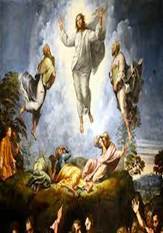
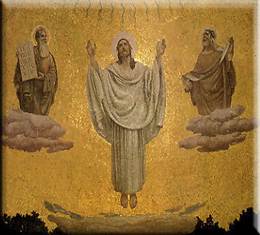
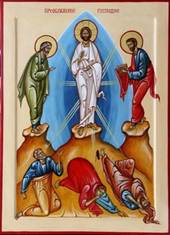
 Homily starter anecdotes # 1: Alluring music of the Sirens: The story of the Sirens in Greek mythology describes the negative and positive ways of fighting temptations. The Sirens are creatures with the heads of beautiful women and the bodies of attractive birds. They lived on an island (Sirenum scopuli– a group of three small rocky islands). With the irresistible charm of their song, they lured mariners to their destruction on the rocks surrounding their island (Homer’s Odyssey XII, 39-54, 158-200; Virgil’s Aeneid V, 42-44; Ovid’s Metamorphoses XIV, 88-89). They sang so sweetly that all who sailed near their home in the sea were fascinated and drawn to the shore, only to be destroyed. When Odysseus, the hero of the Odyssey, was going to pass that enchanted spot he first ordered his sailor comrades to put wax in their ears, so that they might not hear the luring and bewitching strains, and then, wanting to hear the music for himself, he ordered his crew to tie him to the mast and not to release him no matter what happened. Thus, he defeated the Sirens and saved his crew. Jesus compares his disciples with the children of the bridal chamber. These people were selected friends of the bridegroom who feasted in the company of the bride and groom during a week of honeymoon. Nobody expected them to fast. Jesus declares that his disciples will fast when the Bridegroom (Jesus himself), is taken away from them. One of the fruits of the Spirit is joy, and it is mentioned next after love in St Paul’s list, “…love, joy, peace, patience, kindness, goodness, faithfulness, gentleness and self-control” (Gal 5:22). Hence, we are to welcome the joys of Christian life as ordering himself to be tied to the mast and But King Tharsius chose a better and positive way of conquering Sirens’ temptations. He took the great Greek singer and lyrist Orpheus along with him. Orpheus took out his lyre and sang a song so clear and ringing that it drowned the sound of those lovely, fatal voices of the Sirens. — Today’s readings advise us that the best way to break the charm of this world’s alluring voices during Lent is not by trying to shut out the music with ear-plugs, but to have our hearts and lives filled with the sweeter music of prayer, penance, the word of God, self-control, and acts of charity. Then temptations will have no power over us (RH). (
 Temptation to keep large carnivores as pets: Antoine Yates lived in New York City and for some inexplicable reason brought home a 2-month-old tiger cub “Ming” and later an alligator, “Al”. It’s not clear where he found them. But they were with him for two years — in his apartment. What was a little tiger cub, became a 500-pound Bengal tiger and a mini alligator had turned into three-footer! It was inevitable. The police got a call about a “dog” bite and when they got to the 19-story public housing apartment building, they discovered Yates in the lobby with injuries to his right arm and leg. Someone alerted them of the possibility of a “wild animal” at his apartment. A fourth-floor resident complained that urine had seeped through her ceiling from Yates’ apartment. When they arrived, the police peered through a hole and saw the huge cat prowling around in the apartment. To make a long story short, it took a contingent of officers at the door, and some rappelling from the roof to use a dart gun to bring this animal under control. When they entered the apartment, they found the big cat lying atop some newspapers. The alligator was nearby. Both animals were relocated to shelters. — As for Yates, he missed his tiger and alligator, demonstrating that it’s possible to be in love with the very things that can kill you. That is what happens to those who entertain temptations in the form of evil thoughts and desires, evil habits and addictions. (
 The first reading from the book of Genesis (Gen 2:7-9, 3:1-7) describes the “Original Temptation” – “You will be like gods, knowing what is good and what is evil.” This is the story of the first sin, disobedience to the only command God gave them in the Garden: not to eat the fruit of the Tree of the Knowledge [experience] of Good and Evil. It tells us that Adam and Eve were given the responsibility of making the fundamental choice to obey or disobey the Lord God, that is, to choose to be dependent upon, and obedient to His will, or to refuse His Authority and be gods for themselves! Like Adam and Eve, we are all tempted to put ourselves in God’s place. Consequently, we resent every limit on our freedom, and we don’t want to be held responsible for the consequences of our choices. In Genesis, we witness how temptation to evil led Adam and Eve to an act of faithlessness and sin, losing the Life of God in the process, as well their first home in the Garden. In contrast, today’s Gospel from St. Matthew shows us how Jesus Christ conquered temptation by relying on Faith in God’s Word and authority. Are we tempted to serve the gods of our inordinate desires instead of serving our loving and providing God? Today’s Responsorial Psalm (Ps 51) presents our contrition or acknowledgment of guilt before God: “Against Thee, thee only, have I sinned.”
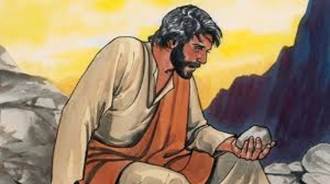
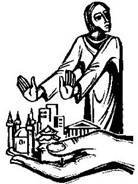
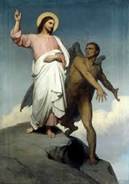
 “Scriptural Homilies” Cycle A (No. 18) by Fr. Tony: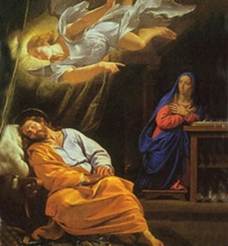
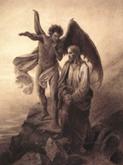
 #3: Salt and light: The story of EWTN is the story of a brave woman who had the courage of her conviction that she should be the salt of the earth and the light of the world. Mother Angelica (who died in 2016), started broadcasting Catholic TV for just a few hours a day in 1981 from the garage of her Poor Clare Monastery in the US. The project grew and grew, and now, after forty-six years, the Eternal Word Television Network is available twenty-four hours a day all over the world by cable and satellite. Mother Angelica is an example of a true Christian living out her Faith as salt to preserve Christian values and to provide the modern world with a purifying mass-medium. She kept putting her lamp on the lampstand so that Christ’s Light would shine for everyone in the modern global village. With the death of Mother Angelica on Easter Sunday, 2016, the Church lost the most charismatic American Catholic media personality of her time, as well as someone who proved beyond any doubt that a determined, grace-filled, savvy woman can, after all, wield real power. For much of the 1980s and 1990s, she was simply the most riveting Catholic figure on the airwaves. She was a simple nun, with a profound Faith, and one courageously dependent upon God’s grace to supply what was needed. Her life and deeds were miraculous. — Mother Angelica regularly attributed the success of EWTN to God’s providence, but the history of the operation reveals savvy business decisions that helped “this miracle of God” to become the multi-million-dollar global media conglomerate it is today. That those decisions were made by a woman without much previous power in the Church or elsewhere is notable. (
 # 4: St. Teresa of Calcutta (Mother Teresa) — salt and light: David Porter writes of Mother Teresa: “She was born as Agnes Gonxha Bojaxhiu (AG-nes GOHN-jah BOY-yah-jee-oo), to Albanian parents in Yugoslavia. . She went to India in 1929 as a member of the Loreto Order of nuns, after learning English in their Motherhouse in Dublin Ireland. She taught in India for many years and became principal of the school. In 1946, she received her ‘call within a call’ to work with the poorest of the poor. By 1948, she had received permission to leave the Loreto order and had gotten training in the nursing skills she would need to carry out her calling. She prayed, “Oh God, if I cannot help these people in their poverty and their suffering, let me at least die with them, close to them, so that I can show them Your love” [Mother Teresa: The Early Years, 67; cited by Caroline J. Simon, “The Media and Mother Teresa,” Perspectives, 12 (March, 1997), 3.] Simon notes: “From this simple beginning, the Missionaries of Charity have grown to include 4,500 Sisters and Brothers, 755 homes for the children, the sick, the destitute and the dying and 1,369 medical clinics that serve 120,000 worldwide.” — We too can become the salt of the earth and the light of the world as Mother Teresa did. (
 #5: St. Elizabeth Ann Seton: Getting Closer to God Means Serving Others: St. Elizabeth Ann Seton, had a long and difficult journey into the Catholic faith. She lived around 1800 and was part of New York high society both by birth and also by marriage. As a young wife and mother, she felt a profound spiritual restlessness. A non-Catholic Christian, she longed for a deeper relationship with Christ, but didn’t know where to find it. A series of Crosses, including her husband’s death, led her to the Catholic Church, where she found what she was looking for in the Sacrament of the Eucharist. Converting to Catholicism led her to be criticized and ostracized by friends, social circles, and even family members. But her deeper intimacy with Christ made the suffering worthwhile. Instead of falling into discouragement or self-pity, in fact, she found herself moved to start a new religious order dedicated to educating the young. Thus was born the American Sisters of Charity, which now has five major divisions in the United States and Canada. And thus began the American system of Catholic education, which in 2011 included over 7,000 elementary and secondary schools throughout the United States. — God wants to bring flavor and light to the world, and the closer we get to his Sacred Heart, the more our hearts will burn with that same desire. [Information for this Illustration was garnered from


 “Scriptural Homilies” Cycle A (No. 14) by Fr. Tony:

 Fr Tony's Homilies

You must be logged in to post a comment.