Category Archives: Uncategorized

Lenten Penance Service

Lenten Penance Service- 2021 (L-21)

Opening song: 1) Amazing Grace (New Britain OCP); 2) Be Not Afraid (Bob Dufford GIA); 3) Come You Sinners, Poor and Needy (RS 954 Beach Spring); 4) Forgive Our Sins as We Forgive (RS 952 St. Anne; 5) Glory and Praise to Our God (Dan Schutte OCP); 6) He Healed the Darkness of My Mind (RS 951 Old 100t)h; 7) Jesus, Remember Me (Jacques Berthier GIA – Taizé); 8) Our Father We Have Wandered (RS 955 Passion Chorale); 9) The Master Came to Bring Good News (RS 956 Ich Glaub’ an Got)t; 10) There’s a Wideness in God’s Mercy (In Babilone GIA/OCP); or any other song of your choice.

Introduction: The primary purpose of Lent is spiritual renewal of life in preparation for our celebration, as individuals and as Church, of Jesus’ death on Good Friday and Resurrection on Easter Sunday.  The Church tries to achieve this goal by leading her children to “repentance.” Repentance is a type of conversion – the reordering of our priorities and the changing of our values, ideals, and ambitions – through fasting, prayer, and mortification.  Lenten observances are also intended to lead us to our annual solemn renewal of Baptismal vows on Holy Saturday.  My brothers and sisters, we gather here in our Church this night because we are sinners, and we desire to approach a merciful God, Who is our loving Heavenly Father, to seek reconciliation with our forgiving God and with each other. Thus, this Penance Service is designed to celebrate the Lord’s invitation to us to participate in loving reconciliation. Jesus Christ not only offers to us his mercy; he expects us to live in a spirit of mercy and forgiveness. Let us pray for the courage to seek God’s forgiveness and the willingness to offer forgiveness to those who have hurt us.

Opening prayer: The Presider: Let us pray. Lord our God, we know that You are patient with sinners and accept our desire to make amends. We acknowledge our sins and we are resolved to change and renew our lives. Help us to celebrate this Sacrament of your Mercy and Reconciliation so that we may reform our lives and receive from you the gift of everlasting joy. We ask this through Jesus Christ our Lord. Amen.

Celebration of the word of God: (The following are suggested readings. Other readings may be chosen).

First Reading: Joel 2: 12-18 (or Ezekiel 11:14-21).

Responsorial Psalm 51, 3-4, 5-6. 12-13. 14. 17. (Or Psalm 130, 25, 33, or 51) 

R. Be merciful, O Lord, for we have sinned.

 Have mercy on me, God, in Your kindness.

In Your compassion blot out my offence.

O wash me more and more from my guilt,

and cleanse me from my sin.

R. Be merciful, O Lord, for we have sinned.

My offences truly I know them;

my sin is always before me.

Against You, You alone, have I sinned;

what is evil in Your sight I have done.

R. Be merciful, O Lord, for we have sinned.

A pure heart create for me, O God,

put a steadfast spirit within me.

Do not cast me away from Your presence,

nor deprive me of Your Holy Spirit.

R. Be merciful, O Lord, for we have sinned.

Give me again the joy of Your help;

with a spirit of fervor sustain me.

O Lord, open my lips

and my mouth shall declare Your praise.

R. Be merciful, O Lord, for we have sinned. 

Second Reading: 2 Corinthians 5:17-21: 17 So whoever is in Christ is a new creation: the old things have passed away; behold, new things have come. 18 And all this is from God, Who has reconciled us to Himself through Christ and given us the ministry of reconciliation, 19 namely, God was reconciling the world to Himself in Christ, not counting their trespasses against them and entrusting to us the message of reconciliation. 20 So we are ambassadors for Christ, as if God were appealing through us. We implore you on behalf of Christ, be reconciled to God. 21 For our sake, He made Him to be sin Who did not know sin, so that we might become the righteousness of God in Him. The word of the Lord. R: Thanks be to God

Gospel Acclamation: “Glory and praise to you, Lord Jesus Christ

Gospel: Luke 13:1-9: (or any other Gospel passage on repentance): Some people told Jesus about the Galileans whose blood Pilate had mingled with the blood of their sacrifices. Jesus said to them in reply, “Do you think that because these Galileans suffered in this way, they were greater sinners than all other Galileans? By no means! But I tell you, if you do not repent, you will all perish as they did! Or those eighteen people who were killed when the tower at Siloam fell on them—do you think they were more guilty than everyone else who lived in Jerusalem? By no means! But I tell you, if you do not repent, you will all perish as they did!” And he told them this parable: “There once was a person who had a fig tree planted in his orchard, and when he came in search of fruit on it but found none, he said to the gardener, ‘For three years now I have come in search of fruit on this fig tree but have found none. So, cut it down. Why should it exhaust the soil?’ He said to him in reply, ‘Sir, leave it for this year also, and I shall cultivate the ground around it and fertilize it; it may bear fruit in the future. If not, you can cut it down.’”

Short reflection: Today’s Gospel explains how God disciplines His people, inviting them to repent of their sins and renew their lives so that they may produce the fruits of the Holy Spirit.  Citing two tragic events, Jesus exhorts the Jews to repent and reform their lives.  With the parable of the barren fig tree, Jesus also warns them that the merciful God will not put up with them indefinitely. Although God patiently waits for sinners to repent, giving them grace to do so, He will not wait forever.  Time may run out, and  therefore, timely repentance is necessary.  Hence, a Lent missed is a year lost from the spiritual life.

Life Messages: 1) We need to live lives of repentance, because (a) we never know when we will meet a tragedy of our own.  Let us turn to Christ, acknowledge our faults and failings, and receive from Him mercy, forgiveness, and the promise of eternal life.  There is no better way to take these words of Jesus to heart than to go to sacramental confession, and there is no better time to go to confession than during Lent.   (b) Repentance helps us in life and in death. It helps us to live as forgiven people and helps us to face death without fear.   2) We need to be fruitful trees in God’s orchard.  Lent is an ideal time “to dig around and manure” the tree of our life so that it may bring forth fruits of repentance, reconciliation, forgiveness, and sensitivity to the feelings of others.  3) We need to make the best use of the “second chance” God gives us.  Our merciful Father always gives us a second chance.  During Lent, we, too, are given another chance to repent and return to our Heavenly Father’s love.

Examination of conscience in the form of Intercessory prayers

(Let us examine our conscience and ask God’s pardon and forgiveness by responding “Lord, have mercy on me, a sinner.”)

1) Lord Jesus, we ask Your pardon and forgiveness for not praying for the anointing and strengthening of your Holy Spirit every morning and not confessing our sins to You and asking Your forgiveness every night. We pray to the Lord.  “Lord, have mercy on me, a sinner.”

2) Lord Jesus, we ask Your pardon and forgiveness for swearing in Your Name, using curse words, and for not   listening to You by reading a portion of the Bible daily and not finding some time to talk to You in prayer, personally and in our families. We pray to the Lord.  “Lord, have mercy on me ,a sinner.”

3) Lord Jesus, we ask Your pardon and forgiveness for neglecting our duties in our family, not paying proper attention to the needs of our spouse and children, and not respecting God’s gift of life from conception to natural death. We pray to the Lord.  “Lord, have mercy on me, a sinner.”

4) Lord Jesus, we ask Your pardon and forgiveness for not regularly participating in the Sunday Mass, and for not recharging our spiritual batteries by attentively hearing the Word of God and devoutly receiving You in Holy Communion as the Food for our souls. We pray to the Lord. “Lord, have mercy on me, a sinner.”

5) Lord Jesus, we ask Your pardon and forgiveness for desecrating our bodies, the temples of the Holy Spirit, by overindulgence in food and drinks, by indulging in impure and unjust thoughts, words and actions, and by continuing to sin by our evil and impure habits and our addictions to alcohol, drugs, pornography or other sexual deviations. We pray to the Lord.  “Lord, have mercy on me, a sinner.”

6) Lord Jesus, we ask Your pardon and forgiveness for all other sins and failures in our life, especially for being gossipy, critical, and judgmental about others, for our hurtful, wounding remarks  and uncharitable criticism about others, for not asking forgiveness from others whom we have offended them, and for not granting forgiveness to others who have offended us.  We pray to the Lord.  “Lord, have mercy on me, a sinner.”

7)  Lord Jesus, we ask Your pardon and forgiveness for cheating in business or work, for stealing the goods of others, for not sharing our blessings with others in need, for not volunteering to help our neighbors in their difficult moments, and for not properly supporting our parish by offering our time, talents, and wealth to its various ministries. We pray to the Lord. “Lord, have mercy on me, a sinner.”

8)  Lord Jesus, we ask Your pardon and forgiveness for not bearing witness to you by our lives, radiating in our words, deeds, and attitudes Your love, mercy, kindness, spirit of forgiveness and service.  We pray to the Lord.  “Lord, have mercy on me, a sinner.”

General confession of sins (The Presider, priest or deacon, invites the assembly to kneel or stand and pray). My brothers and sisters let us call to mind the goodness of God our Father, and acknowledge our sins, so that we may receive His merciful forgiveness. Let us express our repentance by praying the Act of Contrition before we go to the priests to confess our sins.

Prayer before confession: “I confess to almighty God, and to you, my brothers and sisters, that I have greatly sinned, in my thoughts and in my words, in what I have done and in what I have failed to do, through my fault, through my fault, through my most grievous fault; therefore I ask blessed Mary ever Virgin, all the Angels and Saints, and you, my brothers and sisters, to pray for me to the Lord our God.

Act of contrition after confession of sins:

My God, I am sorry for my sins with all my heart.
In choosing to do wrong and failing to do good,
I have sinned against You Whom I should love above all things.
I firmly intend, with Your help, to do penance, to sin no more,
and to avoid whatever leads me to sin.
Our Savior Jesus Christ suffered and died for us.
In His name, my God, have mercy.
Amen.

Concluding prayer: O Lord our God, look upon our weakness with compassion and forgiveness that we might be made whole again. Cleanse us of our sins, and free us from the prison of guilt, that we may live in the promised joy of Your salvation. And may God the Father, the Lord Jesus Christ, and the Spirit Who gives life to al grant us grace and mercy, this night and always, now and forever.

Individual confession to the priest


February 22-27 weekday homilies

Visit my website by clicking on https://frtonyshomilies.com/ for missed homilies

Feb 22-27: Feb 22 Monday (Chair of St. Peter the Apostle): Mt 16:13-23: USCCB video reflections: http://www.usccb.org/bible/reflections/index.cfm By celebrating the Feast of the Chair of St. Peter, we honor the mission of teacher and pastor conferred by Christ on Peter and continued in an unbroken line of his successors down to the present Pope. We also celebrate today, the unity of the Church, founded upon the Apostle Peter, and we use this occasion to renew our submission to the Magisterium or teaching authority of the Roman Pontiff, extended both to truths which are solemnly defined ex cathedra, and to all the acts of the ordinary Magisterium. Like the committee chair, this chair refers to the occupant, not the furniture. Its first occupant stumbled a bit, denying Jesus three times and hesitating to welcome Gentiles into the new Church. Some of its later occupants have also stumbled a bit, sometimes even failed scandalously. So, the feast reminds us that the Vicar of Christ needs the prayer support of all the Catholics. This feast also gives us the occasion to give thanks to God for the mission He entrusted to the Apostle Peter and his successors until the end of time.

It is also is the feast of a relic long reputed to be St. Peter’s actual throne or the Cathedra Petri. On the feast, 110 candles illumine the reliquary that contains it. This relic has been venerated by the faithful since the fourth century. Previously reserved in the Baptismal Chapel of what is referred to as the Old St Peter’s Basilica, built by the Emperor Constantine around 333AD, today it can be found encased in the bronze throne built by Bernini and enshrined in the apse of St Peter’s Basilica. The throne is supported by the statues of four Doctors of the Church:  two from the West, St Augustine and St Ambrose, and two from the East:  St John Chrysostom and St Athanasius, beneath the well-known stained-glass image depicting the Holy Spirit as a dove. In medieval liturgical custom, the Pope was enthroned on the relic for part of his coronation ceremony and used it as his liturgical throne in the Basilica on the feast. Ever since Bernini’s art work on it, it is considered as a reliquary. The last time the relic was exposed was in 1867 by Blessed Pius IX on the eighteenth centenary of the martyrdom of Ss. Peter and Paul. Kings of old sat on thrones and ruled. Peter’s chair is a symbol of his authority from Jesus to rule the Church. This feast reminds us that Jesus bestowed on Peter a special place among the Apostles. He was one of the three who were with Christ on special occasions, such as the Transfiguration of Christ and the Agony in the Garden of Gethsemane. He was the only Apostle to whom Christ appeared on the first day after the Resurrection. Peter, in turn, often spoke on behalf of the Apostles. When Jesus asked the Apostles, “Whom do men say that the Son of Man is?”, Simon replied, “Thou art the Christ, the Son of the Living God.”

And Jesus said, “Blessed are you, Simon Bar-Jona: because flesh and blood have not revealed it to you, but my Father Who is in heaven. And I say to you: That you are Peter [Cephas, a rock], and upon this rock [Cephas] I will build my Church [ekklesia], and the gates of hell shall not prevail against it” (Mt 16:13-20). In saying this, Jesus made St. Peter the head of the entire community of believers and placed the spiritual guidance of the faithful in St. Peter’s hands. A symbol of this authority is the “cathedra,” a bishop’s throne or chair in a cathedral. Peter delivered the first public sermon in Jerusalem on the Jewish feast of Pentecost and won a large number of converts. He also performed many miracles and defended the freedom of the Apostles to preach the Gospels. He preached in Jerusalem, Judaea, and as far north as Syria. He was arrested in Jerusalem under Herod Agrippa I, but miraculously escaped execution. He left Jerusalem and eventually went to Rome, where he preached during the last portion of his life. He was crucified there, head downwards, as he had desired to suffer, saying that he did not deserve to die as Christ had died. The date of St. Peter’s death is not clear. Historians estimate he was executed between the years 64 and 68. His remains now rest beneath the altar of St. Peter’s Basilica in Rome. Fr. Tony (https://frtonyshomilies.com/) L/21

USCCB video reflections: http://www.usccb.org/bible/reflections/index.cfm ; ; https://catholic-daily-reflections.com/daily-reflections/

Feb 23 Tuesday (St. Polycarp, Bishop, Martyr): Mt 6: 7-15: 7 “And when you are praying, do not use meaningless repetition as the Gentiles do, for they suppose that they will be heard for their 10many words. 8 “So do not be like them; for 11your Father knows what you need before you ask Him. 9 “12Pray, then, in this way: ‘Our Father who is in heaven, Hallowed be Your name. 10 ’13Your kingdom come. 14Your will be done, on earth as it is in heaven. 11 ’15Give us this day our daily bread. 12 ‘And 16forgive us our debts, as we also have forgiven our debtors. 13 ‘And do not lead us into temptation, but 17deliver us from 18evil. [For Yours is the kingdom and the power and the glory forever. Amen.’] 14 “19For if you forgive others for their transgressions, your heavenly Father will also forgive you. 15 “But 20if you do not forgive others, then your Father will not forgive your transgressions. USCCB video reflections: http://www.usccb.org/bible/reflections/index.cfm ; ; https://catholic-daily-reflections.com/daily-reflections/

The context: In today’s passage from the Sermon on the Mount, Jesus instructs the crowd that they should not pray like the Gentiles, repeating empty phrases. He means that true prayer is not so much a matter of the number of words as of the frequency and the love with which the Christian turns towards God, raising his or her mind to God. So, Jesus teaches them a model prayer.  Jesus’ prayer, “Our Father,” consists of two parts. In the first part, we praise and worship God, addressing Him as our loving, caring, and providing Heavenly Father and promising Him that we will do His holy will in our lives, thus remaining in His kingdom. In the second part, we present our petitions before the Triune God. First, we ask God for our present needs (“give us this day our daily bread”), our past needs “forgive us our trespasses”(forgiveness of sins), and our future needs, “deliver us from evil” (protection against the tempter and his temptations). In this part, we also bring the Trinitarian God into our lives. We bring in: 1) God the Father, the Provider, by asking for daily bread; 2) God the Son, our Savior, by asking forgiveness for our sins; and 3) God the Holy Spirit, the Paraclete Who is our Guide, Advocate, Comforter and Illuminator, by asking for protection and deliverance from evil. Special stress on the spirit of forgiveness: We are told to ask for forgiveness from others for our offenses against them and to offer unconditional forgiveness to others for their offenses against us as a condition for receiving God’s forgiveness. Jesus further clarifies, “If you forgive others their wrongs, your Father in Heaven will also forgive yours. If you do not forgive others, then your Father will not forgive you either” (Mt 6:14-15).

“For Thine is the Kingdom, the Power, and the Glory, now and forever. Amen.” The manuscripts of the Gospel of Matthew do not contain this phrase, nor do any of the Catholic translations. Martin Luther added this doxology to Our Father in his translation of Matthew’s Gospel, and the King James editions of the Bible keep it.  The doxology is actually taken from the Divine Liturgy or Catholic Mass.  Known as the final doxology, it takes up the first three petitions to our Father. By the final “Amen,” which means, “So be it”, we ratify what is contained in the prayer that God has taught us. Fr. Tony (https://frtonyshomilies.com/) L/21

Feb 24 Wednesday: Lk 11:29-32: 29 When the crowds were increasing, he began to say, “This generation is an evil generation; it seeks a sign, but no sign shall be given to it except the sign of Jonah. 30 For as Jonah became a sign to the men of Nineveh, so will the Son of man be to this generation. 31 The queen of the South will arise at the judgment with the men of this generation and condemn them; for she came from the ends of the earth to hear the wisdom of Solomon, and behold, something greater than Solomon is here. 32 The men of Nineveh will arise at the judgment with this generation and condemn it; for they repented at the preaching of Jonah, and behold, something greater than Jonah is here. USCCB video reflections: http://www.usccb.org/bible/reflections/index.cfm ; ; https://catholic-daily-reflections.com/daily-reflections/

The context: Since there had been many false prophets and false messiahs in the past, and since their pride and prejudice did not permit them to see the Messiah in a carpenter-from-Nazareth-turned-wandering-preacher, the Jewish religious leaders demanded that Jesus show some “Messianic” signs and miracles taken from their list.  They would not accept that Jesus’ numerous miraculous healings were the Messianic signs foretold by the prophets.

Jesus’ negative response: Calling them an apostate generation who refused to believe in their own prophets and denied the hand of God in the miracles he worked, Jesus warned these religious leaders that they would be condemned on the Day of Judgment by the people of Nineveh and by the Queen of Sheba from the South.  This is one of the instances in which Jesus held up Gentiles as models of Faith and goodness (other examples: the Canaanite woman in Matthew 15, the centurion in Luke 7, the Good Samaritan story in Luke 10; etc.).  The pagan Ninevites heard the voice of the Lord God in the prophet Jonah, repented, and were spared. The Queen of Sheba recognized God’s Wisdom in King Solomon and traveled to Israel to receive more of it.  Nevertheless, Jesus gave the religious leaders challenging him, “the sign of Jonah.” It was the undeniable Messianic sign of his own Resurrection from the tomb on the third day after his death, just as Jonah had spent three days in the belly of the giant fish before finally going to Nineveh to accomplish the mission God had originally given him.

 Life messages: We need to recognize God-given signs in our lives: 1) Let us examine our conscience and see if we are able to see God’s presence in ourselves and in others, His hands behind the small and big events of our lives and His provident care in our lives. 2) Let us open our ears to hear God’s message given to us by others and by nature.  3) Let us read God’s message in the Bible and adjust our lives accordingly. 4) Let us try our best to be open to God and receptive to His Spirit through our active participation in the liturgy instead of looking for signs in weeping Madonnas, bleeding crucifixes and visionaries.  Fr. Tony (https://frtonyshomilies.com/) L/21

Feb 25 Thursday: Mt 7:7-12: 7 “Ask, and it will be given you; seek, and you will find; knock, and it will be opened to you. 8 For everyone who asks receives, and he who seeks finds, and to him who knocks it will be opened. 9 Or what man of you, if his son asks him for bread, will give him a stone? 10 Or if he asks for a fish, will give him a serpent? 11 If you then, who are evil, know how to give good gifts to your children, how much more will your Father who is in heaven give good things to those who ask him! 12 So whatever you wish that men would do to you, do so to them; for this is the law and the prophets. USCCB video reflections: http://www.usccb.org/bible/reflections/index.cfm; https://catholic-daily-reflections.com/daily-reflections/

The context: In today’s Gospel, taken from the Sermon on the Mount, Jesus outlines the conditions for fruitful and effective prayer.

  1. The first condition is trusting Faith and confidence in the goodness and promises of a loving Father. As a loving Father, God knows what to give, when to give, and how to give, irrespective of what we ask for. As One Who knows our past, present, and future, God knows what is best for us at any given time. He is a loving Father, and He will not give us evil things as the grudging and mocking gods in Greek stories did their worshippers. Jesus explains this with two examples. Even a bad parent would refuse to give a bread-shaped piece of limestone to his child asking for bread, or a stinging scorpion instead of a fish. So, all the experiences in our lives, including illnesses and tragedies, are permitted by a loving God with a definite purpose – to work in us for our ultimate good
  2. Persistence in prayer is the second condition Patient, trusting persistence reflects our dependence on, and trust in, God. That is why Jesus asks us to keep on asking, seeking and knocking.

Life messages: 1) We need to stop giving lame excuses for not praying, like a) we are too busy; b) we believe that prayer doesn’t do that much good, other than giving us psychological motivation to be better persons; c) a loving God should provide for us and protect us from the disasters of life, such as disease or accidents, without our asking Him; or d) prayer is boring.

2) We need to remember the fact that prayer is a conversation with God, that is, listening to God speaking to us through the Bible and talking to God in our personal, family and liturgical prayers.

3) We can’t have a close relationship with anyone, especially with God, without daily, persistent, and intimate conversation. Fr. Tony (https://frtonyshomilies.com/) L/21

Feb 26 Friday: Mt 5:20-26: 20 For I tell you, unless your righteousness exceeds that of the scribes and Pharisees, you will never enter the kingdom of heaven. 21 “You have heard that it was said to the men of old, `You shall not kill; and whoever kills shall be liable to judgment.’ 22 But I say to you that every one who is angry with his brother shall be liable to judgment; whoever insults his brother shall be liable to the council, and whoever says, `You fool!’ shall be liable to the hell of  fire. 23 So if you are offering your gift at the altar, and there remember that your brother has something against you, 24 leave your gift there before the altar and go; first be reconciled to your brother, and then come and offer your gift. 25 USCCB video reflections: http://www.usccb.org/bible/reflections/index.cfm; https://catholic-daily-reflections.com/daily-reflections/

The context: For the Scribes and the Pharisees, the external fulfillment of the precepts of the Mosaic Law was the guarantee of a person’s salvation. In other words, a man saved himself through the external works of the Law.  Jesus rejects this view in today’s Gospel passage, taken from the Sermon on the Mount.  For Jesus, justification or sanctification is a grace, a free, strengthening gift from God. Man’s role is one of cooperating with that grace by being faithful to it, using it as God means it to be used. Jesus then outlines new moral standards for his disciples.

Control of anger: Anger is the rawest, strongest, and most destructive of human emotions. Describing three stages of anger and the punishment each deserves, Jesus advises his disciples not to get angry in such a way that they sin.

1)  Anger in the heart (“brief stage of insanity” Cicero): It has two forms: a) a sudden, blazing flame of anger which dies suddenly. b) a surge of anger which boils inside and lingers, so that the heart seeks revenge and refuses to forgive or forget. Jesus prescribes trial and punishment by the Village Court of Elders as its punishment.

2) Anger in speech: The use of words which are insulting (“raka“=“fool”), or damaging to the reputation (“moros” = a person of loose morals). Jesus says that such an angry (verbally abusive) person should be sent to the Sanhedrin, the Jewish religion’s Supreme Court, for trial and punishment.

3) Anger in action: Sudden outbursts of uncontrollable anger, which often result in physical assault or abuse. Jesus says that such anger deserves hellfire as its punishment. In short, Jesus teaches that long-lasting anger is bad, contemptuous speech or destroying someone’s reputation is worse and harming another physically is the worst.

Life messages: 1) Let us try to forgive, forget, and move toward reconciliation as soon as possible.  St. Paul advises us “Be angry (righteous anger), but do not sin” (Eph 4: 26).  2) When we keep anger in our mind, we are inviting physical illnesses, like hypertension, and mental illnesses, like depression. Let us relax and keep silence when we are angry and pray for God’s strength for self-control. Fr. Tony (https://frtonyshomilies.com/) L/21

Feb 27 Saturday: Mt 5:43-48: “You have heard that it was said, `You shall love your neighbor and hate your enemy.’ 44 But I say to you, Love your enemies and pray for those who persecute you, 45 so that you may be sons of your Father who is in heaven; for he makes his sun rise on the evil and on the good, and sends rain on the just and on the unjust. 46 For if you love those who love you, what reward have you? Do not even the tax collectors do the same? 47 And if you salute only your brethren, what more are you doing than others? Do not even the Gentiles do the same? 48 You, therefore, must be perfect, as your heavenly Father is perfect. USCCB video reflections: http://www.usccb.org/bible/reflections/index.cfm; https://catholic-daily-reflections.com/daily-reflections/

The context: Today’s Gospel passage is perhaps the central and the most famous section of the Sermon on the Mount.  It gives us the Christian ethic of personal relationship: love one’s neighbors and forgive one’s enemies. Above all, it tells us that what makes Christians different is the grace with which they interact with others, treating them with loving kindness and mercy, especially when those others seemingly don’t deserve it. The Old Law never said to hate enemies, but that was the way some Jews understood it.  Jesus commands that we are to love our enemies and pray for those who persecute us in order to demonstrate that we are children of a merciful Heavenly Father. From the cross, Jesus prayed for all of those who were crucifying him – which includes all fallen humankind, and so ourselves — saying, ‘Father forgive them; they know not what they do.’” (Lk 23:34). A Christian has no personal enemies.  If we only love our friends, we are no different from pagans or atheists.

We need to love our neighbors and our enemies, too: The Greek word used for loving enemies is not storge (affection or natural love towards family members), or philia = friendship (love of close friends), or eros (=romance) (passionate love between a young man and woman), but agápe =unconditional love which is the invincible benevolence, or good will, for another’s highest good. Since agápe, or unconditional love, is not natural, practicing it is possible only with God’s help. Agápe love is a choice more than a feeling. We choose to love, not because our enemies deserve our love, but because Jesus loves them so much that he died for them, and they, too, are the children of our God.  We have in the Acts of the Apostles the example of St. Stephen, the first Christian martyr, who, like Jesus on the cross, prayed for those who were putting him to death.

Life Messages: We are to try to be perfect, to be like God:  1) We become perfect when we fulfill God’s purpose in creating us: with His help, to become God-like. 2) We become perfect when, with His ongoing help, we try to love as God loves, to forgive as God forgives and to show unconditional good will and universal benevolence as God does. Fr. Tony (https://frtonyshomilies.com/) L/21.


Feb 15-20 weekday homilies

Visit my website by clicking on https://frtonyshomilies.com/ for missed homilies

Feb 15-20: Feb 15 Monday: Mk 8:11-13: The Pharisees came and began to argue with him, seeking from him a sign from heaven, to test him. 12 And he sighed deeply in his spirit, and said, “Why does this generation seek a sign? Truly, I say to you, no sign shall be given to this generation.” 13 And he left them and getting into the boat again he departed to the other side. USCCB video reflections: http://www.usccb.org/bible/reflections/index.cfm; https://catholic-daily-reflections.com/daily-reflections/

The context: The Pharisees of Jesus’ time had a long list of fifty extraordinary signs which they expected from the real Messiah, to distinguish the promised Messiah from false messiahs.  Some of the false messiahs in the past had claimed that they could divide the Jordan River into two sections or cause the huge stony walls of Jerusalem to fall by a single word.  Hence, the Pharisees demanded that Jesus show some miracles from their list of Messianic signs.

Jesus’ reply: Jesus knew that the proud, hard-hearted, prejudiced Pharisees were unwilling to accept the signs he had been working as the Messianic signs foretold by the prophets.  Others of them, he knew were not interested in his message but only in seeing signs and wonders.  Hence, according to Mark, Jesus unequivocally denied the demand for an additional Messianic sign.  But according to Matthew 12:38-42 and Luke 11:29-32, Jesus offered them another sign–the miracle of Jonah, the sign of the death and Resurrection of Christ, knowing well that not even this remarkable proof would lead the Pharisees to shed their pride.

Life messages: 1) It is very sad to see superstitious Christians travelling miles to see a miraculous statue of a Madonna shedding tears of blood or oil.  At the same time, they fail to see the presence of Jesus as he promised, in the Bible, in the Holy Eucharist, in a worshipping community or in the fellow Christians.

2) Let us pray for the grace of increased Faith in the genuine teachings of Jesus.  Fr. Tony (https://frtonyshomilies.com/) L/21

Feb 16 Tuesday: Mk 8:14-21: 14 Now they had forgotten to bring bread; and they had only one loaf with them in the boat. 15 And he cautioned them, saying, “Take heed, beware of the leaven of the Pharisees and the leaven of Herod.” 16 And they discussed it with one another, saying, “We have no bread.” 17 And being aware of it, Jesus said to them, “Why do you discuss the fact that you have no bread? Do you not yet perceive or understand? Are your hearts hardened? 18 Having eyes do you not see, and having ears do you not hear? And do you not remember? 19 When I broke the five loaves for the five thousand, how many baskets full of broken pieces did you take up?” They said to him, “Twelve.” 20 “And the seven for the four thousand, how many baskets full of broken pieces did you take up?” And they said to him, “Seven.” 21 And he said to them, “Do you not yet understand?” USCCB video reflections: http://www.usccb.org/bible/reflections/index.cfm ; https://catholic-daily-reflections.com/daily-reflections/

The context: The Jews considered fermentation by yeast as equivalent to putrefaction and, hence, something evil.  That is why Jesus equated evil influence with leaven.  Jesus considered the hypocrisy of the Pharisees and the immoral life of the king Herod as leaven corrupting the dough of Israel.  Hence, he gave the warning against their evil influence to his disciples while they were crossing the Lake in a boat.

The misunderstanding and correction: The Apostles in the boat misunderstood Jesus’ warning as a scolding for their having forgotten to bring enough bread for all of them.  Hence, Jesus reminded them of his miraculous provision of bread in the feedings of the four thousand and of the five thousand people as evidence that they did not have to worry about food they had forgotten to bring for their supper. Twelve baskets full of left over after miraculously feeding four thousand people represent the twelve tribes of Israel whom God first established as his chosen people to preserve the belief in the one true God. The seven baskets left over after feeding the five thousand people represent the seven nations of the Gentiles to whom salvation is extended. Jesus clarifies by these miracles that while salvation is universal, the way to salvation is through him the Messiah.  He warns his disciples to beware of the false way of salvation offered by the two extreme philosophies of the Pharisees and the King Herod and the Herodians.

 Life messages: 1) With trusting Faith, let us rely on the miraculous provision God has in store for us in our daily life (as the word of God and the Holy Eucharist), when we do our share of work sincerely. 2) Let us take Jesus’ warning against allowing the evil influence of the society around us to define and defile us but let us rely on the power of the Holy Spirit dwelling within us and guiding, protecting and enlightening the Church. (https://frtonyshomilies.com/) L/21

Feb 17 Wednesday (Ash Wednesday) Mt 6: 1-6, 16-18:

USCCB video reflections: http://www.usccb.org/bible/reflections/index.cfm https://catholic-daily-reflections.com/daily-reflections/reflections.com/daily-reflections/ Introduction: Ash Wednesday (dies cinerum), is the Church’s Yom Kippur or the “Day of Atonement.” Its very name comes from the Jewish practice of doing penance wearing “sackcloth and ashes.” The Old Testament tells us how the people of Nineveh, King Ben Hadad of Syria, and Queen Esther fasted, wearing sackcloth and ashes. In the early Church, Christians who had committed serious sins were instructed to do public penance wearing sackcloth and ashes. The Church instructs us to observe Ash Wednesday and all Fridays of Lent, including Good Friday, as days of full fast and abstinence. Fasting is prescribed to reinforce our penitential prayer during the Lenten season.

Scripture lessons summarized: The prophet Joel, in the first reading, insists that we should experience a complete conversion of heart and not simply regret for our sins. Today’s Responsorial Psalm, (Ps 51), offers us an act of contrition with a plea for mercy and a prayer for a “clean heart” with which to live holy lives. Saint Paul, in the second reading, advises us “to become reconciled to God.” Today’s Gospel instructs us to assimilate the true spirit of fasting and prayer.

The Blessing of the Ashes and the Significance of the Day: The priest dipping his thumb into ashes (collected from burnt palms of the previous year’s Palm Sunday), marks the forehead of each of us with the sign of the cross saying the words, “Remember that you are dust and to dust you will return,” or “Repent and believe in the Gospel.” By marking the sign of the cross with ashes on the foreheads of her children, the Church gives us: 1- a firm conviction that a) we are mortal beings, b) our bodies will become dust when buried and ashes if cremated, and c) our life-span is very brief and unpredictable; 2- a strong warning that we will suffer eternal misery if we do not repent of our sins, become reconciled with God, asking His pardon and forgiveness, and do penance; and 3- a loving invitation to realize and acknowledge our sinful condition and return to our loving and forgiving God with true repentance and a renewal of our life as the prodigal son did.

Ash Wednesday messages: # 1: We need to purify and renew our lives during the period of Lent by repentance, which means expressing sorrow for sins by turning away from occasions of sins and making a right turn to God. We need to express our repentance by becoming reconciled with God daily, by asking for forgiveness from those whom we have offended and by giving unconditional forgiveness to those who have offended us.

# 2: We need to do prayerful fasting and acts of penance for our sins, following the example of Jesus before his public ministry. Fasting reduces our “spiritual obesity” or the excessive accumulation of “fat” in our soul in the form of evil tendencies, evil habits and evil addictions. It also gives us additional moral and spiritual strength and encourages us to share our blessings with the needy. It offers us more time to be with God in prayer. It encourages us to share our food and goods with the needy. Fasting also makes our minds clearer and more receptive to receive the sacred nourishment of God’s word and Holy Eucharist. (Thomas Merton, OCSO). (https://frtonyshomilies.com/) L/21 (Ashes on the head, not on forehead this year- see the pages 7 &8)

GETTING READY FOR A DIFFERENT KIND OF ASH WEDNESDAY

HOME/COVID-19LITURGY/GETTING READY FOR A DIFFERENT KIND OF ASH WEDNESDAY

https://thedeaconsbench.com/getting-ready-for-a-different-kind-of-ash-wednesday/

The Vatican issued new guidelines for the distribution of ashes during the pandemic — you can read about them here — and now different corners of the United States are getting ready to put them into practice.

CNS reports: 

It said priests should bless the ashes with holy water at the altar and then address the entire congregation with the words in the Roman Missal that are used when marking individual’s foreheads with ashes: Either “Repent and believe in the Gospel” or “Remember that you are dust and to dust you shall return.”

The sprinkling of ashes on individual heads would take place without any words said to each person.

Dioceses will respond to this adaptation based on how the effects of the pandemic in their respective regions, said Father Andrew Menke, executive director of the Secretariat of Divine Worship at the U.S. Conference of Catholic Bishops in Washington.

Some dioceses have announced their plans to follow this step.

Father Tom Kunz, associate general secretary and vicar for canonical services in the Pittsburgh Diocese, said the different approach with ashes “will help the priest or deacon to avoid having direct contact with a large amount of people.” He also said this method is common in other countries.

“Even in a pandemic, Lent is a season of grace and an important moment in the church’s penitential practice,” he told The Pittsburgh Catholic, online diocesan news site.

The website of the Diocese of Fort Worth, Texas, posted videos in English and Spanish reviewing the practice of sprinkling of ashes on people’s heads explained by Father Thu Nguyen, diocesan director of liturgy and worship.

The Diocese of St. Petersburg, Florida, in its online guidelines for parishes during Lent, said if parishes “choose to distribute ashes during the current health crisis” the ashes cannot be self-imposed but must be given by a minister wearing a face mask.

It gave parishes a few options, including the sprinkling of ashes on the head. It also said ashes could be imposed individually with a moistened swab or cotton ball “out of an abundance of caution”; or ministers could place ashes on foreheads with their thumbs as usual, making sure to sanitize after every two or three people.

The description on the diocesan website also stressed the “reception of ashes is not mandatory nor required.” It also said parishioners should know “their own internal disposition and intention to repent and start over” is the key to Ash Wednesday and that ashes are “an external sign of that internal reality. They may enter into Lent with a repentant heart even if they decide that receiving ashes is not the right thing for them this year.”

Read more. 

We’re doing sprinkling in my diocese; I’ve heard of other places where priests and deacons will be trying to apply ashes with swabs or Q-tips, which seems to me time-consuming and difficult, especially if you have a large crowd.

But the pandemic may keep people away from churches this year. We’ll see.

Below is the video from the Diocese of Fort Worth, explaining how they’re going to do it.

Visit this YouTube website or Click here: https://youtu.be/ABna0mryEnU

Feb 18 Thursday: Lk 9:22-25: 22 Jesus said to his disciples, “The `Son of Man must suffer greatly and be rejected by the elders, the chief priests, and the scribes, and be killed, and on the third day raised. 23 And he said to all, “If any man would come after me, let him deny himself and take up his cross daily and follow me. 24 For whoever would save his life will lose it; and whoever loses his life for my sake, he will save it. 25 For what does it profit a man if he gains the whole world and loses or forfeits himself? USCCB video reflections: http://www.usccb.org/bible/reflections/index.cfm; https://catholic-daily-reflections.com/daily-reflections/

The context: After Peter had made his famous declaration of Faith in Jesus as God and the Messiah, Jesus plainly warned his disciples about his suffering death and Resurrection.  But the Apostles were unwilling to accept such a fate for their master.  Hence, Jesus declared the three conditions of discipleship which he expected from his followers, as given in today’s Gospel.

The Three Conditions: 1) Deny yourself. 2) Take up your cross. 3) Follow Me.

1) Denying oneself involves a) cleansing of the heart by the eviction of self from the heart and the removal of all evil tendencies and addictions from the heart, with the help of the Holy Spirit, b) the enthronement of God in the heart and the dedication of oneself to Him, and c) the surrendering of one’s life to the enthroned God through the loving, selfless service of others for God’s glory.

2) Taking up one’s cross means, not only accepting gracefully from God our pains and suffering, but also accepting the pain involved in serving others, in sharing our blessings with them, and in controlling our evil tendencies.  Carrying one’s cross becomes easier when we compare our light crosses with the heavier ones given to terminally ill patients and to exploited people living under subhuman conditions.  The realization that Jesus carries with us the heavier part of our cross also makes our cross-bearing easier and more salvific.

3) Follow Me means to follow Jesus by obeying the word of God and adjusting one’s life accordingly.  The disciple should be ever ready to obey as Jesus directs him or her through His words in the Bible and through the teaching authority He has instituted in the Church.

The paradox of saving/losing and losing/saving life: According to Bible commentators, the word “life” is here used, clearly, in a double sense: the earthly life of man in flesh and time and his eternal Life of happiness in Heaven.  Hence, what Jesus means is that whoever wishes to save his (earthly), life will lose his (eternal), Life.  But whoever loses his (earthly), life by spending it for Jesus and the Gospel, will save his (eternal), Life.

Life message: We need to love the cross, wear the cross, carry the crosses we are given, and transform these God-given crosses of our life into the instruments of our salvation by working with the Holy Spirit. (https://frtonyshomilies.com/) L/21

Feb 19 Friday: Mt 9:14-15: 14 Then the disciples of John came to him, saying, “Why do we and the Pharisees fast, but your disciples do not fast?” 15 And Jesus said to them, “Can the wedding guests mourn as long as the bridegroom is with them? The days will come, when the bridegroom is taken away from them, and then they will fast.” USCCB video reflections: http://www.usccb.org/bible/reflections/index.cfm; https://catholic-daily-reflections.com/daily-reflections/

The context: Today’s Gospel passage gives Jesus’ reply to the question asked by a few disciples of John the Baptist about fasting and feasting.  Prayer, fasting and almsgiving were the three-cardinal works of Jewish religious life.  Hence, John’s disciples wanted to know why they and the Pharisees fasted, while Jesus’ disciples were seen feasting with him and never fasting.

Jesus’ reply: Jesus responded to their sincere question using three metaphors: the metaphor of the “children of the bridal chamber,” the metaphor of patching torn cloth and the metaphor of wineskins (Mark 2:18-20; Luke 5:33-35).  In today’s Gospel passage taken from Matthew, Jesus compares his disciples with the children of the bridal chamber.  These people were selected friends of the bridegroom who feasted in the company of the bride and groom during a week of honeymoon.  Nobody expected them to fast.  Jesus declares that his disciples will fast when he, the Bridegroom, is taken away from them. One of the fruits of the Spirit is joy, and it is mentioned next after love in St Paul’s list, “love, joy, peace, patience, kindness, goodness, faithfulness, gentleness and self-control” (Gal. 5:22).   Hence, we are to welcome the joys of Christian life as well as the crosses it offers us. The Fathers of the Church interpret the image of the bridegroom and bride as referring to Christ and his Church. Some explain it tropologically: as long as the Spouse is with us, we are not able to mourn; but when by our sin we turn from Jesus, then is the time for tears and fasting. Yet others apply the words of Christ to the Holy Eucharist. The parable does not condemn the strictness of John nor does it condemn fasting. The disciples of Christ kept the fasts prescribed by the Law, but they did ignore those imposed by the Pharisees.

Life messages: 1) Fasting reduces the excessive accumulation of fat in our soul in the form of evil tendencies and evil habits (= spiritual obesity).  In addition, fasting gives us additional moral and spiritual strength.  It offers us more time to be with God in prayer.  It encourages us to share our food and goods with the needy. We fast so as to share in the sufferings of the Body of Christ (Col 1:24).

2) We need to be adjustable Christians with open and elastic minds and hearts: The Holy Spirit, working actively in the Church and guiding the teaching authority in the Church, enables the Church to have new visions, new ideas, new adaptations and new ways of worship in the place of old ones.  So, we should have the generosity and good will to follow the teachings of the Church (https://frtonyshomilies.com/) L/21

Feb 20 Saturday: Lk 5: 27-32: 27 After this he went out, and saw a tax collector, named Levi, sitting at the customs post; and he said to him, “Follow me.” 28 And he left everything, and rose and followed him. 29 And Levi made him a great feast in his house; and there was a large company of tax collectors and others sitting at table with them. 30 And the Pharisees and their scribes murmured against his disciples, saying, “Why do you eat and drink with tax collectors and sinners?” 31 And Jesus answered them, “Those who are well have no need of a physician, but those who are sick; 32 I have not come to call the righteous, but sinners to repentance.” USCCB video reflections: http://www.usccb.org/bible/reflections/index.cfm; https://catholic-daily-reflections.com/daily-reflections/

The context: Today’s Gospel episode of Matthew’s call as Jesus’ Apostle reminds us of God’s love and mercy for sinners and challenges us to practice this same love and mercy in our relations with others.

The call and the response: Jesus went to the tax collector’s post to invite Matthew to become his disciple.  Since tax collectors worked for a foreign power and extorted more tax money from the people than the area owed, and thus made themselves rich by extortion, they were hated and despised as traitors by the Jewish people, and considered public sinners by the Pharisees.  But Jesus could see in Matthew a person who needed Divine love and grace. While everyone hated Matthew, Jesus was ready to offer him undeserved love, mercy and forgiveness.  Hence, Matthew abandoned his lucrative job, because for him, Christ’s call to follow him was a promise of salvation, fellowship, guidance and protection.

Scandalous partying with sinners: It was altogether natural for Matthew to rejoice in his new calling by celebrating with his friends. Jesus’ dining with outcasts in the house of a traitor scandalized the Pharisees for whom ritual purity and table fellowship were important religious practices.  Hence, they asked the disciples, “Why does your master eat with tax collectors and sinners?”  Jesus Himself answered their question, stressing his ministry as healer: “Those who are well do not need a physician; the sick do.”  Then, in Matthew’s account, quoting Hosea, Jesus challenged the Pharisees, “Go and learn the meaning of the words, ‘I desire mercy, not sacrifice’ (Hos 6:6)” Finally, Jesus clarified his position, “I did not come to call the righteous, but sinners.”

Life messages: 1) Jesus calls you and me for a purpose: Jesus has called us, through our Baptism, has forgiven our sins and has welcomed us as members of the Kingdom. He calls us through the Word and through his Church to be his disciples and to turn away from all the things that distract us and draw us away from God.

2) Just as Jesus did, and Matthew did, we, too, are expected to preach Christ through our lives, by reaching out to the unwanted and the marginalized in society with Christ’s love, mercy and compassion.  (https://frtonyshomilies.com/) L/21

February 8-13 weekday homilies

Visit my website by clicking on https://frtonyshomilies.com/ for missed homilies

Feb 8-13: Feb 8 Monday (St. Jerome Emiliani, St. Josephine Bakhita, Virgin): Mk 6: 53-56: 53 And when they had crossed over, they came to land at Gennesaret, and moored to the shore. 54 And when they got out of the boat, immediately the people recognized him, 55 and ran about the whole neighborhood and began to bring sick people on their pallets to any place where they heard he was. 56 And wherever he came, in villages, cities, or country, they laid the sick in the marketplaces, and besought him that they might touch even the fringe of his garment; and as many as touched it were made well. USCCB video reflections: http://www.usccb.org/bible/reflections/index.cfm; https://catholic-daily-reflections.com/daily-reflections/

The context: Gennesaret was a tract of land four miles long on the western border of the Sea of Galilee, lying between current day Tabgha and ancient Magdala. Known as the “Paradise of Galilee,” the land was rich soil for farmers to grow walnuts, dates, olives, figs, and grapes and it was a fishing center as well. Today’s Gospel passage describes the reaction of the people of Gennesaret when the healing and preaching miracle-worker, Jesus, unexpectedly landed on their shore. They considered it a golden opportunity to hear his message and to get all their sick people healed by bringing them to Jesus with trusting Faith in his Divine power. They were confident that even touching Jesus’ garment would heal the sick. Actually, they may have been more interested in using the healer to heal their sick people than in hearing Jesus’ preaching. Our innate human tendency is to use others to get something from them. We make use of God when we call Him only when we are in need or when we are sick or when tragedy strikes us. Some of us make use of the Church only to get baptized, married and buried. Often, we make use of our friends to get their company, help and support. Sometimes even grown-up children make use of their parents’ home for eating and sleeping without returning anything to their parents, who might rightly expect, but do not ask, a return, from them.

Life message: Instead of making use of God, let us learn to live in His presence, and recognize His presence in others in the community. 2) When we present our needs before Him, let us do so with expectant Faith and gratitude, and promise Him with the help of His grace that we will do His will. Fr. Tony (https://frtonyshomilies.com/) L/21

Feb 9 Tuesday: Mark: 7:1-13: 1 Now when the Pharisees gathered together to him, with some of the scribes, who had come from Jerusalem, 2 they saw that some of his disciples ate with hands defiled, that is, unwashed. 3 (For the Pharisees, and all the Jews, do not eat unless they wash their hands, observing the tradition of the elders; 4 and when they come from the market place, they do not eat unless they purify themselves; and there are many other traditions which they observe, the washing of cups and pots and vessels of bronze.) 5 And the Pharisees and the scribes asked him, “Why do your disciples not live according to the tradition of the elders, but eat with hands  defiled?” 6 And he said to them, “Well did Isaiah prophesy of you hypocrites, as it is written, `This people honors me with their lips, but their heart is far from me; 7 in vain do they worship me, teaching as doctrines the precepts of men.’ 8 You leave the commandment of God, and hold fast the tradition of men.” 9 And he said to them, “You have a fine way of rejecting the commandment of God, in order to keep your tradition! 10 For Moses said, `Honor your father and your mother’; and, `He who speaks evil of father or mother, let him surely die’; 11 but you say, `If a man tells his father or his mother, What you would have gained from me is Korban’ (that is, given to God) — 12 then you no longer permit him to do anything for his father or mother, 13 thus making void the word of God through your tradition which you hand on. And many such things you do.” USCCB video reflections: http://www.usccb.org/bible/reflections/index.cfm; https://catholic-daily-reflections.com/daily-reflections/

The context: Today’s Gospel passage describes Jesus’ confrontation with the Scribes and the Pharisees sent from Jerusalem by the Jewish religion’s Supreme Court, the Sanhedrin, to assess Jesus’ “heretical teachings.” Their first question to Jesus was why he did not command his disciples to do the ritual washing of hands before meals or during a banquet. Ex 30:17ff had laid down rules for how the priests should wash their hands before offering sacrifice.  Jewish tradition had extended this purification to all Jews before every meal, in an effort to give meals a religious significance.  Ritual purification was a symbol of the moral purity a person should have when approaching God. One should have a clean conscience and clean mind.  But the Pharisees had focused on the mere external rite. Therefore, Jesus restored the genuine meaning of these precepts of the Law, the purpose of which was to teach the right way to render homage to God.

Jesus’ explanation: Jesus shocked his questioners by accusing them of hypocrisy and giving lip-service to God while ignoring His teachings, replacing them with man-made interpretations. As an example, Jesus pointed out how they were cleverly evading God’s commandment to honor one’s parents by falsely interpreting the precept of Korban. According to their interpretation, one could be freed from taking care of one’s parents in their old age by declaring the money or property meant for their support as “Korban,” or a special offering to God. Jesus told them that the true source of defilement was a person’s heart and mind. True religion should not be mere external observances disconnected from the mind and the intentions.

Life messages: 1) We need to remember that the essence of religion is a personal relationship with God and with our fellow-human beings, not merely the external observances of religion. 2) God expects from us that generosity and good will which urge us to practice more mercy, offer more kindness, show more willingness to forgive offenses and exercise more readiness to serve others lovingly and sacrificially. Fr. Tony (https://frtonyshomilies.com/) L/21

Feb 10 Wednesday (St. Scholastica, Virgin): Mk 7:14-23: 14 And he called the people to him again, and said to them, “Hear me, all of  you, and understand: 15 there is nothing outside a man which by going into him can defile him; but the things which come out of a man are what defile him.” 17 And when he had entered the house, and left the people, his disciples asked him about the parable. 18 And he said to them, “Then are you also without understanding? Do you not see that whatever goes into a man from outside cannot defile him, 19 since it enters, not his heart but his stomach, and so passes on?” (Thus he declared all foods clean.) 20 And he said, “What comes out of a man is what defiles a man. 21. From within people, from their hearts, come evil thoughts, unchastity, theft, murder,22adultery, greed, malice, deceit, licentiousness, envy, blasphemy, arrogance, folly.23All these evils come from within and they defile.” All these evil things come from within, and they defile a man USCCB video reflections: http://www.usccb.org/bible/reflections/index.cfm; https://catholic-daily-reflections.com/daily-reflections/

The context: Today’s Gospel passage continues Jesus’ explanation to the public of his revolutionary views on the ritual washing of hands before meals. The Law (Ex 30:17ff) had laid down how priests should wash before offering sacrifice.  Jewish tradition had extended this to all Jews before every meal in an effort to give meals a religious significance.  Ritual purification was a symbol of the moral purity a person should have when approaching God. But the Pharisees had focused on the mere external rite. For Jesus, true religion should not be mere external observances disconnected from the mind and the intentions.

 Jesus’ explanation: Jesus shocked the people by his plain statement: ” … there is nothing outside a man which by going into him can defile him; but the things which come out of a man are what defile him.” In other words, Jesus made the shocking declaration that all the ritual food laws of the Old Testament about Kosher food were null and void. For Jesus, those laws were intended to teach the people of the Old Covenant the importance of offering acceptable sacrifice and worship to God with a clean conscience and clean mind, with clean thoughts and clean deeds. Hence, the true source of defilement is a person’s heart and mind because “out of the heart of man, come evil thoughts, fornication, theft, murder, adultery, coveting, wickedness, deceit, licentiousness, envy, slander, pride, foolishness.”

Life message: 1) We need to keep our minds filled with love, mercy, compassion, and forgiveness if we want to practice the true religion of loving God living in others.  Hence, let us ask God to help us cleanse our minds of evil thoughts and desires and free them from jealousy, envy and pride.  Fr. Tony (https://frtonyshomilies.com/) L/21

Feb 11 Thursday: Mk 7: 24-30: (Our Lady of Lourdes): https://www.franciscanmedia.org/our-lady-of-lourdes/ and the 29th World Day of the Sick (introduced by Pope St.John Paul II in 1992): It was three years and two months after the proclamation of the dogma of the Immaculate Conception by Blessed Pope Pius IX (1854) that Mary appeared for the first time on February 11, 1858, to St. Bernadette Soubirous in the grotto at Massabielle, in Lourdes, France. Bernadette, a 14-year-old peasant girl was the oldest daughter among the six children of Francois Soubirous and Louise Casterot. One day Bernadette went to the rocky area to collect firewood with her sister and a friend. It was when she was left behind by the other two near a big rock that Bernadette heard a loud noise. As she turned to investigate, she caught sight of a very beautiful Lady clothed in white with a rosary hanging on her arm standing in a grotto in the rock wall. The beautiful Lady smiled at her and summoned her to pray the rosary and they prayed together. Bernadette received 18 apparitions of our Lady starting in February and ending in July 1858. (Watch the movie: Song of Bernadette: https://youtu.be/wLKFAKIfn-w ) USCCB video reflections: http://www.usccb.org/bible/reflections/index.cfm; https://catholic-daily-reflections.com/daily-reflections/

On the 18th appearance the Holy Virgin gave the young visionary the answer to her pastor’s question, “Who are you?” In the local language Mary said, ‘I am the Immaculate Conception.” During her previous appearances, the Blessed Virgin Mary had instructed Bernadette to tell people to pray and do penance. All must pray especially for the conversion of sinners. Our Lady instructed Bernadette to go and tell her pastor that she wished a chapel to be built on the spot and processions to be made to the grotto. But it wasn’t until four years later, in 1862, that the Bishop of the diocese declared the faithful “justified in believing the reality of the apparition,” and Pope Pius IX authorized him to permit the veneration of the Virgin Mary in Lourdes. A basilica was built upon the rock of Massabielle by the parish priest in 1865. It was consecrated, and the statue of Our Lady of Lourdes was solemnly crowned. In 1883 the foundation stone of another Church was laid, as the first was no longer large enough. It was built at the foot of the basilica, was consecrated in 1901, and was named the Church of the Rosary. Pope Leo XIII authorized a special office and a Mass, in commemoration of the apparition, and in 1907 Pius X extended the observance of this feast to the entire Church to be observed on 11 February. Since apparitions are private revelation and not public revelation, Catholics are not bound to believe them. However, all recent Popes have visited the Marian shine. Benedict XV, Pius XI and St. John XXIII went there as bishops, Pius XII as papal delegate. Pope Pius XII also issued a Lourdes encyclical on the 100th anniversary of the apparitions in 1958. Pope St. John Paul II visited Lourdes three times, Pope Benedict XVI completed a visit there on 15 September 2008 to commemorate the 150th anniversary of the apparitions, and Pope Francis visited Lourdes in 2015.

Life Messages: The 29th World Day of the Sick will be observed on February 11, 2021. This day serves the purpose of reminding the members of the Church of the healing ministry of the Church. It reminds us of our Christian obligation to attend to the sick and the suffering around us. 2) This is a day to show our gratitude to the caregivers, the doctors, the nurses, the health care workers, the pastoral ministers and all those who strive to restore the physical and spiritual health of the sick Fr. Tony (https://frtonyshomilies.com/) L/20 USCCB video reflections: http://www.usccb.org/bible/reflections/index.cfm; https://catholic-daily-reflections.com/daily-reflections/ Fr. Tony (https://frtonyshomilies.com/) L/21

Feb 12 Friday: Mark 7:31-37: 31 Then he returned from the region of Tyre, and went through Sidon to the Sea of Galilee, through the region of the Decapolis. 32 And they brought to him a man who was deaf and had an impediment in his speech; and they besought him to lay his hand upon him. 33 And taking him aside from the multitude privately, he put his fingers into his ears, and he spat and touched his tongue; 34 and looking up to heaven, he sighed, and said to him, “Ephphatha,” that is, “Be opened.” 35 And his ears were opened, his tongue was released, and he spoke plainly. 36 And he charged them to tell no one; but the more he charged them, the more zealously they proclaimed it. 37 And they were astonished beyond measure, saying, “He has done all things well; he even makes the deaf hear and the dumb speak.” USCCB video reflections: http://www.usccb.org/bible/reflections/index.cfm; https://catholic-daily-reflections.com/daily-reflections/

The context: Today’s Gospel describes how Jesus, by healing a deaf and mute man, fulfilled Isaiah’s Messianic prophecy, “The eyes of the blind shall be opened and the ears of the deaf unstopped”(Isaiah 35:5). The Gospel invites us to become humble instruments of healing in Jesus’ hands by giving a voice to the needy and the marginalized in our society.   It also challenges us to let our ears be opened to hear the word of God, and to let our tongues be loosened to convey the Good News of God’s love and salvation to others.  Through this miracle story, Mark’s account also reminds us that no one can be a follower of the Lord without reaching out to the helpless (“preferential option for the poor”).

The miracle is described in seven ritual-like steps: (1) Jesus leads the man away from the crowd;  (2) puts his fingers into the man’s ears;  (3) spits on his own fingers;  (4)  touches the man’s tongue  with the spittle; (5) looks up to Heaven;  (6) sighs;  (7)  and speaks  the healing command: “Ephphatha”  (“be opened.”). Jesus carries out this elaborate ritual probably because the dumb man could not hear Jesus’ voice nor express his needs.  Jesus applies a little saliva to the man’s tongue because people in those days believed that the spittle of holy men had curative properties. The miracle is about the opening of a person’s ears so that he will be able to hear the word of God, and the loosening of his tongue so that he will be able to profess his Faith in Jesus.

Life messages: 1) Jesus desires to give us his healing touch in order to loosen our tongues so that he may speak to the spiritually hungry through us.   Jesus invites us to give him our hearts so that, through us, he may touch the lives of people in our day.

2) We must allow Jesus to heal our spiritual deafness and muteness because otherwise we may find it hard to speak to God in prayer and harder still to hear Him speaking to us through the Bible and through the Church.

3) Let us imitate the dumb man in the Gospel by seeking out Jesus, following him away from the crowd, spending more of our time in getting to know him intimately through studying the Holy Scriptures and experiencing him personally in our lives through prayer.   The growing awareness of the healing presence of Jesus in our lives will open our ears and loosen our tongues. Fr. Tony (https://frtonyshomilies.com/) L/21 

Feb 13 Saturday: Mark 8:1-10: 1 In those days, when again a great crowd had gathered, and they had nothing to eat, he called his disciples to him, and said to them, 2 “I have compassion on the crowd, because they have been with me now three days, and have nothing to eat; 3 and if I send them away hungry to their homes, they will faint on the way; and some of them have come a long way.” 4 And his disciples answered him, “How can one feed these men with bread here in the desert?”  5 And he asked them, “How many loaves have you?” They said, “Seven.”6 And he commanded the crowd to sit down on the ground; and he took the seven loaves, and having given thanks he broke them and gave them to his disciples to set before the people; and they set them before the crowd. 7 And they had a few small fish; and having blessed them, he commanded that these also should be set before them. 8 And they ate, and were satisfied; and they took up the broken pieces left over, seven baskets full. 9 And there were about four thousand people.10 And he sent them away; and immediately he got into the boat with his disciples and went to the district of Dalmanutha. USCCB video reflections: http://www.usccb.org/bible/reflections/index.cfm; https://catholic-daily-reflections.com/daily-reflections/

The context: The miraculous feeding described in today’s Gospel took place on a hill near the Sea of Galilee after Jesus’ return from the Decapolis. A large crowd remained with Jesus for three days, participating in his preaching and healing ministry till all the food they had carried with them was gone.

Jesus felt pity for the hungry multitude and instructed his Apostles to feed them with what they had, namely, seven loaves of bread and a few small fish. They brought these to Jesus who said a prayer of thanksgiving over them and instructed them to distribute the bread and fish to the people. After the crowd had eaten their fill, the Apostles filled seven baskets with leftover broken pieces. This passage appears to be a repetition of Mk 6:34-44.  But there are two differences: the first account shows the miracle performed for the benefit of Jews, the second for Gentiles.  In the first account there are twelve basketfuls of scraps left over, in the second only seven.  The language is ‘Eucharistic’: Jesus “took the loaves and giving thanks he broke them and handed them to his disciples to distribute.”

 Life messages: 1) We need to help Jesus to feed the hungry today. Jesus invites us to give him our hearts so that he may touch the lives of people in our day through us, just as he touched the lives of millions through saintly souls like Francis of Assisi, Fr. Damien, Vincent de Paul and Mother Teresa. Let us feed the spiritually hungry with words and deeds of kindness, mercy, and sharing love.

2) We need to be fed by Jesus so that we may feed others. Jesus continues to feed us in His Church with His own Body and Blood in Holy Communion and with the word of God through the Holy Bible. Fr. Tony (https://frtonyshomilies.com/) L/21  


February 1-6 weekday homilies

Visit my website by clicking on https://frtonyshomilies.com/ for missed homilies.

Feb 1-6: Feb 1 Monday: Mk 5: 1-201 They came to the other side of the sea, to the country of Gerasenes. 2 And when he had come out of the boat, there met him out of the tombs a man with an unclean spirit, 3 who lived among the tombs; and no one could bind him anymore, even with a chain; 4 for he had often been bound with fetters and chains, but the chains he wrenched apart, and the fetters he broke in pieces; and no one had the strength to subdue him. 5 Night and day among the tombs and on the mountains, he was always crying out, and bruising himself with stones. 6 And when he saw Jesus from afar, he ran and worshiped him; 7 and crying out with a loud voice, he said, “What have you to do with me, Jesus, Son of the Most High God? I adjure you by God, do not torment me.” 8 For he had said to him, “Come out of the man, you unclean spirit!” 9 And Jesus asked him, “What is your name?” He replied, “My name is Legion; for we are many.” 10 And he begged him eagerly not to send them out of the country. 11 Now a great herd of swine was feeding there on the hillside; 12 and they begged him, “Send us to the swine, let us enter them.” 13 So he gave them leave. And the unclean spirits came out, and entered the swine; and the herd, numbering about two thousand, rushed down the steep bank into the sea, and were drowned in the sea. 14 The herdsmen fled and told it in the city and in the country. And people came to see what it was that had happened. 15 And they came to Jesus, and saw the demoniac sitting there, clothed and in his right mind, the man who had the legion; and they were afraid. 16 …20.  USCCB video reflectionshttp://www.usccb.org/bible/reflections/index.cfm; https://catholic-daily-reflections.com/daily-reflections/

The context: Today’s Gospel episode demonstrates Jesus’ power over the devil in a Gentile town of the Decapolis, east of the Jordan, called Gadara (Matthew), or Gerasa (Mark and Luke).  A demon-possessed man (two men in Matthew) came out of a tomb-filled desolate place. The demons, recognizing Jesus as the Son of God, begged Him to send them into a herd of swine. The possessed man’s demons named themselves Legion (ca 5000 men), indicating their number. Jesus did as the evil spirits requested, and the now-possessed swine ran down the slope and drowned in the sea. The frightened people of the city asked Jesus to leave their city. The people considered their swine more precious than the liberation given to the possessed man. If we have a selfish or materialistic outlook, we fail to appreciate the value of Divine things, and we push God out of our lives, begging Him to go away, as these people did.

Life messages: 1) We need to come out of our tombs: Jesus is calling us to come out of the tombs. Our tombs are the closed-in, sealed-off areas of our hearts where Life in the Spirit of God has died because we haven’t let Jesus minister to us through others. Such ungodly persons are lonely. They try to fill their inner emptiness by packing their lives with money, promiscuity, addictions or    workaholism, but nothing works.

2) Jesus the Liberator is ready to free us from the tombs of our evil addictions and habits If we will only let og of everything and give Jesus a chance , He can, and will, help us to experience the joy and freedom of the children of God. Fr. Tony (https://frtonyshomilies.com/) L/21

Feb 2 Tuesday (The Presentation of the Lord): ((https://www.franciscanmedia.org/saint-of-the-day/presentation-of-the-lord ) https://catholic-daily-reflections.com/daily-reflections/ Lk 2:22-32: The context: Today’s Gospel presents the head of the Holy Family, Joseph, faithfully obeying God’s law given through Moses concerning the purification of the mother and the redeeming of the child by presenting Mary and the Baby Jesus in the Temple. The events recounted appear elsewhere in the liturgical year but are those we traditionally celebrate today, February 2nd, with the Feast of Presentation of Jesus.  This is a combined feast, commemorating the Jewish practice of the purification of the mother after childbirth and the presentation of the child in the Temple. It is known as the Hypanthe feast or Feast of the Purification of Mary (by the offering two pigeons in the Temple), the Feast of the Presentation of the Lord (by prayers and the payment of “five shekels to a member of the priestly family” (Nm 3:47-48; NAB Note on Lk 2:22), to redeem or buy the firstborn male child back from the Lord’s service), and the Feast of Encounter (because the New Testament, represented by the Baby Jesus, encountered the Old Testament, represented by Simeon and Anna). On February 2nd, we celebrate these events as a formal ending of the Christmas season. The same day, we also celebrate the Feast of Candlemas (because candles are blessed then for liturgical and personal use).

Purification and redemption ceremonies: The Mosaic Law taught that, since every Jewish male child belonged to Yahweh, the parents had to “buy back” the child (“redeem” him), with the payment of “five shekels (by the rich) to a member of the priestly family” (Nm 3:47-48; NAB Note on Lk 2:22). In addition, (Nm 18:15) every mother had to be purified after childbirth by prayers and the sacrifice of a lamb (or two turtle doves for the poor) in the Temple. Joseph kept these laws as an act of obedience to God.

The encounter with Simeon and Anna:  By the inspiration of the Holy Spirit, the old, pious, Spirit-filled Simeon and the very old widow, Anna, both of whom who had been waiting for the revelation of God’s salvation, were present in the Temple the day Joseph and Mary brought Jesus to Present Him to the Father. Simeon recognized Jesus as the Lord’s Anointed One, and in his prayer of blessing, he prophesied that Jesus was meant to be the glory of Israel and a Light of revelation to the Gentiles. While he blessed Mary, Simeon warned that her child would be “set for the fall and rising of many in Israel, and for a sign of contradiction” and that “a sword will pierce through your own soul. Simeon was prophesying both the universal salvation that would be proclaimed by Jesus and the necessity of suffering in the mission of the Messiah.

Life message: Every Holy Mass in which we participate is our presentation. Although we were officially presented to God on the day of our Baptism, we present ourselves and our dear ones on the altar before God our Father through our Savior Jesus Christ at every Holy Mass. Hence, we need to live our daily lives with the awareness both that we are dedicated people consecrated to God and that we are obliged to lead holy lives. Let us also remember and pray for our godparents who presented us to the Lord on the day of our Baptism Fr. Tony (https://frtonyshomilies.com/) L/21

Feb 3 Wednesday (St. Blaise, Bishop and Martyr) https://www.franciscanmedia.org/saint-of-the-day/saint-blaise : Mk 6: 1-6: (Mt 13:54-58): USCCB video reflectionshttp://www.usccb.org/bible/reflections/index.cfm; https://catholic-daily-reflections.com/daily-reflections/

The context: Today’s Gospel passage describes the painful indifference Jesus met in his audience and the jealous, hurtful comments Jesus heard when, as a carpenter-turned-Rabbi with a band of his own disciples, he started preaching in the synagogue of his hometown, Nazareth.

A prophet without honor: The people of Nazareth literally jammed the synagogue, eager to see their familiar carpenter-turned-miracle-working preacher, Jesus, working miracles as he had done in neighboring towns and villages. But they were jealous, incredulous, and critical, rather than believing, which prevented Jesus from doing miraculous healings. They were jealous of the extraordinary ability of a former carpenter without formal education in Mosaic Law to give a powerful and authoritative interpretation of their Holy Scriptures. A carpenter’s profession was considered low in social ranking.  Besides, they could not accept a prophet coming from so low a family background as Jesus’ was, nor could they accept his “blasphemous” claim to be the promised Messiah. Jesus’ relatives, known to them, were equally unimportant people. But the most offensive thing he did, in their judgment, was to point out to them their own unbelief, citing examples of the famous prophets Elijah and Elisha favoring Faith-filled Gentiles over unbelieving Jews.

Brothers and sisters of Jesus: “Ancient Hebrew, Aramaic and other languages had no special words for different degrees of relationship, such as are found in more modern languages.  In general, all those belonging to the same family, clan, and even tribe, were brethren. Jesus had different kinds of relatives, in two groups–some on his mother’s side, others on St. Joseph’s.  Matthew 13:55-56 mentions, as living in Nazareth, “His brethren” James, Joses, Simon and Judas, and elsewhere there is reference to Jesus’ sisters (cf. Matthew 6:3).  But in Matthew 27:56 we are told that James and Joses were sons of a Mary distinct from the Blessed Virgin, and that Simon and Judas were not brothers of James, or St. Joseph’s children from a previous marriage. Jesus, on the other hand, was known to everyone as the son of Mary (Mark 6:3) or the carpenter’s son (Matthew 13:55).  The Church has always maintained as absolutely certain that Jesus had no brothers or sisters in the full meaning of the term: it is a dogma that Mary was ever-Virgin” (Navarre Bible Commentary)

Life messages:

1) Perhaps we have experienced the pain of rejection, betrayal, abandonment, violated trust, neglect, or abuse from our own friends and relatives. On such occasions, let us face rejection with prophetic courage and optimism. 2)  Let us not, like the people in Jesus’ hometown, reject God in our personal lives.

3) Our country needs to hear God’s Truth from Spirit-filled Christians with the prophetic courage of their convictions.

4) Trusting Faith in the Divinity and goodness of Christ is essential, if Jesus is to work miracles in our personal lives. In addition, we need to be docile to the Holy Spirit living within us, so that He may work miracles in our lives. 5) When we are challenged by the Gospel and by the Church, we should be thankful and should not allow the prophetic voice of the Church die in our hearts. Fr. Tony (https://frtonyshomilies.com/) L/21

Feb 3: Mark 6: 1-6: (In the U. S. St. Blaise, Bishop & Martyr and the blessing of throats): https://www.franciscanmedia.org/saint-blaise/ & Video of his festal celebration in Croatia: https://youtu.be/qoqX63YaJYQ?list=PL58g24NgWPIzvBk2IQVES_xC4WTm6-CDI 

Legends: We have only a few legends and no historical documents about St. Blaise and his martyrdom. But some Eastern Churches observe his feast day as a day of obligation. The British, German and Slavic people honor his memory. The U.S. Catholics seek his intercession for the healing of throat diseases by the ritual of blessing of throats. According to the Acts of St. Blaise written in the eighth century, Bishop Blaise was martyred in his episcopal city of Sebastea, Armenia, (Turkey) in 316. Stories go how when the Christian persecutions began, he withdraw to a cave in the woods when inspired to do so by the Lord. Since he was a physician before he became a bishop, Blaise soon became the friend of wild animals that were ill or wounded. They sought him out. One day the governor’s hunters searching for animals to bring to the city’s amphitheater were shocked when they happened upon Blaise. There he was, kneeling and praying — surrounded by totally docile wolves, lions and bears, tame in his presence. When they took him prisoner, on the way to the jail he got more chances to perform miracles besides healing the boy with the fishbone. He met a poor woman in great distress because a wolf had snatched her small, young pig. She asked his help. Blaise commanded the wolf to return the pig. Right away, the wolf heard and brought back the pig which was not harmed. The woman , continued to visit him in prison, bringing him food and candles to bring him light in his dark cell.

His cult spread throughout the entire Church in the Middle Ages because of the healing of a boy. Details regarding the miraculous healing of the boy vary. One account relates that the  miracle occurred during his journey to  prison when he placed his hand on the boy’s head and prayed.  In anther version of the story, the miracle happened while Blaise was in prison ,when he picked up two candles provided to him and formed a cross around the boy’s throat. The use of candles for the blessing of throats stems from the candles supplied by a woman  that Blaise used while in prison.

Martyrdom and miracles: When the governor of Cappadocia (in Modern Turkey) began to persecute the Christians, St. Blaise was arrested. The governor of Cappadocia tried in vain to persuade Blaise to sacrifice to pagan idols.  The first time Blaise refused; he was beaten. The next time he was suspended from a tree and his flesh torn with iron combs or rakes. Finally, he was beheaded. As he was led to the place of execution a poor mother rushed up to him, begging him to save her child who was choking to death on a fishbone. The bishop gave him a blessing which enabled the child to cough up the bone. Later Bishop Blaise was cruelly tortured and beheaded. The blessing of throats may be given by a priest, deacon, or a lay minister who follows the rites and prayers designated for a lay minister. (Since these are Covid-pandemic days, the minister should take care that the candles do not touch the throat of any person).  The priest or deacon makes the sign of the cross over the recipient as the blessing is said. If necessary, laypersons are permitted to give the blessing of the throats but are instructed not to make the sign of the cross.

Life message: We all need some type of healing in some parts of our body, mind, or soul. Let us ask the intercession of St. Blaise with repentant hearts, so that Jesus the healer may place his healing touch on us as we present ourselves for the ritual of the blessing of the throats. Fr. Tony (https://frtonyshomilies.com/) L/21 

Feb 4 Thursday: Mk 6: 7-13: 7 And he called to him the twelve, and began to send them out two by two, and gave them authority over the unclean spirits. 8 He charged them to take nothing for their journey except a staff; no bread, no bag, no money in their belts; 9 but to wear sandals and not put on two tunics. 10 And he said to them, “Where you enter a house, stay there until you leave the place. 11 And if any place will not receive you and they refuse to hear you, when you leave, shake off the dust that is on your feet for a testimony against them.” 12 So they went out and preached that men should repent. 13 And they cast out many demons, and anointed with oil many that were sick and healed them. USCCB video reflections: http://www.usccb.org/bible/reflections/index.cfm; https://catholic-daily-reflections.com/daily-reflections/

The context: Today’s Gospel describes the commissioning of the twelve Apostles. They were sent out in pairs with power and authority over all demons and to cure diseases. They were to preach to the people whom Jesus would visit the coming of the Kingdom of God, or God’s rule in their lives, and show them how to prepare their hearts for God’s rule by repenting of their sins and asking for God’s forgiveness and liberation from their evil habits. The Apostles were also expected to follow Jesus’ detailed action plan.

Jesus’ instructions and travel tips. From his instructions, it is clear that Jesus meant his disciples to take no supplies for the road. They were simply to trust that God, the Provider, would open the hearts of believers to take care of their needs. Jesus’ instructions also suggest that his disciples should not be like the acquisitive priests of the day, who were interested only in gaining riches.  His disciples should be walking examples of God’s love and providence. The Jews supported their rabbis and judged doing so a privilege as well as an obligation, because hospitality was an important religious tradition in Palestine. The Apostles should choose temporary accommodation in a reputable household, should bless the residents with God’s peace, should be satisfied with the food and accommodation they had received, and should not search for better ones. They were to preach “’the Kingdom of Heaven is at hand,’ heal the sick, raise the dead, cleanse lepers, and cast out demons.”

Life messages: 1) We all have a witnessing mission:   Each Christian is called, not only to be a disciple, but also to be an apostle, bearing witness to Christ. As apostles, we have to evangelize the world by sharing with others not just words, or ideas or doctrines, but our experience of God and His Son, Jesus. It is through our transparent Christian lives that we must show Jesus, whom we have experienced, to others as unconditional love, overflowing mercy, forgiveness, and concern for the people around us. 2) We also have a liberating mission. There are many demons which can control the lives of people around us making them helpless slaves —the demon of nicotine, the demon of alcohol or drugs, the demon of gambling, the demon of pornography and promiscuous sex, the demons of materialism, secularism, and consumerism. We need the help of Jesus to liberate ourselves and others from these demons. Fr. Tony (https://frtonyshomilies.com/) L/21

Feb 5 Friday (St. Agatha, Virgin, Martyr): https://www.franciscanmedia.org/saint-of-the-day/saint-agatha  Mk 6:14-29: 14 King Herod heard of it; for Jesus’ name had become known. Some said, “John the baptizer has been raised from the dead; that is why these  powers are at work in him.” 15 But others said, “It is Elijah.” And others said, “It is a prophet, like one of the prophets of old.” 16 But when Herod heard of it he said, “John, whom I beheaded, has been raised.” 17 For Herod had sent and seized John, and bound him in prison for the sake of Herodias, his brother Philip’s wife; because he had married  her. 18 For John said to Herod, “It is not lawful for you to have your brother’s wife.” 19 And Herodias had a grudge against him, and wanted to kill him. But she could not, 20 for Herod feared John, knowing that he was a righteous and holy man, and kept him safe. When he heard him, he was much perplexed; and yet he  heard him gladly. 21 But an opportunity came when Herod on his birthday gave a banquet for his courtiers and officers and the leading men of Galilee.  22 For when Herodias’ daughter came in and danced, she pleased Herod and his guests; and the king said to the girl, “Ask me for whatever you  wish, and I will grant it.” 23 And he vowed to her, “Whatever you ask me, I will give you, even half of my kingdom.” 24 And she went out, and said to her mother, “What shall I ask?” And she said, “The head of John the baptizer.” 25 And she came in immediately with haste to the king, and asked, saying, “I want you to give me at once the head of John the Baptist on a platter.” 26 And the king was exceedingly sorry; but because of his oaths and his guests he did not want to break his word to her….29 USCCB video reflections: http://www.usccb.org/bible/reflections/index.cfm; https://catholic-daily-reflections.com/daily-reflections/

The context: Today’s Gospel presents the last scene of a tragic drama with three main characters, Herod, Herodias and John the Baptist. Herod was a jealous, weak, puppet-king with a guilty conscience. He feared the prophet John, because John had publicly scolded him for divorcing his legal wife without adequate cause and for marrying his sister-in-law Herodias, thus committing a double violation of Mosaic Law. Herodias was an immoral, greedy woman, stained by a triple guilt and publicly criticized by John. 1) She was an unfaithful woman of loose morals. 2) She was a greedy and vengeful woman. 3) She was an evil mother who used her teenage daughter for the evil purposes of murder and revenge by encouraging her to dance in public in the royal palace against the royal etiquette of the day. John the Baptist was a fiery preacher and the herald of the Promised Messiah. He was also a Spirit-filled prophet with the courage of his prophetic convictions who dared to criticize and scold an Oriental monarch and his proud wife in public.

God’s punishment: After the martyrdom of John, Herod was defeated by Aretas, the father of his first wife. Later, both Herod and Herodias were sent into exile by Caligula, the Roman emperor.

Life messages: 1) Our sins will haunt us, ruining our mental peace, as happened to Herod and Herodias. 2) Brutal sins against others will not go unpunished. 3) We need to stand up for truth and justice in the spirit of John the Baptist. Fr. Tony (https://frtonyshomilies.com/) L/21

Feb 6 Saturday (St. Paul Miki and companions, Martyrs) https://www.franciscanmedia.org/saint-of-the-day/saint-paul-miki-and-companions : Mk 6: 30-34: 30 The apostles returned to Jesus, and told him all that they had done and taught. 31 And he said to them, “Come away by yourselves to a lonely place, and rest a while.” For many were coming and going, and they had no leisure even to eat. 32 And they went away in the boat to a lonely place by themselves. 33 Now many saw them going, and knew them, and they ran there on foot from all the towns, and got there ahead of them. 34 As he went ashore he saw a great throng, and he had compassion on them, because they were like sheep without a shepherd; and he began to teach them many things. USCCB video reflections: http://www.usccb.org/bible/reflections/index.cfm; https://catholic-daily-reflections.com/daily-reflections/

The context: Today’s Gospel passage presents the sympathetic and merciful heart of Jesus who lovingly invites his Apostles to a desolate place for some rest.  Jesus realized that the Apostles he had sent on a preaching and healing mission to be neighboring towns and villages needed some rest on their return. He was eager to hear about their missionary adventures as they proudly shared their experiences. In no time, however, they were surrounded by the crowd, and Jesus resumed his preaching and teaching because he saw the crowd as sheep without shepherd.

Today’s Gospel describes how Jesus became a Good Shepherd. The Old Testament describes God as shepherd of His people, Israel.  The Lord is my shepherd; I shall not want (Psalm 23:1). The prophet Isaiah prophesied that the Messiah would feed his flock like a shepherd, he would gather the lambs in his arms (Isaiah 40:11). Jesus told his disciples that he was the Good Shepherd who was willing to lay down his life for his sheep. In his epistle, Peter calls Jesus the Shepherd and Guardian of our souls (1 Peter 2:25).

Life messages: 1) Let us show the mercy, compassion, care and concern of Jesus the Good Shepherd to those entrusted to our care. 2) Let us become good sheep of Jesus, the Good Shepherd, by leading pure, innocent, humble, selfless lives, obeying Christ’s commandment of love and gaining daily spiritual strength from the Body and Blood of Jesus, the Good Shepherd, in Holy Communion. Fr. Tony (https://frtonyshomilies.com/) L/21
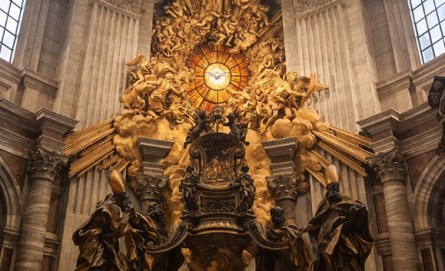
Jan 25-30 weekday homilies

Visit my website by clicking on https://frtonyshomilies.com/ for missed homilies.Jan 25-30: Jan 25 Monday: (Conversion of the Apostle Paul): Mk 16:15-20: http://www.americancatholic.org/gfx/spacer.gif (The feast of the conversion St. Paul) https://www.franciscanmedia.org/conversion-of-saint-paul/ Paul, the “Apostle to the Gentiles” and the greatest missionary of the Apostolic age, was a Roman citizen by his birth in Tarsus (in Cilicia), and a Jew born to the tribe of Benjamin. His Hebrew name was Saul. Since he was a Pharisee, Saul was sent to Jerusalem by his parents to study the Mosaic Law under the great rabbi Gamaliel. As a student, he also learned the trade of tent-making. He was present as a consenting observer at the stoning of Stephen. But Saul was miraculously converted on his way to Damascus to arrest the Christians. After that, Saul, now called Paul, made several missionary journeys, converted hundreds of Jews and Gentiles and established Church communities. He wrote 14 epistles. He was arrested and kept in prison for two years in Caesarea and spent two more years under house arrest in Rome. Finally, he was martyred by beheading at Tre Fontane in Rome.

Today we celebrate the feast of the conversion St. Paul (described thrice in the New Testament: Acts chapters 9, 22, and 26) an event which revolutionized the history and theology of the early Church. Saul of Tarsus, because of his zeal for the Jewish law and Jewish traditions, became the most outrageous enemy of Christ and his teaching, as the apostles started preaching the Gospel. Saul consented to the martyrdom of Stephen, watching the cloaks of the stoners. After the martyrdom of the holy deacon, the priests and magistrates of the Jews raised a violent persecution against the Christian communities at Jerusalem, and Saul was their fanatical young leader. By virtue of the authority he had received from the high priest, he dragged the Christians out of their houses, chained them and thrust them into prison. In the fury of his zeal, he applied to the high priest and Sanhedrin for a commission to take up all Jews at Damascus who confessed Jesus Christ and bring them bound to Jerusalem to be properly punished. He was almost at the end of his journey to Damascus, when, at about noon, he and his company were suddenly surrounded by a great light. As Saul fell to the ground, he heard a voice say, “Saul, Saul, why are you persecuting Me?” Saul answered, “Who are you, Sir?” And the voice said, “I am Jesus, the one you are persecuting. Now, get up and go into the city, and you will be told what you must do.” Saul rose and, blind, was led by his companions into Damascus. The Lord sent a Damascus disciple named Ananias to heal and instruct Saul. Ananias entered the house and, obeying Jesus’ orders, laid his hands-on Saul and prayed over him so that he might regain his sight and be filled with the Holy Spirit. And immediately something like scales fell from Saul’s eyes. He regained his sight, got up, was baptized and, having eaten, recovered his strength. Saul had realized the truth that Jesus was the mysterious fulfillment of all he had been blindly pursuing. He could easily identify Jesus with Jesus’ followers. He stayed several days in Damascus with Christian disciples and started teaching in the synagogues that Jesus was the promised Messiah and the Son of God. Saul’s conversion into Paul teaches us that we, too, need conversion and the renewal of our lives by a fresh anointing of the Holy Spirit, which will enable us to bear witness to Christ by exemplary lives. USCCB video reflections http://www.usccb.org/bible/reflections/index.cfm;  https://catholic-daily-reflections.com/daily-reflections/ Fr. Tony (https://frtonyshomilies.com/(L/21

Jan 26 Tuesday (Saints Timothy & Titus, Bishops) (https://www.franciscanmedia.org/saint-of-the-day/saints-timothy-and-titus) :Lk 10:1-9: 1 After this the Lord appointed seventy others, and sent them on ahead of him, two by two, into every town and place where he himself was about to come. 2 And he said to them, “The harvest is plentiful, but the laborers are few; pray therefore the Lord of the harvest to send out laborers into his harvest. 3 Go your way; behold, I send you out as lambs in the midst of wolves. 4 Carry no purse, no bag, no sandals; and salute no one on the road. 5 Whatever house you enter, first say, `Peace be to this house!’ 6 And if a son of peace is there, your peace shall rest upon him; but if not, it shall return to you. 7 And remain in the same house, eating and drinking what they provide, for the laborer deserves his wages; do not go from house to house. 8 Whenever you enter a town and they receive you, eat what is set before you; 9 heal the sick in it and say to them, `The kingdom of God has come near to you.’ USCCB video reflections http://www.usccb.org/bible/reflections/index.cfm;  https://catholic-daily-reflections.com/daily-reflections/

Both Timothy and Titus were converts and coworkers of St. Paul, who used them to defuse tensions in problem Churches. Timothy was born in Lystra in Asia Minor. He had a Greek father and Jewish mother, Eunice by name. He was converted by Paul in AD 47. He labored with Paul for 15 years, even during Paul’s house arrest in Rome, and Paul called him “dear son.” He visited the cities of Asia Minor and Greece in the company of St. Paul. He was made a bishop of Ephesus when he was comparatively young.  Paul wrote two letters to him and once advised him to take a little daily dose of wine to treat his stomach problem: “Stop drinking only water but have a little wine for the sake of your stomach and your frequent illnesses” (1Timothy 5:23). He also advised Timothy to “stir into flame” the grace of the Holy Spirit Whom he had received in Baptism (with Confirmation) and Ordination. Timothy won a martyr’s crown at Ephesus on a pagan feast day in the precincts of the temple of the goddess Diana to which he had gone to calm an unruly crowd.  

Titus was a Greek-speaking Gentile from Antioch whose parents were Gentiles. He was Paul’s friend and fellow-preacher, a peacemaker and an administrator whom Paul chose to carry his letters to Church communities. He was made administrator (bishop) of Christians in Crete, charged with organizing the Church there, correcting abuses and appointing presbyter-bishops.

 Life messages: 1) Let us have the apostolic zeal of saints Timothy and Titus. 2) Let us also practice their charity and patience. (Fr. Tony) L/19

Jan 27 Wednesday (St. Angela Merici, Virgin) https://www.franciscanmedia.org/saint-of-the-day/all?keys=&page=4 : Mk 4:1-20: 1 Again he began to teach beside the sea.  And a very large crowd gathered about him so that he got into a boat and sat in it on the sea; and the whole crowd was beside the sea on the land. 2 And he taught them many things in parables, and in his teaching he said to them: 3 “Listen! A sower went out to sow. 4 And as he sowed, some seed fell along the path, and the birds came and devoured it. 5 Other seed fell on rocky ground, where it had not much soil, and immediately it sprang up, since it had no depth of soil; 6 and when the sun rose it was scorched, and since it had no root it withered away. 7 Other seed fell among thorns and the thorns grew up and choked it, and it yielded no grain. 8 And other seeds fell into good soil and brought forth grain, growing up and increasing and yielding thirty-fold and sixty-fold and a hundredfold.” 9 And he said, “He who has ears to hear, let him hear.” 10 …..19 USCCB video reflections http://www.usccb.org/bible/reflections/index.cfm;  https://catholic-daily-reflections.com/daily-reflections/

The context: Today’s Gospel passage gives us the parable of the sower, the seeds sown, and the yield depending upon the type of soil. It is the first parable of Jesus in the New Testament about the Kingdom of Heaven. It is also a parable interpreted by Jesus himself. This parable was intended as a double warning: to the hearers to be attentive to, and to the Apostles to be hopeful about, Jesus’ preaching in the face of growing opposition to the Master and his ideas. Jesus wants all of us to open our hearts generously to the word of God and then to put that word into practice. The sower is God, the Church, the parents, the teachers, and we ourselves. The seed sown is the high-yielding word of God which is “a sharp sword” (Is 49:2), “two-edged sword” (Heb 4:12), and “fire and hammer” (Jer 23:29).

Soil type & the yield: The hardened soil on the footpath represents people with minds closed because of laziness, pride, prejudice, or fear. The soil on flat rock pieces represents emotional types of people who go after novelties without sticking to anything, and are unwilling to surrender their wills to God. “I will remove the heart of stone from their flesh and give them a heart of flesh” (Ez 11:19).  The soil filled with weeds represents those who are addicted to evil habits and evil tendencies, those whose hearts are filled with hatred or jealousy, and those whose greed focuses on acquiring money by any means and on enjoying life in any way possible.  The good and fertile soil represents well-intentioned people with open minds and clean hearts, earnest in hearing the word and zealous in putting it into practice. Zacchaeus, the sinful woman and the thief on Jesus’ right side, St. Augustine, St. Francis of Assisi and St. Francis Xavier, among others, fall into this category of the good soil.

Life message: Let us become the good soil and produce hundred-fold yields by earnestly hearing, faithfully assimilating and daily cultivating the word of God we have received, so that the Holy Spirit may produce His fruits in our lives. Fr. Tony (https://frtonyshomilies.com/) L/21

Jan 28 Thursday (St. Thomas Aquinas, Priest, Doctor of the Church) https://www.franciscanmedia.org/saint-of-the-day/saint-thomas-aquinas : Mt 23: 8-12: 8 But you are not to be called rabbi, for you have one teacher, and you are all brethren. 9 And call no man your father on earth, for you have one Father, who is in heaven. 10 Neither be called masters, for you have one master, the Christ. 11 He who is greatest among you shall be your servant; 12 whoever exalts himself will be humbled, and whoever humbles himself will be exalted. USCCB video reflections http://www.usccb.org/bible/reflections/index.cfm;  https://catholic-daily-reflections.com/daily-reflections/

The context: It was the third day of ‘Holy Week,’ in Jerusalem, a day of controversy and personal attacks. Jesus was under fire, and he lashed out at the religious leaders of Israel for rejecting Him as Messiah.

Three sins of the Scribes and Pharisees:  Jesus raises three objections to the Pharisees: they do not practice what they preach, they adopt a very narrow and burdensome interpretation of the Torah, and they seek public acknowledgment. “They do all their deeds to be seen by others” (23: 5). Jesus accuses the scribes and Pharisees of seeking the glory that rightly belongs to God. They express their love of honor in several ways, thereby converting Judaism into a religion of ostentation.  (i) “They make their phylacteries broad and their fringes long” (v. 5). (ii) They “love to have the place of honor at banquets and the best seats in the synagogues” (v. 6). (iii) They “love to be greeted with respect in the marketplaces and to have people call them rabbi” (v. 7). 23: 9 “call no man your Father on earth” cannot be used as a text against calling priests ‘Father,’ because in I Corinthians 4:14-15 Paul says that he is a father to the Corinthians.

Life messages: 1) We need servant leaders in a serving community:  The Church is intended by Christ to be a servant community in which those who hunger are to be filled; the ignorant are to be taught; the homeless to receive shelter; the sick cared for; the distressed consoled; and the oppressed set free.  Hence, leaders should have a spirit of humble service in thought, word and deed. 2) We need to accept the responsibility which goes with our titles. Titles and polite forms exist to remind each of us of our specific responsibilities in society.  Hence, let us use everything we are and have in a way that brings glory to God and His family. Fr. Tony (https://frtonyshomilies.com/) L/21

Jan 29 Friday: Mk 4:26-34: 26 Jesus said to the crowds: “This is how it is with the Kingdom of God; it is as if a man were to scatter seed upon the ground, 27 and should sleep and rise night and day, and the seed should sprout and grow, he knows not how. 28 The earth produces of itself, first the blade, then the ear, then the full grain in the ear. 29 But when the grain is ripe, at once he puts in the sickle, because the harvest has come.” 30 And he said, “With what can we compare the kingdom of God, or what parable shall we use for it? 31 It is like a grain of mustard seed, which, when sown upon the ground, is the smallest of all the seeds on earth; 32 yet when it is sown it grows up and becomes the greatest of all shrubs, and puts forth large branches, so that the birds of the air can make nests in its shade.” 33 With many such parables he spoke the word to them, as they were able to hear it; 34 he did not speak to them without a parable, but privately to his own disciples he explained everything. USCCB video reflections http://www.usccb.org/bible/reflections/index.cfm;  https://catholic-daily-reflections.com/daily-reflections/

The context: Using the mini parables of the growth of wheat seeds and mustard seeds in the field, Jesus explains the nature of the growth of the Kingdom of God or rule of God in human beings and human societies. In the case of both wheat and mustard seeds, the initial growth is slow and unnoticeable. But within days a leafy shoot will emerge, and within months a mature plant with numerous branches and leaves, flowers and fruits will be produced. The growth is silent and slow but steady, using power from the seed in the beginning and transforming absorbed water and minerals for energy in the later stages. Jesus explains that the Kingdom of God grows this way in human souls. The Kingdom of God is the growth of God’s rule in human hearts that occurs when man does the will of God and surrenders his life to God. It is slow and microscopic in the beginning. But it grows by using the power of the Holy Spirit, given to us through the Word of God, the Sacraments, and our prayers. Finally, God’s rule in the human heart transforms individuals and communities into God’s people, doing His will in His kingdom.

Life message 1) As we learn God’s will from His words and try to put these words into practice, we participate in the growth of God’s Kingdom on earth, a growth which will be completed in our Heavenly life. But we need the special anointing of the Holy Spirit to be doers of the word of God, so let us offer our lives before God every day, asking for this special anointing. Fr. Tony (https://frtonyshomilies.com/) L/21

Jan 30 Saturday: Mark 4:35-41: 35 On that day, when evening had come, he said to them, “Let us go across to the other side.” 36 And leaving the crowd, they took him with them in the boat, just as he was. And other boats were with him. 37 And a great storm of wind arose, and the waves beat into the boat, so that the boat was already filling.  38 But he was in the stern, asleep on the cushion; and they woke him and said to him, “Teacher, do you not care if we perish?” 39 And he awoke and rebuked the wind, and said to the sea, “Peace! Be still!” And the wind ceased, and there was a great calm. 40 He said to them, “Why are you afraid? Have you no faith?” 41 And they were filled with awe, and said to one another, “Who then is this, that even wind and sea obey him?” USCCB video reflections http://www.usccb.org/bible/reflections/index.cfm;  https://catholic-daily-reflections.com/daily-reflections/

The context: Mark’s emphasis on Jesus’ wondrous works helps him to reveal Jesus’ true Messianic identity. The role of God in calming the storms of life is the central theme of today’s Gospel. By describing the miracle, Mark also gives the assurance to his first-century believers that nothing can harm the Church as long as the risen Lord is with them. The incident reminds us today to keep Jesus in our life’s boat and to seek God’s help in the storms of life.

The storm:  The Sea of Galilee is lake thirteen miles long from north to south and eight miles broad from east to west at its widest. It is notorious for its sudden storms.   When a cold wind blows from the west, the valleys and gullies and hills act like gigantic funnels, compressing the winds and letting them rush down to the lake to create storms with violent waves. Unable to control their fears in just such a storm, the disciples awaken Jesus, accusing him of disregarding their safety. Jesus’ response is immediate.  First, Jesus rebukes the winds and the sea, producing perfect calm, to the great astonishment of his disciples. Then only does he reproach them for their lack of Faith.

Life messages: 1) We need to welcome Jesus into the boat of our life. All of us are making a journey across the sea of time to the shore of eternity, and it is natural that, occasionally in our lives, we all experience different types of violent storms: physical storms, emotional storms, and spiritual storms. We face storms of sorrow, doubts, anxiety, worries, temptations and passion. Only Jesus can give us real peace in the storm of sorrow or console us at the loss of our dear ones.

2) When the storms of doubt seek to uproot the very foundations of our Faith, Jesus is there to still that storm, revealing to us His Divinity and the authority behind the words of Holy Scripture. He gives us peace in the storms of anxiety and worries about ourselves, about the unknown future and about those we love. Jesus calms the storms of passion in people who have hot hearts and blazing tempers. Fr. Tony (https://frtonyshomilies.com/) L/21


Jan 18-23 weekday homilies

Jan 18-23: Jan 18 Monday: Mk 2:18-22: 18 Now John’s disciples and the Pharisees were fasting; and people came and said to him, “Why do John’s disciples and the disciples of the Pharisees fast, but your disciples do not fast?” 19 And Jesus said to them, “Can the wedding guests fast while the bridegroom is with them? As long as they have the bridegroom with them, they cannot fast. 20 The days will come, when the bridegroom is taken away from them, and then they will fast in that day. 21 No one sews a piece of unshrunk cloth on an old garment; if he does, the patch tears away from it, the new from the old, and a worse tear is made. 22 And no one puts new wine into old wineskins; if he does, the wine will burst the skins, and the wine is lost, and so are the skins; but new wine is for fresh skins.” USCCB reflections: https://youtu.be/pUaqaUN24Uo https://catholic-daily-reflections.com/daily-reflections/

The context: Today’s Gospel passage gives Jesus’ reply to the question raised, perhaps by some well-meaning Pharisees who were disciples of John the Baptist, asking why Jesus’ disciples ate and drank and feasted, while they (John the Baptist’s disciples), and the Pharisees in general, fasted and prayed. Prayer, fasting, and almsgiving were the three cardinal religious practices — the “good deeds”– of Jewish religious life.

Jesus’ reply: Jesus responded to their sincere question using three metaphors: the metaphor of the “children of the bridal chamber,” the metaphor of patching torn clothing, and the metaphor of wineskins. First, Jesus compared his disciples with the children of the bridal chamber. These were the selected friends of the bride and groom who feasted in the company of the bride and groom during a week of honeymoon. Nobody expected them to fast. Jesus assured the questioners that his disciples would fast when he, the Bridegroom, was taken away from them. In the same way, we are to welcome both the joys of Christian life and the crosses it offers us. But Joy is the chief characteristic of a Christian – joy even in tribulation. Using the comparisons of the danger of using new, unshrunken cloth to make a patch for an old garment, or old wineskins to store new, still-fermenting wine, Jesus told the questioners that they must have more elastic and open minds and larger hearts to understand and follow his new ideas which were, in many cases, different from the traditional Jewish teachings.

Life message: 1) We need to be adjustable Christians with open and elastic minds and hearts. The Holy Spirit, working actively in the Church and guiding the teaching authority in the Church, enables the Church to put into practice new visions, new ideas, new adaptations and new ways of worship in place of old ones. So, we should have the generosity and good will to follow the teachings of the Church. 2) At the same time, we need the Old Testament revelations, the New Testament teachings, and the Sacred Tradition of the Church as main sources of our Christian Faith. Fr. Tony (https://frtonyshomilies.com/) L/21

Jan 19 Tuesday: Mk 2:23-28: 23 As Jesus was passing through a field of grain on the Sabbath, His disciples began to make a path, picking the heads of grain. 24 And the Pharisees said to him, “Look, why are they doing what is not lawful on the Sabbath?” 25 And he said to them, “Have you never read what David did, when he was in need and was hungry, he and those who were with him: 26 how he entered the house of God, when Abiathar was high priest, and ate the bread of the Presence, which it is not lawful for any but the priests to eat, and also gave it to those who were with him?” 27 And he said to them, “The Sabbath was made for man, not man for the Sabbath; 28 so the Son of man is lord even of the Sabbath.” USCCB video reflections: http://www.usccb.org/bible/reflections/index.cfm ; https://catholic-daily-reflections.com/daily-reflections/

The context: Today’s Gospel passage gives Jesus’ teaching on the purpose of the Sabbath and on its proper observance. This was his response to a criticism and a silly accusation made by Pharisees against his disciples. On a Sabbath, to satisfy their hunger, they had plucked ears of grain from a field, removing the husks by rubbing the grain between their palms and blowing away the chaff. The Pharisees accused them of violating Sabbath laws by performing three items of work forbidden on the Sabbath, namely, harvesting, threshing and winnowing. God Himself, the originator of the Sabbath (Gn 2:3), ordered the Jewish people to avoid certain kinds of work on this day (Ex 20:8-11; 21:13; Dt 5:14) to leave them free to give more time to God. As time went by, the rabbis complicated this Divine precept. By Jesus’ time they had extended the list to 39 kinds of forbidden work (Navarre Bible Commentary).

Counter-arguments: According to Matthew, Jesus gives three counter-arguments from Holy Scripture defending his apostles. But Mark gives only one of those arguments.   Jesus argues that basic human needs, like hunger, take precedence over Divine worship and Sabbath observance. In other words, the commandment to keep the Sabbath holy does not come before the duty to seek basic sustenance. Jesus cites from Scripture the example of hungry David and his selected soldiers. They approached Abiathar (Mk 2: 26), the high priest of Nob (or his father, priest Ahimelech — 1 Sm 21:1-6) who gave them for food the “bread of the Presence” which only the priests were allowed to eat. The bread of the Presence consisted of twelve loaves or cakes placed each morning on the table in the sanctuary, as homage to the Lord from the twelve tribes of Israel (cf. Lv 24:5-9). The loaves withdrawn to make room for the fresh ones were reserved to the priests (Navarre Bible Commentary).

Life message: Like the Jewish Sabbath, the Christian Sunday is to be: 1) a day of rest and refreshment with members of the family; 2) a day for thanksgiving and the recharging of spiritual batteries through participation in the Eucharistic celebration (for Catholics); 3) a day for parents to teach religious Faith and Bible to their children; 4) a day to do works of charity in the neighborhood and in the parish; 5) a day for socializing with family members, neighbors, and fellow-parishioners. Fr. Tony (https://frtonyshomilies.com/) L/21

Jan 20 Wednesday (St Fabian, Pope & Martyr (https://www.franciscanmedia.org/saint-of-the-day/saint-fabian); St. Sebastian, Martyr) https://www.franciscanmedia.org/saint-of-the-day/saint-sebastian : Mk 3:1-6 1 There was a man there with a withered hand. 2 And they watched him, to see whether he would heal him on the Sabbath, so that they might accuse him. 3 And he said to the man who had the withered hand, “Come here.” 4 And he said to them, “Is it lawful on the Sabbath to do good or to do harm, to save life or to kill?” But they were silent. 5 And he looked around at them with anger, grieved at their hardness of heart, and said to the man, “Stretch out your hand.” He stretched it out, and his hand was restored. 6 The Pharisees went out, and immediately held counsel with the Herodians against him, how to destroy him. USCCB reflections: https://youtu.be/5pZYEkT03tQ ; https://catholic-daily-reflections.com/daily-reflections/

The context: Today’s Gospel describes a miraculous healing done by Jesus on one Sabbath as a public violation of Sabbath law to prove that God’s intention for the Sabbath was to do good and to save life rather than to do evil or to destroy life.

The incident and the reaction: Ex 20:8 and Dt 5:12 instructed the Jews to keep the Sabbath holy. But the Scribes and the Pharisees had amplified God’s law on the Sabbath by misinterpreting it and had made it burdensome for the common people through man-made laws. Jesus wanted to demonstrate in public the original intention of God in declaring the Sabbath holy. For Jesus, the Sabbath was a day of rest to be used in adoring God, learning and teaching His laws, and doing good to/for others. Hence, Jesus took the liberty of granting healing to a man with a withered hand in the local synagogue immediately after the worship service, thus infuriating the scribes and the Pharisees.

Life messages: 1) Our Christian Sabbath, that is, Sunday, observance of participating in the Eucharistic celebration is meant to recharge our spiritual batteries for doing good to/for others and avoiding evil. 2) Our Sunday observance is also meant to be an offering of our lives to God on the altar, to ask God’s pardon and forgiveness for our sins, to present our needs before the Lord and to participate in the Divine Life by Holy Communion. 3) It is also a day for us to spend time with the members of the family and to participate in the activities of our parish and neighborhood. Fr. Tony(https://frtonyshomilies.com/) L/21

Jan 21 Thursday (St. Agnes, Virgin, Martyr) https://www.franciscanmedia.org/saint-of-the-day/saint-agnes : Mk 3: 7-12: 7 Jesus withdrew with his disciples to the sea, and a great multitude from Galilee followed; also from Judea 8 and Jerusalem and Idumea and from beyond the Jordan and from about Tyre and Sidon a great multitude, hearing all that he did, came to him. 9 And he told his disciples to have a boat ready for him because of the crowd, lest they should crush him; 10 for he had healed many, so that all who had diseases pressed upon him to touch him. 11 And whenever the unclean spirits beheld him, they fell down before him and cried out, “You are the Son of God.” 12 And he strictly ordered them not to make him known. USCCB reflections: http://www.usccb.org/bible/reflections/index.cfm; https://catholic-daily-reflections.com/daily-reflections/

The context: Today’s Gospel describes how both Jews and Gentiles from Galilee and all surrounding areas gathered around Jesus practically every day of his public ministry of preaching and healing. Jesus preached the Good News of God’s love and demonstrated by his healing ministry the mercy and compassion of God his Father.

Jesus’ mission was universal, attracting Jews and pagans alike. He exercised his Divine power of healing, using his human body to demonstrate to the people that he was both God and man. Jesus instructed the healed ones not to publicize him as the expected Messiah because he did not want to bring his public life to a premature end. The ordinary Jews believed that the expected Messiah would declare himself King of the Jews after overthrowing the Roman rule. Hence, it was dangerous to let people regard him as the Messiah.

Life message: 1) Jesus continues to preach the Good News and heal the sick through his Church and through us his followers. He welcomes our response to him and calls us to come to him through the Sacraments, and especially through our participation in the Eucharistic celebration, with trusting Faith and confident expectation. “The holy human nature of our Lord is our only route to salvation; it is the essential means we must use to unite ourselves to God. Thus, we can today approach our Lord by means of the sacraments, especially and pre-eminently the Eucharist. And through the sacraments there flows to us, from God, through the human nature of the Word, a strength which cures those who receive the sacraments with faith (cf. St. Thomas Aquinas, “Summa Theologica”, III, q. 62, a. 5). Fr. Tony (https://frtonyshomilies.com/(L/21)

Jan 22 Friday: Mk 3: 13-19: 13 And he went up on the mountain, and called to him those whom he desired; and they came to him. 4 And he appointed twelve, to be with him, and to be sent out to preach 15 and have authority to cast out demons: 16 Simon whom he surnamed Peter; 17 James the son of Zebedee and John the brother of James, whom he surnamed Boanerges, that is, sons of thunder; 18 Andrew, and Philip, and Bartholomew, and Matthew, and Thomas, and James the son of Alphaeus, and Thaddeus, and Simon the Cananaean, 19 and Judas Iscariot, who betrayed him. Then he went home. (& Lk 6: 12-16) USCCB reflections: http://www.usccb.org/bible/reflections/index.cfm; ; https://catholic-daily-reflections.com/daily-reflections/

The context: Today’s Gospel passage gives a short account of the call and mission of the Apostles. Jesus is the first missionary, sent by his Father with the “Good News” that God his Father is a loving, merciful, and forgiving Father Who wants to save everyone through His Son Jesus. Today’s Gospel describes how Jesus selects and empowers twelve future missionaries as Apostles, giving them his own mission along with a share of his power to preach, and to heal the sick as proof of the truth of their message. Then, Jesus sends them in pairs to the Jewish towns and villages as heralds, to prepare the people to receive the Good News.

Special features: Jesus selected very ordinary people, most of them hard-working fishermen with no social status, learning, or political influence, because he was sure that they would be very effective instruments in God’s hands. It was a strange mixture of people. Matthew was a hated tax-collector for a foreign power, while Simon the Cananaean was a Zealot and fanatical nationalist who belonged to a militant group determined to destroy Roman rule by any means. The others were mostly professional fishermen with a lot of good will, patience and stamina. At first it was only their admiration and love for Jesus that united them. Jesus selected them after a night of prayer and gave them his own powers of healing and exorcism and his own mission of preaching the “Kingdom of God.”

Life message: 1) As Christians, we have the same mission that Jesus entrusted to his Apostles: to proclaim the word of God to all the world. We fulfill this mission primarily by living out Jesus’ teachings and by promoting and helping the world-wide missionary activities of the Church with prayer, moral support, and financial aid. Fr. Tony (https://frtonyshomilies.com/ (L/21)

Jan 23 Saturday (St. Vincent, Deacon, Martyr, (U. S. A.) https://www.franciscanmedia.org/saint-of-the-day/saint-vincent-of-zaragossa : St. Marianne Cope, Virgin (U. S. A.) https://www.franciscanmedia.org/saint-of-the-day/saint-marianne-cope :

Mk 3: 20-21: Then he went home; 20 and the crowd came together again, so that they could not even eat. 21 And when his family heard it, they went out to seize him, for people were saying, “He is beside himself.” USCCB reflections: http://www.usccb.org/bible/reflections/index.cfm ; https://catholic-daily-reflections.com/daily-reflections/       

 The context: Today’s Gospel tells us how Jesus’ relatives and fellow villagers wrongly judged him as out of his mind and consequently tried to take him by force back to Nazareth to do his safe and secure job as a good carpenter. That might be one reason why Jesus once remarked, “a man’s enemies will be the members of his own household.” (Matthew 10:36). However, Jesus met opposition with grace and with determination to fulfill his Father’s will.

There were five reasons why Jesus’ family thought he was mad and attempted to dissuade him from his preaching and healing mission. First, he had abandoned his safe and secure job as a much-needed village carpenter with steady income to become a wandering preacher with no residence or steady income. Second, he had chosen a band of fishermen with no political or social influence, a hated tax-collector and a fanatic zealot as his disciples. Third, he had begun to criticize the power lobby – the scribes and Pharisees – in the Jewish religious headquarters, Jerusalem, labeling them hypocrites. Jesus’ relatives might really have been afraid that Jesus would be arrested, and they would be persecuted with Him, for criticizing those in power.  Fourth, he had indirectly claimed to be the long-awaited Messiah and had worked miracles to support his claim. Fifth, they might have been jealous of his huge popularity throughout Palestine.

Life message: 1) Since Jesus experienced rejection from his own family relatives, he can sympathize with the hurt and rejection we received from our family members and console us in our pain. 2) Let us learn to forgive the modern “liberal-minded” people who find our Christian beliefs and practice  as crazy and face them with the courage of our convictions based on Christ’s divine authority and the reliability of his doctrines and promises. Let us remember that many saints, following Christ’s example, have been taken for madmen–but they were mad with love, mad with love for Jesus Christ, their God. Fr. Tony (https://frtonyshomilies.com/ (L/21)


January 11-16 weekday homilies

CHILDREN WITH DOWN SYNDROME SURPRISES THEIR TEACHER/ DOCTOR AT HER WEDDING: https://youtu.be/BAU0dsQ1lB4

Jan 11-16: Jan 11 Monday: Mk 1: 14-20: 14 Now after John was arrested, Jesus came into Galilee, preaching the gospel of God, 15 and saying, “The time is fulfilled, and the kingdom of God is at hand; repent, and believe in the gospel.” 16 And passing along by the Sea of Galilee, he saw Simon and Andrew the brother of Simon casting a net in the sea; for they were fishermen. 17 And Jesus said to them, “Follow me and I will make you become fishers of men.” 18 And immediately they left their nets and followed him.19 And going on a little farther, he saw James the son of Zebedee and John his brother, who were in their boat mending the nets. 20 And immediately he called them; and they left their father Zebedee in the boat with the hired servants and followed him. USCCB video reflections: http://www.usccb.org/bible/reflections/index.cfm ; https://catholic-daily-reflections.com/daily-reflections/

The context:  Today’s Gospel describes the beginning of Jesus’ preaching and healing ministry and the call of his Apostles who were to continue that ministry. Jesus started his public ministry immediately after John the Baptist was arrested. Following John’s pattern, Jesus, too, invited his hearers to repent as a preparation for believing in the Gospel, or the Good News, of the Kingdom of God. Repentance means an about-face turn to God resulting in a change of mind, heart, behavior and life. It also means sorrow for having refused God’s love and a resolution to make amends.  Believing in the Gospel demands from the hearers a resolution to take Jesus’ words seriously, to translate them into action and to put trust in Jesus’ authority. Jesus preached the Gospel, or Good News, that God is a loving, forgiving, caring and merciful Father Who wants to liberate us and save us from our sins through His son Jesus. According to Mark, Jesus selected four fishermen, Andrew and his brother Simon (later named Peter by Jesus), with James and his brother John, right from their fishing boats. Jesus wanted these ordinary, hard-working people as assistants for his ministry because they would be very responsive instruments in the hands of God.

Life messages: 1) In order to be effective instruments in the hands of God and to continue Jesus’ preaching, healing and saving ministry, we, too, need to repent of our sins on a daily basis and to renew our lives by cooperating with God’s grace and relying on the power of God. Fr. Tony(https://frtonyshomilies.com/) L/21

Jan 12 Tuesday: Mk 1:21-28: Then they came to Capernaum, and on the Sabbath he entered the synagogue and taught. 22. The people were astonished at his teaching, for he taught them as one having authority and not as the scribes. 23.In their synagogue was a man with an unclean spirit; 24. he cried out, “What have you to do with us, Jesus of Nazareth? Have you come to destroy us? I know who you are – the Holy One of God!” 25. Jesus rebuked him and said, “Quiet! Come out of him!” 26. The unclean spirit convulsed him and with a loud cry came out of him. 27. All were amazed and asked one another, “What is this? A new teaching with authority. He commands even the unclean spirits and they obey him.” 28. His fame spread everywhere throughout the whole region of Galilee. USCCB video reflections: http://www.usccb.org/bible/reflections/index.cfm; https://catholic-daily-reflections.com/daily-reflections/

The context: Jesus made the city of Capernaum on the shore of the Sea of Galilee, the center of the fishing business, his headquarters. There he started his preaching, teaching and healing ministry. The people were impressed by the authority of his teaching. The Old Testament prophets had taught using God’s delegated authority, and the scribes and Pharisees taught quoting Moses, the prophets and the great rabbis. But Jesus taught using his own authority and knowledge as God. Perfect knowledge of God, perfect accomplishment of God’s will, and absolute confidence in God were the sources of Jesus’ authority.

The second part of today’s Gospel describes a healing by exorcism which Jesus performed in the synagogue. We are told how Jesus, using his authority as God, cast out the devil by just one command: “Be silent, and come out of him!” In first-century Palestine, most sicknesses, especially mental illness, were considered to be the result of demonic possession, and both Jewish and pagan exorcists used lengthy procedures and physical force in their exorcisms. When Jesus commanded the Evil One to depart, he did so at once, and in its rush to depart, the evil spirit convulsed the man. Thus, Jesus demonstrated that he is the Messiah, the Savior, more powerful than the demon.

Life messages:  1) Our Faith is based on the Divinity of Christ, which is proved by his miracles; these, in turn, give authority and validity to his teaching and promises. Hence, let us accept Jesus’ teachings even if some of them are mysteries beyond our reach. Let us read the authoritative word of God every day and assimilate it into our lives. 2) In our illnesses, let us confidently approach Jesus, the healer, with trusting Faith and then go to the doctors who serve as the current instruments of Jesus’ healing ministry in our midst. Fr. Tony(https://frtonyshomilies.com/) L/21

Jan 13 Wednesday (St. Hilary, Bishop, Doctor of the Church)( https://www.franciscanmedia.org/saint-of-the-day/saint-hilary-of-poitiers)_ : Mk 1:29-39: 29 And immediately he left the synagogue, and entered the house of Simon and Andrew, with James and John. 30 Now Simon’s mother-in-law lay sick with a fever, and immediately they told him of her. 31 And he came and took her by the hand and lifted her up, and the fever left her; and she served them. 32 That evening, at sundown, they brought to him all who were sick or possessed with demons. 33 And the whole city was gathered together about the door. 34 And he healed many who were sick with various diseases and cast out many demons; and he would not permit the demons to speak, because they knew him. 35 And in the morning, a great while before day, he rose and went out to a lonely place, and there he prayed. 36 And Simon and those who were with him pursued him, 37 and they found him and said to him, “Everyone is searching for you.” 38 And he said to them, “Let us go on to the next towns that I may preach there also; for that is why I came out.” 39 And he went throughout all Galilee, preaching in their synagogues and casting out demons. USCCB video reflections: https://youtu.be/Vja5beACaq8?list=PLpTzvCOJa7DAFrAB3rgpm4xC_YNYqc0xt ; https://catholic-daily-reflections.com/daily-reflections/

The context: Today’s Gospel tells us that preaching the Good News of God’s love, mercy and salvation and healing the sick were the means Jesus used to enable his listeners to do the will of God and thus to build up the Kingdom of God, allowing God to take control of their lives. We are also told that Jesus recharged his spiritual batteries by talking with and listening to his Heavenly Father. Thus, preaching, healing and recharging spiritual power by prayer were the three key points of Jesus’ public ministry.

Healing mission: Jesus was never tired of healing the sick, thus demonstrating the mercy and compassion of his Heavenly Father to every sick person who approached him with trusting Faith. As soon as he had finished the day’s preaching in the synagogue on one Sabbath, Jesus went to Simon’s home and healed Simon’s mother-in-law of a fever. In the evening when the Sabbath rest was over, people brought all their sick dear ones to Jesus for healing and exorcism and he healed them all. Jesus began the next day very early, spending time in prayer in a lonely place.

Life messages: 1) We are called to continue Jesus’ preaching mission primarily by bearing witness to Christ through our day-to-day lives, as we radiate Christ’s mercy, love, forgiveness, and spirit of humble service to all around us. 2) We can participate in Jesus’ healing mission by praying for the sick, by visiting them, and by helping and encouraging the sick and shut-ins. 3) But in order to continue Jesus’ preaching and healing mission, we too, need to have our spiritual batteries recharged every day by prayer as Jesus did. Fr. Tony(https://frtonyshomilies.com/) L/21

Jan 14 Thursday: Mk 1:40-45: 40 And a leper came to him beseeching him, and kneeling said to him, “If you will, you can make me clean.” 41 Moved with pity, he stretched out his hand and touched him, and said to him, “I will; be clean.” 42 And immediately the leprosy left him, and he was made clean. 43 And he sternly charged him, and sent him away at once, 44 and said to him, “See that you say nothing to any one; but go, show yourself to the priest, and offer for your cleansing what Moses commanded, for a proof to the people.” 45 But he went out and began to talk freely about it, and to spread USCCB video reflections: https://youtu.be/V0mISJ1BJE8?list=PLpTzvCOJa7DAFrAB3rgpm4xC_YNYqc0xt ; https://catholic-daily-reflections.com/daily-reflections/

The context: Today’s Gospel describes Jesus touching a man sick with a severe case of leprosy and healing him instantly. In this miracle we have all the essentials for any miracle, says, Rev. Dr. L. Parker. We have a) a leper; b) a disease, leprosy; c) recognition of the disease by the man who has it; d) the presence of Jesus; e) Faith; f) trust, and g) humility enough for the sick man to ask for help from Jesus.  Biblical “leprosy” rarely indicated Hansen’s disease (leprosy proper). Mostly, the term referred to skin diseases like ringworm, psoriasis, leukoderma, skin cancer, and vitiligo. The suffering of lepers in Biblical times was chiefly due to the way they were treated by the religious society of the day (Interpreter’s Bible).  They were deemed unclean, unfit to be counted among a people who considered themselves “a kingdom of priests, a holy nation” (Ex 19:6).    In addition, lepers were treated as sinners who were being punished by God with this contagious disease.  The leprosy given by God as punishment to Miriam, the complaining sister of Moses (Nm 12: 1-3, 9-13) , to Gehazi, the greedy servant of the prophet Elisha (2 Kgs 5:22-27), and to the proud king Uzziah of Judah, also called Azariah (2 Kgs 15:3-5), supported the Jewish belief that leprosy was God’s punishment for sins. Finally, “leprosy” was considered a contagious disease, and, hence, its victims were separated from their families and society. The Mosaic Law, as given in Leviticus, demanded that the priest declare the leper unclean and that the leper a) keep his garments rent and his head bare, b) muffle his beard, c) cry out, “Unclean, unclean,” and d) dwell apart, making his abode outside the camp.  As a general rule, when a Jewish leper was healed, he had to go to the local priest for confirmation that he was now clean and was permitted to mix with the general public. Here the healed leper started evangelization by sharing the Good News of God’s activity in his life and allowing the Holy Spirit to touch the lives of others.

Life Messages: 1) The strong Faith of the sick man prompted him to violate the Mosaic Law prohibiting him from joining a crowd and approaching Jesus. The sympathy and mercy of Jesus prompted Jesus to violate the Mosaic Law which forbade anyone to touch an untouchable leper. Thus, Jesus teaches the lesson that the essence of Christianity is to touch the untouchable, to love the unlovable, and to forgive the unforgivable.

2) We need to be healed of the spiritual leprosy of sin by being reconciled with God every night, by asking His pardon and forgiveness for our sins of the day and by receiving the Sacrament of Reconciliation when we are in serious sin. Fr. Tony(https://frtonyshomilies.com/) L/21

Jan 15 Friday: Mk 2:1-12: 1 And when he returned to Capernaum after some days, it was reported that he was at home. 2 And many were gathered together, so that there was no longer room for them, not even about the door; and he was preaching the word to them. 3 …..12 USCCB video reflections: http://www.usccb.org/bible/reflections/index.cfm; https://catholic-daily-reflections.com/daily-reflections/

The context: Today’s Gospel presents the last in a series of five healing stories.  This one demonstrates the power of Faith, and in this particular case we learn what others can do for us if they are persons of Faith. As soon as Jesus got back to Capernaum after a preaching tour of Galilee, the crowds gathered in and around the house where he was staying, so that there was no room to get in or out.  Four men, carrying their paralyzed friend, tried in vain to get to the house through the crowd.  Here is the wonderful picture of a man who was saved by the Faith of his friends.  His friends were men who had trusting Faith in the healing power of Jesus, and they were men with initiative, tenacity and creativity.  So they carried their friend to the roof of the house, made a hole in the roof, and lowered the man on his mat, placing him right in front of Jesus.  Luke tells us that there were in the crowd Pharisees and Doctors of the Law from Galilee, Judea and Jerusalem sent to check out Jesus, the new preacher, and to report back to the Sanhedrin.

The sick man’s paralysis was seen by the people around as a punishment for some serious sin in his own life or the lives of his parents.  It was a common belief that no major sickness could be cured until sin was forgiven.  For that reason, Jesus began the young man’s healing by audibly forgiving his sins, so that he might feel no longer estranged from God. Then the young man was able to receive the physical healing he and his friends desired for him.  But the Pharisees thought that, in forgiving sin, Jesus had insulted God by blasphemy, because forgiving sin is the exclusive prerogative of God.  Jesus insisted that if he healed the man, then his enemies must recognize his authority to forgive sin, and consequently his Divinity. He then healed the young man with a single command, but we do not know whether any of the objectors believed in Jesus.

Life message: We are called to intercede for others and to bring them to Christ.  1) In the Old Testament, it is Moses who constantly begs God’s mercy and forgiveness for the Israelites’ sins. Later, we find the prophets interceding for the unfaithful Israelites. 2) In the New Testament, the dramatic role played by the friends of the paralyzed man in the healing story reminds us of the continuing need for, and power of, intercession for/by others. The text gives us encouragement to intercede for those who are ill or in special need.  When we pray and invite God into the situation, healing takes place. Fr. Tony(https://frtonyshomilies.com/) L/21

Jan 16 Saturday: Mk 2:13-17: 13 He went out again beside the sea; and all the crowd gathered about him, and he taught them. 14 And as he passed on, he saw Levi the son of Alphaeus sitting at the tax office, and he said to him, “Follow me.” And he rose and followed him. 15 And as he sat at table in his house, many tax collectors and sinners were sitting with Jesus and his disciples; for there were many who followed him. 16 And the scribes of the Pharisees, when they saw that he was eating with sinners and tax collectors, said to his disciples, “Why does he eat with tax collectors and sinners?” 17 And when Jesus heard it, he said to them, “Those who are well have no need of a physician, but those who are sick; I came not to call the righteous, but sinners.” USCCB http://www.usccb.org/bible/reflections/index.cfm; https://catholic-daily-reflections.com/daily-reflections/

The context: Today’s Gospel episode, telling of Matthew’s call as Jesus’ Apostle, reminds us of God’s love and mercy for sinners and challenges us to practice this same love and mercy in our relations with others.

The call and the response: Jesus went to the tax collector’s station to invite Matthew to become his disciple. Since tax collectors worked for a foreign power and extorted more tax money from the people than the area owed, they were hated and despised as traitors by the Jewish people and considered public sinners by the Pharisees.   Jesus could see in Matthew a person who needed Divine love and grace. While everyone hated Matthew, Jesus was ready to offer him undeserved love, mercy, and forgiveness. Hence, Matthew abandoned his lucrative job, because for Matthew, Christ’s call to follow Him was a promise of salvation, fellowship, guidance, and protection.

Scandalous partying with sinners. It was altogether natural for Matthew to celebrate his new calling by holding a feast for his friends. But Jesus’ dining with outcasts in the house of a traitor scandalized the Pharisees for whom ritual purity and table fellowship were important religious practices. Hence, they asked the disciples, “Why does your master eat with tax collectors and sinners?”  In answer to their question, Jesus stressed his ministry as healer: “Those who are well do not need a physician; the sick do.” Then, in Matthew’s own account of his conversion, Jesus challenged the Pharisees, quoting Hosea, “Go and learn the meaning of the words, ‘I desire mercy, not sacrifice.’ (Hosea 6:6).”  Finally, Jesus clarified his position, “I did not come to call the righteous, but sinners.”

Life messages: 1) Jesus calls you and me for a purpose: Jesus has called us through our Baptism, forgiven our sins, and welcomed us as members of the Kingdom. In fact, He calls us daily through the Word and through His Church, to be His disciples, and to turn away from all the things that distract us and draw us away from God. Just as Jesus did for us and for Matthew, we are to reach out to the unwanted and the marginalized in society with God’s own love, mercy and compassion. Fr. Tony(https://frtonyshomilies.com/) L/21


Jan 4-9 weekday homilies

Jan 4-9: Jan 4 Monday (St. Elizabeth Ann Seton, Religious (U. S. A.) (https://www.franciscanmedia.org/saint-of-the-day/saint-elizabeth-ann-seton) : Mt 4: 12-17, 23-25: 12 Now when he heard that John had been arrested, he withdrew into Galilee; 13 and leaving Nazareth he went and dwelt in Capernaum by the sea, in the territory of Zebulon and Naphtali, 14 that what was spoken by the prophet Isaiah might be fulfilled: 15 “The land of Zebulon and the land of Naphtali, toward the sea, across the Jordan, Galilee of the Gentiles — 16 the people who sat in darkness have seen a great light, and for those who sat in the region and shadow of death  light has dawned.” 17 From that time Jesus began to preach, saying, “Repent, for the kingdom of heaven is at hand.” He went around all of Galilee, teaching in their synagogues, 11 proclaiming the gospel of the kingdom, and curing every disease and illness among the people. 24 12 His fame spread to all of Syria, and they brought to him all who were sick with various diseases and racked with pain, those who were possessed, lunatics, and paralytics, and he cured them. 25 And great crowds from Galilee, the Decapolis, 13 Jerusalem, and Judea, and from beyond the Jordan followed him. USCCB video: http://www.usccb.org/bible/reflections/index.cfm (See the map of Galilee below Saturday reflections; https://catholic-daily-reflections.com/daily-reflections/

The context: Today’s Gospel describes the beginning of Jesus’ mission of preaching and healing in Galilee. He chose that area as the ideal spot because it was the most fertile land in Palestine. In addition, it was the most populated area, with 204 villages around the Sea of Galilee housing Jews and Gentiles. The Jews there largely belonged to the tribes of Asher, Naphtali and Zebulon. The people were open to new ideas because they had been exposed to various religious beliefs and the culture of traders from all over the known world.

Preaching the Good News: Jesus started preaching the Good News about God the Father and about God’s Kingdom. Since it was God the King’s message, it carried God’s authority and certainty. It was “Good News” because Jesus introduced to his hearers God his Father as a loving, merciful, providing and forgiving Father Who wanted to save everyone from the bondage of sin. It was also “Good News” of the kingdom of God or the rule of God in human lives. As a continuation of John’s message, Jesus, too, invited his hearers to repentance and the renewal of their lives so that God might start ruling their lives. Matthew identified Jesus’ preaching and healing ministry in Galilee as the fulfillment of the prophecy of Isaiah as Light to people living in darkness.

Life message: 1) As Christians we have been given Jesus’ mission to continue. Hence, our exemplary, transparent lives must be our message radiating the light of Christ’s love, mercy, forgiveness and spirit of humble and committed service. Fr. Tony (https://frtonyshomilies.com/) L/21

Jan 5 Tuesday (St. John Neumann, Bishop (U.S.A.) (https://www.franciscanmedia.org/saint-of-the-day/saint-john-neumann) : Mk 6: 34-44: 34 As he went ashore he saw a great throng, and he had compassion on them, because they were like sheep without a shepherd; and he began to teach them many things. 35 And when it grew late, his disciples came to him and said, “This is a lonely place, and the hour is now late; 36 send them away, to go into the country and villages round about and buy themselves something to eat.” 37 But he answered them, “You give them something to eat.” And they said to him, “Shall we go and buy two hundred denarii worth of bread, and give it to them to eat?” 38 And he said to them, “How many loaves have you? Go and see.” And when they had found out, they said, “Five, and two fish.” 39 Then he commanded them all to sit down by companies upon the green grass. 40 So they sat down in groups, by hundreds and by fifties. 41 And taking the five loaves and the two fish he looked up to heaven, and blessed, and broke the loaves, and gave them to the disciples to set before the people; and he divided the two fish among them all. 42 And they all ate and were satisfied. 43 And they took up twelve baskets full of broken pieces and of the fish. 44 And those who ate the loaves were five thousand men. USCCB video reflections http://www.usccb.org/bible/reflections/index.cfm https://catholic-daily-reflections.com/daily-reflections/

The context: Today’s Gospel describes Jesus’ miraculous feeding of a great multitude. The story is told in all four Gospels and serves as Jesus’ way of introducing to his hearers a merciful and providing God. Through God’s power, Elijah gave the widow each day just enough to meet her needs (1 Kgs 17:13-16). Jesus, on the other hand, gives generously and abundantly. This miraculous feeding was meant to remind people of God’s provision of manna in the wilderness and to prefigure the true Heavenly Bread, which Jesus would offer His followers because Jesus performed this miracle just before promising the Sacrament of the Eucharist for our spiritual feeding.

Jesus took pity on the growing physical hunger of his listeners as he preached, and he challenged his Apostles to feed them. But they had with them only five loaves of bread and two dried fish. Jesus took these, said a prayer of blessing broke them and asked the Apostles to distribute them till the hungry people were fully satisfied. Since it was mid-April, springtime in Israel, the people could sit comfortably on green grass in their groups of hundreds and fifties as Jesus instructed. After serving a generous meal which satisfied all, the Apostles collected twelve wicker baskets of leftover bread and fish pieces, a vivid proof and reminder of God’s generosity in giving and as a warning not to waste God’s blessings.

Life messages: 1) We may not be able to feed the hungry millions in the world. But today’s Gospel challenges us to do our humble share in alleviating hunger and poverty in our neighborhood. God will amplify our little contributions and reward our good will and generosity. 2) We must be thankful to God for miraculously giving us our daily spiritual bread in the Holy Eucharist Fr. Tony(https://frtonyshomilies.com/) L/21

Jan 6 Wednesday (St. Andre Bessette, Religious (U.S.A) (https://www.franciscanmedia.org/saint-of-the-day/saint-andre-bessette) : Mk 6: 45-52: 45 Immediately he made his disciples get into the boat and go before him to the other side, to Bethsaida, while he dismissed the crowd. 46 And after he had taken leave of them, he went up on the mountain to pray. 47 And when evening came, the boat was out on the sea, and he was alone on the land. 48 And he saw that they were making headway painfully, for the wind was against them. And about the fourth watch of the night he came to them, walking on the sea. He meant to pass by them, 49 but when they saw him walking on the sea they thought it was a ghost, and cried out; 50 for they all saw him, and were terrified. But immediately he spoke to them and said, “Take heart, it is I; have no fear.” 51 And he got into the boat with them and the wind ceased. And they were utterly astounded, 52 for they did not understand about the loaves, but their hearts were hardened. USCCB video reflections http://www.usccb.org/bible/reflections/index.cfm https://catholic-daily-reflections.com/daily-reflections/

The context: The event presented by today’s Gospel is the scene immediately following Jesus’ miraculous feeding of the five thousand with five loaves of bread and two fish. Sensing the danger of being seized by the people and “made King” as the leader of a revolt, Jesus promptly instructed his Apostles to leave the place by boat. He dismissed the crowd and went to the mountain to pray in solitude.

A double miracle in the sea: When the Apostles in the boat were several furlongs away from the shore, they faced an unexpected storm on the sea caused by the rush of hot wind from the desert blowing through the gaps of the Golan Heights onto the Sea of Galilee. Recognizing His Apostles’ danger, Jesus went toward their boat, walking on the stormy sea. Jesus calmed the frightened disciples as he approached the boat. As soon as Jesus got into the boat, the storm ceased miraculously, to the great astonishment of the Apostles.

Life messages: 1) Let us approach Jesus with strong Faith in His ability and availability to calm the storms in our lives and in the life of the Church. Church history shows us how Jesus saved his Church from the storms of persecution in the first three centuries, from the storms of heresies in the fifth and sixth centuries, from the storms of moral degradation and the Protestant reformation movement in the sixteenth and seventeenth centuries, and from the storms of clergy sex-abuse scandals in the twentieth and twenty-first centuries.

2) Let us ask Jesus to protect us when we face storms of strong temptations, storms of doubts about our religious beliefs, and storms of fear, anxiety and worries in our personal lives. Experiencing Jesus’ presence in our lives, let us confess our Faith in him and call out for his help and protection Fr. Tony (https://frtonyshomilies.com/) L/21

Jan 7 Thursday (St. Raymond of Penyafort, Priest) (https://www.franciscanmedia.org/saint-of-the-day/saint-raymond-of-penafort) : Lk 4: 14-22: Jesus in the synagogue at Nazareth 14 And Jesus returned in the power of the Spirit into Galilee, and a report concerning him went out through all the surrounding country. 15 And he taught in their synagogues, being glorified by all. 16 And he came to Nazareth, where he had been brought up; and he went to the synagogue, as his custom was, on the Sabbath day. And he stood up  to read; 17 and there was given to him the book of the prophet Isaiah. He opened the book and found the place where it was written, 18 “The Spirit of the Lord is upon me, because he has anointed me to preach good news to the poor.  He has sent me to proclaim release to the captives and recovering of sight to the blind, to set at liberty those who are oppressed, 19 to proclaim the acceptable year of the Lord.” 20 And he closed the book, and gave it back to the attendant, and sat down; and the eyes of all in the synagogue were fixed on him. 21 And he began to say to them, “Today this scripture has been fulfilled in your hearing.” 22 And all spoke well of him, and wondered at the gracious words which proceeded out of his mouth; and they said, “Is not this Joseph’s son?” USCCB video reflections http://www.usccb.org/bible/reflections/index.cfm https://catholic-daily-reflections.com/daily-reflections/

Scripture explained: Today’s Gospel describes how Jesus participated in the Sabbath prayer of the synagogue in his native place with a band of his disciples. The prayer began with “Shema’’ prayer followed by the recital of the “Eighteen Blessings,” praising and thanking God. Then four passages from the “Torah” the book of Law were read and explained by a priest, followed by a selection from the Prophets, which was read and interpreted by an invited scholar or guest or volunteer.  Finally, the prayer was concluded with a priest or the synagogue president blessing the assembly, using the blessing from the Book of Numbers (6: 22 ff). Since Jesus had become popular as a miracle working preacher in Capernaum, he was given the chance to read from the Book of the Prophets and to interpret the Scripture. Jesus, handed the Scroll of the prophet Isaiah, opened it and read his prophecy on the mission of the expected Messiah.  Surprising everyone, Jesus claimed that he was the One sent “to bring glad tidings to the poor, liberation to captives, recovery of sight to the blind and freedom for the oppressed”—language that reflects the Biblical year of Jubilee. To the great amazement and disbelief of his own townsmen, Jesus declared that Isaiah’s prophecy was being fulfilled at that very moment “in their hearing,” because the prophet was foretelling and describing Jesus’ mission and ministry.  Jesus’ mission would be to give liberation to everyone who would listen to his “Good News,” accept it and put it into practice. Luke reports that the initial reaction of the people was surprise at the power and eloquence of this son of their soil.

Life messages: 1) We need to receive Christ’s freedom, live it and pass it on to others: As members of Christ’s Mystical Body, we share in the freeing, saving mission of Jesus.   But we are captives of sin. We need Christ to set us free. We are often blinded by our evil habits, addictions and need for financial security. Once we receive true liberation from Christ, we have to share it with those we encounter in our daily lives, families, neighborhoods, parishes and workplaces.  2) We need to let the power of the Holy Spirit fill us, and to be ready to have miracles done through us. Today’s Gospel tells us that Jesus performed miracles because he was filled with the power of the Holy Spirit.  Let us be ready to become Spirit-filled instruments of Christ’s saving freedom. Fr. Tony (https://frtonyshomilies.com/) L/21

Jan 8 Friday: Lk 5: 12-16: 12 While he was in one of the cities, there came a man full of leprosy; and when he saw Jesus, he fell on his face and besought him, “Lord, if you will, you can make me clean.” 13 And he stretched out his hand, and touched him, saying, “I will; be clean.” And immediately the leprosy left him. 14 And he charged him to tell no one; but “go and show yourself to the priest, and make an offering for your cleansing, as Moses commanded, for a proof to the people.” 15 But so much the more the report went abroad concerning him; and great multitudes gathered to hear and to be healed of their infirmities. 16 But he withdrew to the wilderness and prayed. USCCB video: http://www.usccb.org/bible/reflections/index.cfm https://catholic-daily-reflections.com/daily-reflections/

The context: Today’s Gospel shows us Jesus touching a man sick with a severe case of leprosy and healing him instantly. Biblical “leprosy” rarely indicated Hansen’s disease (leprosy proper); mostly, the term referred to skin diseases like ringworm, psoriasis, leukoderma, vitiligo and some types of skin cancer. The suffering of lepers in Biblical times was chiefly due to the way they were treated by the religious society of the day (Interpreter’s Bible) because lepers were treated as sinners deserving no mercy, because they were seen as being punished by God with their contagious disease. The leprosy given by God as a punishment to Miriam (Nm 12:10-15),Bible the complaining sister of Moses, to Gehazi, the greedy servant of the prophet Elisha (2 Kgs 5: 20 ff), and to the proud the King Uzziah (2 Kgs 15:5; 2 Chr:19-21), supported the Jewish belief that leprosy was God’s punishment for sins. Lepers, like sinners, were deemed unclean, unfit to be counted among a people who considered themselves “a kingdom of priests, a holy nation” (Ex 19:6). “Leprosy” was also a terrible disease because its victims were separated from their families and society.

Mosaic restrictions on lepers: The Mosaic Law, as given in Leviticus, demanded that, first, the priest declare the leper unclean, and then that the leper should a) keep his garments rent and his head bare, b) muffle his beard, c) cry out, “Unclean, unclean,” and d) dwell apart, making his abode outside the camp.  As a rule, when a Jewish leper was healed, he had to go to the local priest for confirmation that he was now clean and was permitted to mix with the general public.

Life Messages: 1) The strong Faith of the sick man prompted him to violate the Mosaic Law prohibiting him from joining a crowd and approaching Jesus. The sympathy and mercy of Jesus prompted Jesus to violate the Mosaic Law which forbade anyone to touch an untouchable leper. Thus, Jesus teaches the lesson that the essence of Christianity is to touch the untouchable, to love the unlovable, and to forgive the unforgivable.

2) By sending the cured man to the priests to get their certification of his freedom from disease, Jesus teaches us that we should pray for healing and, at the same time, go to the doctors who share God’s wisdom in healing. Healing normally happens when man’s skill combines with God’s grace. Fr. tony(https://frtonyshomilies.com/) L/21

Jan 9 Saturday: Jn 3:22-30: 22 After this Jesus and his disciples went into the land of Judea; there he remained with them and baptized. 23 John also was baptizing at Aenon near Salim, because there was much water there; and people came and were baptized. 24 For John had not yet been put in prison. 25 Now a discussion arose between John’s disciples and a Jew over purifying. 26 And they came to John, and said to him, “Rabbi, he who was with you beyond the Jordan, to whom you bore witness, here he is, baptizing, and all are going to him.” 27 John answered, “No one can receive anything except what is given him from heaven. 28 You yourselves bear me witness that I said, I am not the Christ, but I have been sent before him. 29 He who has the bride is the bridegroom; the friend of the bridegroom, who stands and hears him, rejoices greatly at the bridegroom’s voice; therefore, this joy of mine is now full. 30 He must increase, but I must decrease.” USCCB video reflections http://www.usccb.org/bible/reflections/index.cfm https://catholic-daily-reflections.com/daily-reflections/

The context: Today’s Gospel passage shows the loveliness of John the Baptist’s humility. John was responding to his disciples who complained that many among them were deserting John to join the new preacher, Jesus, whom John had baptized.

John’s explanation: John told them plainly who he really was and what his mission was. He told them that he was only a forerunner of the Messiah and that his mission was to prepare a people for the Messiah by preaching repentance. He was challenging his hearers to receive the baptism of repentance as their first step in renewing their lives, so they could welcome Jesus the Messiah into their lives. John explained further that his role was to be the “friend of the bridegroom” (shoshben); the bridegroom was Jesus. As the shoshben arranges the meeting of the bride and groom, arranges the details of the wedding, presides over the wedding, guards the bridal chamber and leaves happily, John prepared the bride, namely, the Jewish nation for receiving her bridegroom, Jesus the Messiah, by baptizing the people who were willing to repent and then baptizing Jesus and introducing him to the people as the “Lamb of God.”

Life messages: 1) Our mission, as St. Francis de Sales puts it, is to “bloom where we are planted.” God has given a unique mission to each one of us, and we are expected to accomplish that unique mission by receiving God’s strength through the various means Jesus has instituted in his Church. “No one can receive anything except what has been given from Heaven.” 2) True humility and trusting Faith in God are necessary for us to accomplish our life’s mission by using God’s freely given gifts. Fr. Tony; (https://frtonyshomilies.com/) L/21

Church’s teaching on the morality of Covid-19 vaccine

Must Catholics refuse a COVID-19 Vaccine?

(Article in the Archdiocese of Mobile official weekly, “Catholic Week” on Dec 18, 2020); MAKING SENSE OUT OF BIOETHICS by Rev. Tadeusz Pacholczyk, Ph.D.)

In the wake of announcements from multiple pharmaceutical companies about safe and effective COVID-19 vaccines, many are expressing ethical doubts about whether it is OK to take these vaccines. Do Catholics have a moral duty to decline an inoculation if it was unethically produced using a cell line that came from an abortion? Th e short answer is “no.” This has been discussed and explained in several magisterial church documents in recent years. In 2008, for example, the Congregation for the Doctrine of the Faith reminded us in the Instruction Dignitas Personae that: “Grave reasons may be morally proportionate to justify the use of such ‘biological material.’ Th us, for example, danger to the health of children could permit parents to use a vaccine which was developed using cell lines of illicit origin, while keeping in mind that everyone has the duty to make known their disagreement and to ask that their healthcare system make other types of vaccines available.” For a serious reason, therefore, Catholics may receive a COVID-19 vaccine having an association with abortion, and a serious reason could include a threat to one’s health and wellbeing. Those who are elderly or who face co-morbidities like diabetes, obesity or other significant health conditions are among the highest risk groups for adverse outcomes from infection and would clearly have a serious reason.

Included (in graphic on page 2) is information comparing some of the COVID-19 vaccine candidates that may become available in the U.S. in terms of their association with abortion-derived cell lines, helpfully collated by the Charlotte Lozier Institute and alphabetically arranged. Vaccines from Moderna and Pfizer are the first to receive emergency approval in the U.S., and do not rely on cell lines from abortions in the manufacturing process. As such, they appear to be good candidates for Catholics to use. There is a problem that a cell line from a 1972 abortion was used to carry out some ancillary testing of those vaccines, but the fact that zero material derived from any cell line from an abortion is present in these vaccines, that is to say, inside the syringe which actually jabs the patient, is sufficient in the minds of most to assuage any concern over using them, even if problematic laboratory testing may have taken place along the way. If we end up facing a choice among multiple COVID-19 vaccines of similar or equal safety and efficacy, as appears likely, it will clearly be preferable to choose alternatives with a better ethical profile, i.e. those not associated with, or less associated with, material derived from abortions. Suppose, however, that two new vaccines both appeared to be safe during clinical trials. Th e first vaccine had no association with abortion but was only 35 percent effective at protecting from COVID-19, while the second was more than 90 percent effective, but was manufactured using a cell line derived from an abortion. In such a case, again, we could choose the significantly more effective version for the serious reason of danger to our health.

Relying on cell lines from abortions to manufacture a COVID-19 vaccine provokes strong moral objections and some can and will refuse the vaccines on these grounds. While it is a personal decision of conscience as to whether or not to accept a vaccine, it is important to be clear that the Church, for her part, does not require us to decline it on such grounds in the face of serious reasons, as in the situation of an elderly person or someone with multiple health issues who faces significant risks if they were to contract COVID-19. This fact, of course, in no way absolves or diminishes the serious wrongdoing of those who used cell lines from abortions to make vaccines in the first place. Any time we decide to receive an unethically produced vaccine, moreover, we should push back. We need to do our part in applying pressure on the manufacturer, perhaps by sending an email indicating our objection to the fact that their vaccine was produced using ethically controversial cell sources, and requesting that they reformulate it using alternative, non-abortion-related cell sources. Alternatively, we might write a letter to the editor of our local paper pointing out the injustice of being morally coerced to rely on these cell sources, or take other steps to educate and inform others. Such efforts help expand public awareness of the problem and apply real pressure for change. Such efforts can be more effective (and require more authentic determination on our part) than merely “digging in our heels” or “taking a stand” and refusing to get vaccinated, which has the negative effect of subjecting us, and others around us, to heightened risk from various diseases. While it is too early to know which COVID-19 vaccines will end up becoming available in the U.S., the pandemic is certain to elevate the profile of abortion-related ethical concerns among the public to a degree not previously seen, off ering a unique opportunity to push for the elimination of these cell lines from future biomedical research and pharmaceutical development projects. —

Rev. Tadeusz Pacholczyk, Ph.D. earned his doctorate in neuroscience from Yale and did post-doctoral work at Harvard. He is a priest of the diocese of Fall River, MA, and serves as the Director of Education at The National Catholic Bioethics Center in Philadelphia.

Additional websites on the morality of Pfizer & Moderna vaccine for Covid-19

U.S. bishops’ internal memo: Catholics can take Covid-19 vaccines: https://www.americamagazine.org/politics-society/2020/11/23/misinformation-us-bishops-catholics-covid-vaccine-abortion

New Vatican document: Refusing to get vaccinated can seriously jeopardize public health: https://www.americamagazine.org/politics-society/2020/12/29/vatican-covid-guidelines-catholic-pope-document-239606

COVID vaccines are moral to use, say ethicists, Catholic bishops: https://religionnews.com/2020/11/25/trust-vaccines-fetal-cells-conspiracy-covid-catholic-evangelical/

USCCB: MORAL CONSIDERATIONS REGARDING THE NEW COVID-19 VACCINES: https://www.usccb.org/moral-considerations-covid-vaccines